7 Fabricator / Welder - Aviation Training Equipment CV Templates with Example
This guide shows you how to create a clear, focused CV for a Fabricator / Welder - Aviation Training Equipment role. It explains how to organise relevant evidence so readers can quickly understand your practical contribution.
For this work, a strong CV connects fabrication tasks to specifications, quality checks and project progress. Learn how to present evidence around engineering drawings, steel and aluminium work, workshop machinery, welding standards and traceable records.
The example is presented in 7 layouts, so you can compare the PNG image previews and open a preferred example in the editor to customise it. The guide also covers ATS readability, useful CV sections and role-specific terms such as machining allowances, welding symbols, tolerances and AS9001/NIS procedures.
What Makes a Great Fabricator / Welder - Aviation Training Equipment CV in 2026
A strong CV makes fabrication experience, drawing skills and quality practice easy to scan. Clear bullet points show the work completed and how it supported accurate, timely assembly.
Use relevant terms such as steel and aluminium, heavy plate, light-gauge sheet metal, press brakes, powered rolls and EN ISO 9606. Add figures only when you can support them with reliable evidence.
Note: CV examples are for educational purposes only. Use only information that accurately reflects your experience and qualifications. References to real organisations do not imply affiliation or endorsement.
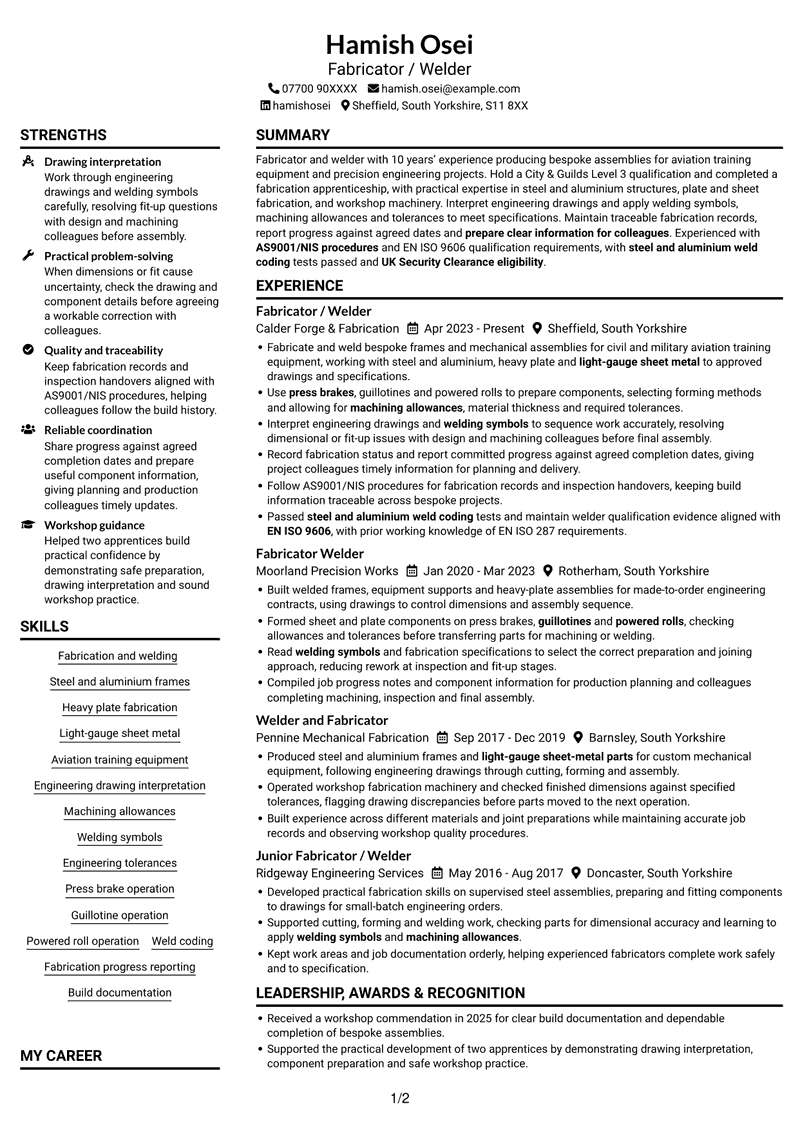
#1 Plain Two Column Format CV Example
The Plain Two Column Format separates work history from supporting CV sections, helping reviewers move between them with ease.
CV Snapshot
- 10 years’ experience in fabrication and welding
- City & Guilds Level 3 Diploma and completed apprenticeship
- Steel and aluminium weld coding tests passed
- Experience with AS9001/NIS procedures and UK Security Clearance eligibility
Why This Format Works
- Distinct content areas help reviewers find supporting details without losing the career sequence.
- Chronological role entries make progression through fabrication work straightforward to follow.
- Qualifications and training are easy to locate during a focused requirements check.
Best For
- CVs with several work entries
- Technical skills beside qualifications
- Clear chronology across roles
- Quick access to credentials
- Fabrication and quality experience
CV Keywords
- Fabrication and welding
- City & Guilds Level 3 Diploma in Fabrication and Welding
- Engineering Fabrication Apprenticeship, completed
- Produced steel and aluminium frames
- Heavy plate fabrication
- light-gauge sheet-metal parts
- Engineering drawing interpretation
- Machining allowances
- welding symbols
- Engineering tolerances
- press brakes
- guillotines
- powered rolls
- EN ISO 9606
- steel and aluminium weld coding
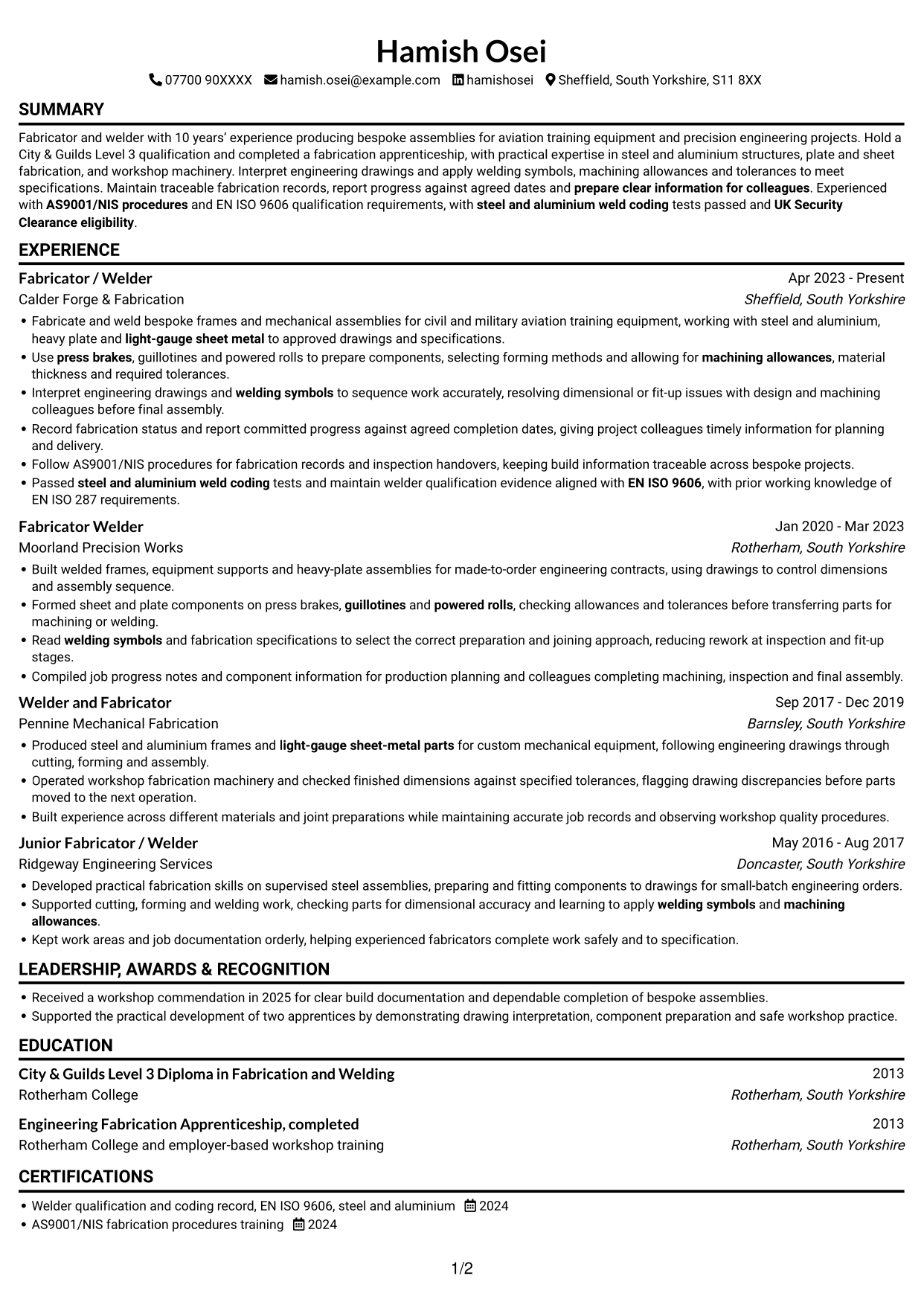
#2 Simple One Column Format CV Example
The Simple One Column Format gives the CV a single reading path, helping reviewers follow work history in sequence.
Why This Format Works
- One reading path keeps role dates and details in chronological order.
- Skills and qualifications appear within the same sequence of CV sections.
- Full-width entries give detailed fabrication records room to remain readable.
Best For
- Chronological work histories
- Detailed role descriptions
- Single-path CV review
- Technical skills with supporting context
- Several fabrication roles
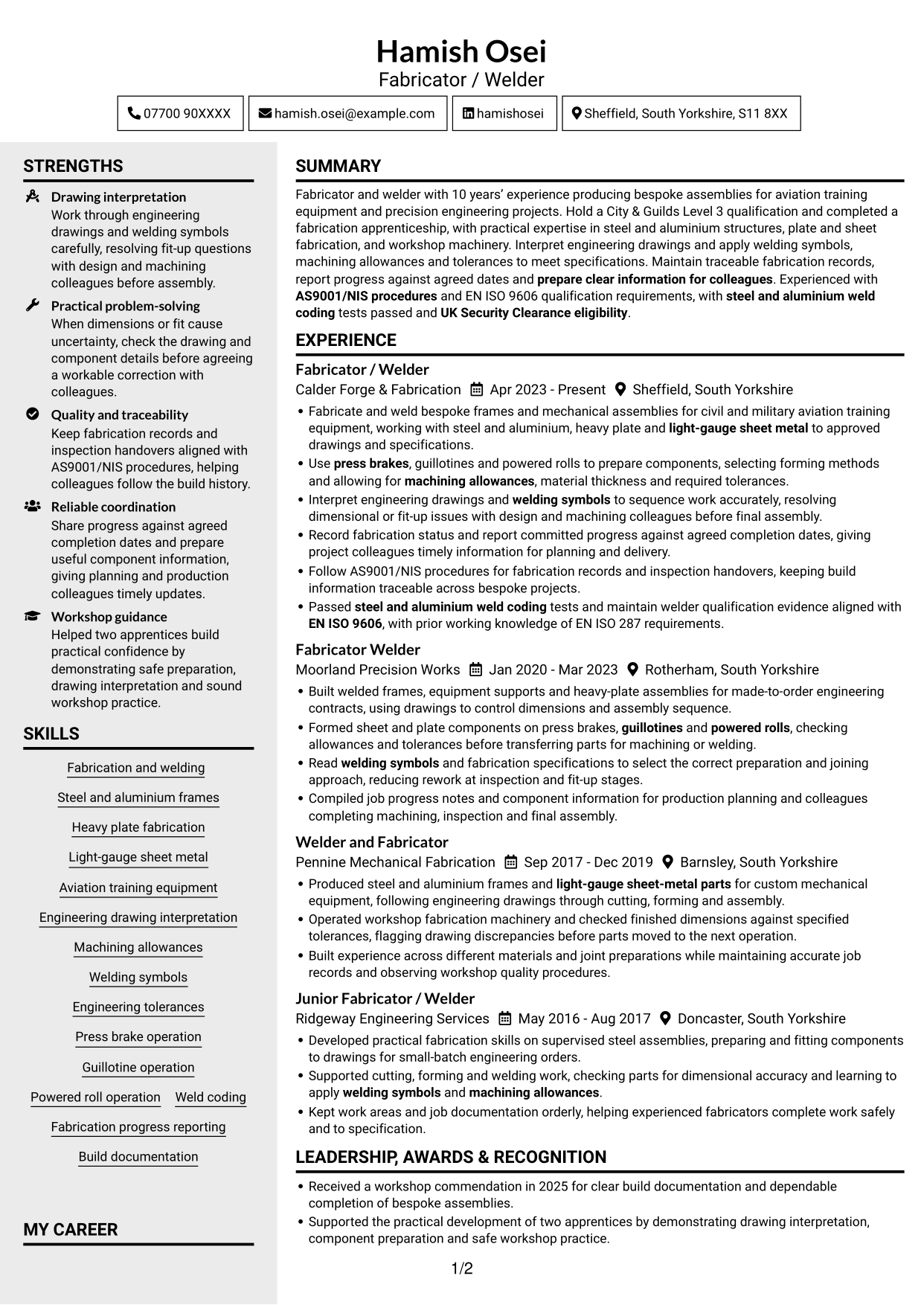
#3 Clean Two Column Sidebar Format CV Example
The Clean Two Column Sidebar Format uses a sidebar beside the main content, giving reviewers a clear route between CV sections.
Why This Format Works
- Career entries can remain in sequence while supporting CV details have a separate area.
- Column boundaries help reviewers return to education and skills with less searching.
- Section-based organisation keeps work achievements distinct from training and credentials.
Best For
- Work history with supporting sections
- Quick reference to education
- CVs with distinct skill groups
- Chronological career details
- Fabrication and qualification records
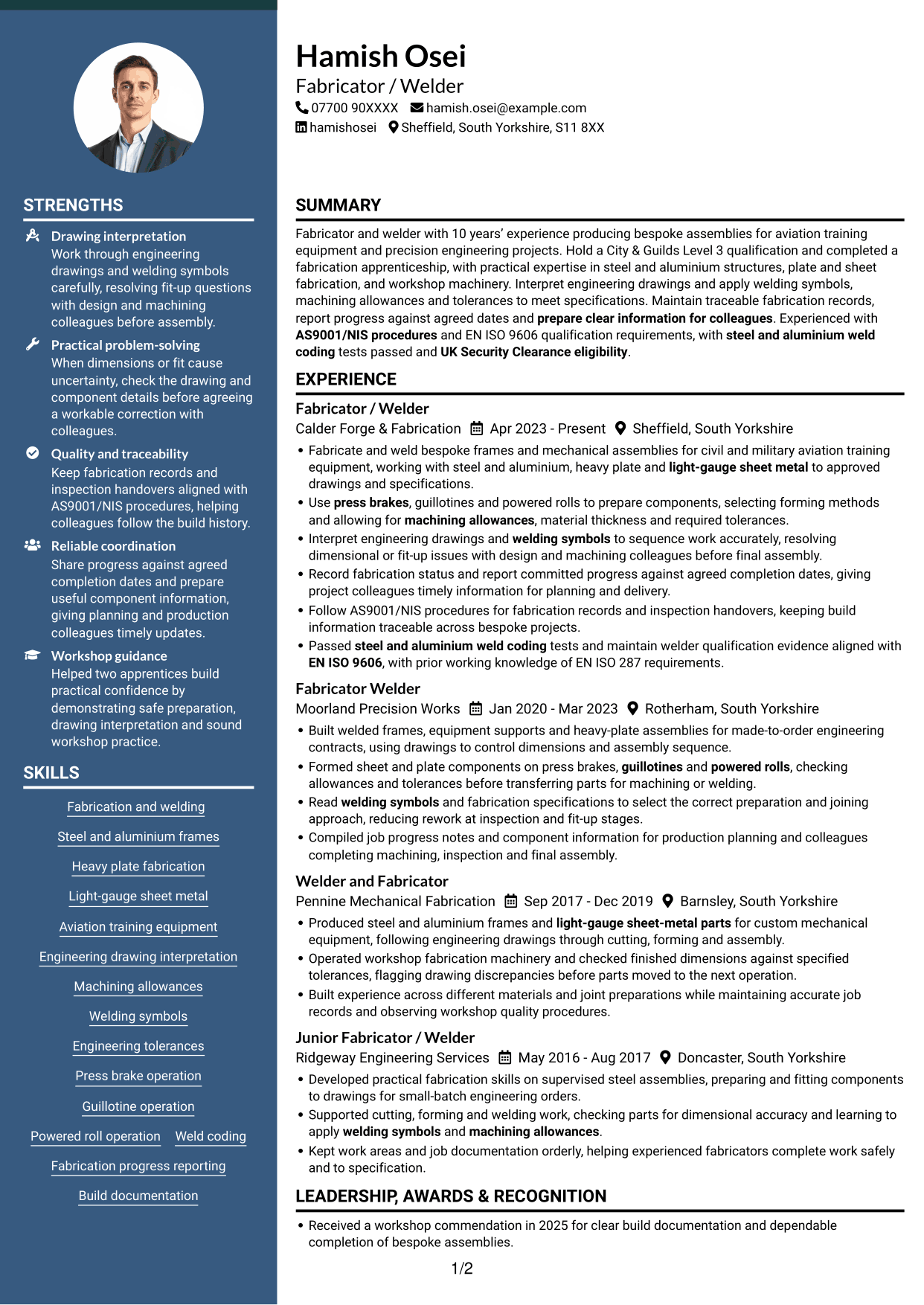
#4 Two Column Format CV Example
The Two Column Format places CV information in two body columns, helping reviewers move between career history and supporting qualifications.
Why This Format Works
- Separate columns help distinguish role details from other sections of the CV.
- A clear sequence of roles makes career progression easier to trace.
- Education and credentials remain findable without interrupting the experience entries.
Best For
- Several detailed role entries
- Career progression across employers
- Experience beside qualifications
- CVs with varied technical evidence
- Readers checking education and credentials
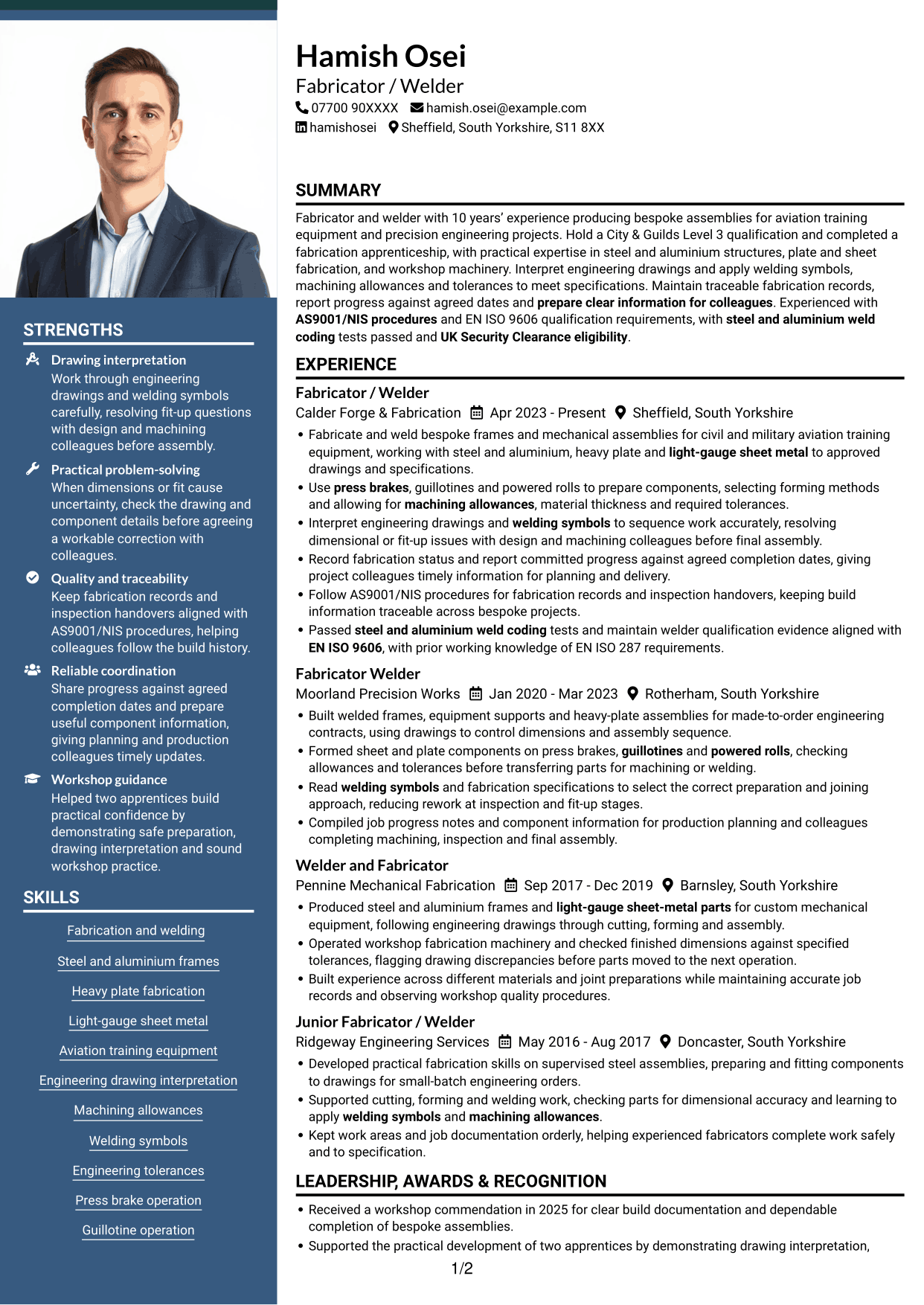
#5 Photo Header Two Column Format CV Example
The Photo Header Two Column Format combines a portrait in the header with a two-column body, for CVs where a portrait is wanted.
Why This Format Works
- The two-column body keeps experience and supporting CV sections visually distinct.
- Chronological entries let reviewers follow work history from role to role.
- The portrait has a clear place in the header without interrupting the body.
Best For
- CVs where a portrait is requested
- Work histories with several roles
- Experience paired with qualifications
- Clear separation of CV sections
- Technical skills and training
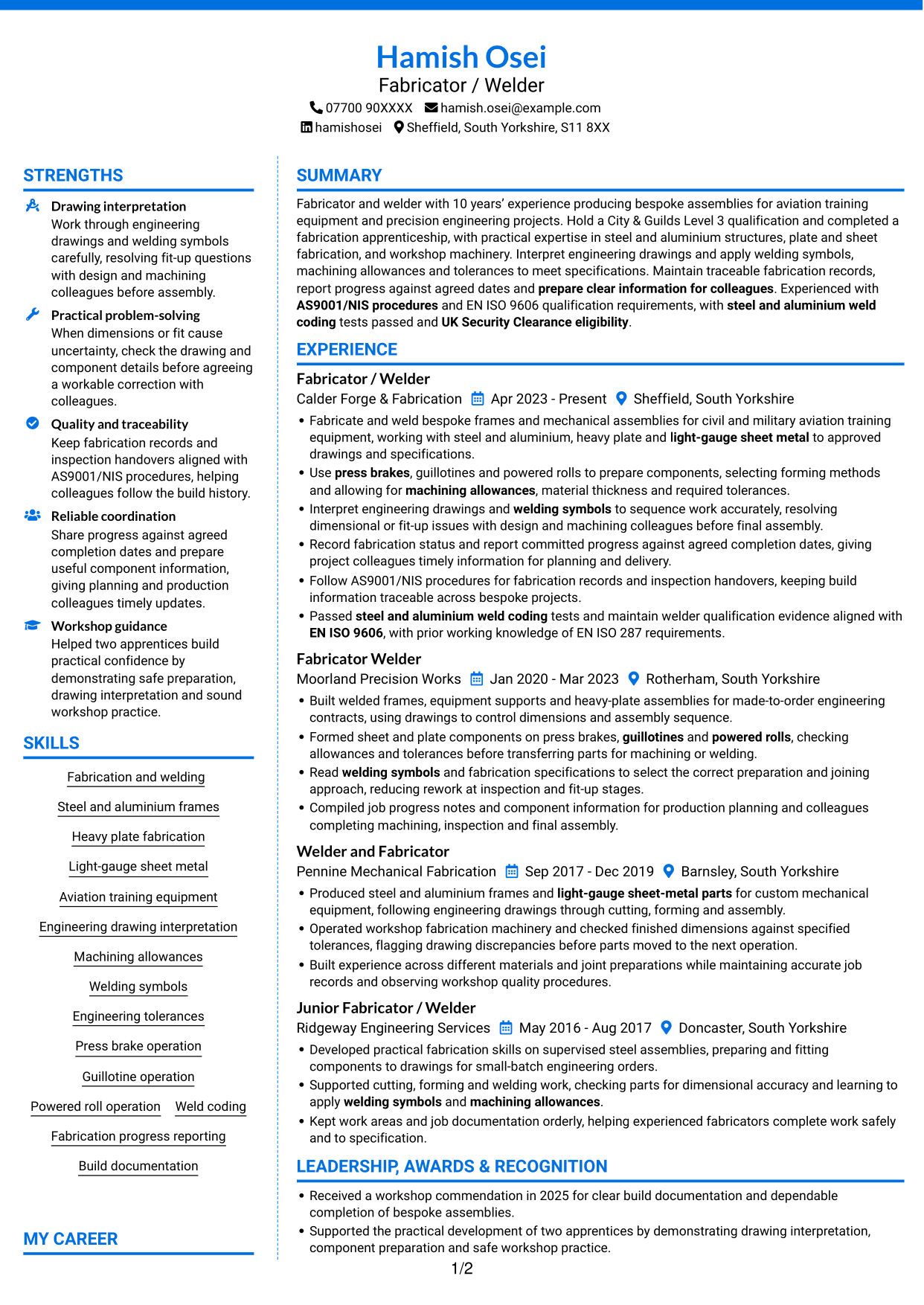
#6 Coloured Two Column Format CV Example
The Coloured Two Column Format arranges CV content in two body columns, helping reviewers move between career entries and supporting details.
Why This Format Works
- Two distinct content areas make experience and supporting sections easier to locate.
- The role sequence helps reviewers follow changes in responsibility over time.
- Education and qualifications are accessible without searching through each job entry.
Best For
- CVs with several employers
- Career details in chronological order
- Separate space for supporting sections
- Fast access to qualifications
- Fabrication experience and training
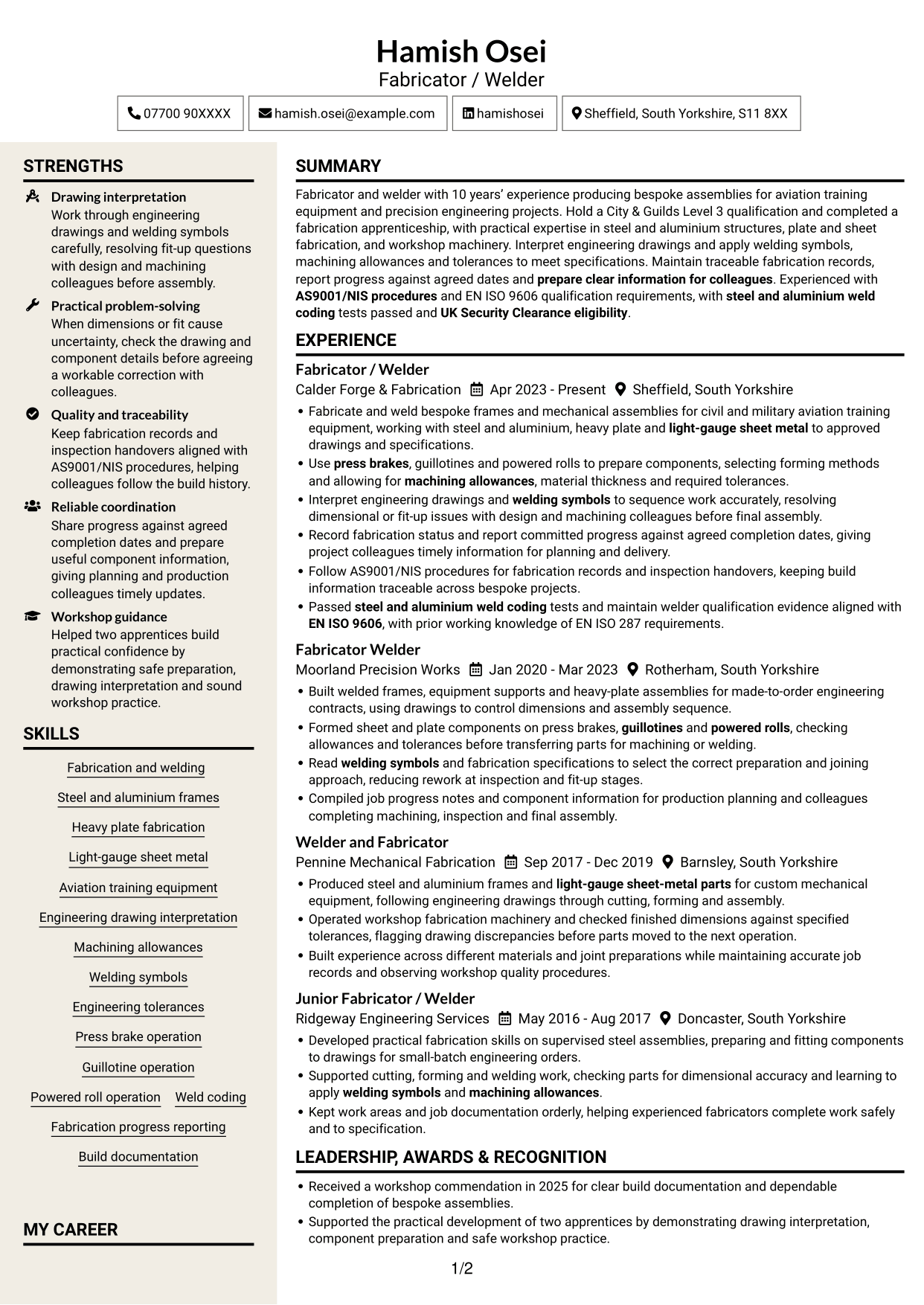
#7 Stylish Two Column Designer Format CV Example
The Stylish Two Column Designer Format uses two body columns to group CV sections, giving reviewers a clear way to navigate the content.
Why This Format Works
- Grouped sections help reviewers locate skills and education apart from role details.
- Chronological entries keep the work history easy to follow.
- The two-column reading order offers a clear route through experience and credentials.
Best For
- CVs with varied section content
- Work history and credentials together
- Clear navigation between sections
- Several role descriptions
- Skills supported by training
Why Build Your Fabricator / Welder - Aviation Training Equipment CV with ResumeInMinutes
ResumeInMinutes helps you organise fabrication experience, skills and education in a clear CV. Compare PNG image previews, then open an example in the editor to customise its content and layout.
- Different CV layouts
- Clear, readable section structure
- Space for role-specific keywords
- Organised skills and experience
- PNG image previews
- CV customisation in the editor
Choose a format that makes your fabrication work easy to follow. Keep attention on drawing interpretation, safe workshop practice, quality records and dependable progress updates.
See Also
- 7 Civil Planning Engineer - Highways and Drainage Infrastructure CV Templates with Example
- 7 Civil Engineer - Wastewater Infrastructure CV Templates with Example
- 7 Senior Project Engineer - Rail and Civil Engineering CV Templates with Example
- 7 Compliance Officer - Drainage and Wastewater Operations CV Templates with Example
- 7 Motor Vehicle Technician - Ford Vehicles CV Templates with Example
- 7 Chartered Structural Engineer CV Templates with Example
- 7 Geotechnical Engineer - Ground Investigation and Design CV Templates with Example
- 7 Civil Design Engineer - Water and Wastewater Infrastructure CV Templates with Example
- 7 Junior CAD Technician - Civil Engineering CV Templates with Example
- 7 Fabricator / Welder - Aviation Training Equipment Cover Letter Templates with Example
Frequently Asked Questions
Are these Fabricator / Welder - Aviation Training Equipment CV templates ATS-friendly?
The examples use readable headings and clear sections to support scanning. Include relevant terms naturally, such as engineering drawings, machining allowances, welding symbols, tolerances and EN ISO 9606.
Are these separate CV examples or different layouts of one example?
This page shows one role-focused CV example in different layouts. Compare the PNG image previews, then open an example in the editor to customise it.
What should a Fabricator / Welder - Aviation Training Equipment CV include?
Include a focused summary, relevant experience, education, skills and certifications. Show how you use drawings, prepare and assemble components, follow quality procedures and share progress information.
Which CV layout works well for this role?
Choose a layout with clear headings and an easy-to-follow order for experience, skills and education. A simple structure helps recruiters and applicant tracking systems find key details.
How can I show fabrication achievements on my CV?
Use concise bullet points to explain the task, your contribution and the result. Include supported details about quality, completed assemblies, progress against agreed dates or clear build records.
Should I include a photo on my CV?
For UK applications, a photo is usually not needed. Use the space for relevant experience, skills and measurable results instead.