7 Qualified Architect - Heritage and Conservation Cover Letter Templates with Example
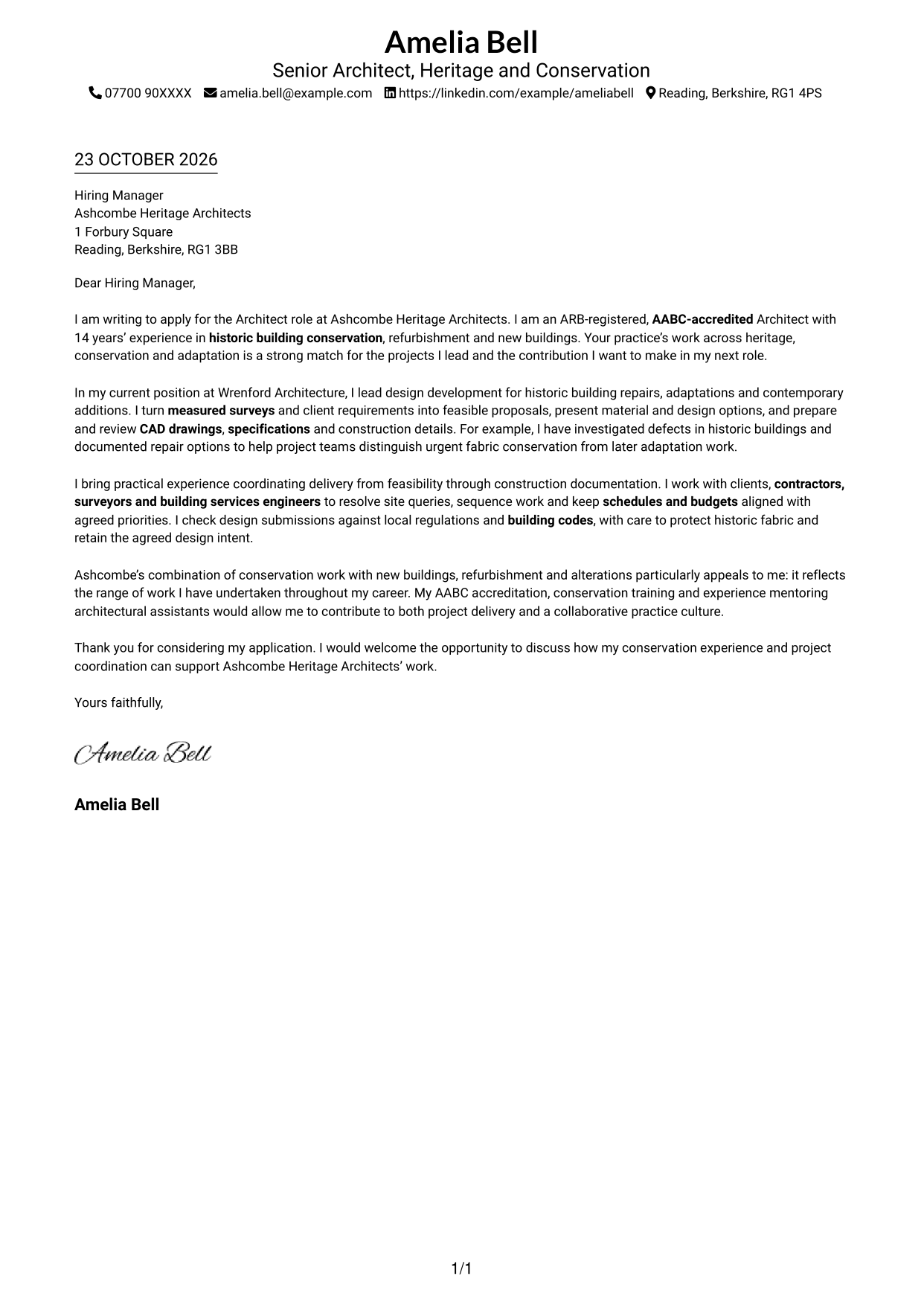
This practical guide to a Qualified Architect - Heritage and Conservation cover letter shows how to present role fit and motivation across seven layouts.
What Makes a Great Qualified Architect - Heritage and Conservation Cover Letter in 2026
A strong letter connects your interest in the role with practical skill in surveying, repairing and adapting historic buildings. It should show how you can explain conservation choices clearly and support workable design proposals.
Use relevant evidence, such as recording repair options, preparing detailed drawings and specifications, or coordinating project contributors. Link that evidence to the employer’s work and explain why its mix of conservation and building projects interests you.
The featured example moves from role interest to relevant conservation evidence, delivery coordination and a clear close; adapt this focused progression while choosing a presentation suited to the employer and communication context.
#1 Simple One Column Format Cover Letter Example
A single-column body carries the application, evidence and closing in one direct reading path.
Why This Format Works
- One reading column carries the application, evidence and closing in a clear sequence.
- Sender details in the header stay apart from the message itself.
- Separate paragraphs help distinguish motivation, supporting evidence and practice interest.
Best For
- Direct-reading letters
- Paragraph-led applications
- Header-based contact details
- Letters with several supporting points
- Text-first correspondence
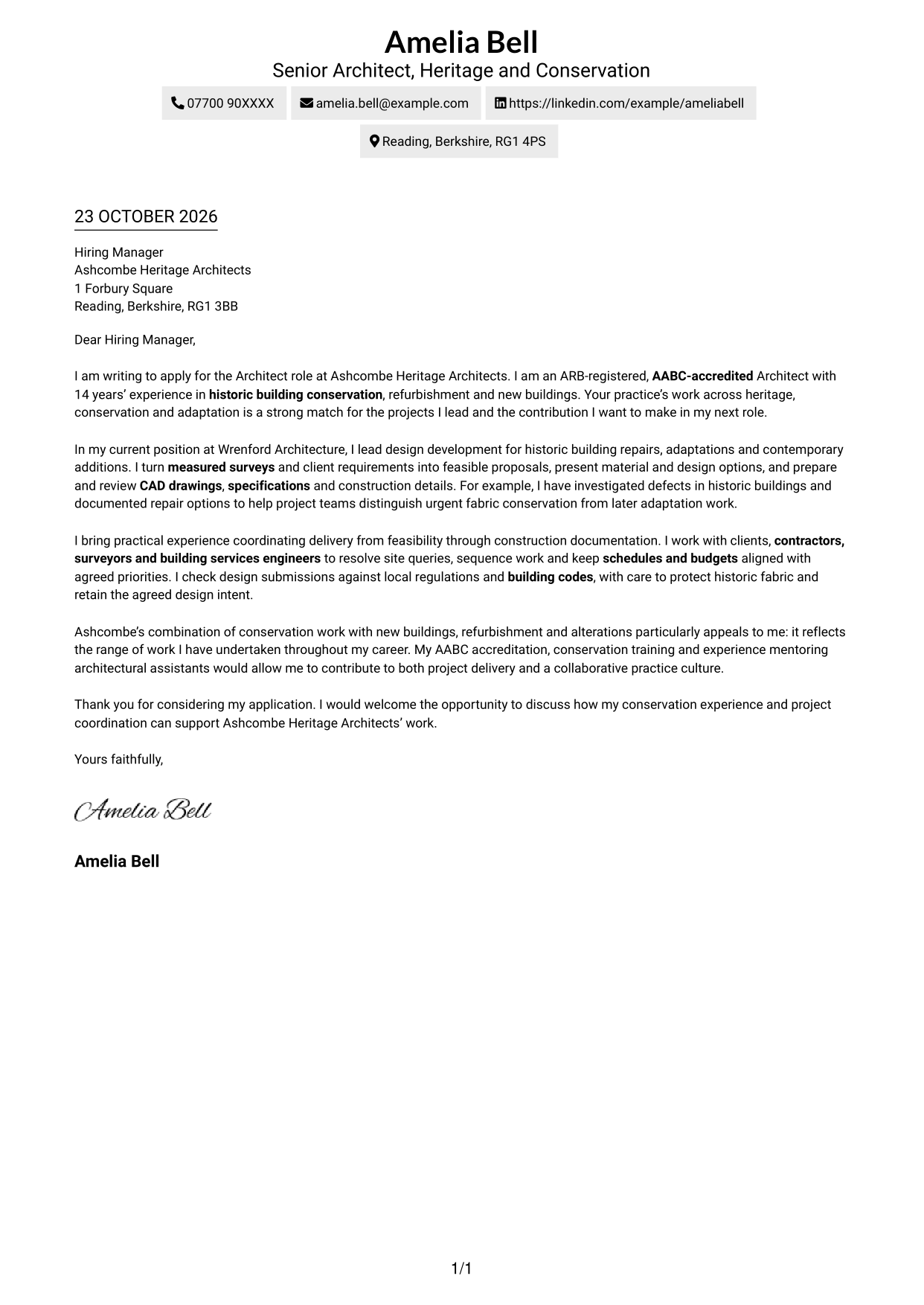
#2 Two Column Format Cover Letter Example
A contact sidebar sits beside one continuous letter body, giving contact details a separate place.
Why This Format Works
- The sidebar keeps sender details outside the letter text and easy to find.
- The single body column preserves the letter's opening-to-closing reading order.
- Paragraph breaks distinguish motivation, evidence and interest in the practice.
Best For
- Separate contact and message areas
- Continuous letter arguments
- Easy-to-find sender details
- Practice-specific motivation
- Multi-paragraph applications
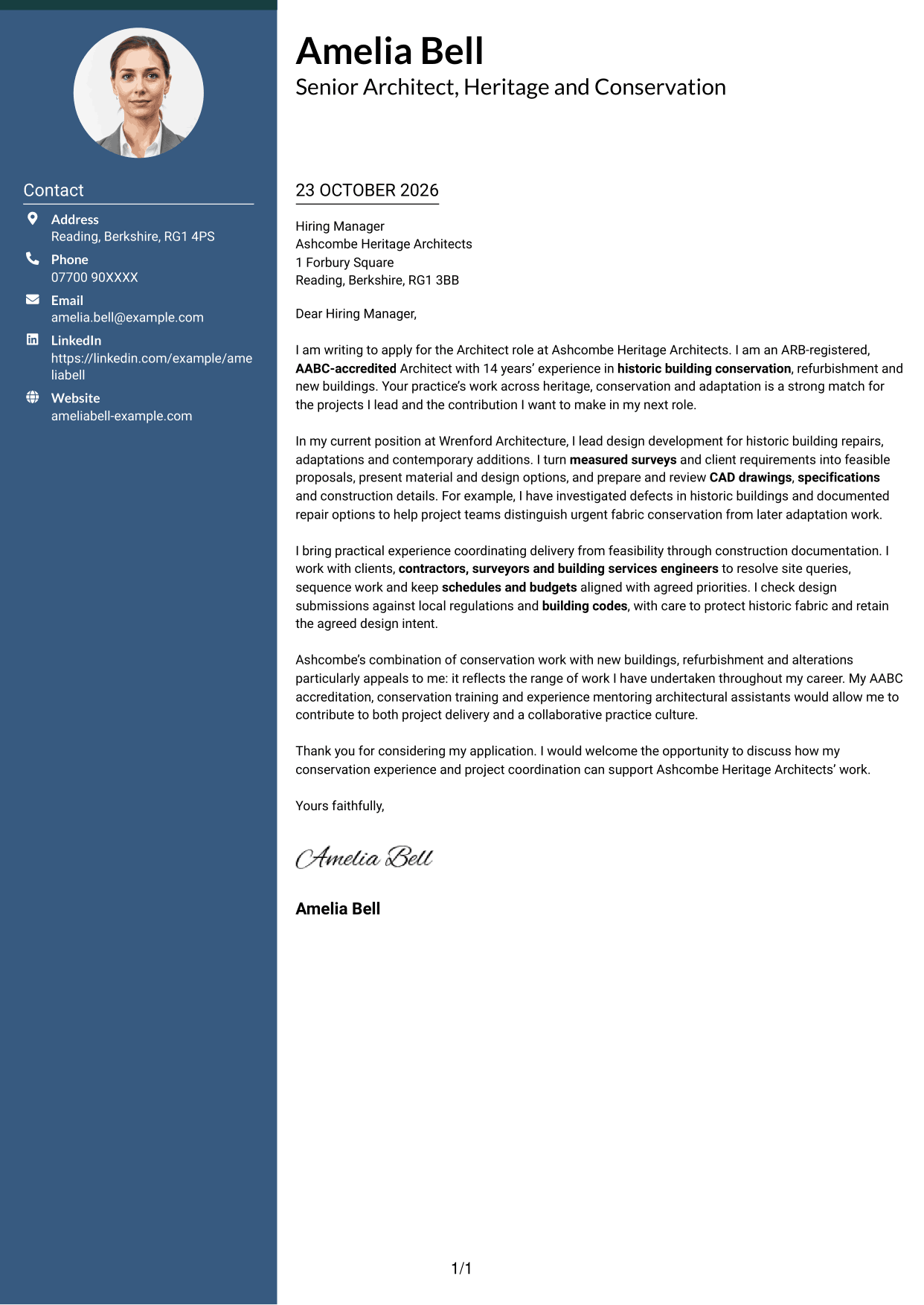
#3 Photo Header Two Column Format Cover Letter Example
A photo accompanies the contact sidebar and continuous letter body, suiting a photo-inclusive presentation without splitting the written argument.
Why This Format Works
- The sidebar separates contact details from the message for quick reference.
- The continuous body keeps the case together in one reading column.
- Paragraph breaks make the letter's separate points easier to distinguish.
Best For
- Photo-inclusive correspondence
- Separate contact and message areas
- Letters with several evidence points
- A continuous written case
- Visible sender details
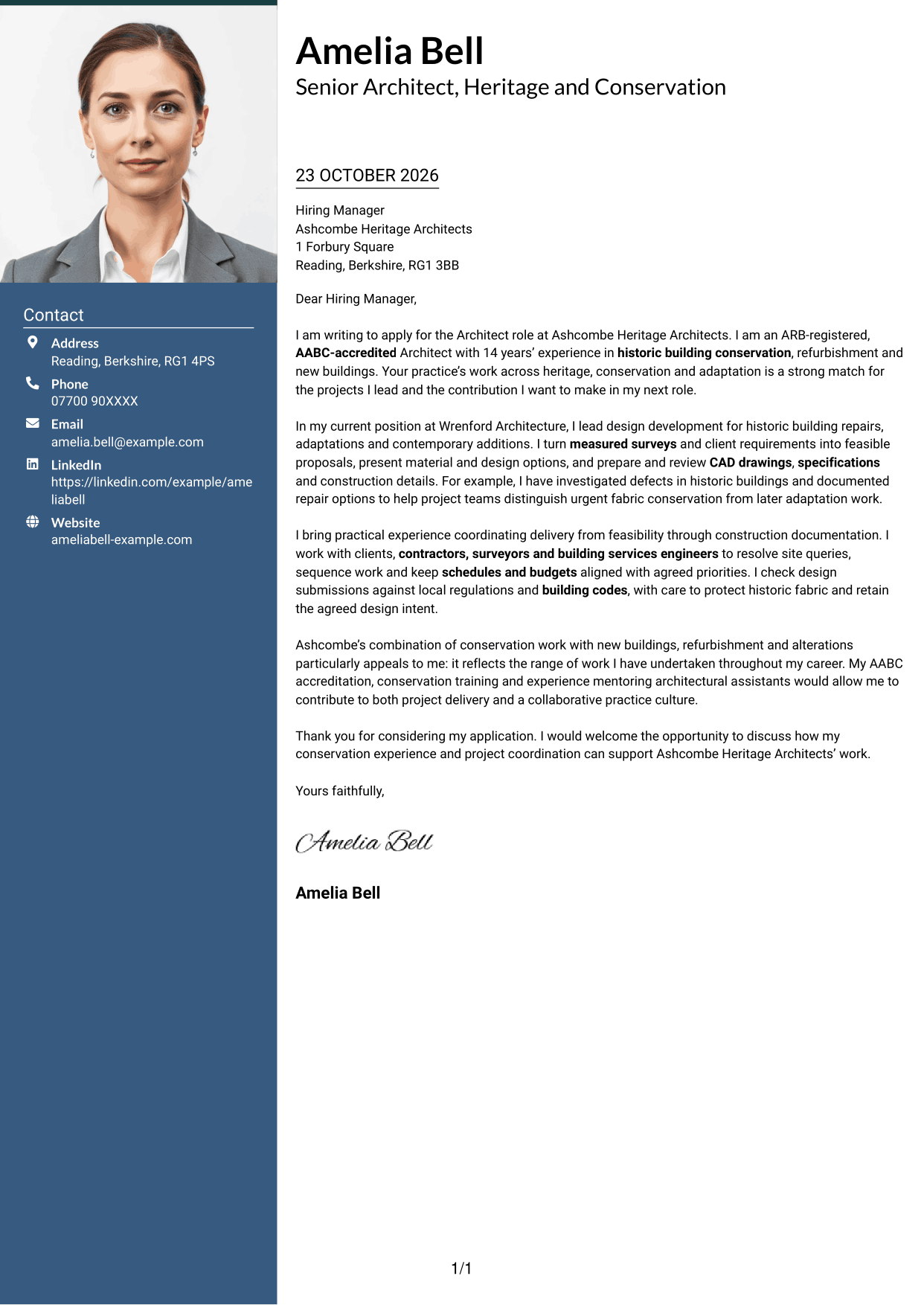
#4 One Column Format with Photo Cover Letter Example
A portrait accompanies a single-column letter, keeping the written message in one uninterrupted path.
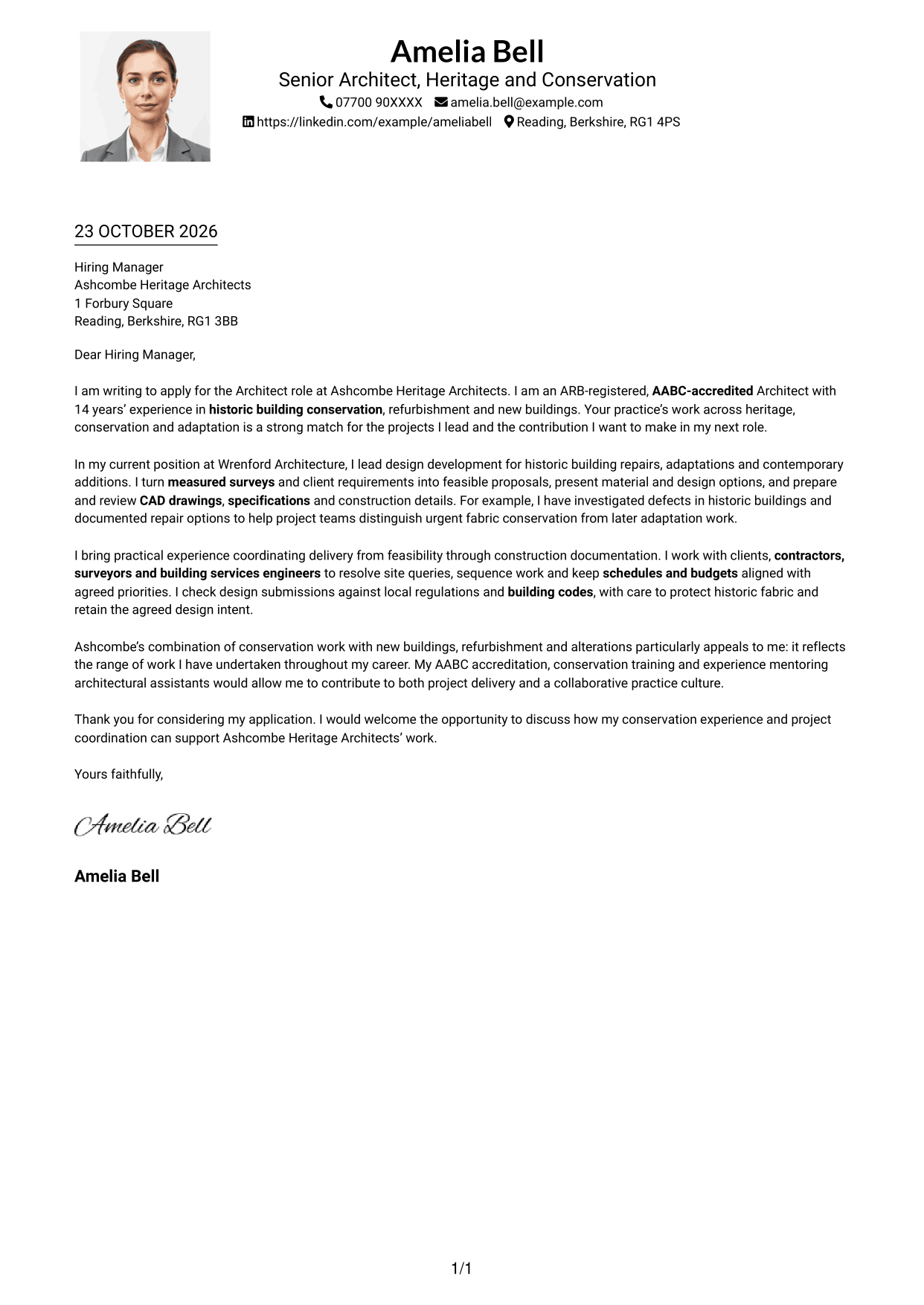
Why This Format Works
- The single column gives the greeting, evidence and closing one clear sequence.
- Header contact details remain distinct from the paragraphs of the letter.
- The portrait adds a visual point without dividing the written message.
Best For
- Single-column letter reading
- Photo-led sender presentation
- Multi-paragraph case building
- Direct employer motivation
- Header-first contact details
#5 Simple Two Column Format Cover Letter Example
A contact sidebar sits alongside a single continuous letter body, suiting correspondence that needs both distinct contact details and a connected argument.
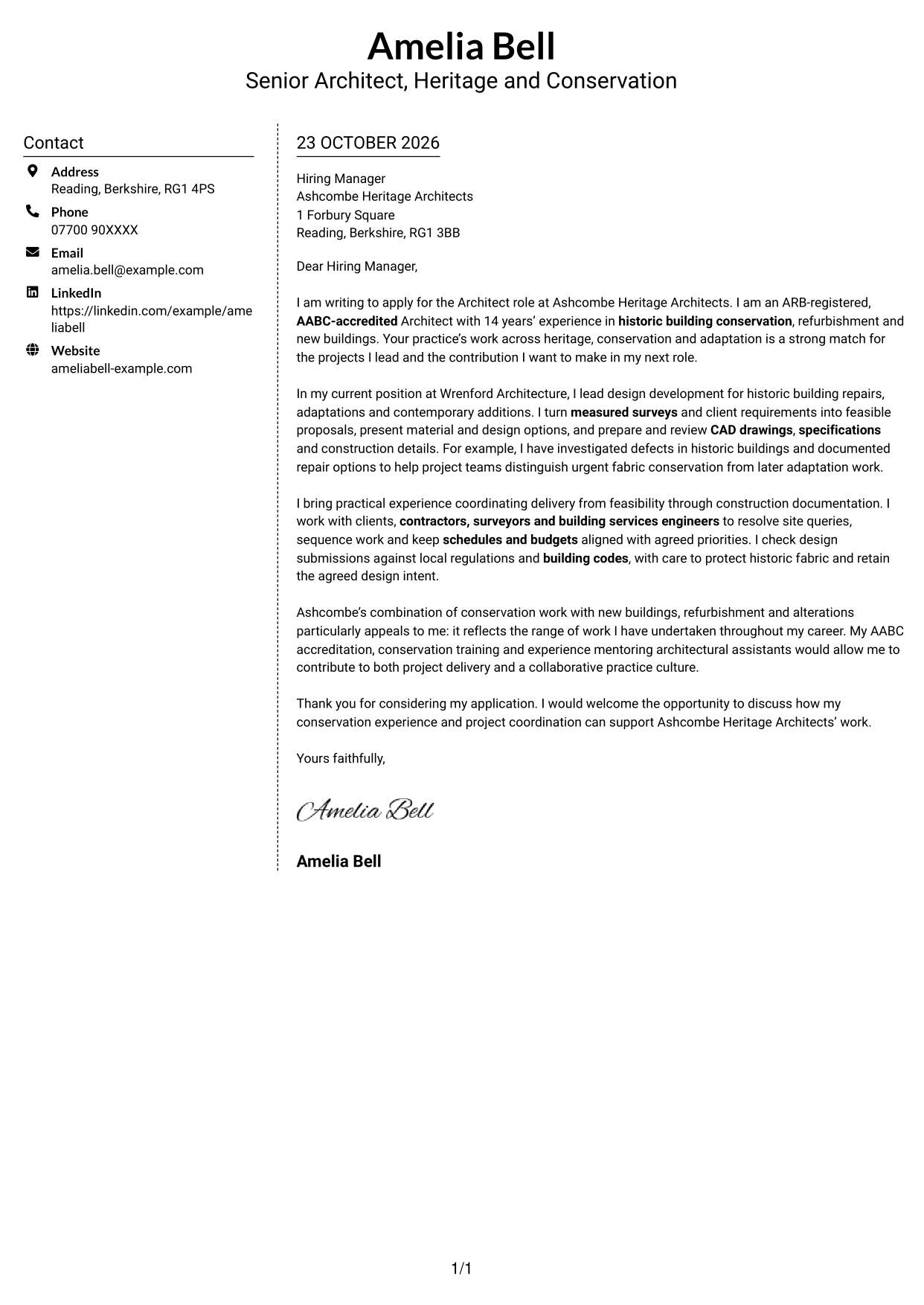
Why This Format Works
- Contact information sits apart from the continuous letter body in its own sidebar.
- One reading column keeps the motivation and supporting case together.
- Paragraph breaks help distinguish the letter's evidence from its practice interest.
Best For
- Sidebar contact organisation
- One-column letter arguments
- Distinct motivation and evidence paragraphs
- Practice-fit explanations
- Letters with clear contact details
#6 Modern Icon Format Cover Letter Example
Contact icons provide visual cues beside the continuous letter body, helping readers recognise the contact area without dividing the message.
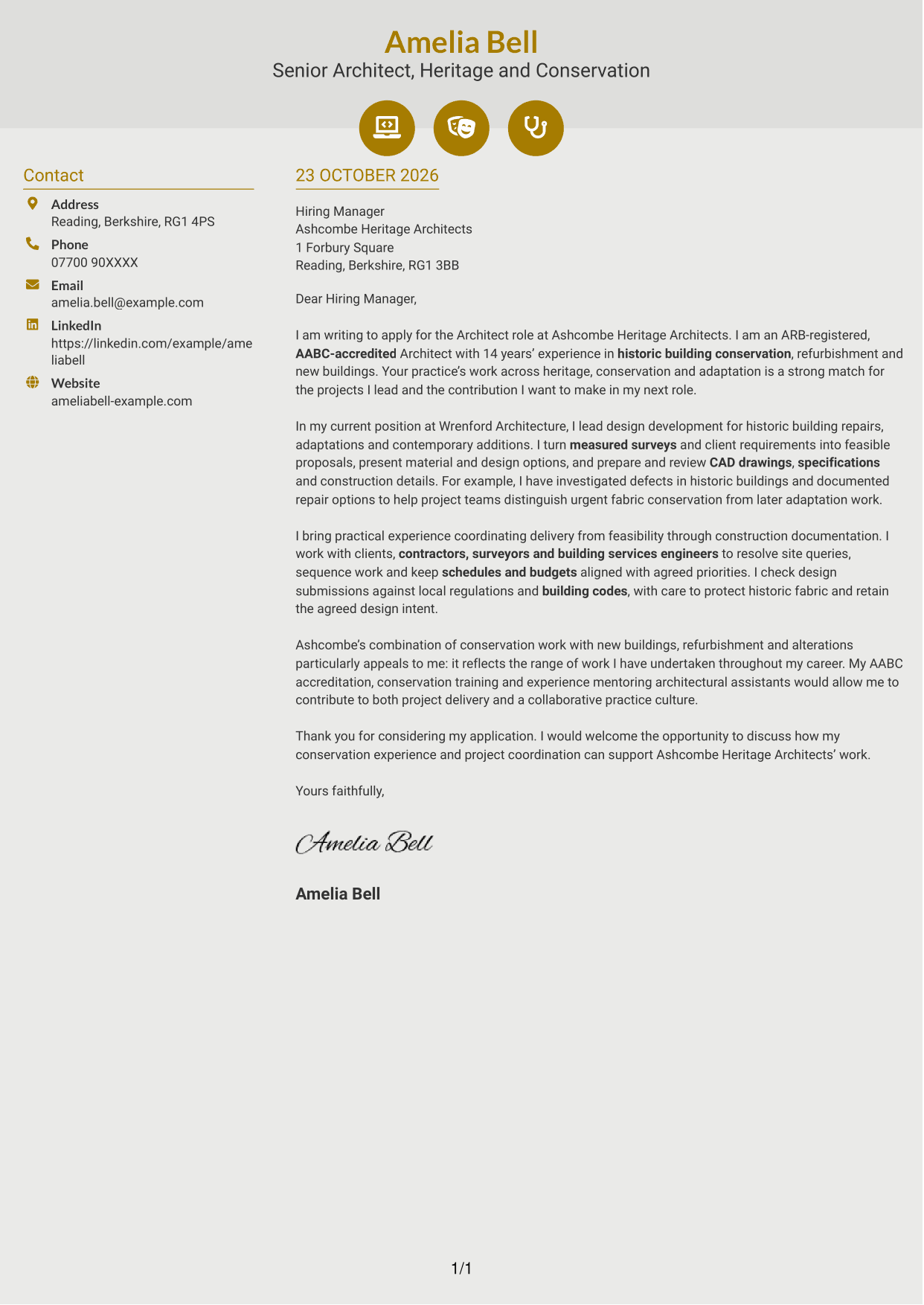
Why This Format Works
- Contact icons provide visual cues for details in the sidebar.
- One letter column keeps the message in a single reading sequence.
- Icons decorate contact or header areas, rather than marking argument stages.
Best For
- Icon-led contact details
- Separate contact and message areas
- Letters with a clear paragraph sequence
- A single-column letter argument
- Quick contact-detail reference
#7 Creative Two Tone Format Cover Letter Example
The contact sidebar and continuous letter body form two clear columns, keeping sender details apart from the written case.
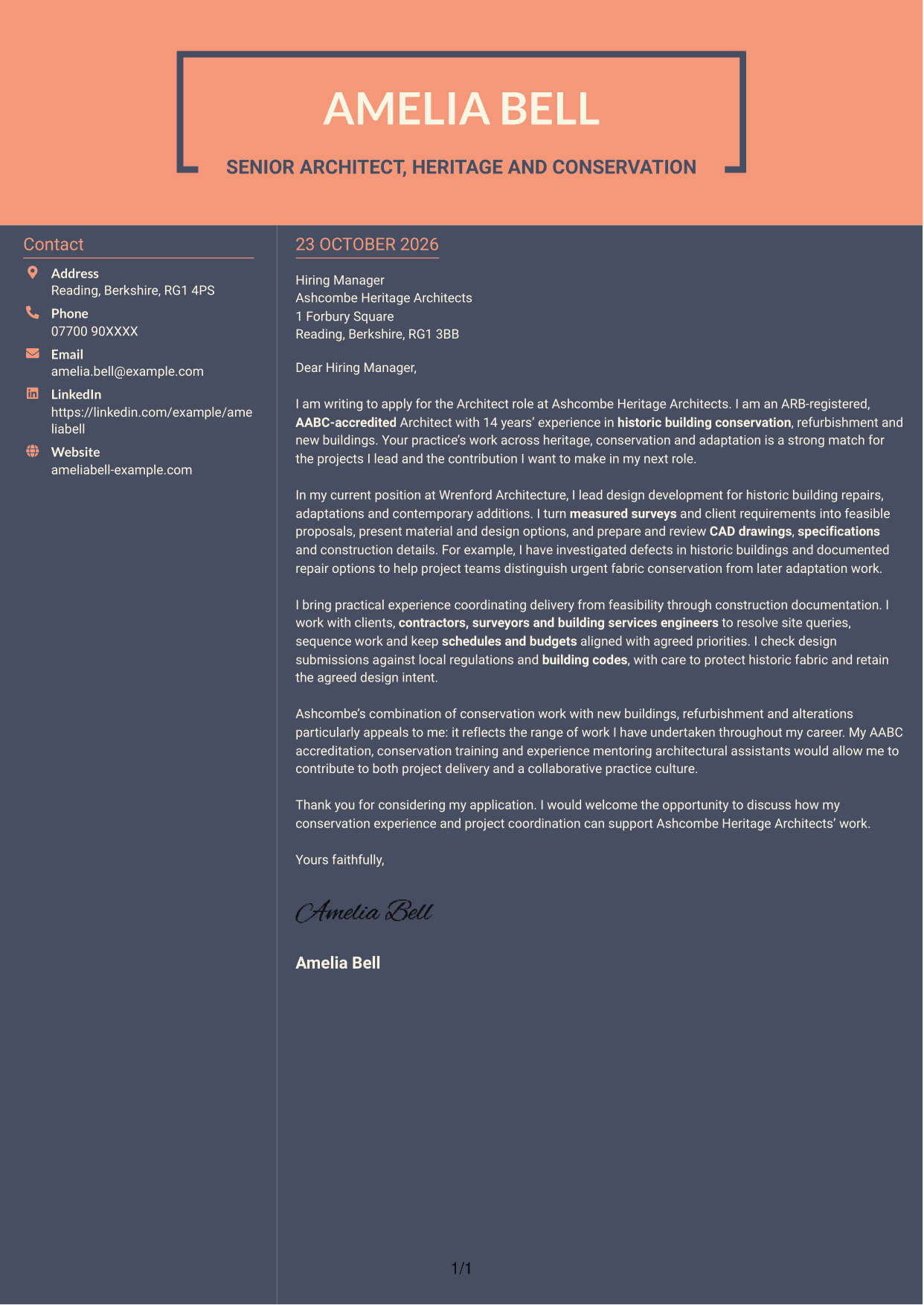
Why This Format Works
- The contact sidebar gives sender details a separate place beside the letter.
- One body column lets the message develop without parallel argument text.
- Paragraph breaks separate the application, supporting case and practice interest.
Best For
- Side-by-side contact and message areas
- One-column argument text
- Applications with several evidence points
- Practice-specific motivation
- Separate sender details
See Also
- 7 Qualified Architect - Heritage and Conservation CV Templates with Example
- 7 Newly Qualified Architect - Commercial and Industrial CV Templates with Example
- 7 AI Solution Architect - Agentic AI CV Templates with Example
- 7 AI Solution Architect - GCP / Agentic AI CV Templates with Example
- 7 Architect - Retail and Commercial CV Templates with Example
- 7 Associate Architect - Architectural Project Delivery CV Templates with Example
- 7 Associate Architect - Education and Healthcare CV Templates with Example
- 7 Business Architect - Capability and Operating Model CV Templates with Example
- 7 Newly Qualified Architect - Commercial and Industrial Cover Letter Templates with Example
- 7 AI Solution Architect - Agentic AI Cover Letter Templates with Example
Frequently Asked Questions
What should a Qualified Architect - Heritage and Conservation cover letter highlight?
Show how your experience supports the repair and adaptation of historic buildings. Relevant examples may cover building surveys, conservation proposals, suitable materials, detailed documentation and coordination with clients and construction professionals.
How can I show that my experience fits this role?
Choose a specific example and explain your actions and their value. For instance, describe how you assessed a building defect, recorded repair options or resolved a design issue while protecting historic fabric.
How should I explain my interest in Ashcombe Heritage Architects?
Connect a genuine interest in the practice’s work across conservation, new buildings, refurbishment and alterations with the contribution you could make. Refer only to details you have checked and can discuss clearly.
How should I structure this cover letter?
Open with the role and a clear reason for applying. Use the body to present focused evidence of conservation and project delivery, then close by restating your interest and inviting a discussion.
Should I include every part of my work history?
No. Select the experience that best supports your fit for this position. A small number of clear, relevant examples will make your case easier to follow.