7 Software Engineer - High-Performance Java / Low Latency CV Templates with Example
This guide shows you how to create a Software Engineer - High-Performance Java / Low Latency CV that presents your evidence clearly. It explains how to organise your experience and choose a format that makes performance-focused work easy to review.
A strong CV for this role connects engineering decisions to reliable, measurable system behaviour. Clear evidence can show how you have worked with JVM performance, concurrent services, networking and production diagnostics.
Explore the example presented in 7 layouts, compare their PNG image previews, and open a preferred example in the editor to customise it. The guidance also covers ATS readability, useful CV sections and role-specific terms such as garbage collection optimisation, Aeron, Java Unsafe, JNI, JNR-FFI, shared memory and TCP/UDP.
What Makes a Great Software Engineer - High-Performance Java / Low Latency CV in 2026
A strong CV makes your Java performance work, system design and results easy to scan. Use concise bullets to show how you tested and improved throughput, latency or reliability.
Include relevant evidence and keywords such as JVM tuning, memory profiling, event-driven design, concurrency, Aeron, TCP/UDP and Linux. Add figures only when you can support them.
Note: CV examples are for educational purposes only. Use only information that accurately reflects your experience and qualifications. References to real organisations do not imply affiliation or endorsement.
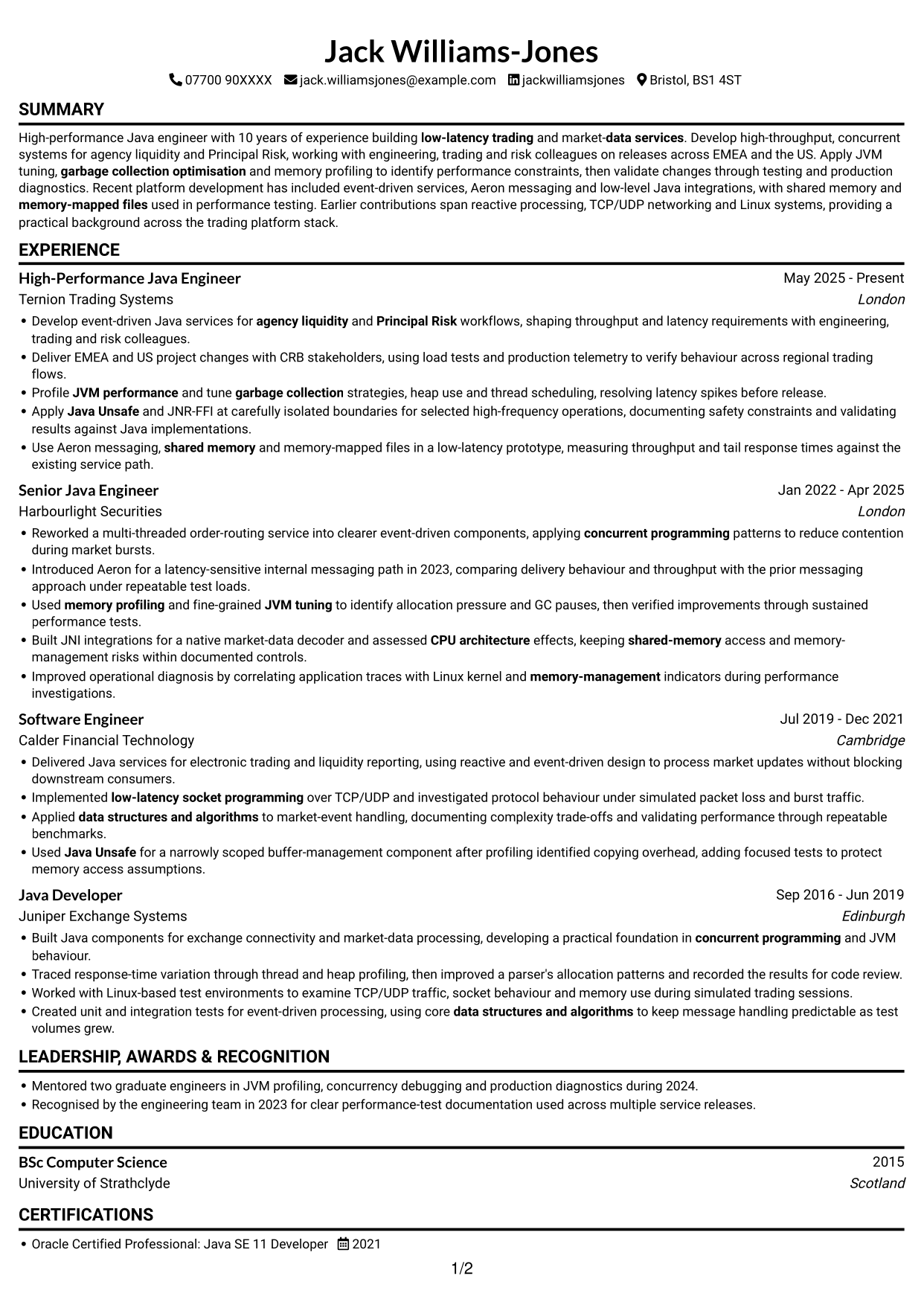
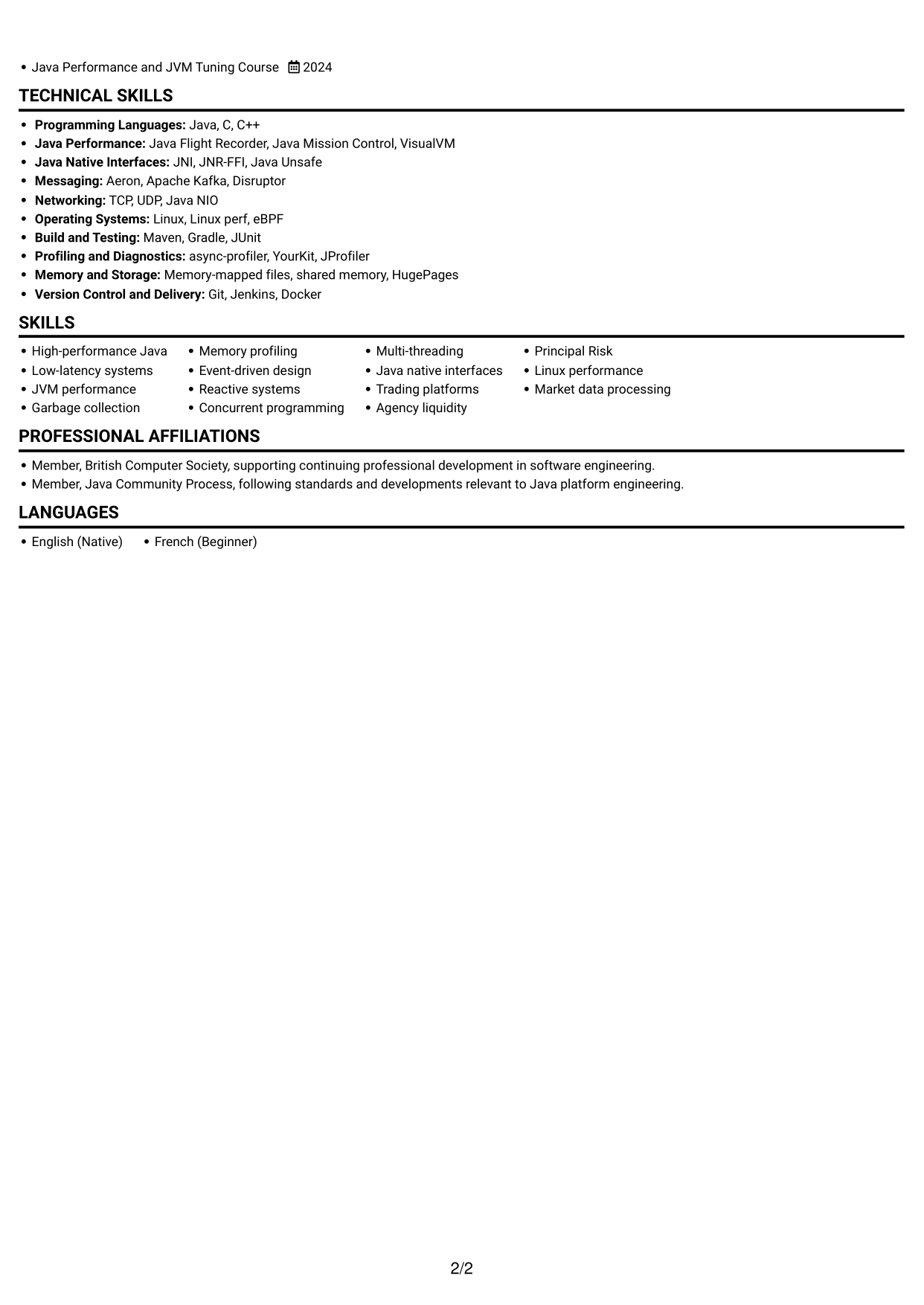
#1 Simple One Column Format CV Example
The Simple One Column Format keeps the CV in one reading path, so readers can follow work history and supporting sections in sequence.
Why This Format Works
- Career history follows a single reading path, making role progression straightforward to review.
- Skills and technical tools can be grouped without competing with experience details.
- Education and certifications fit into the same clear sequence as professional experience.
Best For
- Chronological work histories
- Text-first CV applications
- Technical skills alongside career details
- Education and credentials in sequence
- Straightforward recruiter review
CV Keywords
- High-performance Java engineer
- low-latency trading and market-data services
- Profile JVM performance and tune garbage collection strategies, heap use and thread scheduling
- JVM tuning
- garbage collection optimisation
- memory profiling
- Develop event-driven Java services
- Reactive systems
- concurrent programming
- Multi-threading
- data structures and algorithms
- Java Unsafe
- CPU architecture
- shared memory
- memory-mapped files
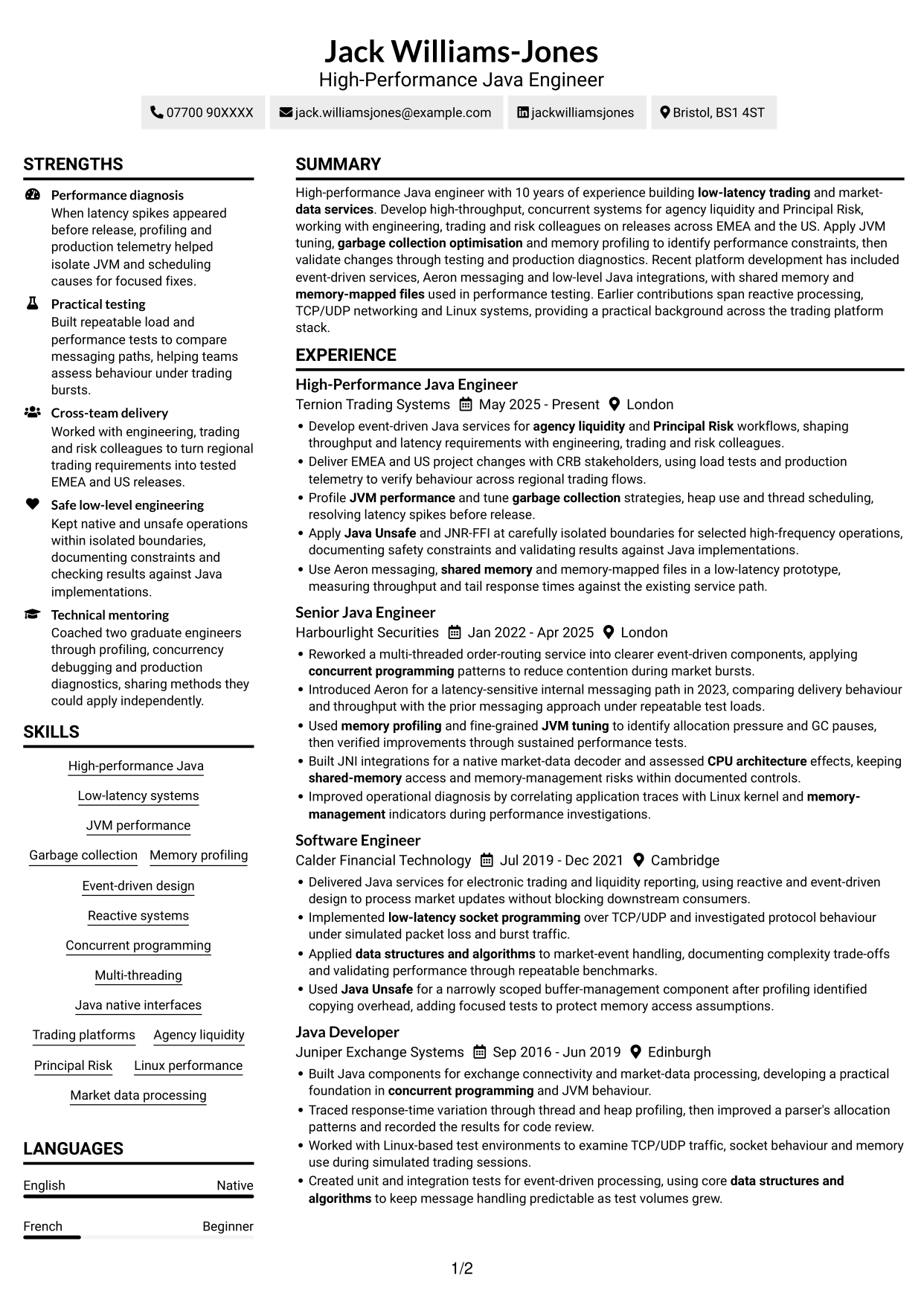
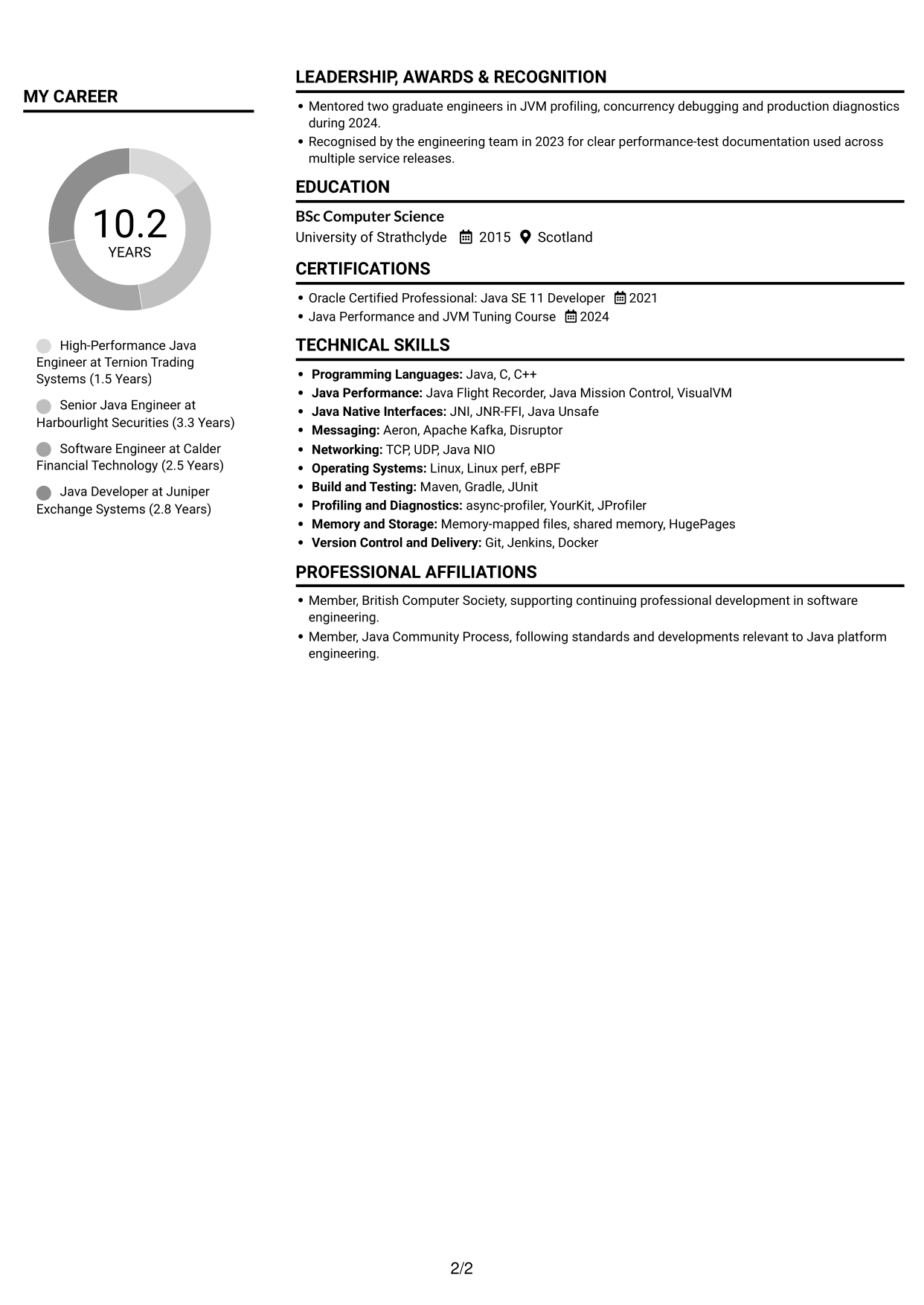
#2 Simple Two Column Format CV Example
The Simple Two Column Format arranges CV content in two columns, offering a compact way to present experience alongside supporting sections.
Why This Format Works
- The two-column structure gives experience and supporting sections distinct places to scan.
- Career entries are easier to compare when dates and role details stay clearly grouped.
- Skills and education can sit apart from employment history without losing document context.
Best For
- CVs with several content areas
- Experience beside supporting details
- Separate skills and employment sections
- Quick comparison of career entries
- Compact organisation of varied information
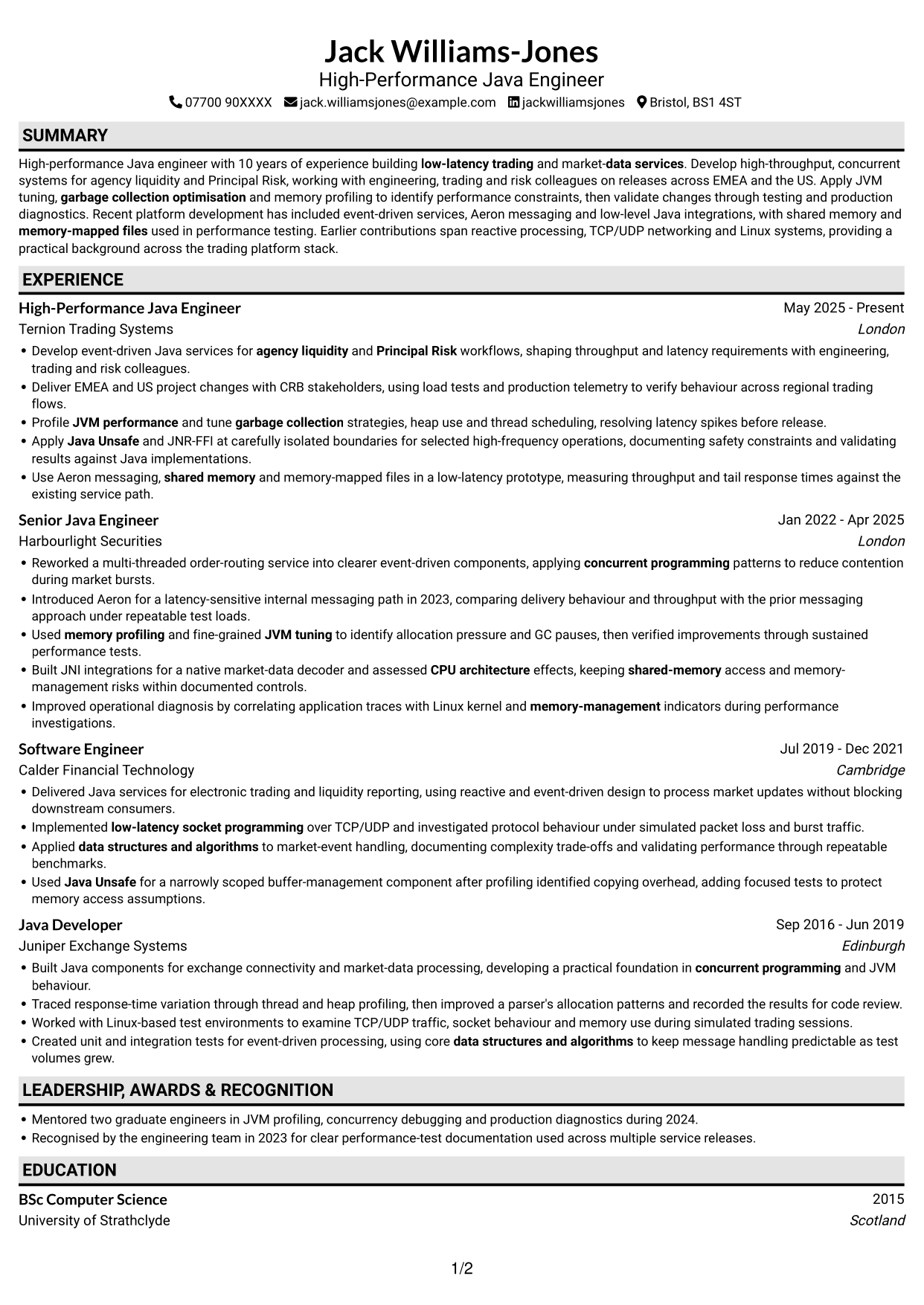
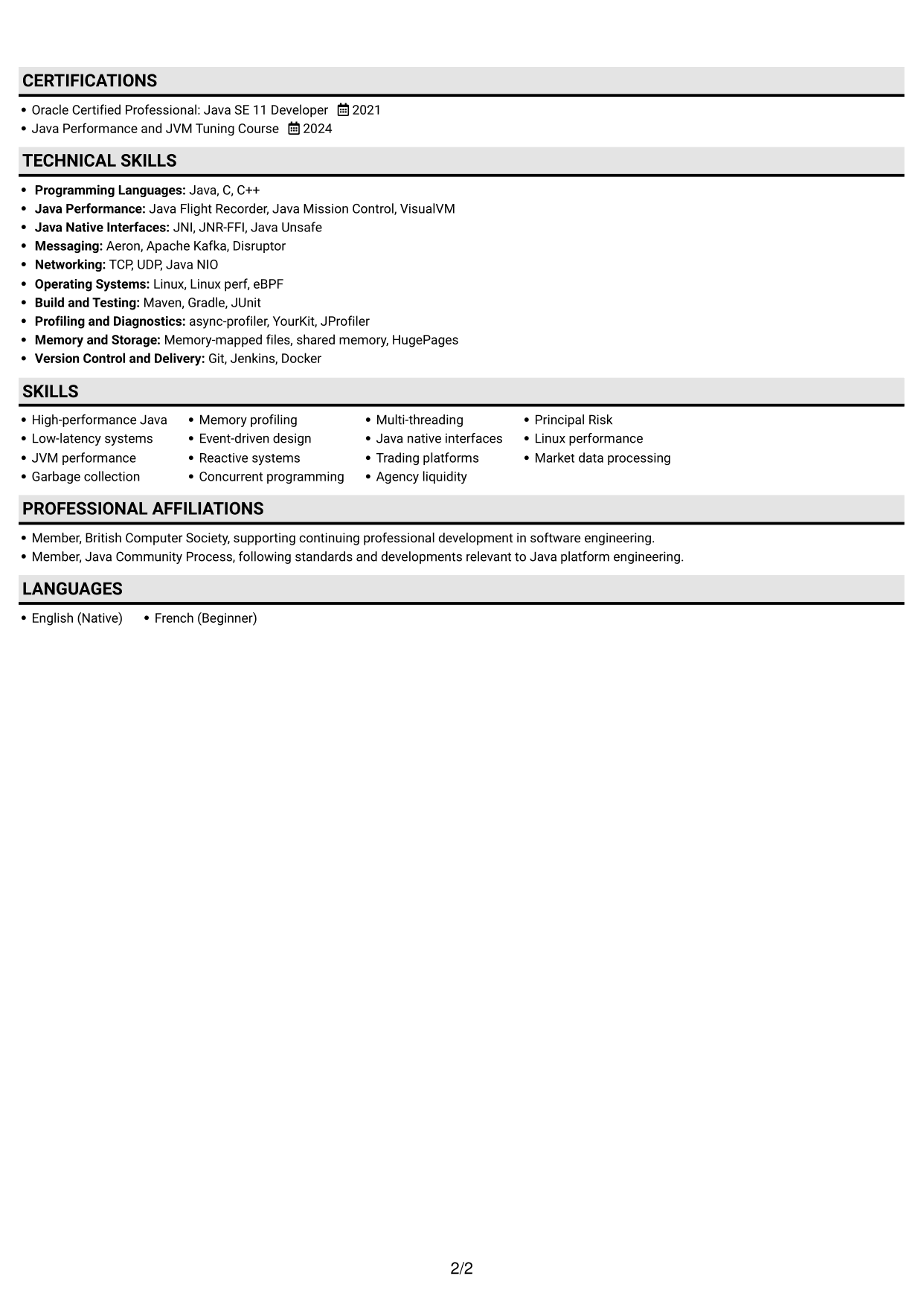
#3 Plain One Column with Shaded Labels CV Example
The Plain One Column with Shaded Labels format keeps the CV content in one top-to-bottom reading order, linking work history with skills and credentials.
Why This Format Works
- A single reading order helps reviewers follow career progression from one role to the next.
- Experience details and achievements stay together as the work history unfolds.
- Skills, education and credentials remain part of the same clear document sequence.
Best For
- Step-by-step career histories
- Experience-led CV content
- Skills linked to work history
- Qualifications within a single sequence
- Readers who prefer one reading path
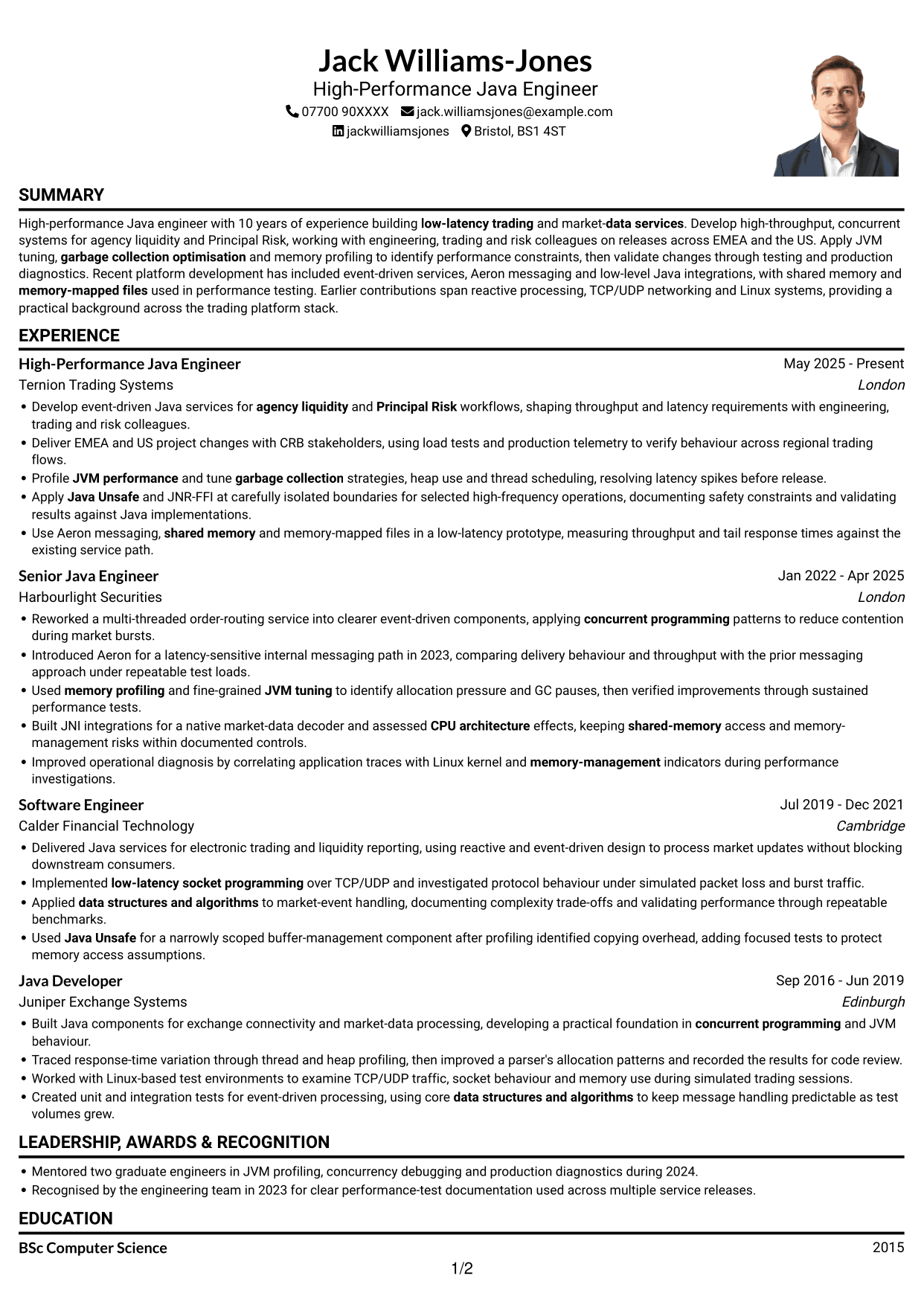
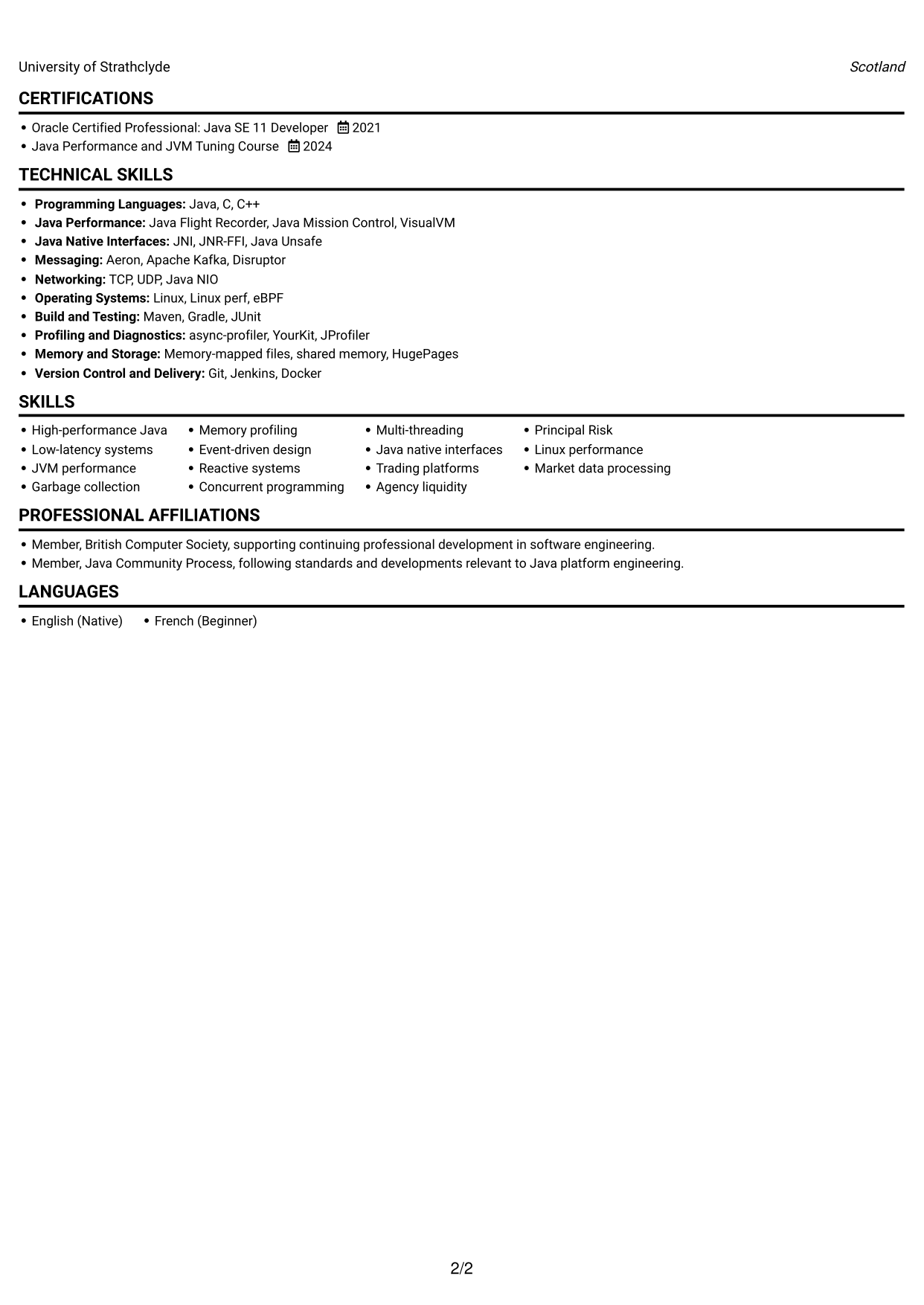
#4 One Column Format with Photo Right CV Example
The One Column Format with Photo Right combines a one-column CV body with a photo, keeping the written sections in a direct reading order.
Why This Format Works
- The single-column body lets readers follow experience and career dates in sequence.
- Skills and education remain easy to locate within the same reading path.
- A photo adds a visual element without dividing the written CV into columns.
Best For
- CVs with a photo
- One-path reading preference
- Sequential work histories
- Skills and education in one flow
- Applications where a portrait is preferred
#5 Clean Two Column Sidebar Format CV Example
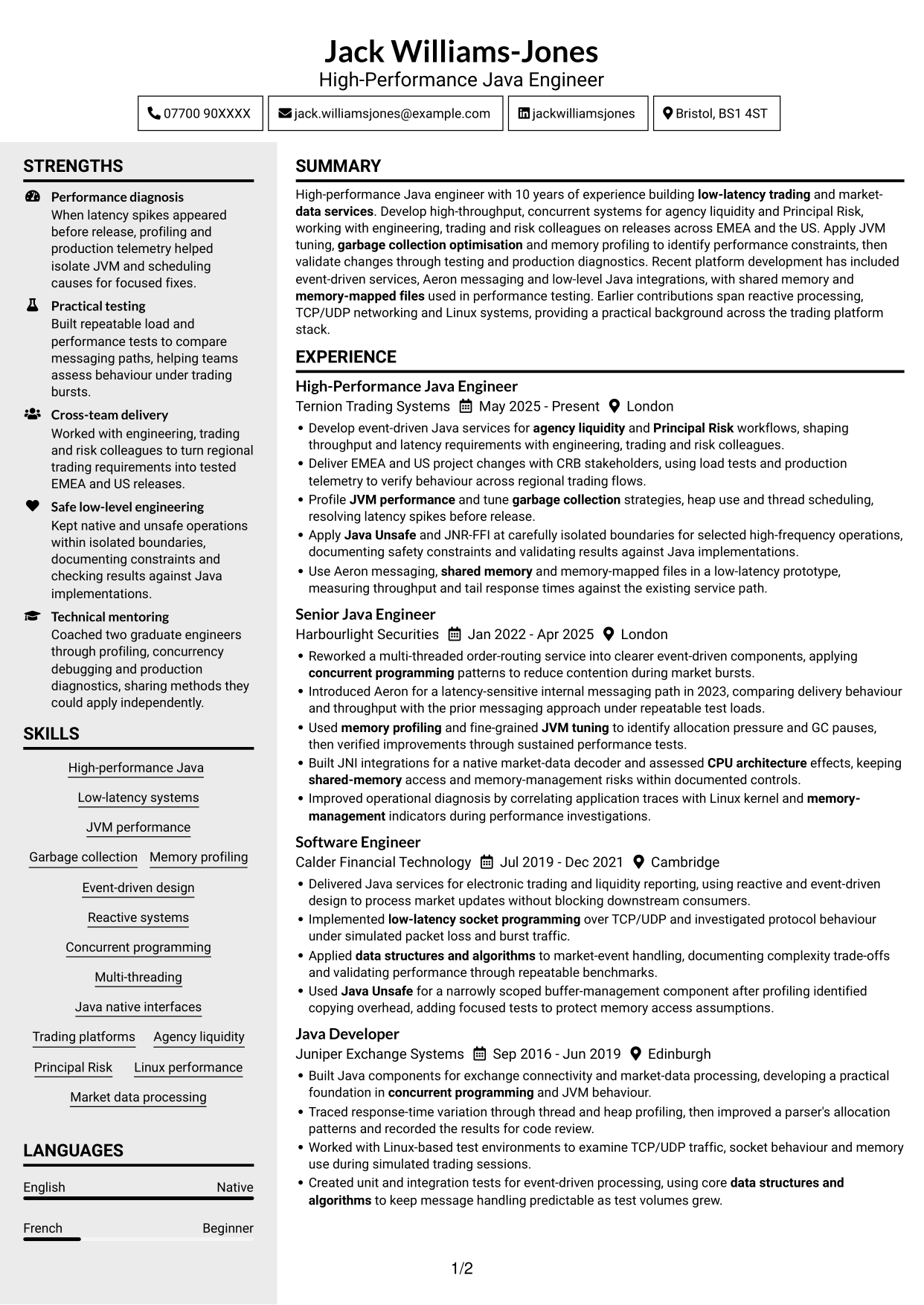
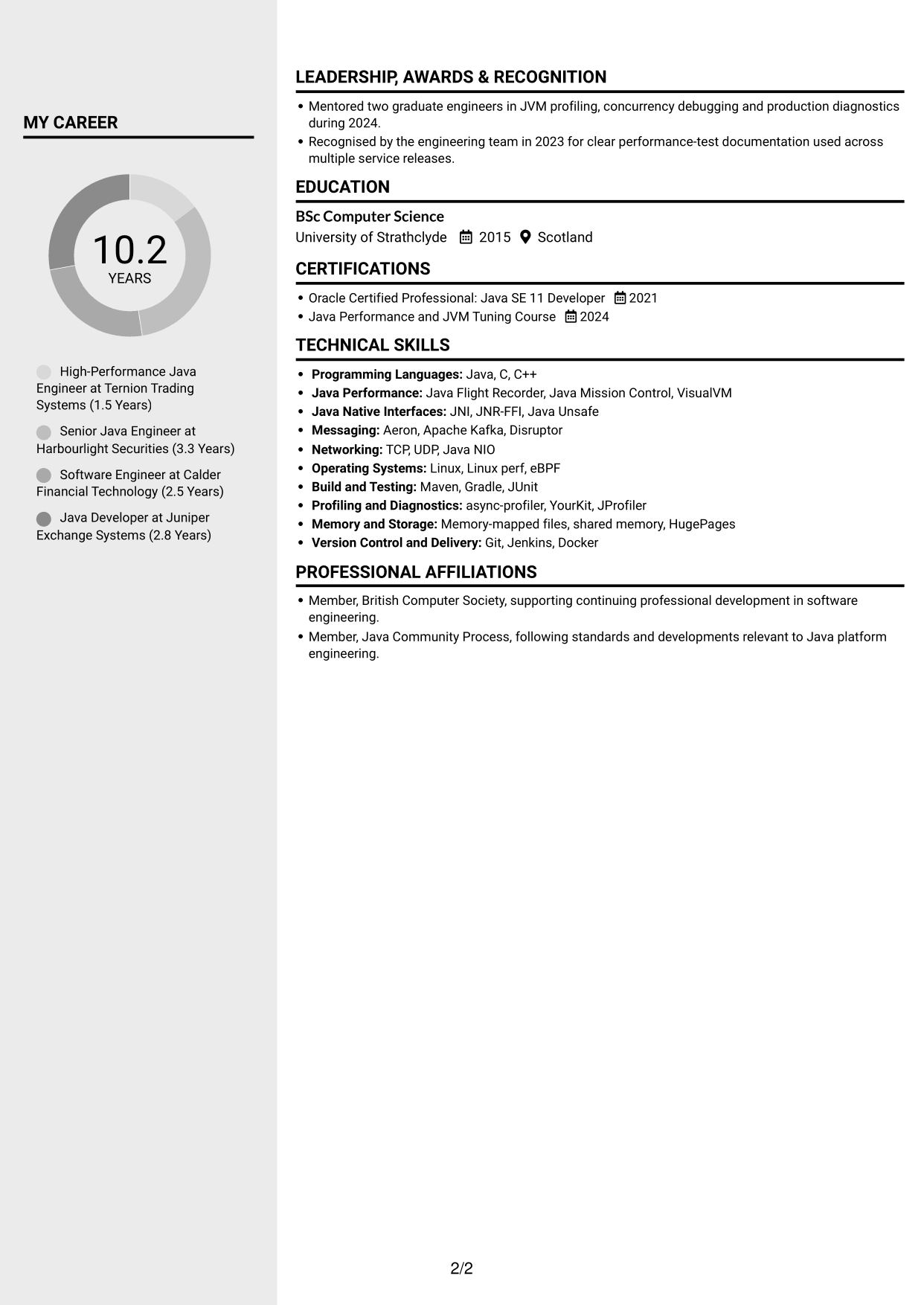
The Clean Two Column Sidebar Format separates CV information across two columns, giving career history and supporting details distinct areas.
Why This Format Works
- Separate columns help readers move between work history and supporting CV details.
- Career entries can be reviewed together without merging them with skills and education.
- The layout gives varied sections distinct places while keeping them within one document.
Best For
- CVs with varied section types
- Career history beside supporting details
- Separate skills and education areas
- Photo-free CV applications
- Readers comparing experience and qualifications
#6 Two Column Format CV Example
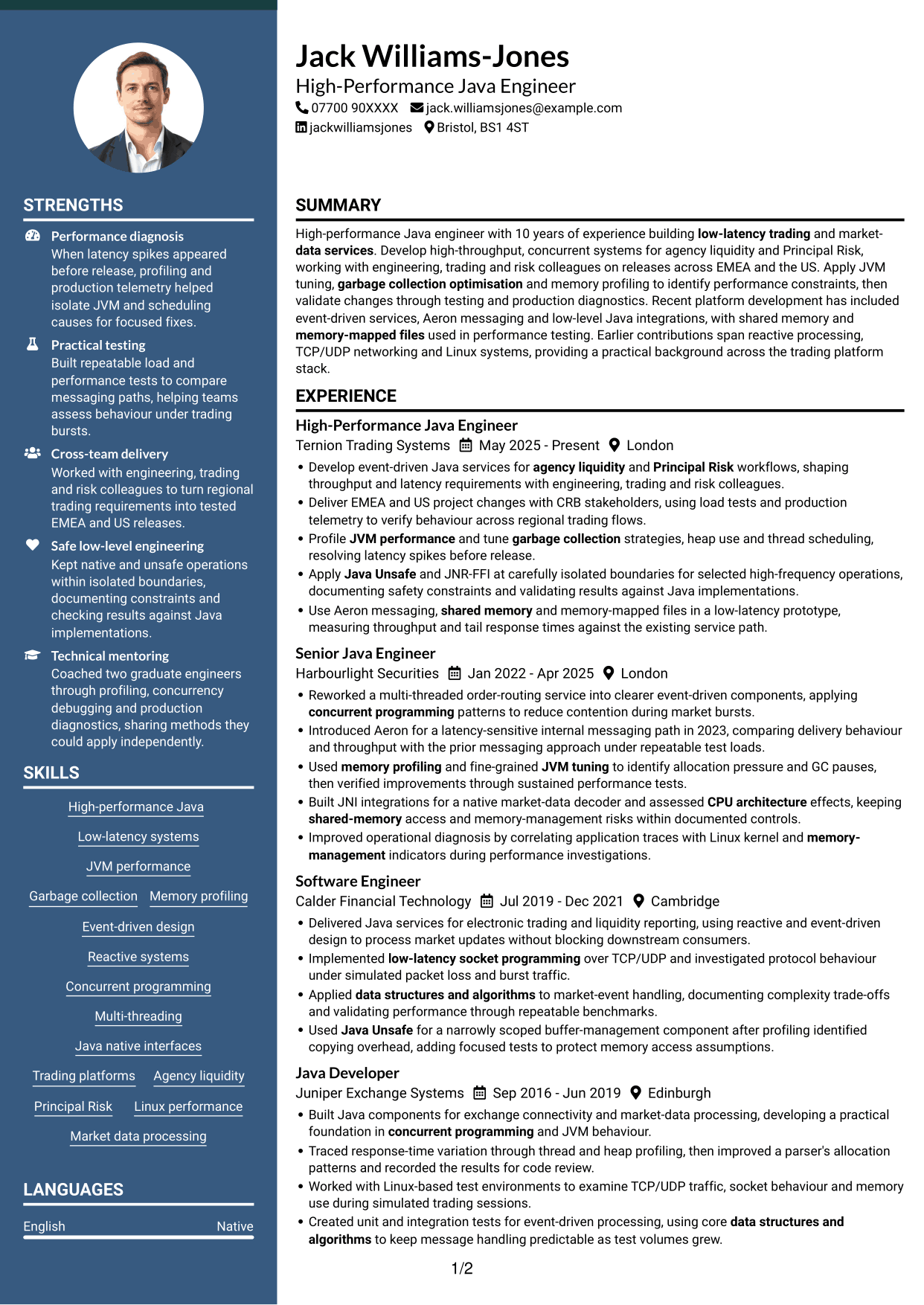
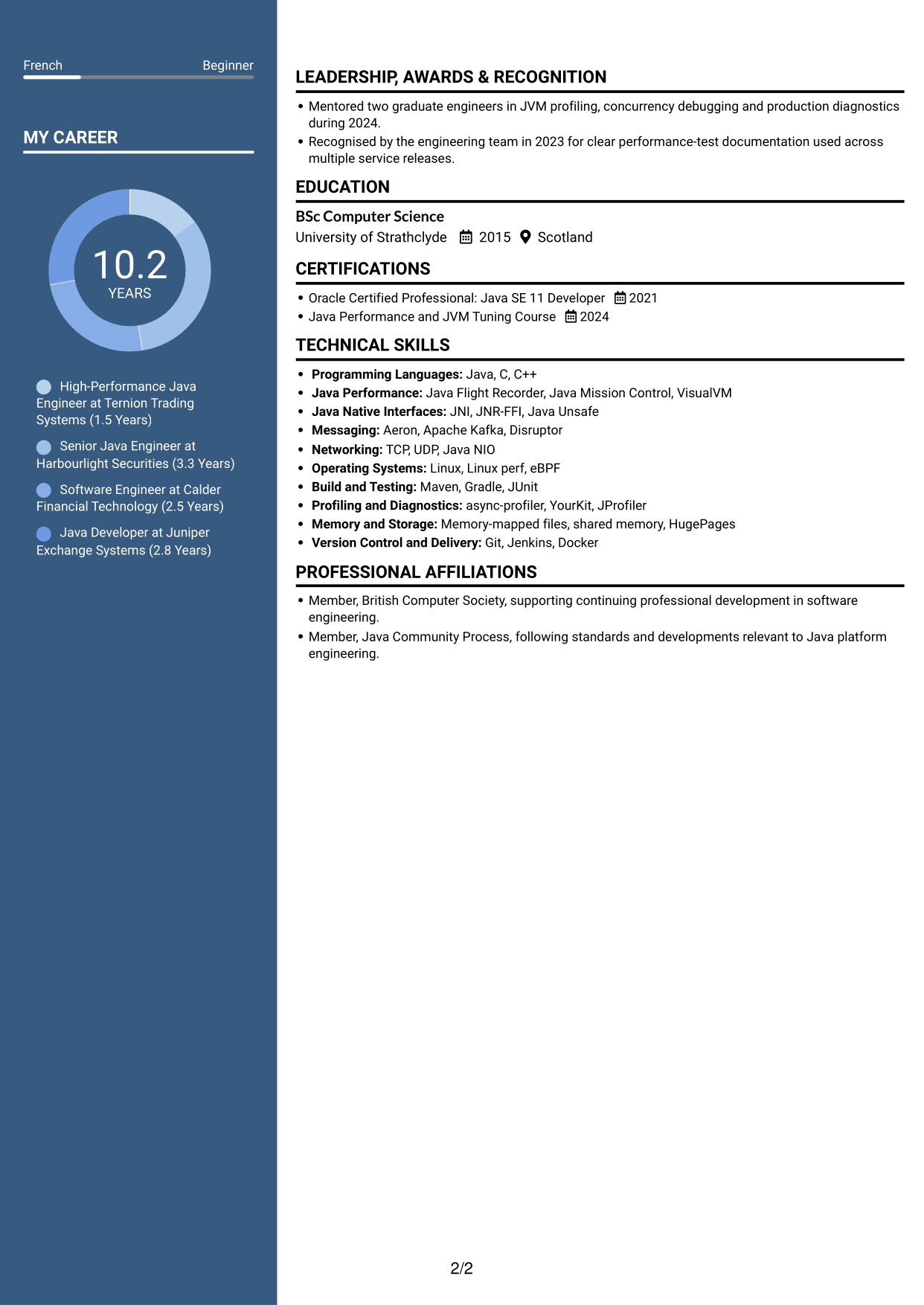
The Two Column Format places CV information in two columns, creating a compact layout for reviewing career history and related sections.
Why This Format Works
- The two-column arrangement lets readers locate career history and supporting sections separately.
- Related role details remain grouped, helping reviewers compare experience across positions.
- Skills and qualifications have room apart from the employment record.
Best For
- Compact CV organisation
- Career records with supporting sections
- Experience compared across roles
- Skills and qualifications apart from jobs
- Readers scanning several information types
#7 Photo Header Two Column Format CV Example
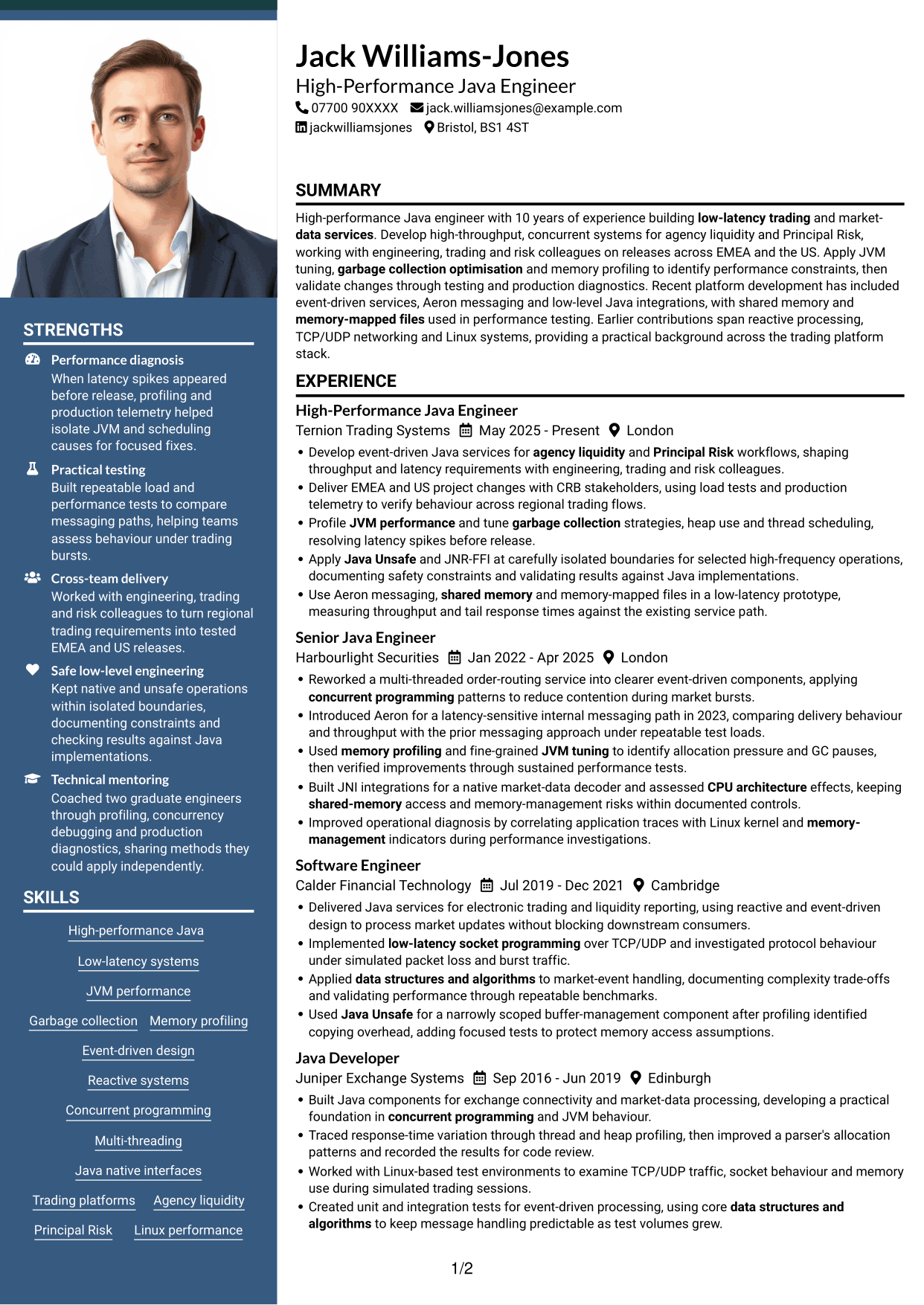
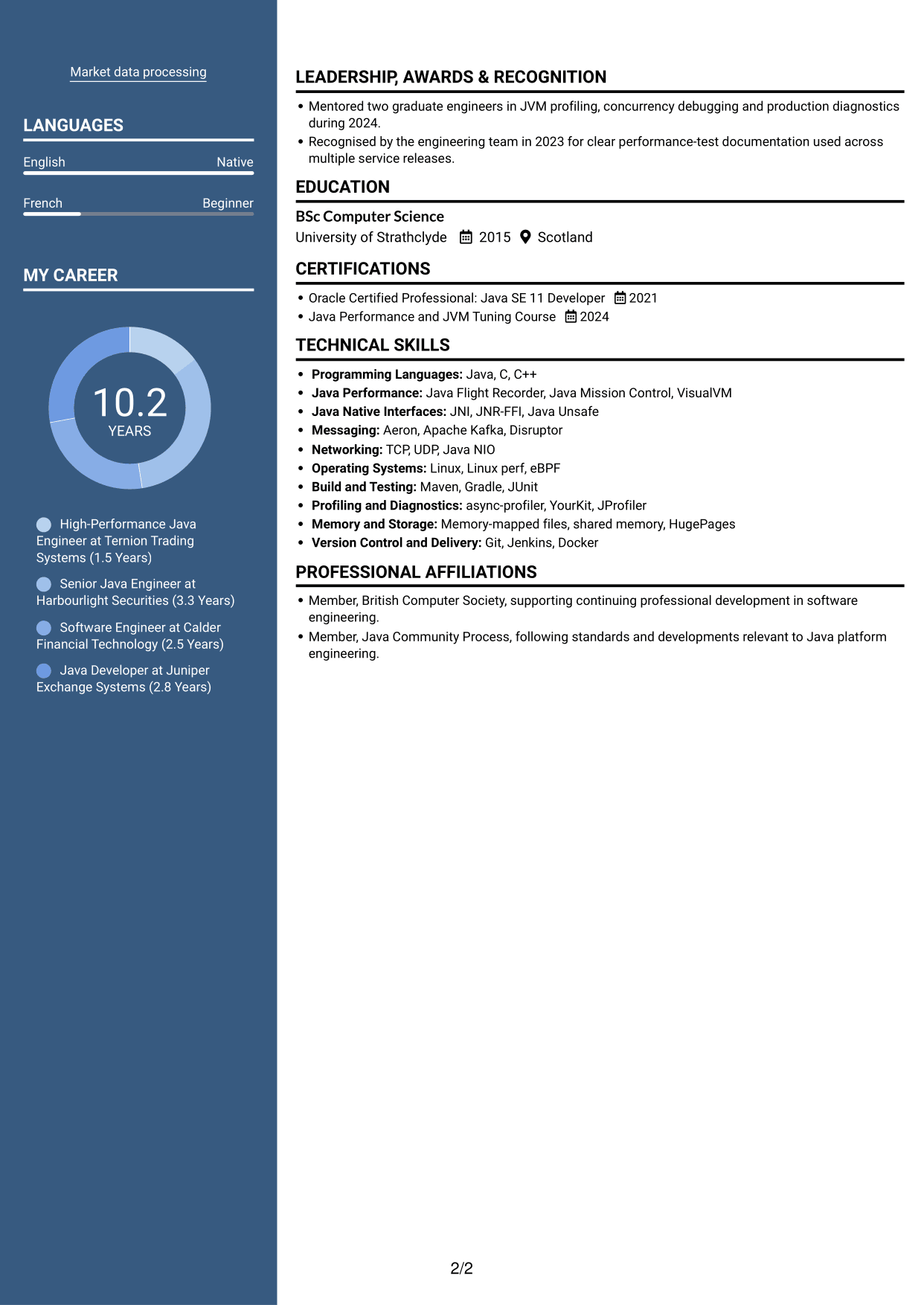
The Photo Header Two Column Format combines a photo with a two-column CV body, balancing visual identification with organised written sections.
Why This Format Works
- Two columns give work history and supporting information separate areas for review.
- The photo provides a visual identifier while the written sections retain a clear order.
- Skills and education can be reviewed apart from the career record.
Best For
- Two-column CV organisation
- CVs where a photo is preferred
- Career history with related details
- Skills and education beside experience
- Visual identification with structured content
Why Build Your Software Engineer - High-Performance Java / Low Latency CV with ResumeInMinutes
ResumeInMinutes helps you organise your Java engineering experience, skills and education in a clear CV. Compare PNG image previews, then open an example in the editor to customise its content and layout.
- Different CV layouts
- Clear, readable section structure
- Space for role-specific keywords
- Organised skills and experience
- PNG image previews
- CV customisation in the editor
Choose a format that makes your technical evidence easy to follow. Keep the focus on performance work, sound testing, production diagnostics and the systems you have helped deliver.
See Also
- Full Stack Lead Software Engineer CV Guide (Java, Spring Boot, AWS) (Examples + Free PDF Downloads)
- 7 Java Software Engineer - Cross-Domain Security CV Templates with Example
- 7 Lead Software Engineer - Java, Spring Boot, AWS CV Templates with Example
- 7 Principal Software Engineer - Java and Enterprise Integration CV Templates with Example
- Principal Software Engineer CV Guide (Java, AWS) (Examples + Free PDF Downloads)
- 7 AI Software Engineer CV Templates with Example
- 7 Associate Backend Software Engineer - Network Modelling CV Templates with Example
- 7 Principal Full-Stack Software Engineer - Python, Data and AI CV Templates with Example
- 7 Software Engineer - High-Performance Java / Low Latency Cover Letter Templates with Example
- 7 Java Software Engineer - Cross-Domain Security Cover Letter Templates with Example
Frequently Asked Questions
Are these Software Engineer - High-Performance Java / Low Latency CV templates ATS-friendly?
The examples use clear headings and sections to make key details easier to scan. Use relevant terms naturally, such as JVM tuning, garbage collection optimisation, event-driven systems, concurrency, Aeron, Java Unsafe, JNI and TCP/UDP.
Are these separate CV examples or different layouts of one example?
This page shows one role-focused CV example in different layouts. Compare the PNG image previews, then open an example in the editor to customise it.
What should a Software Engineer - High-Performance Java / Low Latency CV include?
Include a focused summary, relevant experience, technical skills and education. Add evidence of JVM performance work, concurrent and event-driven systems, low-level Java integrations, networking, Linux and production testing where these match your experience.
Which CV layout works well for this role?
Choose a layout with clear headings and an easy-to-follow order for experience, skills and education. A simple structure helps recruiters and applicant tracking systems find important details.
How can I show low-latency engineering results on my CV?
Use concise bullet points to explain the system or performance issue, the work you did and the result. Include supported measures such as throughput, response times or test results when available.
Should I include a photo on my CV?
For UK applications, a photo is usually not needed. Use the space for relevant experience, technical skills and measurable results instead.