7 Space Policy Lead - Spaceflight Regulation Cover Letter Templates with Example
This practical guide to a Space Policy Lead - Spaceflight Regulation cover letter helps you shape a clear, persuasive application across seven layouts.
What Makes a Great Space Policy Lead - Spaceflight Regulation Cover Letter in 2026
A strong letter links your interest in safe, secure and sustainable commercial space activity to the policy and licensing work this role needs. Make your opening direct, then show how your approach supports clear and consistent regulation.
Use relevant evidence, such as developing guidance under the Space Industry Act and Outer Space Act, explaining technical safety evidence, or working with government, industry and international partners. Connect that evidence to the employer’s regulatory aims and explain why the role interests you.
The featured example moves from motivation to policy and licensing evidence, then stakeholder work, leadership and a clear close; adapt this focused progression while choosing a presentation suited to the employer and communication context.
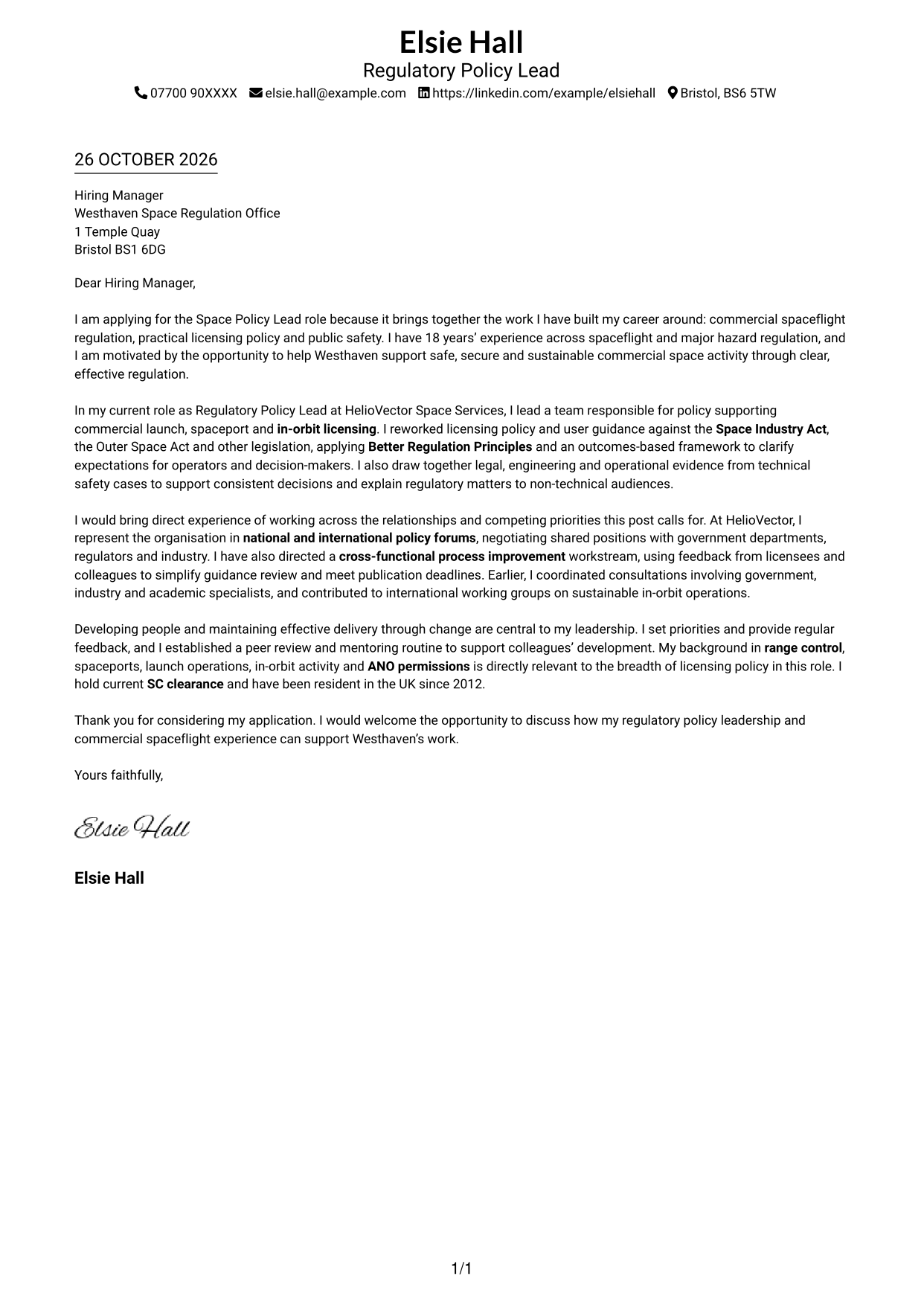
#1 Simple One Column Format Cover Letter Example
Sender details sit in the header, with one letter column keeping the message in a clear reading order.
Why This Format Works
- One reading column keeps the opening, supporting case and closing together.
- Sender details stay in the header rather than interrupting the letter body.
- With no sidebar, contact information does not compete with the letter’s argument.
Best For
- Single-column reading preference
- Contact details in the header
- Connected letter paragraphs
- Photo-free document preference
- A direct reading sequence
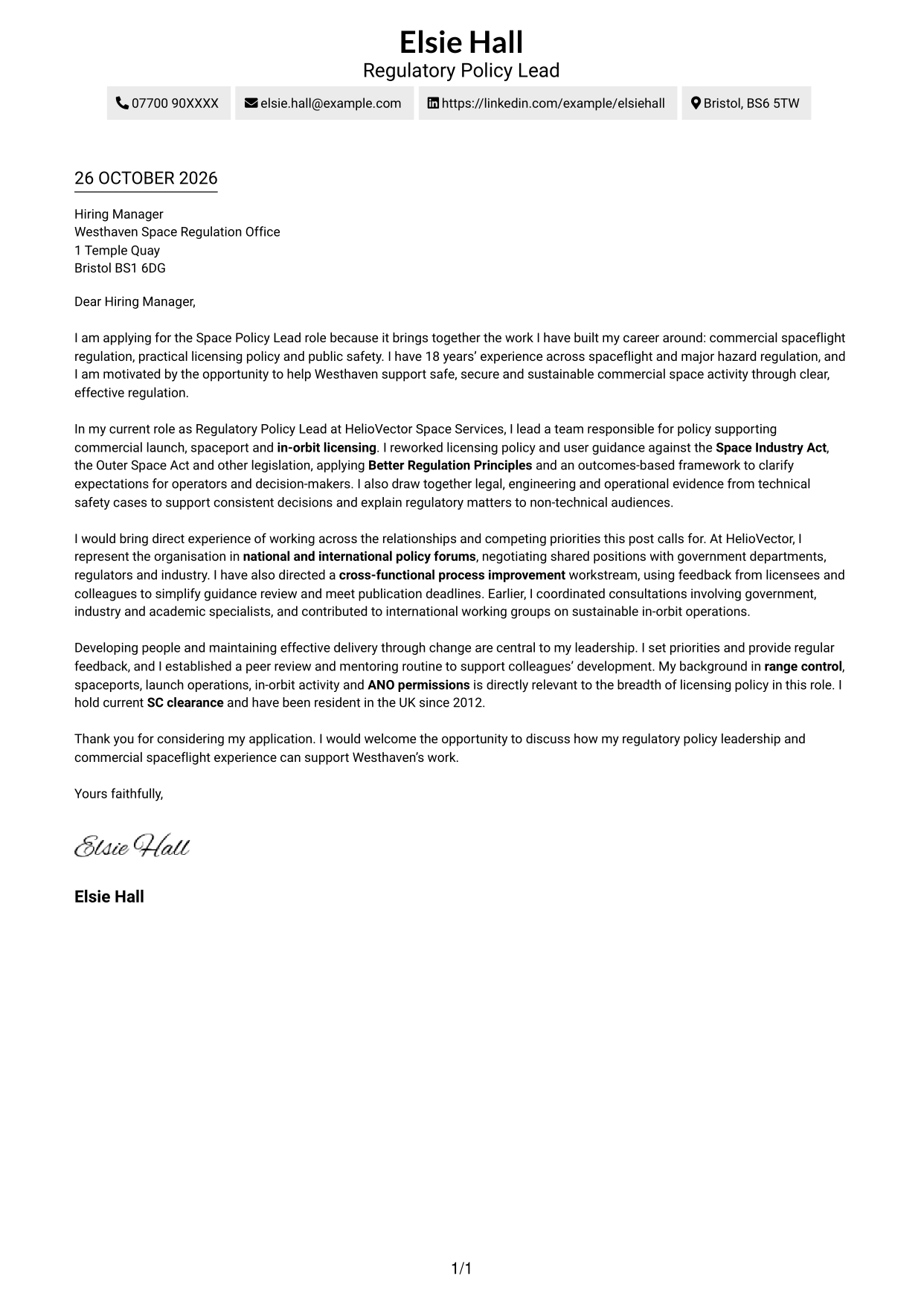
#2 Two Column Format Cover Letter Example
A contact sidebar sits beside one continuous letter body, separating contact details from the written case.
Why This Format Works
- The contact sidebar keeps sender details apart from the letter’s message.
- One continuous body presents motivation and evidence in a single sequence.
- Two distinct areas let readers locate contact information without splitting the letter.
Best For
- Contact and letter areas kept separate
- A single body for the full case
- Quick access to sender details
- Two-column reading preference
- Photo-free document presentation
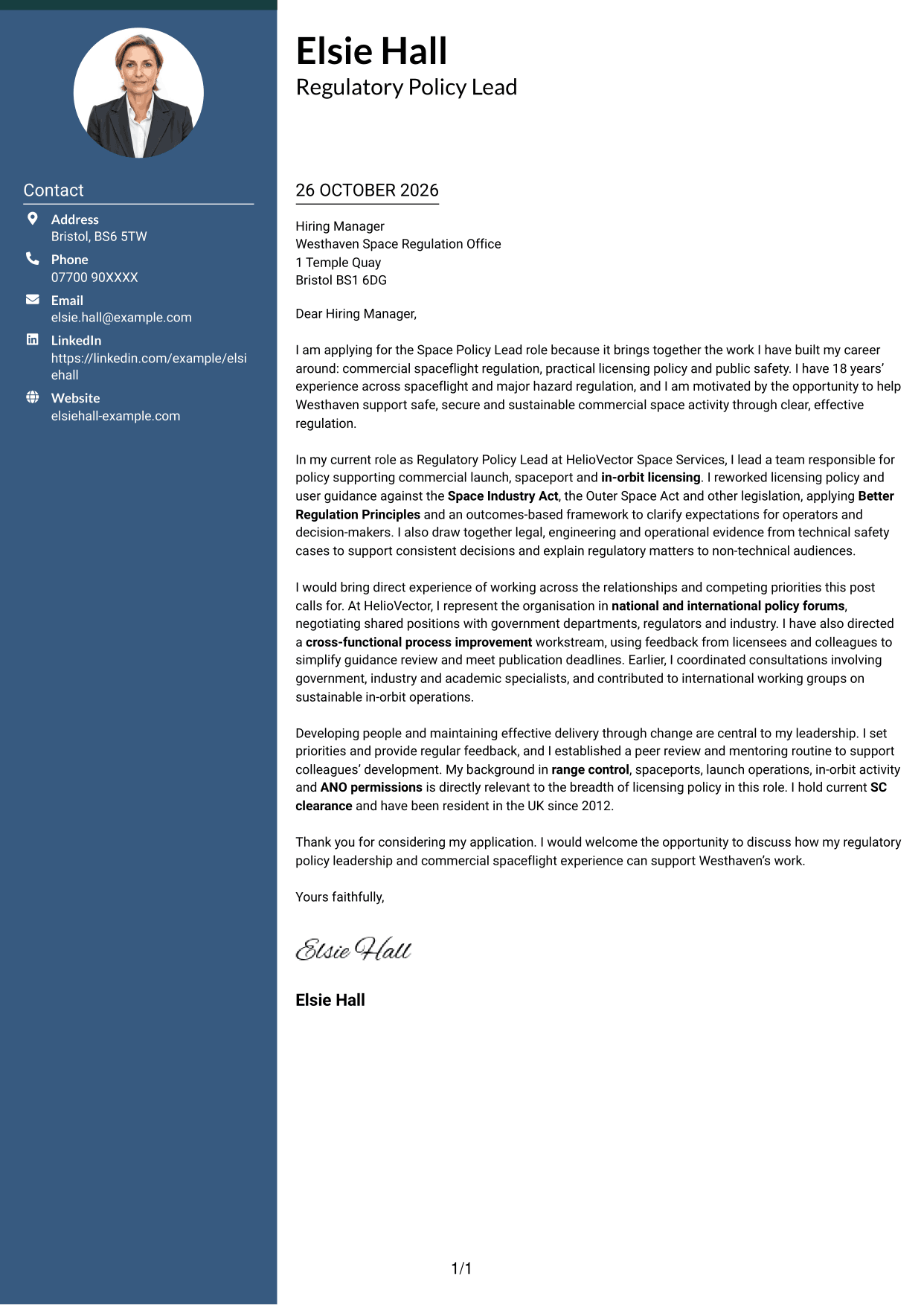
#3 Photo Header Two Column Format Cover Letter Example
A portrait accompanies the contact sidebar, giving this two-column letter a personal visual element while the body stays continuous.
Why This Format Works
- The contact sidebar separates sender details from the letter’s paragraphs.
- A portrait offers a visible personal element for readers who prefer one.
- The continuous body keeps the letter’s opening, evidence and close in sequence.
Best For
- A portrait alongside contact details
- Separate contact and letter areas
- One continuous argument
- Personal visual presentation
- Two-column reading preference
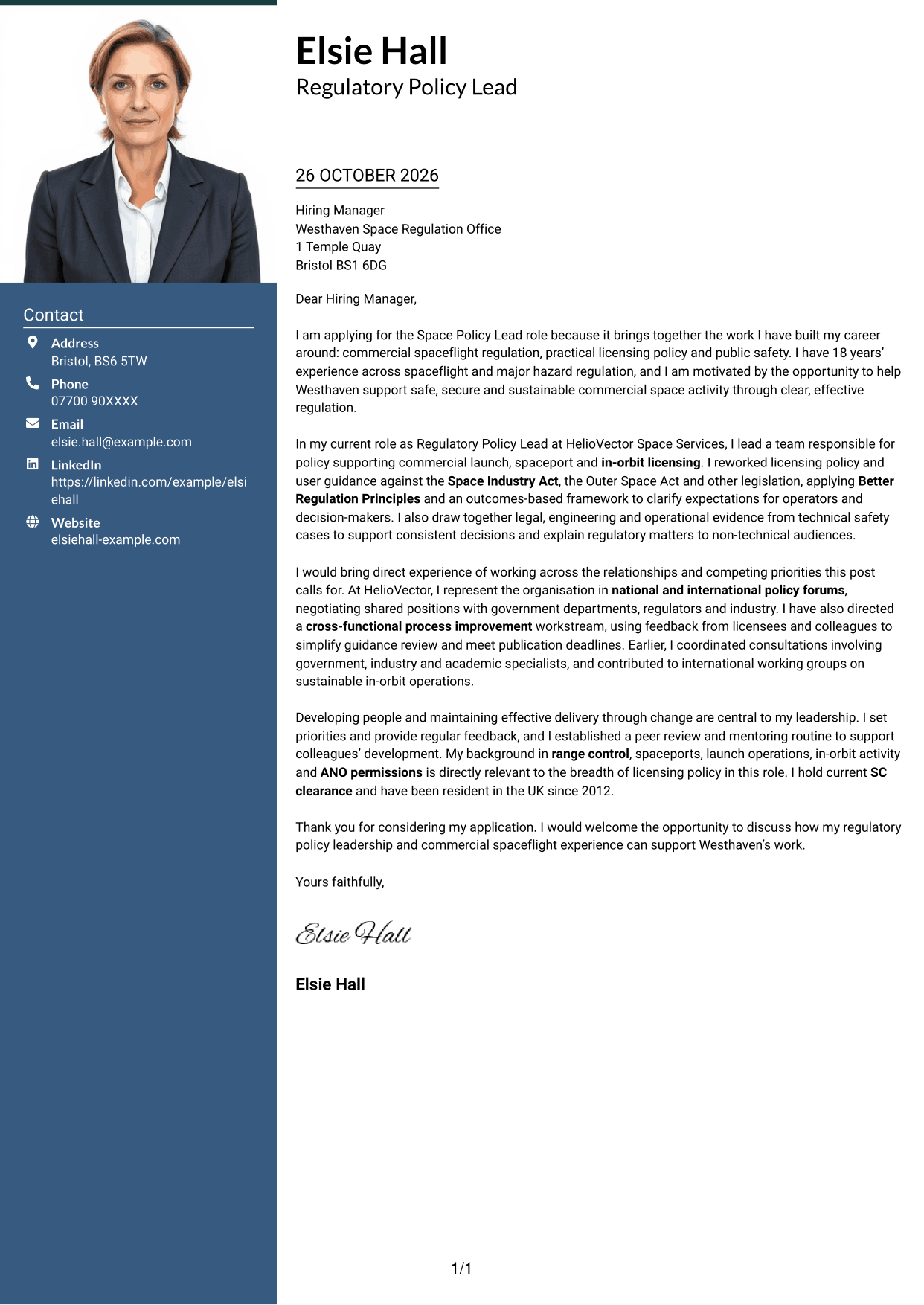
#4 One Column Format with Photo Cover Letter Example
The letter uses one column and includes a photo, pairing a direct reading path with a personal visual element.
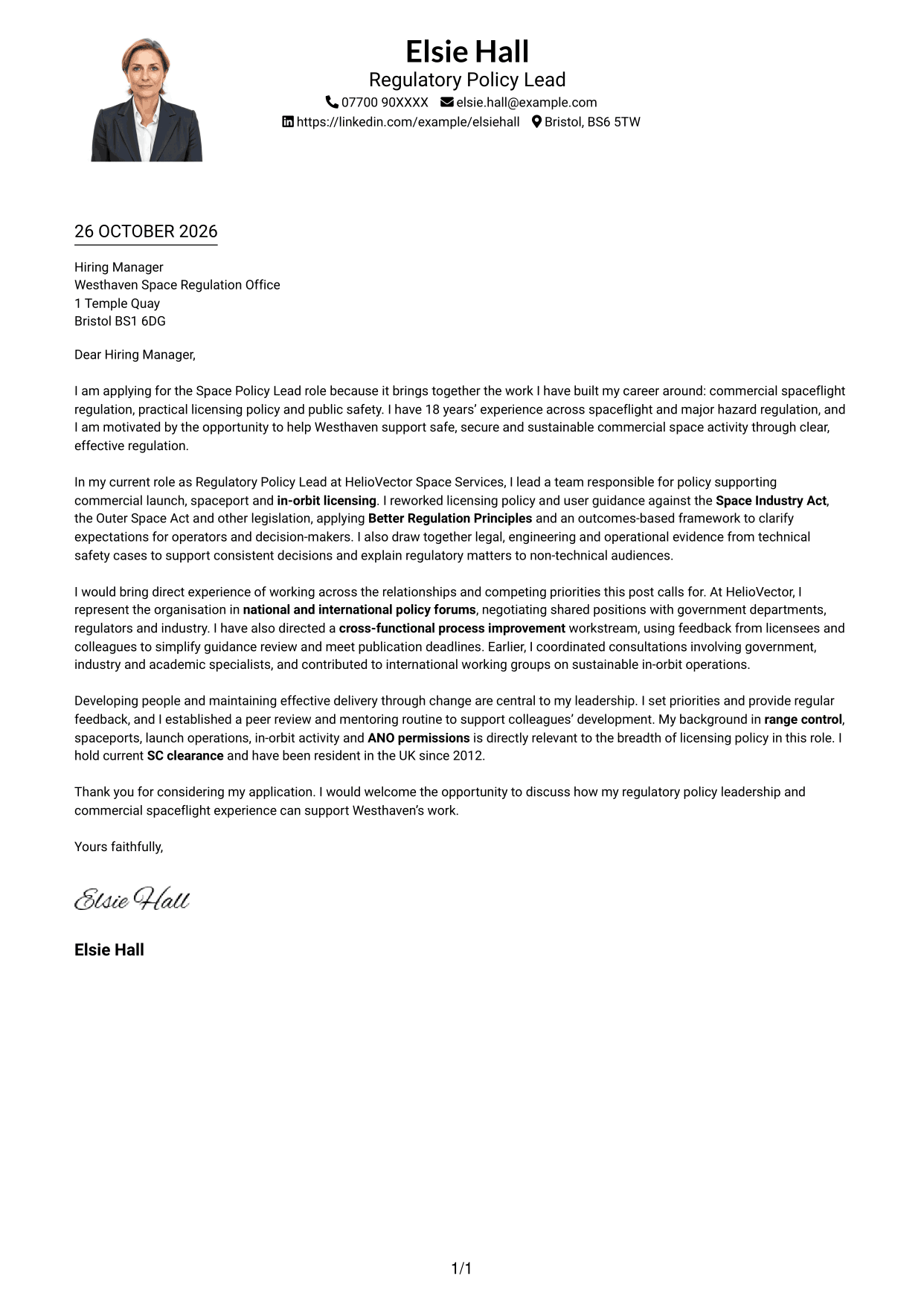
Why This Format Works
- One column keeps the letter’s paragraphs in a direct reading sequence.
- The photo adds a personal visual element without creating a second body column.
- Sender details in the header remain distinct from the continuous letter.
Best For
- One-column letter reading
- A photo with the letter
- Header-based contact details
- Connected paragraphs in one body
- Personal visual presentation
#5 Simple Two Column Format Cover Letter Example
A contact sidebar and a separate letter column give the page two clear areas without dividing the letter’s argument.
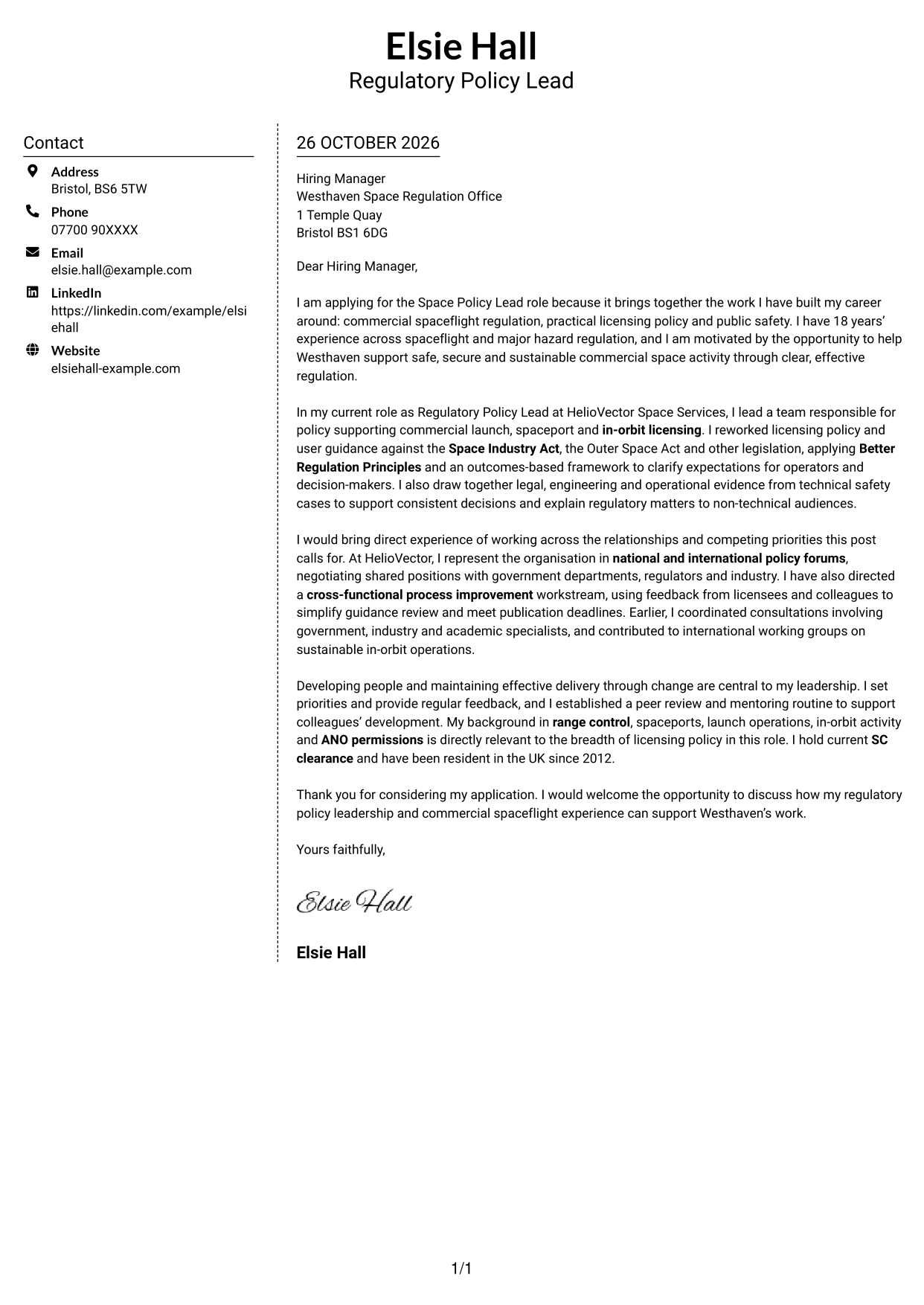
Why This Format Works
- The sidebar places contact details apart from the letter’s central message.
- A single letter column keeps each paragraph within the same argument.
- The two-area arrangement makes the distinction between contact details and letter text clear.
Best For
- Contact details beside the letter
- A single-column letter body
- Clear separation of page areas
- Paragraph-led communication
- Photo-free presentation
#6 Modern Icon Format Cover Letter Example
Contact icons sit with the sidebar details beside one continuous letter body, keeping the visual cues separate from the message.
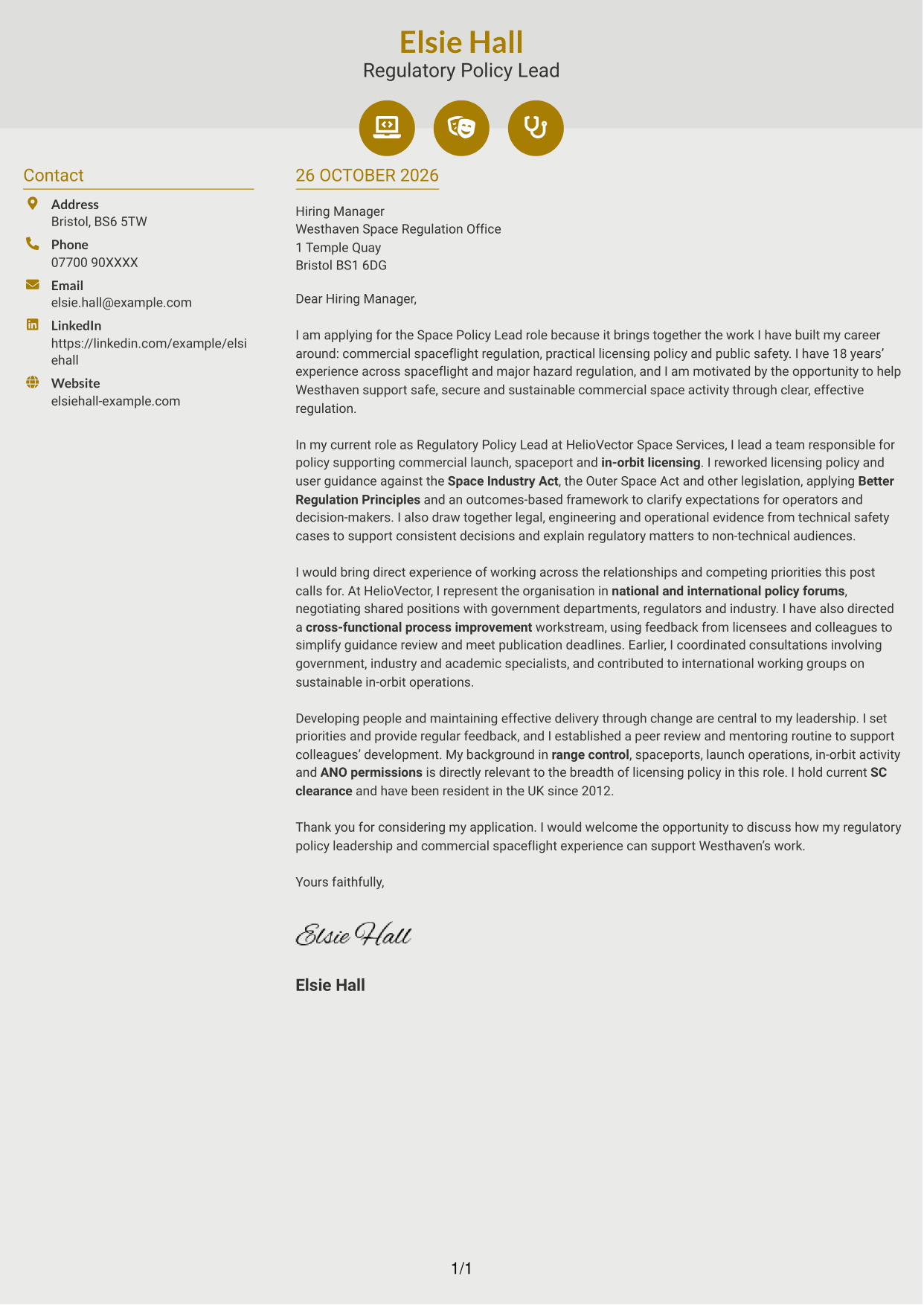
Why This Format Works
- Icons act as cues for contact details, not labels for letter paragraphs.
- The contact sidebar stays separate from the uninterrupted written message.
- A single body keeps the opening, supporting points and close together.
Best For
- Icon cues beside contact details
- Separate contact and letter areas
- One continuous letter body
- A visually marked contact section
- Photo-free document preference
#7 Creative Two Tone Format Cover Letter Example
The contact sidebar gives this two-column letter a distinct contact area while leaving the written message in one continuous body.
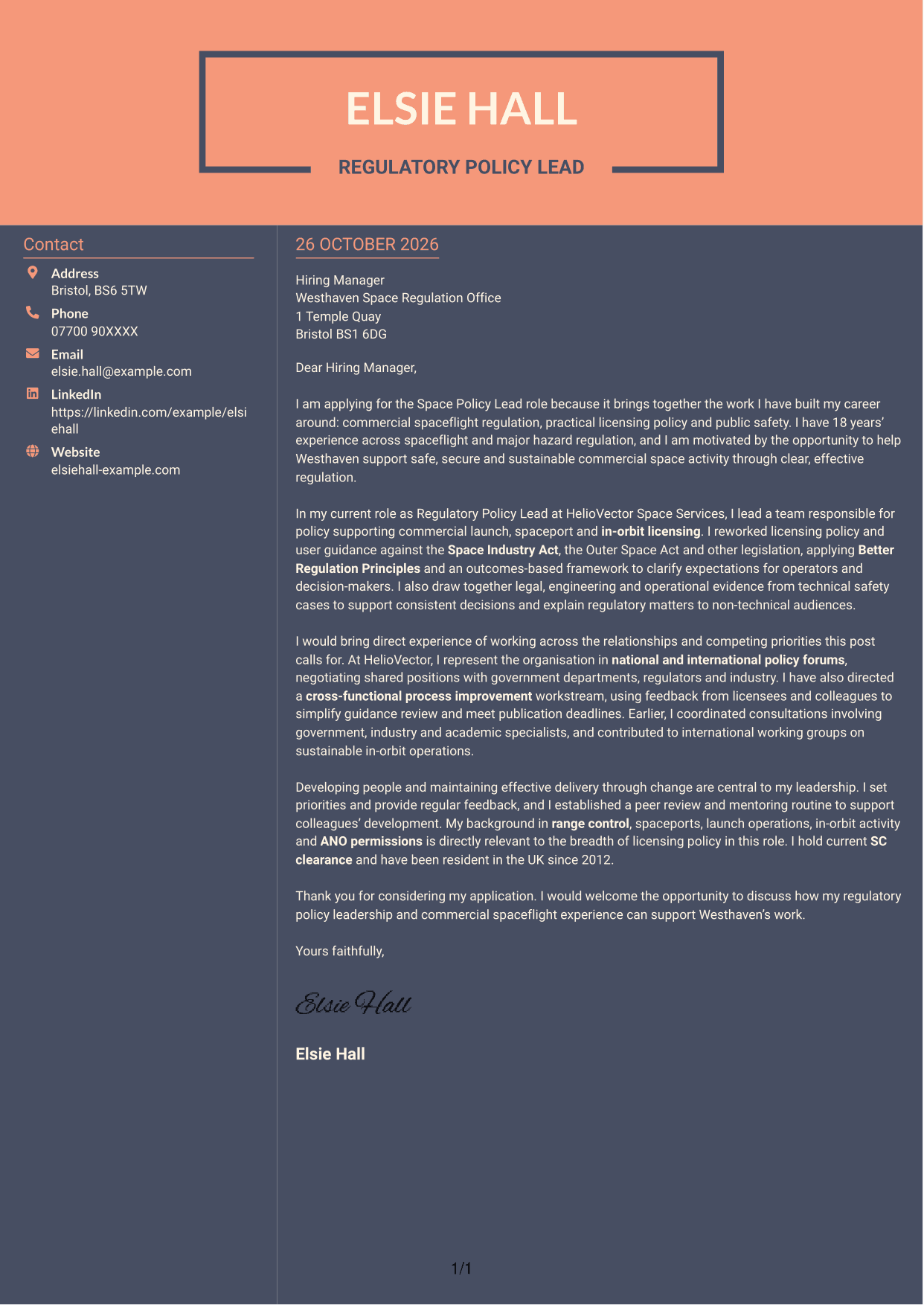
Why This Format Works
- Sender details have a separate area, distinct from the letter’s paragraphs.
- The continuous body keeps the argument together from opening to close.
- Two columns distinguish contact information from the text readers follow.
Best For
- A distinct contact area
- One uninterrupted letter body
- Separate contact and message areas
- Two-column page organisation
- Photo-free layout preference
See Also
- 7 Space Policy Lead - Spaceflight Regulation CV Templates with Example
- 7 Global People Business Partner Marine and Offshore CV Templates with Example
- 7 Paraplanner - Financial Planning CV Templates with Example
- 7 Office Administrator - Building Control CV Templates with Example
- 7 Technical Field Research Lead - Plant Science CV Templates with Example
- 7 Disputes and Investigations Graduate Programme CV Templates with Example
- 7 Building Control Surveyor - Residential and Low-Risk Commercial CV Templates with Example
- 7 Investment Banking Intern - Infrastructure Project Finance CV Templates with Example
- 7 Structured ETF Product Specialist CV Templates with Example
- 7 Assistant - Executive and Banking Administration CV Templates with Example
Frequently Asked Questions
What should a Space Policy Lead - Spaceflight Regulation cover letter highlight?
Show how your policy and regulatory work supports commercial spaceflight licensing and clear decisions. Useful examples include applying the Space Industry Act or Outer Space Act, improving guidance, and explaining complex evidence to non-specialist audiences.
How can I show that my experience fits this role?
Choose a specific example that shows your contribution and its result. You might describe how you brought legal, engineering and operational evidence together, negotiated a shared position, or improved a guidance review process.
How should I explain my interest in the employer?
Connect your motivation to the stated aim of supporting safe, secure and sustainable commercial space activity. Then explain how your approach to practical regulation and public safety would support that work.
What is a clear way to structure this cover letter?
Open with the role and your reason for applying. Use the body to give focused evidence of policy work, stakeholder relationships and leadership, then close by restating your interest and inviting a discussion.
Which spaceflight knowledge is useful to mention?
Refer to areas that match your own experience and the role, such as range control, spaceports, launch operations, in-orbit activity or Air Navigation Order permissions. Explain how that knowledge helps you develop practical licensing policy.