7 Applied AI/ML Scientist - Large-Scale Model Training Resume Templates with Example
This guide shows you how to build an Applied AI/ML Scientist - Large-Scale Model Training resume that is clear, focused, and easy to review. You will learn how to present your training work, organize technical evidence, and choose a layout that supports your goals.
For this role, make it easy to see how you handled model training from data readiness and architecture selection through evaluation. Use concise experience bullets to explain your work with large models, distributed training, Cerebras hardware, and customer benchmarks, when these are part of your background.
The resume example is presented in 7 layouts, with image previews to compare their structure and design. You can open an example in the editor to view or customize its layout.
What Makes a Great Applied AI/ML Scientist - Large-Scale Model Training Resume in 2026
A strong resume uses clear sections and focused bullets to show how you train and evaluate large models. It should make your technical role and the results of your work easy to understand.
Use relevant terms such as dense transformers, MoEs, PyTorch, distributed training, Cerebras Wafer-Scale Engine, RLHF, and DPO when they match your experience. Add specific details about benchmarks, convergence, and data pipelines to support your claims.
Note: Resume examples are for educational purposes only. Use only information that accurately reflects your experience and qualifications. References to real organizations do not imply affiliation or endorsement.
#1 Simple One Column Format Resume Example
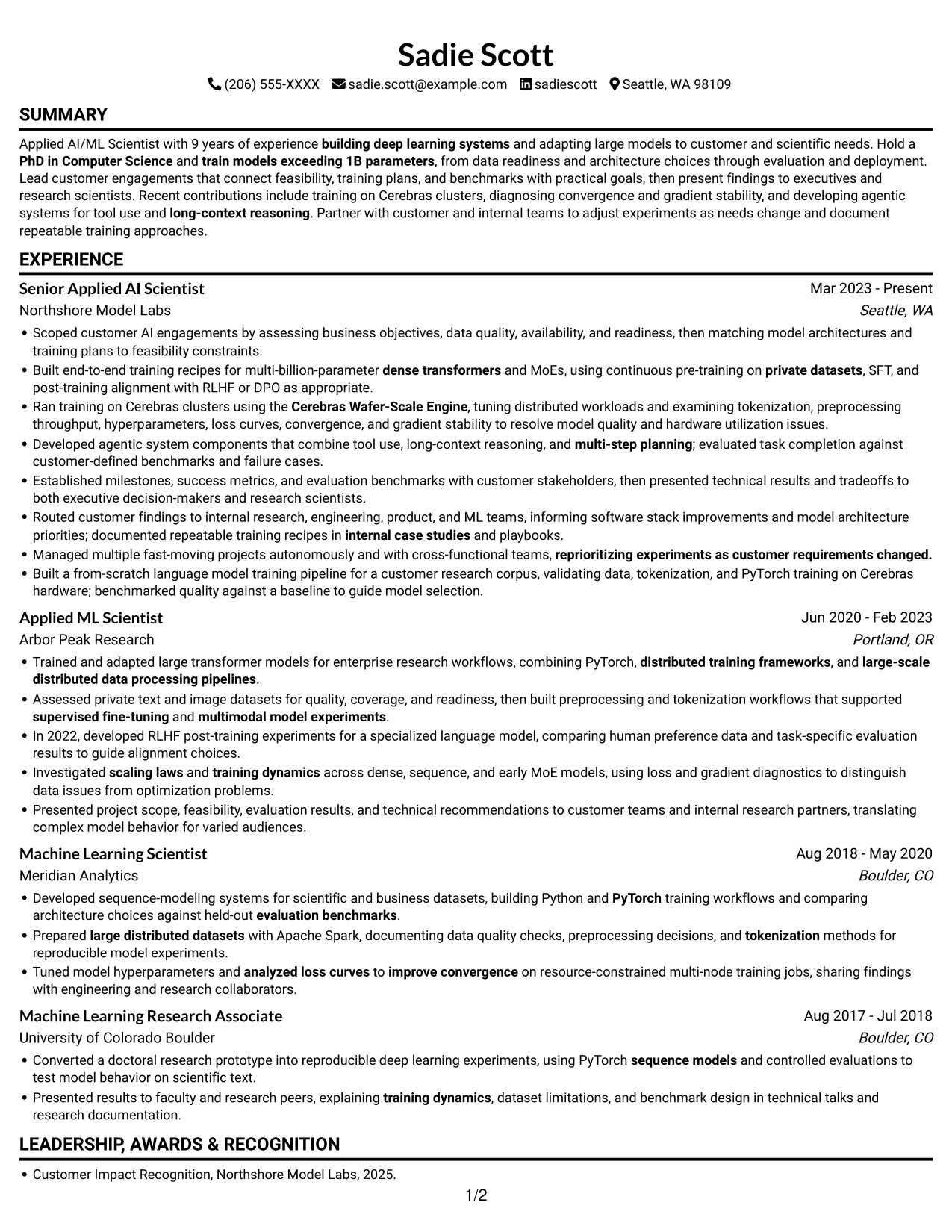
The Simple One Column Format keeps the resume in one vertical reading path, a practical choice when uninterrupted review matters.
Why This Format Works
- One reading path helps reviewers trace experience and education in sequence.
- Full-width sections give detailed achievement bullets room to remain easy to follow.
- Skills and credentials can be scanned without moving between columns.
Best For
- One-path resume review
- Detailed experience sections
- Long achievement bullets
- Skills and education in sequence
- Resumes with several content sections
Resume Keywords
- PhD in Computer Science
- train models exceeding 1B parameters
- Built end-to-end training recipes for multi-billion-parameter dense transformers and MoEs, using continuous pre-training on private datasets, SFT, and post-training alignment with RLHF or DPO as appropriate.
- building deep learning systems
- dense transformers
- MoEs
- multimodal model experiments
- sequence models
- scaling laws
- training dynamics
- Python
- PyTorch
- distributed training frameworks
- large-scale distributed data processing pipelines
- Built a from-scratch language model training pipeline for a customer research corpus
#2 Simple Two Column Format Resume Example
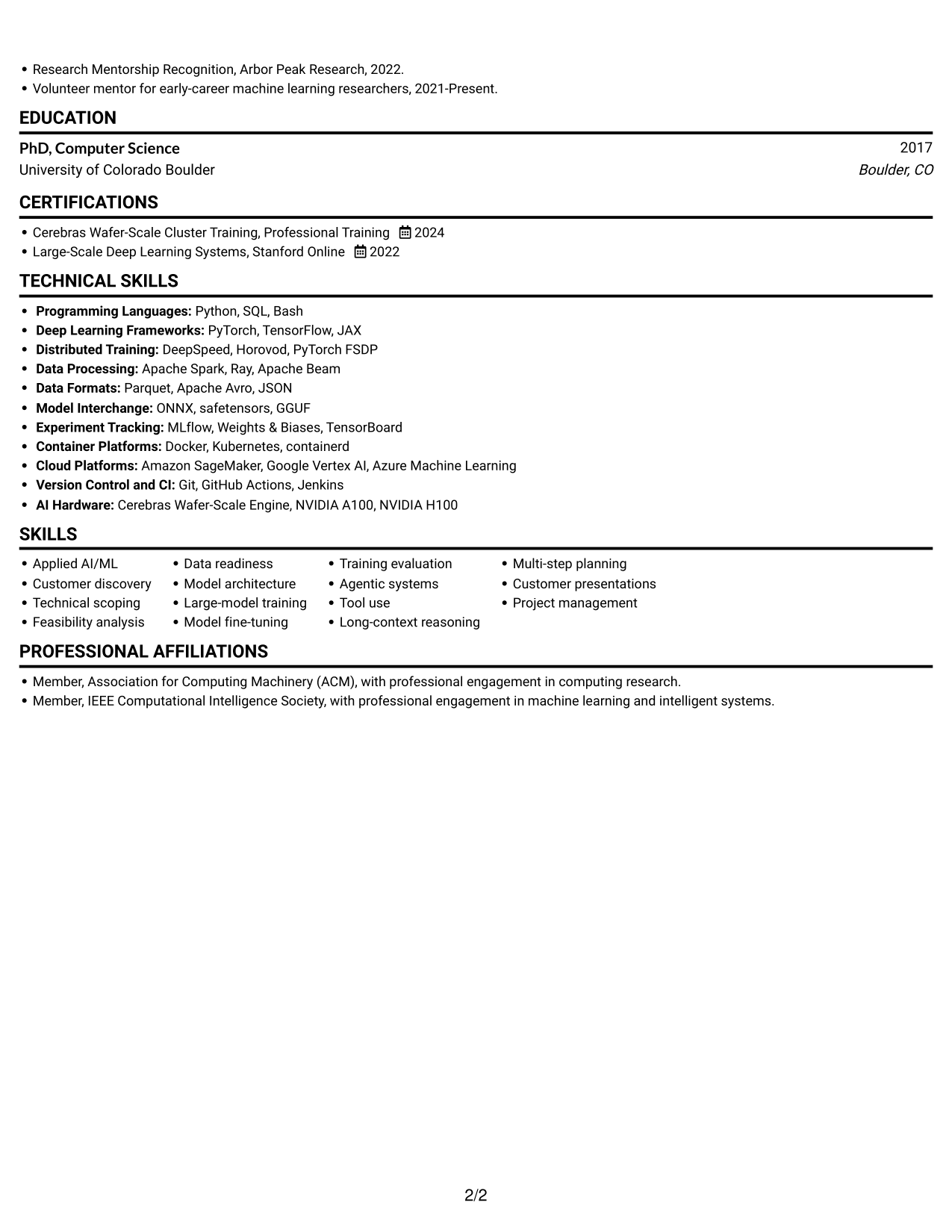
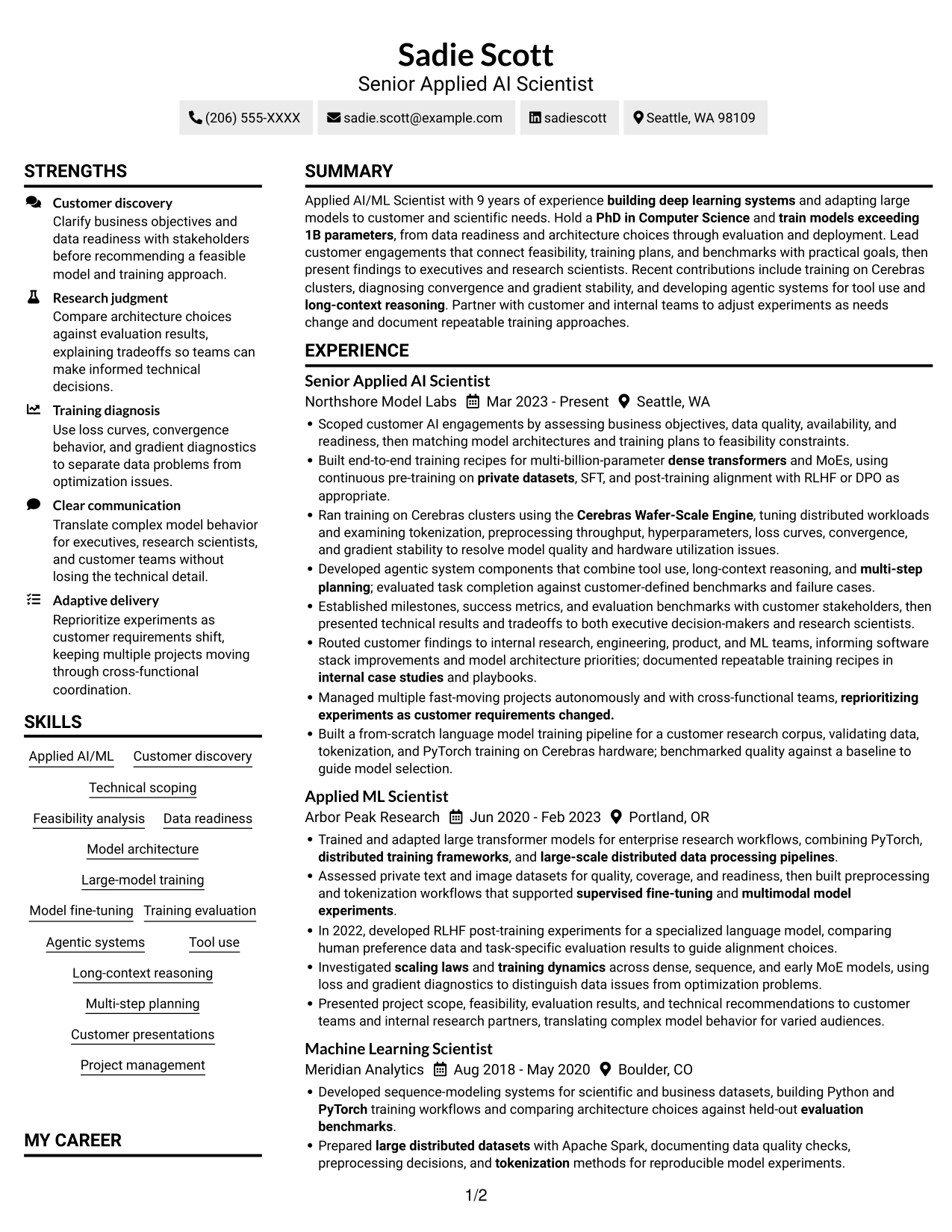
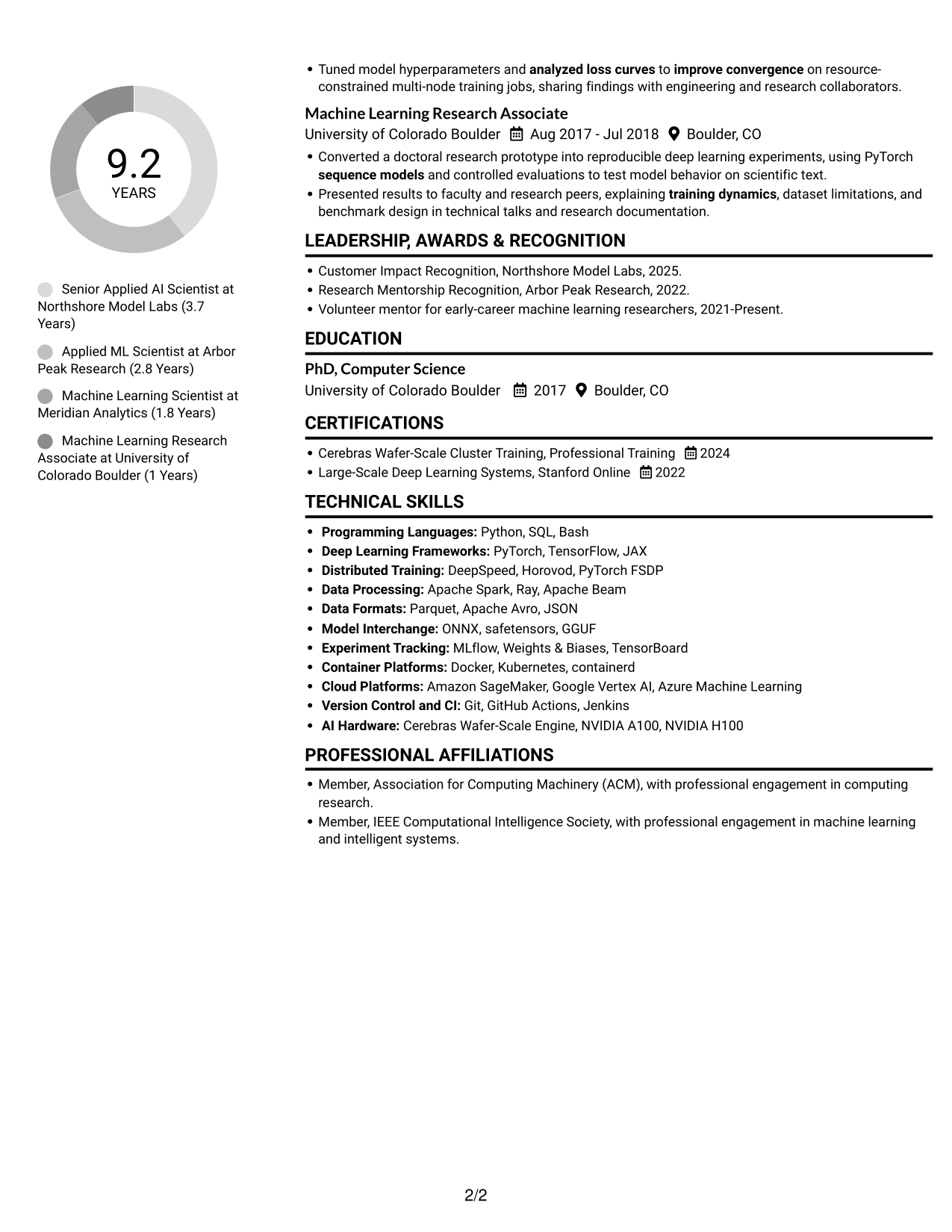
The Simple Two Column Format places resume content in two columns, a useful choice for readers who want to move between sections quickly.
Why This Format Works
- Two columns give reviewers clear routes between experience and supporting sections.
- The split layout helps education and credentials stand apart from career history.
- Distinct content areas make varied resume sections easier to locate.
Best For
- Side-by-side section navigation
- Resumes with varied section types
- Experience with supporting details
- Readers scanning several content areas
- Compact section organization
#3 Plain One Column with Shaded Labels Resume Example
Plain One Column with Shaded Labels keeps the resume in one column, a practical fit for readers who prefer a direct top-to-bottom review.
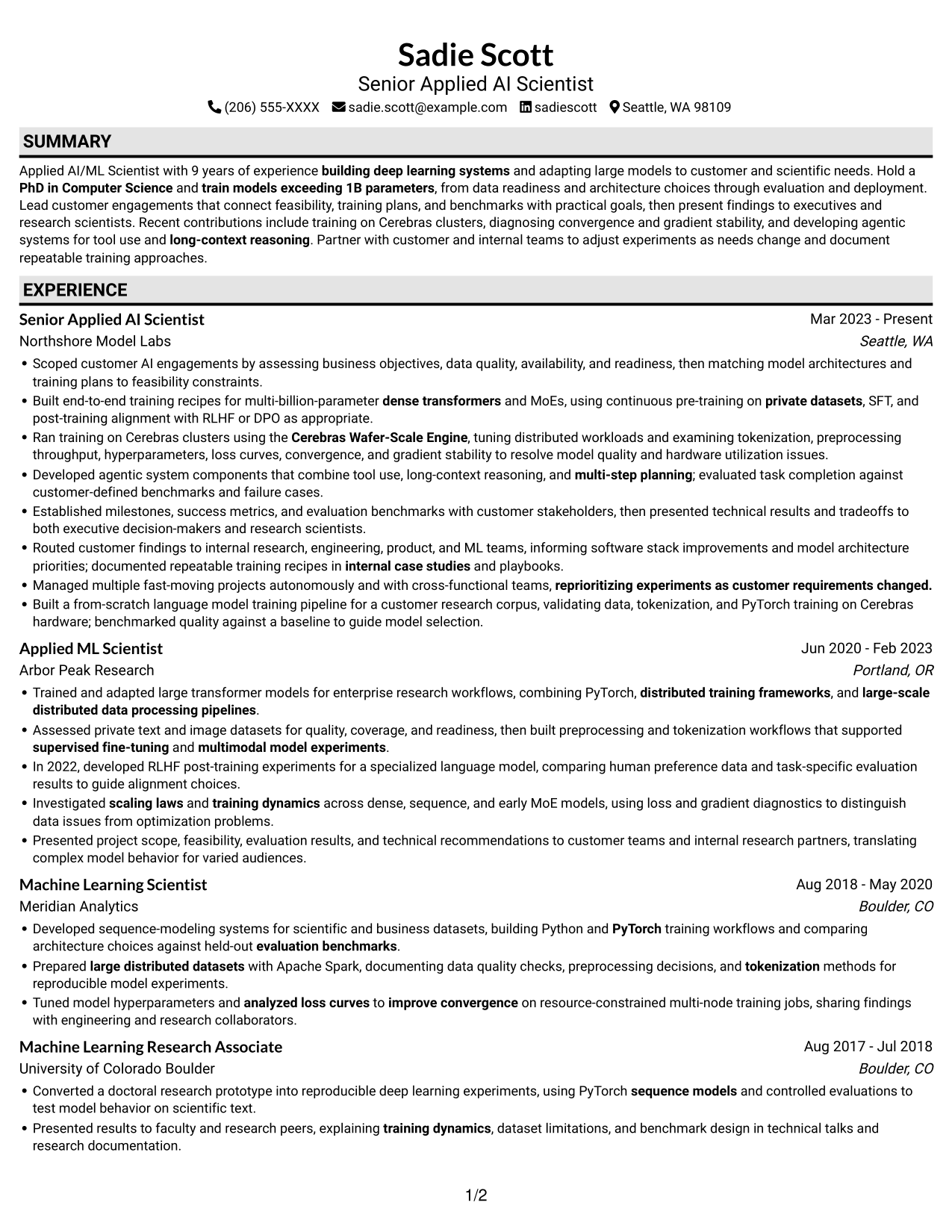
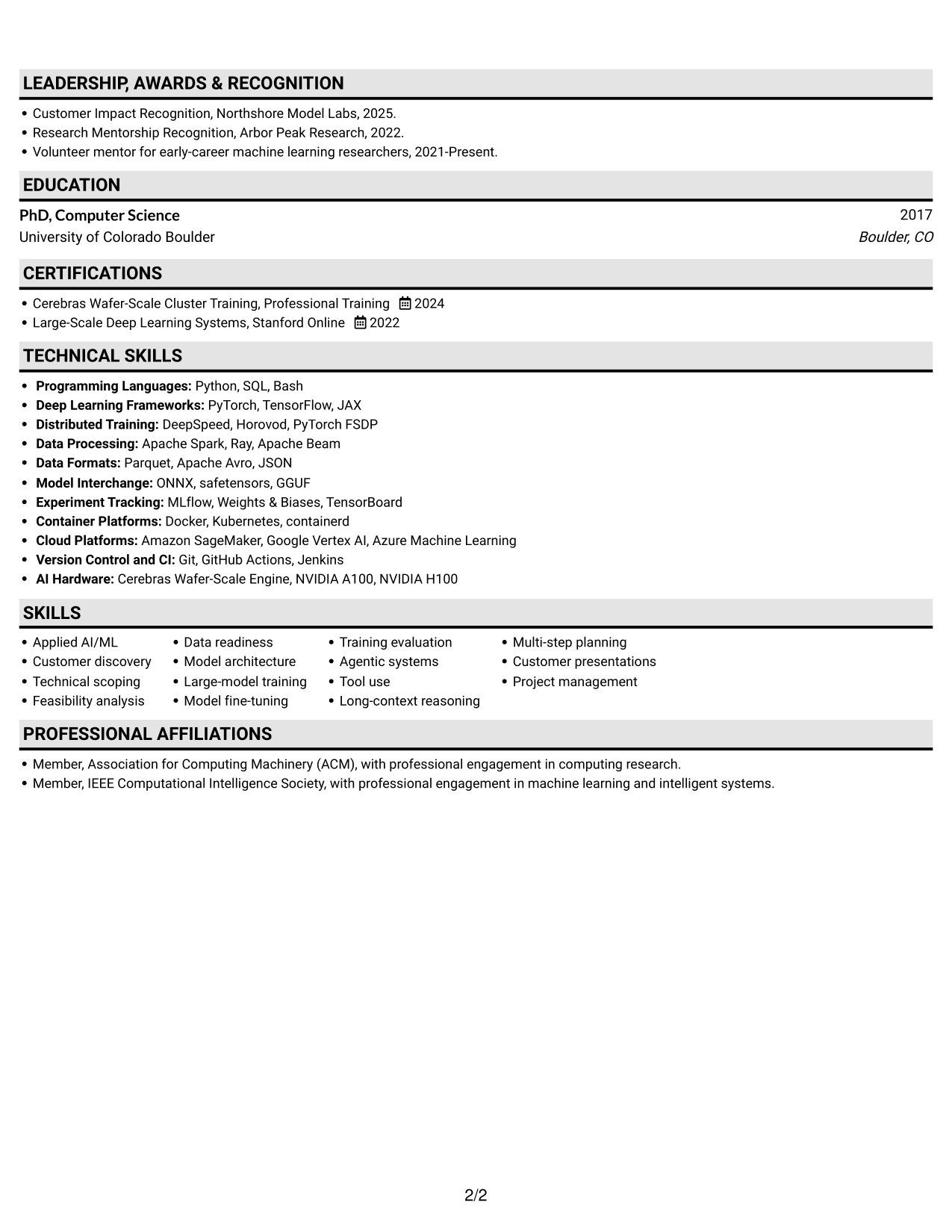
Why This Format Works
- A single reading path helps reviewers follow experience without switching between columns.
- Full-width section areas keep education and credentials easy to review in context.
- Skills can be checked within the same continuous page flow.
Best For
- Direct top-to-bottom review
- Experience-led resumes
- Detailed work history
- Skills and credentials in one flow
- Readers who avoid column switching
#4 One Column Format with Photo Right Resume Example
One Column Format with Photo Right places a portrait on the right side, a useful choice when the resume should include a visible photo.
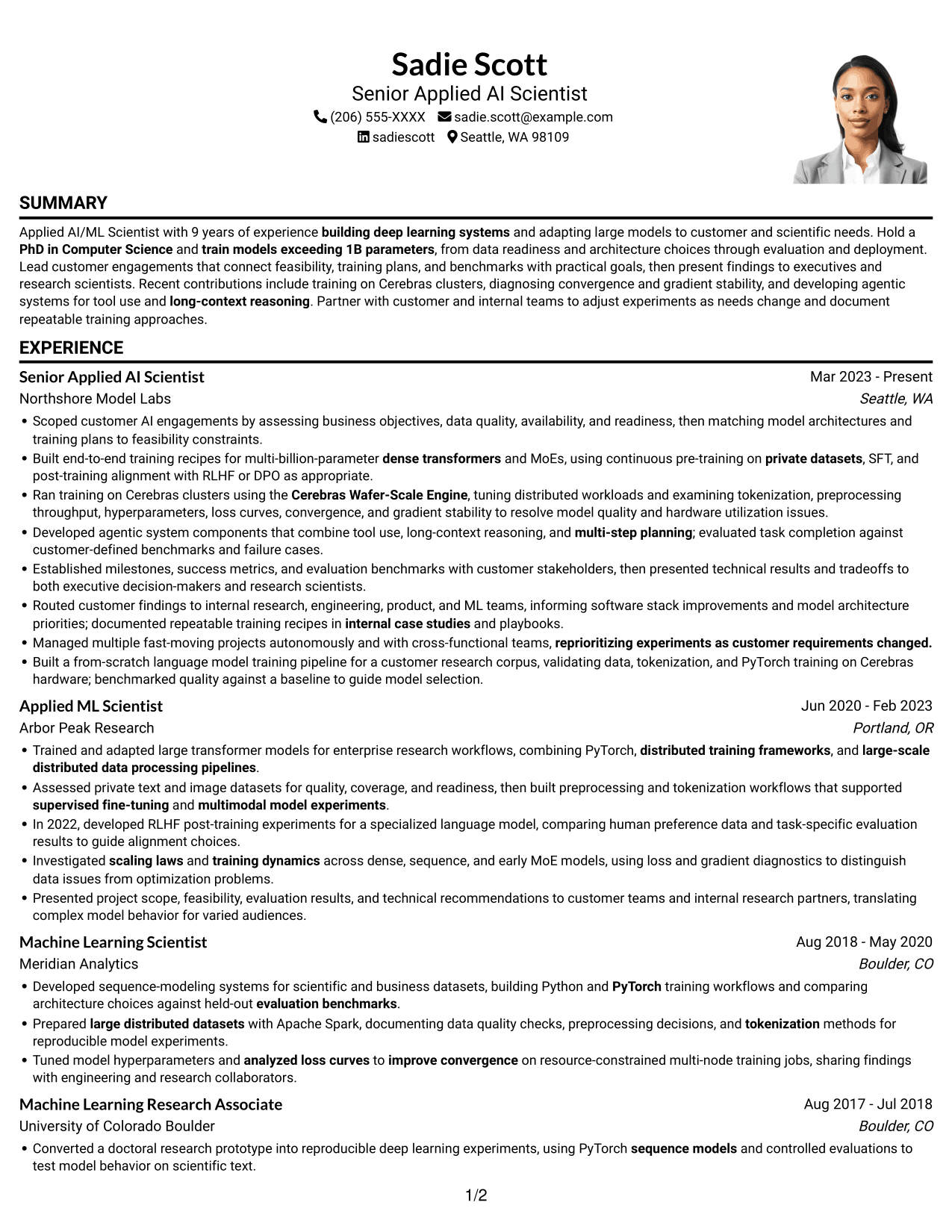
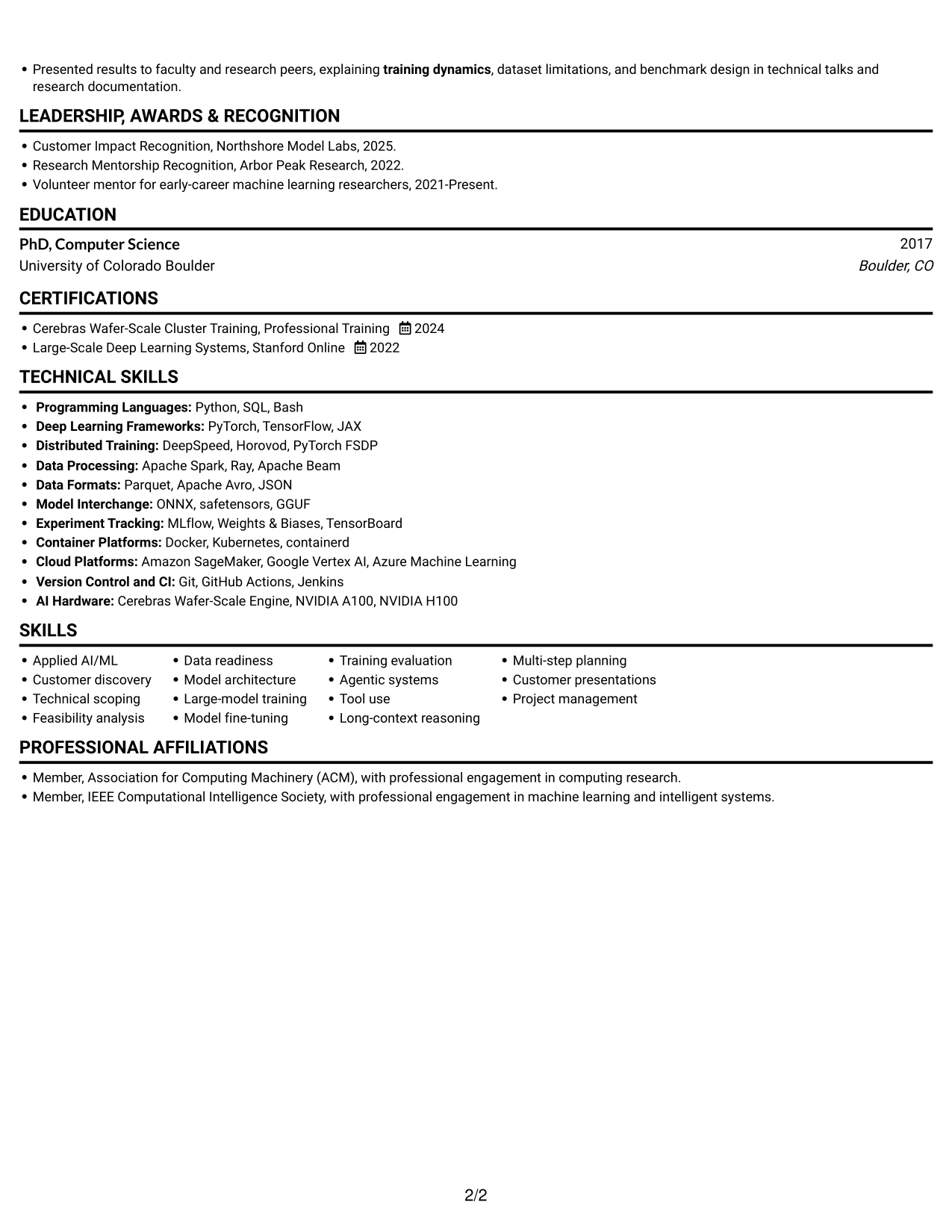
Why This Format Works
- The one-column body lets reviewers follow career history from section to section.
- Full-width areas give experience details room to remain together.
- Education and skills stay within one continuous reading path.
Best For
- Right-side portrait preference
- Single-column resume review
- Detailed career histories
- Experience with supporting sections
- Continuous section reading
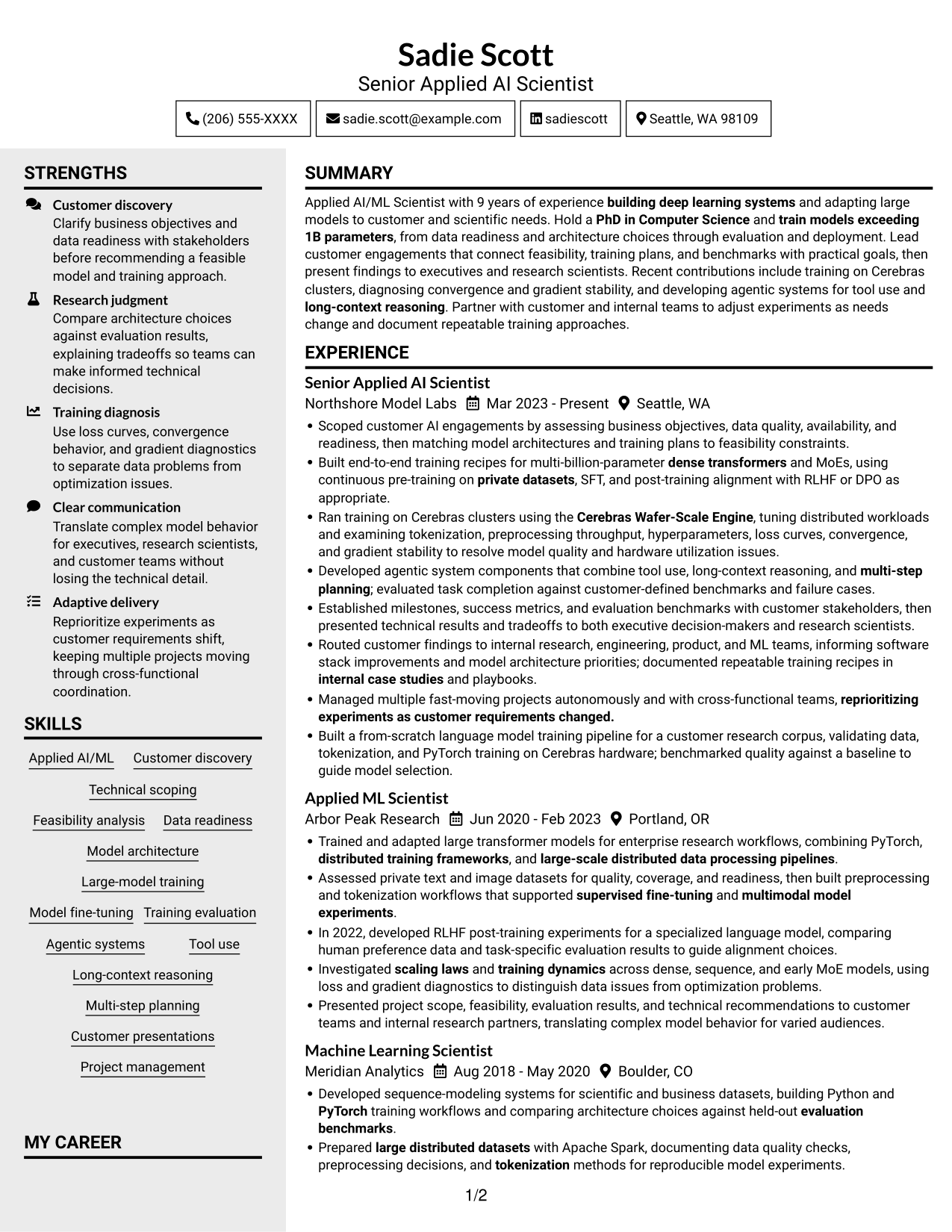
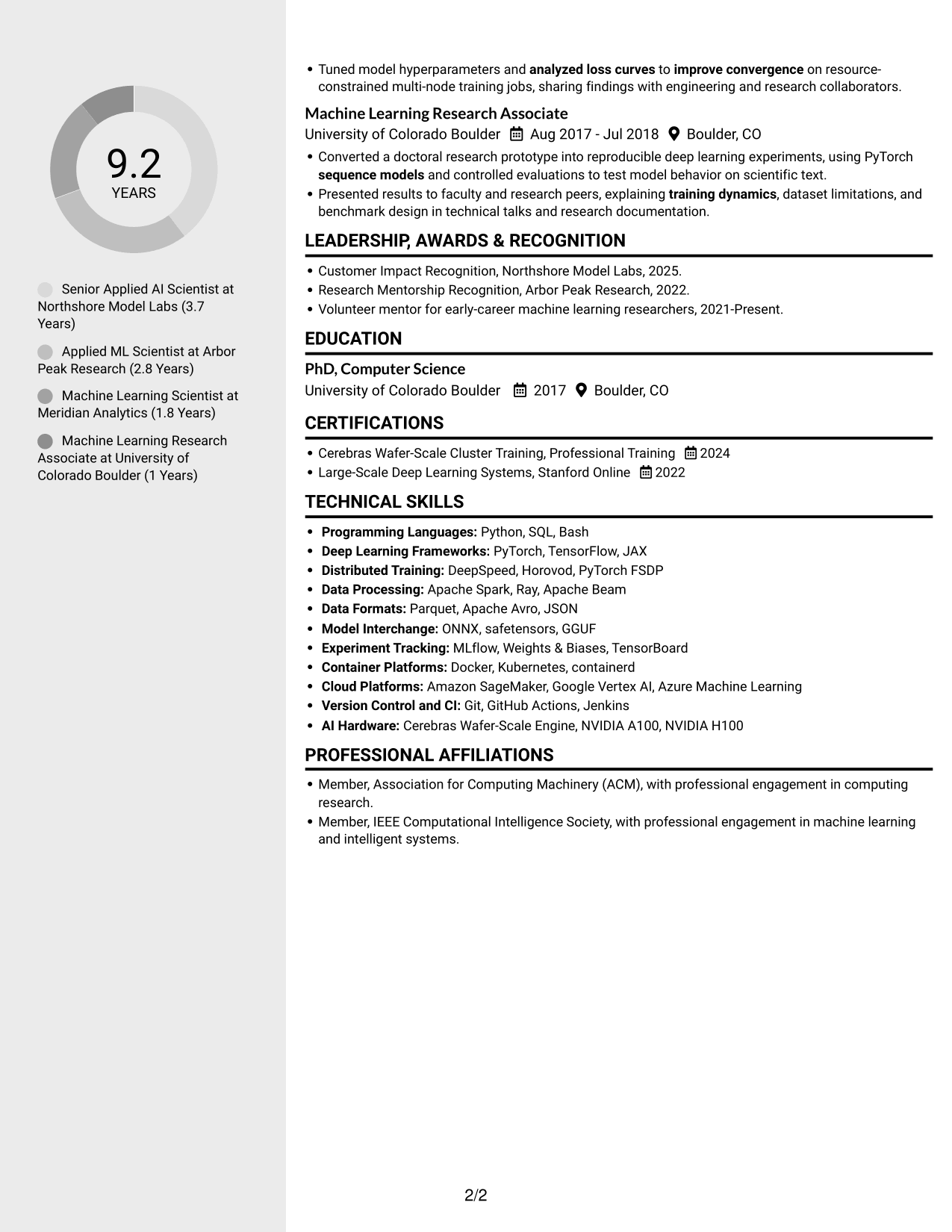
#5 Clean Two Column Sidebar Format Resume Example
Clean Two Column Sidebar Format pairs a sidebar with a main content area, helping readers navigate a resume with multiple sections.
Why This Format Works
- The sidebar creates a distinct area for resume content beside the main column.
- A separate main area gives career history its own reading space.
- Two-column organization helps reviewers move among sections with less backtracking.
Best For
- Sidebar-based section navigation
- Resumes with multiple content groups
- A distinct main reading area
- Supporting details beside career history
- Readers who prefer grouped information
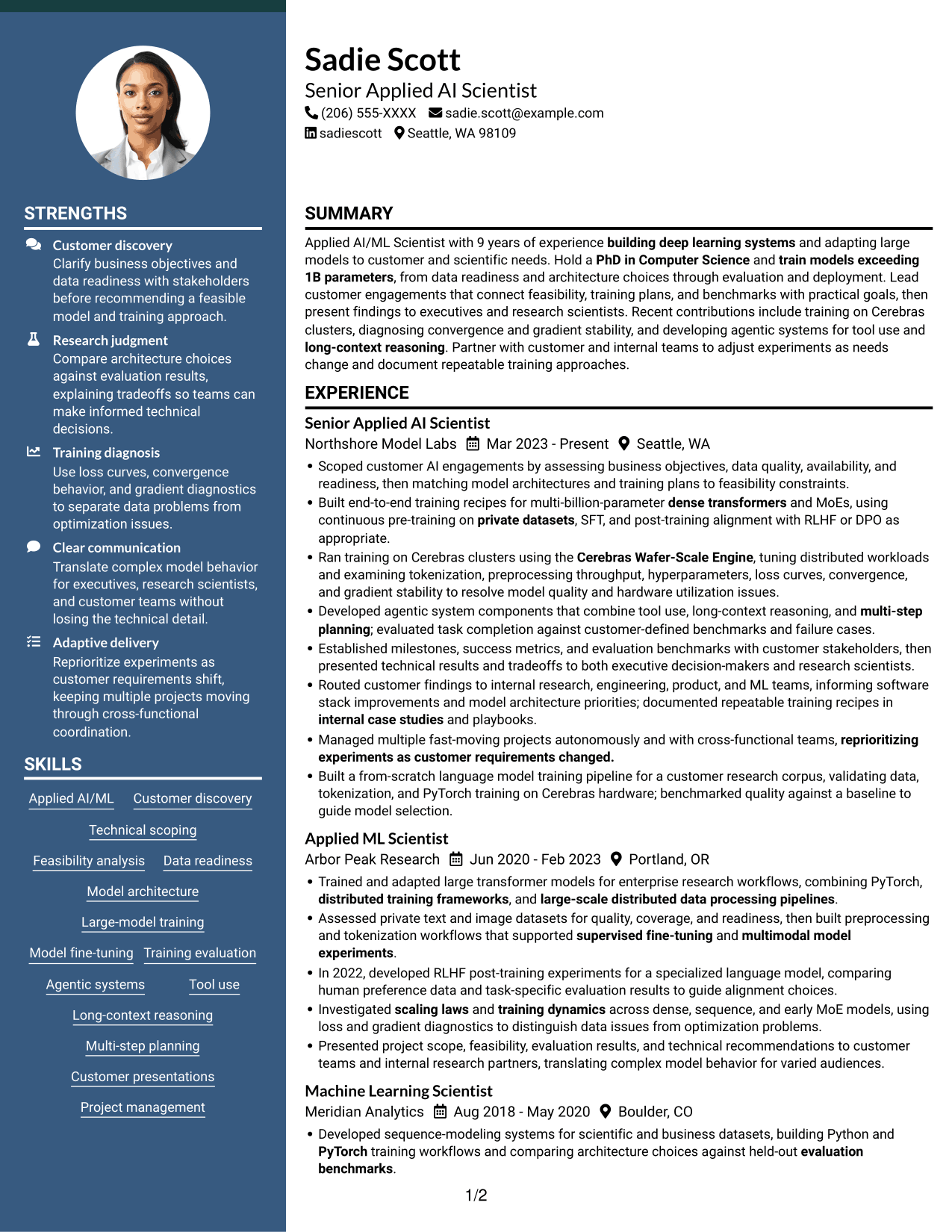
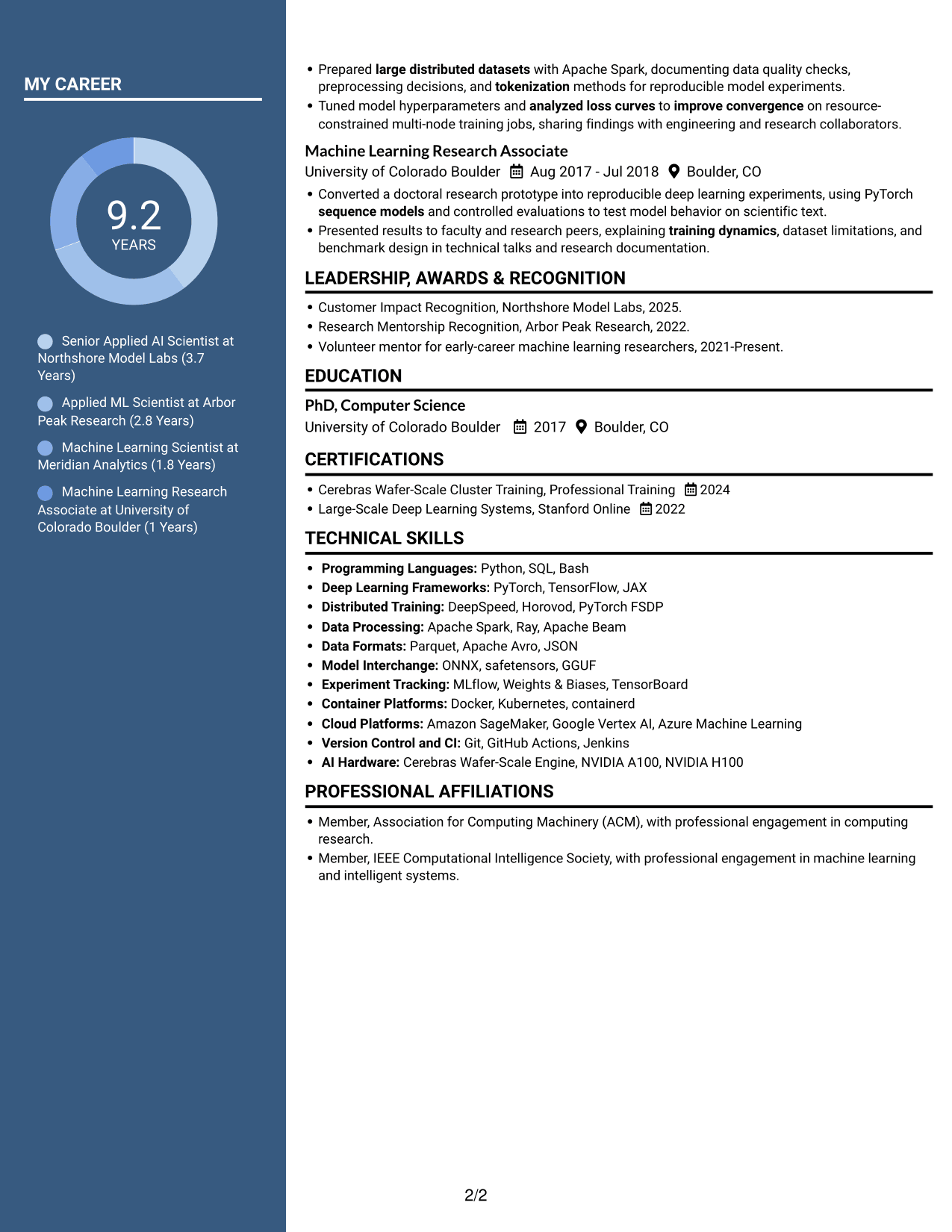
#6 Two Column Format Resume Example
Two Column Format organizes resume content in parallel columns, a practical choice for readers who want to scan distinct sections side by side.
Why This Format Works
- Parallel columns let reviewers move between career history and supporting content.
- Separate reading areas make education and credentials easier to find.
- The layout supports quick scanning across different resume sections.
Best For
- Parallel section review
- Resumes with varied content
- Side-by-side information scanning
- Career history with supporting details
- Readers moving between sections
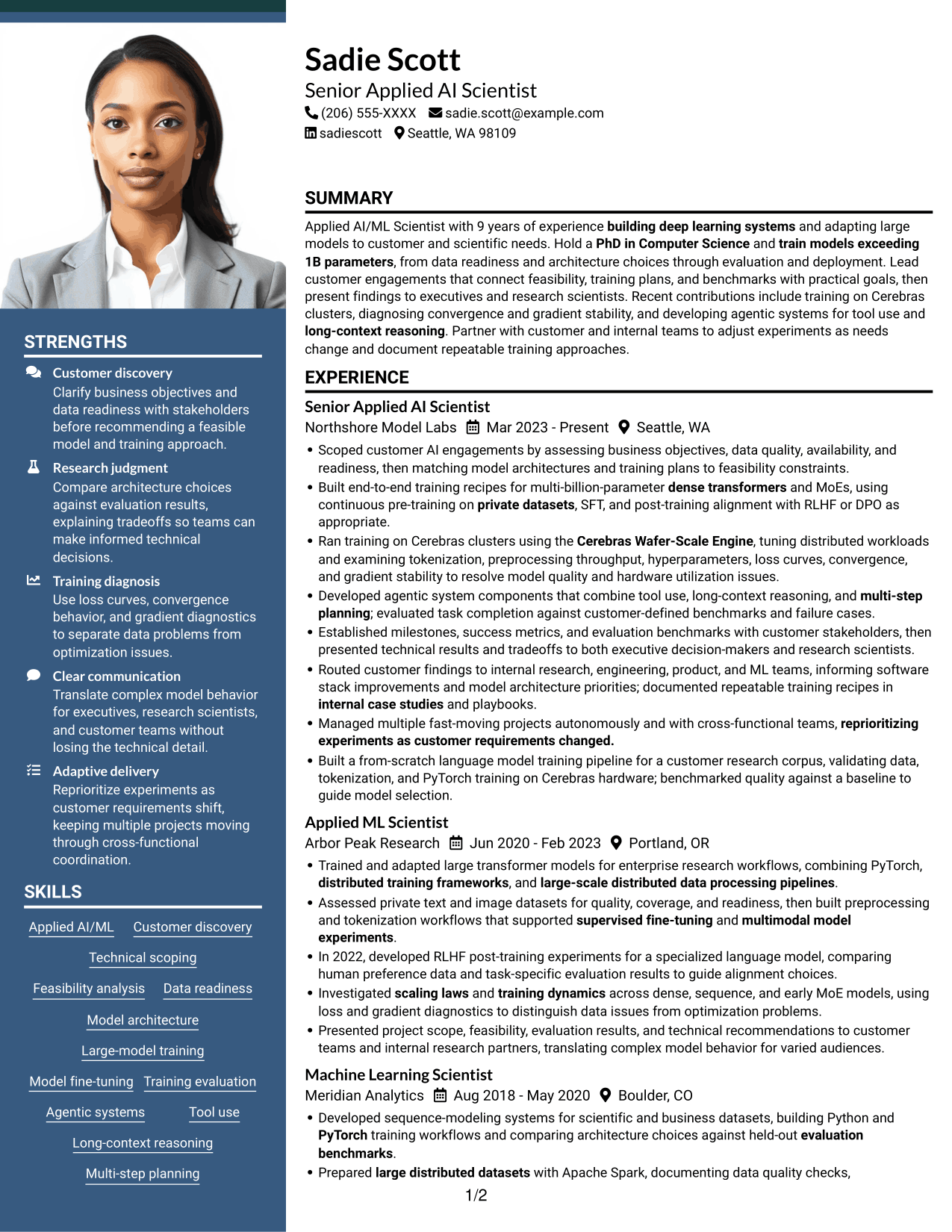
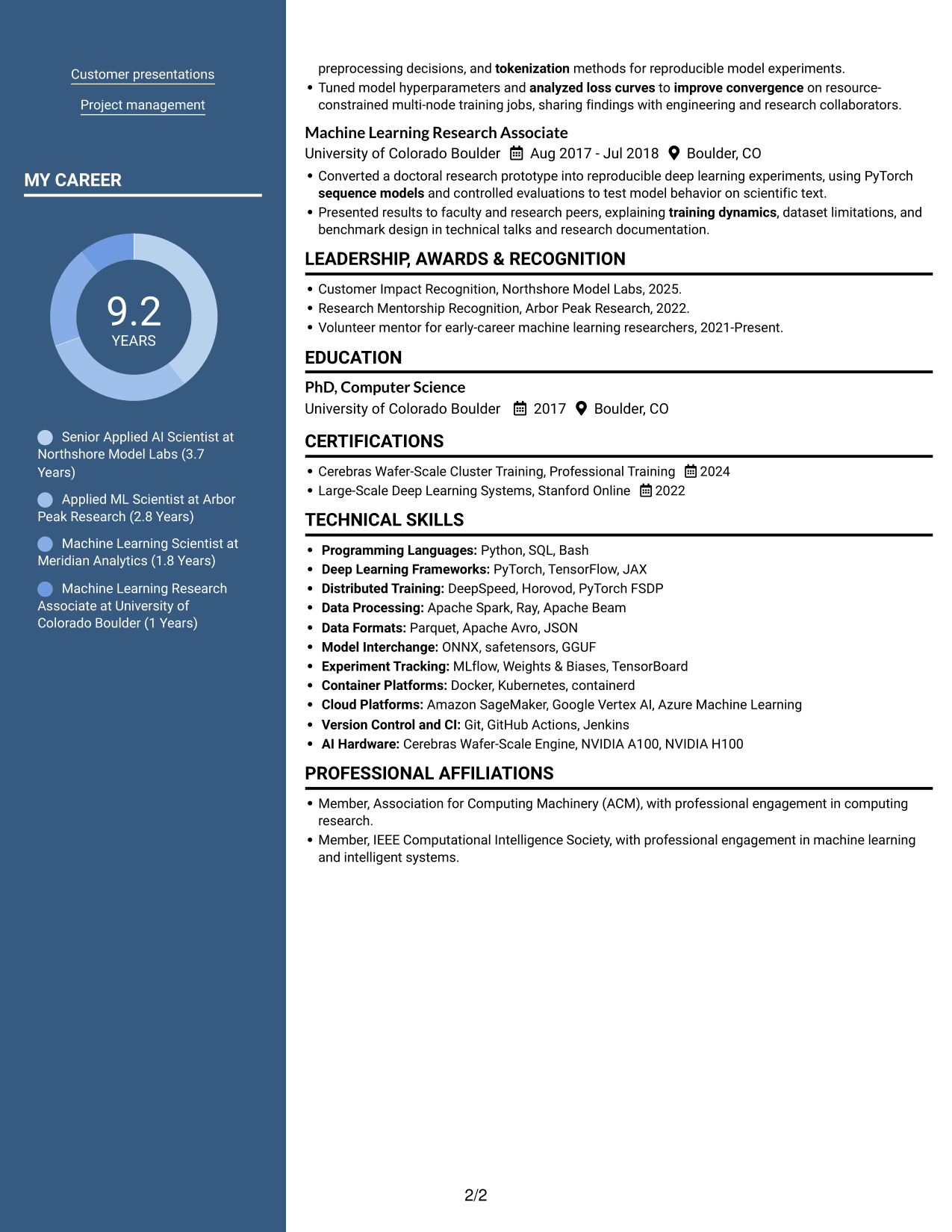
#7 Photo Header Two Column Format Resume Example
Photo Header Two Column Format combines a photo in the header with two-column body content, a useful choice when both features suit the preferred resume presentation.
Why This Format Works
- The two-column body gives reviewers separate areas to navigate across resume sections.
- Parallel content areas help keep experience distinct from supporting information.
- The header portrait adds a visible photo without changing the body's two-column reading structure.
Best For
- Photo in the resume header
- Two-column section navigation
- Resumes with multiple content groups
- Side-by-side section review
- A visible photo with compact organization
Why Build Your Applied AI/ML Scientist Resume with ResumeInMinutes
Compare image previews to see how different resume layouts organize technical skills and experience. When a format suits your needs, open it in the editor to view or customize the example.
- ATS-friendly section structure
- Clear organization for technical skills
- Space for model training experience
- Sections for education and certifications
- Image previews for layout comparison
- Resume customization in the editor
Keep the focus on the work that best supports your target role. Use specific, accurate details about models, tools, training workflows, and evaluation methods to help readers assess your fit.
See Also
- 7 Full Stack Data Scientist - AI/ML Platform Engineering Resume Templates with Example
- 33 Applied Machine Learning Scientist Intern Resume Templates with Example 2026 (ATS-Optimized)
- 33 Healthcare AI Data Scientist Intern Resume Templates with Example 2026 (ATS-Optimized)
- 33 Lead Data Scientist - Advanced AI Resume Templates with Example 2026 (ATS-Optimized)
- 7 Assistant Project Scientist - Experimental Space Physics Resume Templates with Example
- 33 Associate Data Scientist Resume Templates with Example 2026 (ATS-Optimized)
- 33 Bioinformatics Scientist / Computational Biologist Resume Templates with Example 2026 (ATS-Optimized)
- 7 Clinical Lab Scientist III - Core Laboratory Resume Templates with Example
- 7 Applied AI/ML Scientist - Large-Scale Model Training Cover Letter Templates with Example
- 7 Full Stack Data Scientist - AI/ML Platform Engineering Cover Letter Templates with Example
Frequently Asked Questions
How can I make an Applied AI/ML Scientist resume easier for ATS software to read?
Use standard section names, simple formatting, and text-based skill lists. Include role-relevant terms such as PyTorch, distributed training, model fine-tuning, and evaluation benchmarks when they accurately describe your work.
What should a large-scale model training resume include?
Include a focused summary, technical skills, relevant experience, education, and certifications. Explain your part in model training, data preparation, architecture choices, and evaluation with clear bullets.
How should I describe model training achievements?
State the task, methods, and outcome. Where available, add verified measures such as model scale, benchmark results, training efficiency, or changes in convergence and model quality.
Which technical keywords may be relevant to this role?
Use terms that match your actual experience, such as dense transformers, MoEs, multimodal models, scaling laws, continuous pre-training, SFT, RLHF, DPO, Cerebras Wafer-Scale Engine, and gradient stability.
How can I show experience with customer-facing AI work?
Describe how you clarified use cases, assessed data readiness, set benchmarks, and communicated technical tradeoffs. Include only responsibilities and results that reflect your own work.
How can I compare the resume examples?
Review the image previews to compare section order, spacing, and visual style. You can open an example in the editor to view or customize the layout.