7 Construction Materials Testing Technician I Resume Templates with Example
This guide shows you how to build a Construction Materials Testing Technician I resume that is clear, focused, and easy to review. You will see how to organize strong evidence and compare practical resume formats.
Focus on field testing, accurate daily reports, plan review, equipment care, and safe work practices. Include relevant credentials and technical knowledge such as concrete field testing, nuclear density gauge operation, Proctor methods, USCS Soil Classification, and One-Point Proctor testing when your background supports them.
The same complete resume is presented in 7 layouts so you can compare section order, scanability, and visual structure. Use the examples to choose a format that keeps experience, skills, education, certifications, and project evidence easy to find.
What Makes a Great Construction Materials Testing Technician I Resume in 2026
A strong Construction Materials Testing Technician I resume in 2026 is clear, accurate, and built around job-relevant field evidence. It should make testing experience, reporting discipline, safety, and credentials easy to review.
Use direct terms such as field testing, concrete testing, soil testing, daily field reports, nuclear density gauge, Proctor Compaction Test, and USCS Soil Classification only when they match your actual experience.
The examples shown below are intentionally detailed to demonstrate a range of experiences, skills, accomplishments and relevant keywords. We prefer detailed resumes as they provide more context to the hiring managers and also help the ATS systems identify relevant qualifications and score your resume better for a match. But the length of a resume is an individual choice. If you want a one page resume, just keep the most relevant experience and information for the job. Note: Resume examples are for educational purposes only. Use only information that accurately reflects your experience and qualifications. References to real organizations do not imply affiliation or endorsement.
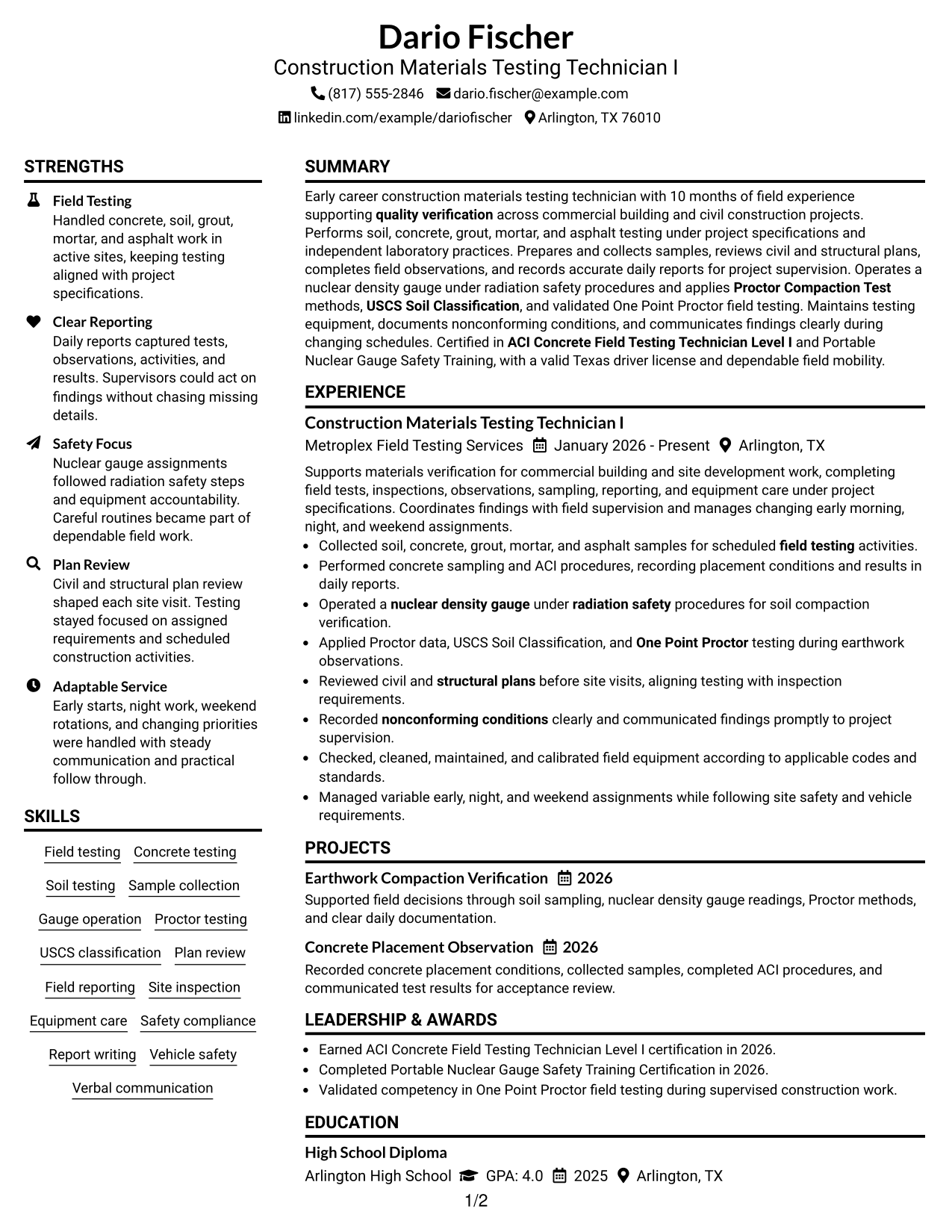
#1 Plain Two Column Format Resume Example
The Plain Two Column Format separates core sections clearly, helping recruiters scan the resume without losing the main reading order.
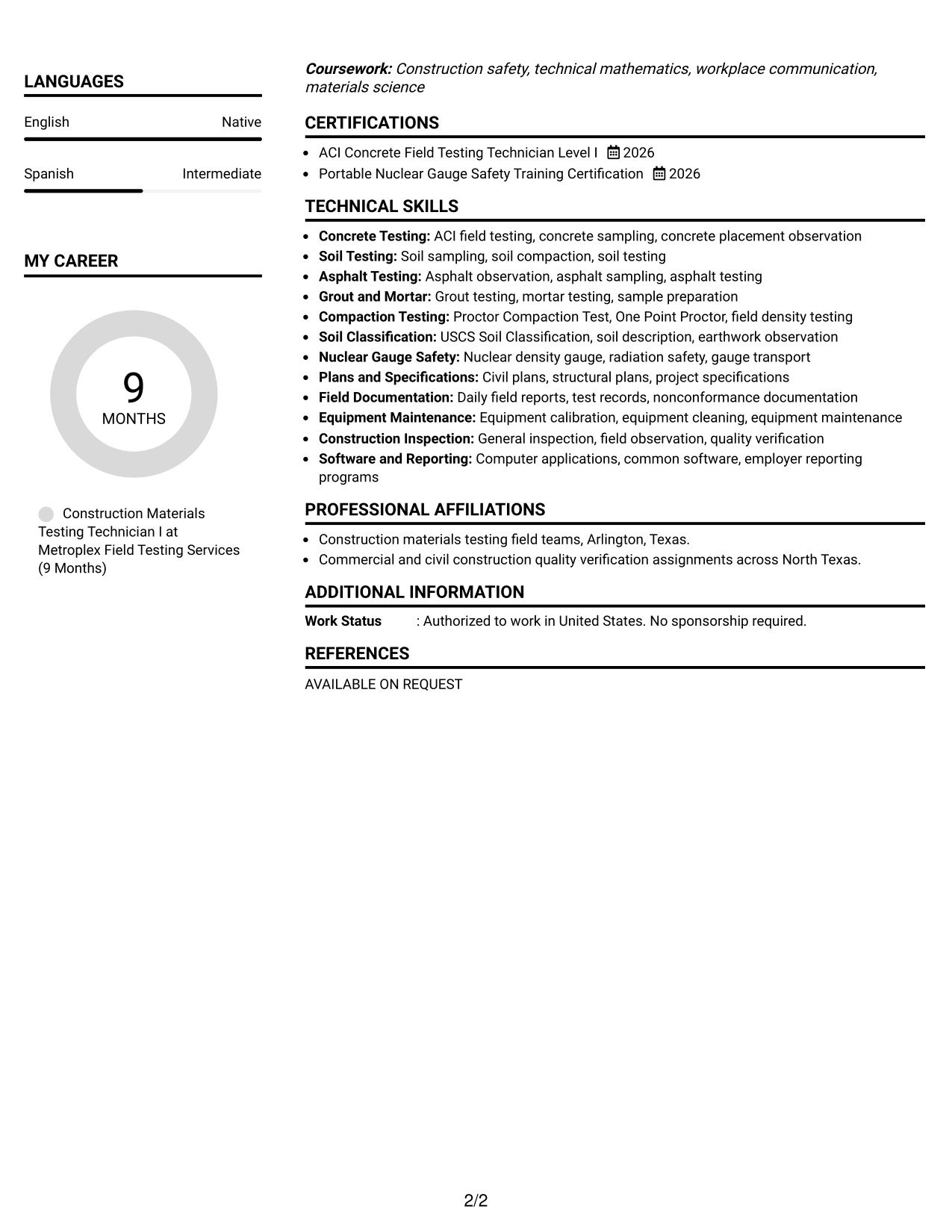
Resume Snapshot
- 10 months of construction materials testing field experience
- ACI Concrete Field Testing Technician Level I, 2026
- Portable Nuclear Gauge Safety Training Certification, 2026
- Experience with soil, concrete, grout, mortar, asphalt, reporting, and plan review
Why This Format Works
- Two columns keep experience visible while giving skills their own clear area.
- Section separation helps recruiters compare credentials, education, and field experience quickly.
- A balanced structure gives projects and achievements space without crowding core experience.
Best For
- Resumes with several technical sections
- Fast comparison of experience and skills
- Visible certifications beside core history
- Readers who prefer compact organization
- Applications needing clear section boundaries
Resume Keywords
- Construction Materials Testing Technician I
- field testing
- concrete testing
- soil testing
- nuclear density gauge
- Proctor Compaction Test
- USCS Soil Classification
- One Point Proctor
- daily field reports
- equipment calibration
- construction site safety
- ACI Concrete Field Testing Technician Level I
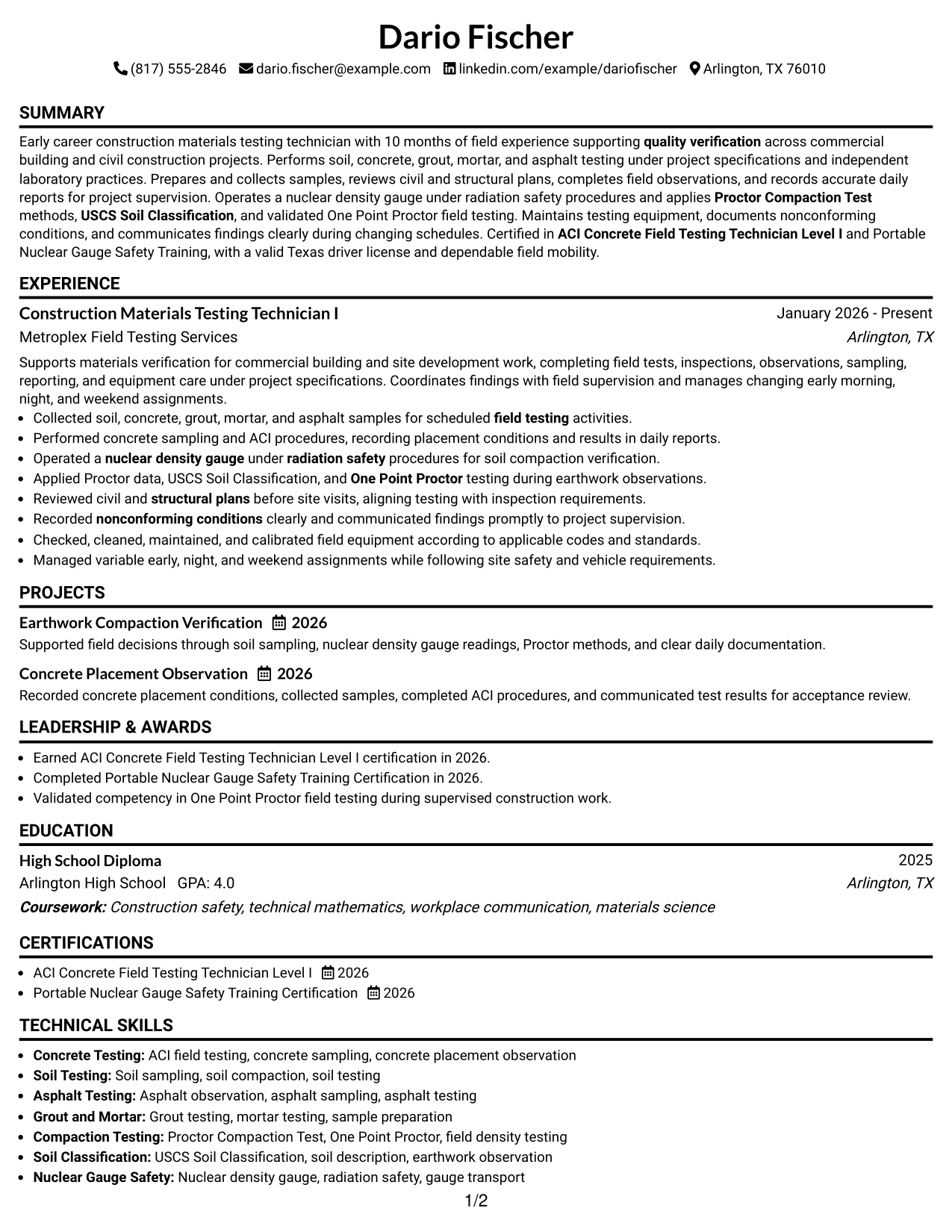
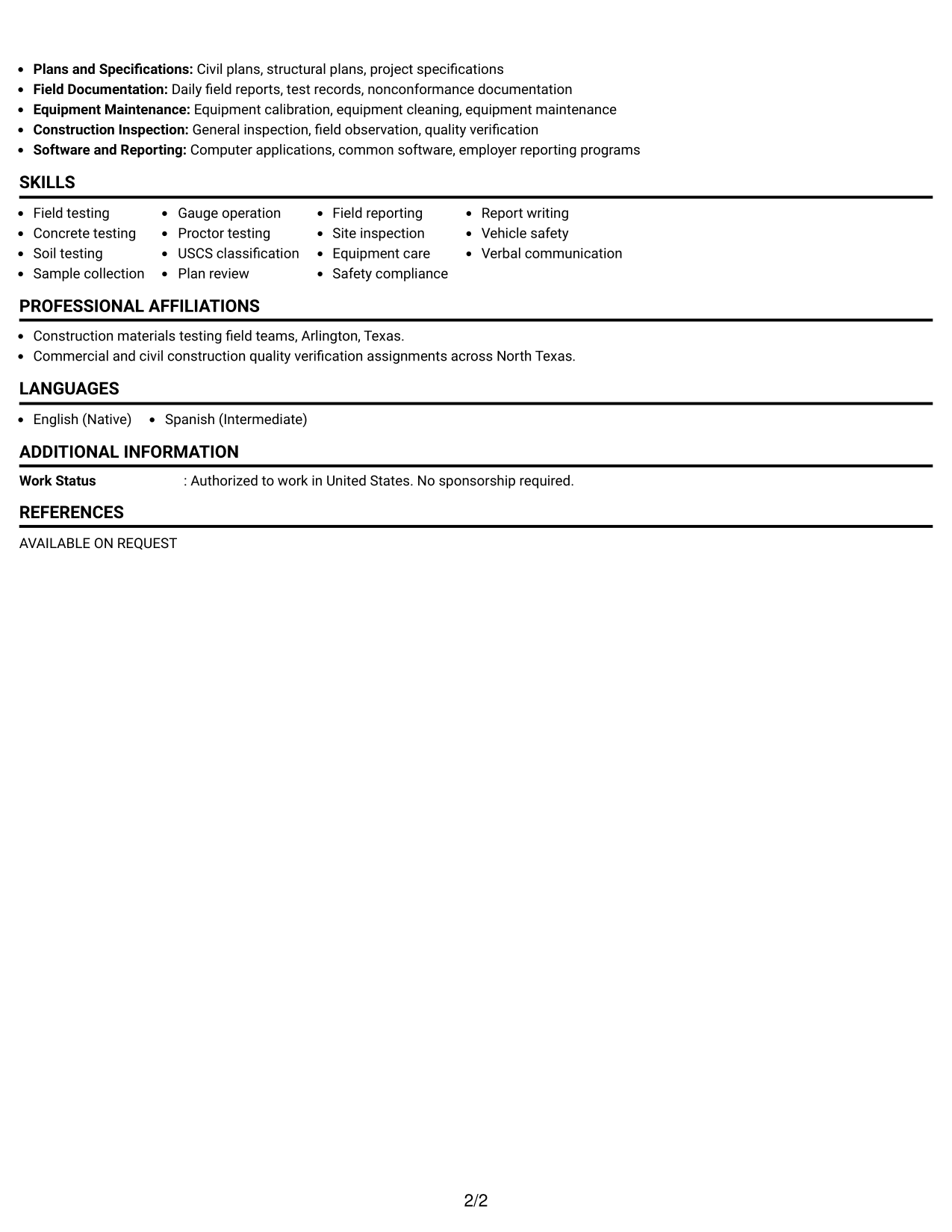
#2 Simple One Column Format Resume Example
The Simple One Column Format creates a direct top-to-bottom path, so recruiters can follow each resume section in sequence.
Why This Format Works
- One reading path makes experience and education easy to follow in order.
- Full-width sections give achievements room to stay readable and well spaced.
- Simple hierarchy helps credentials and skills stand apart without parallel content.
Best For
- Straightforward recruiter scanning
- Longer achievement bullets
- Clear chronological experience
- Simple section-by-section reading
- Applications favoring restrained design
#3 Clean Two Column Sidebar Format Resume Example
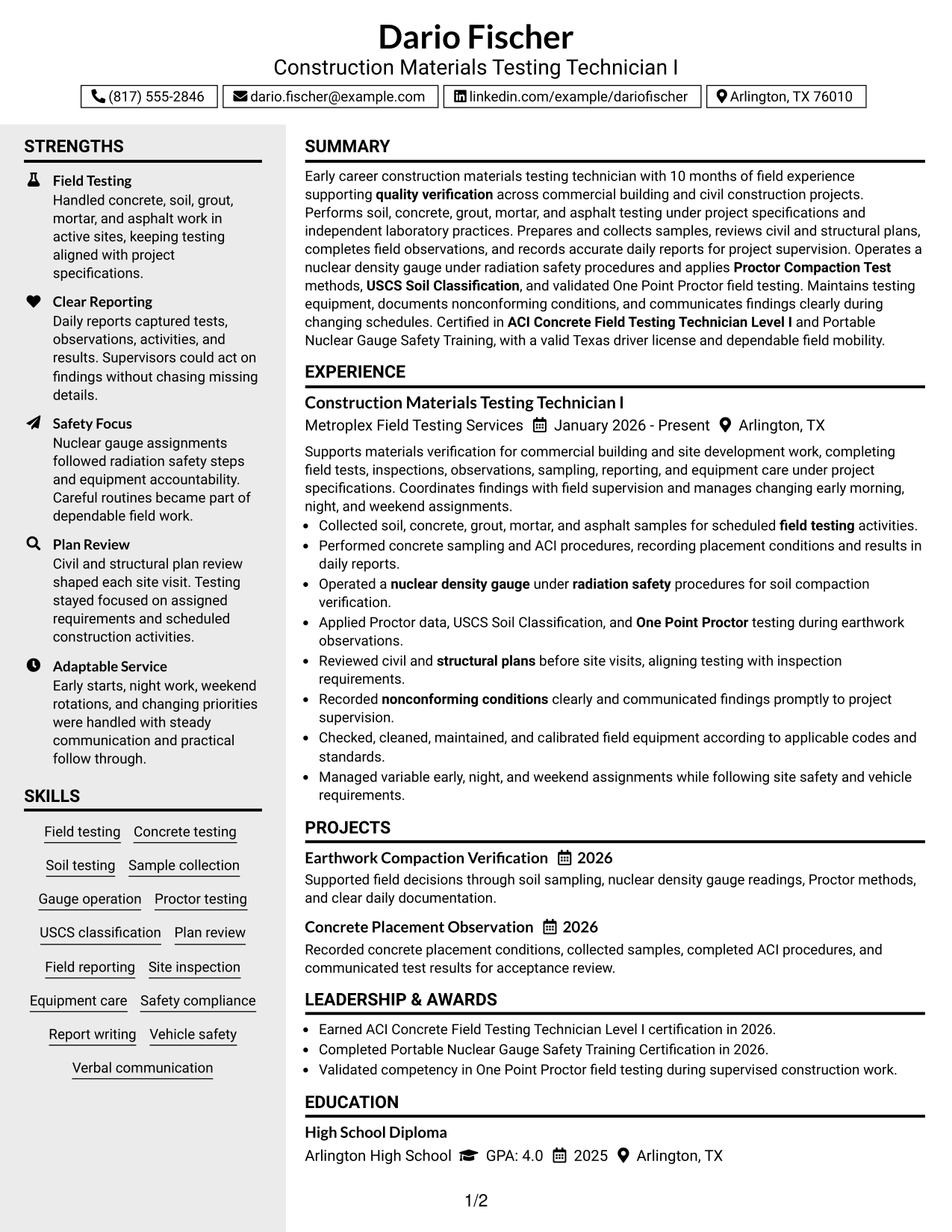
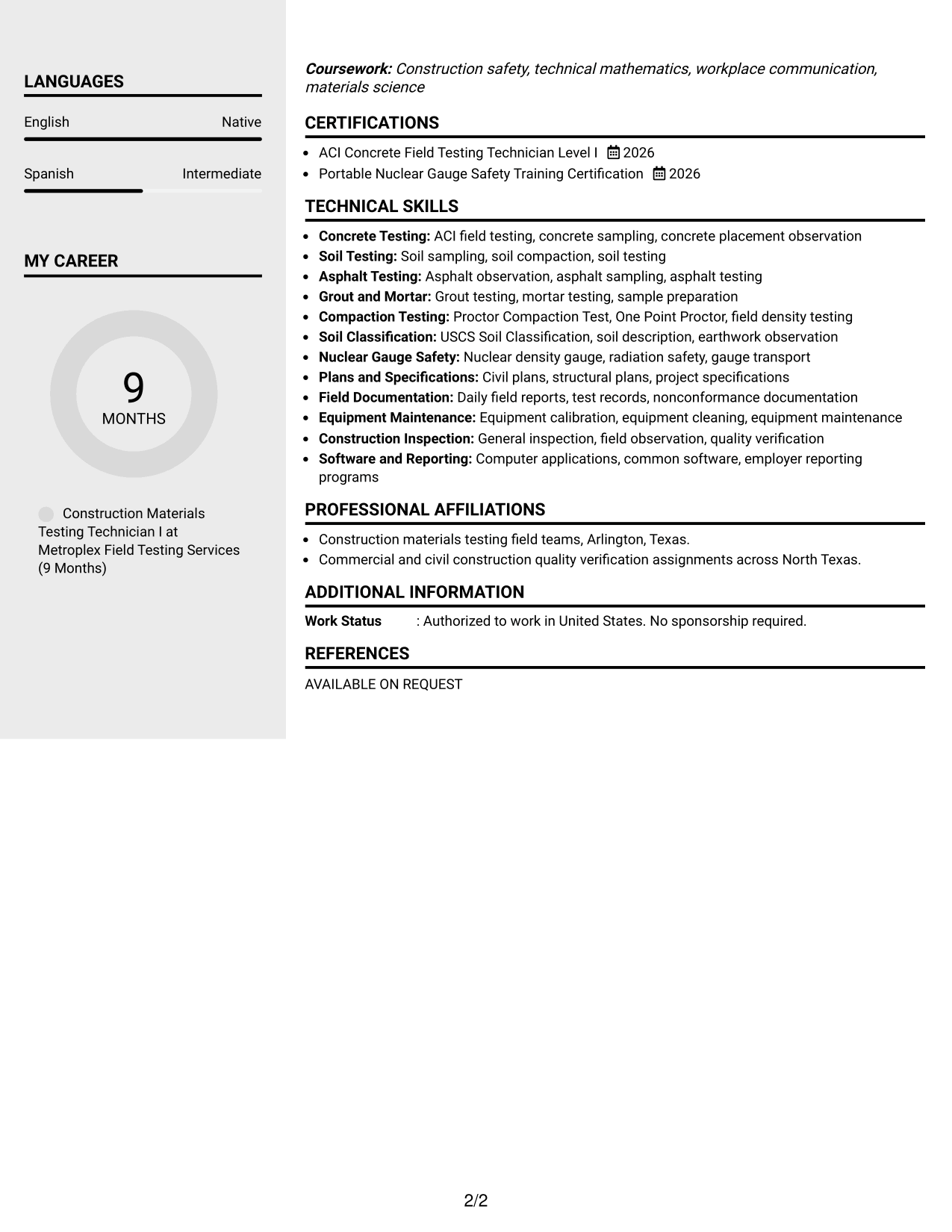
The Clean Two Column Sidebar Format uses a distinct side area to help recruiters locate supporting resume sections beside the main history.
Why This Format Works
- The sidebar separates supporting skills and credentials from the main experience narrative.
- Main-column space keeps career history readable while secondary details remain easy to find.
- Clear visual zones help education and qualifications avoid competing with achievement bullets.
Best For
- Resumes with many supporting credentials
- Quick access to skills
- Experience that needs a strong main column
- Readers comparing qualifications at a glance
- Compact technical profiles
#4 Two Column Format Resume Example
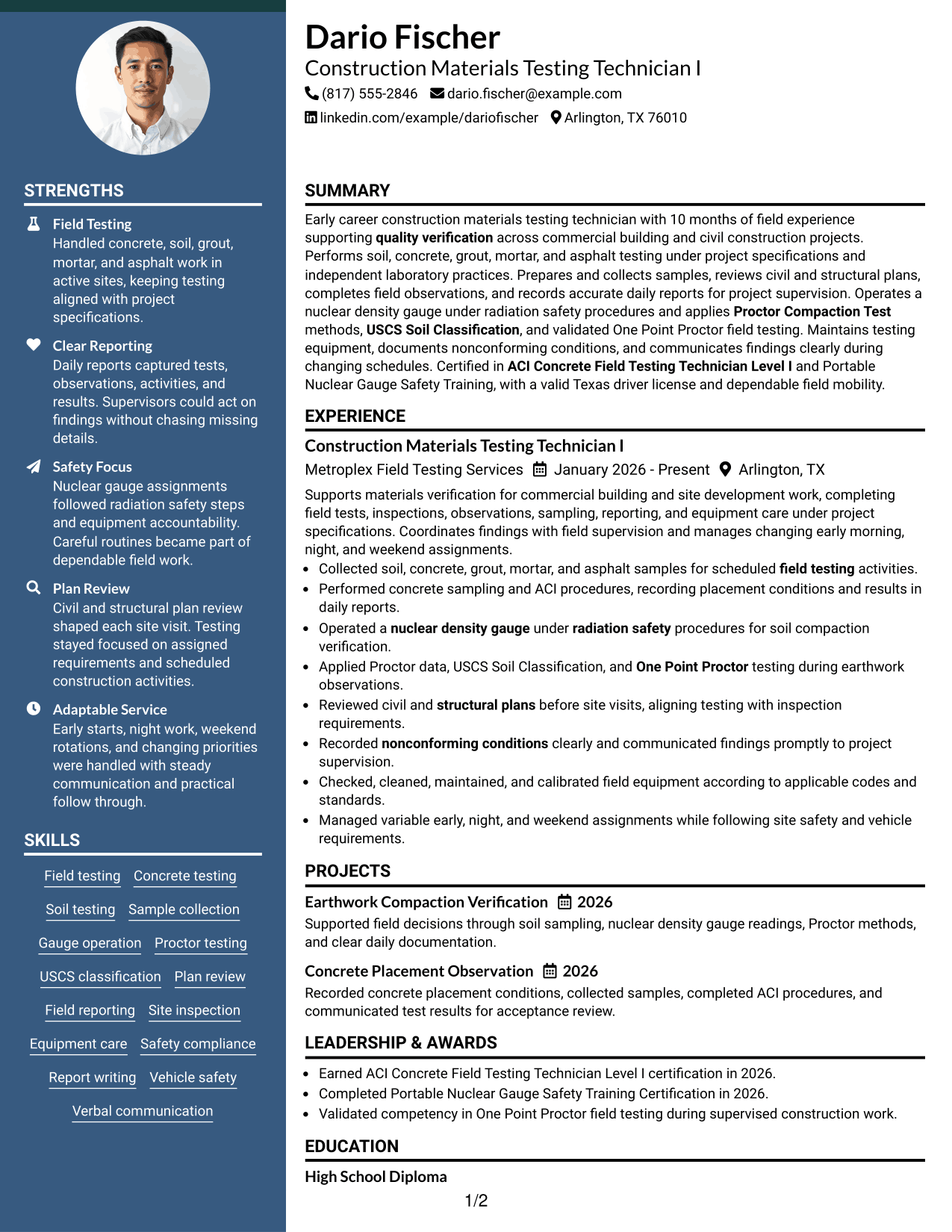
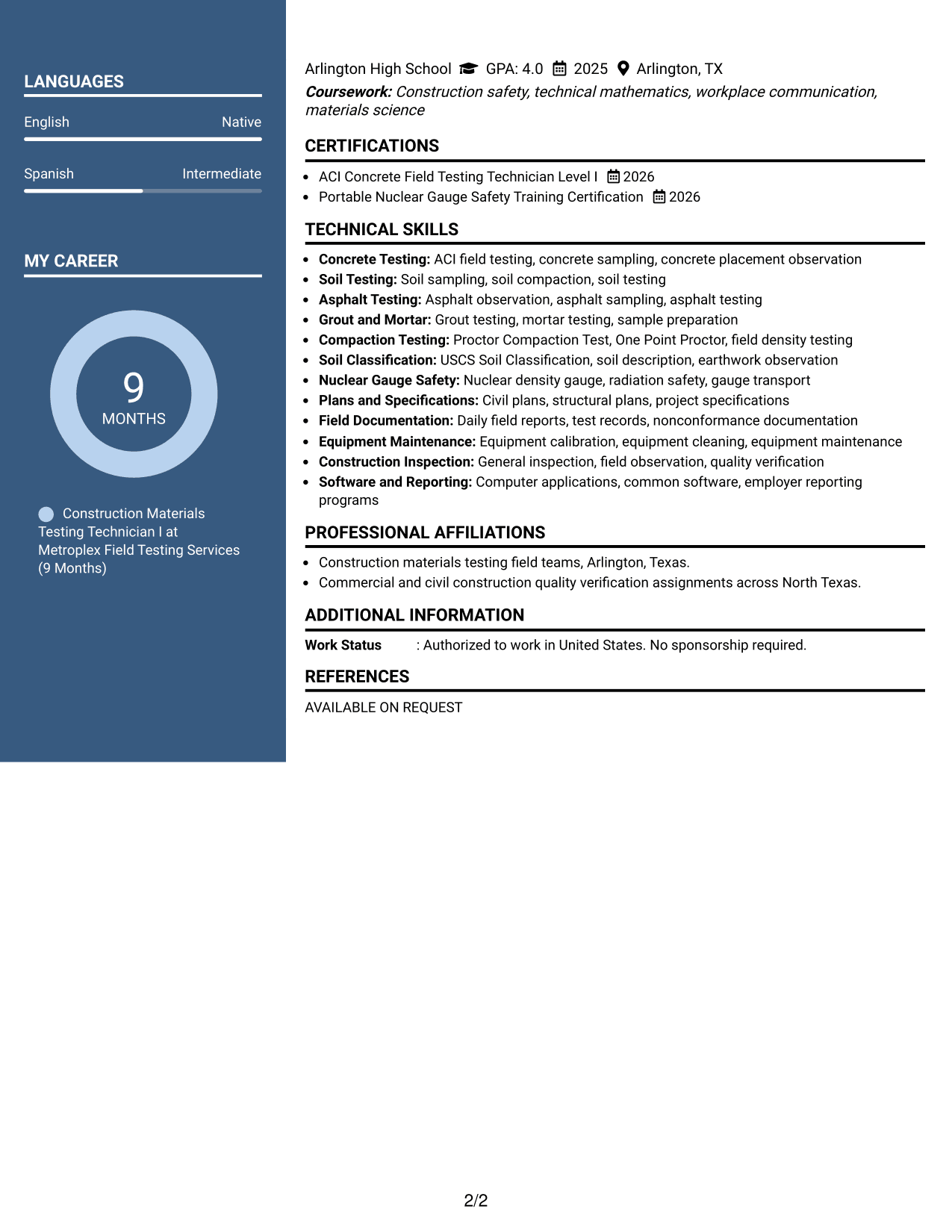
The Two Column Format divides the resume into parallel content areas, helping recruiters move between major sections with less vertical scrolling.
Why This Format Works
- Parallel columns let experience and supporting qualifications share the page efficiently.
- Separate content areas make skills, education, and credentials easier to locate.
- Shorter vertical runs help recruiters revisit achievements without searching through long sections.
Best For
- Balanced experience and qualification content
- Profiles with several short sections
- Readers who compare sections side by side
- Compact use of page space
- Technical resumes with varied evidence
#5 Photo Header Two Column Format Resume Example
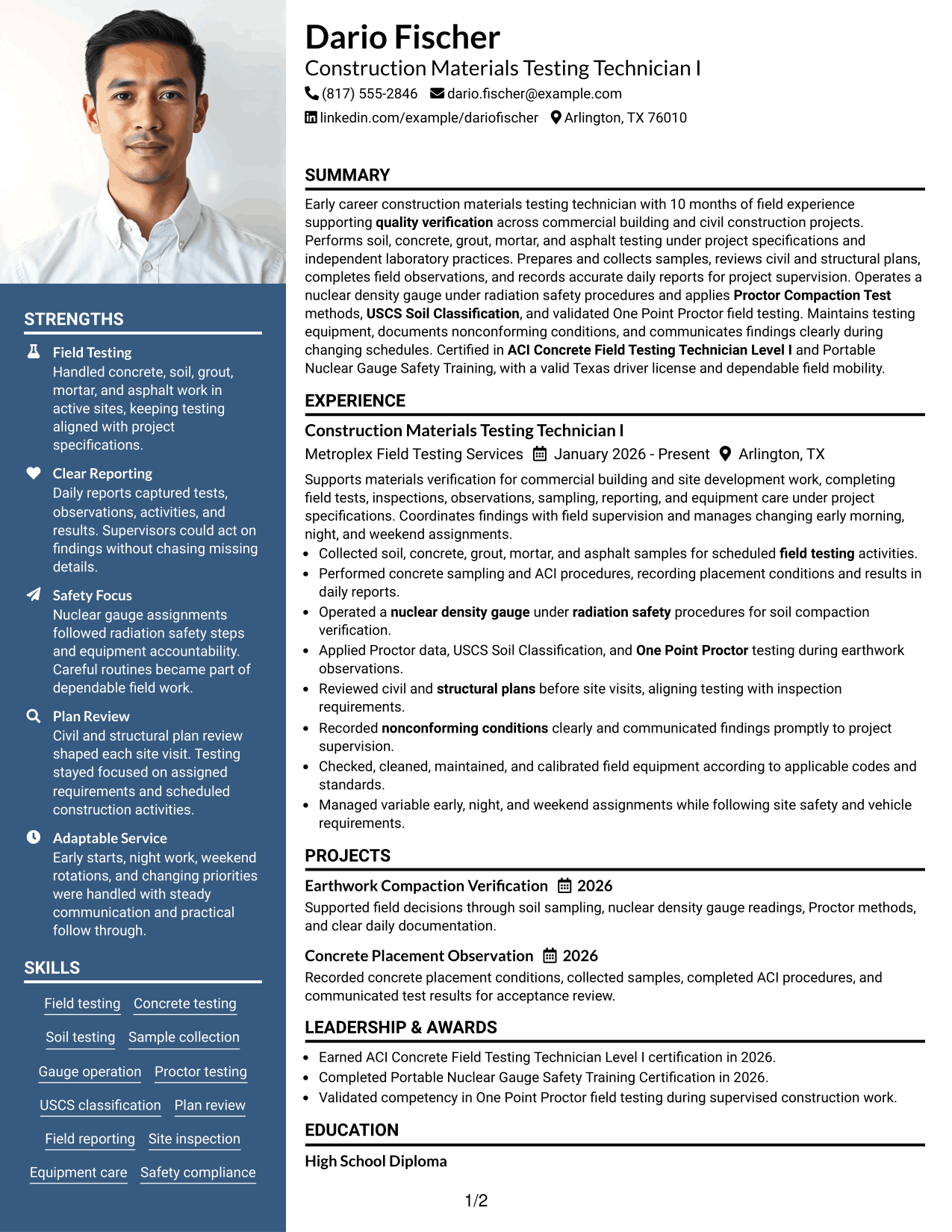
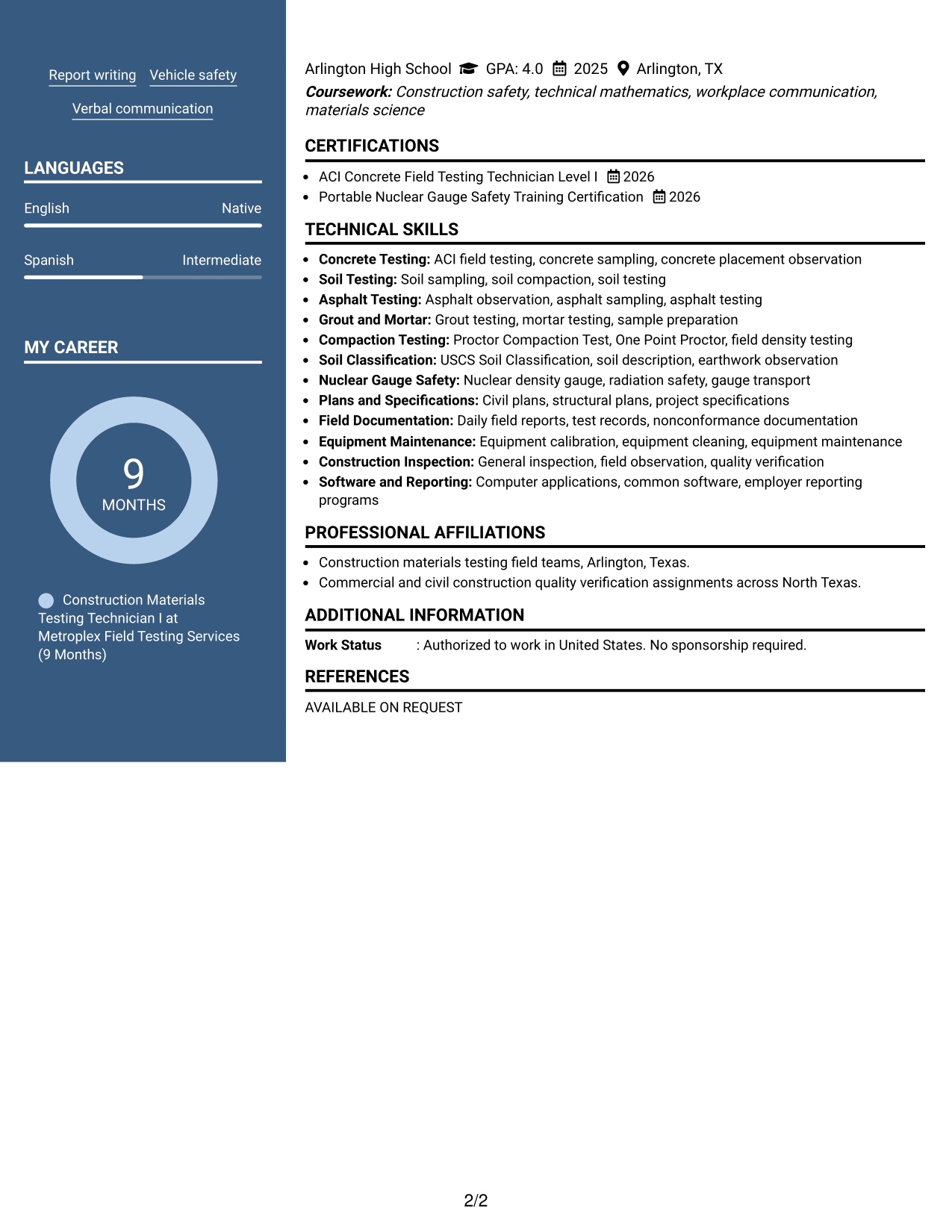
The Photo Header Two Column Format combines a photo-led header with a two-column body, giving recruiters clear identity and section navigation.
Why This Format Works
- The two-column body keeps experience distinct from supporting resume information.
- Section contrast helps recruiters separate career evidence from education and credentials.
- Header space identifies the applicant while the body preserves structured content scanning.
Best For
- Markets where resume photos are customary
- Applications needing strong identity presentation
- Two-column section navigation
- Resumes with compact supporting details
- Readers balancing history and credentials
#6 Colored Two Column Format Resume Example
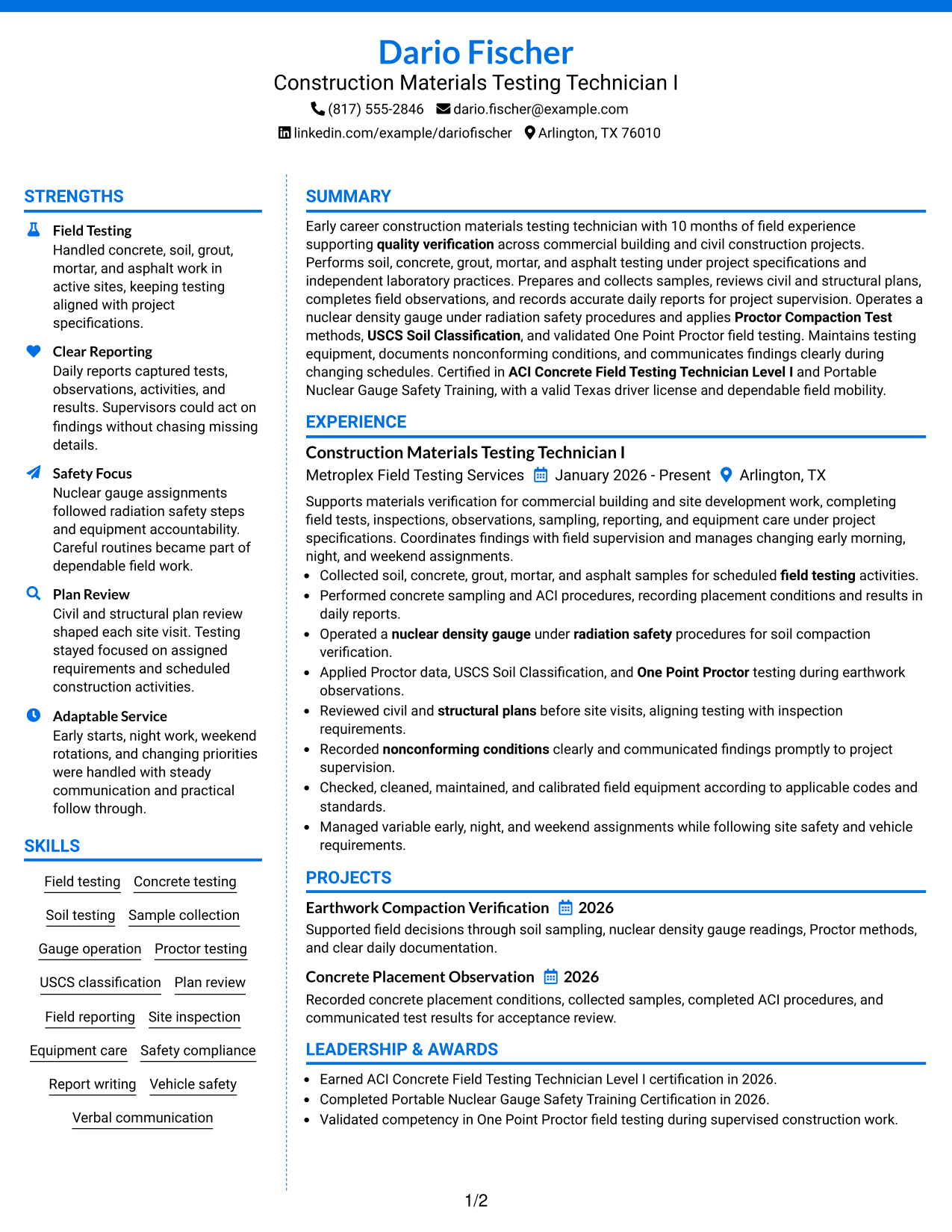
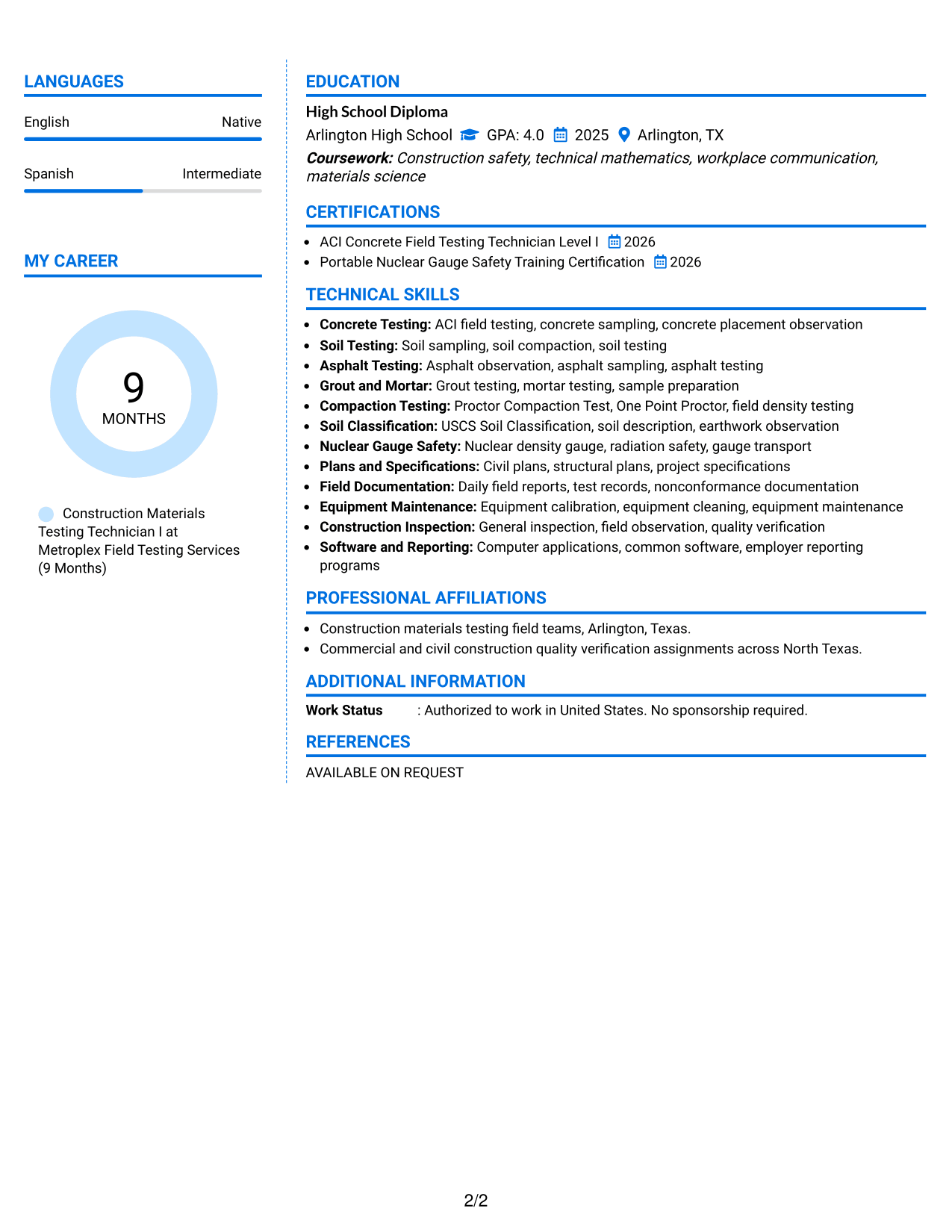
The Colored Two Column Format uses color-backed section separation across two columns, helping recruiters distinguish content groups quickly.
Why This Format Works
- Color separation marks section boundaries while two columns organize the resume compactly.
- Distinct areas make experience, skills, and credentials easier to distinguish during review.
- Visual grouping helps achievements stay connected to their proper resume section.
Best For
- Readers who value strong section cues
- Resumes with multiple content groups
- Compact organization with visual contrast
- Skills and credentials needing quick location
- Applications allowing moderate color
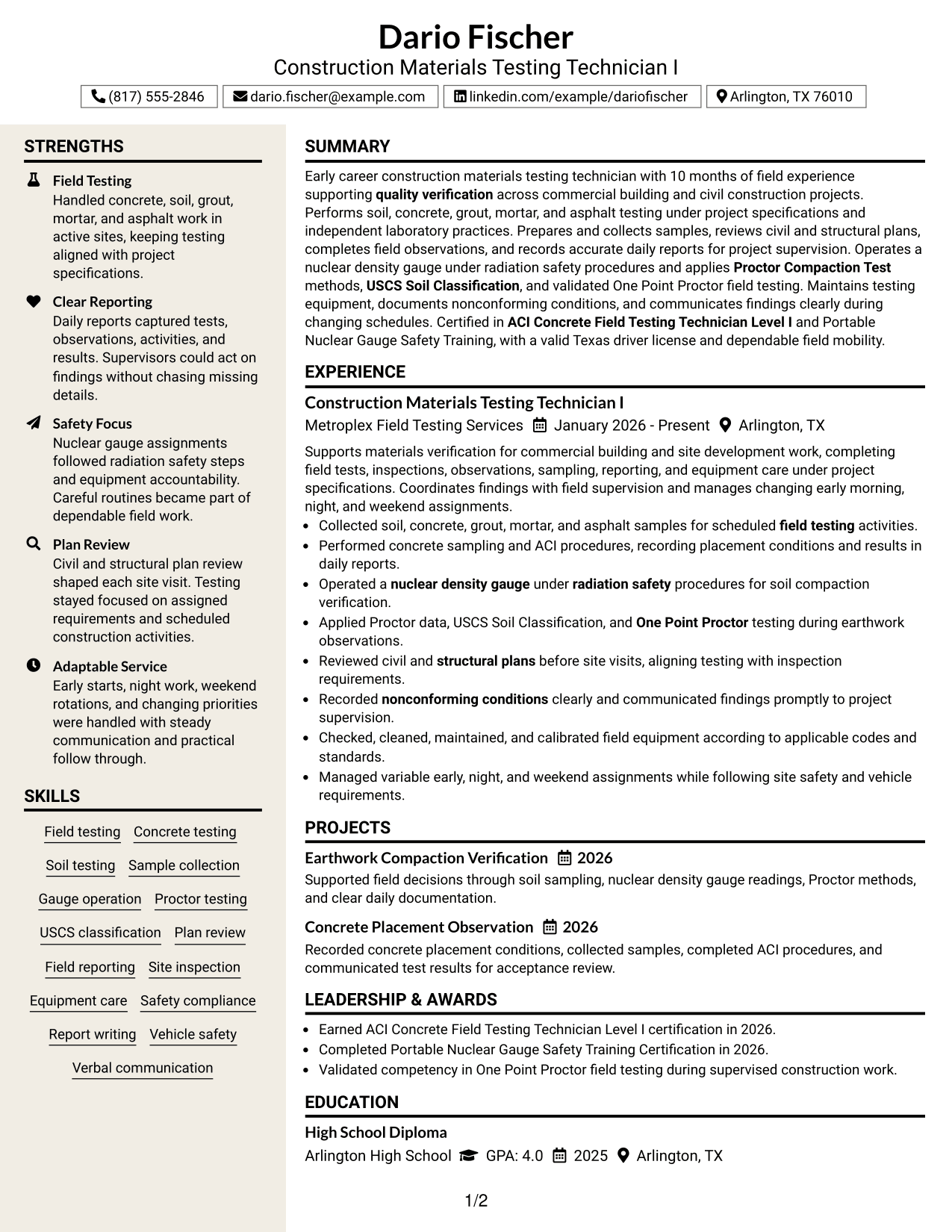
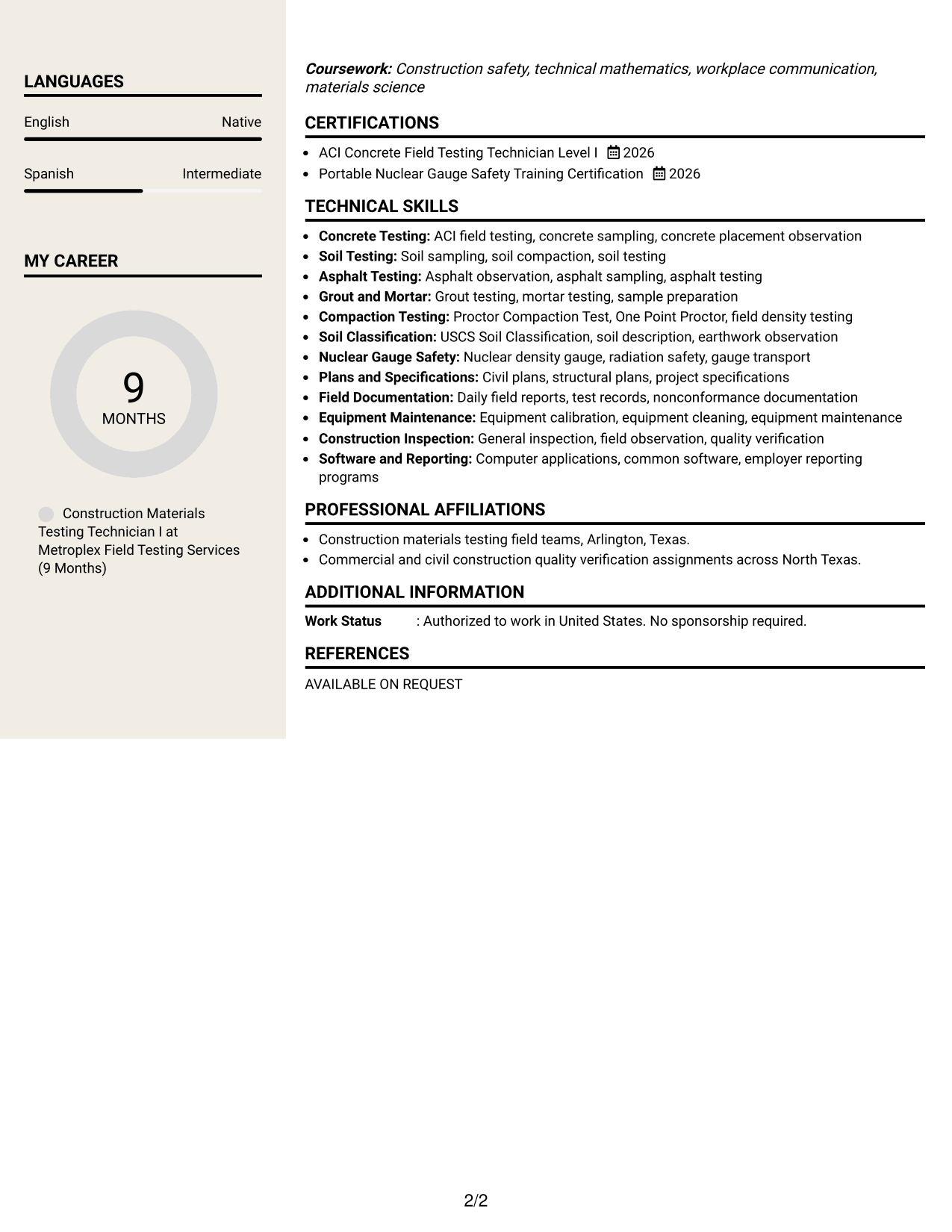
#7 Stylish Two Column Designer Format Resume Example
The Stylish Two Column Designer Format uses structured visual accents across two columns, helping recruiters navigate dense resume content efficiently.
Why This Format Works
- Structured accents create clear stops between experience, skills, and credential sections.
- Two-column organization gives supporting qualifications visibility without interrupting career history.
- Defined section shapes help recruiters return quickly to achievements and education.
Best For
- Resumes needing stronger visual navigation
- Applications open to expressive formatting
- Profiles with dense supporting information
- Readers revisiting key sections quickly
- Two-column resumes with clear boundaries
Why Build Your Construction Materials Testing Technician I Resume with ResumeInMinutes
ResumeInMinutes helps you turn field testing work, technical skills, certifications, projects, and reporting duties into a resume with clear sections and easy-to-scan evidence.
- Practical resume formats
- ATS-friendly section structure
- Role-specific keyword guidance
- Organized skills and credential sections
- Free PDF resume previews
- Easy resume customization
You can adjust the wording and layout to show your strongest supported evidence, from field observations and sample collection to equipment care, certifications, and dependable site documentation.
See Also
- 7 Construction Materials Testing Field Technician Trainee Resume Templates with Example
- 7 Construction and Field Survey Technician Resume Templates with Example
- 7 Adjunct Phlebotomy Technician Instructor Resume Templates with Example
- 7 Audiovisual and Oral History Technician Resume Templates with Example
- 33 Auto Technician Trainee Resume Templates with Example 2026 (ATS-Optimized)
- 7 Automation Technician Resume Templates with Example
- 7 Automotive Diesel Technician Resume Templates with Example
- 33 Automotive Service Technician Resume Templates with Example 2026 (ATS-Optimized)
- 30+ Auto Technician Trainee Cover Letter Templates with Example 2026
- 30+ Automotive Service Technician Cover Letter Templates with Example 2026
Frequently Asked Questions
Are these Construction Materials Testing Technician I resume templates ATS-friendly?
Yes. The templates use clear headings and standard resume sections that support ATS scanning. Keep your wording accurate and include role terms that match your real experience.
Are these different candidate resumes?
No. This guide shows one complete Construction Materials Testing Technician I resume in different visual formats, so you can compare how the same evidence is organized.
What should a Construction Materials Testing Technician I resume include?
Include a focused summary, relevant experience, testing skills, education, certifications, field documentation strengths, equipment knowledge, and project evidence that you can support.
Can I download the resume templates as PDFs?
Yes. Each design includes a free PDF preview so you can compare the layout before choosing the format that fits your resume content.
Which resume style is best for a Construction Materials Testing Technician I position?
A simple one-column or well-organized two-column format can work well. Choose the layout that keeps experience, certifications, skills, and field evidence easy to scan without crowding the page.
Can an early-career technician still build a strong resume?
Yes. Show verified field experience, safety training, certifications, testing methods, reporting work, plan review, equipment care, and dependable schedule flexibility when those details are accurate for you.
Should I include a photo on my resume?
For U.S. applications, a no-photo resume is usually the safer choice. Use a photo only when it is customary or expected in the location where you are applying.
Can I customize these resume templates?
Yes. You can adjust the text and design to match your actual Construction Materials Testing Technician I experience, credentials, skills, and application needs.