7 Critical Care RN/Critical Care RN Trainee - Emergency Department Resume Templates with Example
This guide shows you how to build a Critical Care RN/Critical Care RN Trainee - Emergency Department resume that is clear, focused, and easy to review. You will see how to organize strong nursing evidence and compare professional resume layouts.
Lead with emergency and acute care experience, then make licenses, life-support credentials, assessment skills, clinical documentation, and patient-safety strengths easy to find. Use concise bullets that show triage, stabilization, reassessment, escalation, medication administration, cardiac monitoring, neurologic assessment, and interdisciplinary coordination when those facts match your background.
The same complete resume is presented in 7 layouts so you can compare reading order, section structure, and visual emphasis without changing the underlying qualifications. The examples also show where role-specific keywords and credentials can support ATS matching while keeping the resume readable for a recruiter.
What Makes a Great Critical Care RN/Critical Care RN Trainee - Emergency Department Resume in 2026
A strong resume is easy to scan and puts recent emergency and acute care evidence first. It should connect clinical judgment, safe patient care, and clear escalation with concise experience bullets.
Include exact credentials and keywords you truly hold, such as California RN licensure, BLS, ACLS, PALS, NIH Stroke Scale, Basic Arrhythmia, CPI, and Certified Emergency Nurse.
The examples shown below are intentionally detailed to demonstrate a range of experiences, skills, accomplishments and relevant keywords. We prefer detailed resumes as they provide more context to the hiring managers and also help the ATS systems identify relevant qualifications and score your resume better for a match. But the length of a resume is an individual choice. If you want a one page resume, just keep the most relevant experience and information for the job. Note: Resume examples are for educational purposes only. Use only information that accurately reflects your experience and qualifications. References to real organizations do not imply affiliation or endorsement.
#1 Plain Two Column Format Resume Example
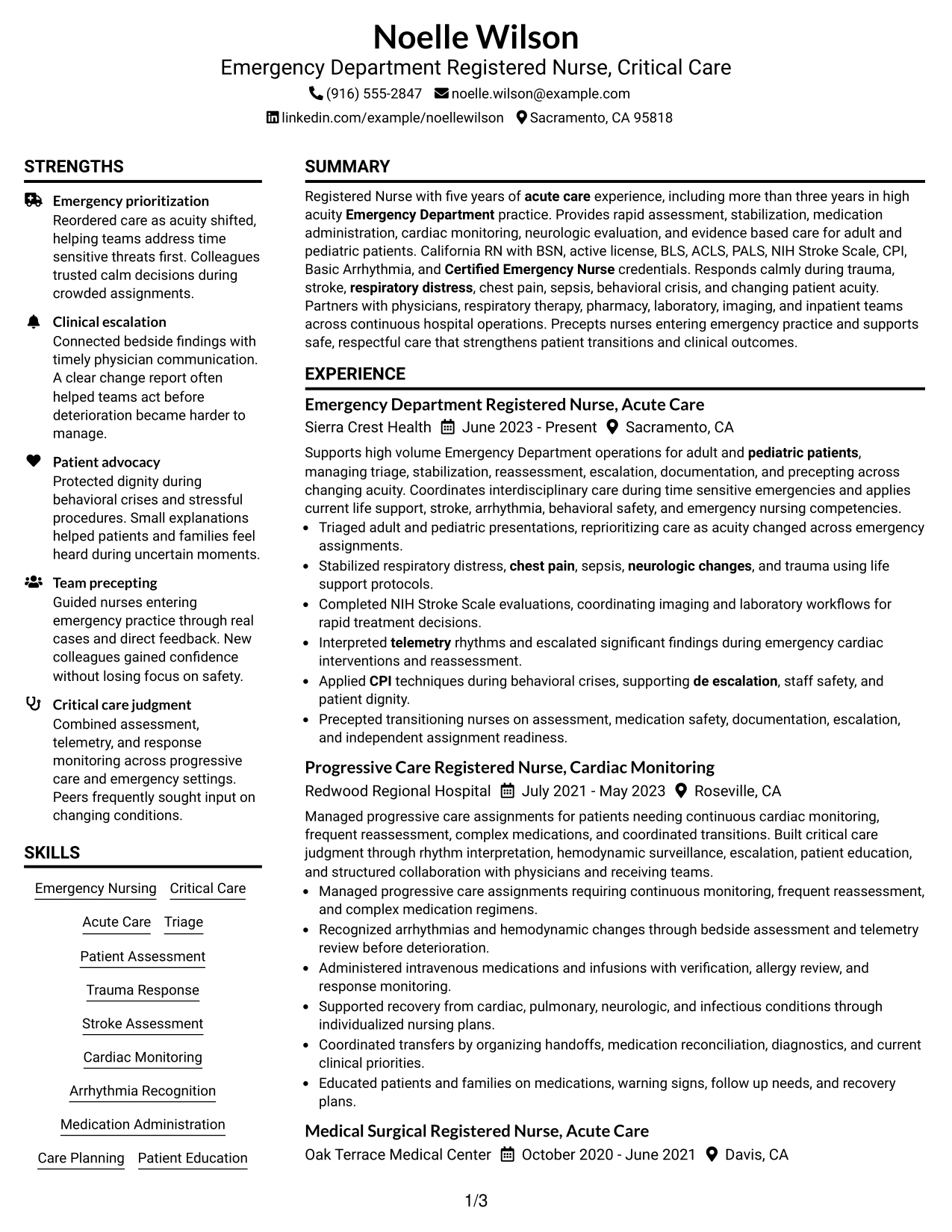
The Plain Two Column Format separates information into two clear areas, helping recruiters scan major resume sections without losing the reading order.
Resume Snapshot
- Five years of acute care nursing experience, including more than three years in high-acuity Emergency Department practice
- Active California Registered Nurse license with BSN education
- Current BLS, ACLS, PALS, NIH Stroke Scale, CPI, Basic Arrhythmia, and Certified Emergency Nurse credentials
- Experience in triage, stabilization, cardiac monitoring, neurologic assessment, documentation, precepting, and interdisciplinary coordination
Why This Format Works
- Two columns separate skills and credentials from detailed experience sections.
- Clear section breaks help recruiters trace career progression across acute care roles.
- Balanced space keeps education and certifications visible beside substantial clinical experience.
Best For
- Resumes with many current credentials
- Readers comparing skills with experience
- Detailed acute care career histories
- Applications needing quick section scanning
- Strong experience plus compact supporting sections
Resume Keywords
- Critical Care RN
- Emergency Department
- Registered Nurse
- acute care
- patient care
- clinical standards
- safe practice
- California Registered Nurse license
- BLS
- ACLS
- NIH Stroke Scale Certification
- PALS
- Basic Arrhythmia
- CPI
- Certified Emergency Nurse
- triage
- patient assessment
- stabilization
- medication administration
- clinical documentation
- interdisciplinary coordination
#2 Simple One Column Format Resume Example
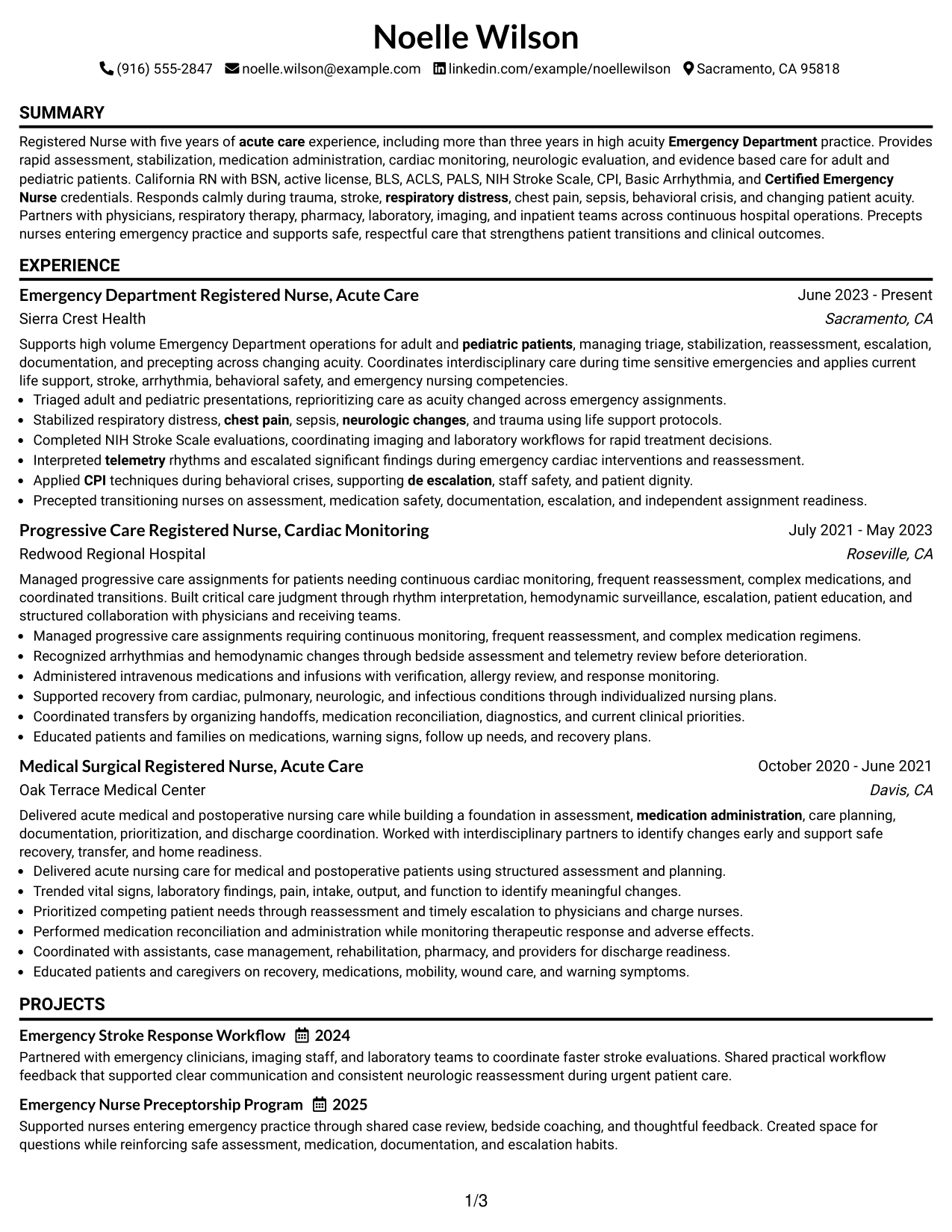
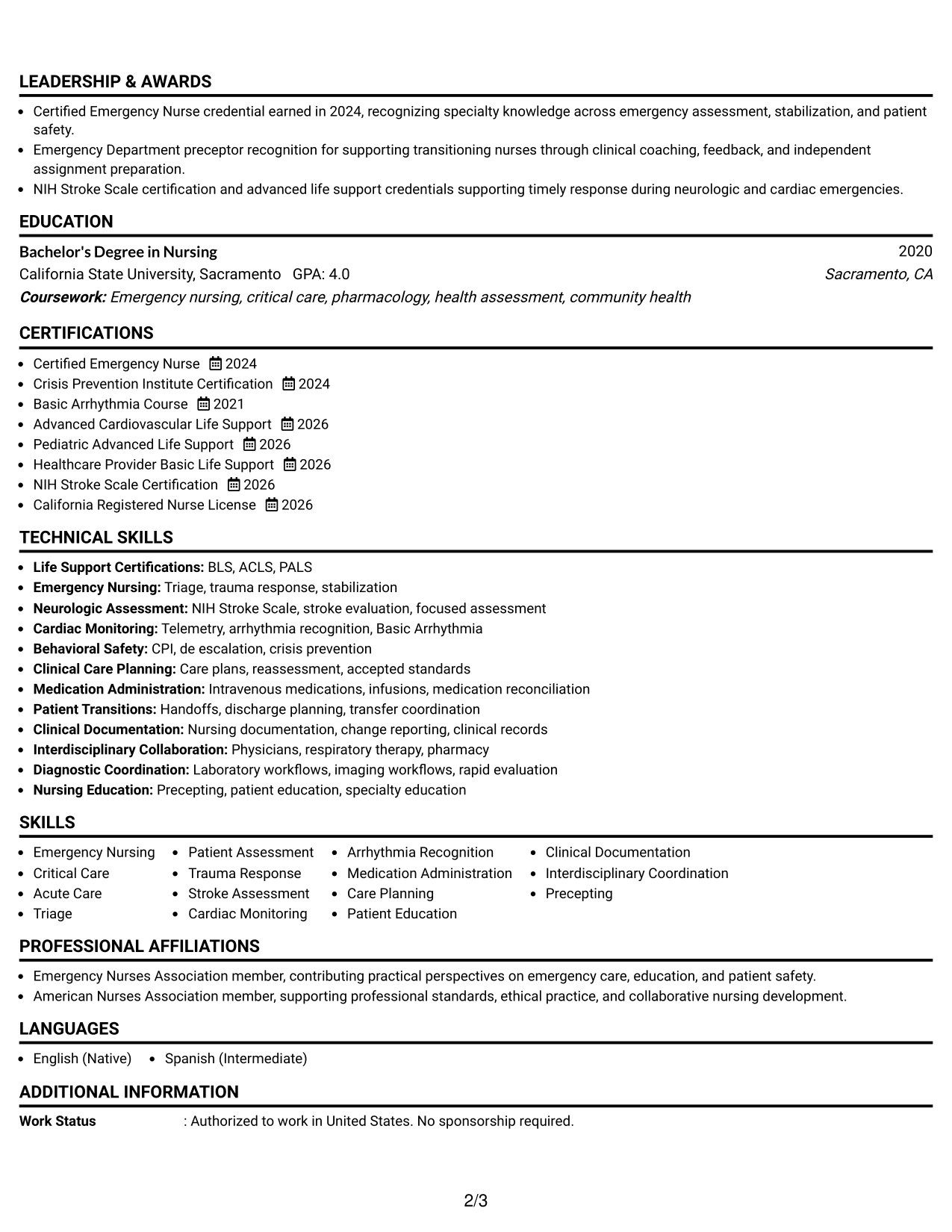
The Simple One Column Format gives recruiters a direct top-to-bottom path through each resume section, which keeps the review sequence easy to follow.
Why This Format Works
- Single-column reading keeps recent experience and earlier roles in one sequence.
- Full-width sections give substantial experience bullets room to remain easy to read.
- Straightforward stacking makes education and credentials simple to locate after experience.
Best For
- Traditional recruiter reading order
- Longer experience descriptions
- Simple section-by-section review
- ATS-focused applications with clear headings
- Readers who prefer linear navigation
#3 Clean Two Column Sidebar Format Resume Example
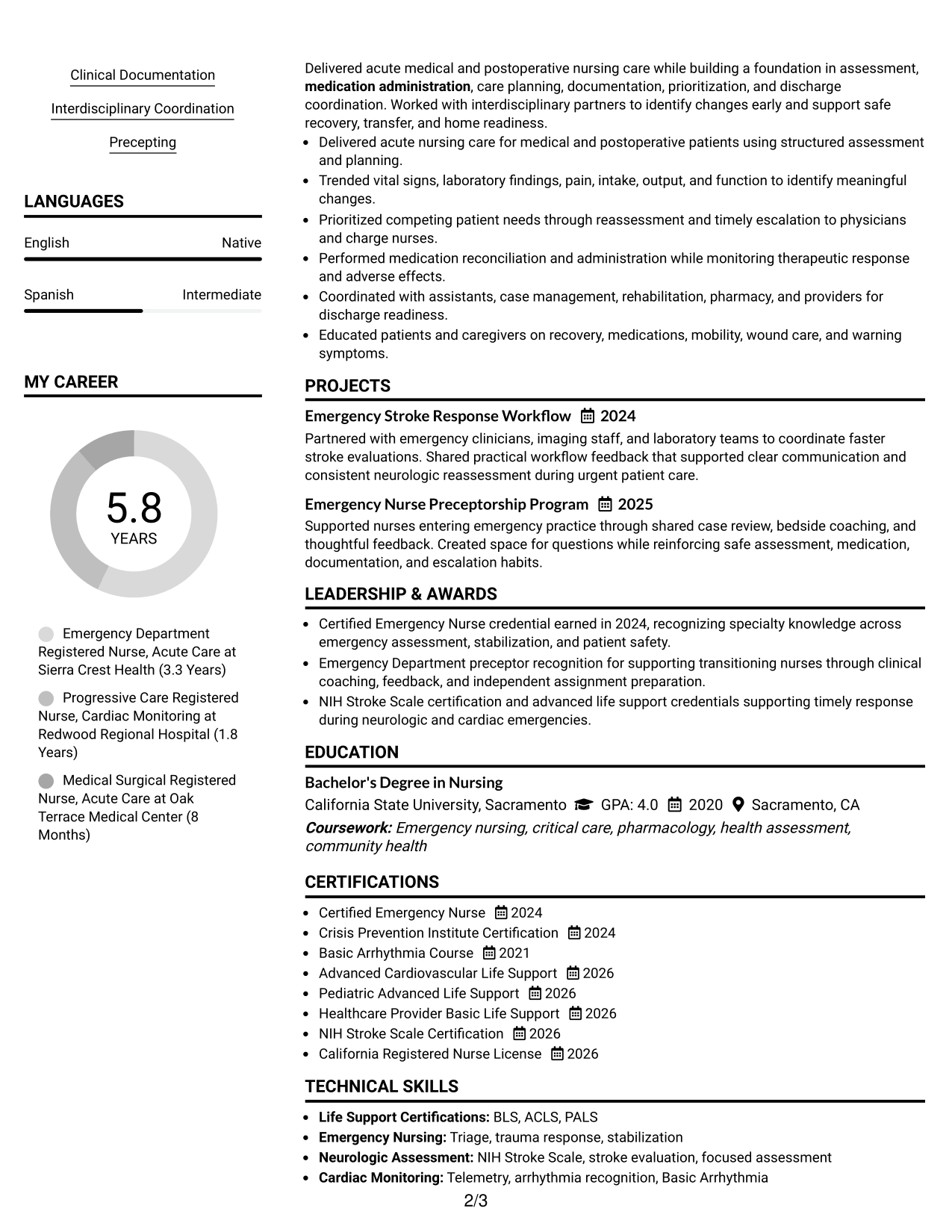
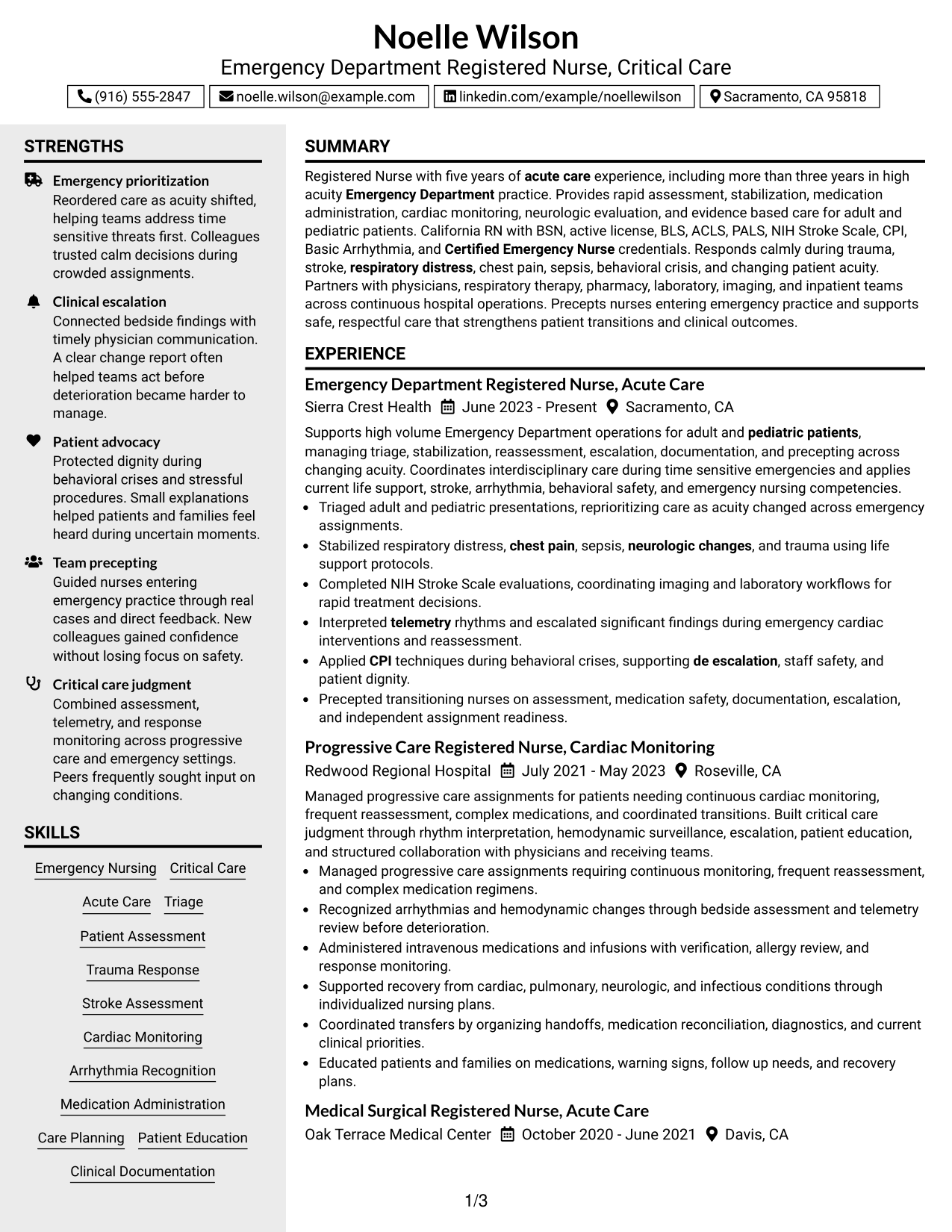
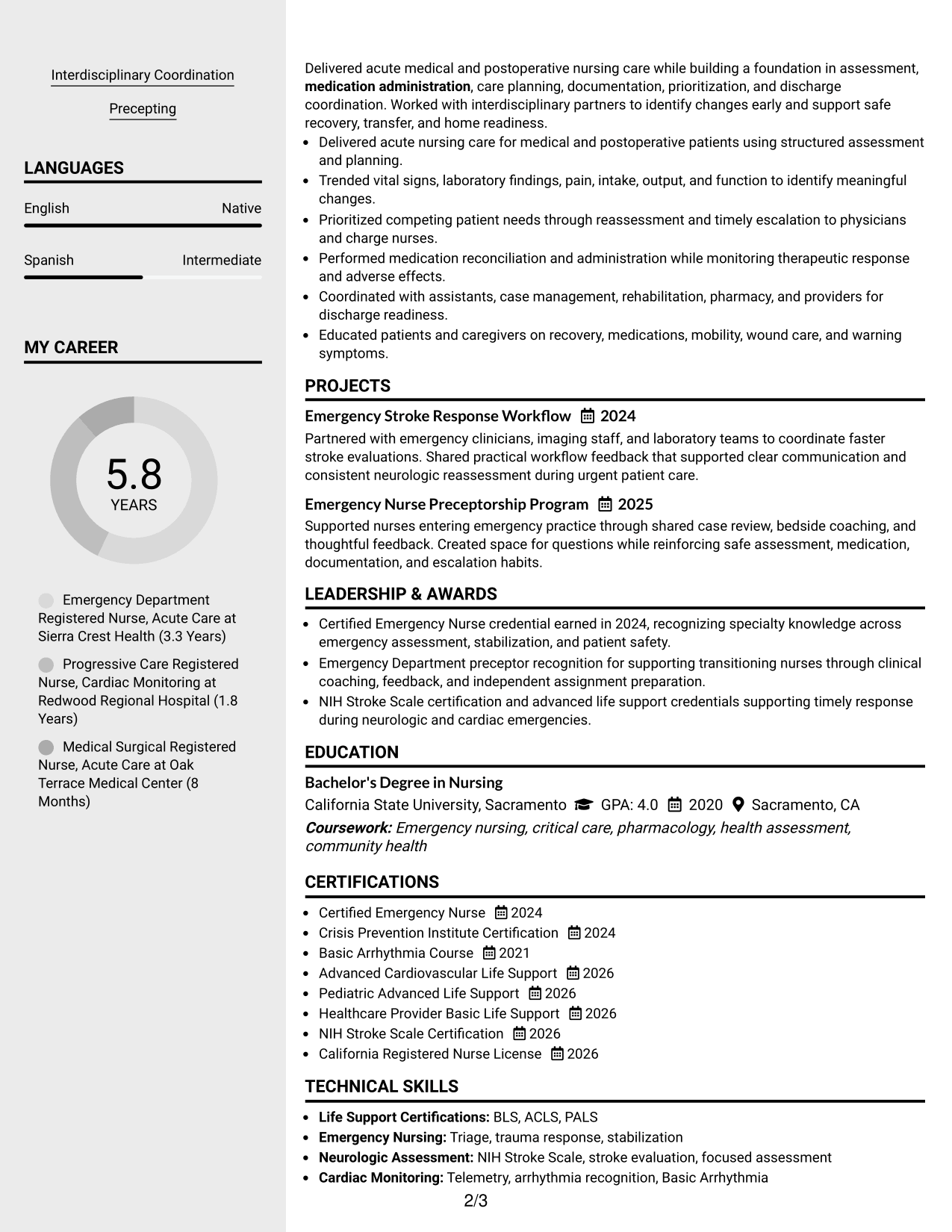
The Clean Two Column Sidebar Format uses a main content area and sidebar, helping recruiters separate detailed experience from shorter supporting sections.
Why This Format Works
- The main column gives career history enough space for clear experience detail.
- The sidebar creates a compact home for skills, education, and credentials.
- Parallel sections let recruiters cross-check qualifications without interrupting experience flow.
Best For
- Credential-heavy nursing resumes
- Compact skills and education sections
- Experience that needs wider text space
- Recruiters cross-checking supporting qualifications
- Two-column organization with a defined sidebar
#4 Two Column Format Resume Example
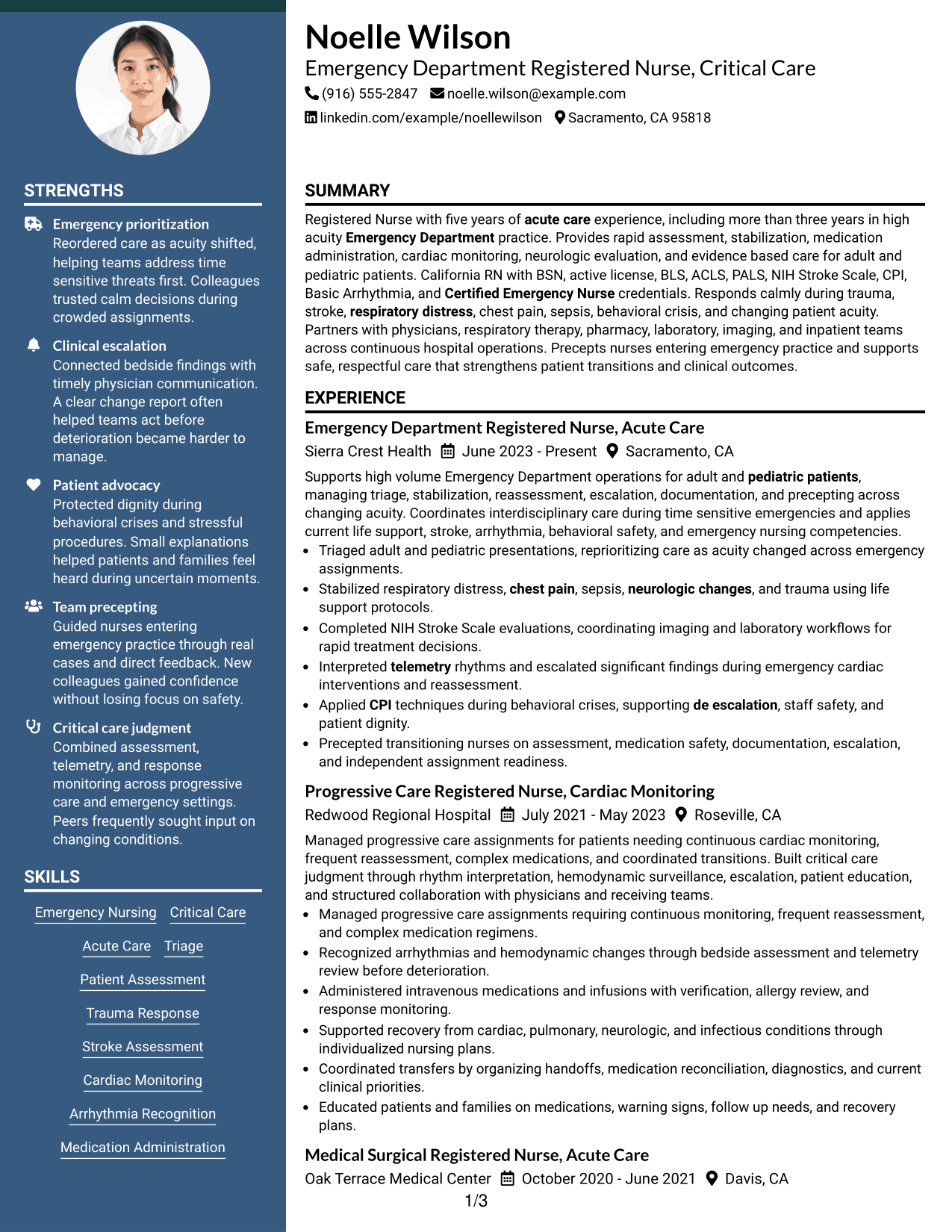
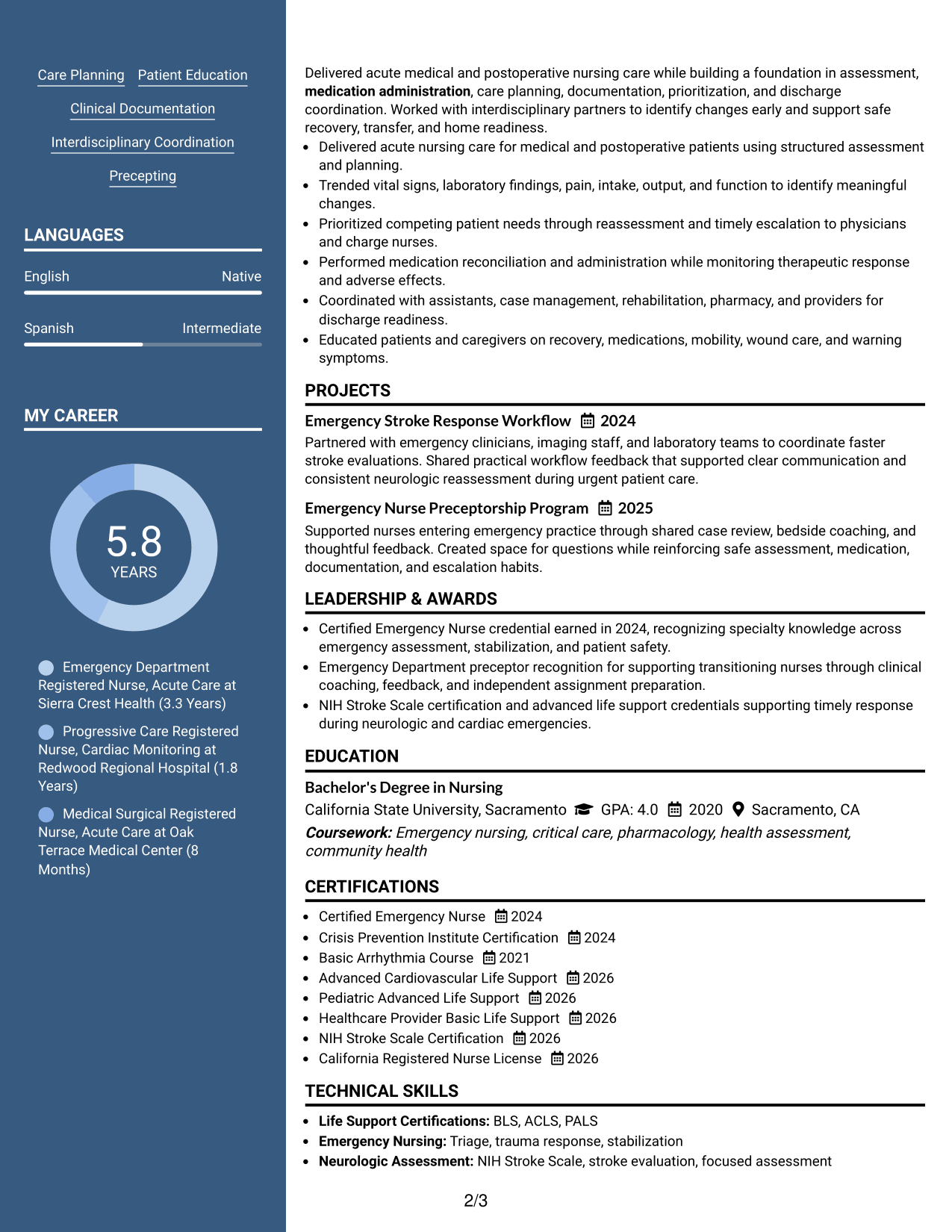
The Two Column Format divides the resume body into parallel areas, helping recruiters compare core experience with supporting qualifications during a quick review.
Why This Format Works
- Parallel columns give experience and supporting sections distinct visual space.
- Section separation helps recruiters find achievements without scanning unrelated content.
- The divided structure handles substantial skills and credentials without crowding experience.
Best For
- Balanced experience and qualification content
- Fast comparison across major sections
- Resumes with substantial supporting information
- Readers who scan by section
- Clinical backgrounds with several credential groups
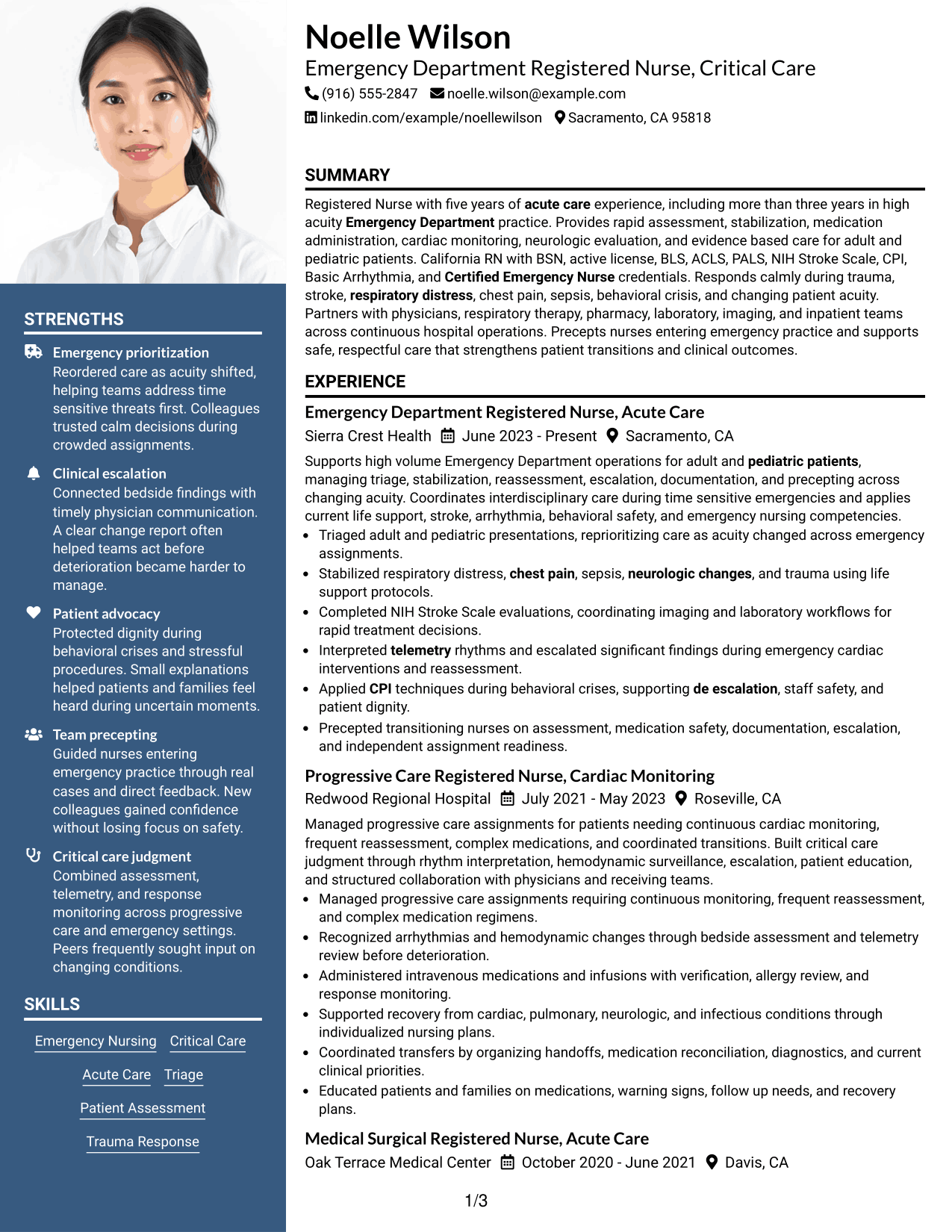
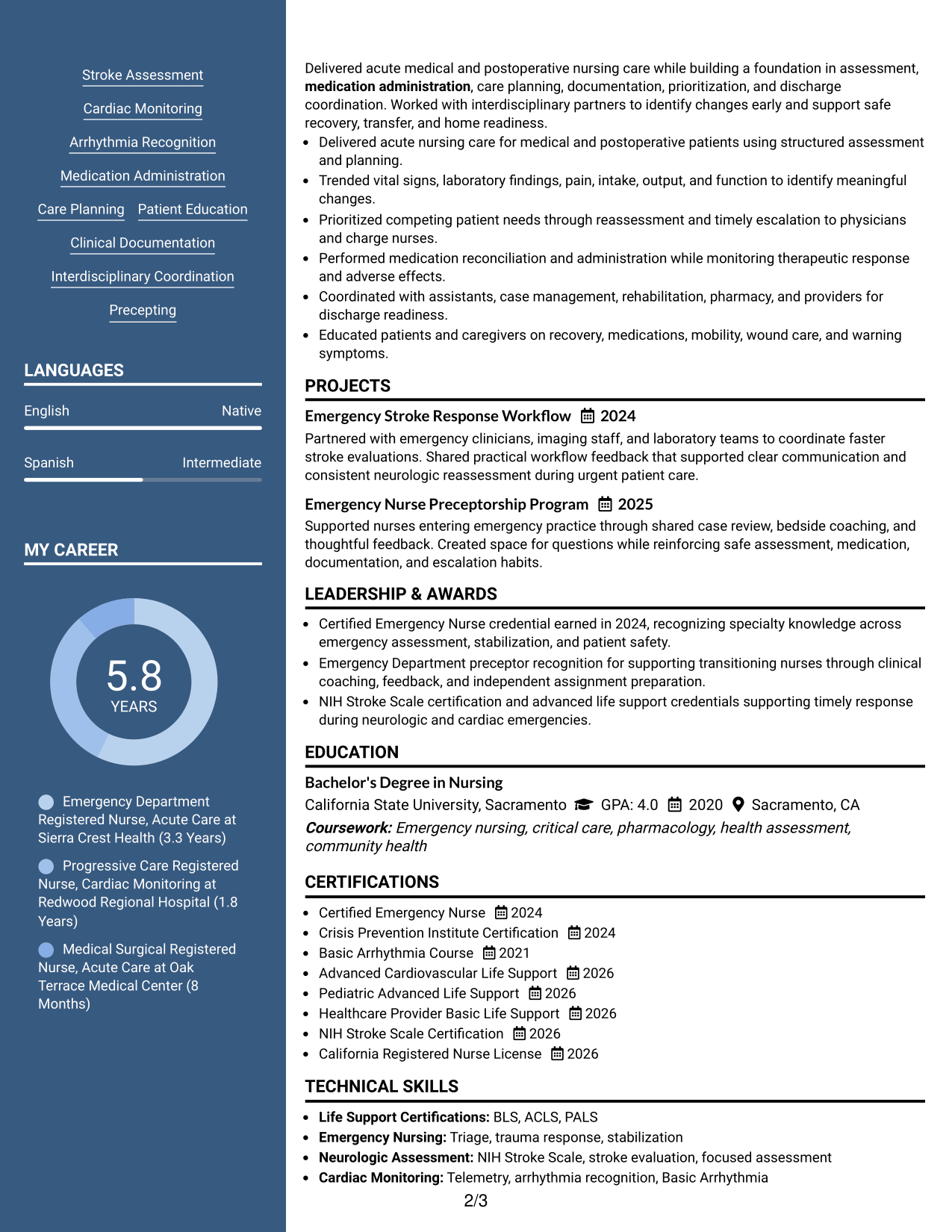
#5 Photo Header Two Column Format Resume Example
The Photo Header Two Column Format combines a photo header with two body columns, giving recruiters a distinct header and organized paths through the resume sections.
Why This Format Works
- The photo header identifies the applicant before recruiters enter the resume body.
- Two body columns separate detailed experience from shorter skills and credential sections.
- Clear body divisions help recruiters move between career history and supporting qualifications.
Best For
- Regions where resume photos are customary
- Applications that request a professional photo
- Resumes combining detailed history with compact sections
- Readers who value clear body separation
- International presentation needs with two-column organization
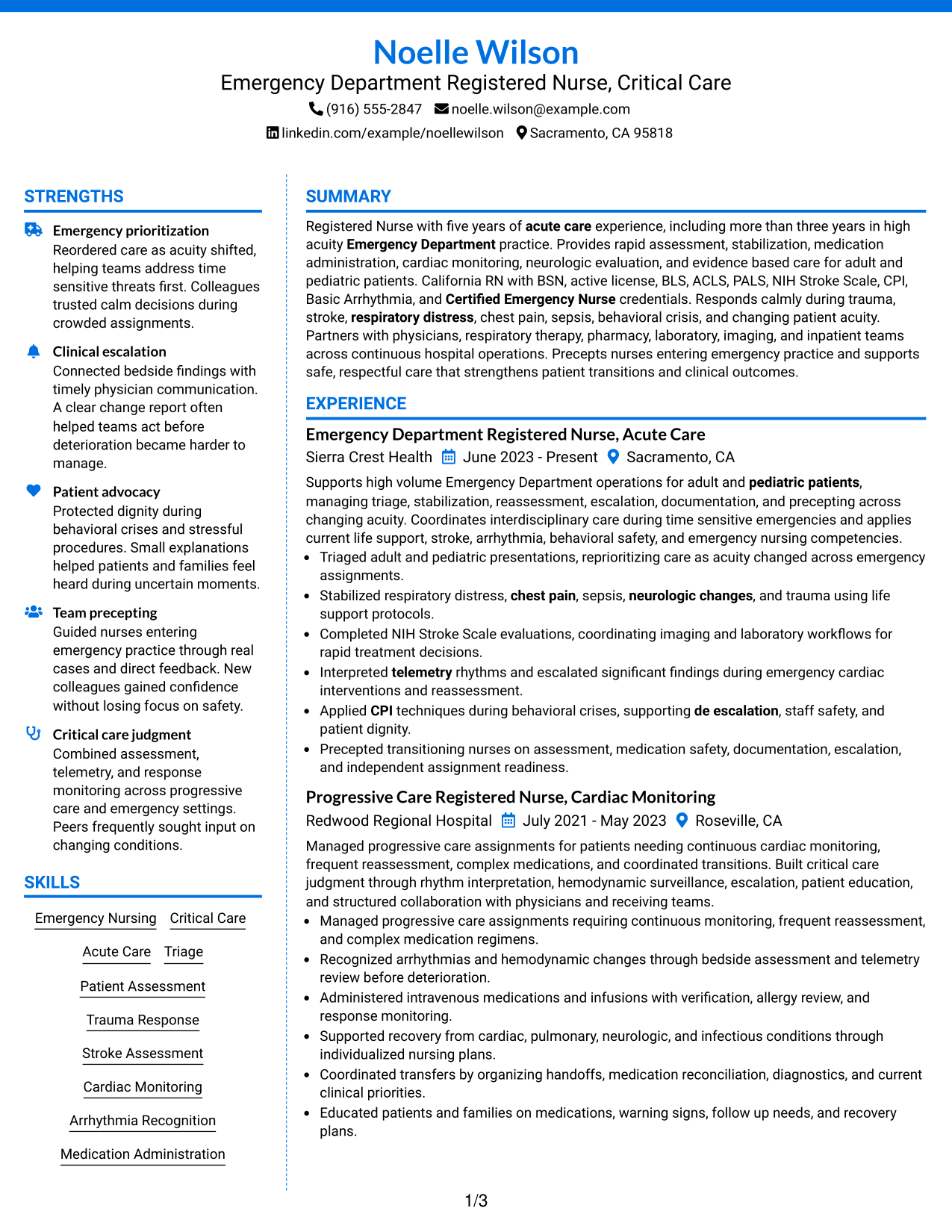
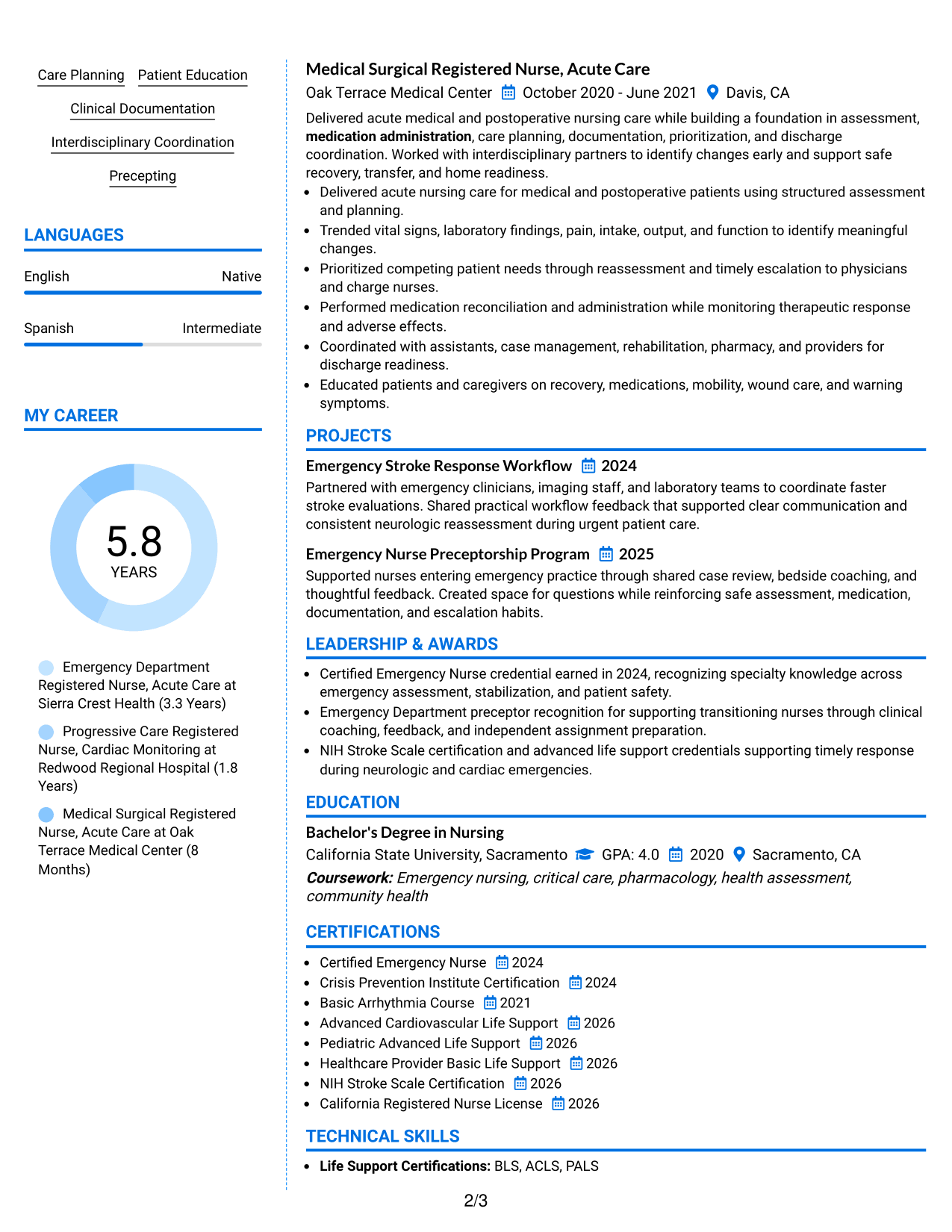
#6 Colored Two Column Format Resume Example
The Colored Two Column Format uses color and two-column organization to mark section boundaries, helping recruiters move quickly between experience and supporting information.
Why This Format Works
- Color cues make section boundaries easier to notice during a fast review.
- Two columns reserve separate space for experience, skills, and credentials.
- Visible grouping helps recruiters return to education or qualifications after reading experience.
Best For
- Readers who benefit from strong section cues
- Resumes with several supporting sections
- Quick navigation between experience and credentials
- Modern layouts with restrained color
- Applications allowing modest visual styling
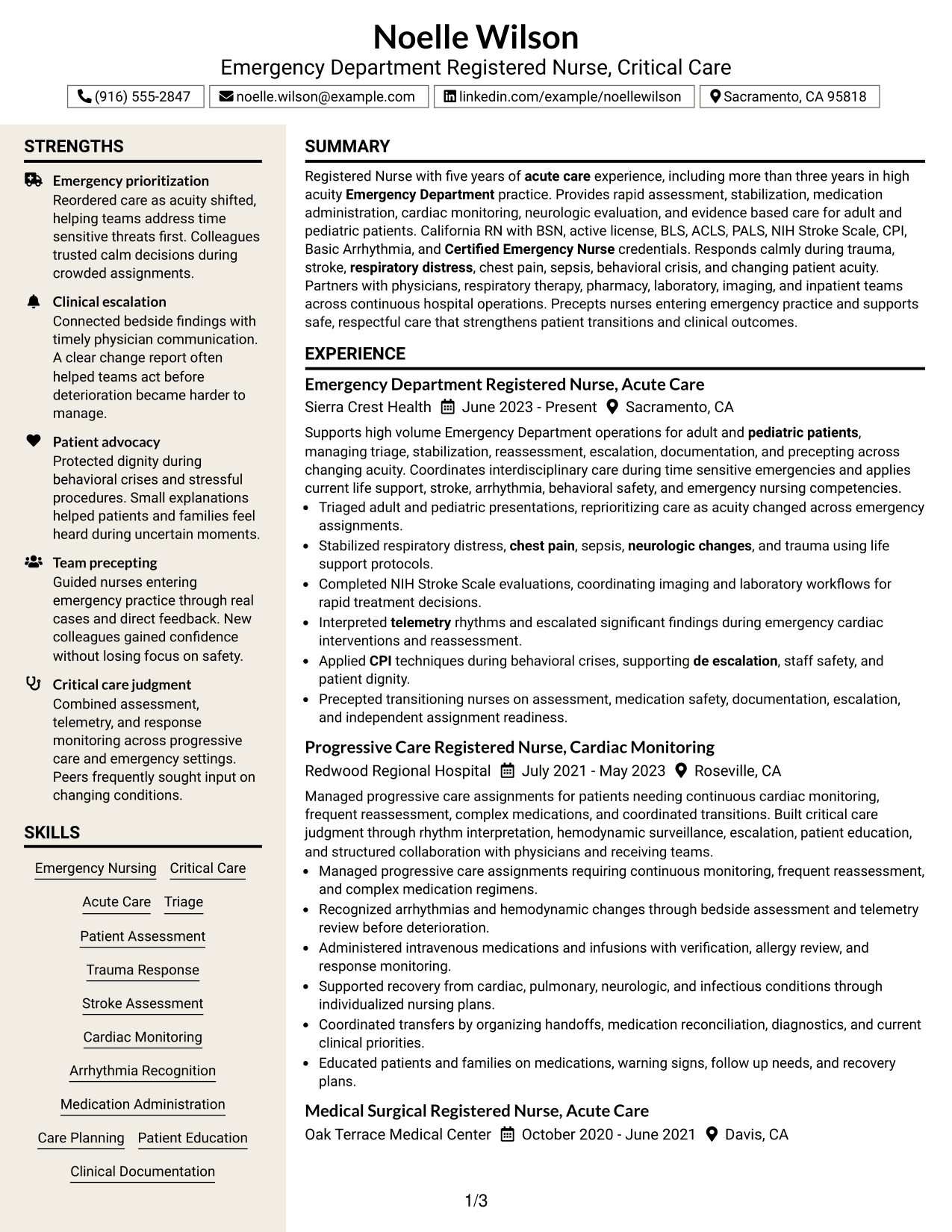
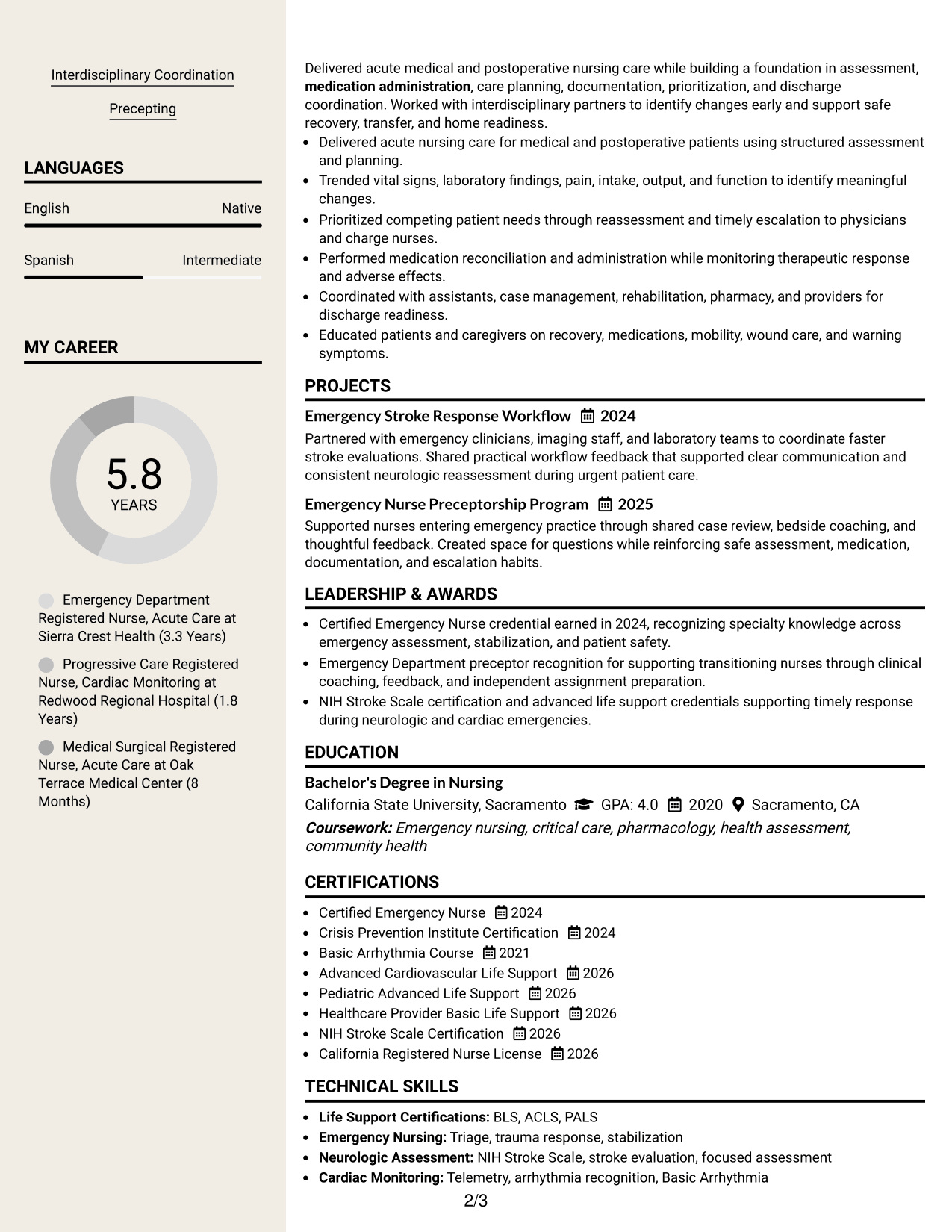
#7 Stylish Two Column Designer Format Resume Example
The Stylish Two Column Designer Format uses structured two-column styling to help recruiters distinguish dense experience content from shorter resume sections at a glance.
Why This Format Works
- Defined visual blocks separate career progression from shorter supporting sections.
- Two-column structure keeps a large skills set from overwhelming experience detail.
- Distinct section treatment helps recruiters revisit credentials and education efficiently.
Best For
- Polished resumes with varied section lengths
- Substantial skills alongside detailed experience
- Readers revisiting credentials during review
- Applications accepting stronger visual design
- Content needing clear visual grouping
Why Build Your Critical Care RN/Critical Care RN Trainee - Emergency Department Resume with ResumeInMinutes
ResumeInMinutes helps you organize emergency nursing experience, clinical skills, education, licenses, and certifications into clear sections that are simple to review and tailor.
- Multiple professional resume formats
- ATS-friendly section structure
- Role-focused keyword guidance
- Clear experience and credential organization
- Free PDF resume previews
- Easy resume customization
You can adjust the content for the exact emergency department opening while keeping the strongest evidence near the top and preserving clear section labels for both recruiters and ATS software.
See Also
- 7 Critical Care Charge Nurse (RN) - ICU Resume Templates with Example
- 7 Critical Care Nurse (RN) Resume Templates with Example
- 7 New Graduate Critical Care Nurse (RN) Resume Templates with Example
- 33 RN Critical Care Resume Templates with Example 2026 (ATS-Optimized)
- 33 Advanced Practice Registered Nurse (APRN) - Critical Care Resume Templates with Example 2026
- 33 Paramedic - Critical Care Transport Resume Templates with Example 2026 (ATS-Optimized)
- 33 Registered Nurse Educator - Critical Care Resume Templates with Example 2026 (ATS-Optimized)
- 7 Registered Nurse II/III - Adult Critical Care Resume Templates with Example
- 30+ RN Critical Care Cover Letter Templates with Example 2026
- 30+ Advanced Practice Registered Nurse (APRN) - Critical Care Cover Letter Templates with Example 2026
Frequently Asked Questions
Are these Critical Care RN/Critical Care RN Trainee - Emergency Department resume templates ATS-friendly?
Yes. They use clear section labels and straightforward structure. For stronger matching, include only accurate terms from the posting, such as Emergency Department, acute care, BLS, ACLS, PALS, NIH Stroke Scale, and California RN licensure when they apply to you.
Are these different candidate resumes?
No. This guide presents one complete Critical Care RN/Critical Care RN Trainee - Emergency Department resume in different visual formats, so you can compare layout choices without changing the candidate evidence.
What should a Critical Care RN/Critical Care RN Trainee - Emergency Department resume include?
Include a focused summary, RN experience, education, active licensure, current life-support credentials, emergency and acute care skills, clinical documentation, patient-safety strengths, and relevant certifications. Add measurable results only when you can support them.
Can I download the resume templates as PDFs?
Yes. Each design includes a free PDF preview so you can compare the layout and choose a format that fits your content.
Which resume style works well for this emergency nursing role?
A clean one-column or well-organized two-column format can work well. Choose the layout that keeps recent experience, credentials, and critical skills easy to find without crowding the page.
How should I show Emergency Department experience and critical care readiness?
Use recent experience bullets to show assessment, triage, stabilization, reassessment, escalation, cardiac or neurologic monitoring, medication safety, and teamwork when those duties are part of your background. Keep separate credentials in a clear certification or license section.
Should I include a photo on a U.S. nursing resume?
Usually no. For U.S. applications, a no-photo resume is generally the safer choice unless a specific application process asks for one.
Can I customize these resume templates?
Yes. You can edit the resume text, section order, and visual style to match the role while keeping every claim accurate and supported by your own experience.