7 Data Analysis Intern Food Processing Resume Templates with Example
This guide shows you how to build a clear, focused Data Analysis Intern Food Processing resume. You will learn how to present relevant analysis work and choose a format that makes your evidence easy to review.
Strong resumes connect analysis methods to practical results. Show how you used SQL and Python, examined food production or supply data, checked data quality, and explained findings through reports or presentations.
Compare the example in 7 resume layouts to see how different formats organize the same role-focused evidence. The guide also explains how to present projects, skills, education, certifications, and ATS keywords for this position.
What Makes a Great Data Analysis Intern Food Processing Resume in 2026
A strong resume makes relevant analysis easy to verify. Use clear sections and concise bullets to show your work with food processing data, database systems, data quality, and business intelligence.
Support your claims with specific evidence, such as analyzing 18 months of simulated production records or profiling 120,000 food supply and production records. Include relevant terms such as SQL, Python, statistical modeling, machine learning, and data accuracy improvement where they match your work.
Note: Resume examples are for educational purposes only. Use only information that accurately reflects your experience and qualifications. References to real organizations do not imply affiliation or endorsement.
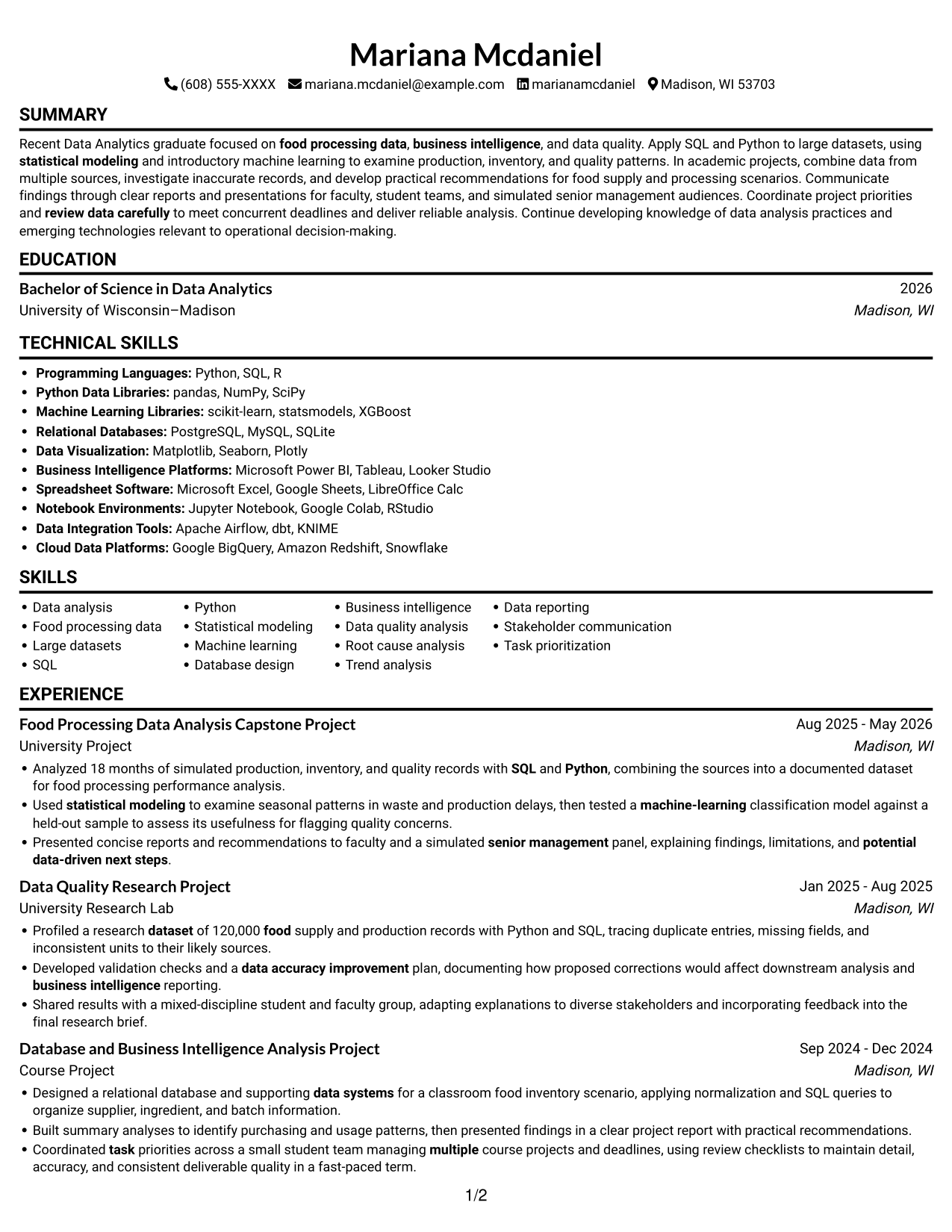
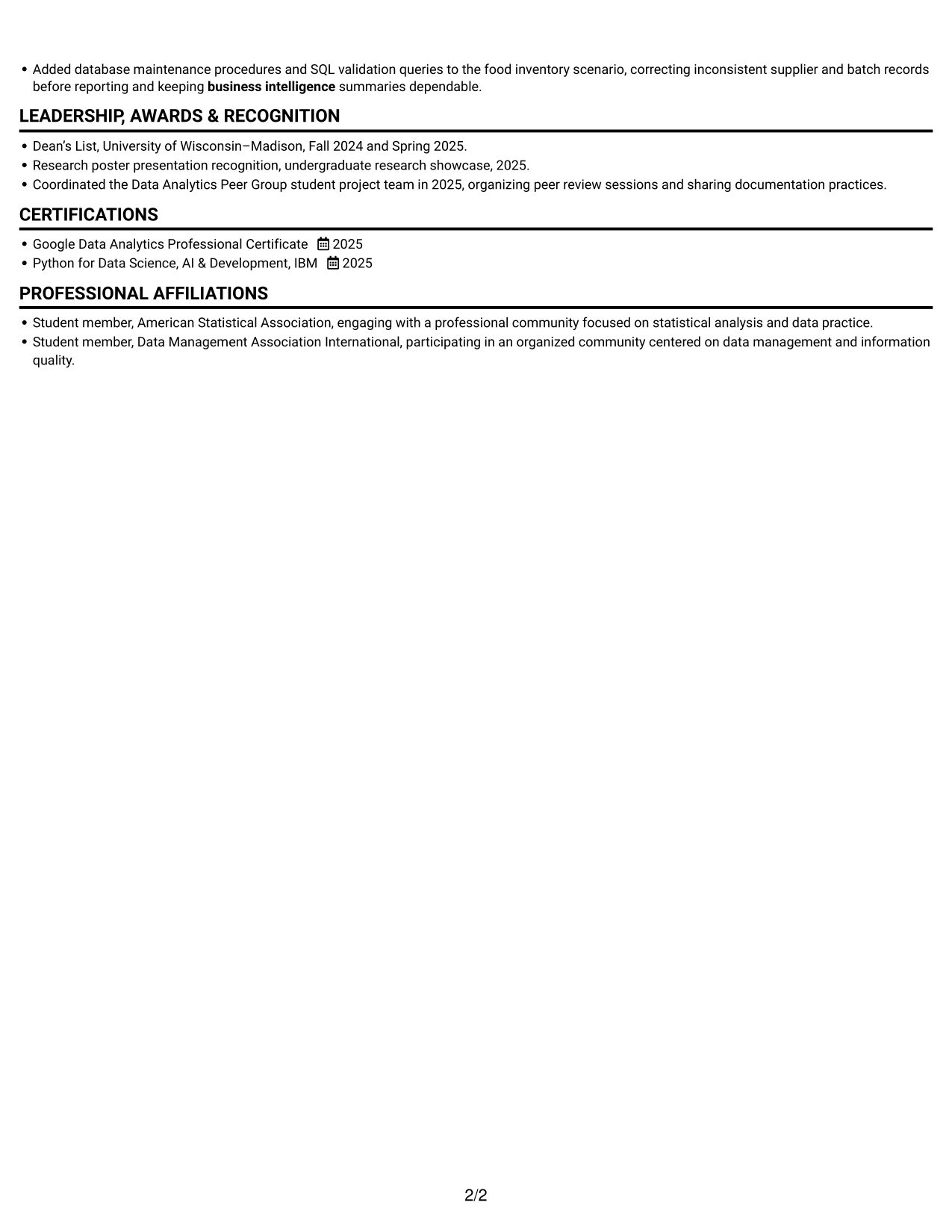
#1 Simple One Column Format Resume Example
A single-column page keeps the resume in one vertical reading path, making section order easy to follow.
Why This Format Works
- One vertical reading path helps reviewers follow experience, education, and credentials in sequence.
- Consistent section order makes project achievements easier to compare across roles.
- Skills and training details stay easy to locate during a focused scan.
Best For
- Linear section-by-section review
- Academic project histories
- Resumes with several content sections
- Experience paired with education and credentials
- Straightforward recruiter scanning
Resume Keywords
- data analysis
- business intelligence
- SQL
- Python
- Profiled a research dataset of 120,000 food supply and production records
- statistical modeling
- machine learning
- food processing data
- data systems
- Data quality analysis
- Root cause analysis
- data accuracy improvement
- Used statistical modeling to examine seasonal patterns in waste and production delays
- potential data-driven next steps
- Stakeholder communication
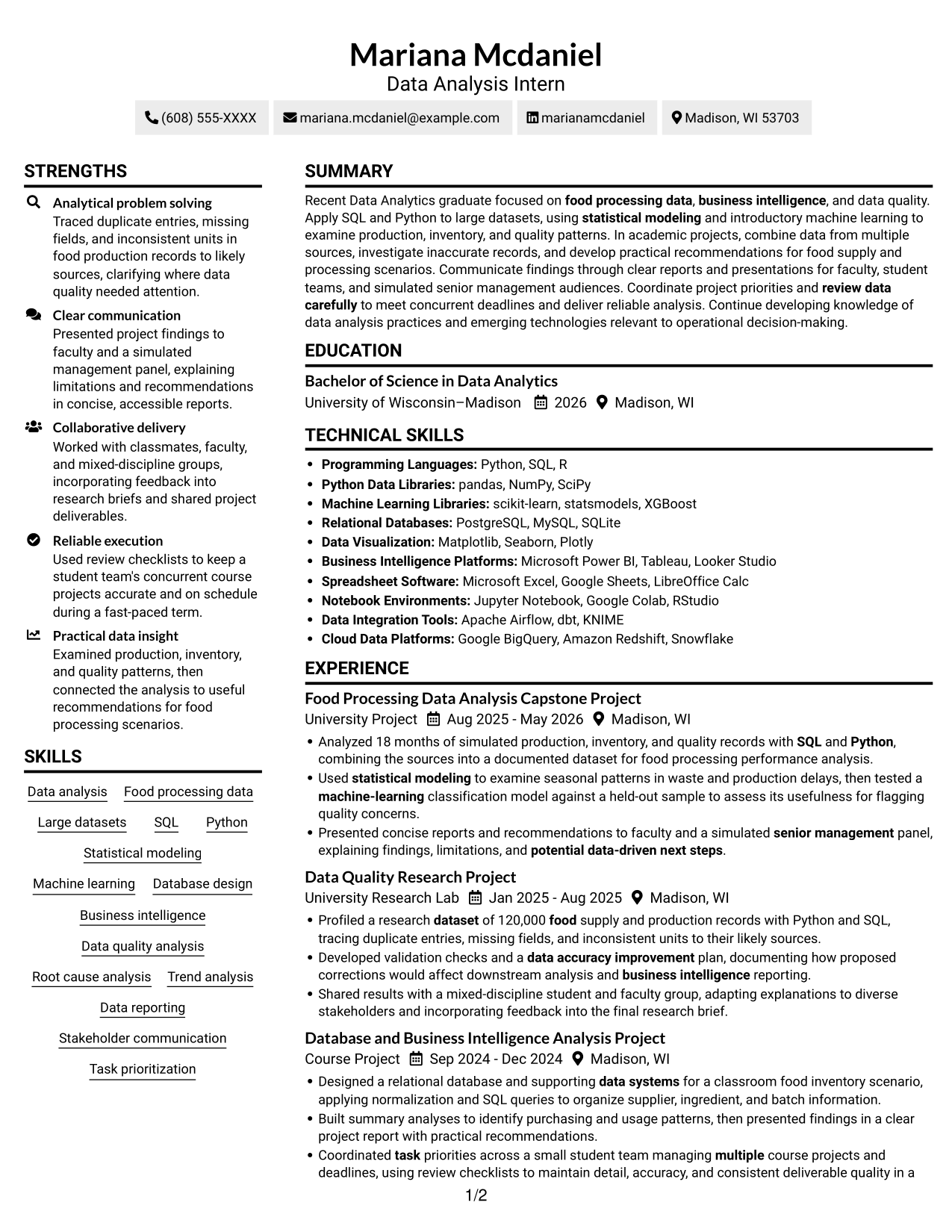
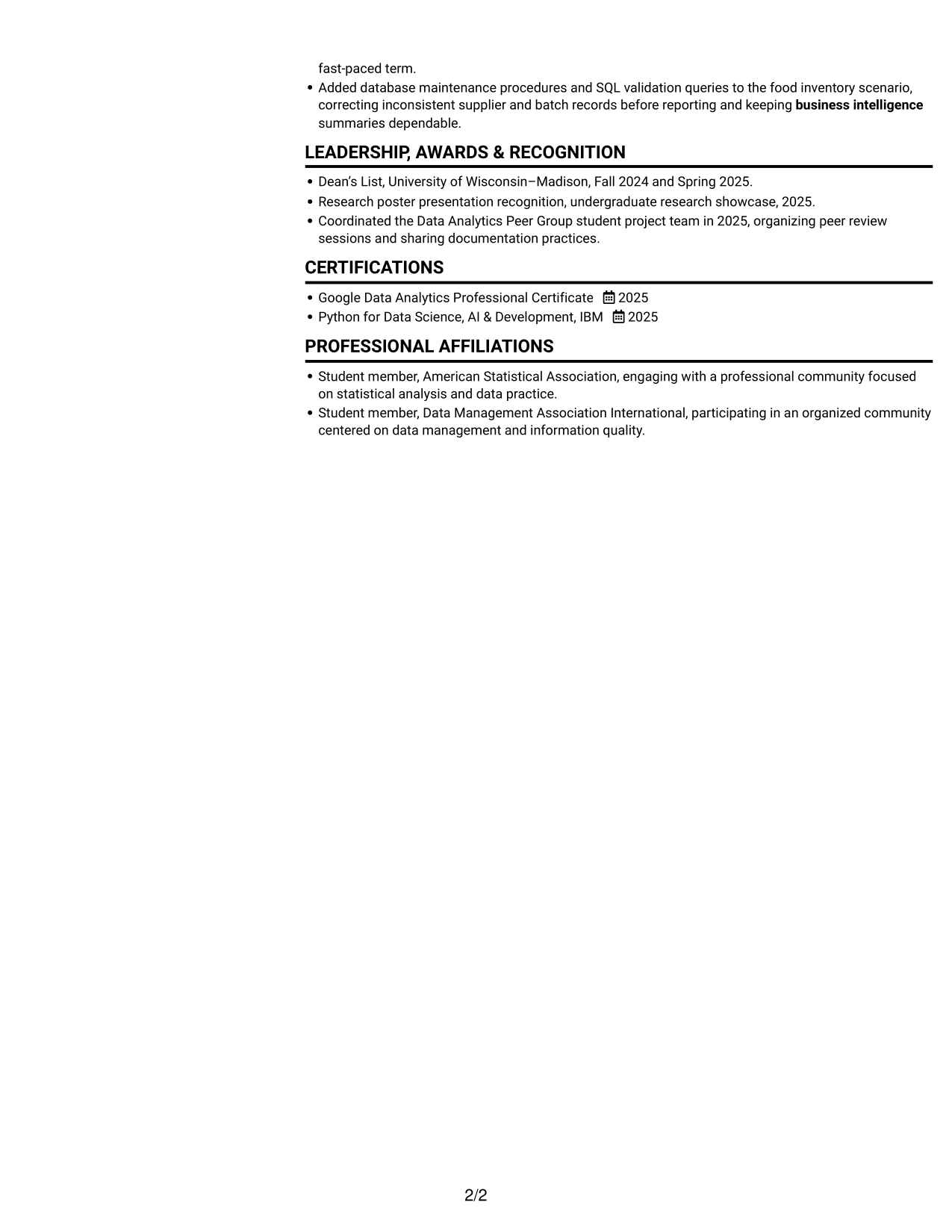
#2 Simple Two Column Format Resume Example
The two-column body gives the resume distinct content areas, helping reviewers scan information without losing its overall reading order.
Why This Format Works
- Two-column organization makes experience and supporting details easier to scan side by side.
- Section separation helps skills stand apart from project achievements during review.
- Education and credentials remain easy to locate among several resume sections.
Best For
- Experience with supporting details
- Skills and project information
- Several distinct resume sections
- Side-by-side information scanning
- Academic and project-based experience
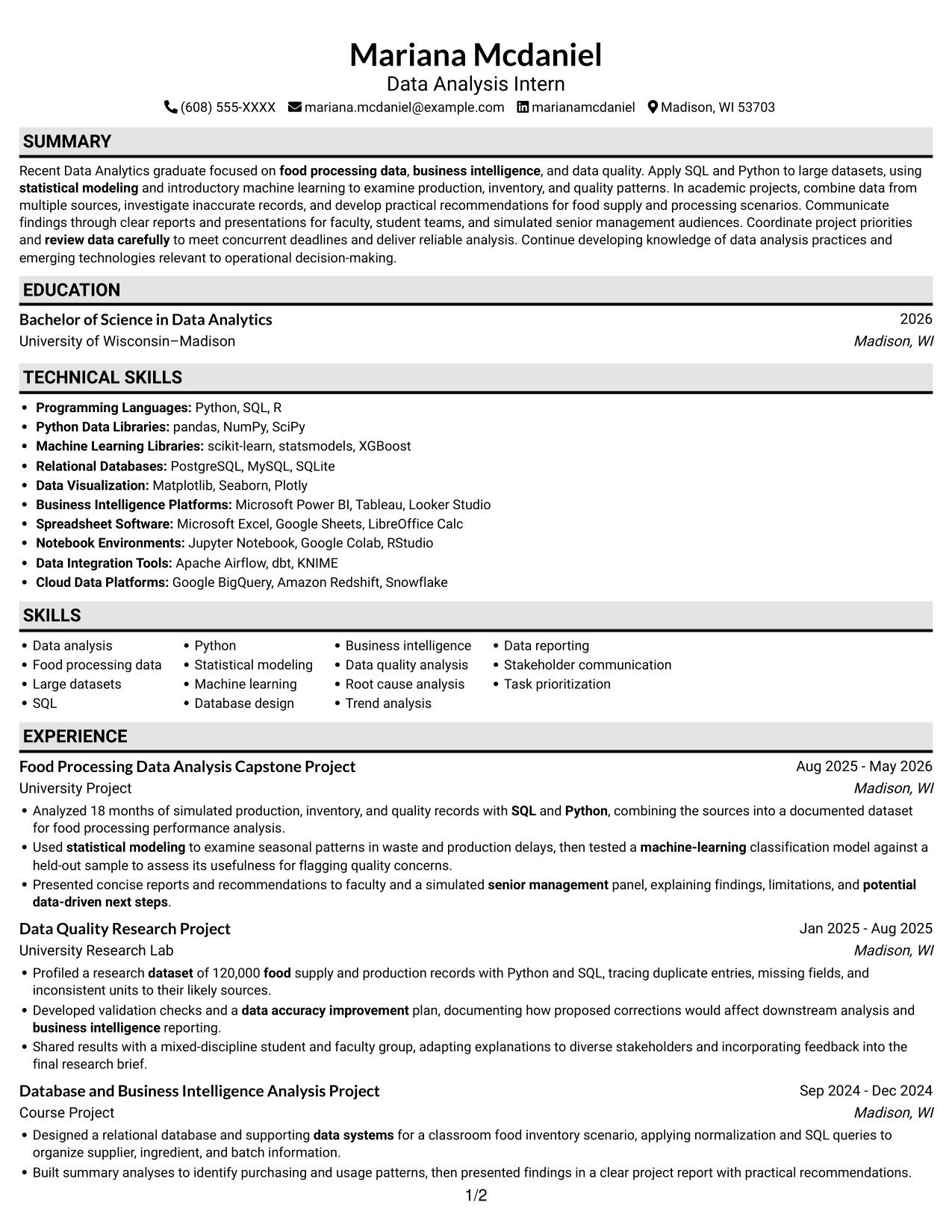
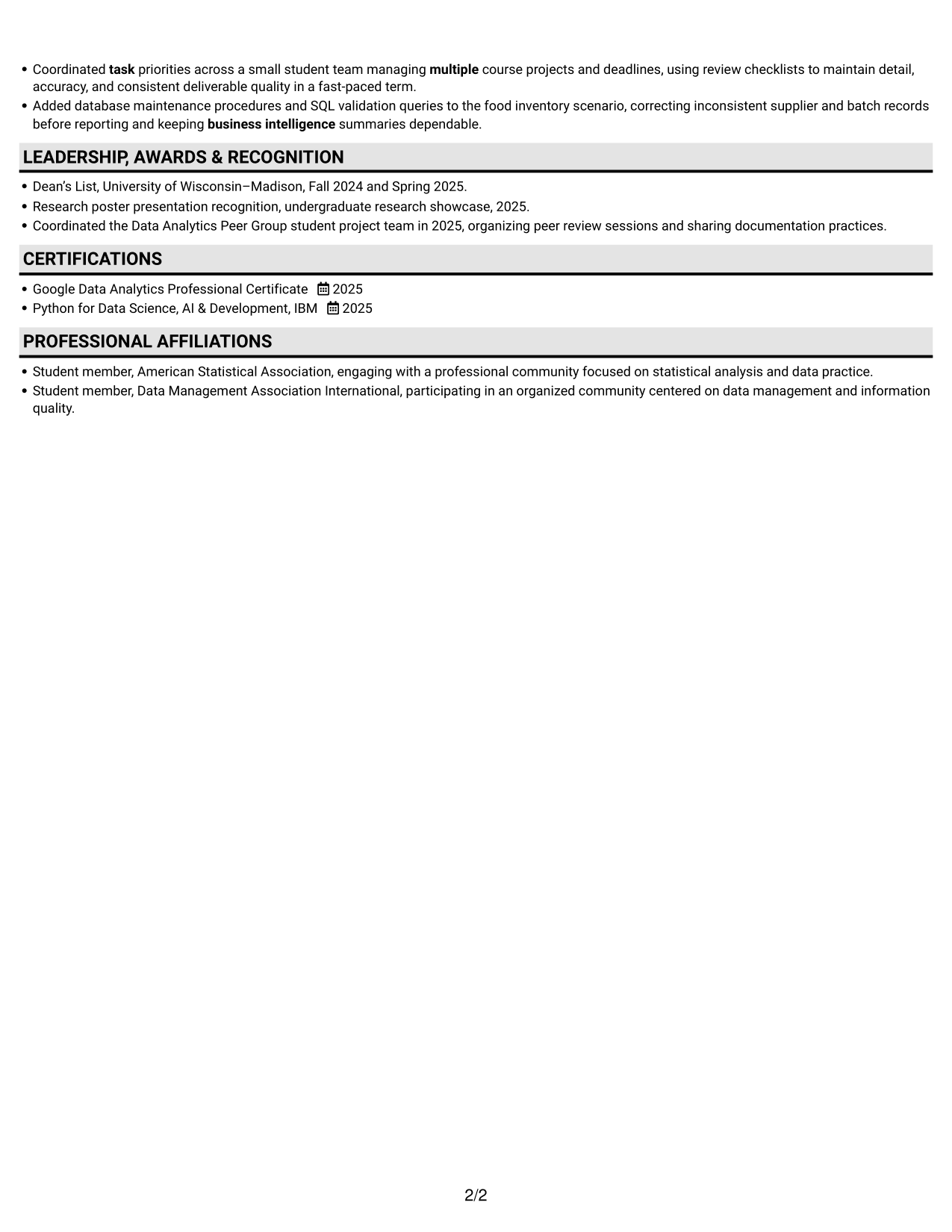
#3 Plain One Column with Shaded Labels Resume Example
A one-column body presents the resume in a direct top-to-bottom sequence, so reviewers can follow each section in order.
Why This Format Works
- The vertical sequence keeps career history and project results easy to follow.
- A single reading path helps reviewers locate education without navigating between columns.
- Skills and credentials remain part of the same continuous section order.
Best For
- Top-to-bottom resume review
- Project results within career history
- Academic and research projects
- A clear sequence of education and experience
- Simple navigation across resume sections
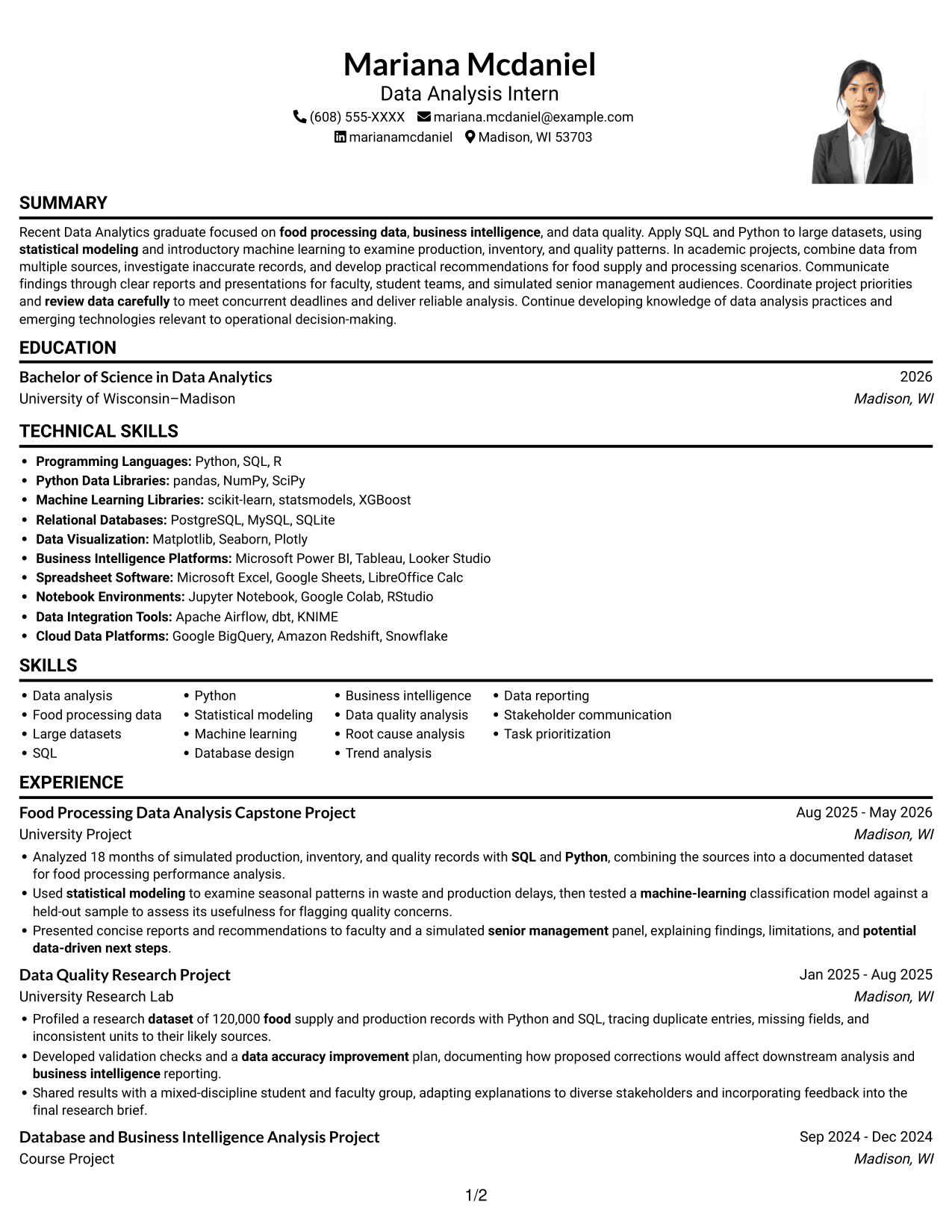
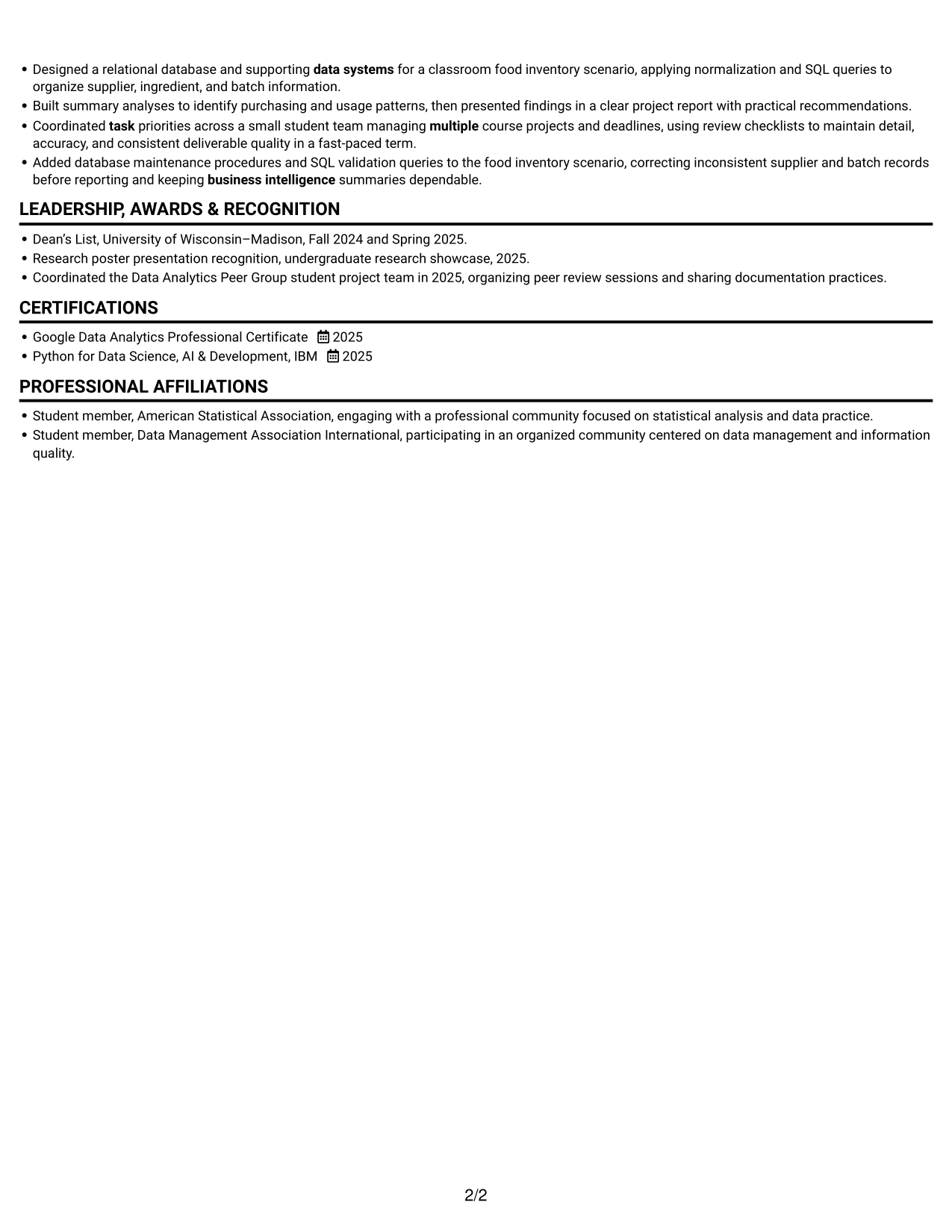
#4 One Column Format with Photo Right Resume Example
A single-column resume with a portrait keeps the content in a direct reading path while giving the photo a clear place.
Why This Format Works
- The vertical content flow lets reviewers track experience and project results in order.
- A single column keeps education and credentials within one continuous review path.
- Skills remain easy to find without competing with a second content column.
Best For
- Resumes that include a portrait
- One-path section review
- Academic project experience
- Experience alongside supporting sections
- Readers who prefer a vertical layout
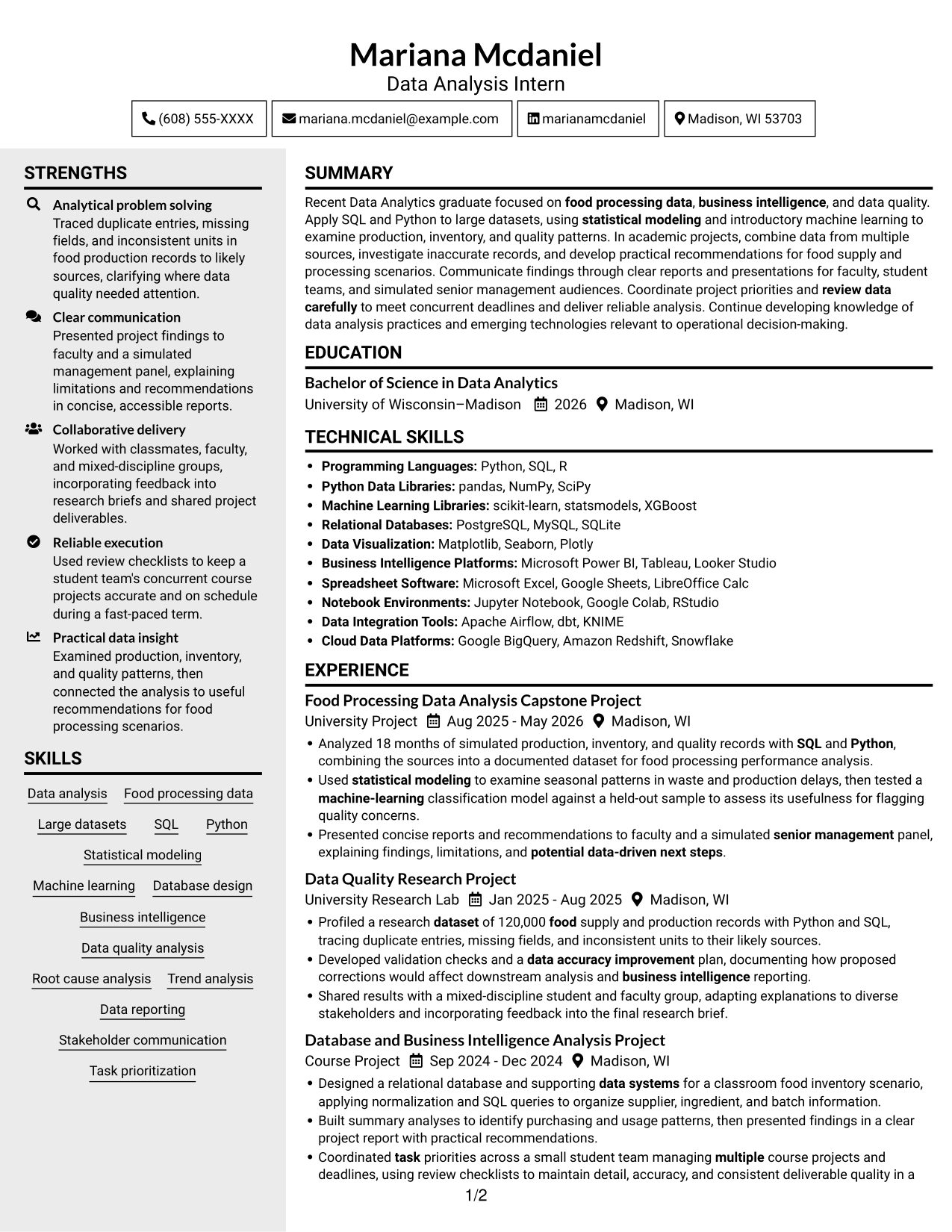
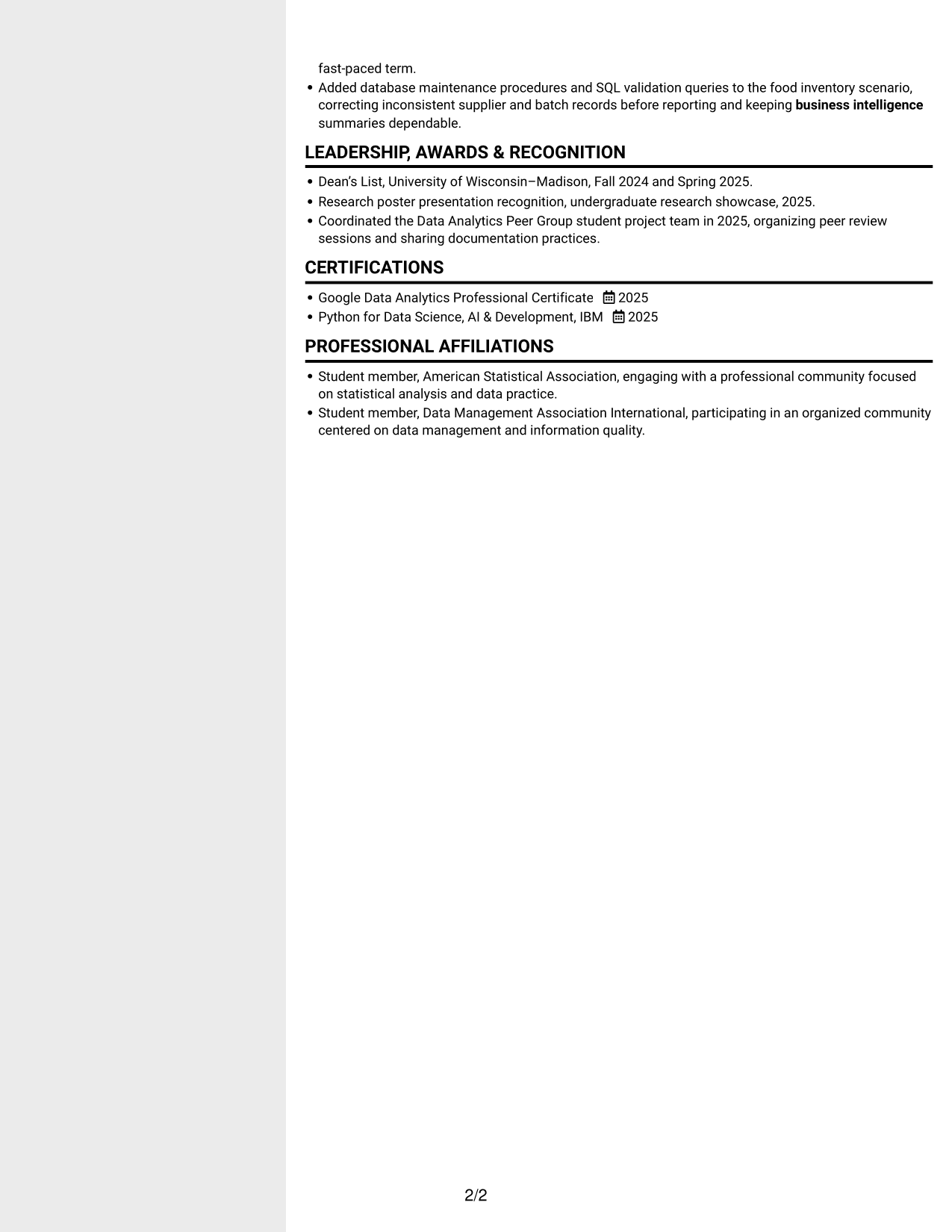
#5 Clean Two Column Sidebar Format Resume Example
The two-column body separates resume content into distinct areas, giving reviewers another way to scan experience and supporting details.
Why This Format Works
- Two-column organization lets reviewers scan career history alongside other resume sections.
- Separate content areas make technical skills easier to locate during review.
- Education and credentials have clear places within a varied resume.
Best For
- Career history with supporting sections
- Technical skills and project work
- Resumes with multiple section types
- Quick scanning across distinct content areas
- Academic projects and credentials
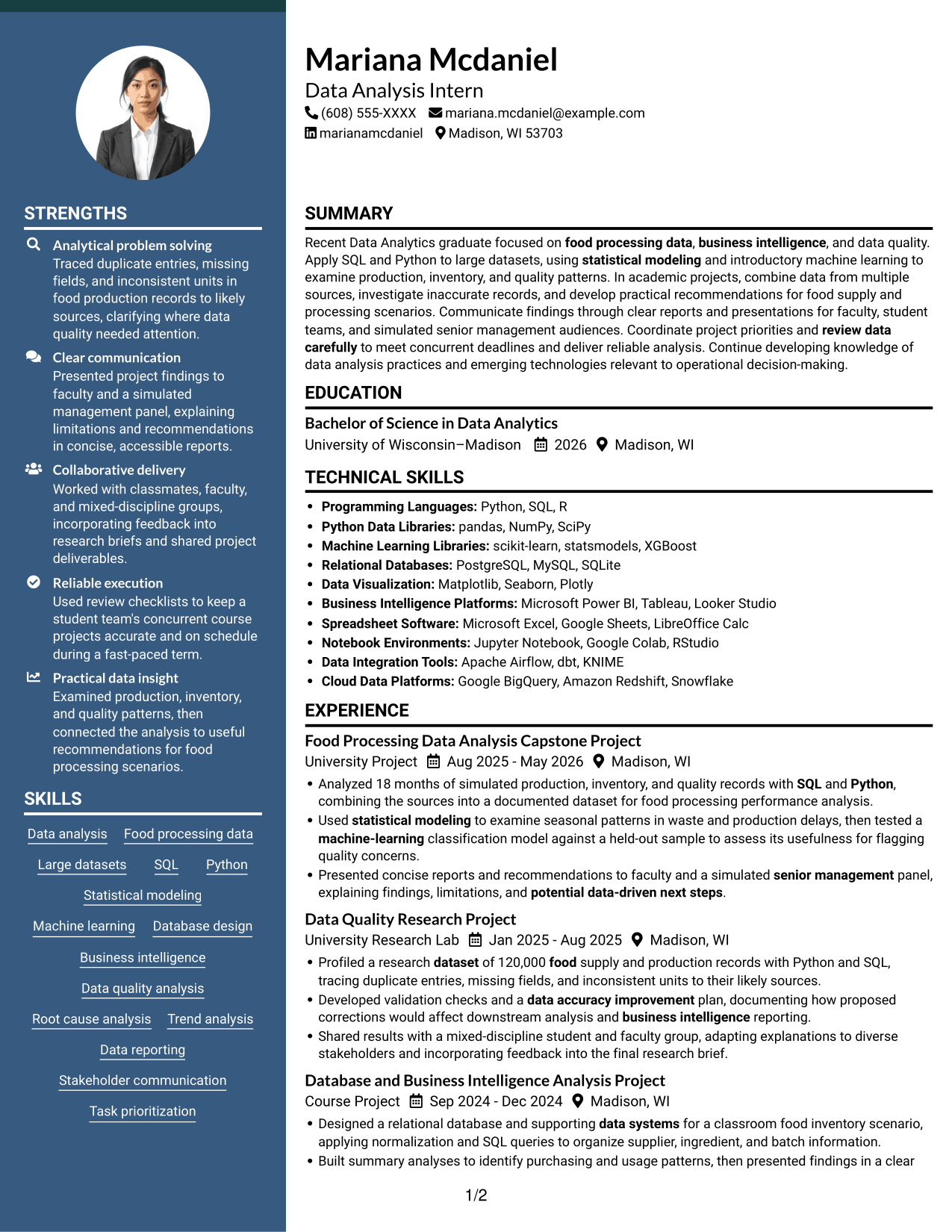
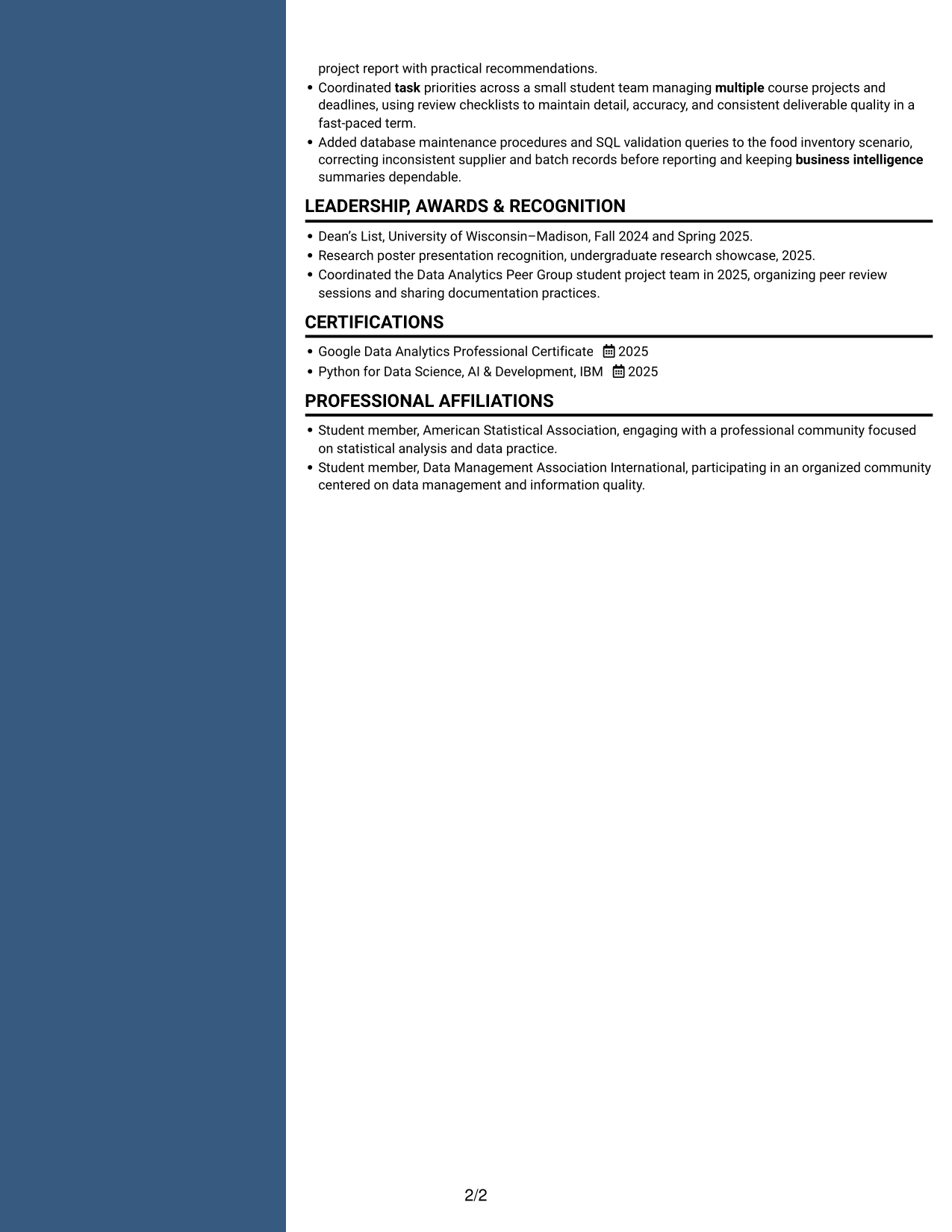
#6 Two Column Format Resume Example
A two-column layout offers a compact way to review separate resume sections while keeping the document’s reading order clear.
Why This Format Works
- The two-column structure gives experience and other sections distinct places on the page.
- Reviewers can find education and credentials without moving through every experience entry.
- Separate areas help keep project achievements distinct from skills information.
Best For
- Compact review of varied sections
- Experience with project achievements
- Skills alongside education details
- Resumes with several supporting categories
- Readers comparing section information
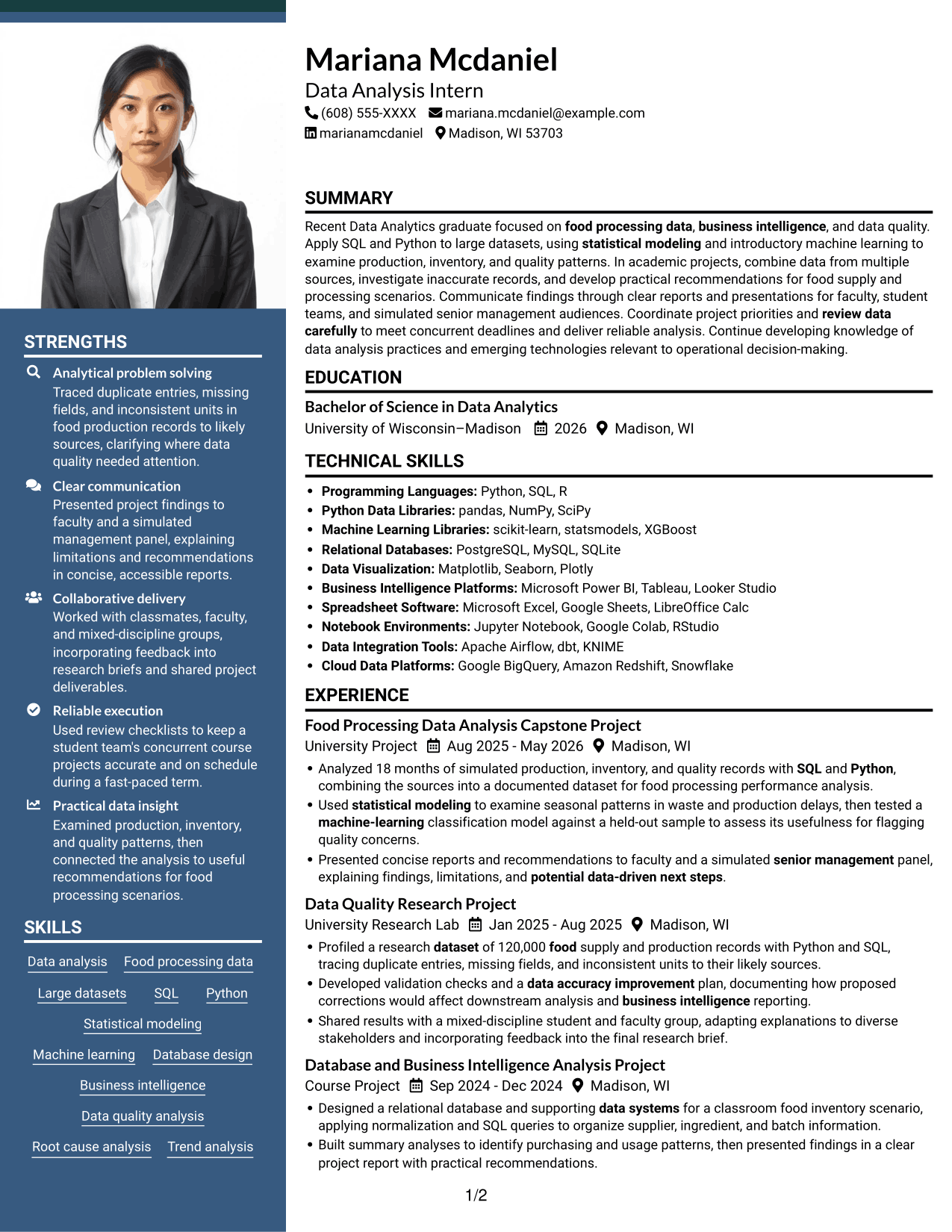
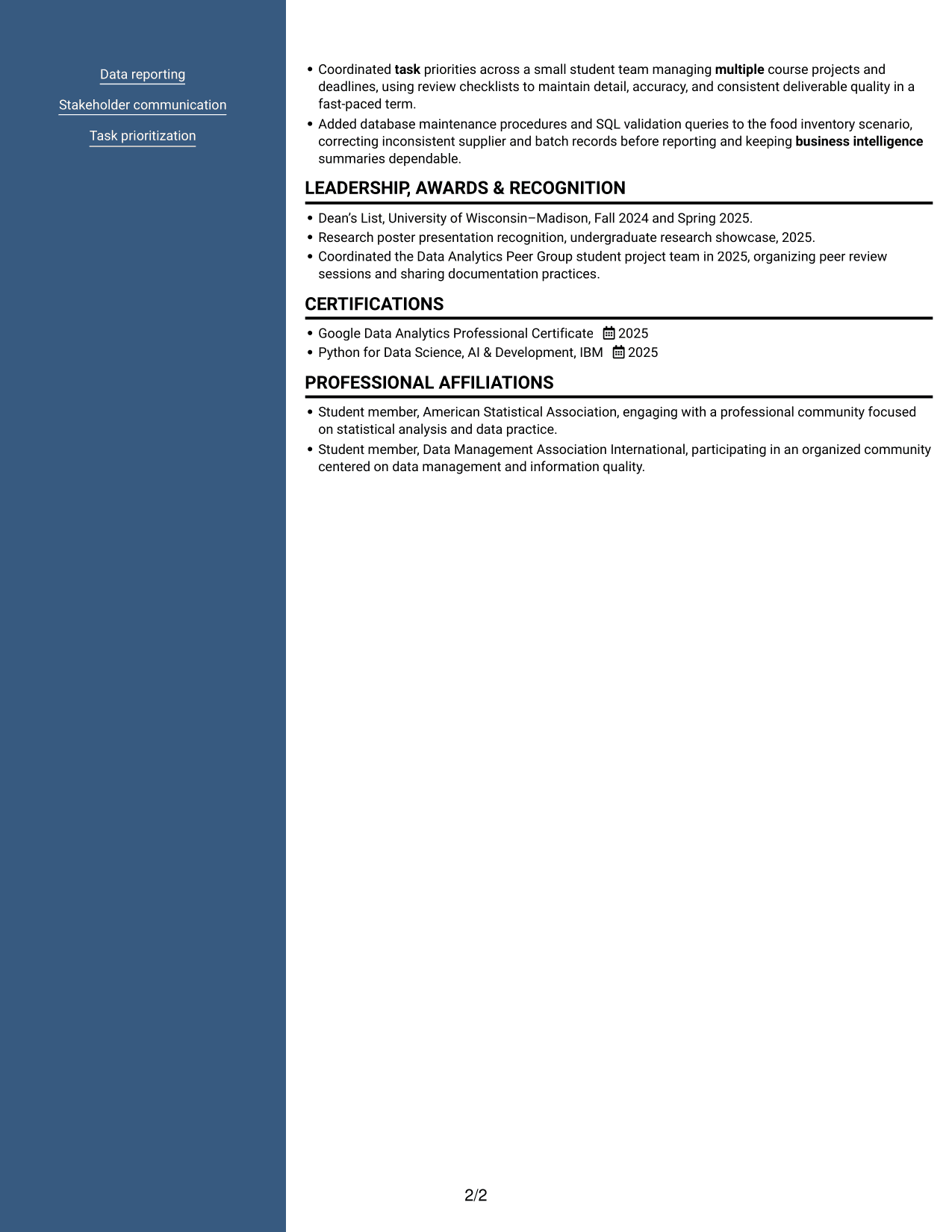
#7 Photo Header Two Column Format Resume Example
A photo in the header pairs with a two-column body, keeping the portrait visible while leaving the resume content in separate areas.
Why This Format Works
- Two-column organization gives experience and supporting sections distinct reading areas.
- The clear section structure helps reviewers locate education and credentials quickly.
- Project achievements and skills remain easier to scan as separate content categories.
Best For
- Portrait in the resume header
- Two-column section organization
- Project achievements and supporting details
- Several experience and education sections
- Readers who prefer a visible portrait
See Also
- 7 Entry-Level Data Scientist - Python and Data Analysis Resume Templates with Example
- 7 Junior Business/Data Analyst - Market and Revenue Analysis Resume Templates with Example
- 33 Accounts Payable Analyst - Invoice Processing Resume Templates with Example 2026 (ATS-Optimized)
- 7 Certified Sterile Processing Technician II - Surgical Instrument Reprocessing Resume Templates with Example
- 7 Crime Scene Investigator - Forensic Evidence Processing Resume Templates with Example
- 7 Evidence/Supply Technician - Crime Scene Processing Resume Templates with Example
- 7 Judicial Processing Archivist - Court Records Resume Templates with Example
- 7 Plasma Processing Technician Resume Templates with Example
- 7 Data Analysis Intern Food Processing Cover Letter Templates with Example
- 7 Entry-Level Data Scientist - Python and Data Analysis Cover Letter Templates with Example
Frequently Asked Questions
Are these Data Analysis Intern Food Processing resume templates ATS-friendly?
The examples use readable sections and role-relevant terms such as SQL, Python, statistical modeling, business intelligence, and data quality. Use standard headings and include keywords only when they accurately describe your skills and work.
Are these separate resumes?
No. The page presents one Data Analysis Intern Food Processing resume example in several visual layouts.
What should a Data Analysis Intern Food Processing resume include?
Include a focused summary, education, relevant projects or experience, technical skills, certifications, and measurable results. Explain how you analyzed food production or supply data, checked accuracy, and shared useful findings.
Which resume style works well for this role?
A clean layout with clear section headings and concise project bullets is a practical choice. Keep important skills and results easy to find, and use a format that remains readable by applicant tracking systems.
How can I show relevant experience if my work is mainly academic?
Present coursework and research as projects. State the data you used, the methods you applied, the issue you examined, and the result or recommendation you produced. Label simulated or classroom data clearly.
Should I include a photo on my resume?
For U.S. applications, a resume without a photo is generally the safer choice. Follow local norms if you are applying in another country.