7 Entry-Level Machine Learning and Artificial Intelligence Engineer - Data Science Resume Templates with Example
This guide shows you how to create an Entry-Level Machine Learning and Artificial Intelligence Engineer - Data Science resume that presents your qualifications clearly. You will learn how to organize project evidence and choose a professional layout that is easy to review.
Show how you use Python, statistics, machine learning, and data visualization through specific project details. Include relevant experience with time series analysis, natural language processing (NLP), Tableau, Java, Spring Boot, microservices, and REST APIs when supported by your background.
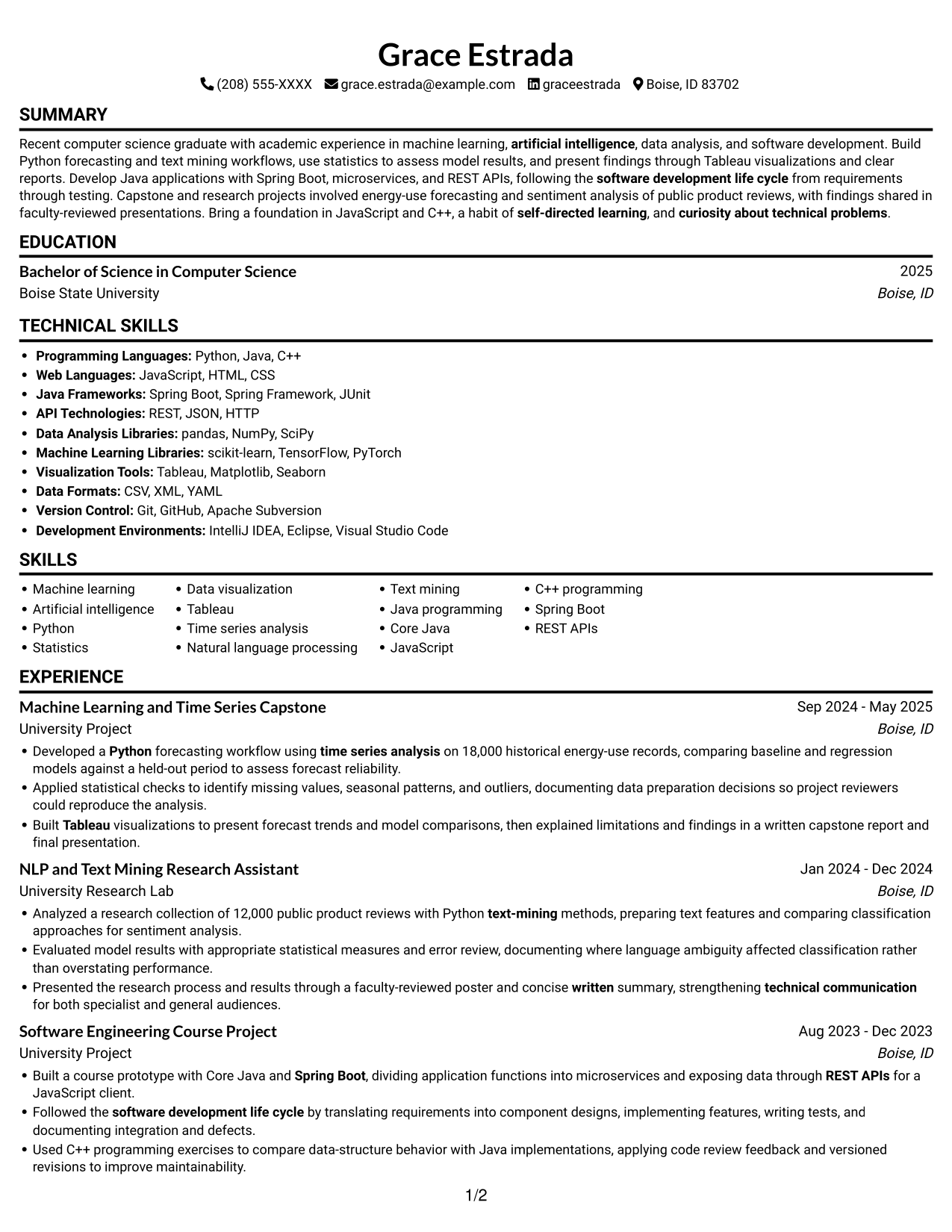
The resume example is presented in 7 layouts. Compare the image previews to see how each format organizes resume sections, then open an example in the editor to view or customize it.
What Makes a Great Entry-Level Machine Learning and Artificial Intelligence Engineer - Data Science Resume in 2026
A strong resume makes technical skills easy to find and connects them to clear project evidence. Use familiar section headings, concise bullet points, and a focused skills section.
Include relevant keywords such as Python, statistics, machine learning, NLP, time series analysis, Tableau, Java, Spring Boot, and REST APIs. Support them with accurate project details, such as the 18,000 energy-use records analyzed or 12,000 product reviews studied.
Note: Resume examples are for educational purposes only. Use only information that accurately reflects your experience and qualifications. References to real organizations do not imply affiliation or endorsement.
#1 Simple One Column Format Resume Example
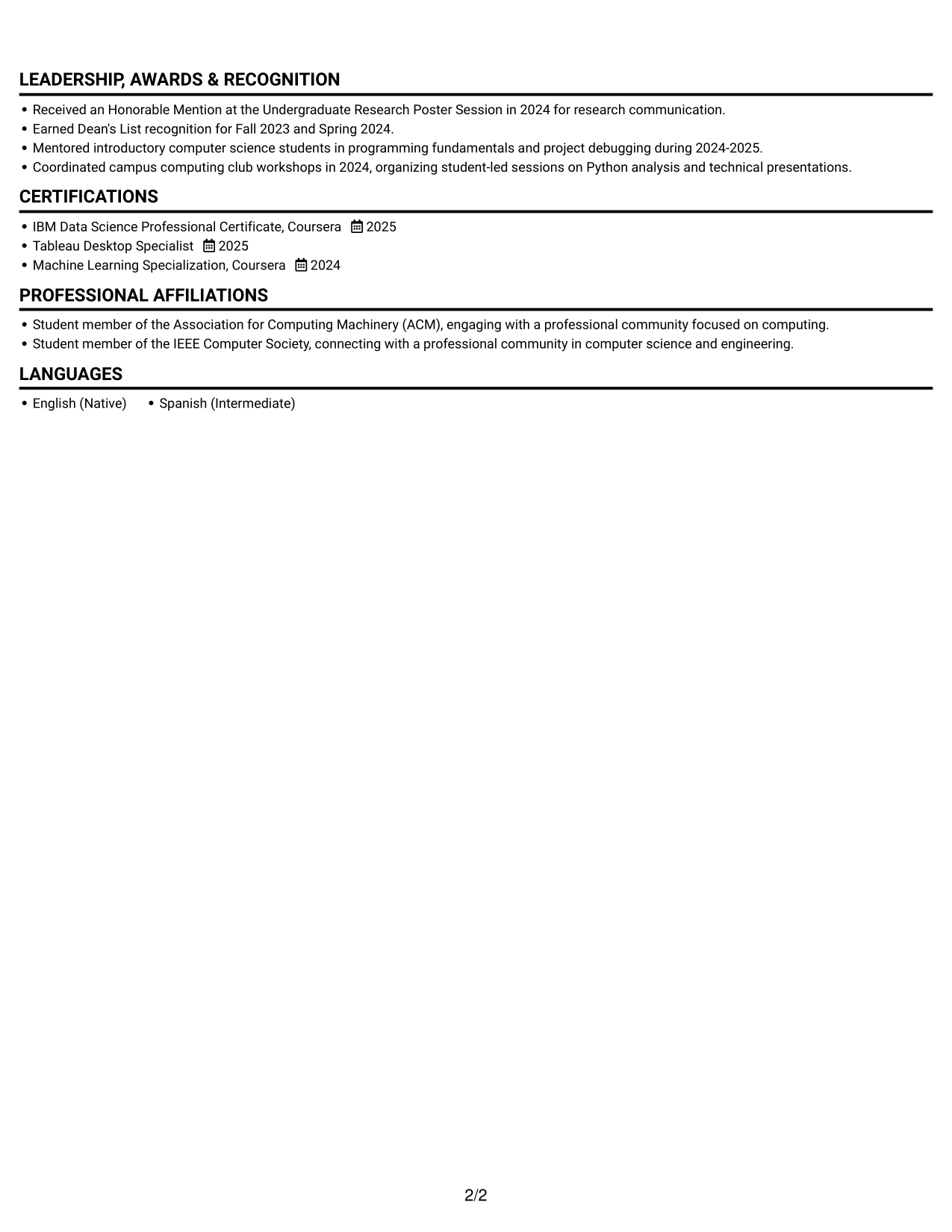
The Simple One Column Format keeps the resume in one vertical reading path, making section order easy to follow.
Why This Format Works
- One reading path lets reviewers follow experience, education, and achievements in sequence.
- Shared page width gives skill and credential sections room for clear labels.
- Consistent vertical order helps recruiters compare project evidence with career preparation.
Best For
- Single-column reading preference
- Top-to-bottom section review
- Longer evidence bullets
- Mixed resume section types
- Consistent career-history sequence
Resume Keywords
- Bachelor of Science in Computer Science
- Java programming
- machine learning
- artificial intelligence
- Python
- statistics
- Spring Boot
- microservices
- REST APIs
- software development life cycle
- Data visualization
- Presented the research process and results through a faculty-reviewed poster and concise written summary, strengthening technical communication for both specialist and general audiences.
- Core Java
- JavaScript
- NLP
#2 Simple Two Column Format Resume Example
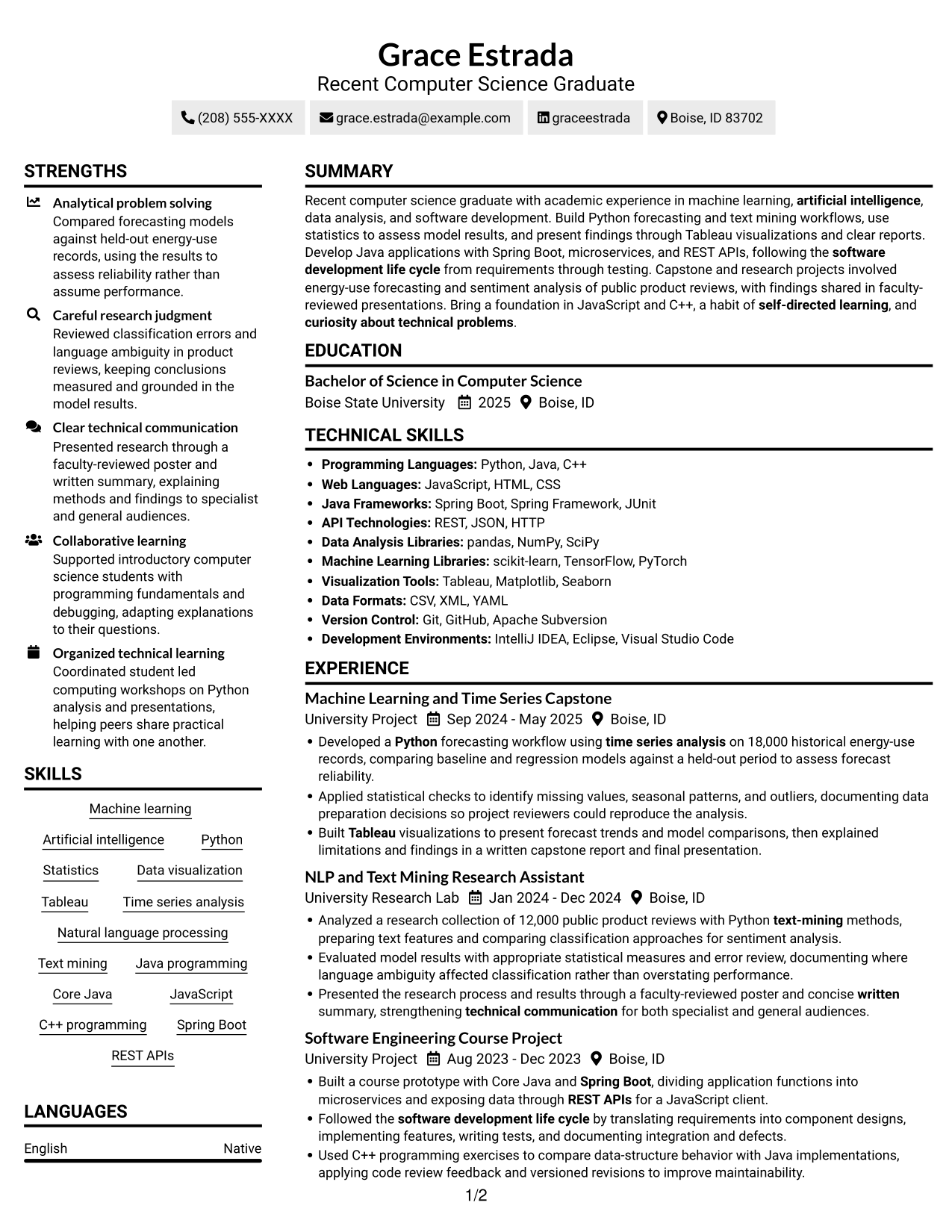
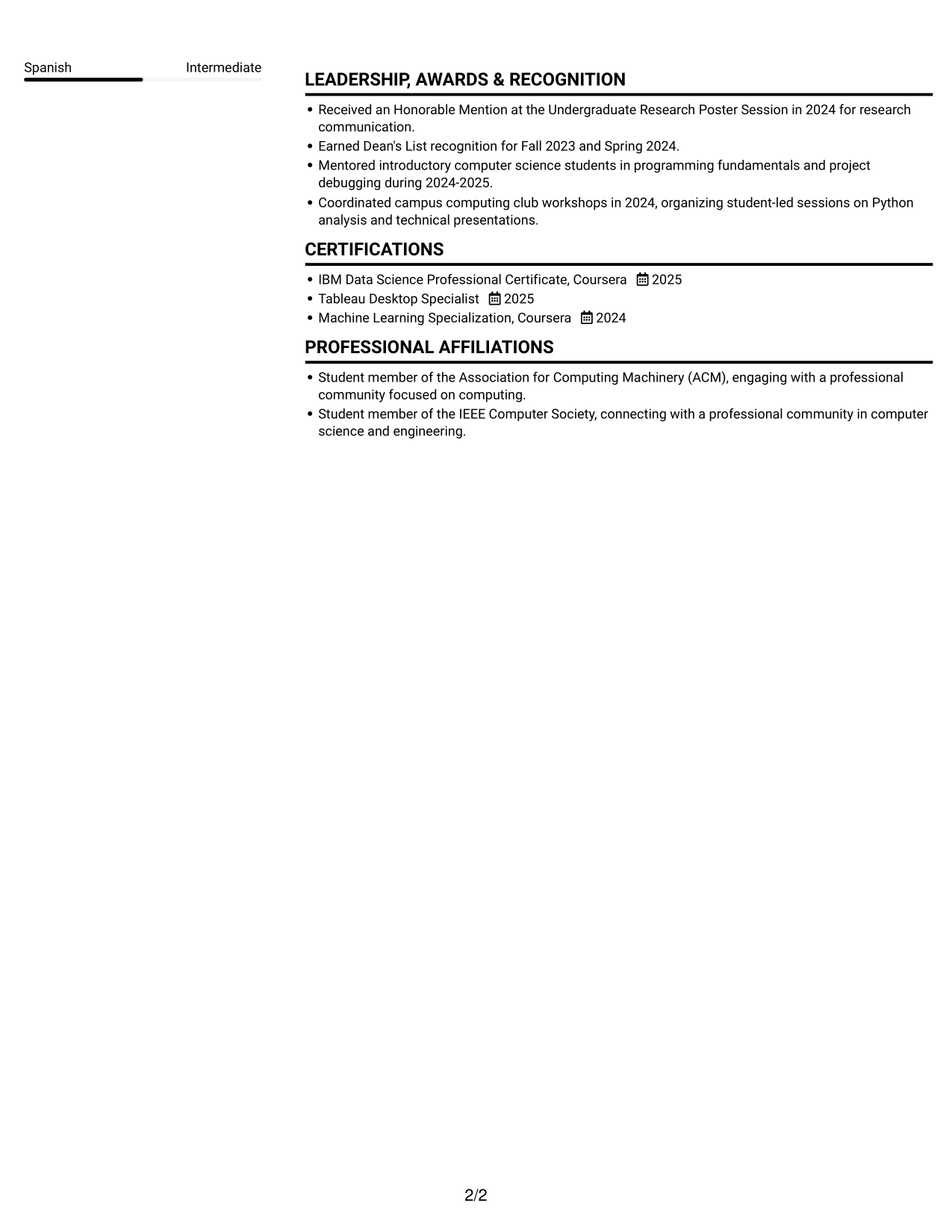
The Simple Two Column Format places content in two columns, helping reviewers move between core details and supporting sections.
Why This Format Works
- Two-column organization sets experience beside supporting sections for flexible review.
- Distinct content areas make education and skills easier to revisit.
- Clear ordering across both columns keeps achievement details connected to career history.
Best For
- Two-column reading preference
- Parallel review of varied sections
- Cross-section comparison needs
- Projects with detailed evidence
- Resumes with several content types
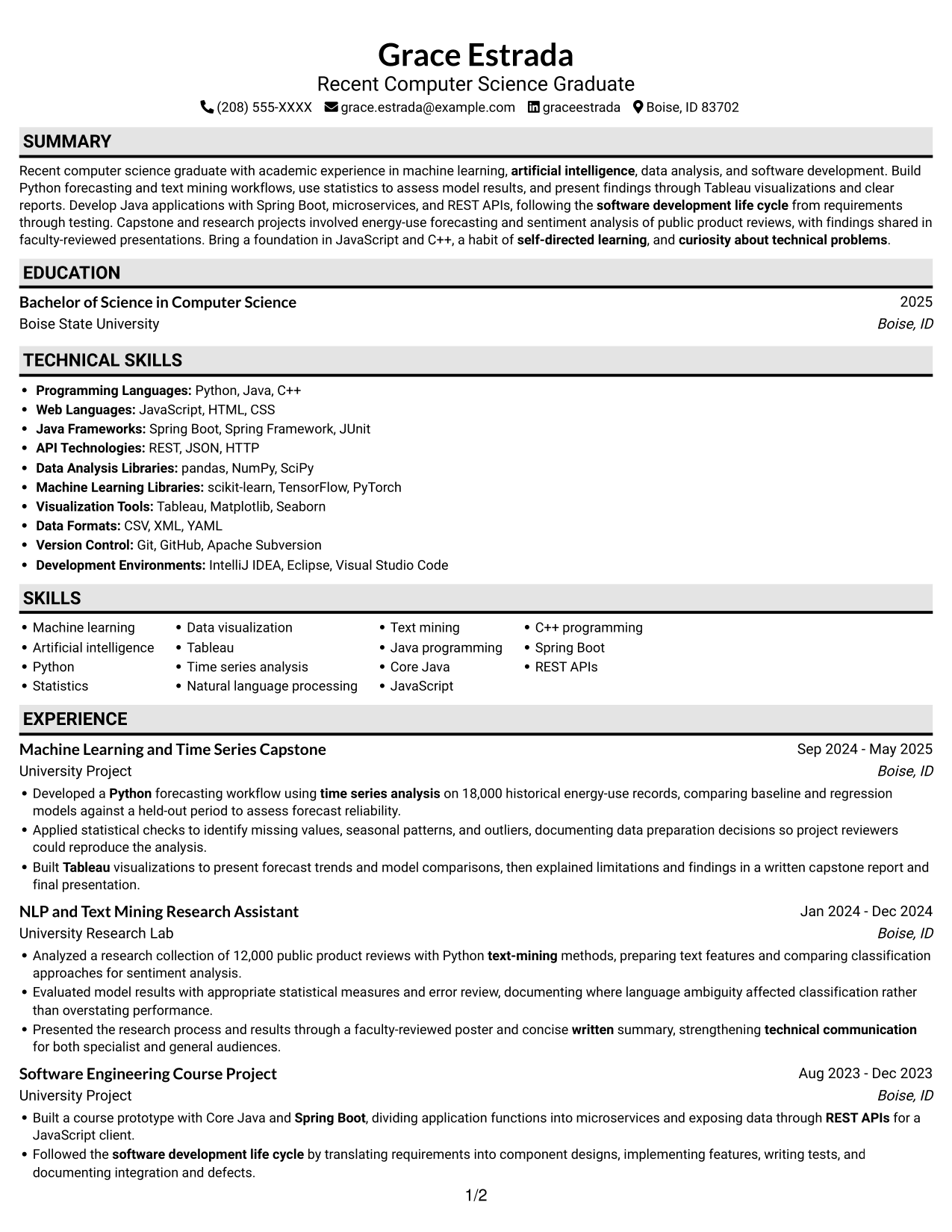
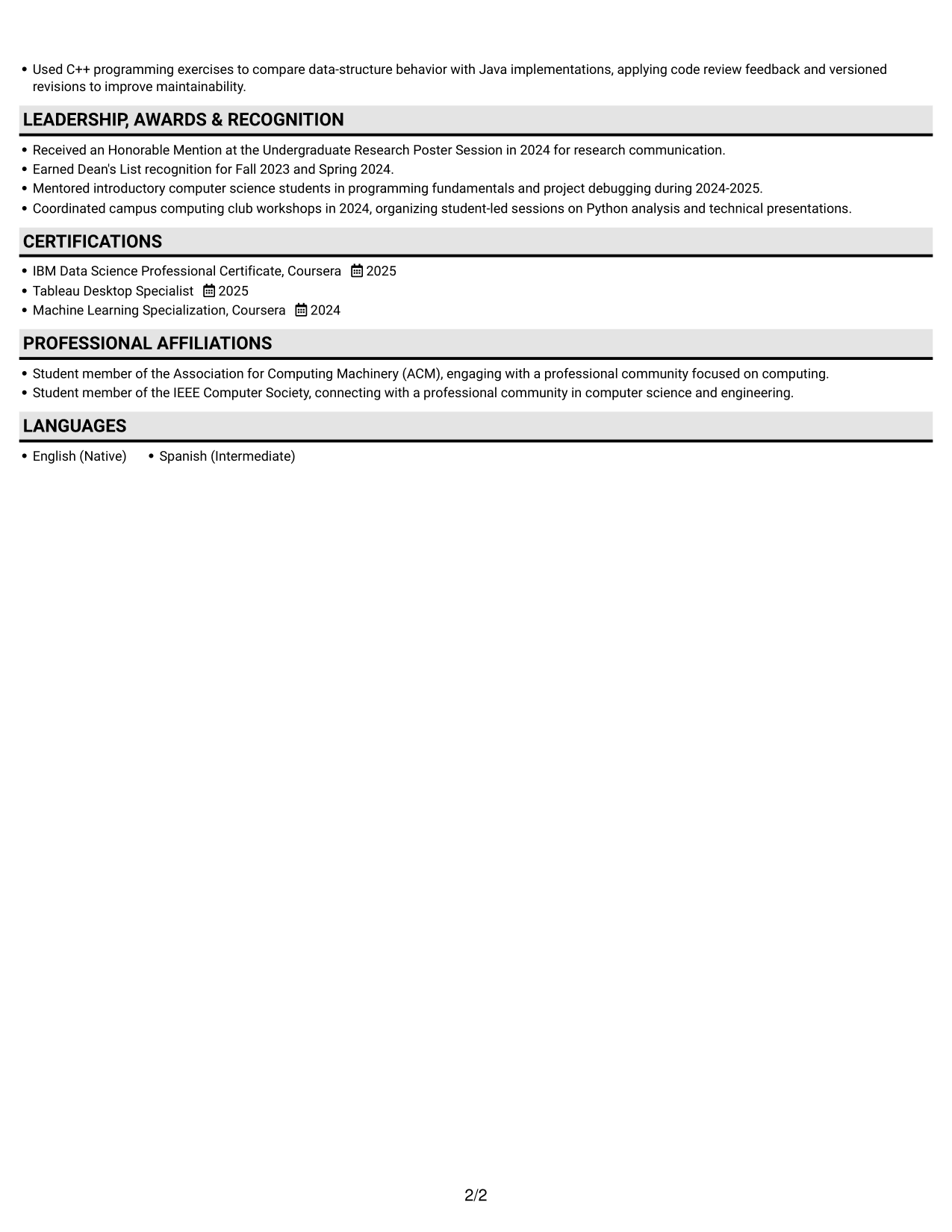
#3 Plain One Column with Shaded Labels Resume Example
The Plain One Column with Shaded Labels format keeps the resume in a single top-to-bottom path, so reviewers can follow its sections in order.
Why This Format Works
- One vertical reading path lets reviewers follow experience and education without switching columns.
- Section order can present career history, achievements, and credentials in a steady sequence.
- Full-width lines give project descriptions room to carry their evidence clearly.
Best For
- Single-path section reading
- Top-to-bottom career progression
- Full-width experience bullets
- Sequential education and project review
- Several resume section types
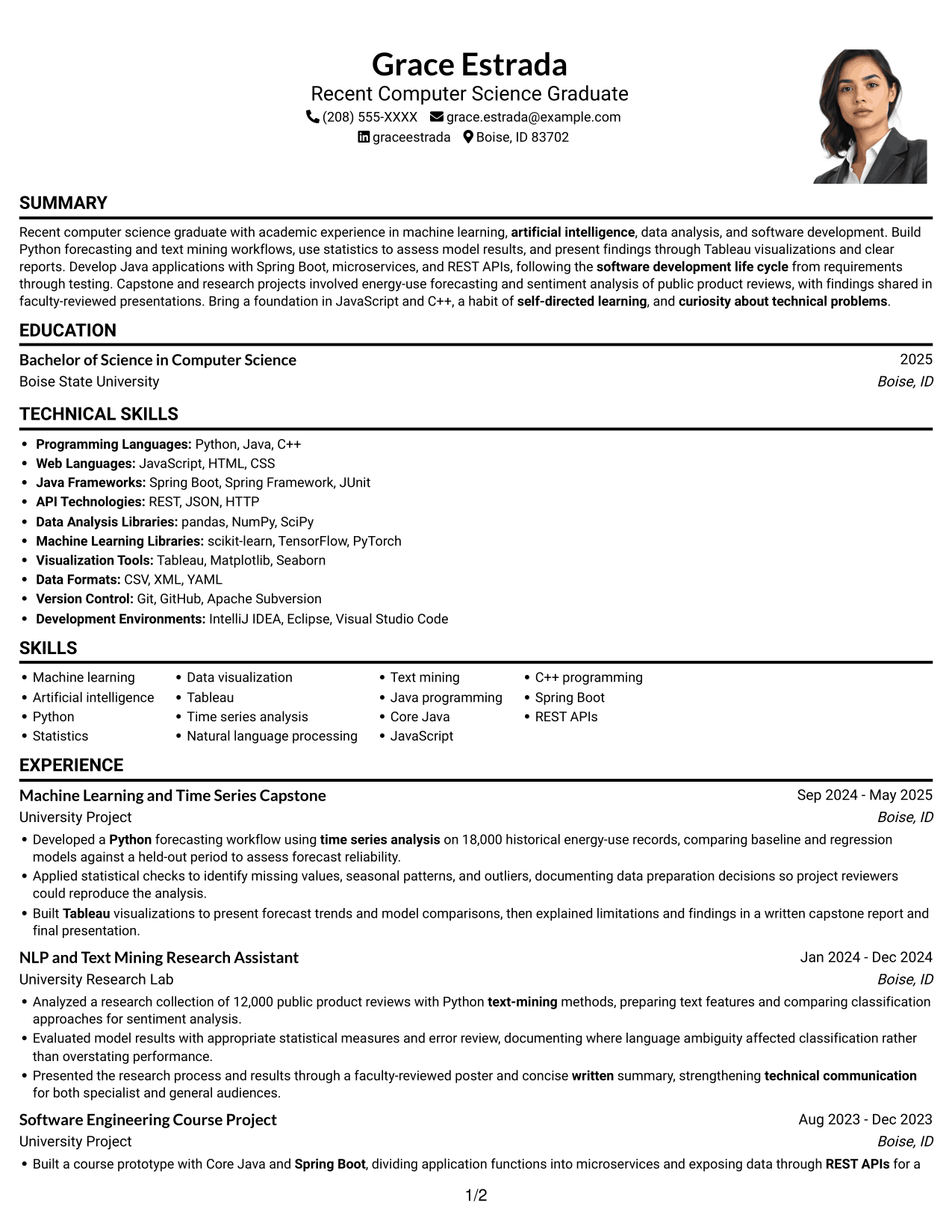
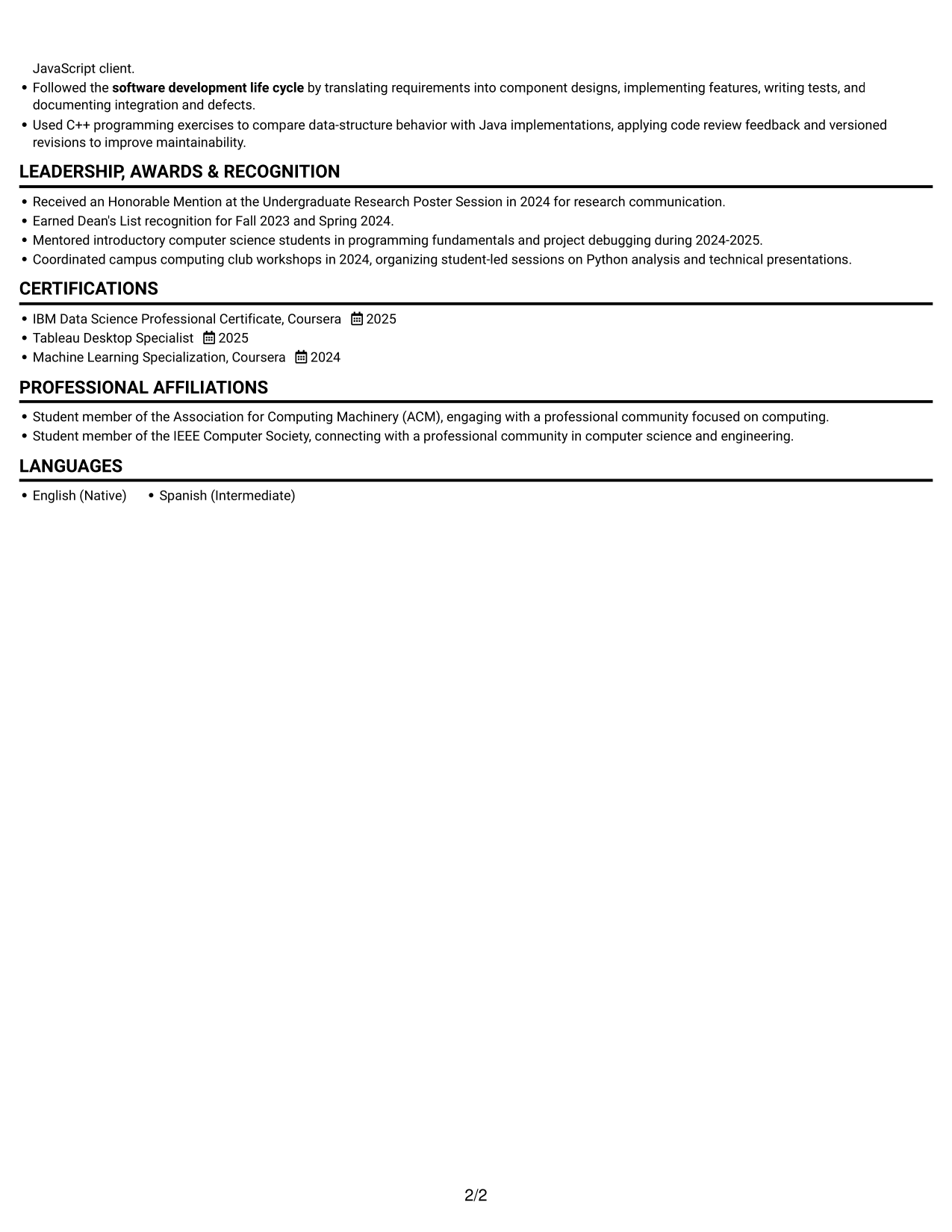
#4 One Column Format with Photo Right Resume Example
The One Column Format with Photo Right places a portrait to the right of a single content column, pairing a personal image with a clear reading path.
Why This Format Works
- One content column keeps experience and education in a single review sequence.
- Vertical section order helps readers connect project evidence with career details.
- Achievement and credential sections remain part of the same straightforward reading path.
Best For
- Right-side portrait preference
- Single-column text review
- Linear career-history reading
- Text alongside a portrait
- Detailed project evidence
#5 Clean Two Column Sidebar Format Resume Example
The Clean Two Column Sidebar Format uses two columns to give resume sections distinct areas that reviewers can scan and revisit.
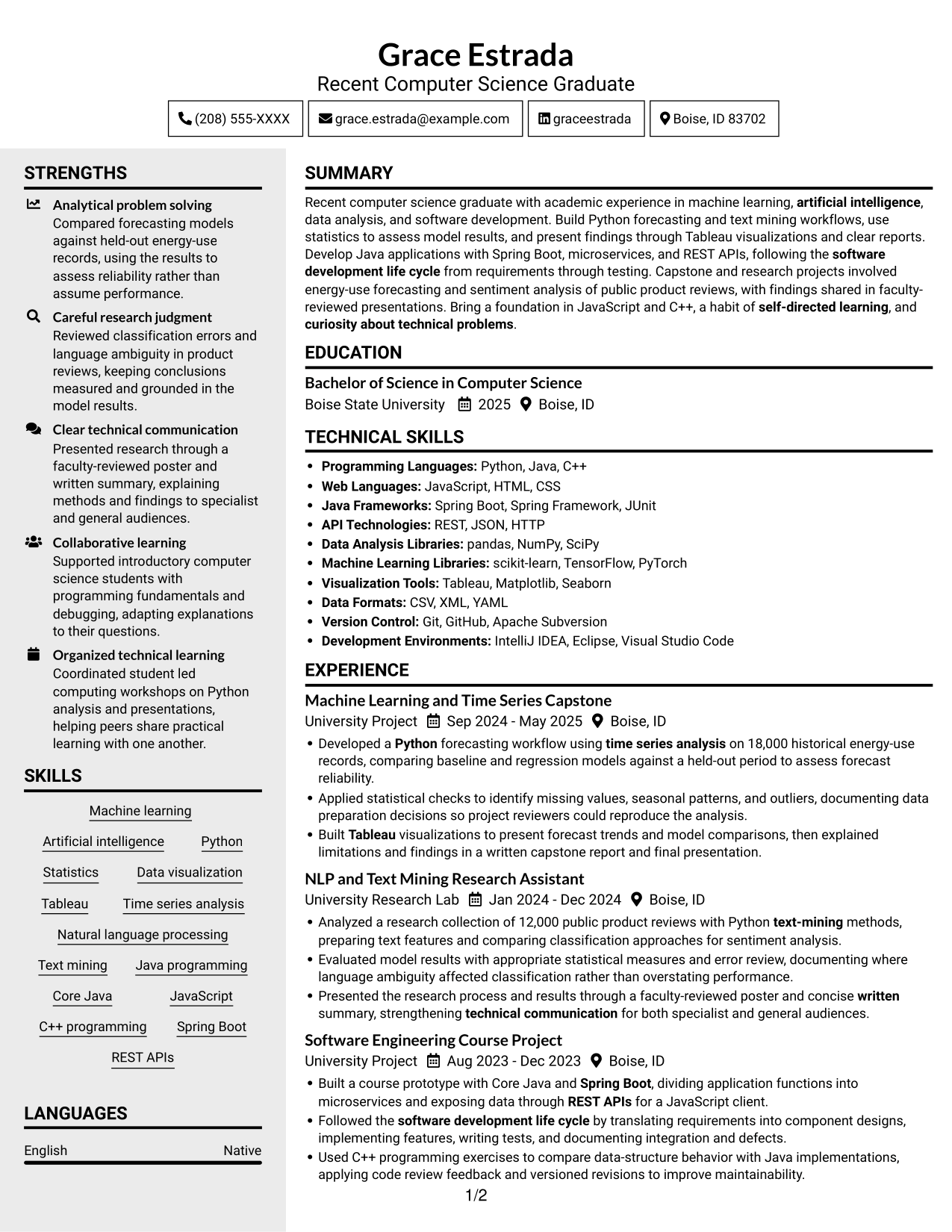
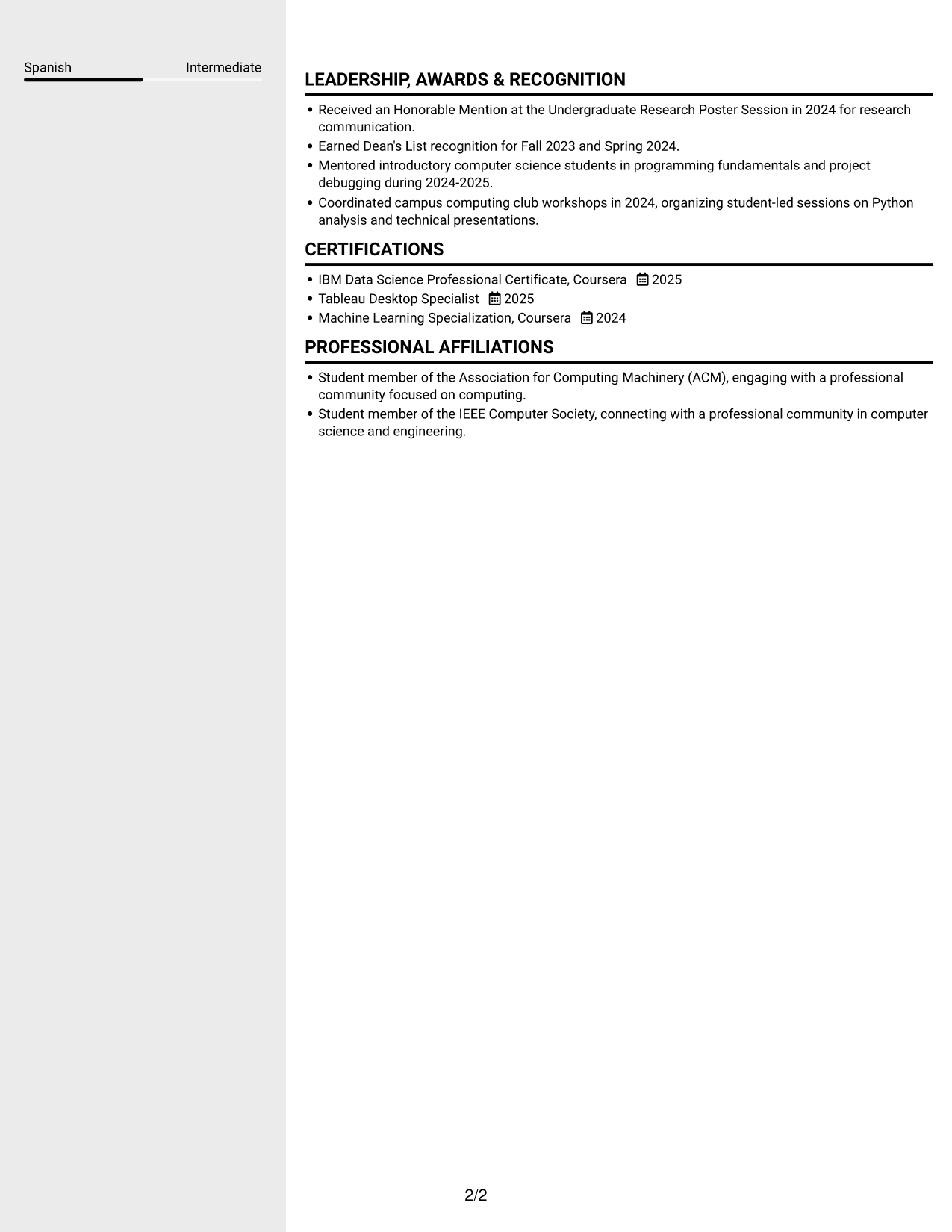
Why This Format Works
- Two columns provide distinct areas for reviewing experience alongside supporting resume details.
- Separate visual areas can help skills and credentials remain easy to revisit.
- Paired columns give varied sections clear structure while preserving reading order.
Best For
- Two-column section navigation
- Resume areas reviewed side by side
- Supporting details beside experience
- Varied section types
- Quick return to key information
#6 Two Column Format Resume Example
The Two Column Format organizes resume content in two columns, giving reviewers a compact way to navigate its sections.
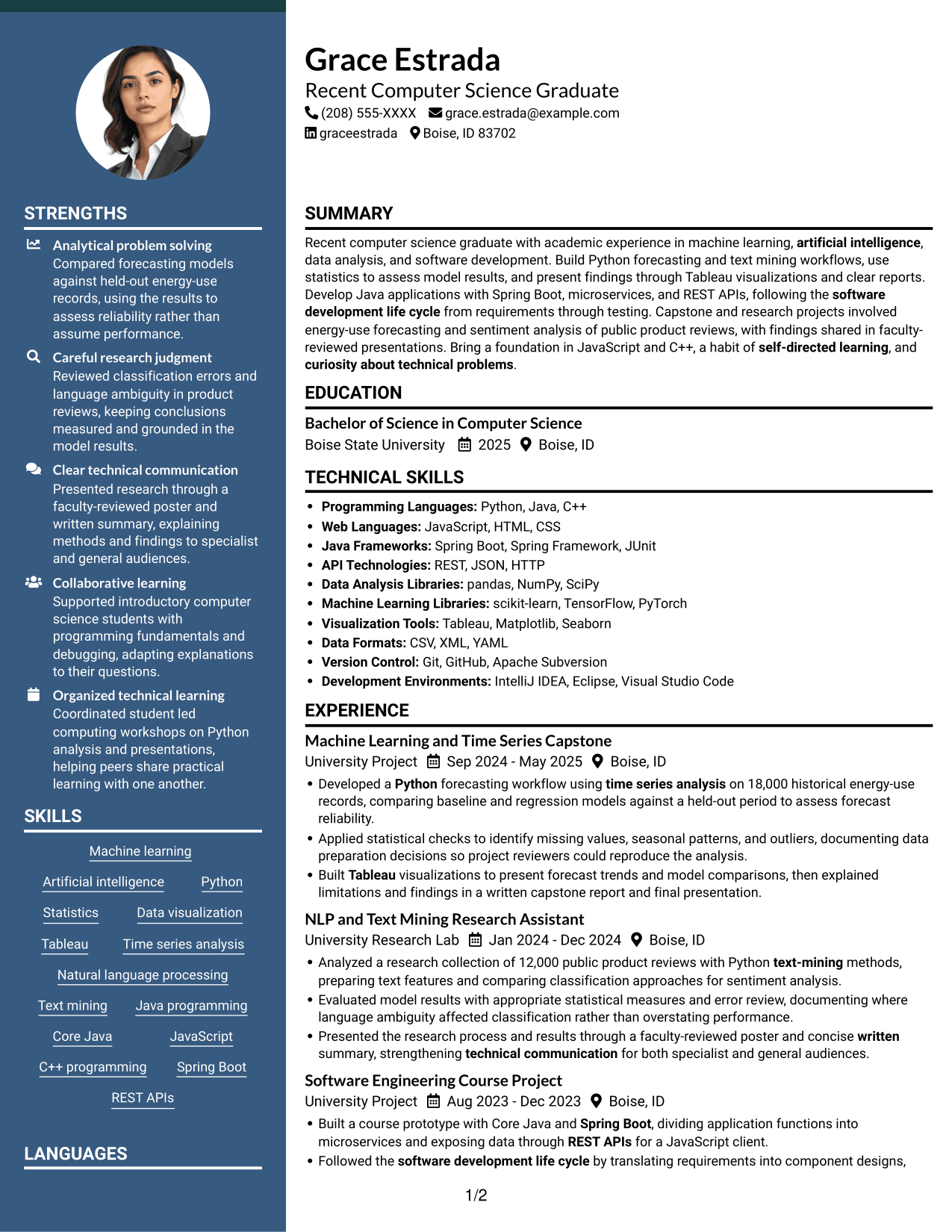
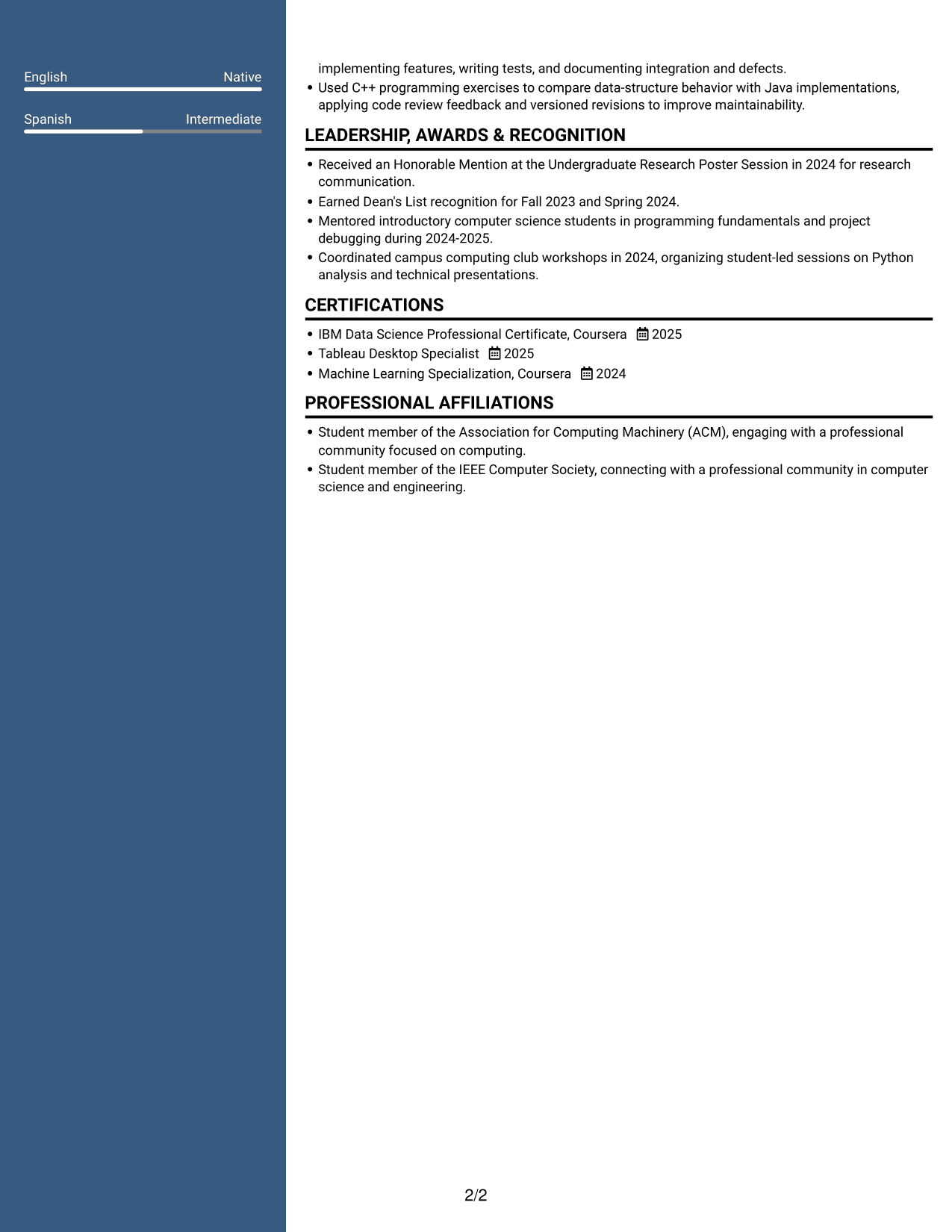
Why This Format Works
- Two-column organization lets reviewers compare experience with other resume sections at a glance.
- Distinct content areas make achievements and education easier to locate during review.
- A clear sequence across both columns helps preserve context as readers scan career history.
Best For
- Two-column section navigation
- Parallel review of resume areas
- Dense supporting information
- Career history with varied details
- Frequent cross-section review
#7 Photo Header Two Column Format Resume Example
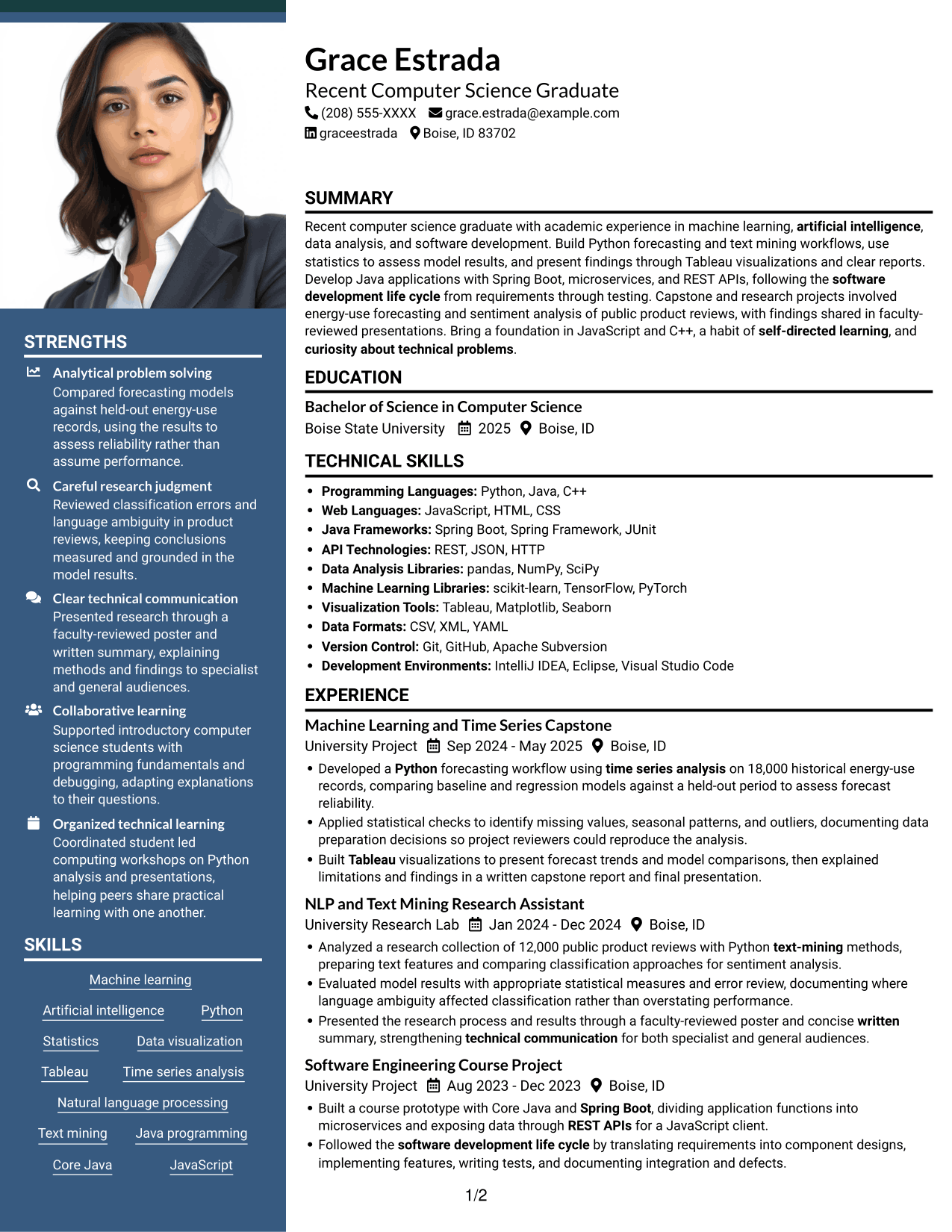
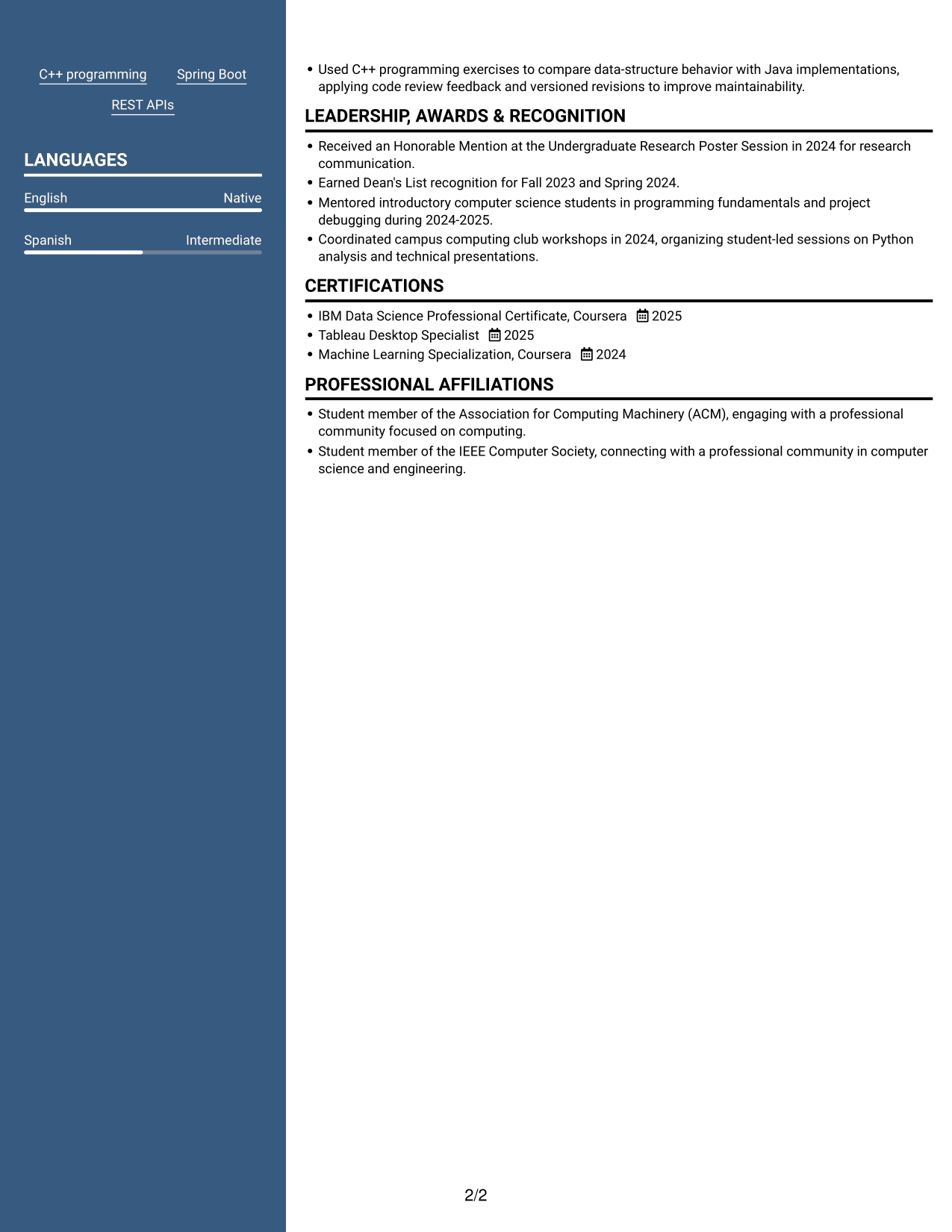
The Photo Header Two Column Format combines a header portrait with two content columns, balancing a personal image with clear section navigation.
Why This Format Works
- Two columns help reviewers move between career history and supporting resume sections efficiently.
- Separate content areas keep skills, education, and credentials easy to find.
- Reading order across both columns helps preserve context around achievement details.
Best For
- Header portrait preference
- Two-column content review
- Side-by-side section navigation
- Mixed resume content
- Portrait with organized details
See Also
- 33 Associate Machine Learning Engineer, Trust & Safety Intelligence Resume Templates with Example 2026 (ATS-Optimized)
- 33 Senior Artificial Intelligence Automation Engineer Resume Templates with Example 2026 (ATS-Optimized)
- 33 Entry Level Machine Learning Engineer/Data Scientist Resume Templates with Example 2026 (ATS-Optimized)
- 33 AI/ML Engineer - Machine Learning Systems Resume Templates with Example 2026 (ATS-Optimized)
- 33 Applied AI, Forward Deployed Machine Learning Engineer Resume Templates with Example 2026
- 33 Applied Machine Learning Engineer - ML & AI Systems Resume Templates with Example 2026 (ATS-Optimized)
- 7 Entry-Level Machine Learning Engineer - Computer Vision Resume Templates with Example
- 33 Junior Machine Learning Engineer / BI Analyst – Junior Level (Remote) Resume Templates with Example 2026 (ATS-Optimized)
- 7 Entry-Level Machine Learning and Artificial Intelligence Engineer - Data Science Cover Letter Templates with Example
- 30+ Associate Machine Learning Engineer, Trust & Safety Intelligence Cover Letter Templates with Example 2026
Frequently Asked Questions
Are these Entry-Level Machine Learning and Artificial Intelligence Engineer - Data Science resume templates ATS-friendly?
The layouts use clear headings and readable sections to support quick review. Use standard resume section names and include relevant skills, such as Python, statistics, machine learning, Java, and data visualization, where they match your experience.
What should an Entry-Level Machine Learning and Artificial Intelligence Engineer - Data Science resume include?
Include a focused summary, education, technical skills, and relevant project or experience entries. Add certifications, awards, or leadership activities when they support your qualifications.
How can I show machine learning experience on my resume?
Describe the data, methods, and models you worked with, then explain how you assessed the results. Include measurable details when available, such as dataset size, evaluation approach, or findings presented.
Which resume format works well for this role?
A clean, easy-to-scan layout helps reviewers find your technical skills, education, and project evidence. Choose a format with clear section headings and enough space for concise bullet points.
Can academic projects help support an entry-level resume?
Yes. Relevant coursework, research, and academic projects can show how you apply programming, data analysis, and model evaluation. Explain your role and the results without overstating what the work demonstrated.
Should I include a photo on my resume?
Include a photo only if it is customary or expected in your country, region, or field. For U.S. applications, a resume without a photo is generally the safer choice.