7 Entry Level Production - Steel Manufacturing Resume Templates with Example
This guide shows you how to create an Entry Level Production - Steel Manufacturing resume that is clear, focused, and easy to review. You will learn how to organize strong evidence so employers can quickly understand your readiness for production work.
Give priority to safety, material handling, quality inspection, housekeeping, standardized work, and clear English communication. Use short bullets that show what you did, how you followed procedures, and how you supported safe, reliable work.
The same resume appears in 7 ATS-friendly layouts so you can compare reading order, section emphasis, and visual structure. Each example includes format guidance and free PDF downloads.
What Makes a Great Entry Level Production - Steel Manufacturing Resume in 2026
A strong resume shows a safety-first work style, dependable production habits, and clear evidence of hands-on training. Keep the summary, experience, education, skills, and certifications easy to scan.
Use grounded terms such as industrial safety, material handling, quality inspection, housekeeping, hazard recognition, standardized work, safe lifting, and shift flexibility when they match your experience.
The examples shown below are intentionally detailed to demonstrate a range of experiences, skills, accomplishments and relevant keywords. We prefer detailed resumes as they provide more context to the hiring managers and also help the ATS systems identify relevant qualifications and score your resume better for a match. But the length of a resume is an individual choice. If you want a one page resume, just keep the most relevant experience and information for the job. Note: Resume examples are for educational purposes only. Use only information that accurately reflects your experience and qualifications. References to real organizations do not imply affiliation or endorsement.
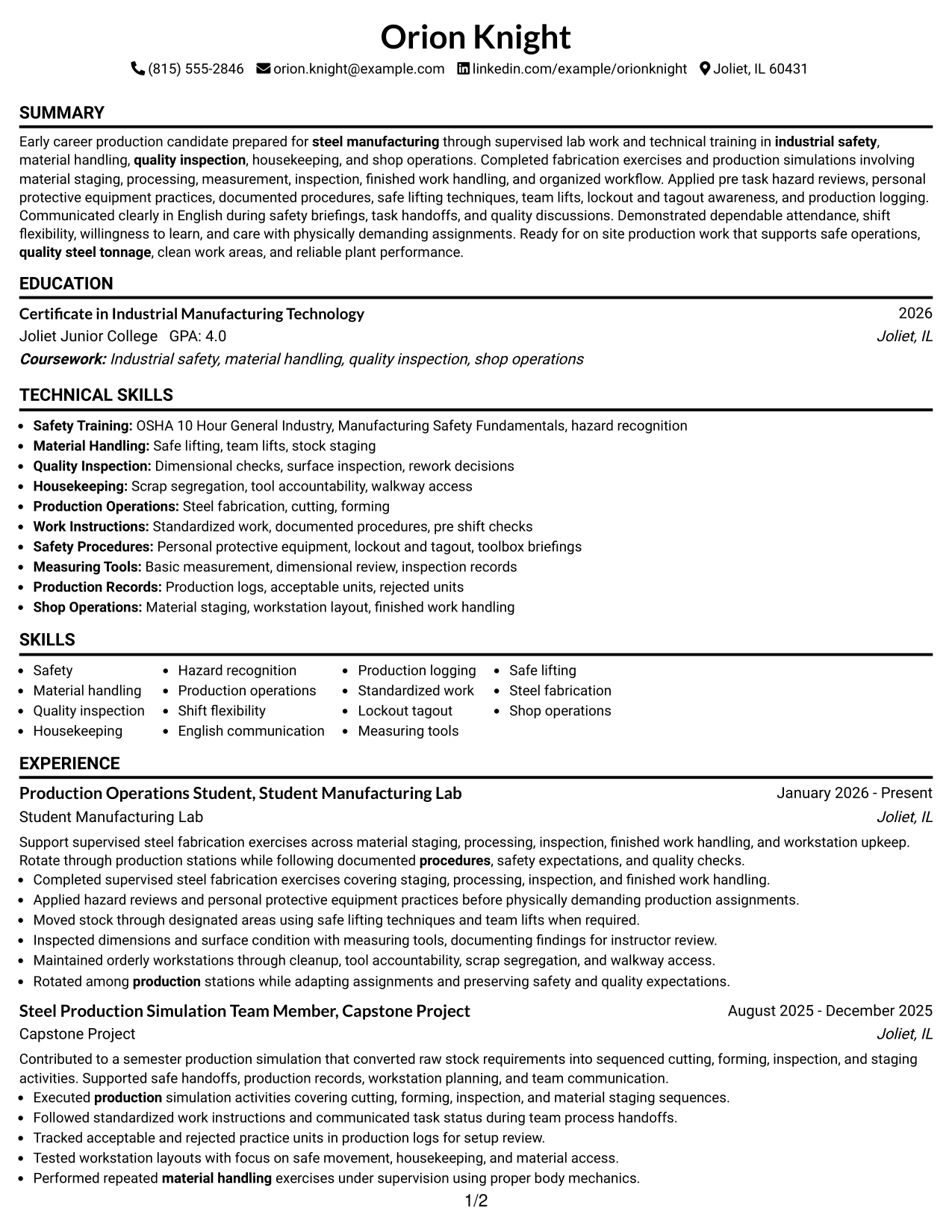
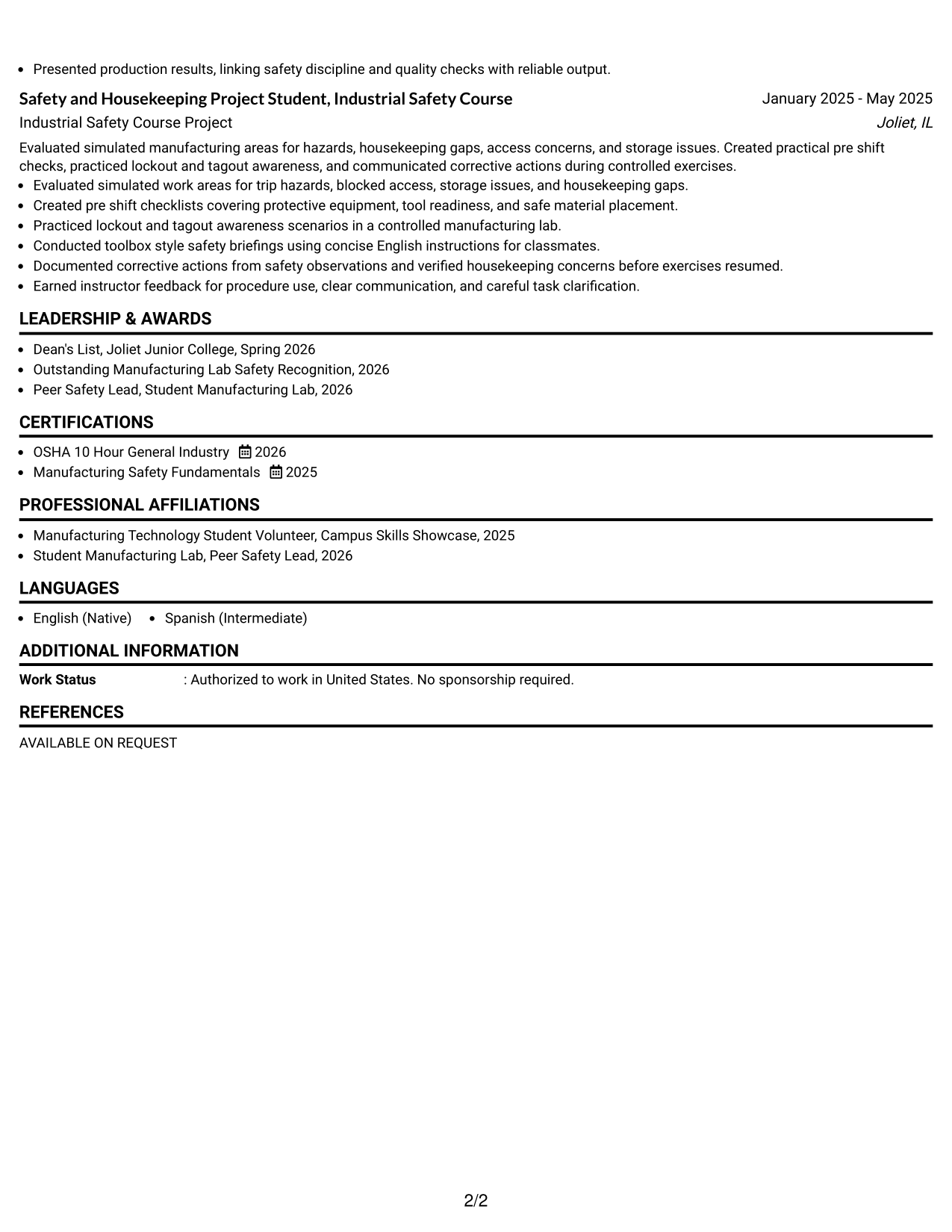
#1 Simple One Column Format Resume Example
A simple one-column flow gives recruiters a direct reading path through each resume section.
Why This Format Works
- Linear reading order keeps experience and achievements easy to follow.
- Full-width sections give skills and education clear space without crowding.
- Simple section breaks help recruiters locate credentials during a quick review.
Best For
- Straightforward ATS-focused applications
- Readers who prefer linear scanning
- Resumes with detailed experience bullets
- Clear separation of training and skills
- Entry-level steel production applications
Resume Keywords
- industrial safety
- material handling
- quality inspection
- housekeeping
- hazard recognition
- standardized work
- safe lifting
- shift flexibility
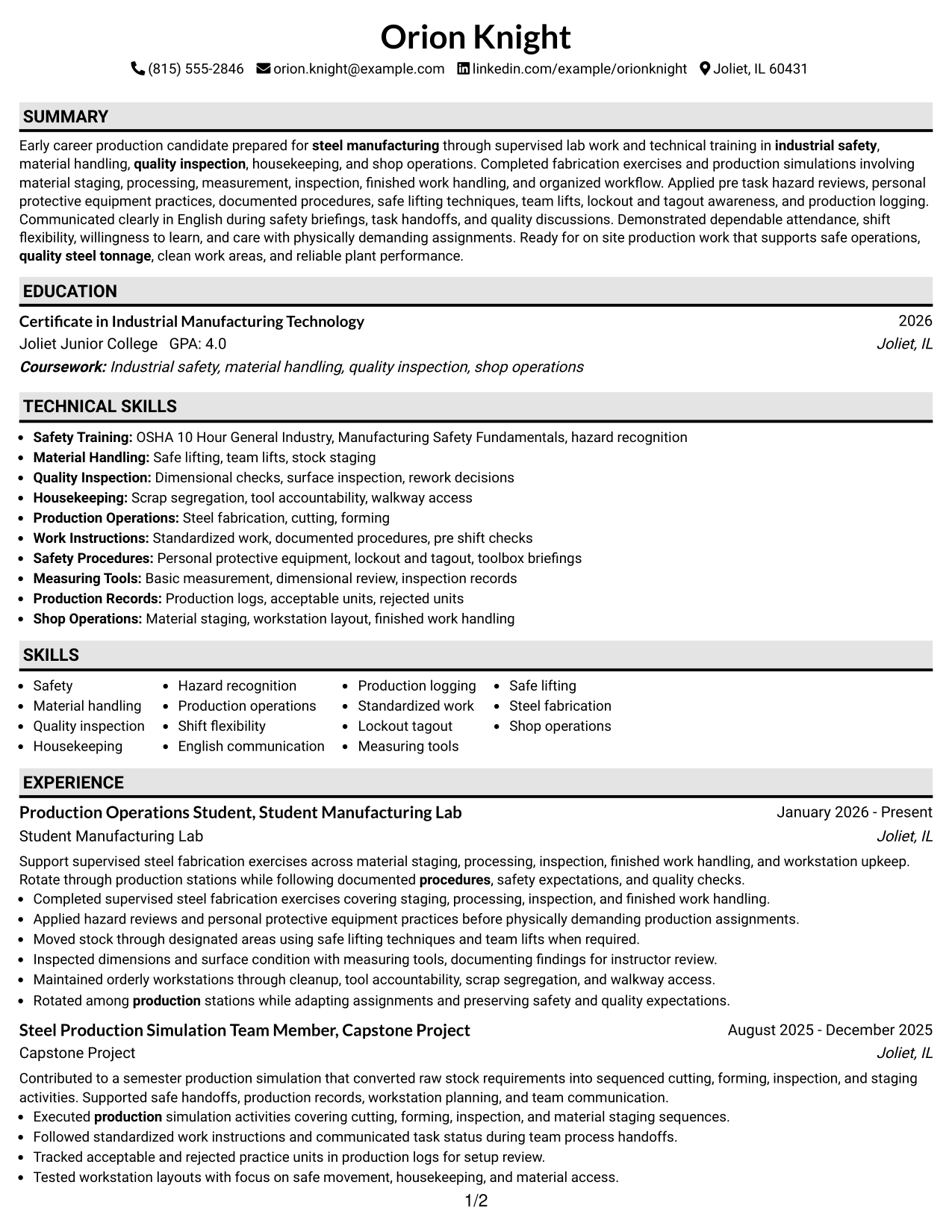
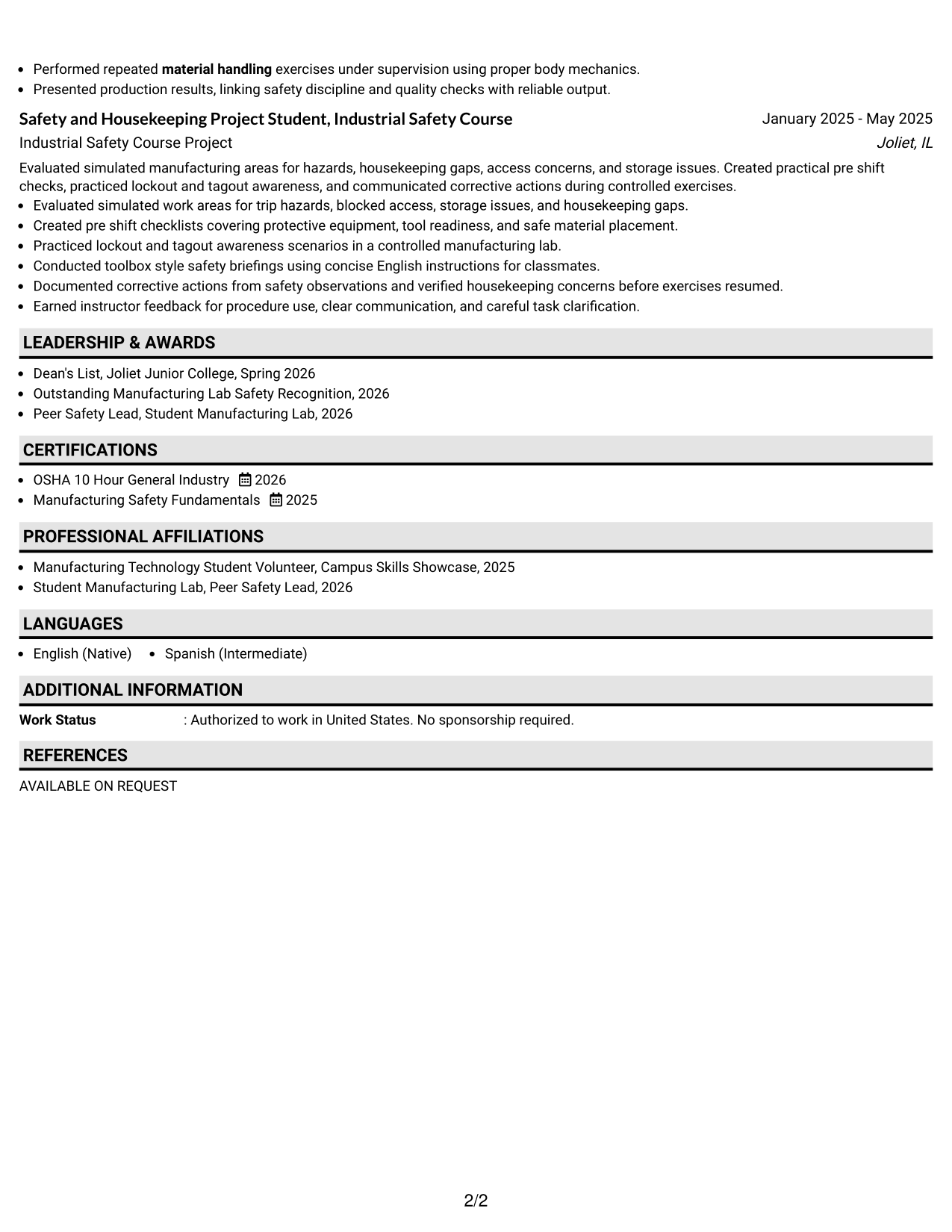
#2 Plain One Column with Shaded Labels Resume Example
Shaded section labels break up the one-column flow so recruiters can find key resume areas faster.
Why This Format Works
- Shaded labels create clear stops between experience, skills, and education.
- Single-column structure preserves a steady reading order for career details.
- Visible section boundaries make credentials easier to find without extra decoration.
Best For
- Longer sections needing visible breaks
- Readers who scan by section name
- Resumes balancing training and experience
- Applications needing restrained visual contrast
- Content with several credential categories
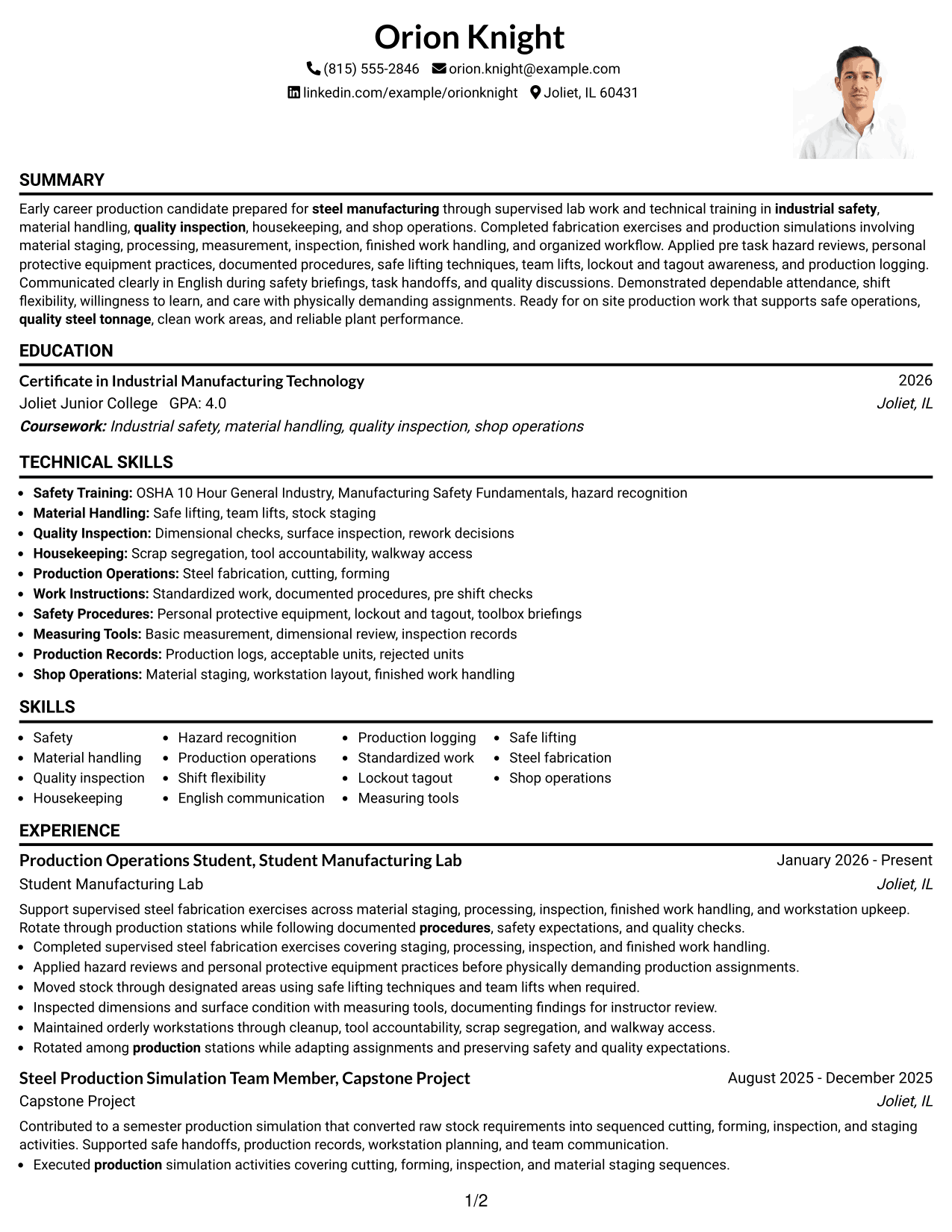
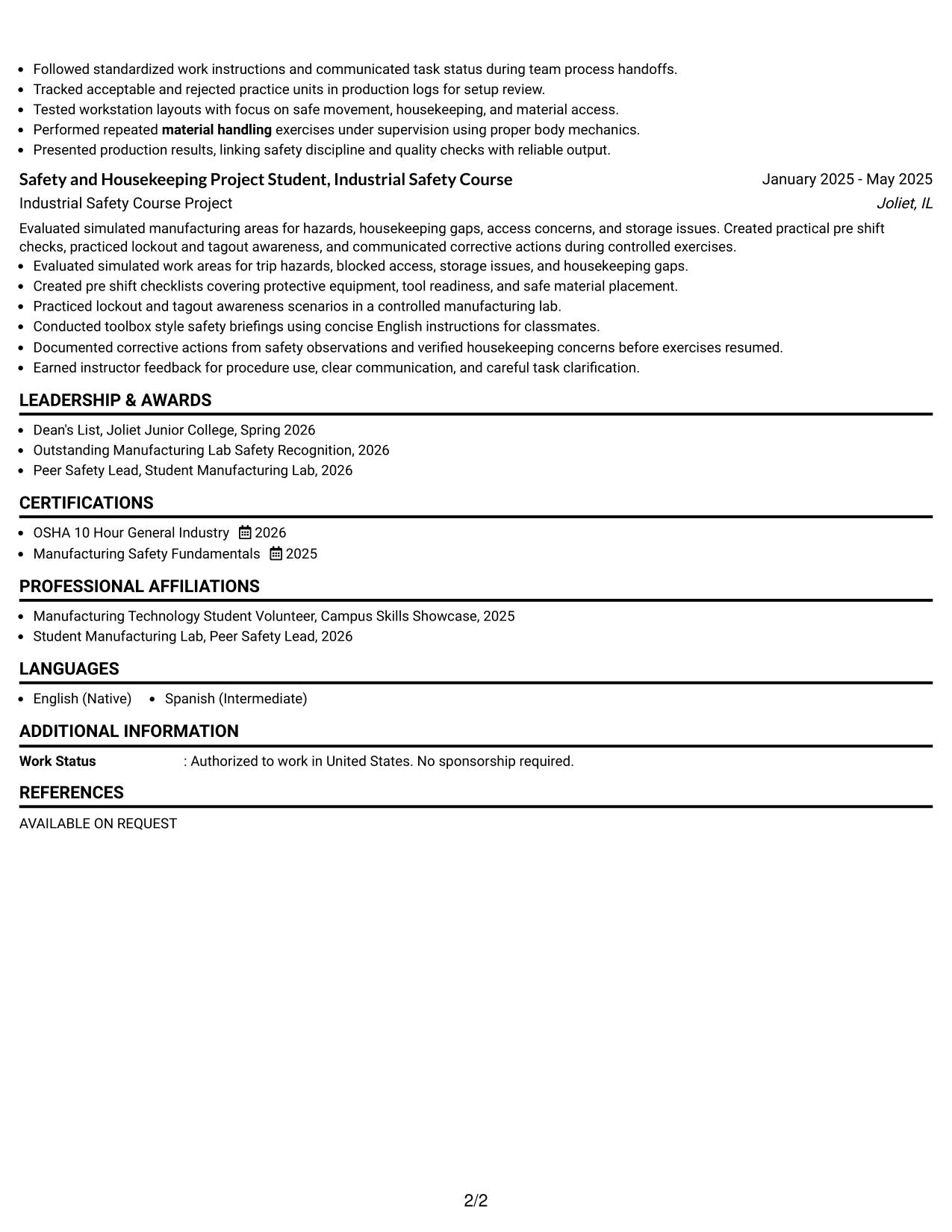
#3 One Column Format with Photo Right Resume Example
A right-side photo adds personal identification while the one-column body keeps recruiter scanning direct.
Why This Format Works
- One-column content keeps experience and achievements in an uninterrupted sequence.
- Photo placement stays separate from the main skills and education flow.
- Open body width gives credentials room to remain readable and distinct.
Best For
- Markets where resume photos are customary
- Applications requiring personal identification
- Experience presented in one continuous sequence
- Readers who value generous text width
- Resumes with compact skills sections
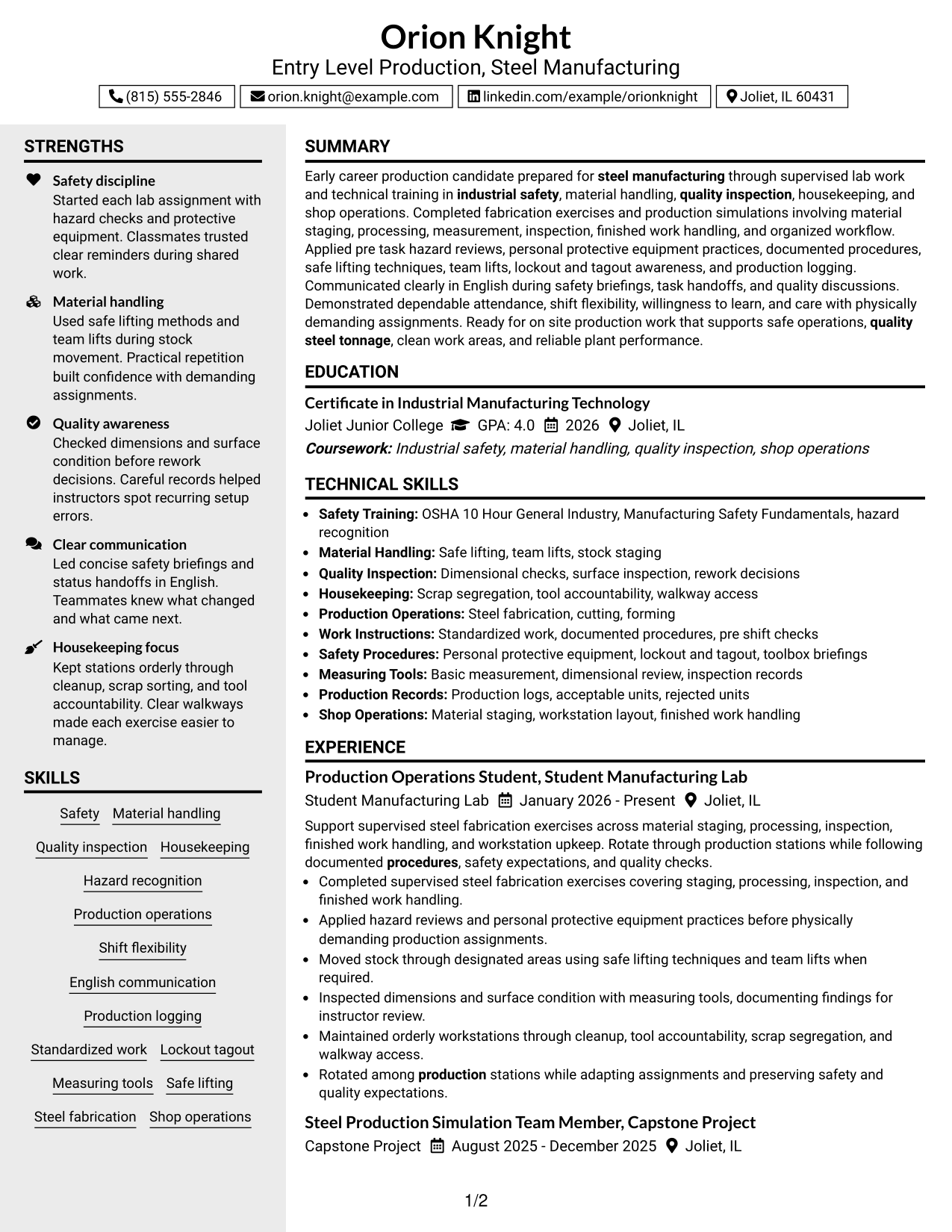
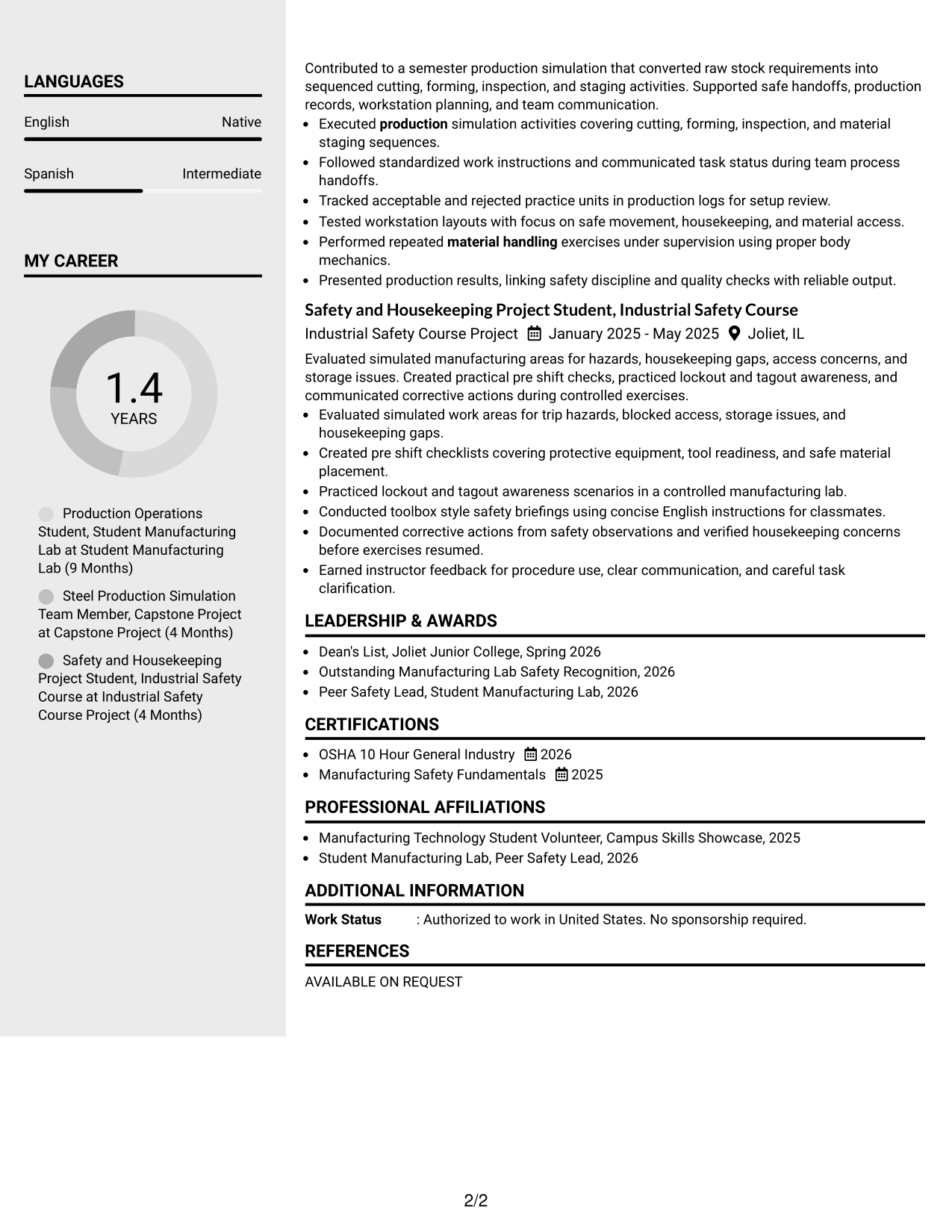
#4 Clean Two Column Sidebar Format Resume Example
A clean sidebar creates two clear content zones, helping recruiters scan core details without losing the experience timeline.
Why This Format Works
- Sidebar space separates skills and credentials from the main experience narrative.
- Main column keeps career details and achievements together for easier reading.
- Two content zones reduce competition between education details and work history.
Best For
- Compact skills and credential lists
- Experience that needs a wider main column
- Readers comparing qualifications beside work history
- Resumes with several short supporting sections
- Applications needing strong section separation
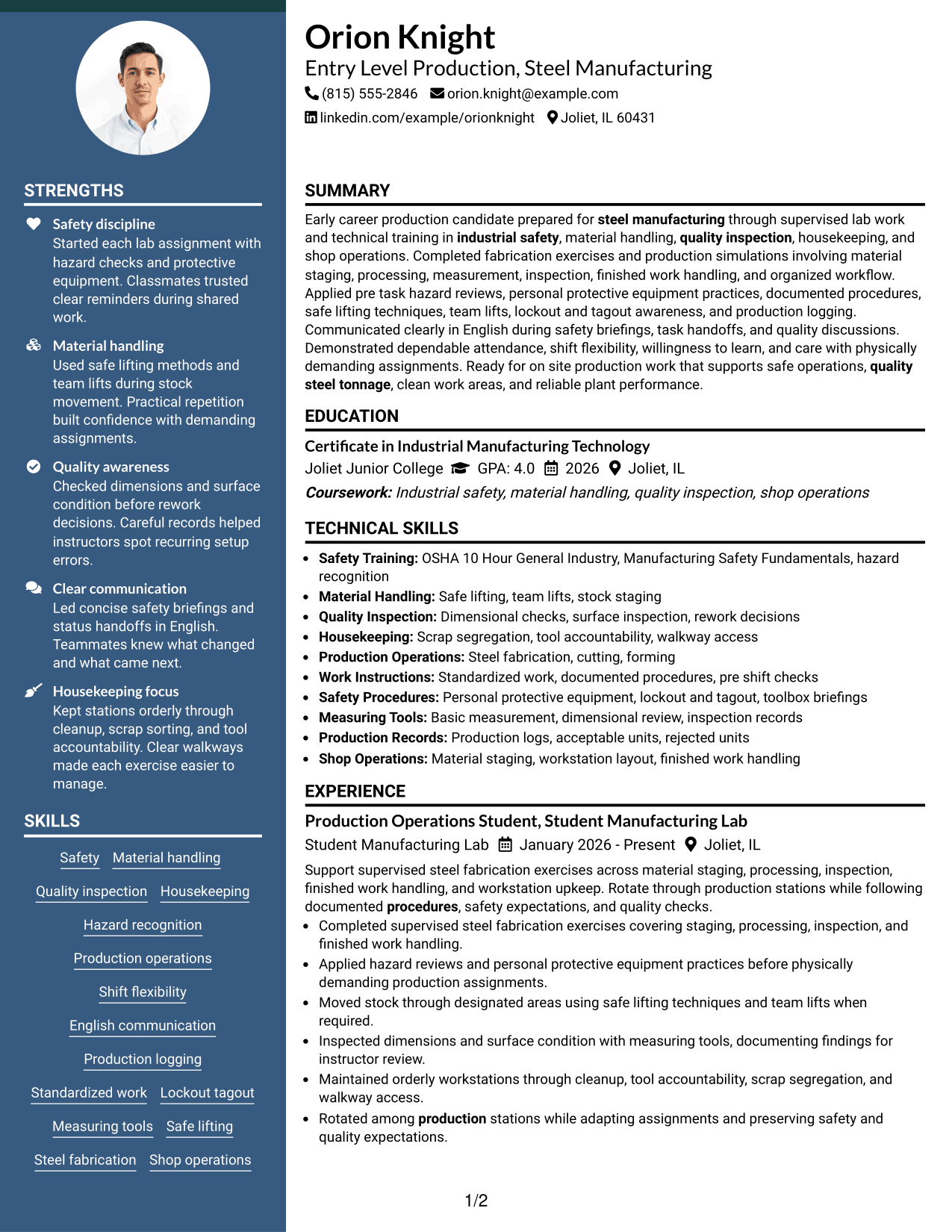
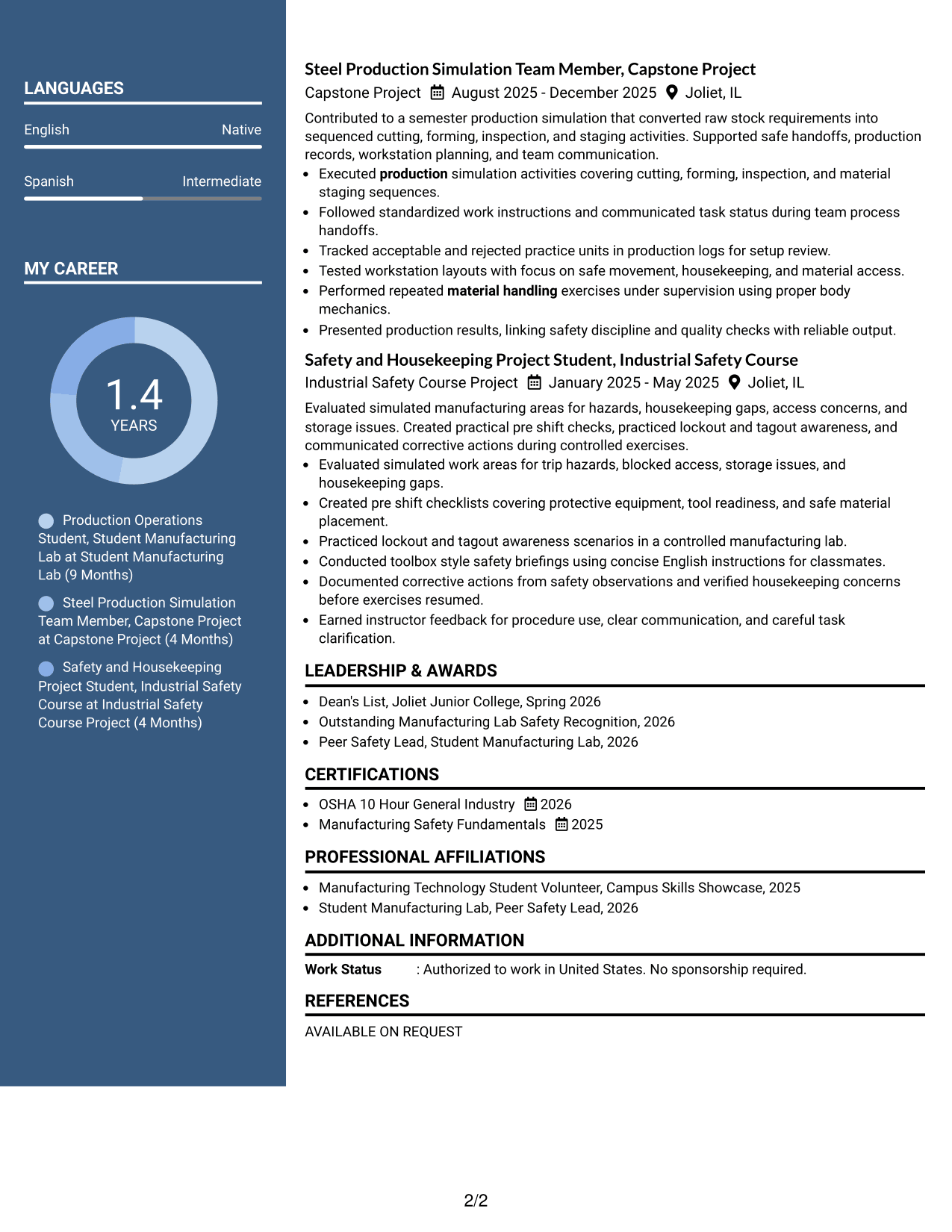
#5 Two Column Format Resume Example
Two balanced columns let recruiters compare supporting qualifications with experience while keeping major sections distinct.
Why This Format Works
- Parallel columns give skills and experience separate, easy-to-scan areas.
- Balanced space supports education and credentials without interrupting career details.
- Distinct content blocks help achievements stand apart from supporting qualifications.
Best For
- Resumes with balanced content volume
- Readers comparing skills with experience
- Several concise supporting sections
- Applications needing compact organization
- Training and credentials shown beside career evidence
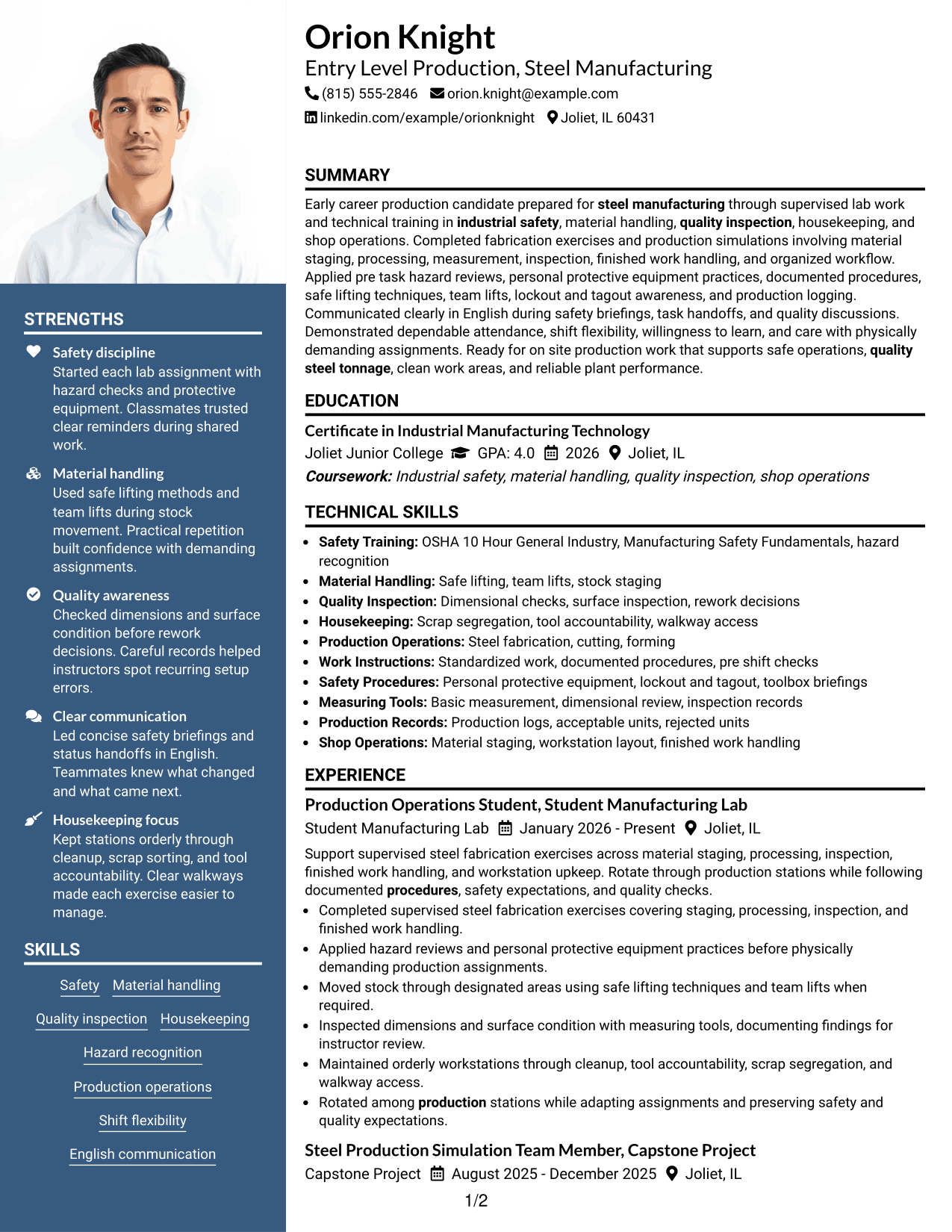
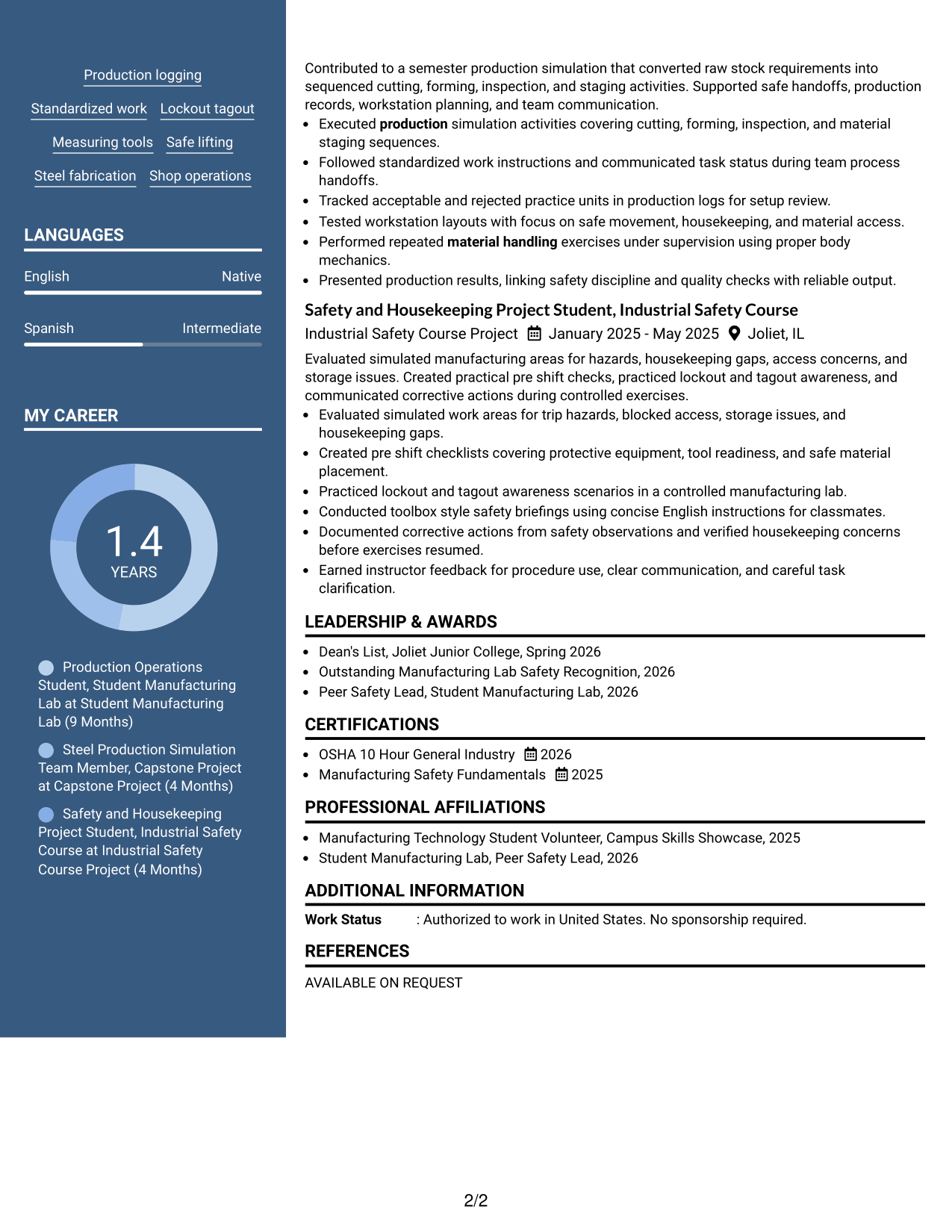
#6 Photo Header Two Column Format Resume Example
A photo header identifies the applicant while two body columns help recruiters scan resume sections in compact groups.
Why This Format Works
- Two-column body separates supporting skills from detailed experience content.
- Header photo remains distinct from achievements, education, and credential sections.
- Grouped body sections make career evidence easier to review in limited space.
Best For
- Regions where resume photos are expected
- Applications needing compact two-column grouping
- Resumes with a defined professional header
- Readers reviewing supporting skills separately
- Career evidence with multiple short sections
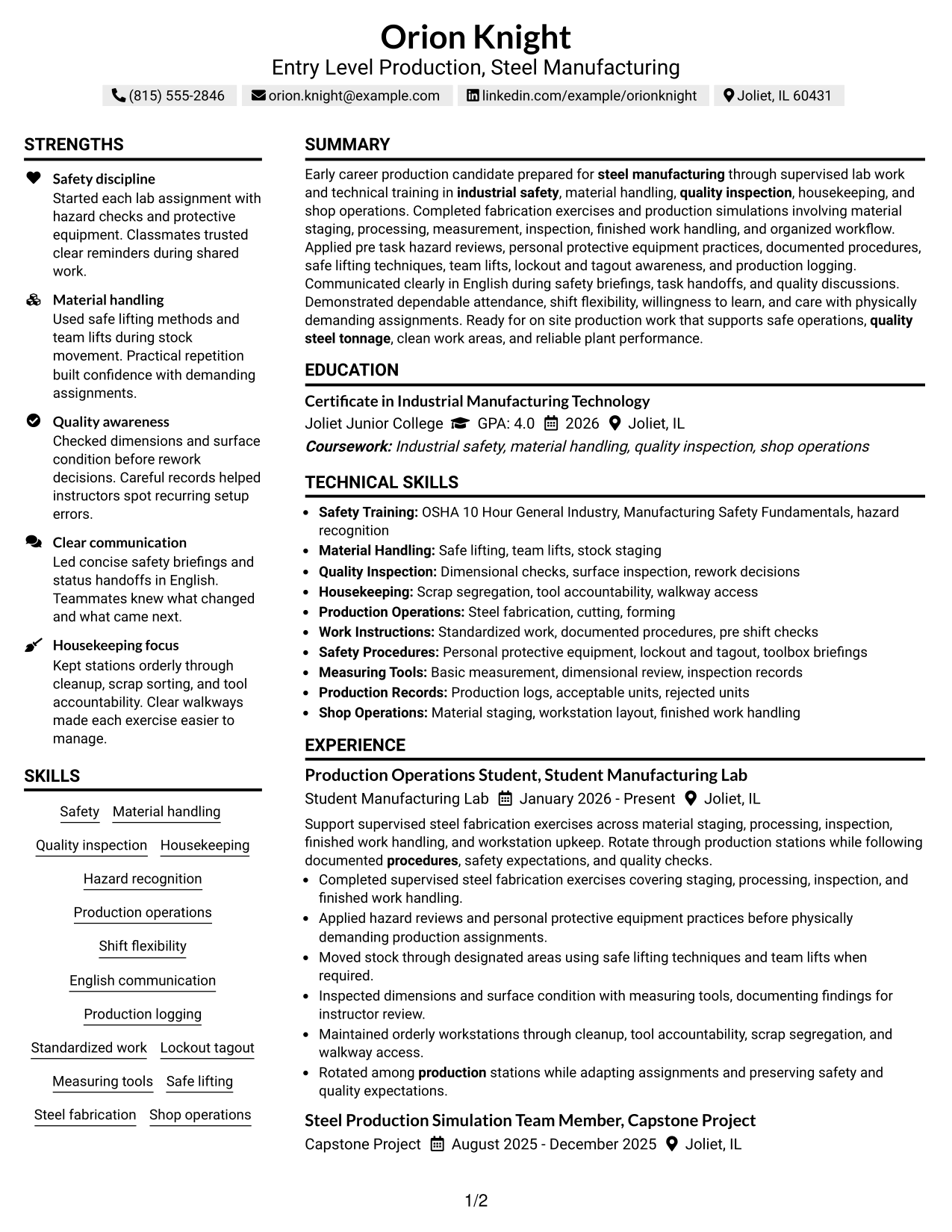
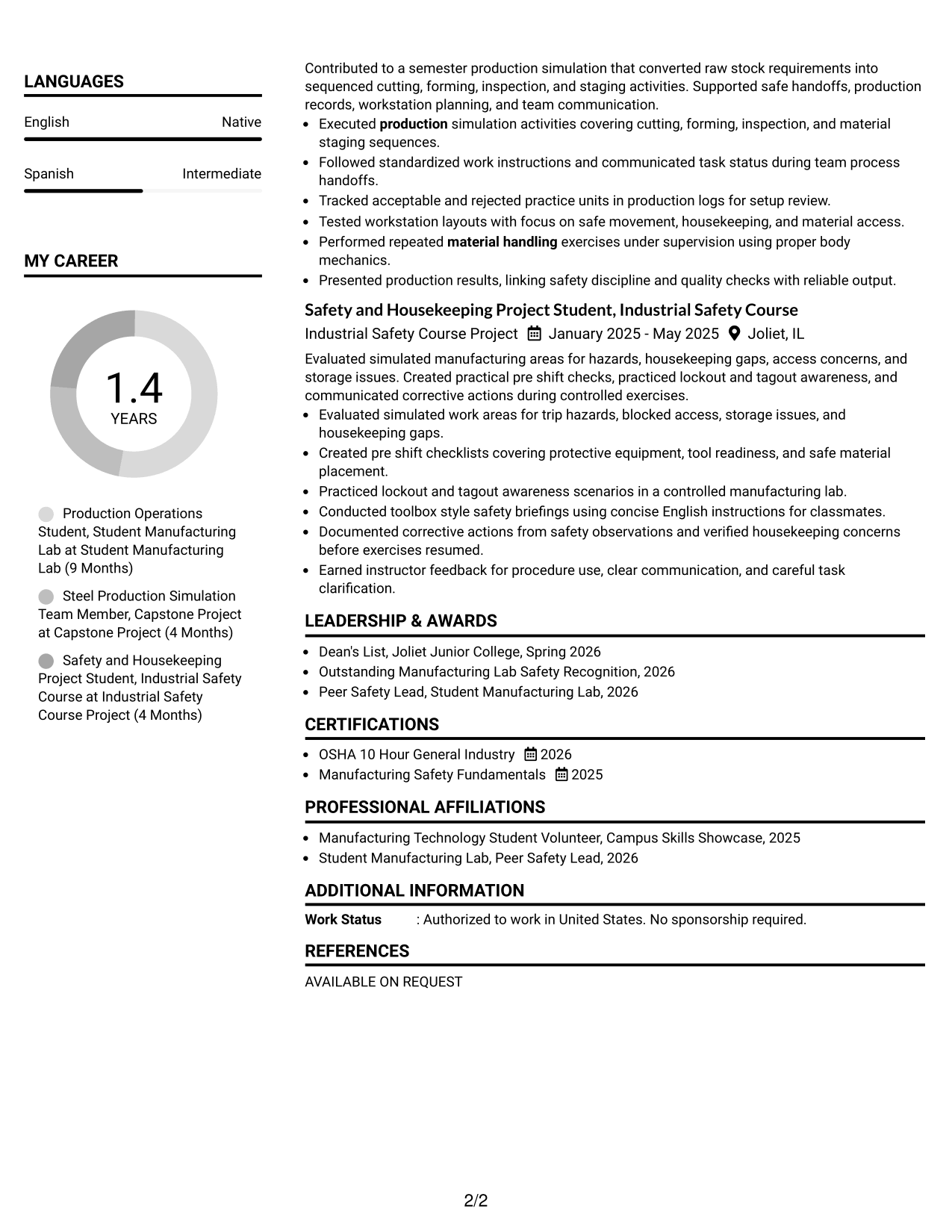
#7 Simple Two Column Format Resume Example
A simple two-column structure organizes resume content into parallel areas so recruiters can scan related sections quickly.
Why This Format Works
- Clean columns divide skills and credentials from longer experience information.
- Parallel structure lets education remain visible without breaking career progression.
- Simple spacing keeps achievements readable across separate content groups.
Best For
- Practical resumes with mixed section lengths
- Readers who scan parallel information
- Skills and credentials needing dedicated space
- Experience sections with supporting education
- Applications favoring simple visual structure
See Also
- 33 Production Supervisor - Manufacturing Operations Resume Templates with Example
- 33 Applied AI Research Engineer - Production ML & Cloud Resume Templates with Example 2026 (ATS-Optimized)
- 7 Assembly Manager Production Resume Templates with Example
- 7 Entry Level Production Resume Templates with Example
- 33 Food Production Chef Resume Templates with Example 2026 (ATS-Optimized)
- 33 General Production Worker Resume Templates with Example 2026 (ATS-Optimized)
- 7 NF Production I - Scrap Metal Operations Resume Templates with Example
- 7 Production Associate - Meat Processing Resume Templates with Example
- 30+ Applied AI Research Engineer - Production ML & Cloud Cover Letter Templates with Example 2026
- 30+ Food Production Chef Cover Letter Templates with Example 2026
Frequently Asked Questions
Are these Entry Level Production - Steel Manufacturing resume templates ATS-friendly?
Yes. They use clear section structure and readable headings that support ATS scanning. Your results still depend on using accurate, relevant keywords from the job posting and your own experience.
Are these different resumes?
No. The examples show the same Entry Level Production - Steel Manufacturing resume in different visual formats so you can compare how the same content is organized.
What should an Entry Level Production - Steel Manufacturing resume include?
Include a focused summary, hands-on training or experience, education, safety credentials, production skills, and concise bullets that show safe work, quality checks, material handling, and housekeeping.
How can I strengthen a resume without prior manufacturing employment?
Use relevant lab work, course projects, production simulations, safety training, and team assignments. Describe the tasks you completed, the procedures you followed, and the quality or safety checks you performed.
Which resume format is best for this production role?
A clear one-column format is useful when you want a simple reading order. A two-column format can work well when you need compact space for skills and credentials beside experience.
Should I list OSHA and manufacturing safety training?
Yes, when you have completed that training. Put relevant certifications in a clear section and use accurate names and dates so recruiters can verify them quickly.
Should I include a photo on a U.S. manufacturing resume?
Usually no. For most U.S. applications, a no-photo format is the safer choice because it keeps attention on your qualifications and work evidence.
Can I customize these resume templates?
Yes. Adjust the summary, bullets, skills, and section order to match the target posting while keeping every claim accurate and supported by your background.