
7 Inside Plant (ISP) Fiber Optic Engineer - High-Tech Connectivity Resume Templates with Example
This guide shows you how to create an Inside Plant (ISP) Fiber Optic Engineer resume that clearly presents relevant design work and technical strengths. You will learn how to organize your evidence and review professional formats for this role.
A strong resume makes fiber pathways, building entrance systems, telecommunications spaces, and passive connectivity easy to understand. Use specific examples to show how you plan routes, manage capacity, coordinate with other disciplines, and support projects through testing and closeout.
The example is presented in 7 layouts so you can compare image previews and see how section order and page design affect readability. The guide also covers ATS-friendly headings, role-specific keywords, and ways to describe your experience with tools such as AutoCAD, Civil 3D, Revit, and Bluebeam.
What Makes a Great Inside Plant (ISP) Fiber Optic Engineer Resume in 2026
A strong resume uses clear sections and focused bullet points to show fiber design, pathway coordination, and project delivery. Keep key information easy to scan, including relevant skills, experience, education, and certifications.
Use accurate terms for route diversity, capacity planning, OSP-to-ISP coordination, cable schedules, riser diagrams, and termination details. Name tools and standards you have used, such as AutoCAD, Civil 3D, Revit, TIA, BICSI, NEC, and NFPA.
The examples shown below are intentionally detailed to demonstrate a range of experiences, skills, accomplishments and relevant keywords. We prefer detailed resumes as they provide more context to the hiring managers and also help the ATS systems identify relevant qualifications and score your resume better for a match. But the length of a resume is an individual choice. If you want a one page resume, just keep the most relevant experience and information for the job. Note: Resume examples are for educational purposes only. Use only information that accurately reflects your experience and qualifications. References to real organizations do not imply affiliation or endorsement.
#1 Simple One Column Format Resume Example
A single column keeps resume content in one vertical reading path, making it straightforward to review from section to section.
Why This Format Works
- Experience entries can follow a clear sequence, helping reviewers trace career progression.
- Skills and technical tools remain easy to locate within the resume’s section structure.
- Education and certification details can be reviewed apart from achievement bullets.
Best For
- Single-path resume reading
- Chronological work histories
- Technical detail in distinct sections
- Skill and credential review
- Resume-first recruiter screening
Resume Keywords
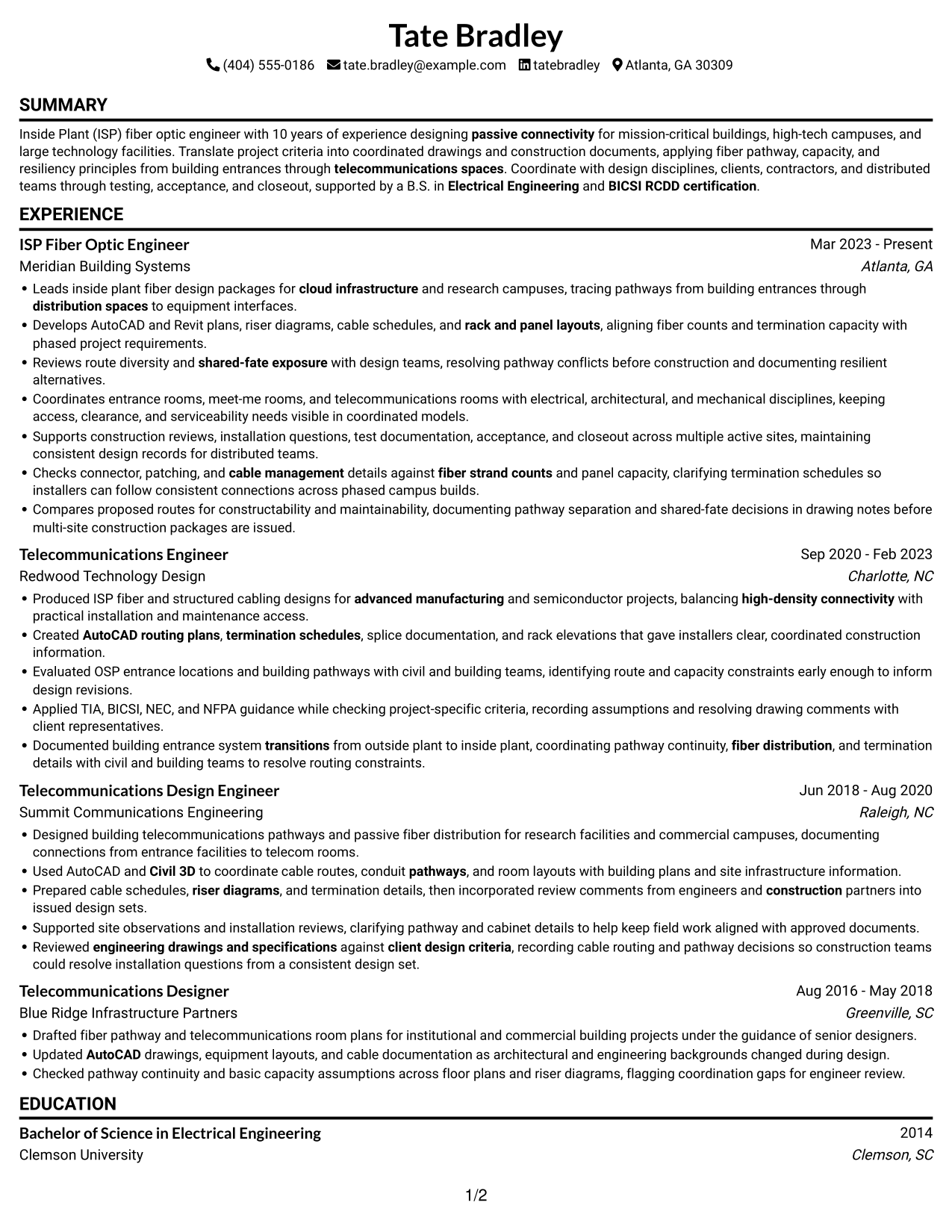
- Leads inside plant fiber design packages for cloud infrastructure and research campuses, tracing pathways from building entrances through distribution spaces to equipment interfaces.
- Documented building entrance system transitions from outside plant to inside plant, coordinating pathway continuity, fiber distribution, and termination details with civil and building teams to resolve routing constraints.
- Used AutoCAD and Civil 3D to coordinate cable routes, conduit pathways, and room layouts with building plans and site infrastructure information.
- AutoCAD
- Civil 3D
- structured cabling
- telecommunications spaces
- fiber distribution, and termination
- Capacity planning
- route diversity
- Network resiliency
- Checks connector, patching, and cable management details against fiber strand counts and panel capacity, clarifying termination schedules so installers can follow consistent connections across phased campus builds.
- Fiber Splicing
- cable management
- passive connectivity
#2 Simple Two Column Format Resume Example
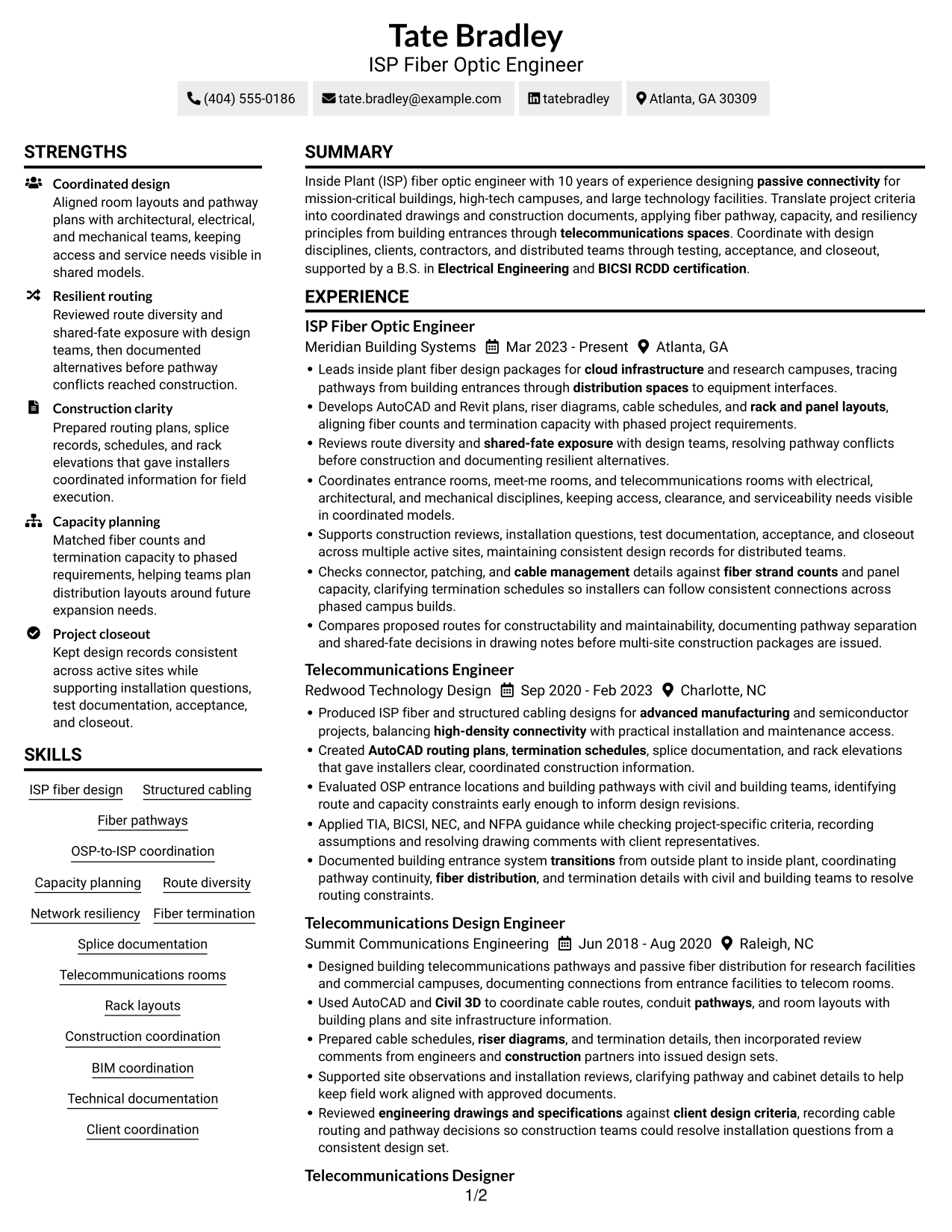
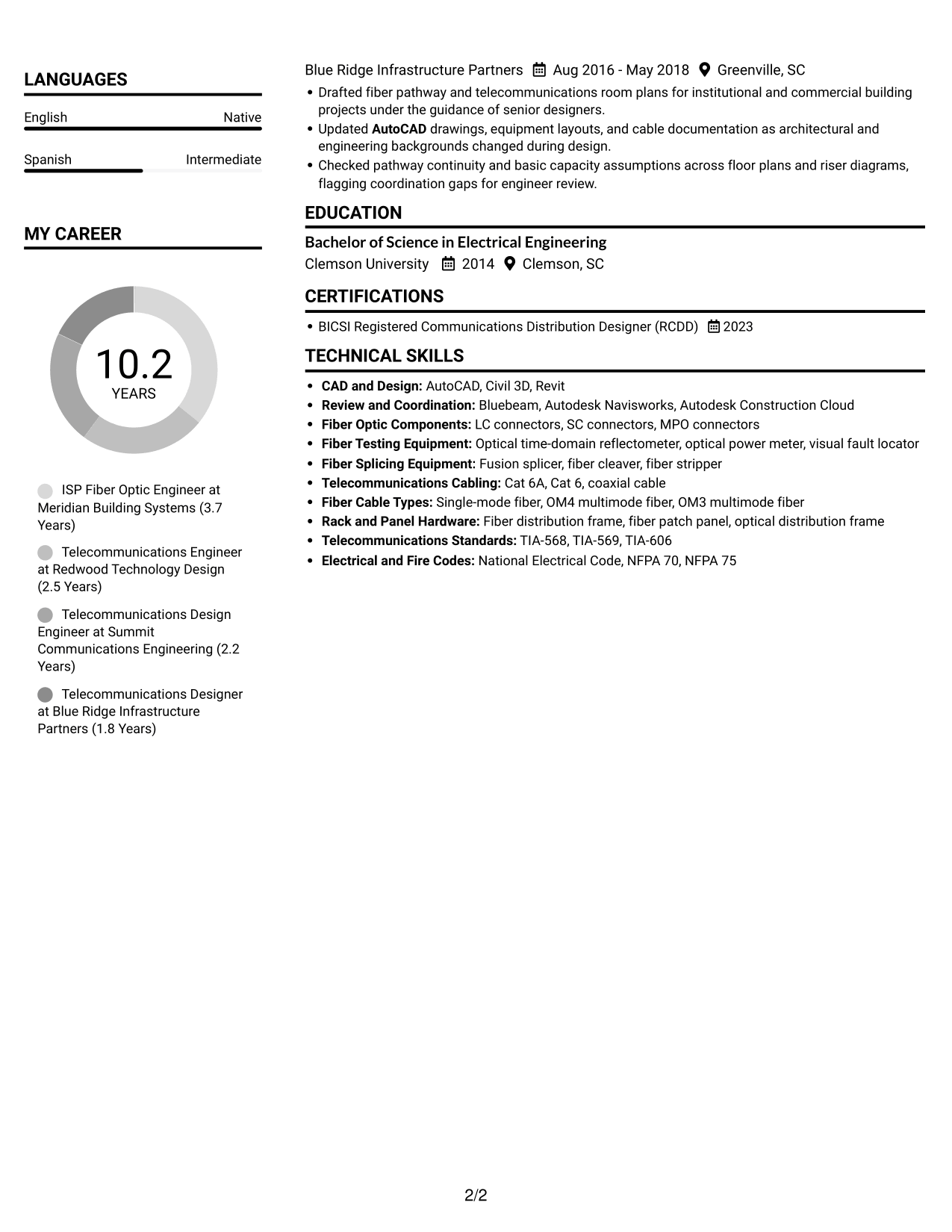
Two columns place resume content side by side, giving reviewers parallel areas to scan.
Why This Format Works
- Parallel content areas help reviewers distinguish experience details from supporting resume sections.
- A clear reading order can keep career progression easy to follow across multiple roles.
- Skills, education, and credentials can be scanned without interrupting experience review.
Best For
- Side-by-side section review
- Experience with supporting sections
- Career histories spanning several roles
- Skills and education scanning
- Dense technical resume content
#3 Plain One Column with Shaded Labels Resume Example
The one-column structure gives resume sections a direct top-to-bottom sequence for review.
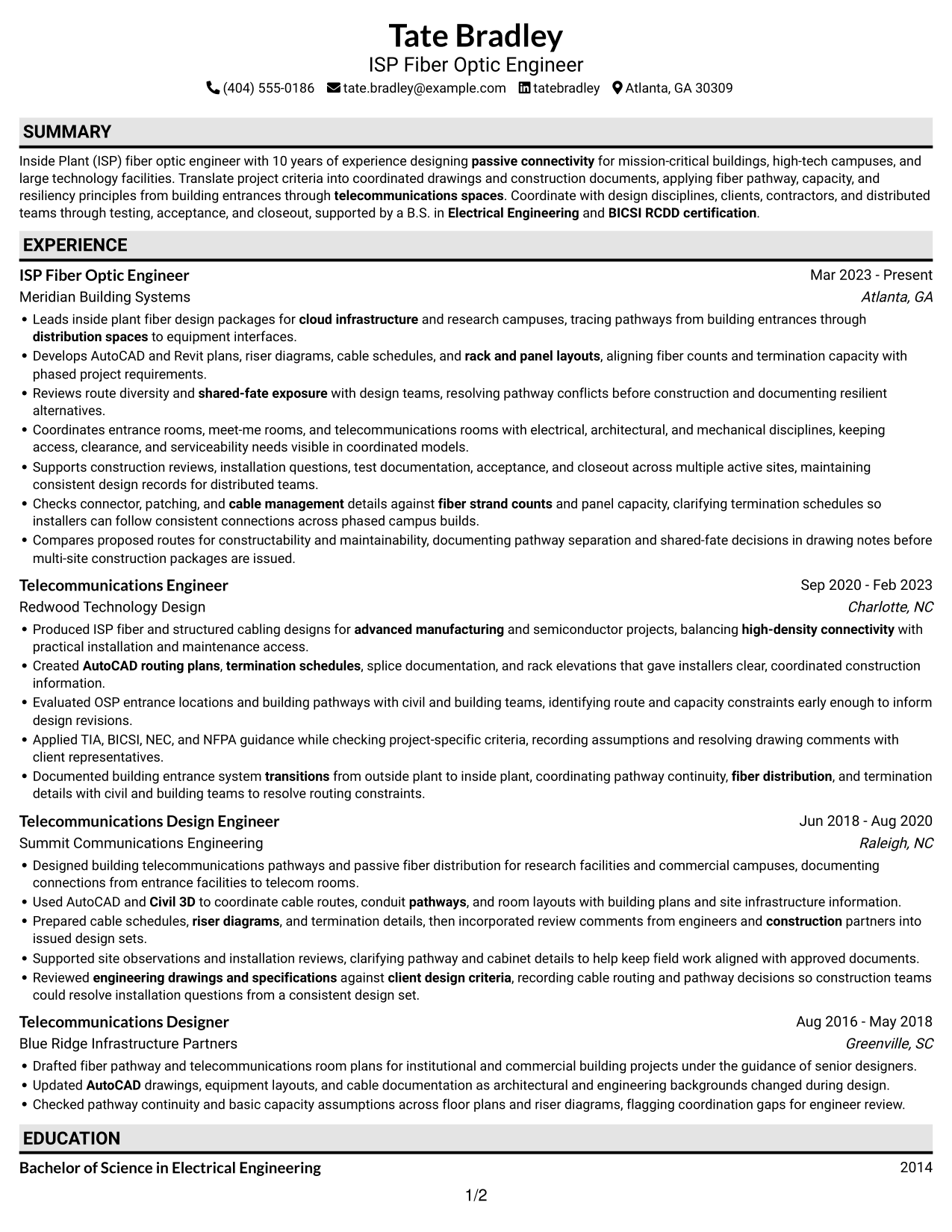
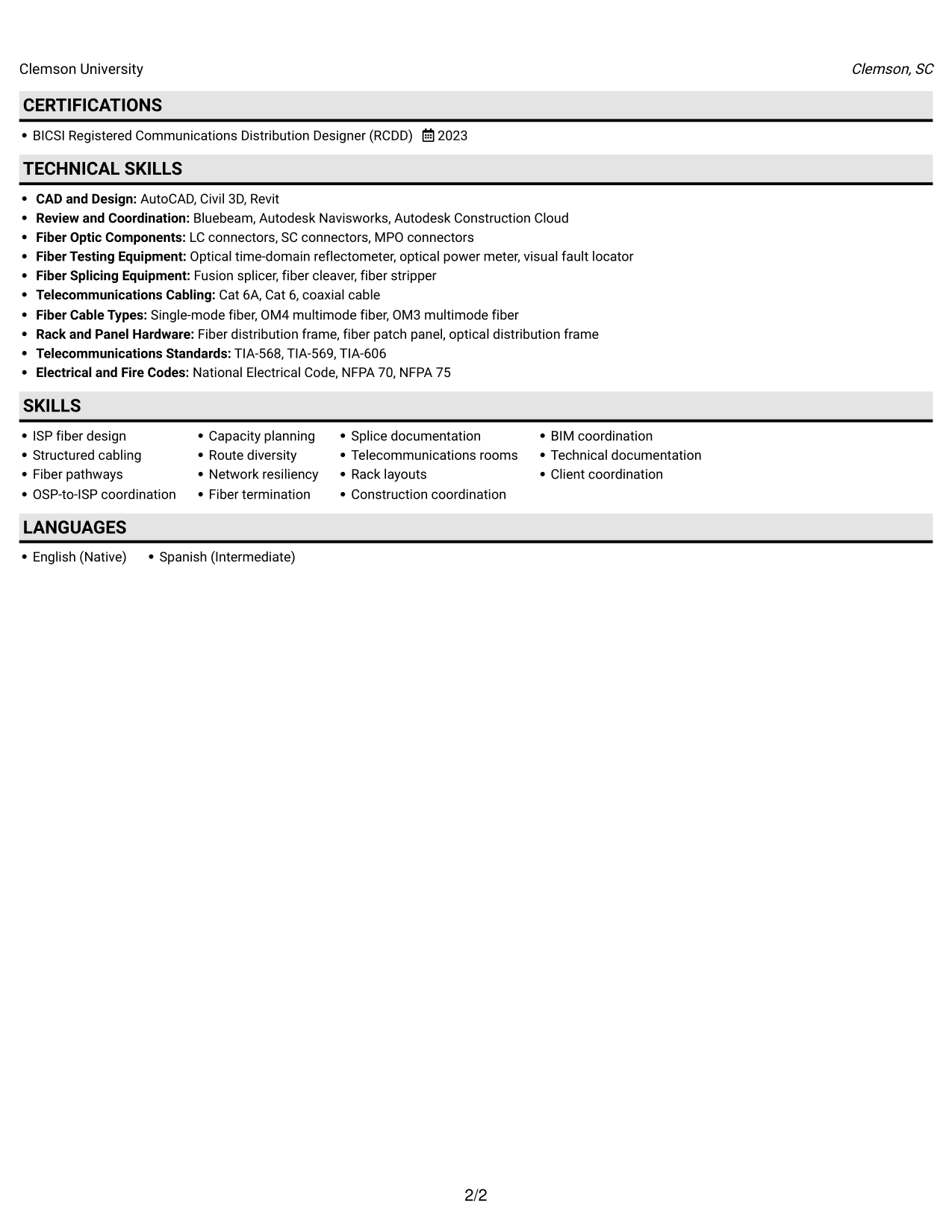
Why This Format Works
- A continuous column lets reviewers move from summary to work history in sequence.
- Role entries can show career progression without requiring readers to switch between columns.
- Technical skills and education stay within the same vertical path as experience.
Best For
- Top-to-bottom section review
- Sequential work-history reading
- Detailed technical summaries
- Education and career history
- Text-focused application materials
#4 One Column Format with Photo Right Resume Example
A one-column body pairs a photo with a direct reading path through the resume text.
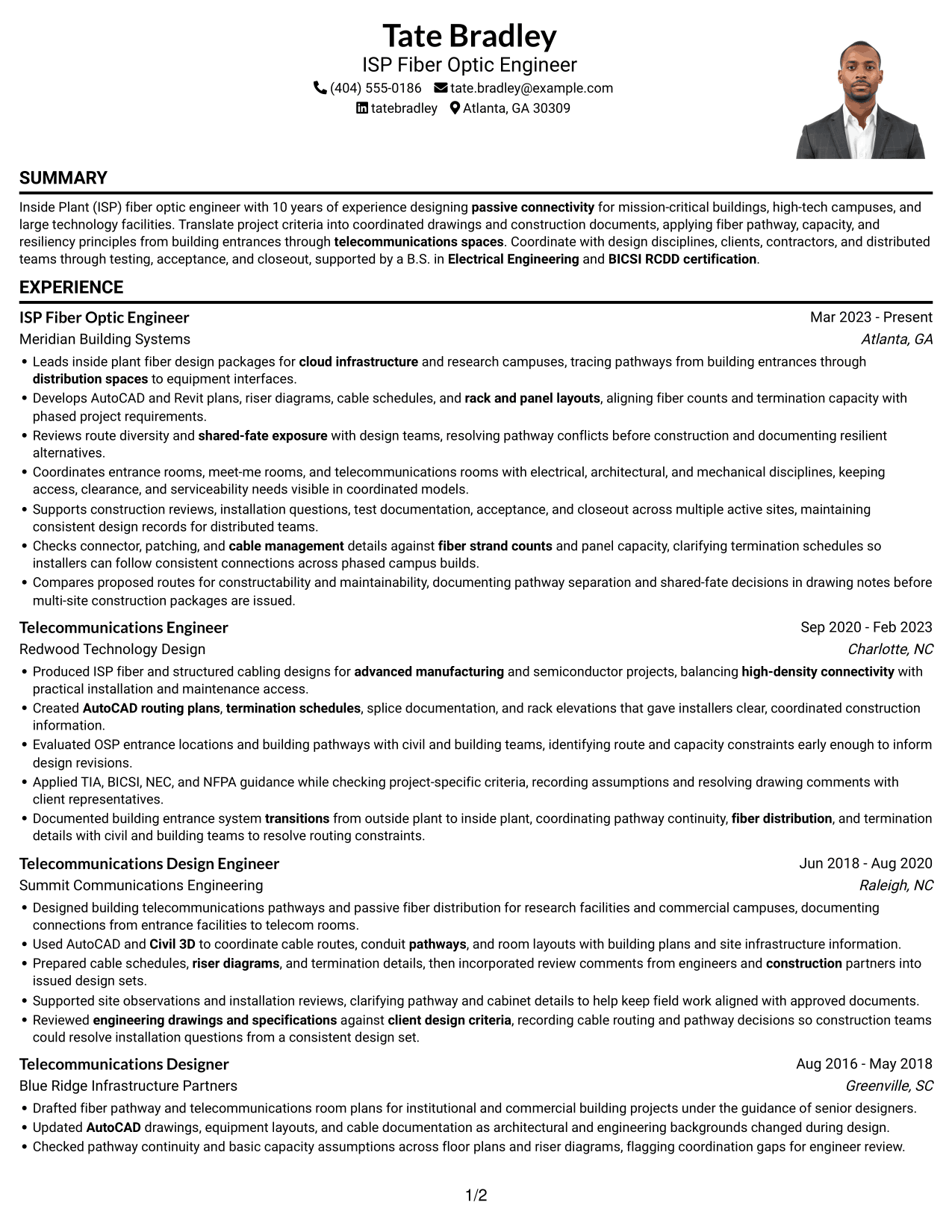
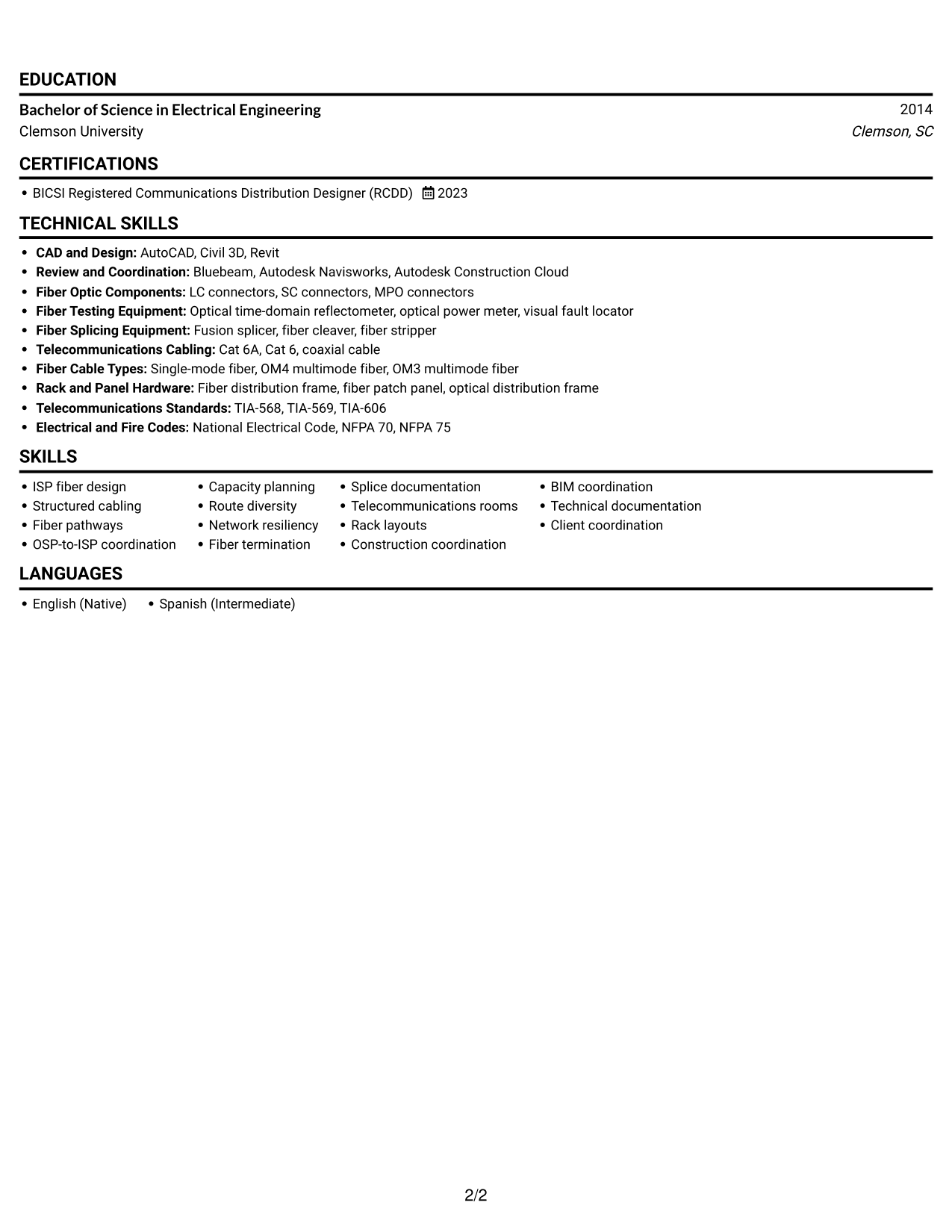
Why This Format Works
- The single body column keeps experience entries in a familiar top-to-bottom order.
- Section divisions help reviewers locate skills and credentials without splitting the main reading path.
- Career history stays in one text flow, while the photo serves as a visual element.
Best For
- Portrait-inclusive resume submissions
- Single-column reading preference
- Career histories with several roles
- Technical details in a clear sequence
- Text and portrait presentation
#5 Clean Two Column Sidebar Format Resume Example
Two columns give the resume distinct areas for readers to navigate across its content.
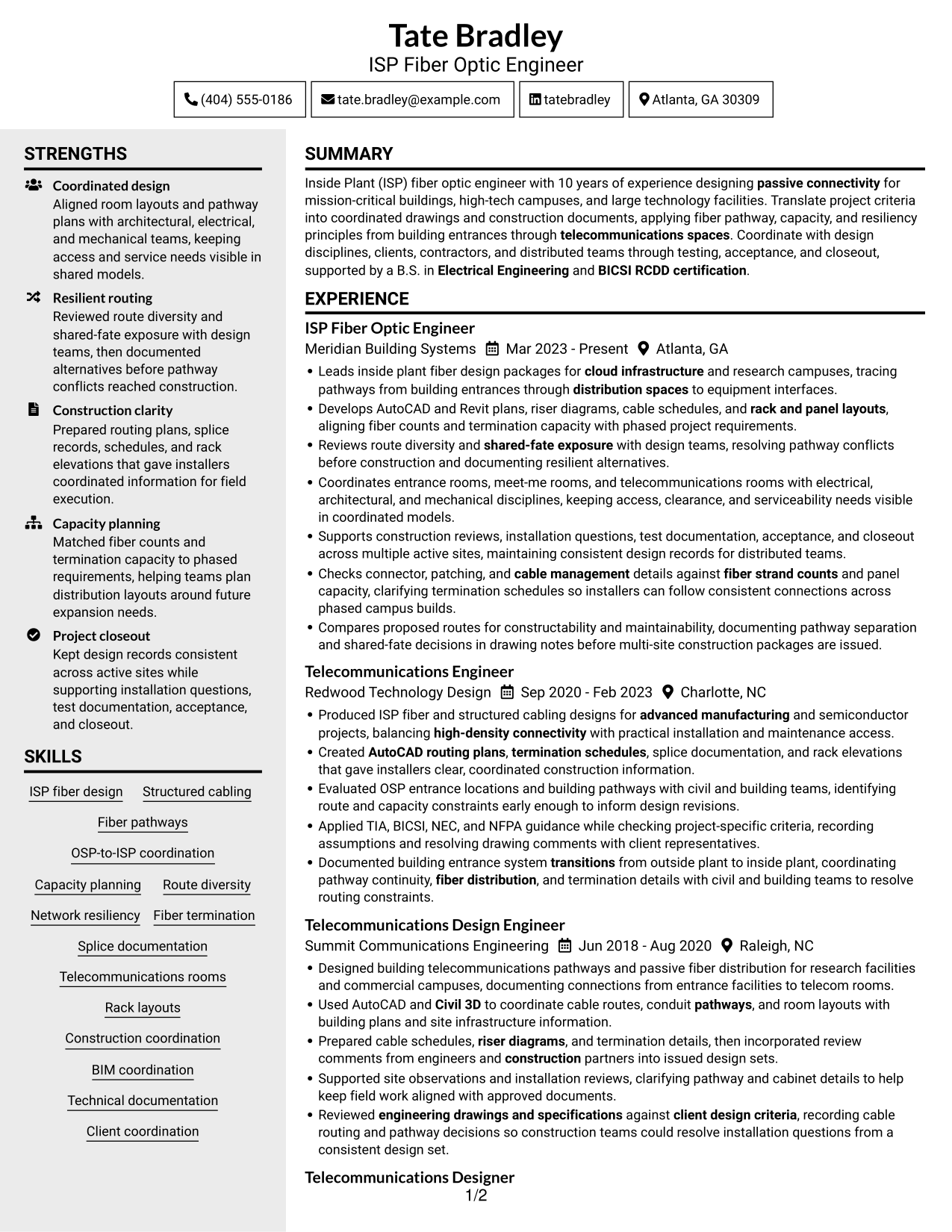
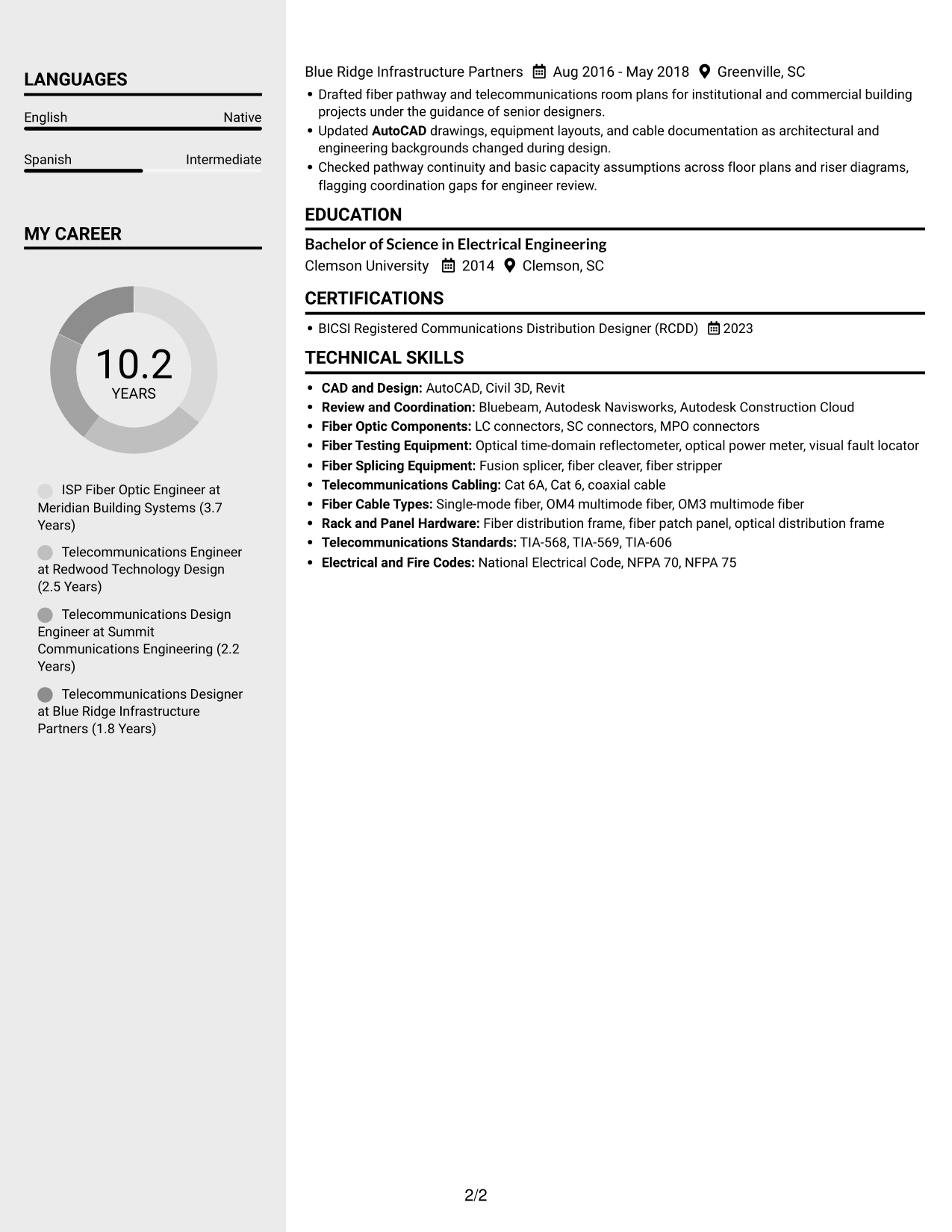
Why This Format Works
- Separate content areas help reviewers locate experience, skills, and education by section.
- The two-column arrangement supports review of role history alongside other resume details.
- Section-based reading can make technical credentials easier to find among varied content.
Best For
- Resume sections needing clear separation
- Concurrent experience and skills review
- Multi-role career summaries
- Quick section-level navigation
- Technical details across varied sections
#6 Two Column Format Resume Example
The two-column layout offers a parallel way to review resume sections and supporting details.
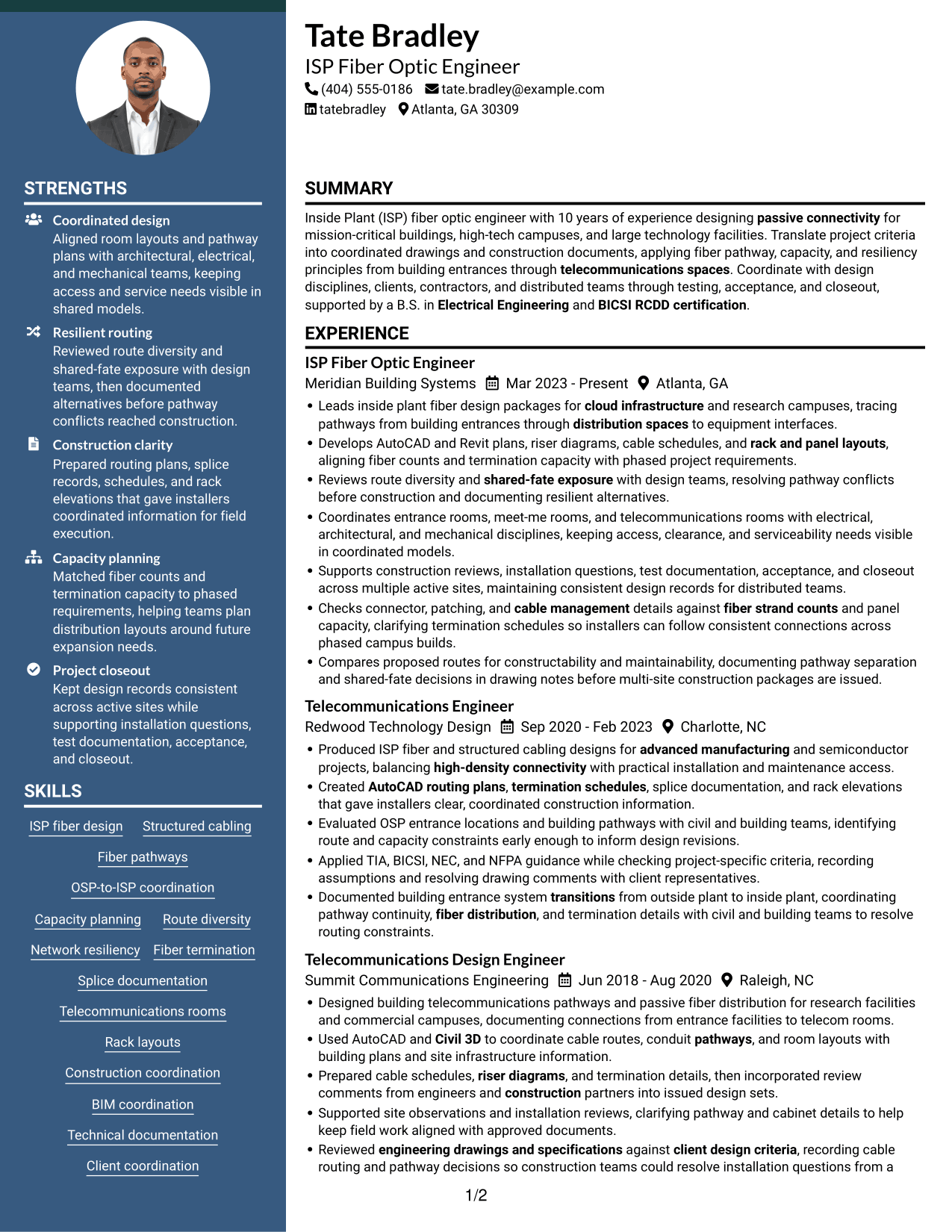
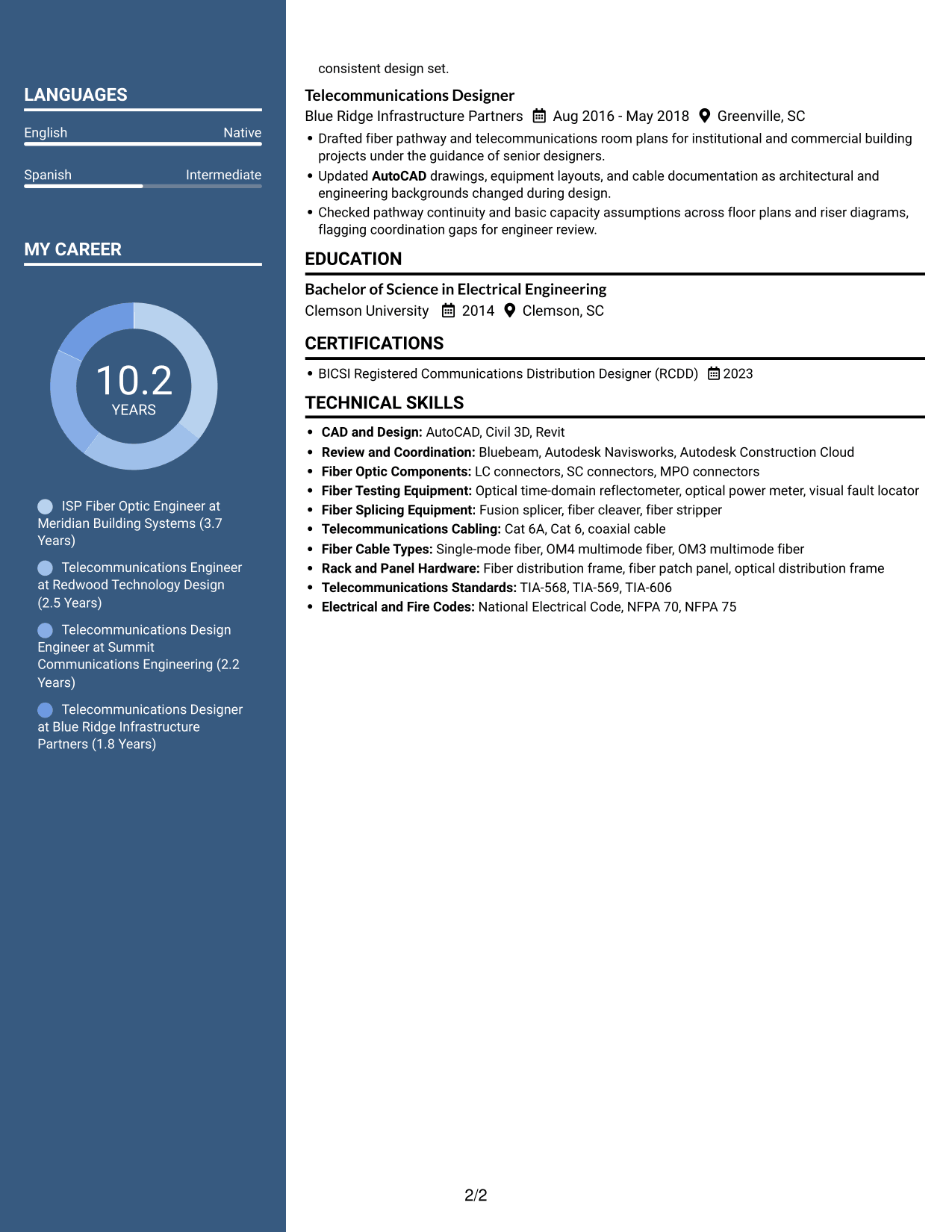
Why This Format Works
- Side-by-side areas give reviewers more than one clear route through resume sections.
- Career entries remain distinct from supporting details during a focused review.
- Skills and credentials can be found without reading every experience bullet first.
Best For
- Parallel section navigation
- Resumes with varied content
- Career history and technical details
- Focused section-level review
- Multi-role experience records
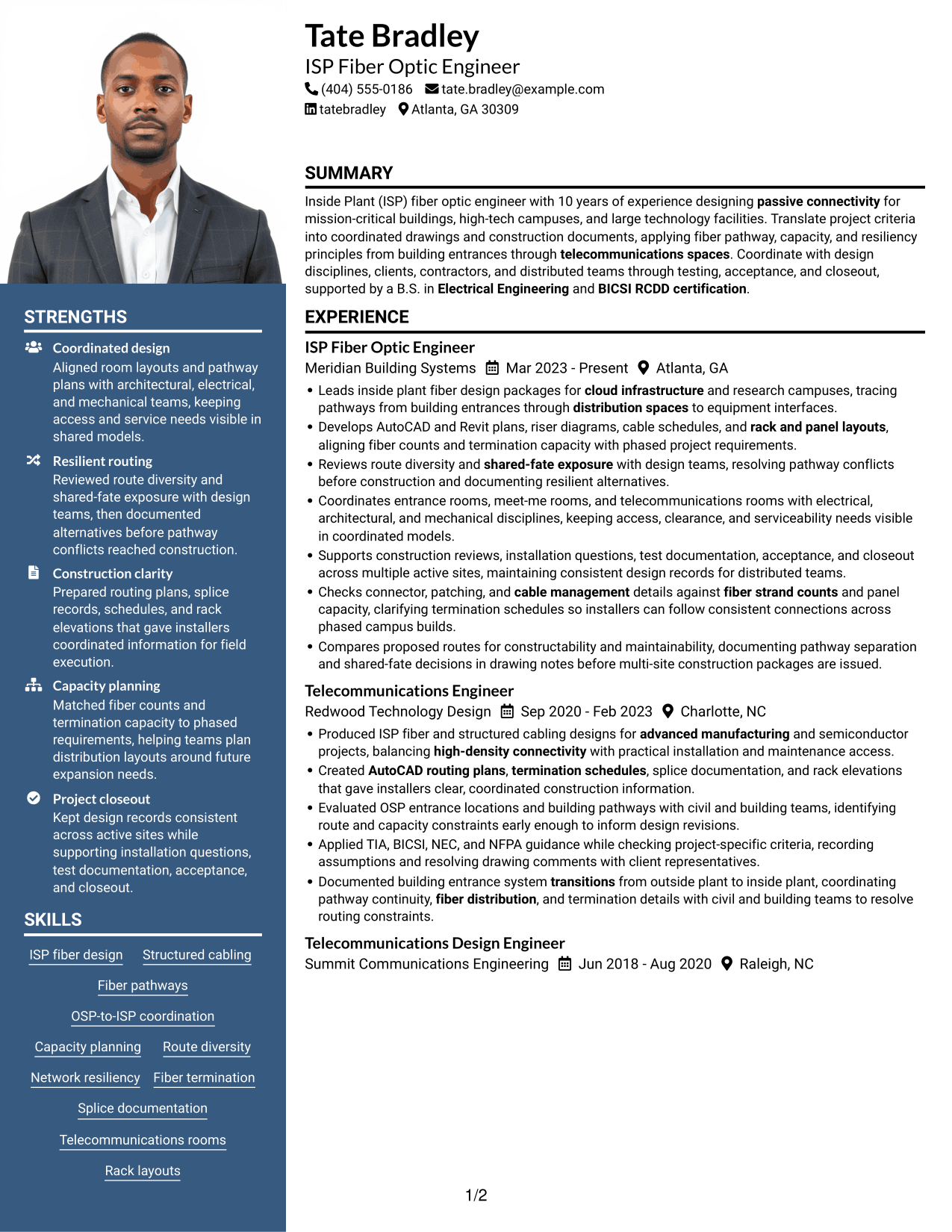
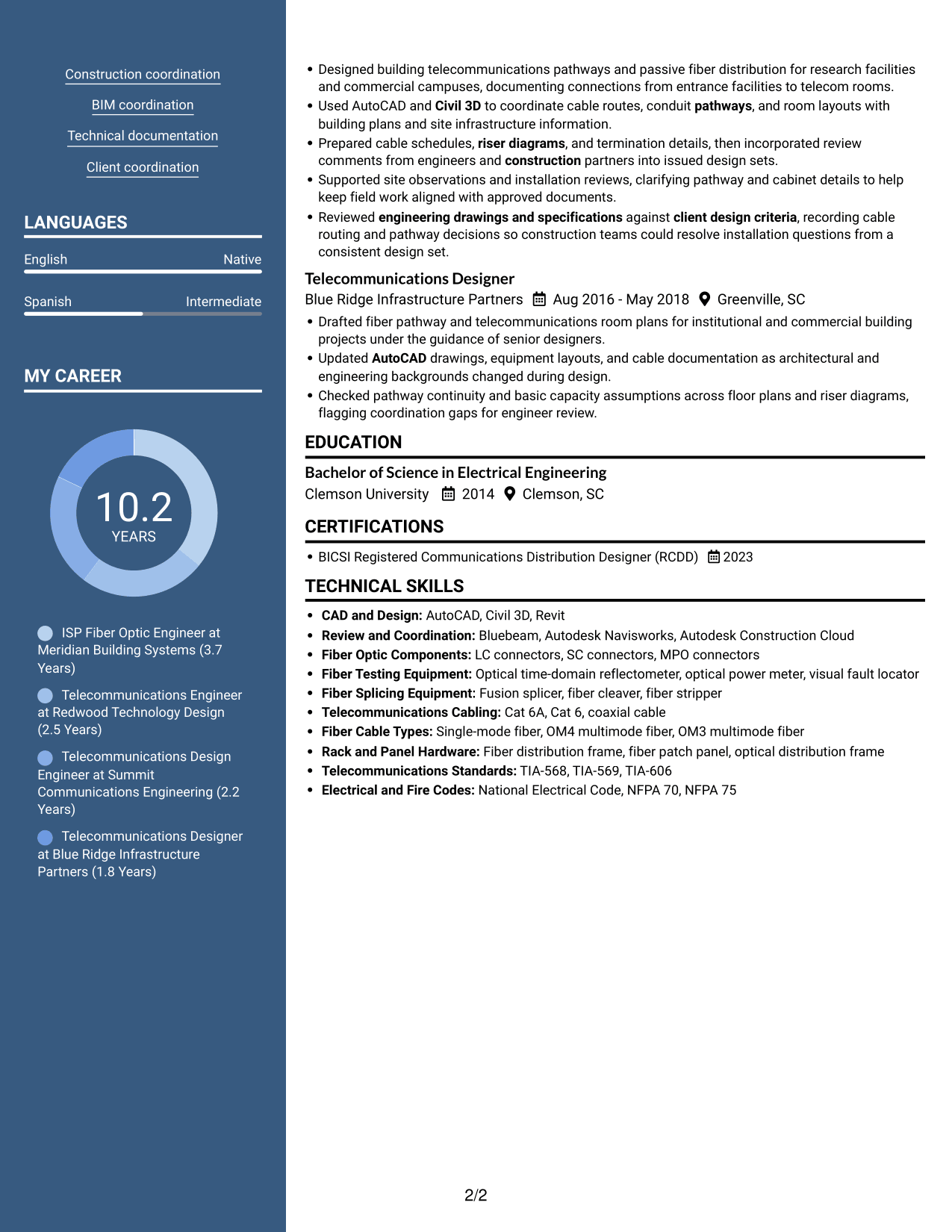
#7 Photo Header Two Column Format Resume Example
Two columns combine a photo with a split layout for reviewing resume content.
Why This Format Works
- Two content areas give experience and supporting resume sections distinct places in the reading order.
- Section separation helps reviewers move between career history, education, and credentials.
- The photo adds a visible personal image while leaving resume text available for review.
Best For
- Two-column resume structure
- Portrait-inclusive submissions
- Concurrent section review
- Career history with technical detail
- Photo-forward document preference
Why Build Your Inside Plant (ISP) Fiber Optic Engineer Resume with ResumeInMinutes
ResumeInMinutes lets you view resume examples in the editor and customize the content and layout. Use the image previews to compare how each design presents technical skills, work history, and education.
- ATS-friendly section structure
- Role-specific keyword guidance
- Clear skills and tools sections
- Experience and achievement organization
- Resume image previews
- Example editing in the editor
Keep your resume focused on the work most relevant to inside plant fiber design. Show how you coordinate pathways and rooms, document design decisions, and help teams move from planning to construction review and closeout.
See Also
- 33 Pilot Plant Chemist/Engineer Resume Templates with Example 2026 (ATS-Optimized)
- 33 Senior Plant Controls Engineer - Combined Cycle Controls Resume Templates with Example 2026 (ATS-Optimized)
- 33 Senior Plant Controls Engineer - Global Design Leadership Resume Templates with Example 2026 (ATS-Optimized)
- 33 Lead Cybersecurity Engineer (Cyber Network Analysis Tech 3) Resume Templates with Example 2026 (ATS-Optimized)
- 7 Senior Fullstack Engineer, Tech Foundations Resume Templates with Example
- 33 5G/LTE Network Engineer I Resume Templates with Example 2026 (ATS-Optimized)
- 33 Advanced Manufacturing Automation Engineer - Mechatronics Resume Templates with Example 2026 (ATS-Optimized)
- 7 Advanced Packaging Engineer Resume Templates with Example
- 7 Inside Plant (ISP) Fiber Optic Engineer - High-Tech Connectivity Cover Letter Templates with Example
- 30+ Pilot Plant Chemist/Engineer Cover Letter Templates with Example 2026
Frequently Asked Questions
Are these Inside Plant (ISP) Fiber Optic Engineer resume templates ATS-friendly?
Use clear section headings, a readable layout, and terms that match your actual work. Relevant terms may include ISP fiber design, route diversity, OSP-to-ISP coordination, AutoCAD, Civil 3D, cable schedules, and telecommunications rooms.
What does the resume example show?
It shows one resume in different layouts. Compare the image previews to see how each design arranges experience, skills, education, and certifications.
What should an Inside Plant (ISP) Fiber Optic Engineer resume include?
Include a focused summary, relevant experience, technical skills, education, and certifications. Add specific examples of fiber routing, pathway and room coordination, capacity planning, design documentation, and project support when they match your background.
Which resume layout works well for this role?
A simple layout with clear headings and a logical section order is a sound choice. Make sure your experience, fiber design skills, tools, and certifications are easy to find and that the page remains readable.
How can I show fiber design work clearly?
Describe the task, the design records or tools you used, and the result. Include details such as pathway plans, riser diagrams, termination schedules, route diversity reviews, or construction coordination when they reflect your experience.
Should I include a photo on my resume?
Include a photo only when it is customary or expected in your country, region, or field. For U.S. applications, a resume without a photo is generally the safer choice.




