7 Law Clerk - Judiciary and Legislative Research Resume Templates with Example
This guide shows you how to create a focused Law Clerk - Judiciary and Legislative Research resume. You will learn how to present research, writing, and hearing preparation clearly so readers can find the most relevant evidence quickly.
For this role, connect legal research to useful work products such as concise memoranda, hearing briefs, and organized oversight records. Highlight relevant experience with case law, statutory analysis, legislative history, primary-source verification, and tools such as Westlaw, Congress.gov, and govinfo when they apply to your background.
Review the example in 7 layouts, compare the image previews, and choose a format that makes your education, experience, and skills easy to scan.
What Makes a Great Law Clerk - Judiciary and Legislative Research Resume in 2026
A strong resume makes legal research, clear writing, and careful handling of evidence easy to see. Use clear section headings and concise bullets to show what you researched and what you produced.
Include relevant terms such as legislative history, statutory and case-law analysis, oversight research, hearing preparation, and source verification. Support them with accurate examples, including memoranda, briefs, questions, or markup notes.
Note: Resume examples are for educational purposes only. Use only information that accurately reflects your experience and qualifications. References to real organizations do not imply affiliation or endorsement.
#1 Simple One Column Format Resume Example
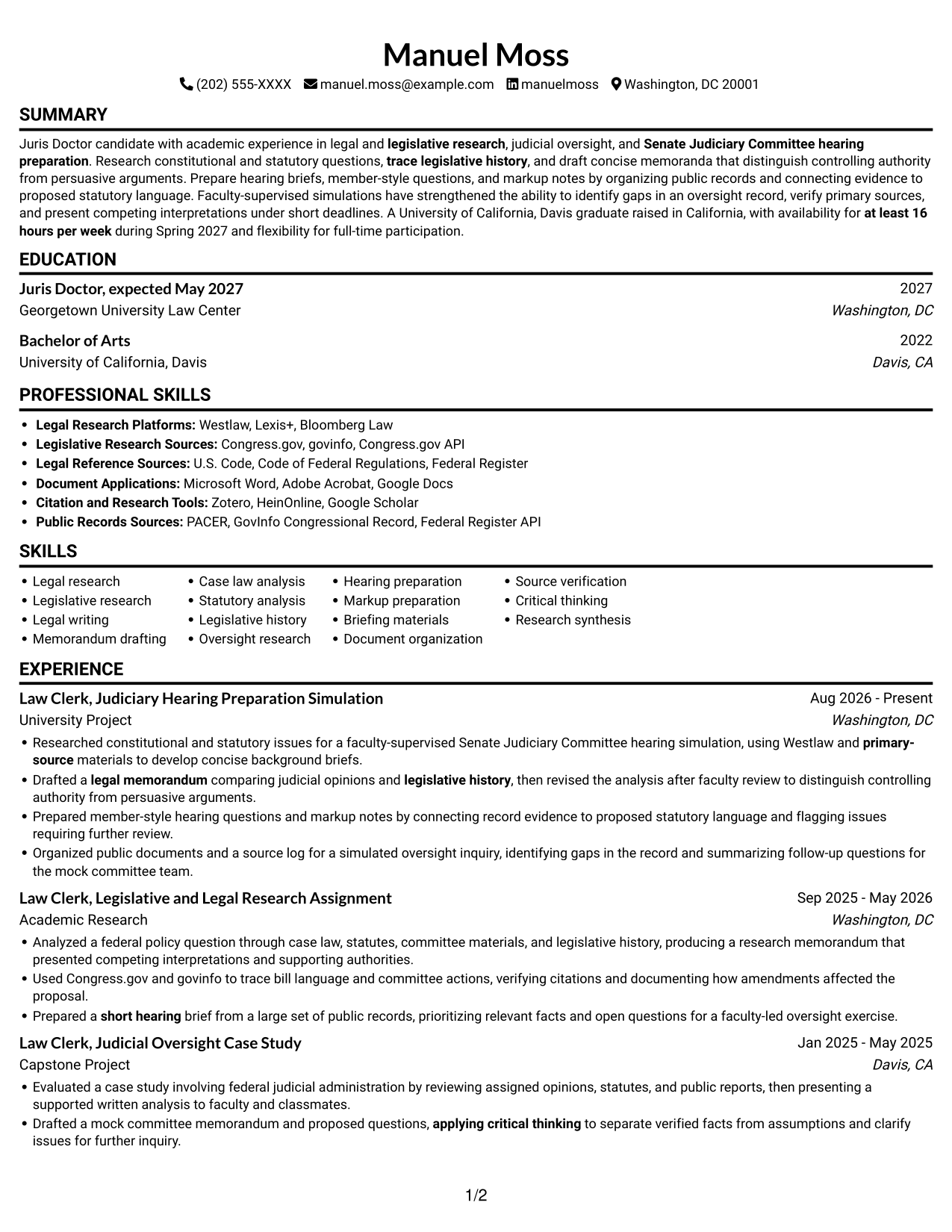
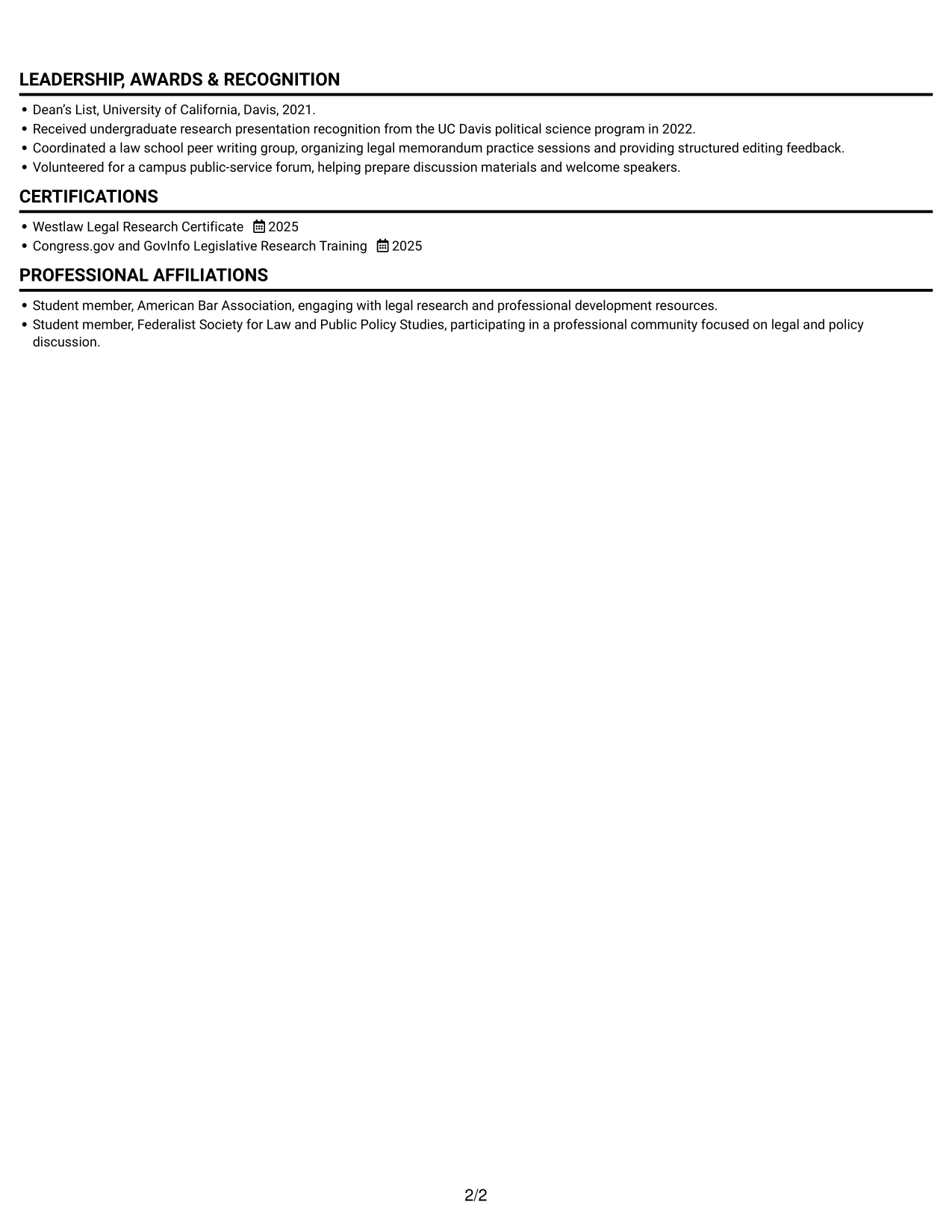
A single-column body gives this resume a direct top-to-bottom path, helping reviewers follow education and research experience in sequence.
Why This Format Works
- Full-width sections give legal research experience room for detailed, readable achievement bullets.
- Education and credentials remain easy to locate within the same reading path.
- Sequential section order helps reviewers compare research entries and dates without switching columns.
Best For
- Top-to-bottom reading preference
- Detailed research bullet points
- Several academic and experience sections
- Chronological review of research work
- Simple section-by-section scanning
Resume Keywords
- Juris Doctor candidate
- Legal Research
- legislative research
- Legal writing
- Drafted a legal memorandum comparing judicial opinions and legislative history
- applying critical thinking
- Critical thinking
- Oversight research
- Senate Judiciary Committee hearing preparation
- Markup preparation
- Prepared a short hearing brief from a large set of public records
- Document organization
- Case law analysis
- Statutory analysis
- trace legislative history
#2 Simple Two Column Format Resume Example
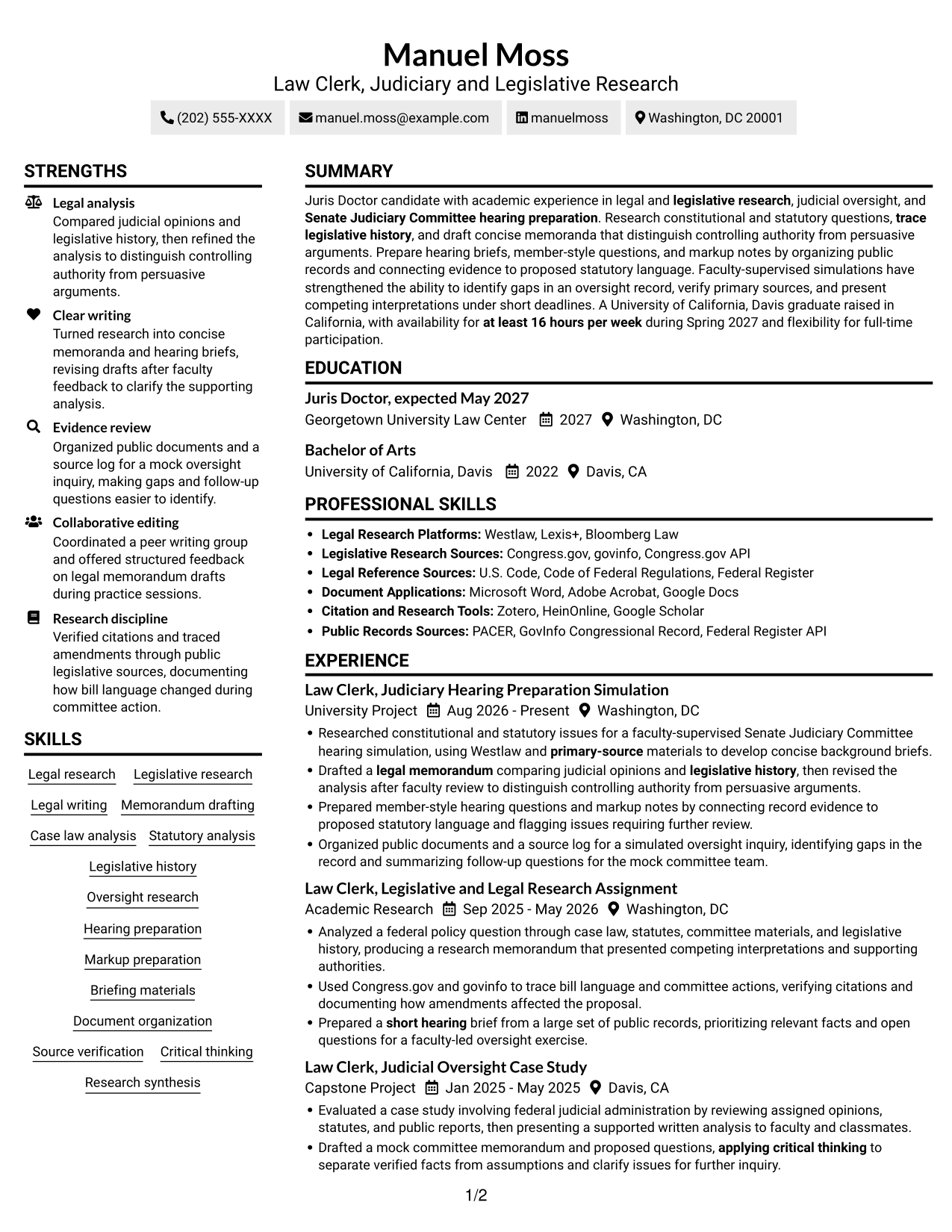
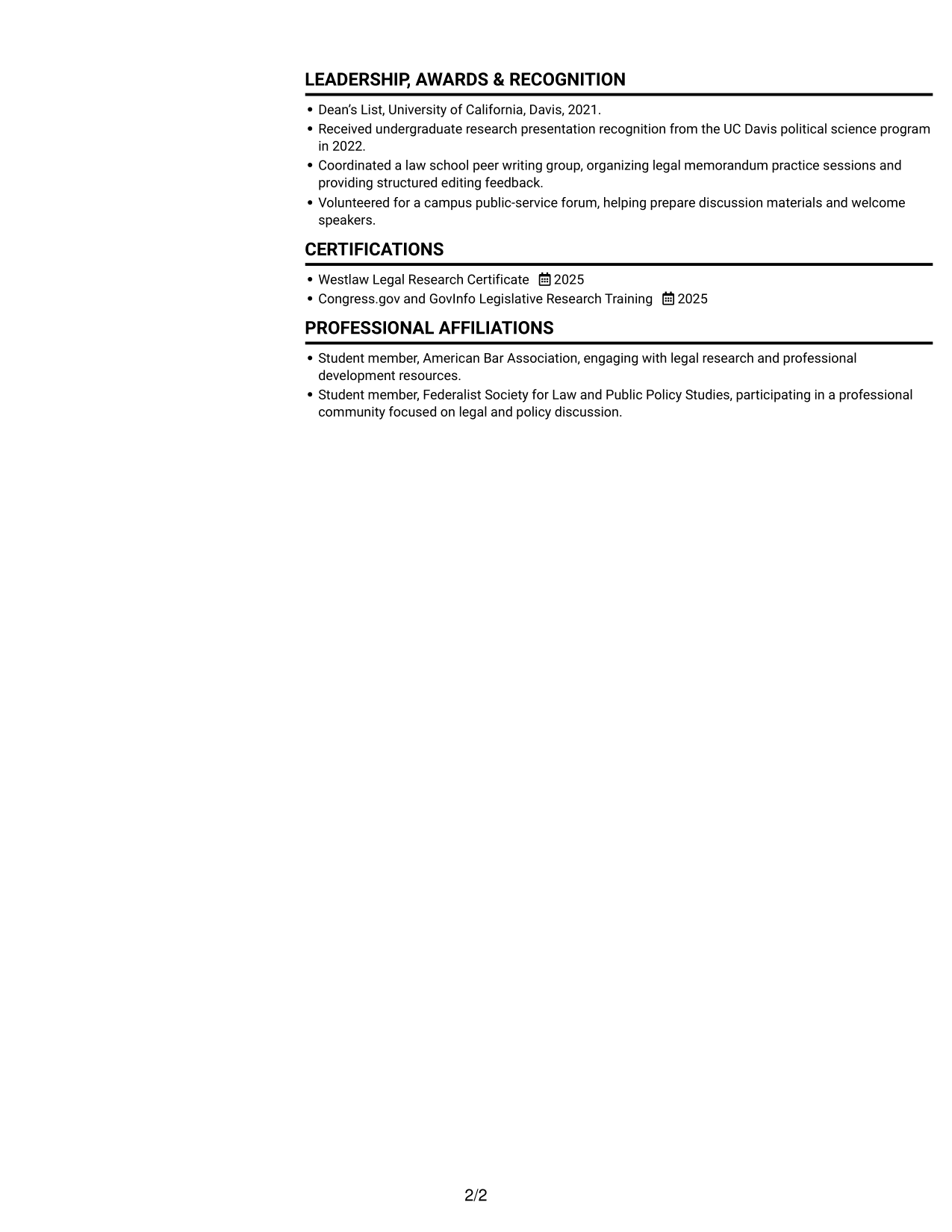
A two-column body separates information into parallel areas, giving reviewers a compact way to scan the resume’s main sections and supporting details.
Why This Format Works
- Two reading areas can distinguish academic details from the sequence of research entries.
- Separate columns help reviewers locate skills without losing the chronology of experience.
- Short text blocks make multiple research bullets easier to scan.
Best For
- Parallel content organization
- Side-by-side review of skills and experience
- Distinct education and research sections
- Quick access to supporting qualifications
- Compact scanning of multiple sections
#3 Plain One Column with Shaded Labels Resume Example
With one column, this resume keeps its material in a single reading sequence, a useful choice when section order matters more than side-by-side grouping.
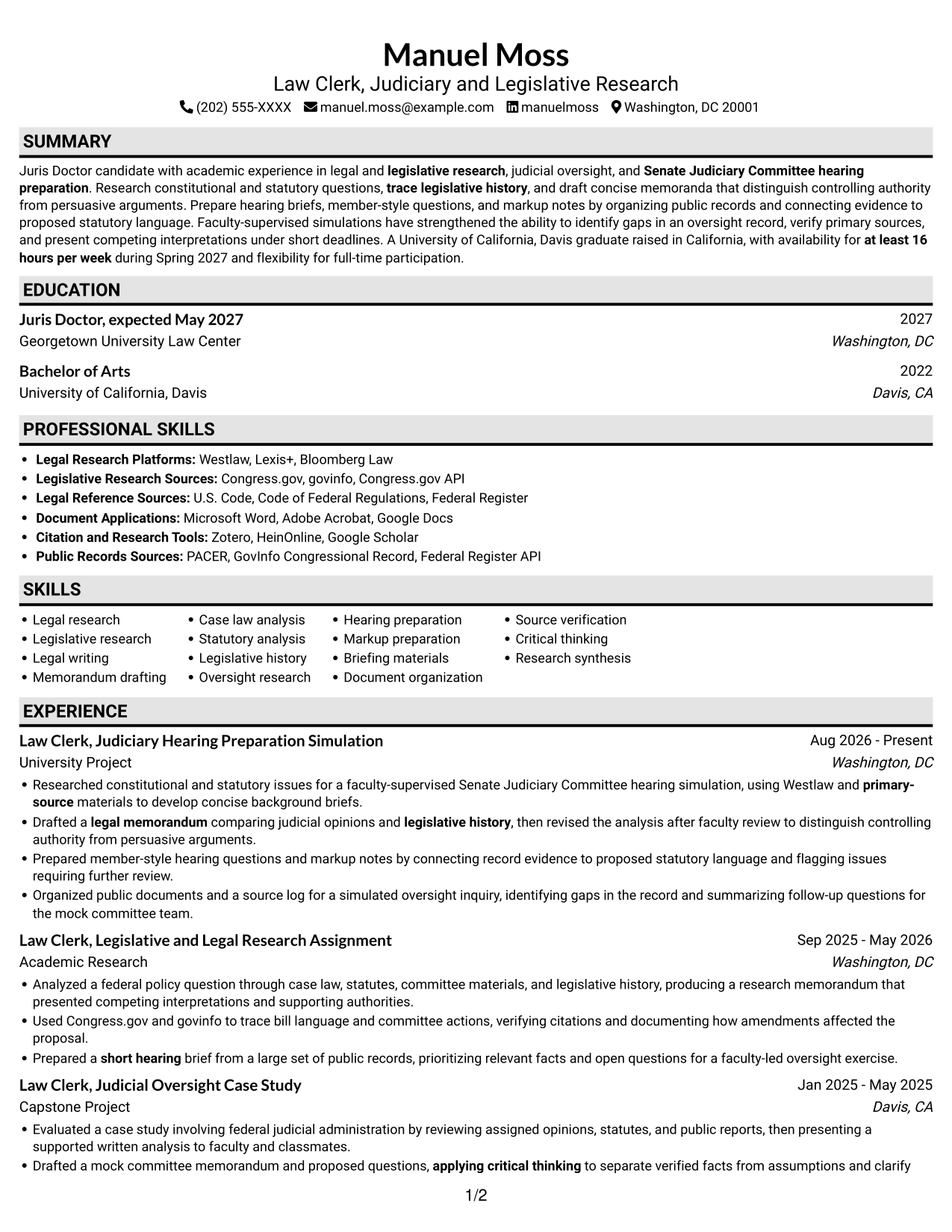
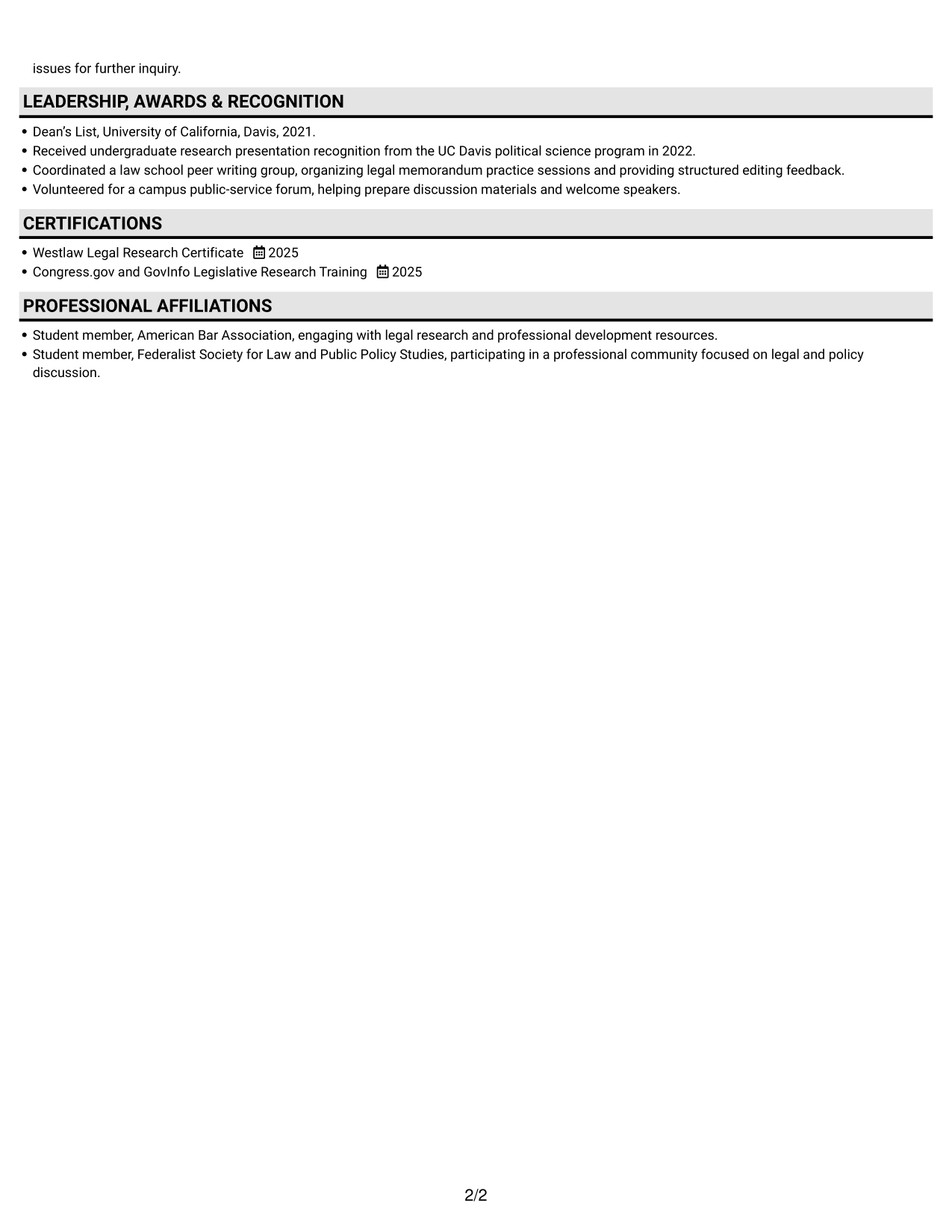
Why This Format Works
- One reading sequence helps reviewers follow education and research work in order.
- Full-width entries give multi-part research bullets room to remain readable.
- Dates and section changes stay in one path, making academic progress easier to trace.
Best For
- Single-sequence reading
- Multi-part research bullets
- Chronological academic records
- Full-width section details
- Resumes with several content areas
#4 One Column Format with Photo Right Resume Example
This one-column resume keeps its sections in a vertical sequence, and its photo suits readers who want a visible personal identifier.
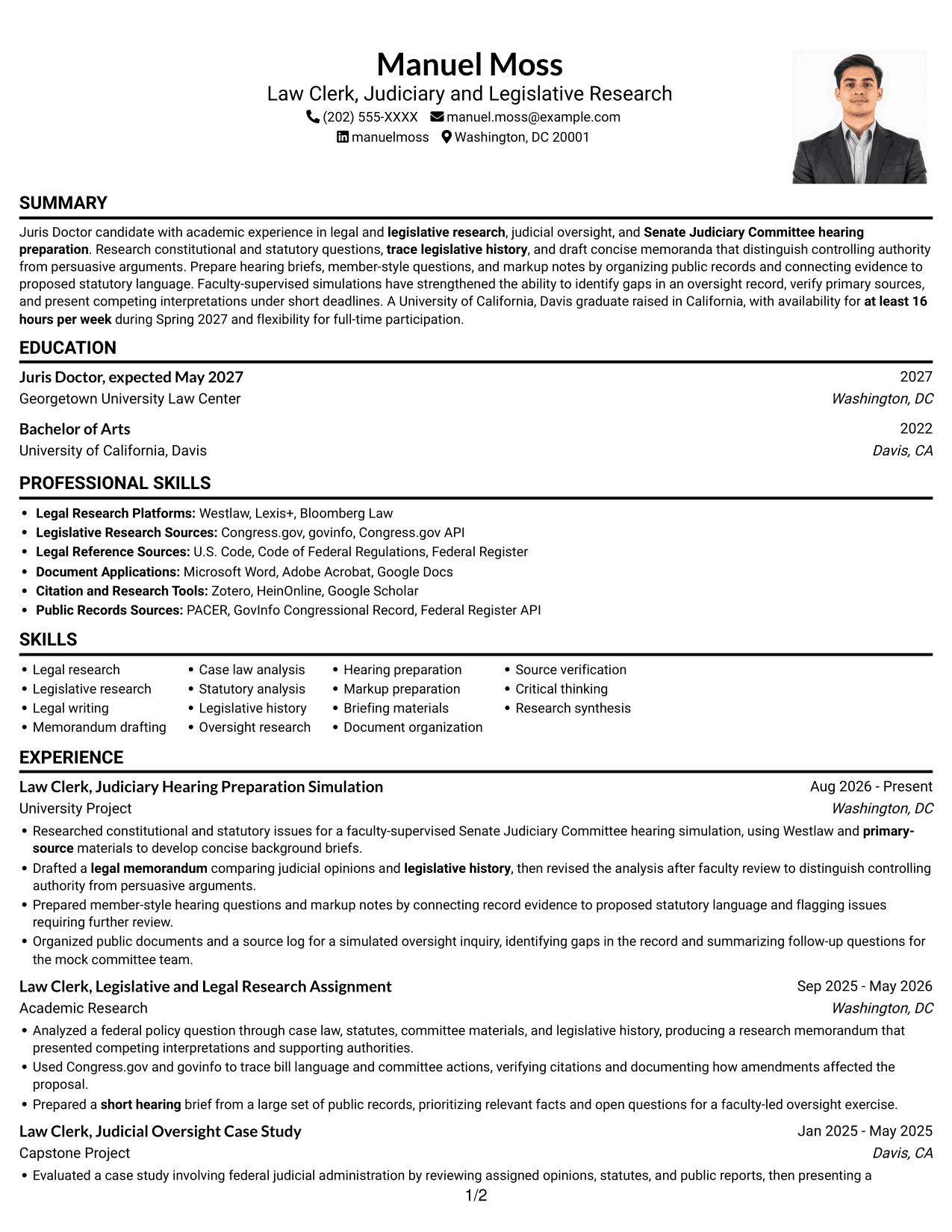
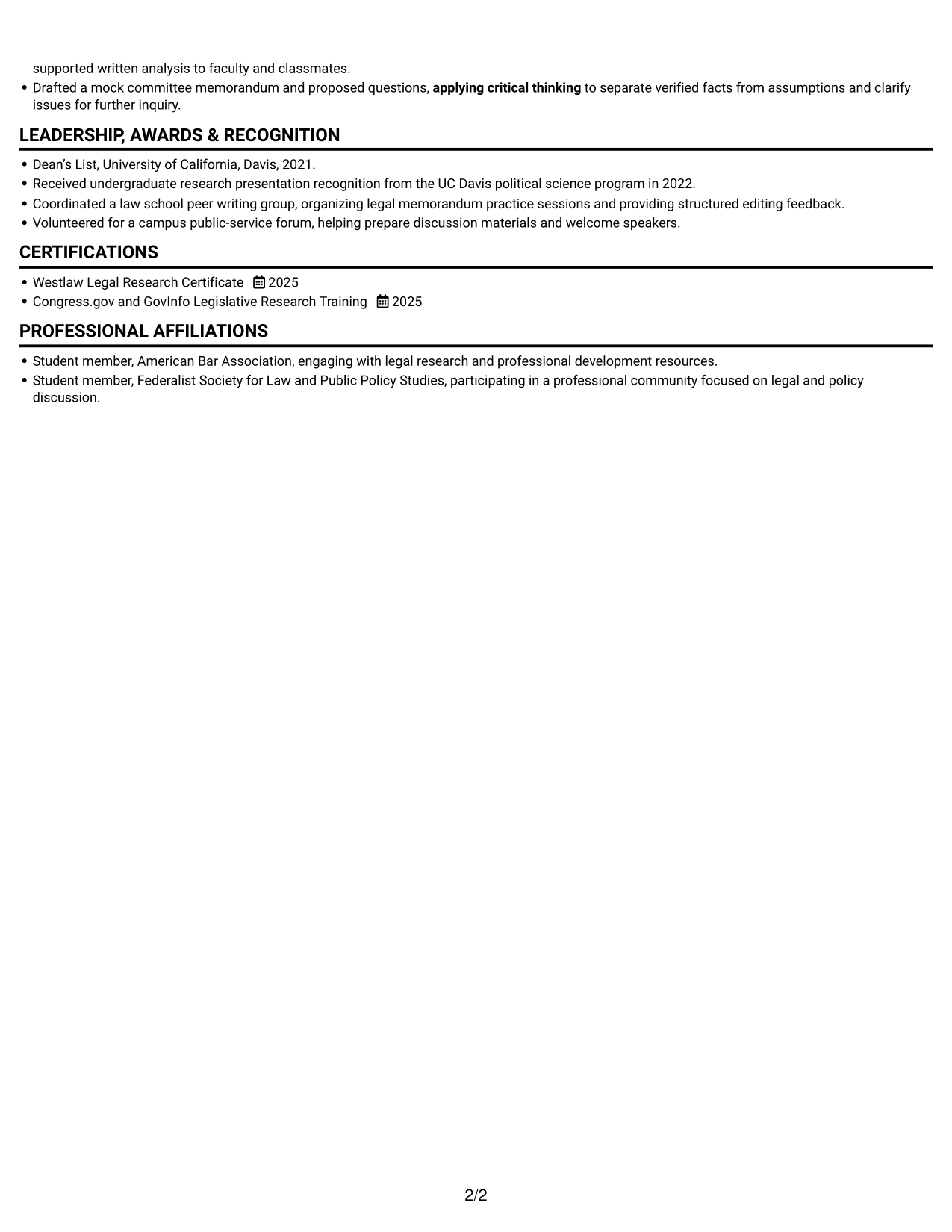
Why This Format Works
- One continuous column keeps education and research experience in a clear reading order.
- Room for complete bullets helps reviewers see how each research entry develops.
- Section sequence makes credentials and academic records easy to find.
Best For
- Vertical reading order
- Photo-inclusive resume preferences
- Complete research bullet points
- Academic and experience sections
- Easy-to-follow section sequence
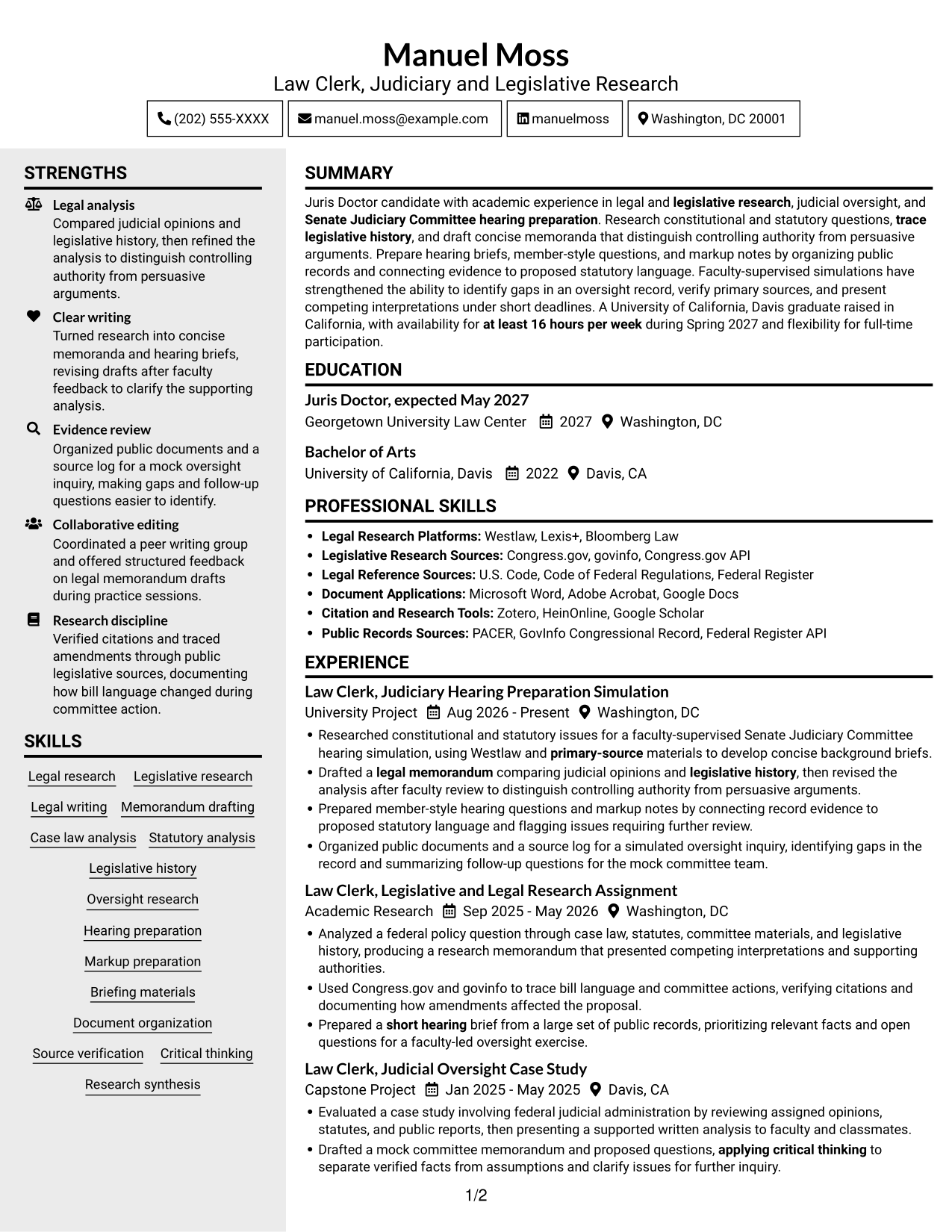
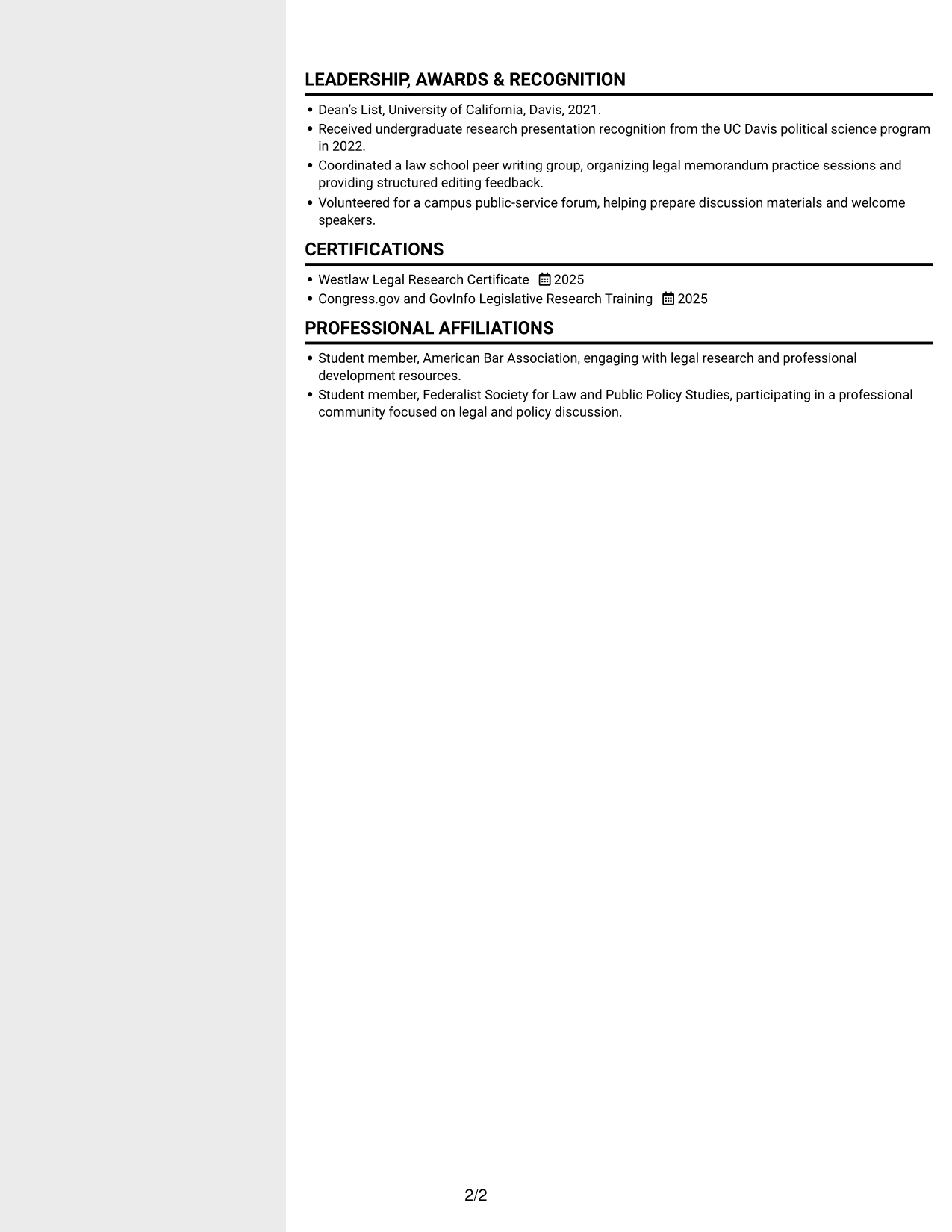
#5 Clean Two Column Sidebar Format Resume Example
Two columns give this resume a compact structure, useful when readers want to compare core experience with supporting details.
Why This Format Works
- Parallel areas distinguish research history from supporting education and credentials.
- Separate content zones help skills stand apart from detailed experience bullets.
- A compact layout lets reviewers scan dates alongside academic and research sections.
Best For
- Compact content organization
- Research history beside supporting details
- Skills shown apart from experience
- Quick review of dates and education
- Multiple academic and research sections
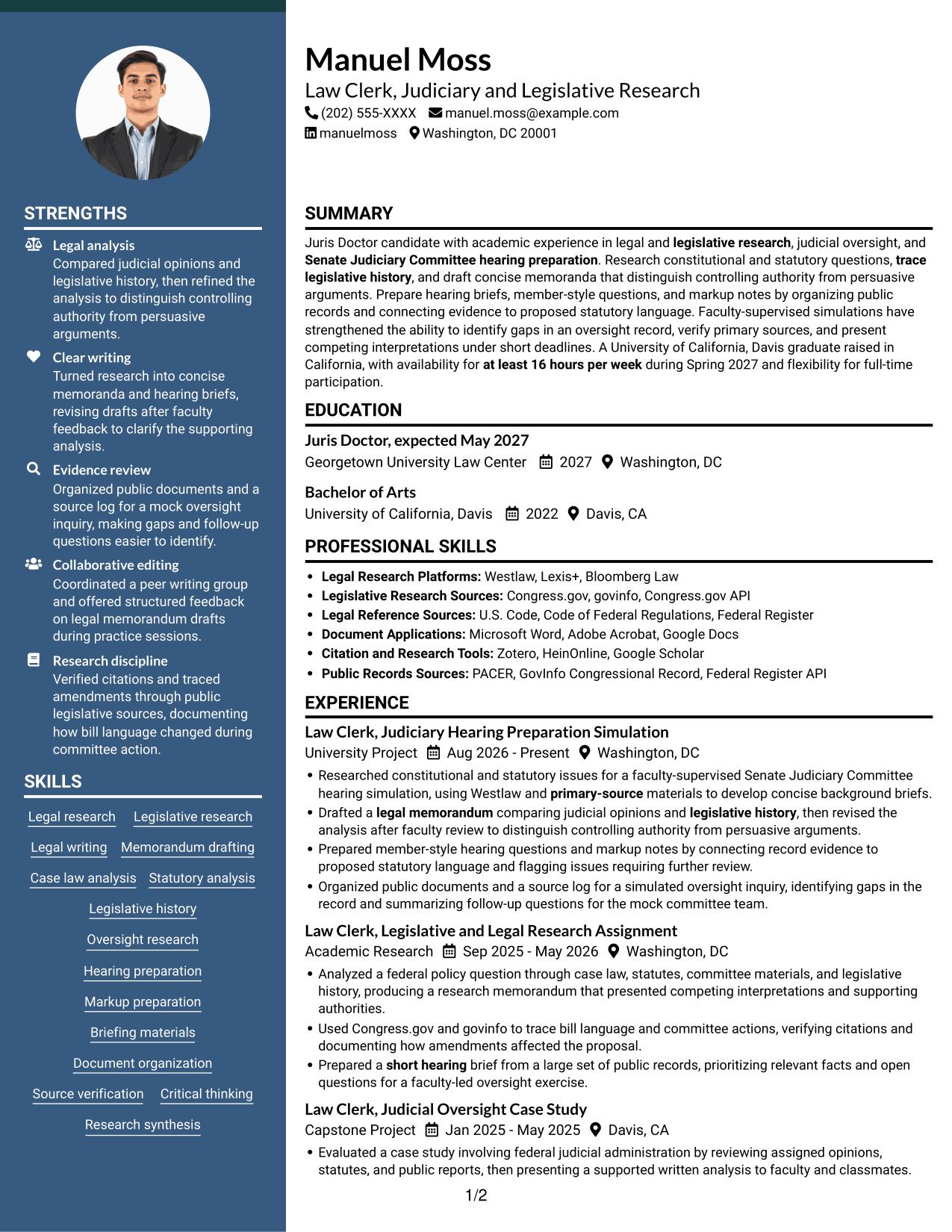
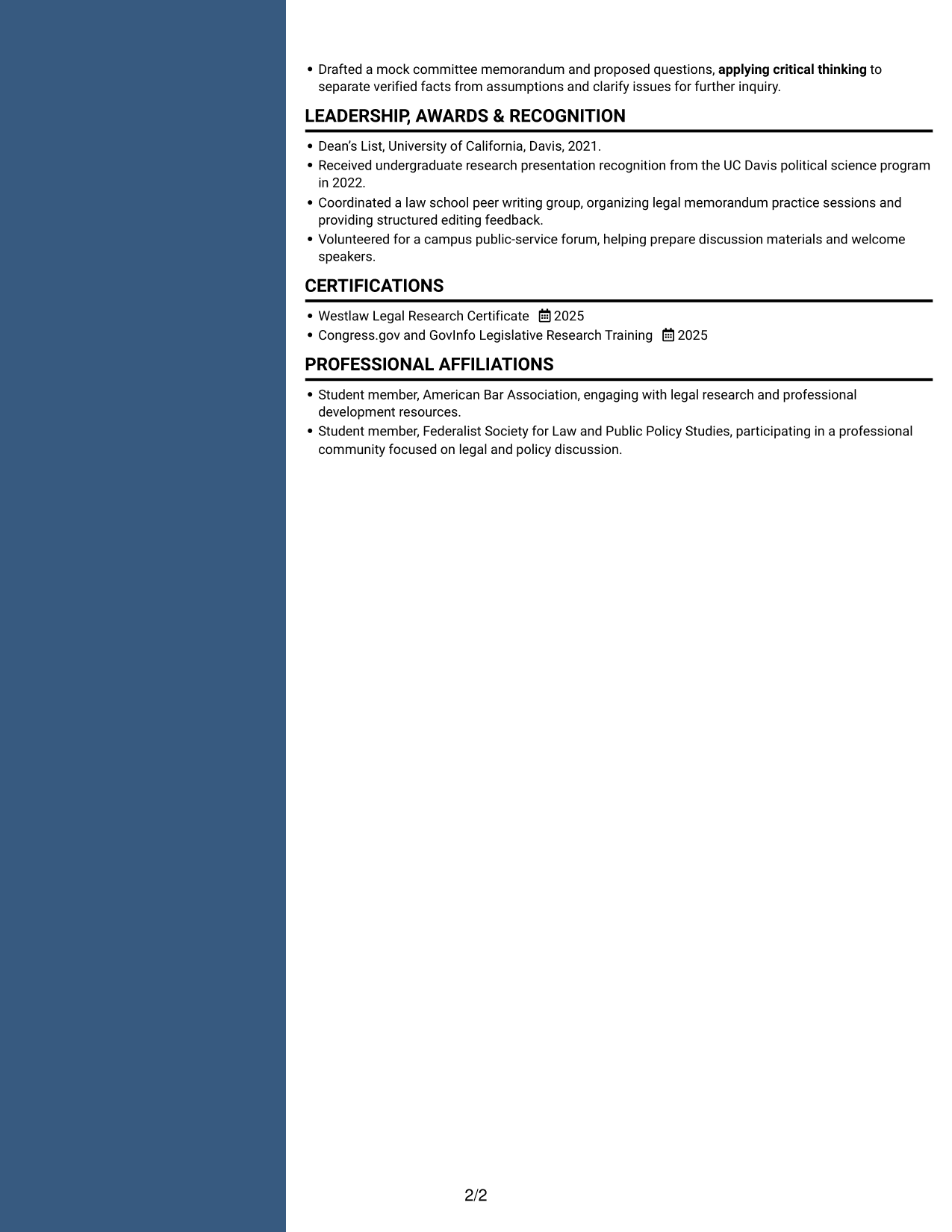
#6 Two Column Format Resume Example
Two columns help reviewers move between research history and supporting details without searching through one long text block.
Why This Format Works
- Separate columns make skills and education easier to locate beside research experience.
- Research entries retain a clear sequence while other resume sections stay accessible.
- Side-by-side content helps reviewers compare academic preparation with documented research work.
Best For
- Side-by-side section review
- Research history with supporting details
- Accessible skills and education
- Clear sequence of research entries
- Comparison of academic preparation and research work
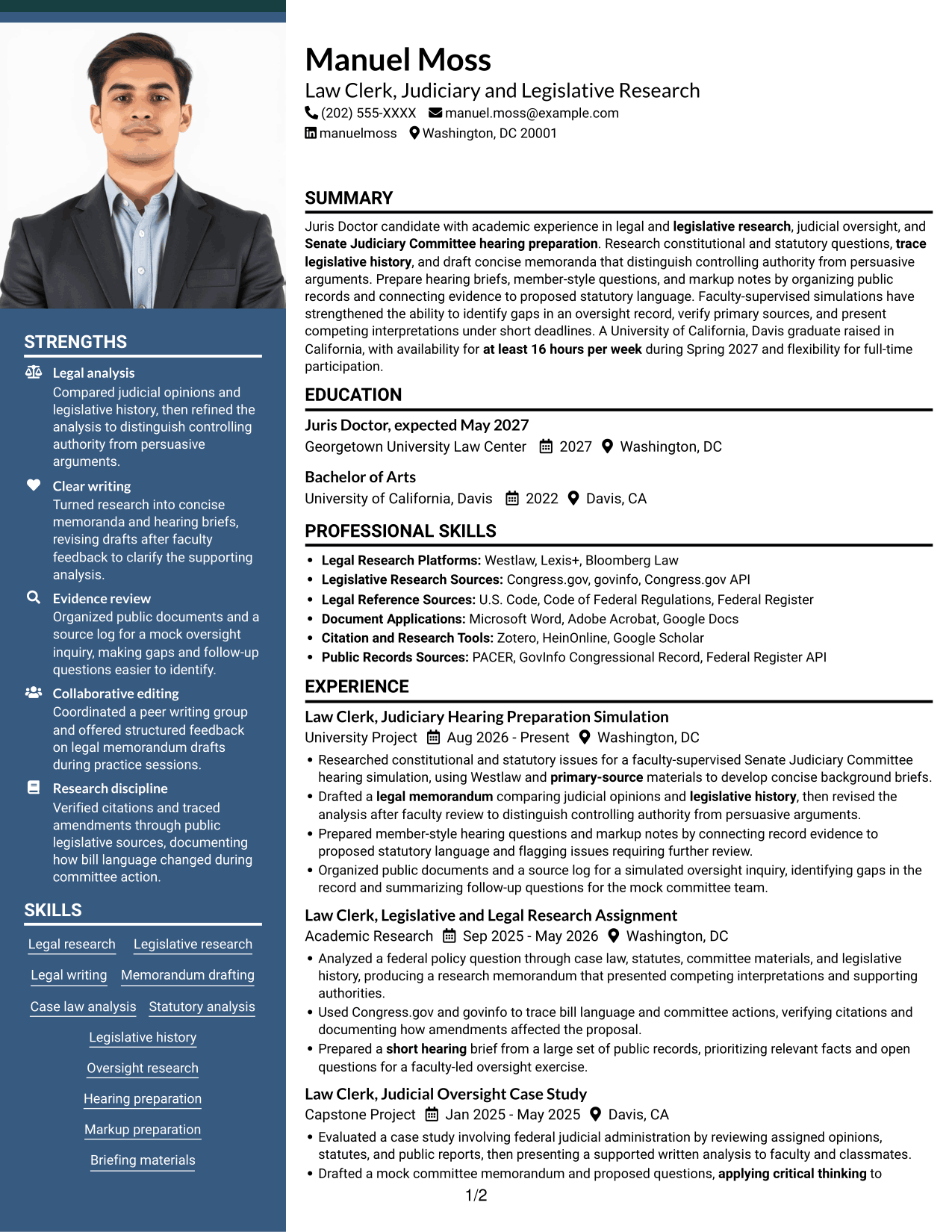
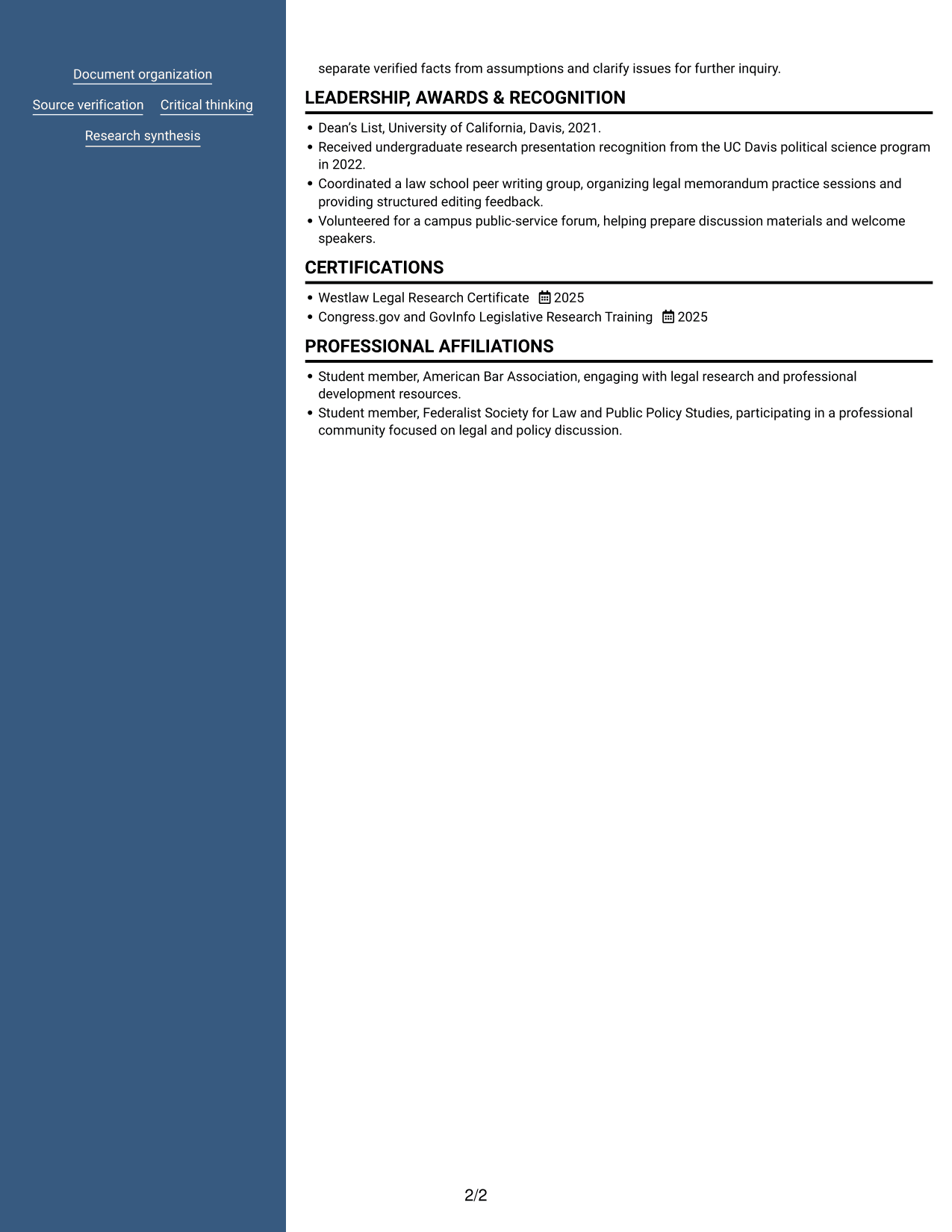
#7 Photo Header Two Column Format Resume Example
This two-column resume includes a photo, offering a visible personal identifier while keeping resume sections organized in parallel areas.
Why This Format Works
- Parallel areas give academic records and research history distinct reading spaces.
- Reviewers can find credentials without losing the sequence of experience entries.
- Compact columns make skills and education details easier to scan.
Best For
- Parallel section organization
- Photo-inclusive resume preferences
- Academic records alongside research history
- Easy access to credentials
- Compact skills and education sections
Build Your Law Clerk - Judiciary and Legislative Research Resume with ResumeInMinutes
A clear resume structure can help you present legal research and academic work in a way that is easy to review. Use the editor to adjust section order and wording, then compare the image previews to see which layout best supports your information.
- Clear resume section structure
- Readable headings and bullet points
- Space for legal research skills
- Organization for education and experience
- Room for relevant certificates
- Resume customization in the editor
Keep each entry accurate and specific. Show how your research led to a memorandum, brief, source log, or other relevant work product, and make important details easy to find.
See Also
- 7 Law Clerk - Congressional Investigations Resume Templates with Example
- 7 Parliamentary Clerk - Legislative Procedure Resume Templates with Example
- 7 Clerk III - Research Support Services Clerical Administrator Resume Templates with Example
- 7 Administrative Assistant - Disability & Elder Law Resume Templates with Example
- 7 Police Officer 3 - Campus Law Enforcement Resume Templates with Example
- 33 Accounting Clerk Resume Templates with Example 2026 (ATS-Optimized)
- 33 Accounts Payable Clerk Resume Templates with Example 2026 (ATS-Optimized)
- 7 Administrative Clerk Resume Templates with Example
- 7 Law Clerk - Judiciary and Legislative Research Cover Letter Templates with Example
- 7 Law Clerk - Congressional Investigations Cover Letter Templates with Example
Frequently Asked Questions
How can I make a Law Clerk - Judiciary and Legislative Research resume ATS-friendly?
Use simple section headings, readable formatting, and wording that matches your actual research experience. Include relevant terms such as legal research, legislative history, memorandum drafting, oversight research, and hearing preparation where they accurately describe your work.
What should this law clerk resume include?
Include a concise summary, education, relevant research or work experience, skills, and applicable certificates. Use bullet points to describe research questions, sources reviewed, and materials you prepared.
How should I describe legal and legislative research?
Name the type of question you reviewed, the sources you used, and the result of your work. For example, explain how you compared opinions and legislative history, verified citations, or prepared a concise memorandum.
Which resume layout works well for a law clerk?
Choose a layout with clear headings and enough room for education, research experience, and skills. A straightforward design helps readers find your legal analysis and writing evidence without searching through dense text.
Can a law student with limited work experience create a strong resume?
Yes. Relevant academic research, faculty-supervised simulations, capstone work, and student activities can show research, writing, and teamwork. Describe the task and your contribution clearly, and do not present classroom work as employment.
Should I include legal research platforms and public sources?
Include platforms and sources you have used, such as Westlaw, Congress.gov, or govinfo. Place them in a skills section or explain how you used them in a relevant experience bullet.