7 Scrum Master Resume Templates with Example
This guide shows you how to build a Scrum Master resume that is clear, focused, and easy to review. You will learn how to organize your evidence so recruiters can see your Agile leadership and delivery value quickly.
Strong Scrum Master resumes connect Scrum facilitation and coaching with delivery results. Use clear sections for experience, skills, education, certifications, projects, and tools, then support them with concise bullets about backlog refinement, impediment removal, delivery metrics, risk management, and continuous improvement.
The same complete resume example is shown in 7 ATS-friendly layouts so you can compare reading order, section structure, and visual balance. The examples also show how to present experience with Jira, Azure DevOps, CI/CD, DevSecOps, embedded electronics, real-time systems, and cross-functional delivery without losing clarity.
What Makes a Great Scrum Master Resume in 2026
A strong Scrum Master resume is easy to scan, evidence-based, and focused on delivery. It shows how you coach teams, run Scrum events, remove blockers, and improve execution.
Match important terms to the target role when they are true for you, such as backlog refinement, Jira, Azure DevOps, delivery metrics, CI/CD, DevSecOps, risk management, and continuous improvement.
The examples shown below are intentionally detailed to demonstrate a range of experiences, skills, accomplishments and relevant keywords. We prefer detailed resumes as they provide more context to the hiring managers and also help the ATS systems identify relevant qualifications and score your resume better for a match. But the length of a resume is an individual choice. If you want a one page resume, just keep the most relevant experience and information for the job. Note: Resume examples are for educational purposes only. Use only information that accurately reflects your experience and qualifications. References to real organizations do not imply affiliation or endorsement.
#1 Simple One Column Format Resume Example
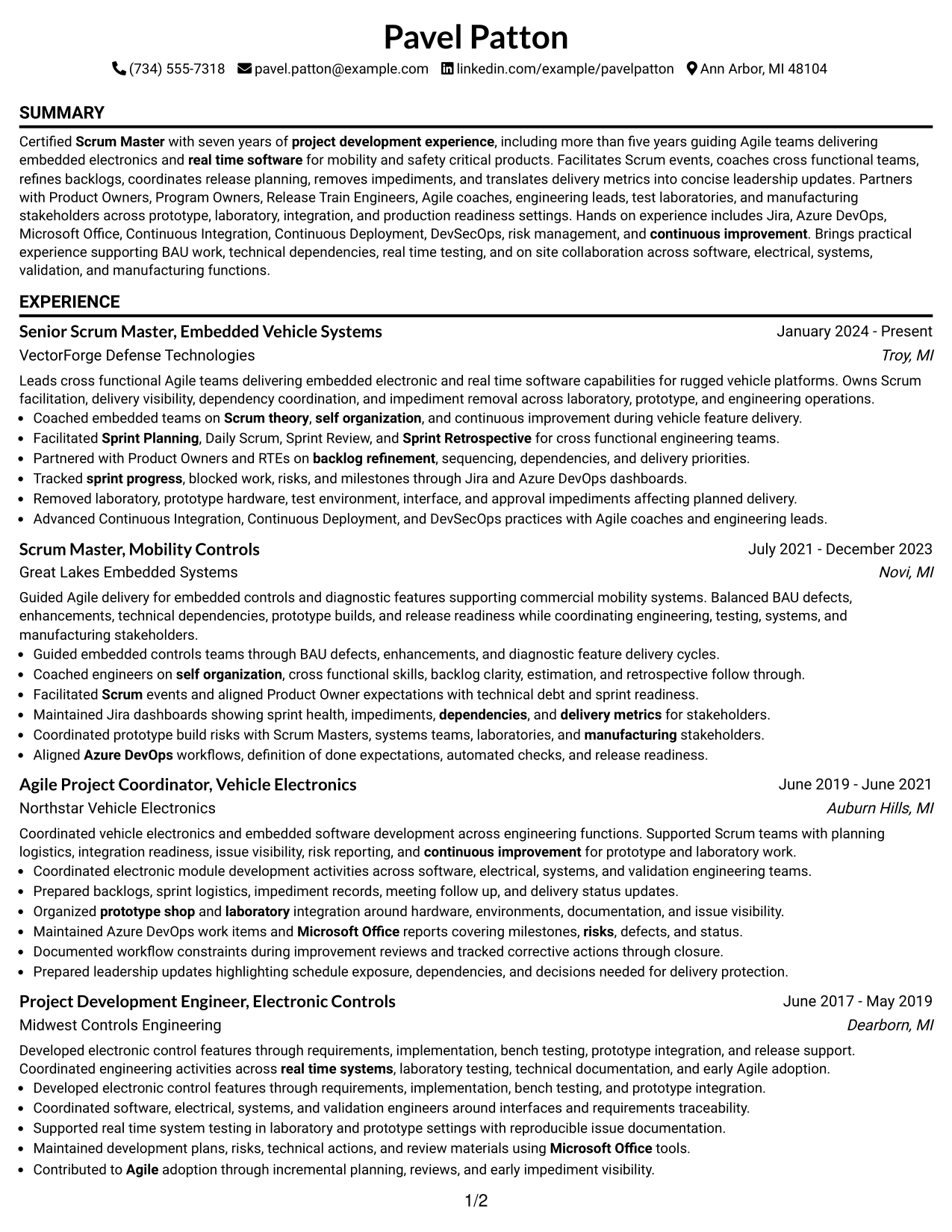
The simple one-column flow gives recruiters a direct reading path through each resume section.
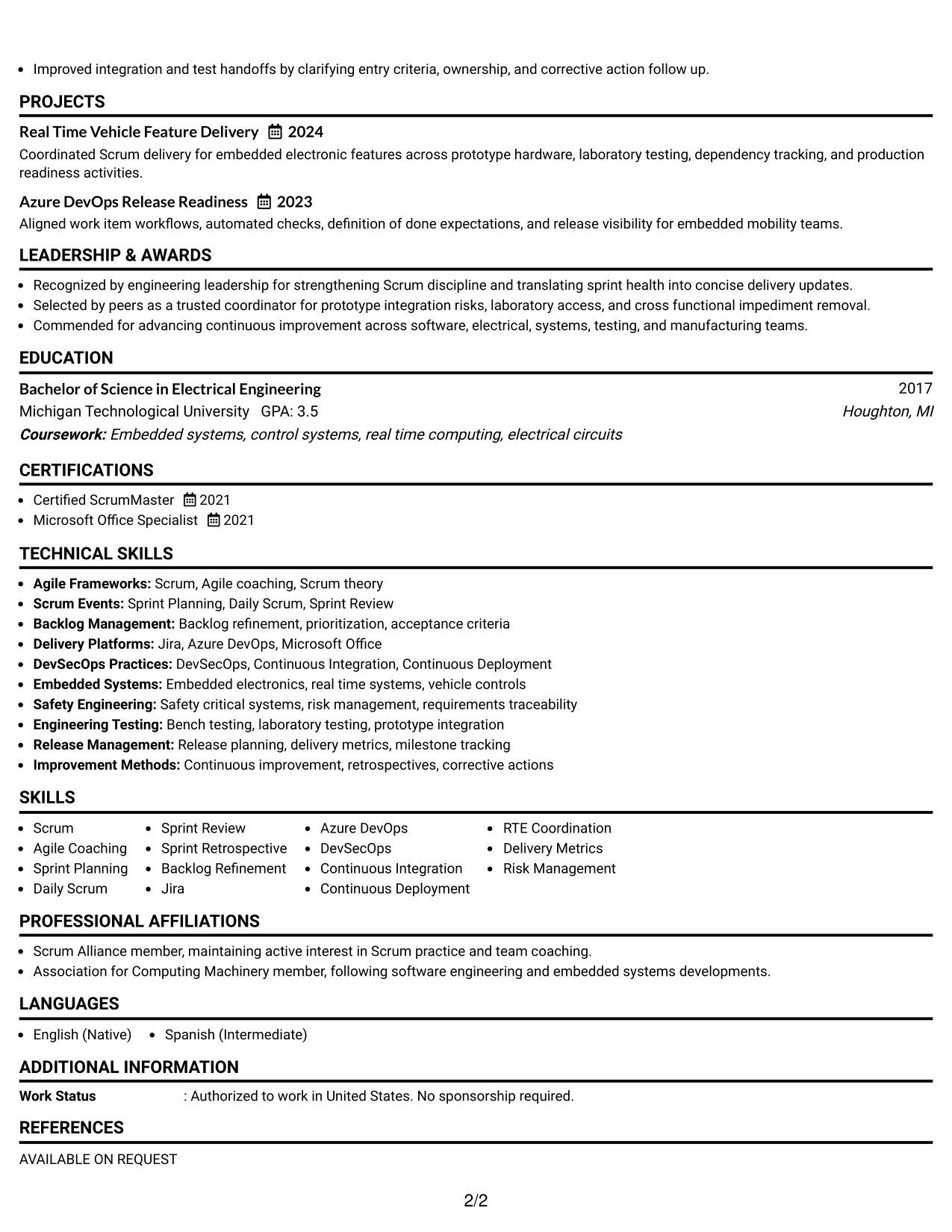
Why This Format Works
- Linear reading keeps career progression easy to follow from role to role.
- Full-width sections give experience and achievements room without competing side content.
- Clear section breaks help recruiters locate skills, education, and credentials quickly.
Best For
- Straightforward recruiter scanning
- Detailed experience histories
- Clear technical career progression
- ATS-conscious applications
- Scrum Master resumes with varied evidence
Resume Keywords
- Scrum Master
- Agile Coaching
- Sprint Planning
- Daily Scrum
- Sprint Review
- Sprint Retrospective
- Backlog Refinement
- Jira
- Azure DevOps
- RTE Coordination
- Delivery Metrics
- Risk Management
- Continuous Integration
- Continuous Deployment
- DevSecOps
- Continuous Improvement
#2 Plain One Column with Shaded Labels Resume Example
Shaded section labels break the one-column page into clear stops that speed recruiter scanning.
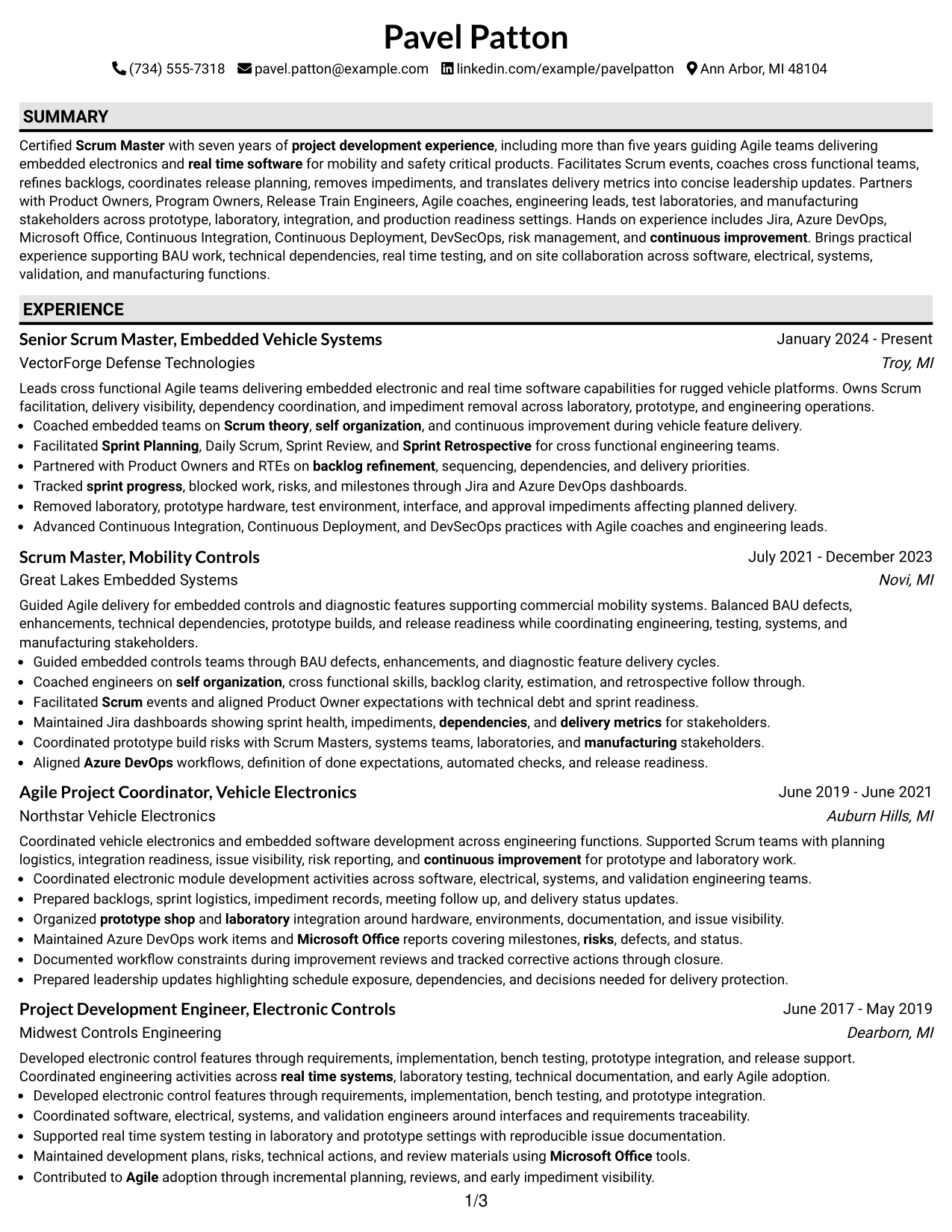
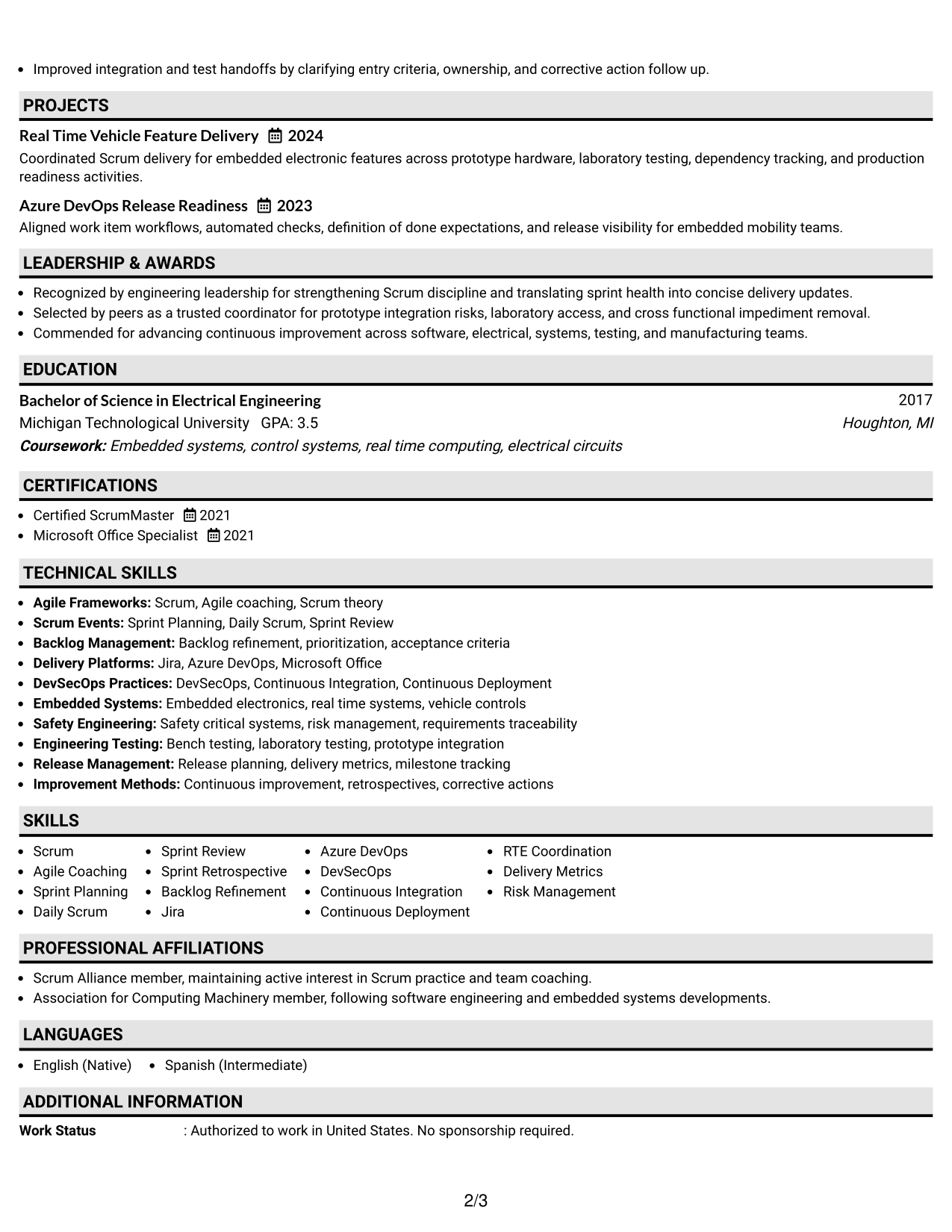
Why This Format Works
- Shaded labels separate experience, skills, education, and credentials without changing reading order.
- One continuous column keeps achievements connected to the roles that produced them.
- Strong section markers help reviewers return to key content during comparison.
Best For
- Longer section-based resumes
- Readers who value strong navigation
- Experience-led applications
- Mixed skills and credentials
- Traditional structure with clearer labels
#3 One Column Format with Photo Right Resume Example
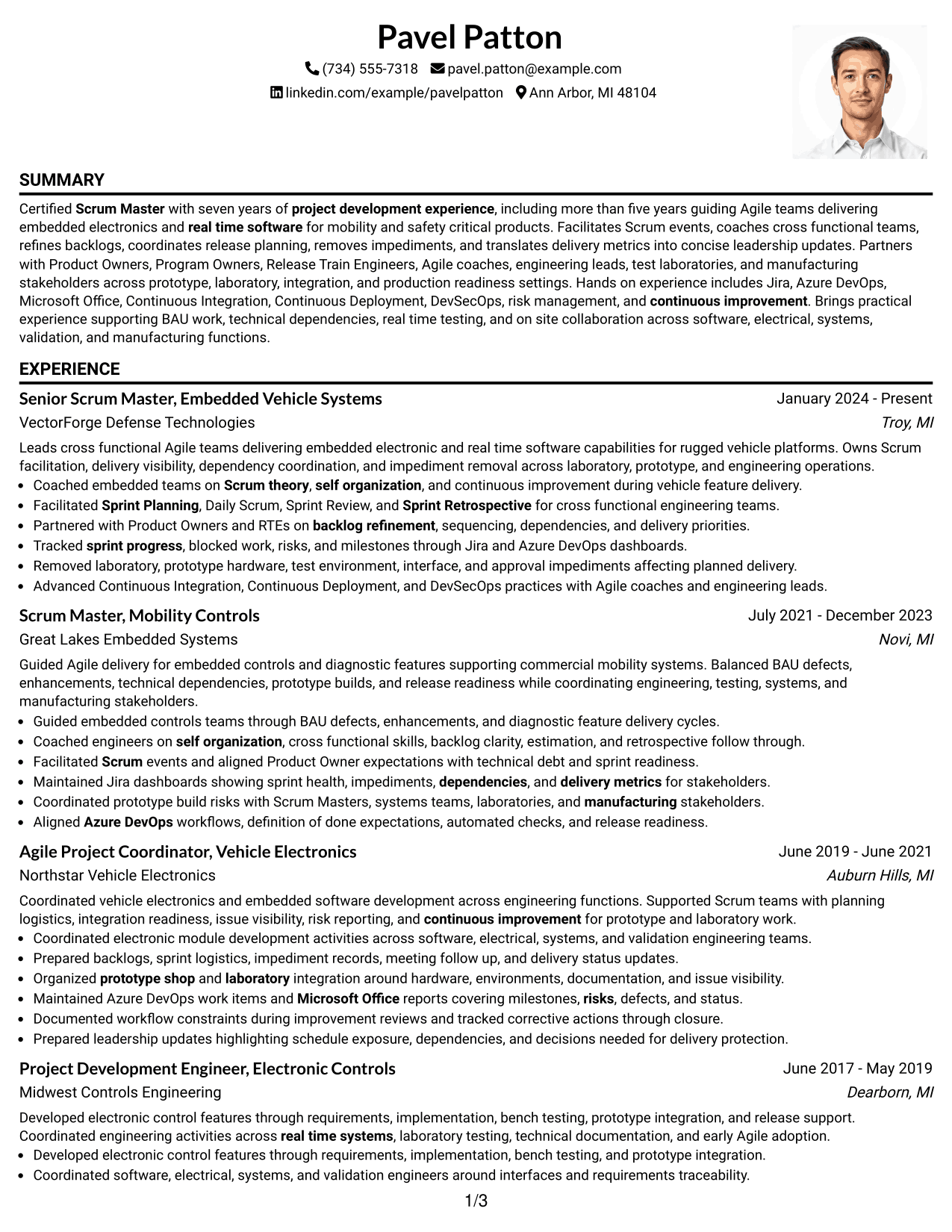
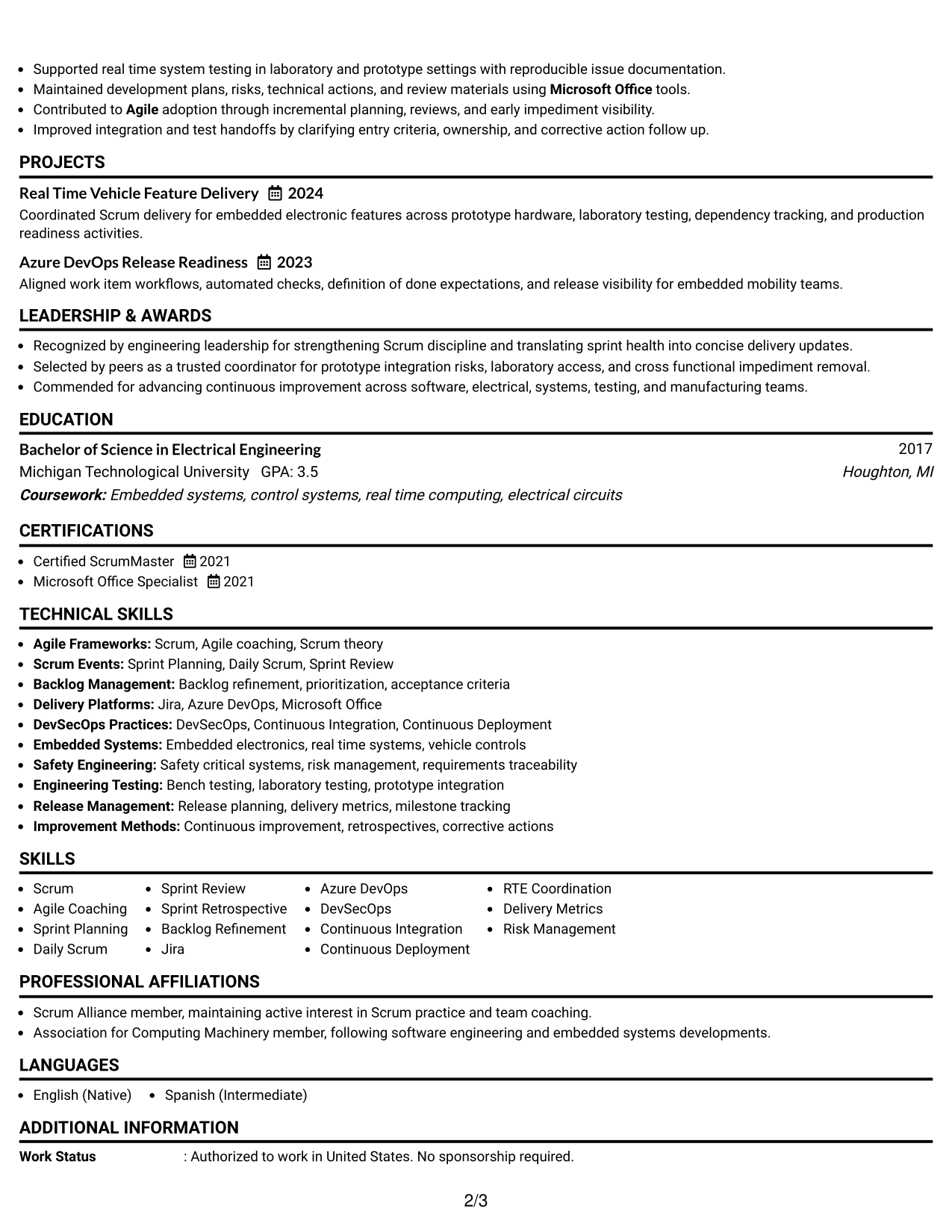
A right-side photo adds personal identification while the one-column body keeps recruiter scanning sequential.
Why This Format Works
- One-column body preserves a simple path through experience, achievements, skills, and education.
- The photo stays in the header area instead of interrupting core resume sections.
- Consistent full-width content helps reviewers compare career evidence in a fixed order.
Best For
- Markets where resume photos are customary
- Sequential career storytelling
- Experience-heavy profiles
- Full-width achievement bullets
- Applications needing clear personal identification
#4 Clean Two Column Sidebar Format Resume Example
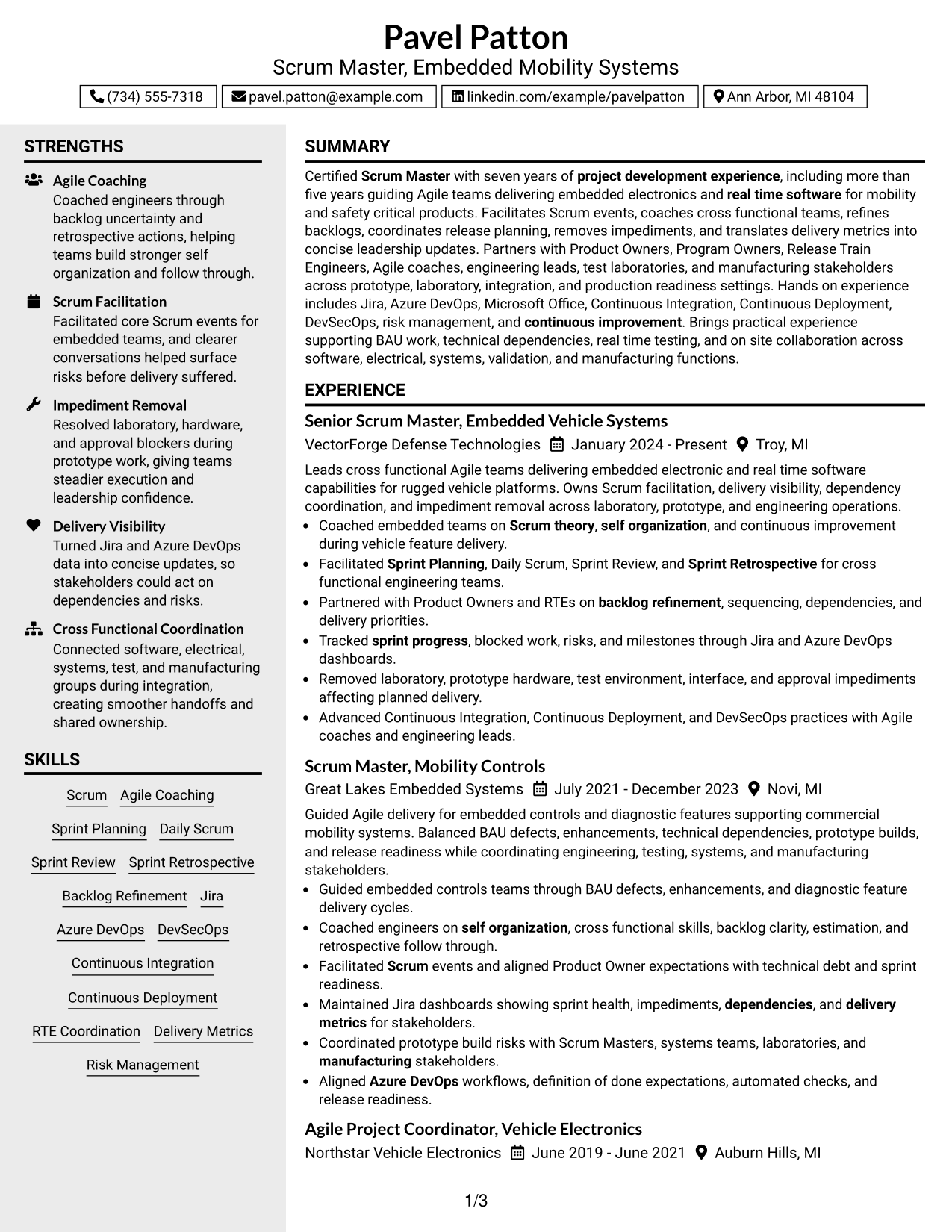
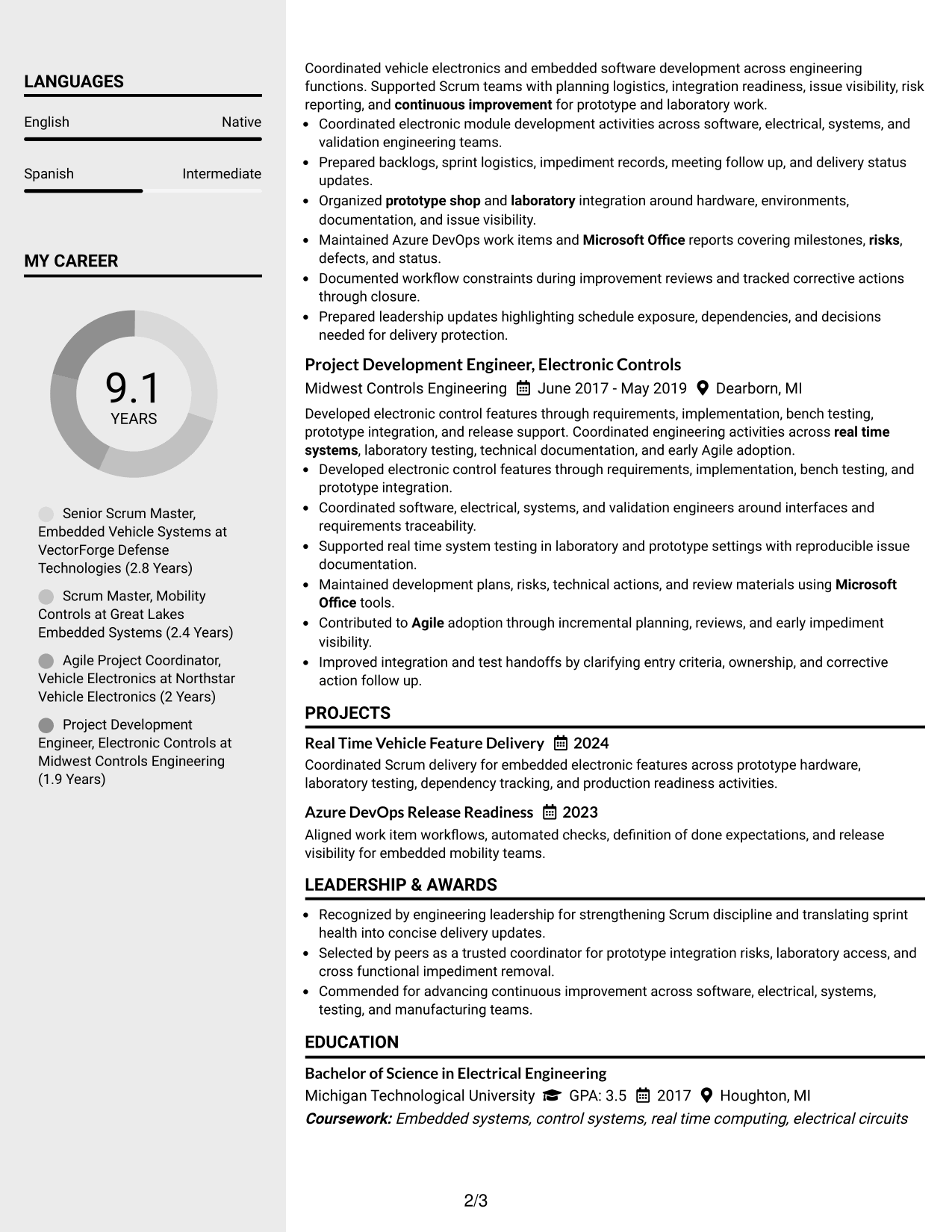
The two-column sidebar separates supporting details from the main record so recruiters can scan both efficiently.
Why This Format Works
- Main-column space keeps experience and achievements together for fast career review.
- Sidebar separation gives skills and credentials a distinct area without interrupting chronology.
- Parallel sections help recruiters switch between career evidence and supporting qualifications.
Best For
- Balanced experience and skills
- Compact supporting credentials
- Readers comparing qualifications quickly
- Resumes with several supporting sections
- Two-column visual organization
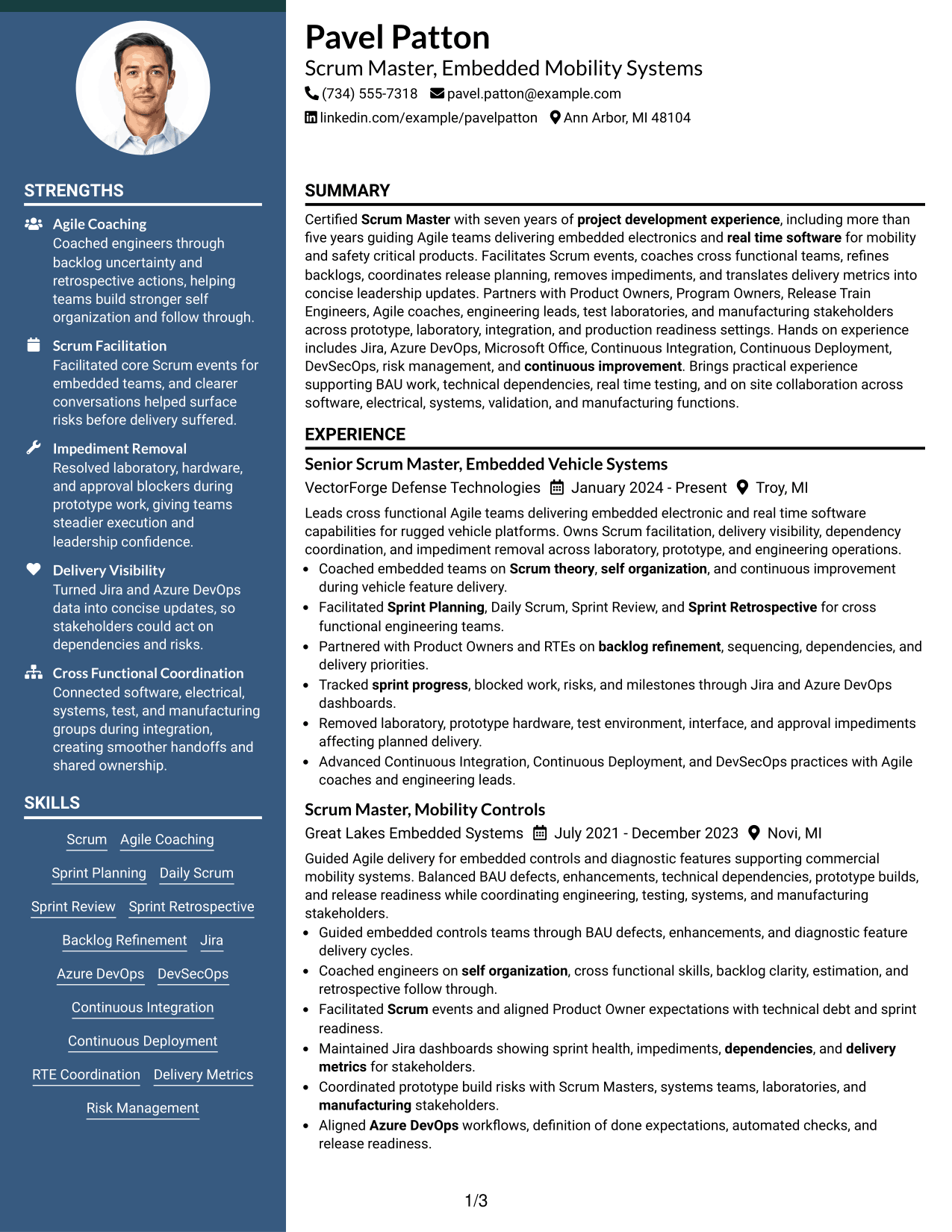
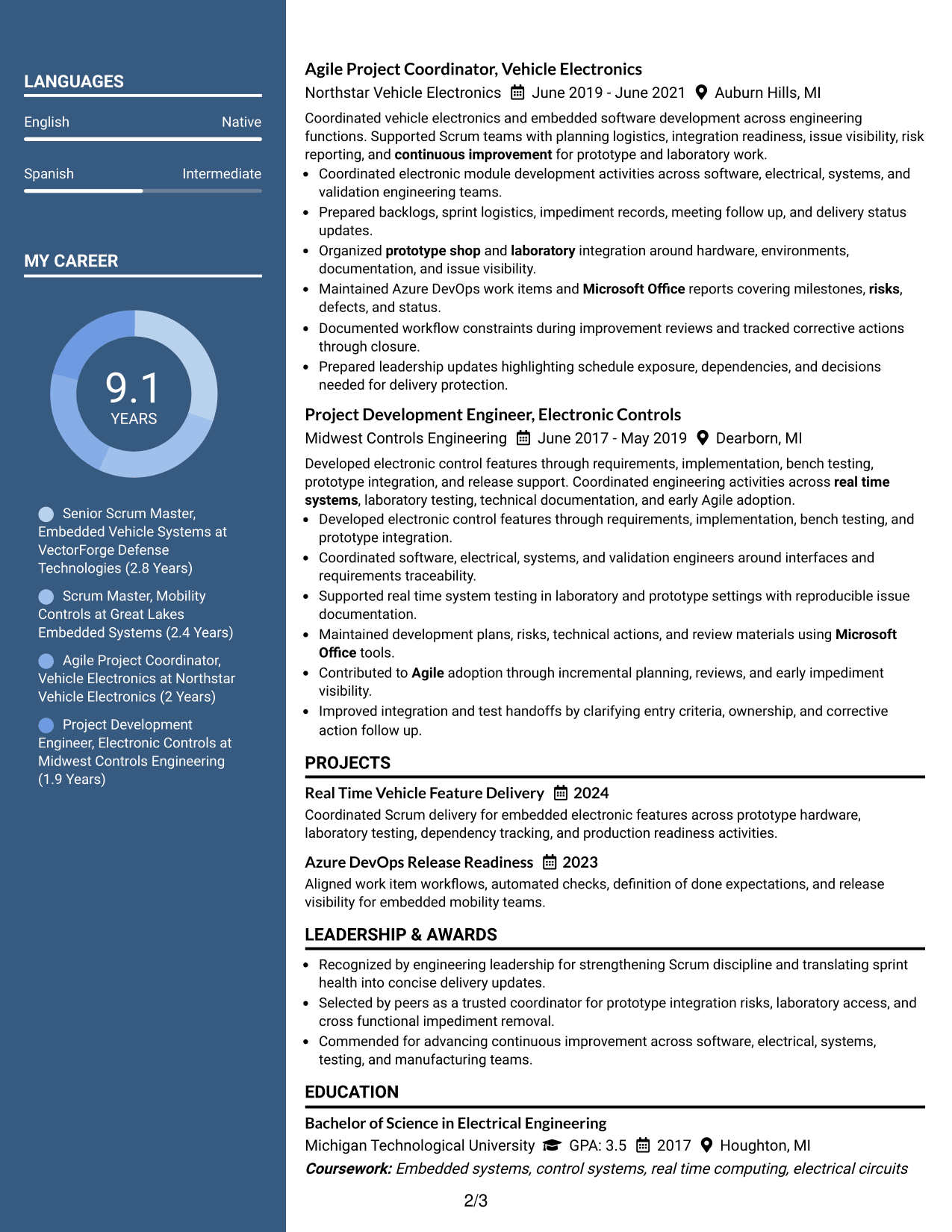
#5 Two Column Format Resume Example
This two-column layout lets recruiters review major resume sections side by side without losing section boundaries.
Why This Format Works
- Two-column structure reduces vertical searching across experience, skills, education, and credentials.
- Separated content areas make dense qualifications easier to review in shorter passes.
- Visible section boundaries help recruiters compare achievements with supporting background information.
Best For
- Information-dense resumes
- Side-by-side section review
- Broad qualification sets
- Candidates with substantial supporting content
- Applications needing compact visual balance
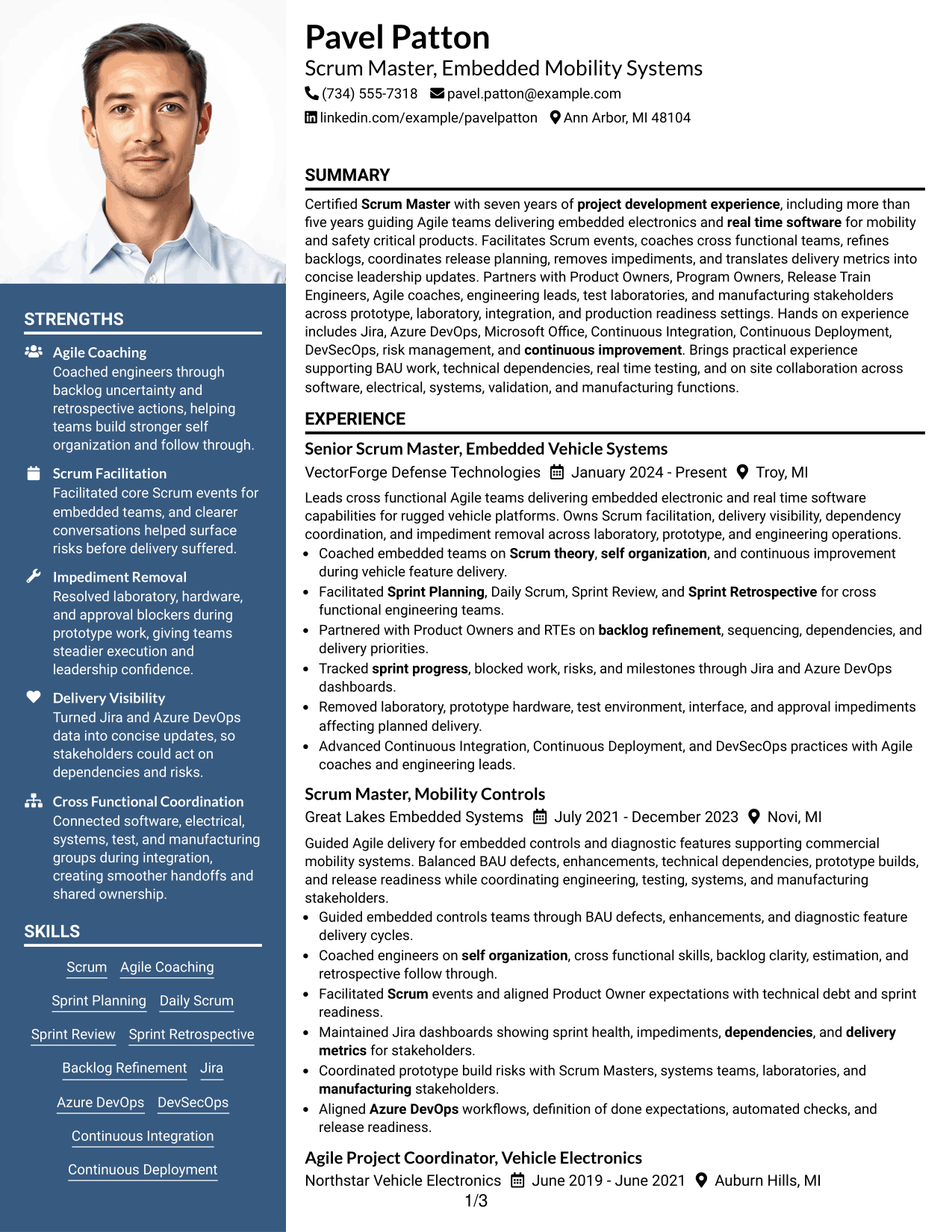
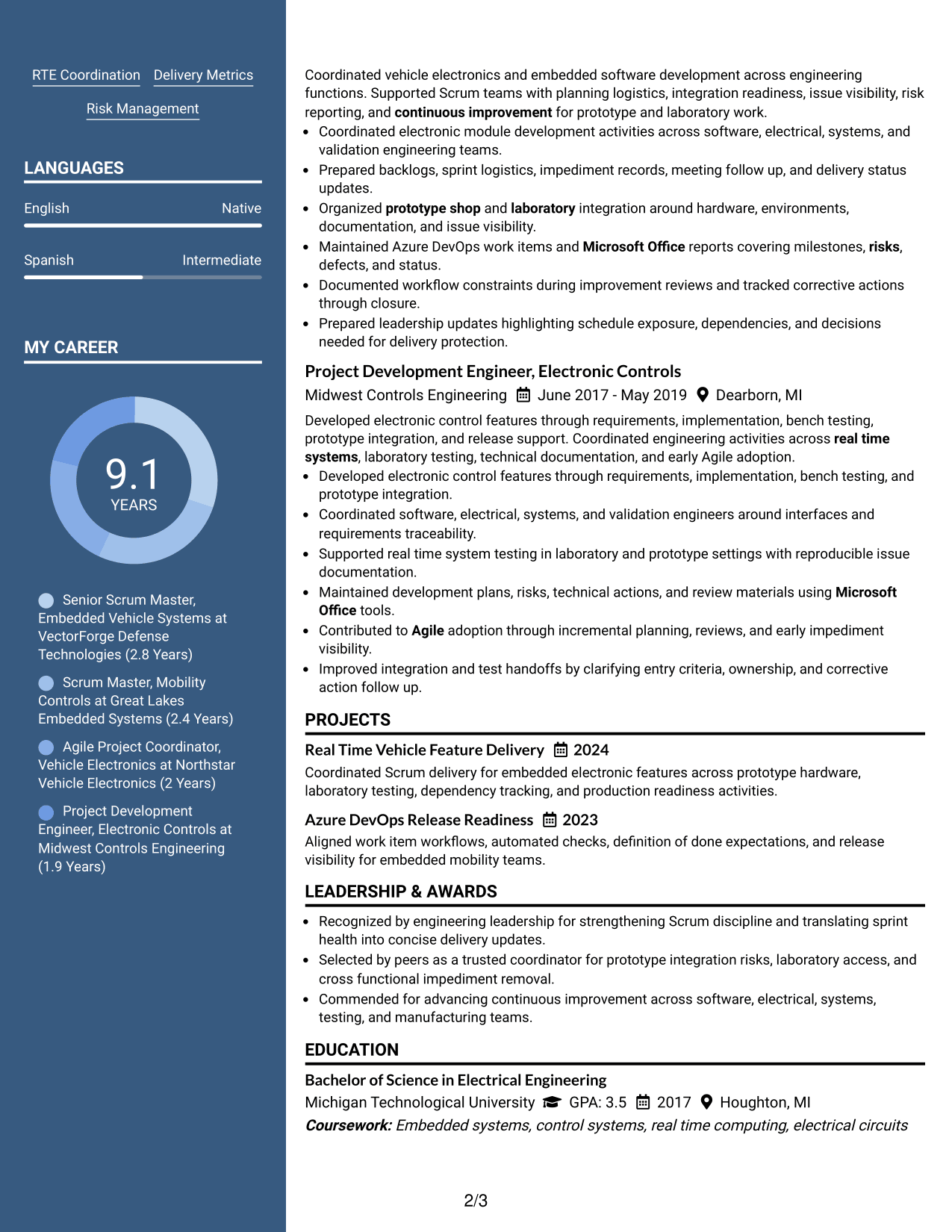
#6 Photo Header Two Column Format Resume Example
A photo header identifies the person while the two-column body gives recruiters separate paths through core and supporting sections.
Why This Format Works
- Two body columns divide experience-focused content from supporting skills and credentials.
- Header photo remains visually separate from the evidence recruiters must evaluate.
- Section separation helps reviewers locate achievements, education, and qualifications with fewer jumps.
Best For
- Photo-appropriate international applications
- Two-track information scanning
- Resumes balancing experience and credentials
- Profiles with many supporting sections
- Readers who prefer clear visual separation
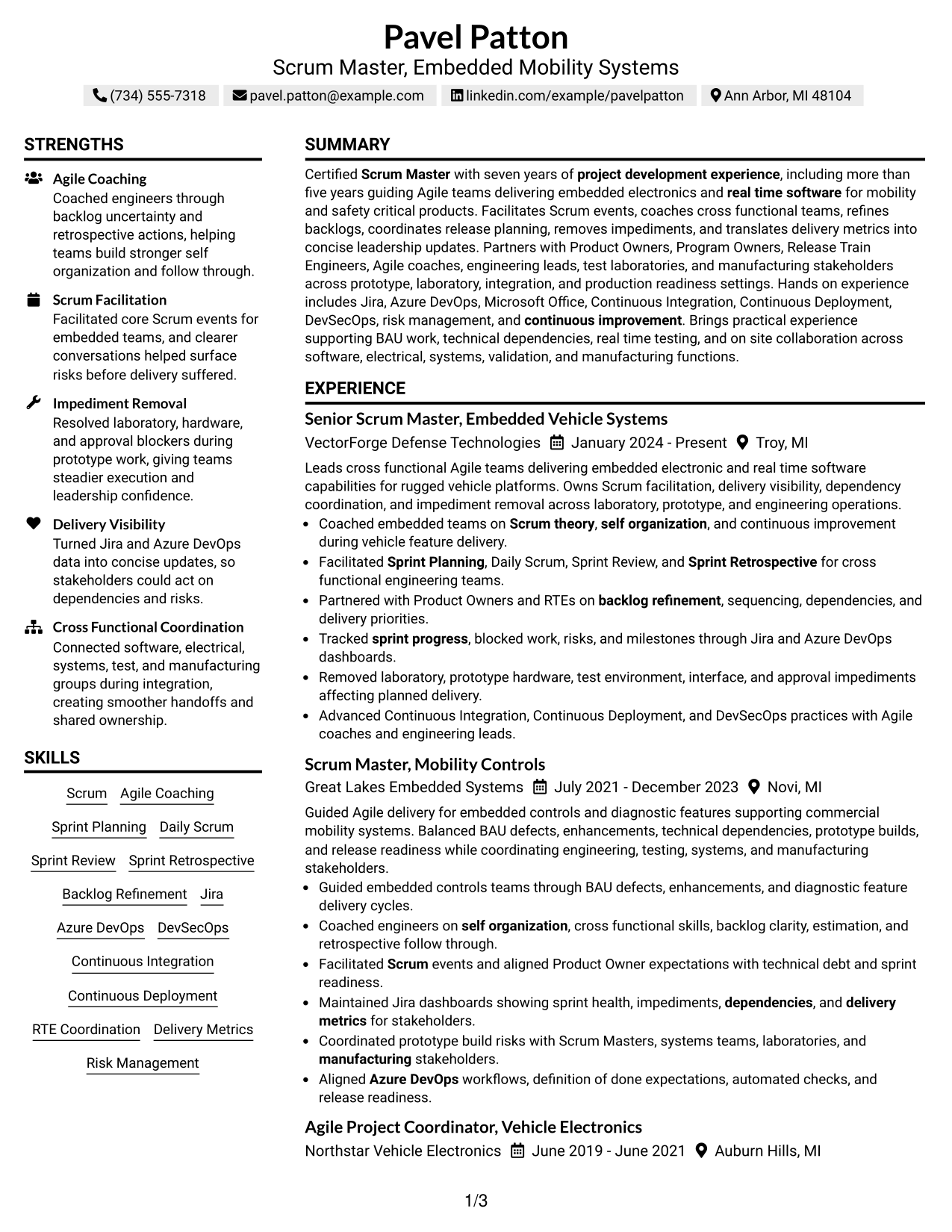
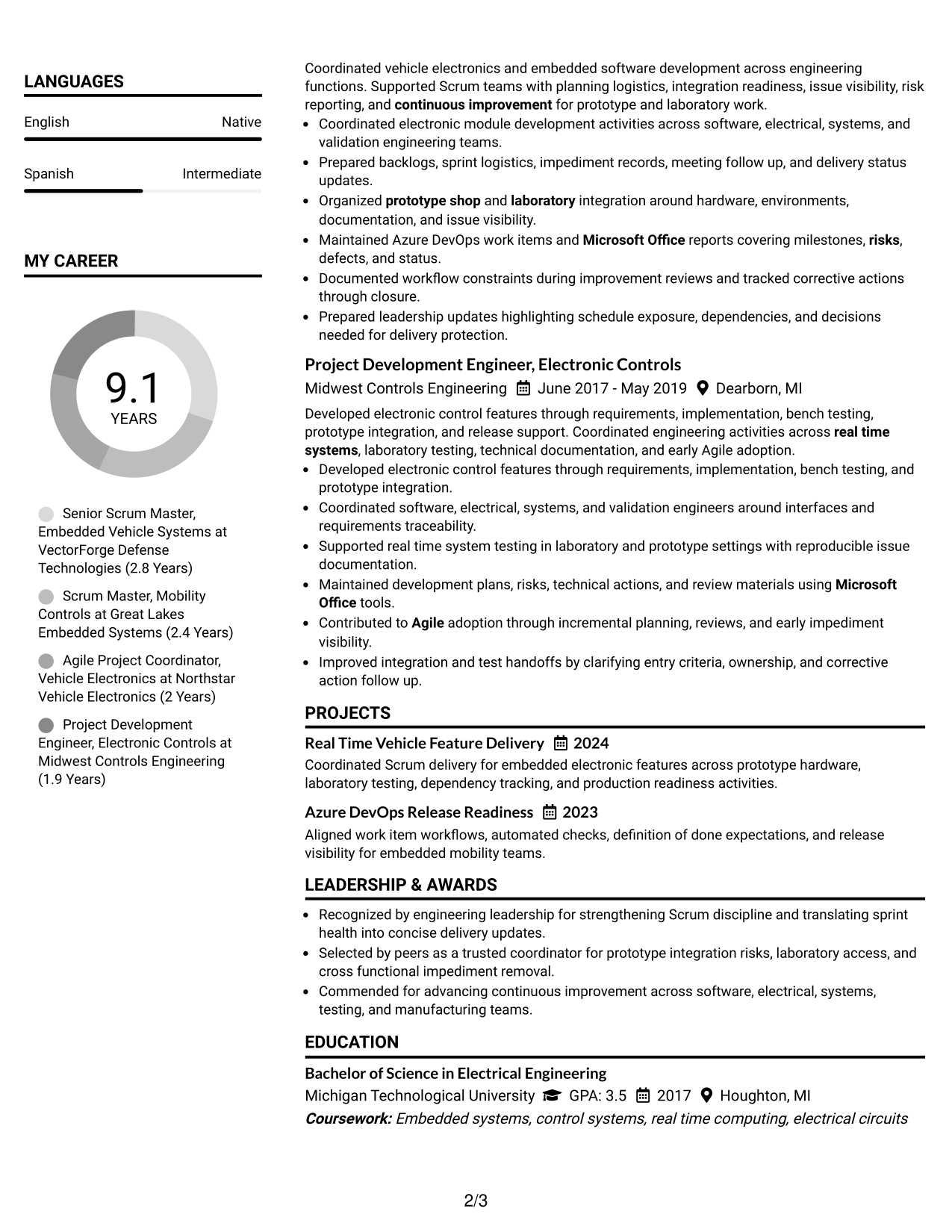
#7 Simple Two Column Format Resume Example
The simple two-column structure keeps visual noise low while helping recruiters scan related resume sections in parallel.
Why This Format Works
- Simple columns create clear separation between primary experience and supporting qualifications.
- Compact organization gives skills, education, and credentials space without crowding achievements.
- Low visual complexity keeps attention on section content and career progression.
Best For
- Clean two-column organization
- Strong experience plus supporting details
- Quick section-to-section comparison
- Content needing moderate compression
- Professional applications with restrained styling
See Also
- 33 Senior Project Manager / Scrum Master Resume Templates with Example 2026 (ATS-Optimized)
- 33 Associate Master Data Analyst - Data Governance Resume Templates with Example
- 33 Master Data Analyst Resume Templates with Example 2026 (ATS-Optimized)
- 33 Master Electrician Resume Templates with Example 2026 (ATS-Optimized)
- 33 Senior Master Data Analyst Resume Templates with Example 2026 (ATS-Optimized)
- 7 Kitchen Supervisor Resume Templates with Example
- 7 Technician I - Streets Resume Templates with Example
- 7 Software Development Engineer in Test, IS&T Customer Systems Resume Templates with Example
- 30+ Senior Project Manager / Scrum Master Cover Letter Templates with Example 2026
- 30+ Master Data Analyst Cover Letter Templates with Example 2026
Frequently Asked Questions
Are these Scrum Master resume templates ATS-friendly?
They use clear headings, standard resume sections, readable text, and straightforward organization that can support ATS parsing. Your final result still depends on the file format and the content you add.
Are these different Scrum Master resumes?
No. The guide shows one complete Scrum Master resume example in several visual layouts so you can compare how the same evidence is organized.
What should a Scrum Master resume include?
Include a focused summary, relevant experience, Agile and Scrum skills, tools, education, certifications, and concise bullets that show coaching, facilitation, impediment removal, delivery tracking, risk management, and continuous improvement.
Which Scrum Master keywords should I use?
Use terms that match both the job posting and your real experience. Relevant examples here include Scrum, Agile coaching, Sprint Planning, backlog refinement, RTE coordination, Jira, Azure DevOps, delivery metrics, CI/CD, DevSecOps, and risk management.
How should I describe Scrum Master achievements?
Write short bullets that connect an action to a delivery result or business effect. Useful evidence can include removing blockers, improving sprint visibility, coordinating dependencies, strengthening team practices, or improving release readiness.
Should I include technical experience on a Scrum Master resume?
Yes, when it supports the target role. Experience with embedded systems, real-time software, laboratories, prototype work, manufacturing, or DevSecOps can show that you understand the environment your Agile teams work in.
Should I include a photo on a U.S. Scrum Master resume?
For most U.S. applications, a no-photo resume is the safer standard. Use a photo only when it is normal and appropriate for the country or market where you are applying.
Can I customize these Scrum Master resume templates?
Yes. You can adjust the wording, section order, visual style, and PDF output while keeping the resume focused on the requirements of your target Scrum Master role.