7 Senior HR Systems Solutions Architect (Workday) Resume Templates with Example
This guide shows you how to build a Senior HR Systems Solutions Architect (Workday) resume that is clear, focused, and easy to review. You will learn how to organize strong evidence so recruiters can understand your value quickly.
Give priority to Workday Core HCM, functional requirements, configuration, testing, reporting, integrations, and production troubleshooting. Use concise bullets that show how you assess downstream impact, support HR processes, and work with business and technical partners.
Below, one complete resume example appears in 7 ATS-friendly resume layouts. Compare the reading order, section structure, and visual balance to choose a format that fits your content.
What Makes a Great Senior HR Systems Solutions Architect (Workday) Resume in 2026
A strong resume is clear, evidence-based, and easy to scan. It should connect HR systems work to practical delivery, testing, issue resolution, and cross-functional decisions.
Use grounded keywords such as Workday Core HCM, Absence, Time Tracking, Recruiting, Talent Management, VNDLY, reporting, HR integrations, regression testing, and user acceptance testing.
The examples shown below are intentionally detailed to demonstrate a range of experiences, skills, accomplishments and relevant keywords. We prefer detailed resumes as they provide more context to the hiring managers and also help the ATS systems identify relevant qualifications and score your resume better for a match. But the length of a resume is an individual choice. If you want a one page resume, just keep the most relevant experience and information for the job. Note: Resume examples are for educational purposes only. Use only information that accurately reflects your experience and qualifications. References to real organizations do not imply affiliation or endorsement.
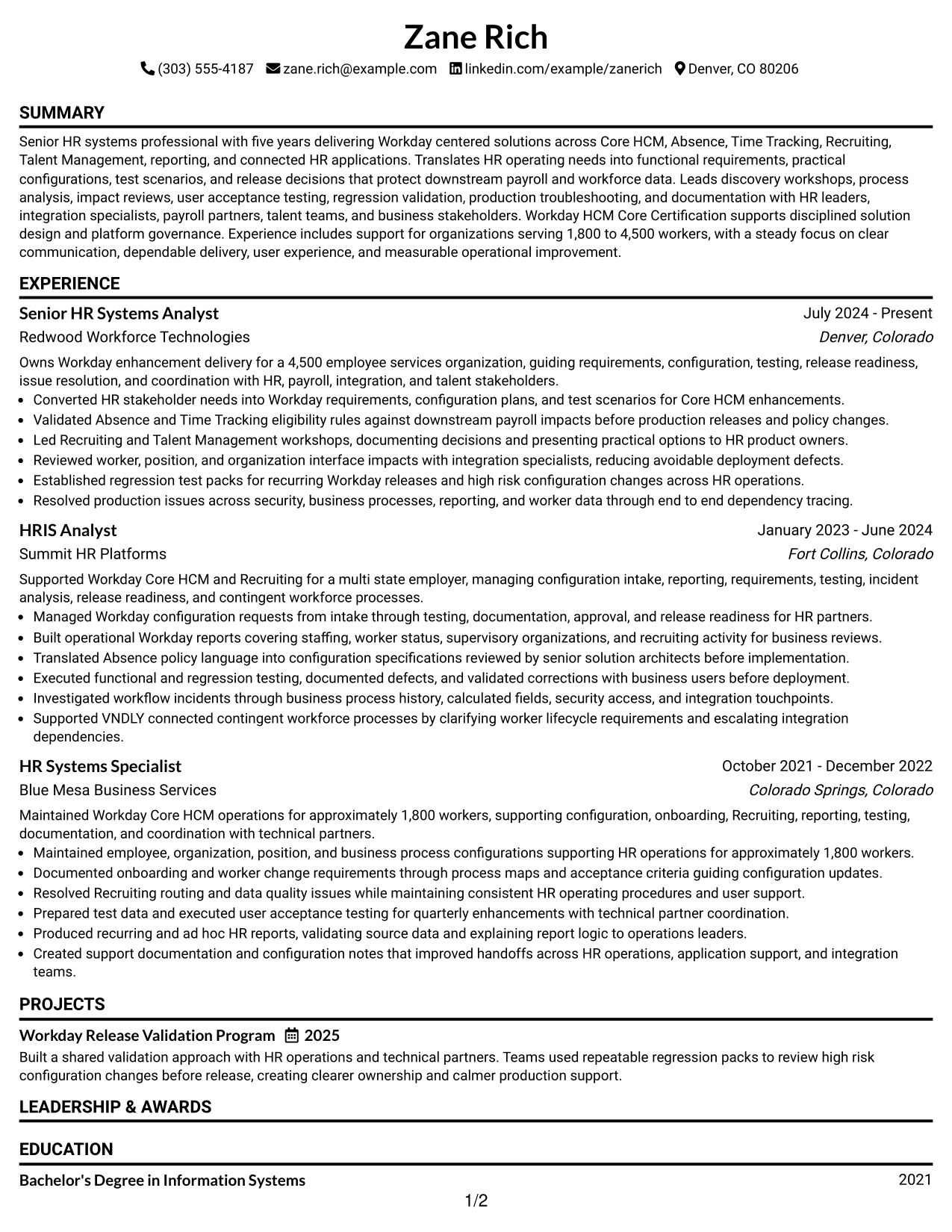
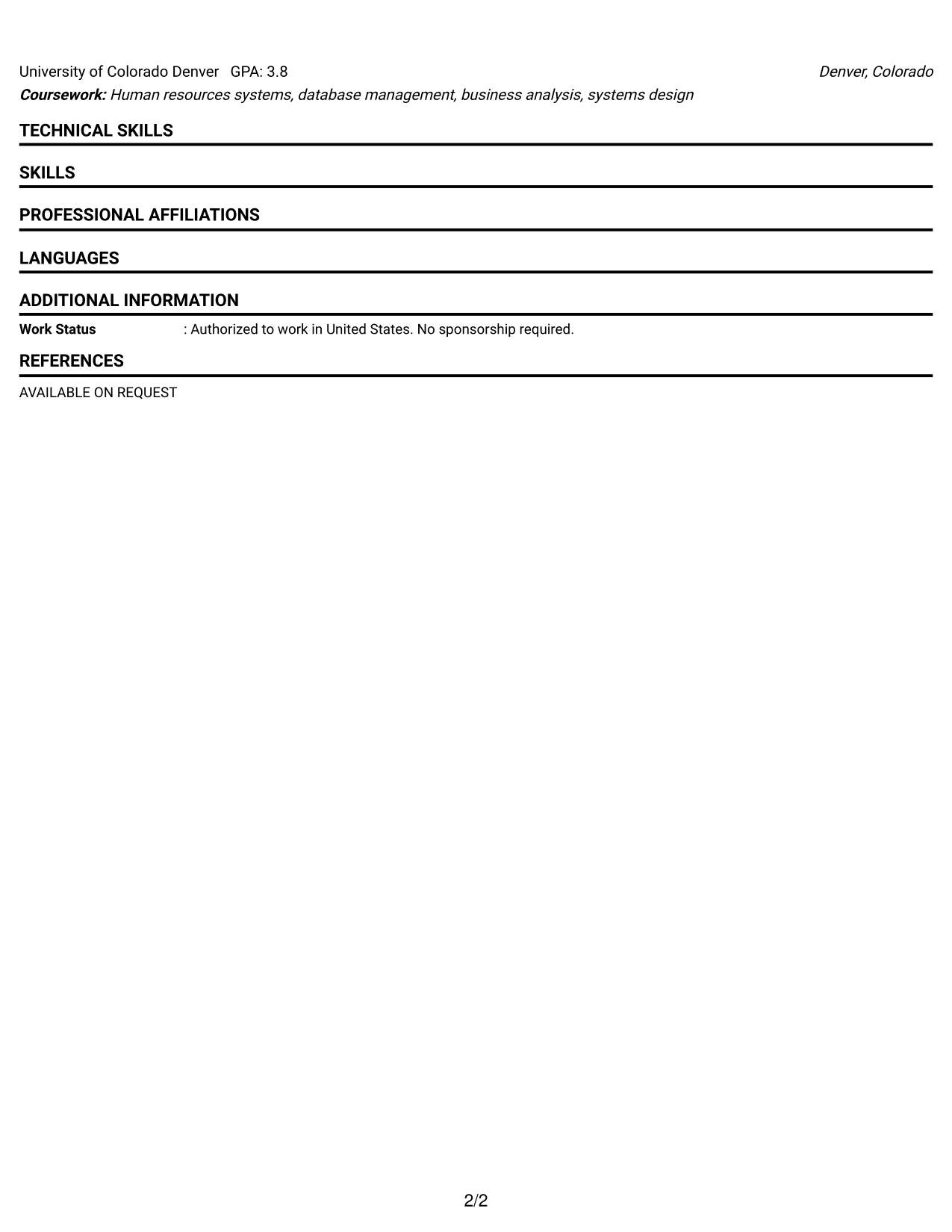
#1 Simple One Column Format Resume Example
A direct one-column reading order helps recruiters scan each resume section without switching across the page.
Why This Format Works
- Straight section flow keeps career progression easy to follow from top to bottom.
- Full-width space gives experience and achievements room for clear, readable detail.
- Simple section breaks help recruiters find skills, education, and credentials quickly.
Best For
- Longer experience bullets
- Linear career histories
- Detailed Workday project evidence
- Readers who prefer simple scanning
- Content that needs full-width space
Resume Keywords
- Workday Core HCM
- Absence
- Time Tracking
- Recruiting
- Talent Management
- VNDLY
- HRIS configuration
- business requirements
- functional requirements
- HR integrations
- reporting
- regression testing
- user acceptance testing
- troubleshooting
- process analysis
- stakeholder consulting
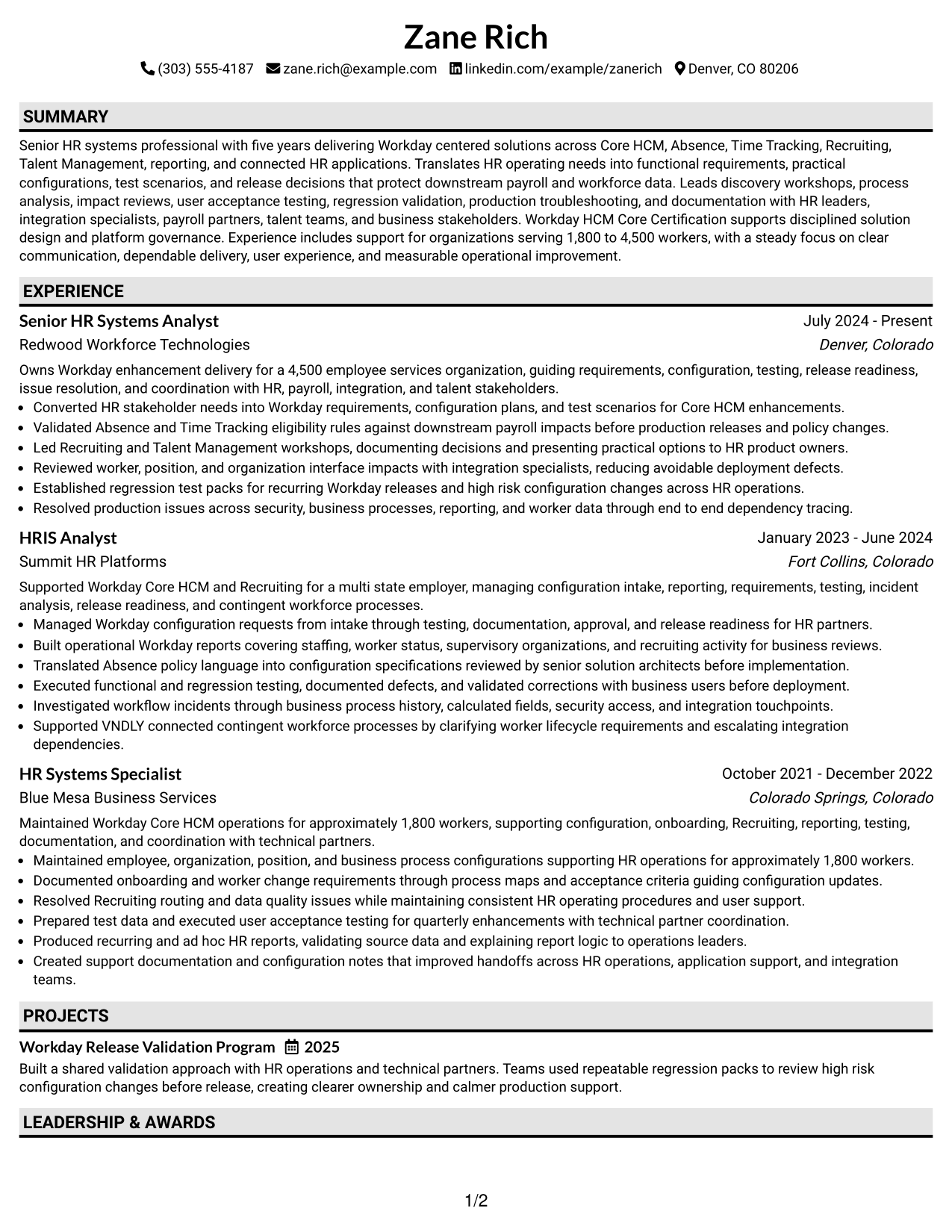
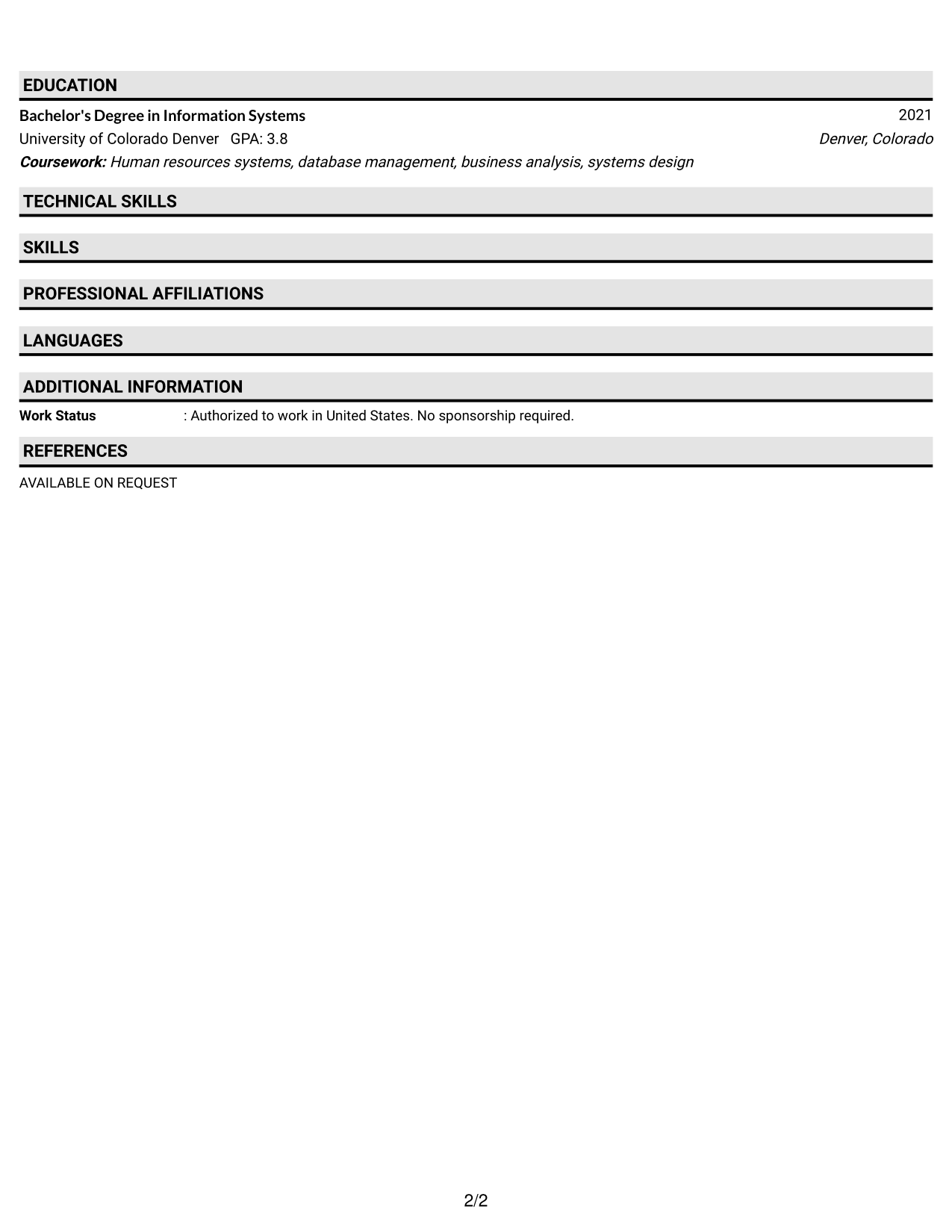
#2 Plain One Column with Shaded Labels Resume Example
Shaded section labels mark each part of the one-column resume so recruiters can move through it quickly.
Why This Format Works
- Shaded labels separate experience, skills, education, and credentials without changing reading order.
- One-column structure keeps achievements connected to the roles where they were earned.
- Visible section markers make dense professional content easier to navigate during review.
Best For
- Resumes with many clear sections
- Reviewers who value strong section cues
- Dense experience content
- Traditional applications with subtle visual structure
- Career records needing easy navigation
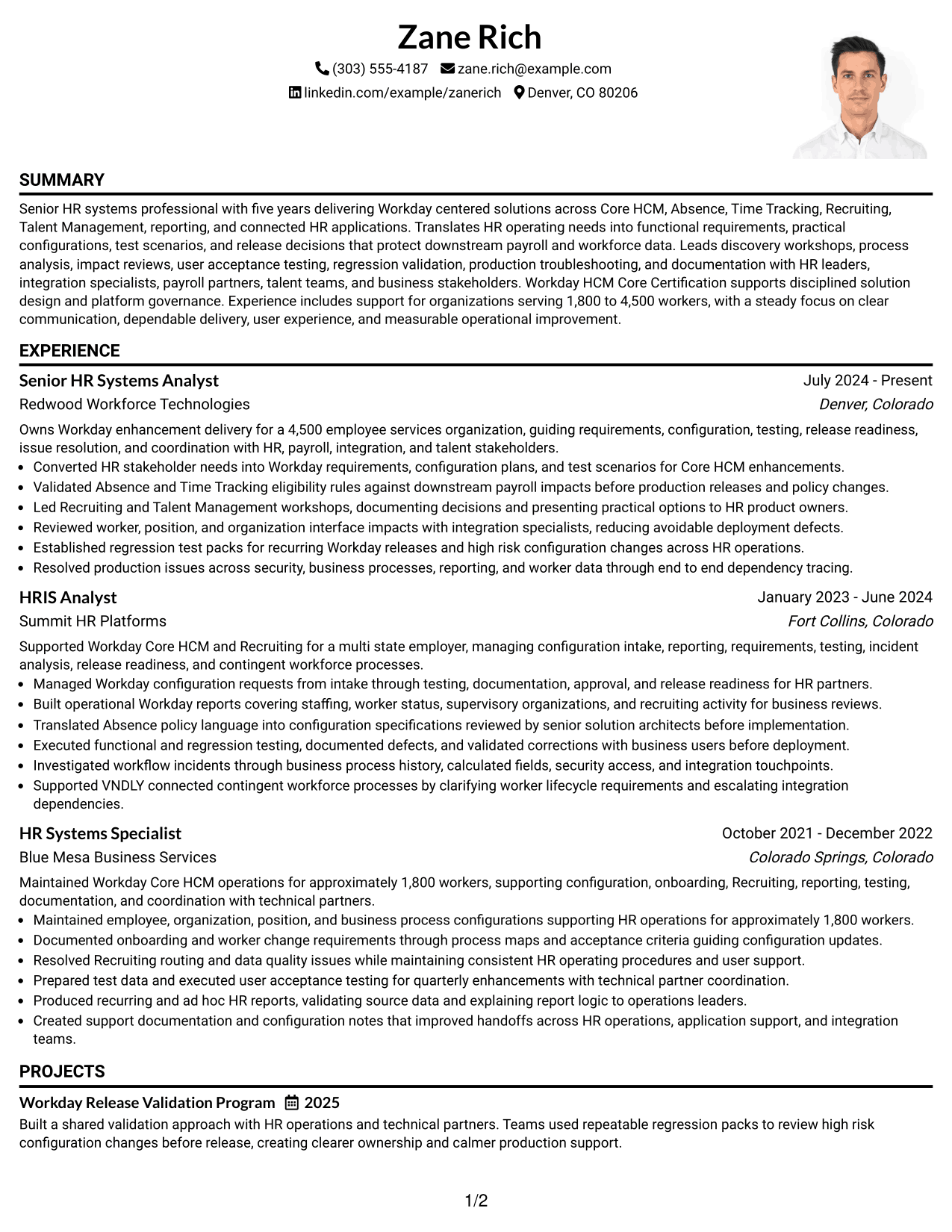
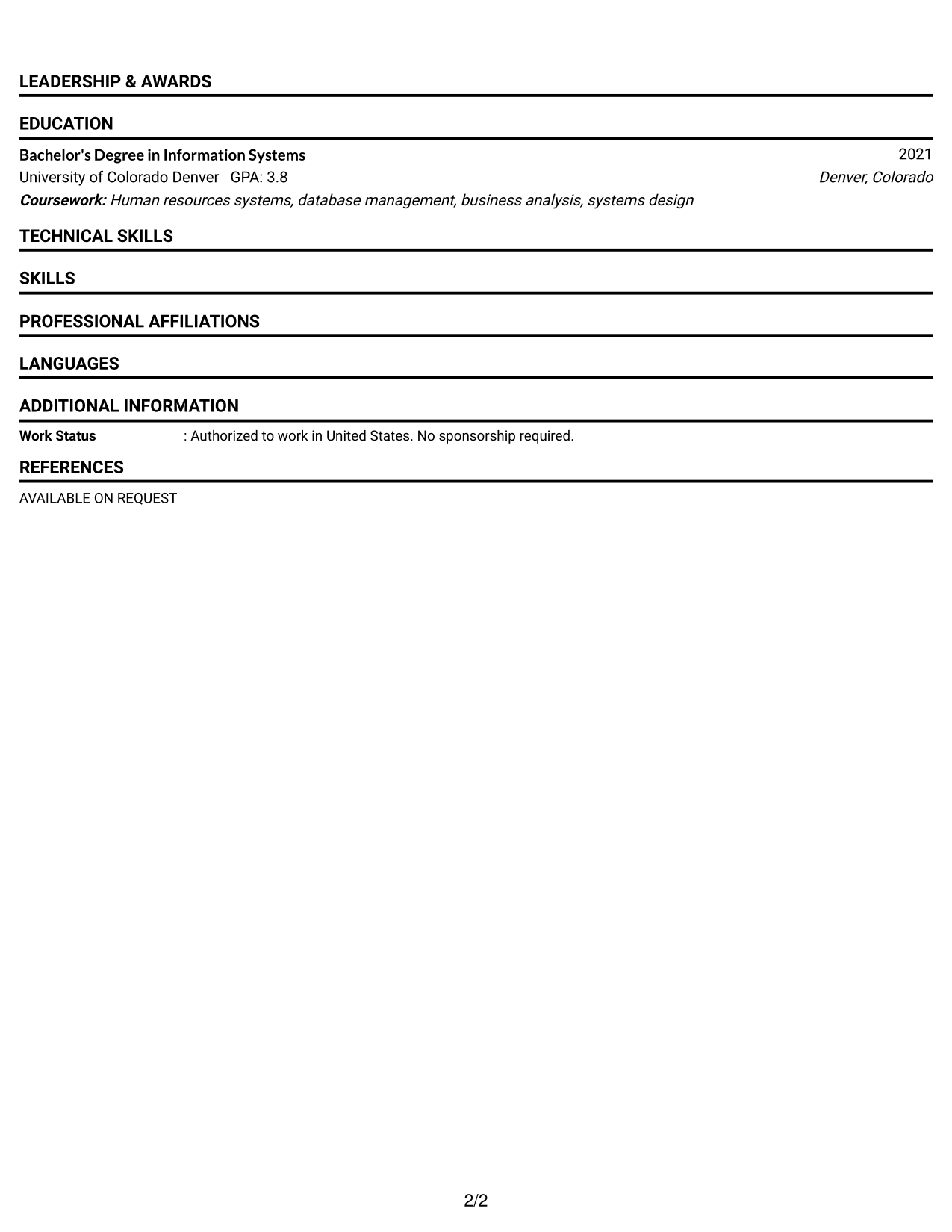
#3 One Column Format with Photo Right Resume Example
A right-side photo gives the header a personal visual element while the one-column body keeps recruiter scanning direct.
Why This Format Works
- One-column body keeps experience and achievements in one continuous reading path.
- Clear body sections separate skills, education, and credentials for faster reference.
- Photo placement stays in the header while career content keeps a simple flow.
Best For
- Applications where photos are customary
- International resume contexts
- Professionals wanting a personal header
- Experience-heavy content with linear reading
- Readers who want simple body navigation
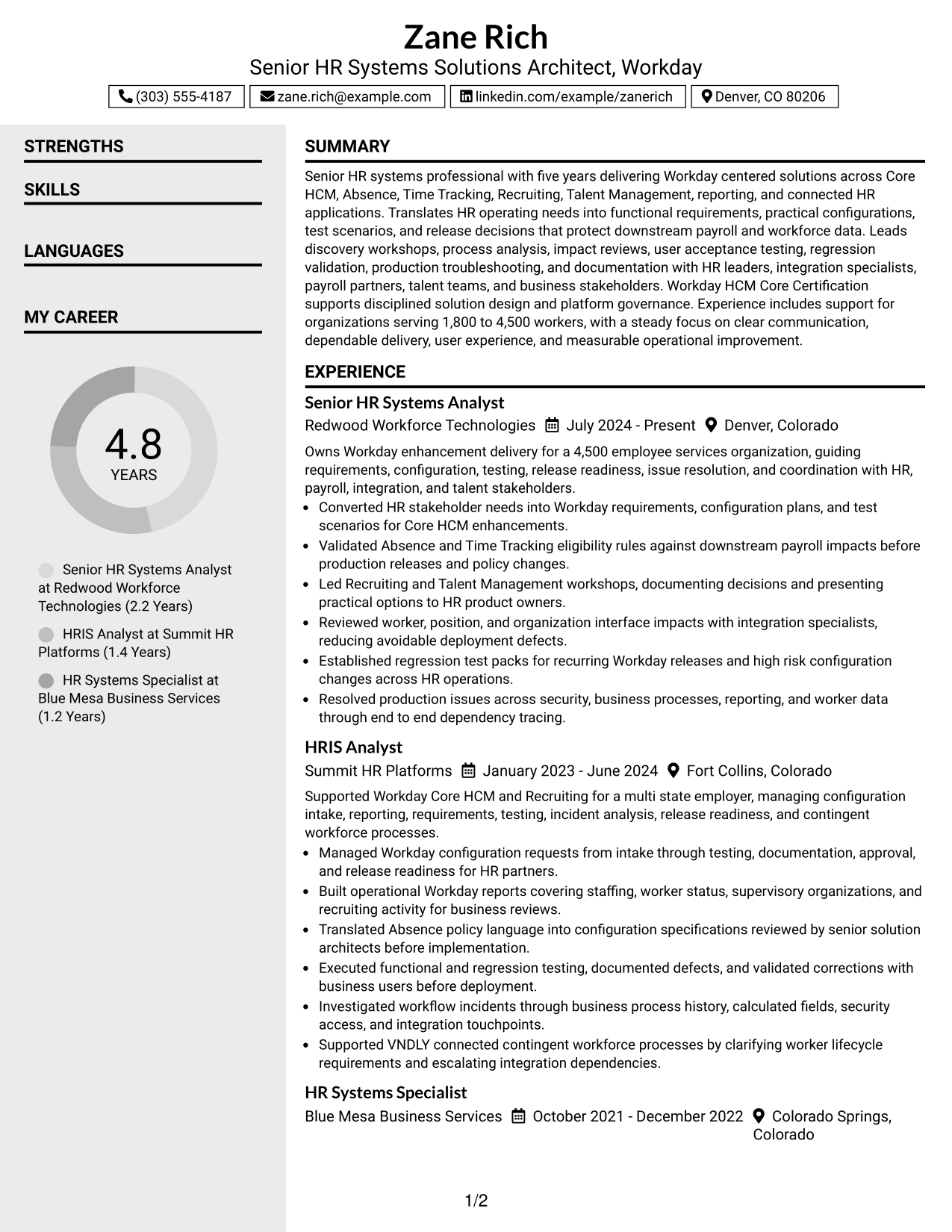
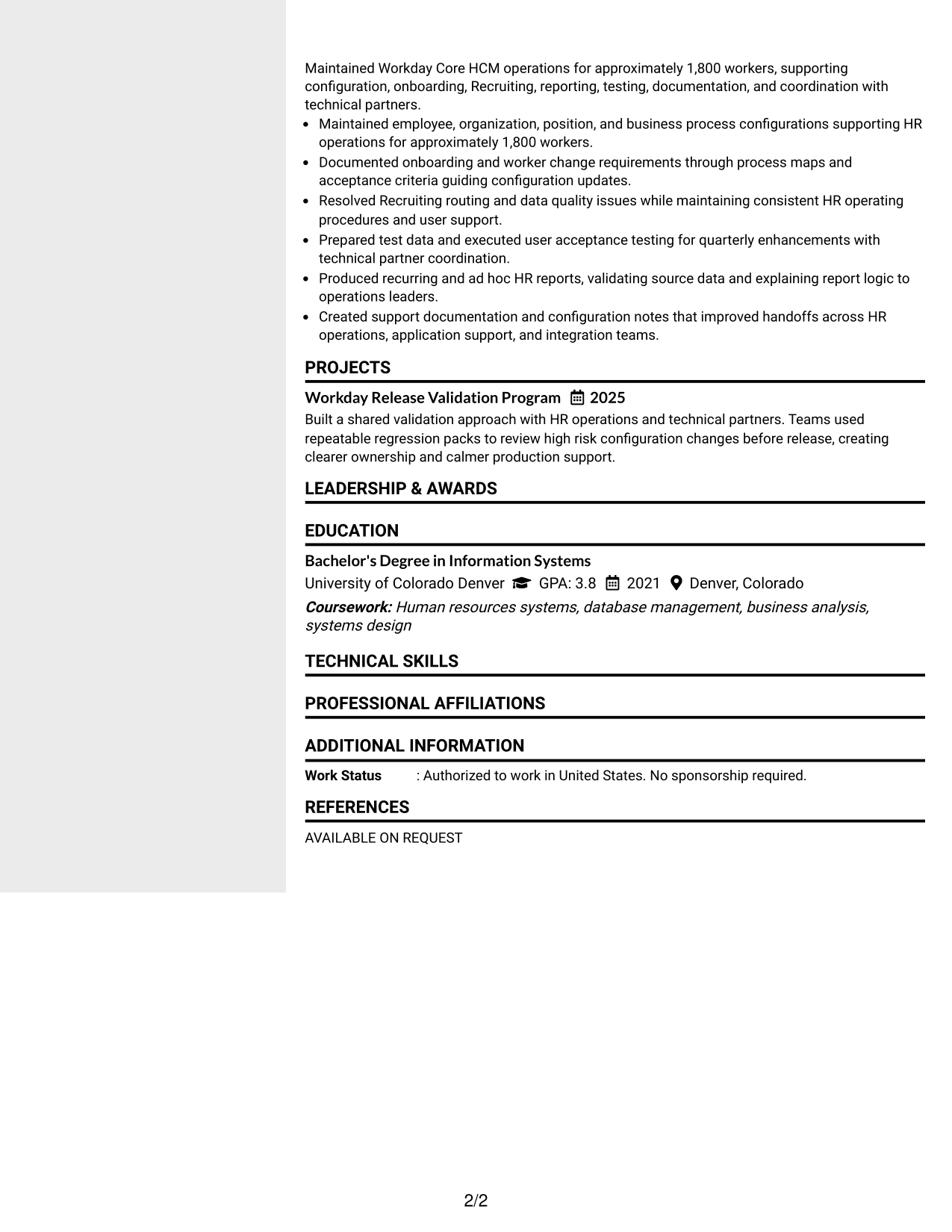
#4 Clean Two Column Sidebar Format Resume Example
A clean two-column body lets recruiters scan supporting details beside the main career content without losing structure.
Why This Format Works
- Two-column organization separates supporting details from the main experience narrative.
- Sidebar structure gives skills and credentials a distinct area for quick reference.
- Main column preserves enough continuity to show career progression and achievements clearly.
Best For
- Balanced experience and skills content
- Compact supporting information
- Readers comparing credentials with career history
- Resumes needing clear visual separation
- Professionals with several relevant skill groups
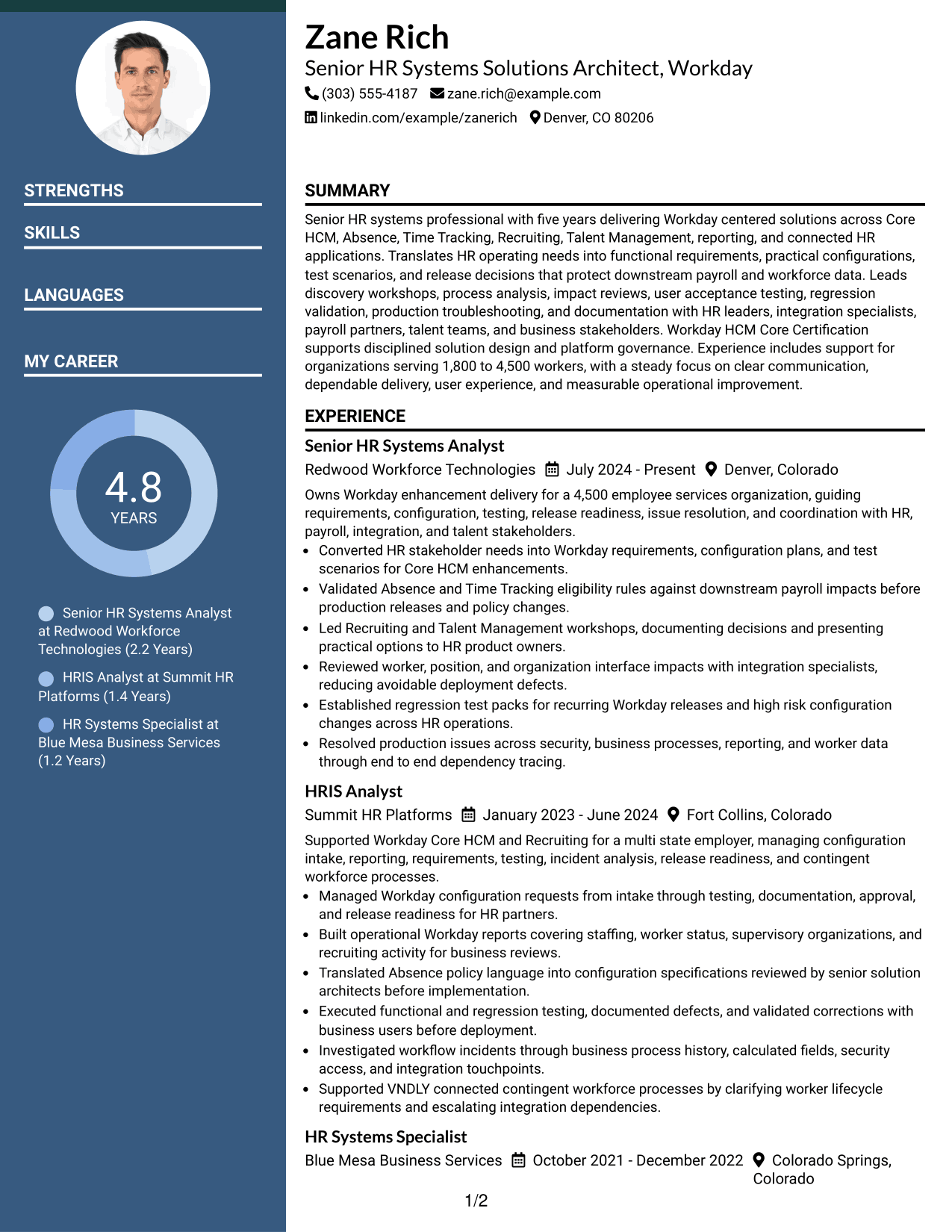
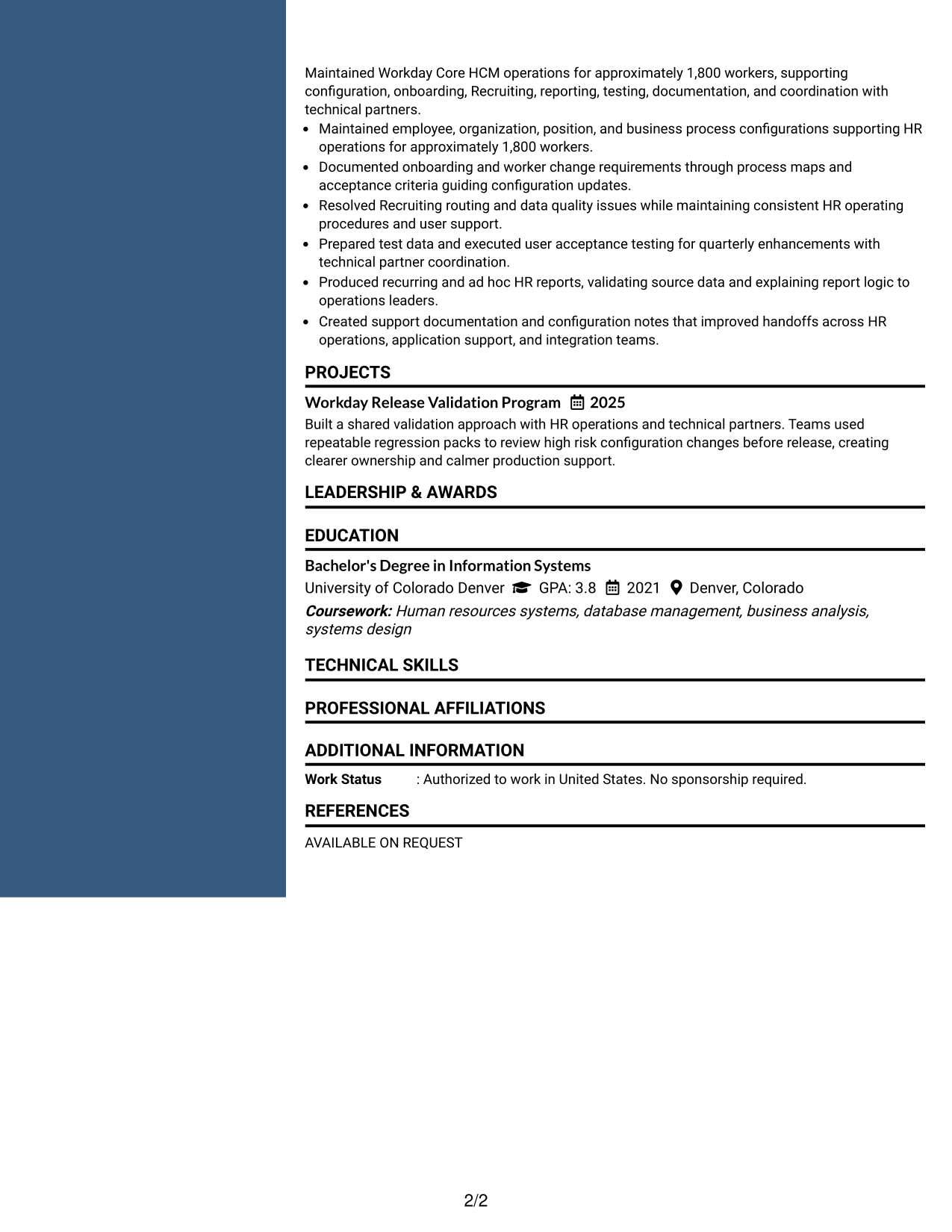
#5 Two Column Format Resume Example
Parallel two-column organization helps recruiters compare core career evidence with supporting sections in a compact view.
Why This Format Works
- Parallel columns give experience and supporting sections separate visual space.
- Shorter blocks help recruiters compare achievements, skills, and education without long scrolling.
- Balanced section areas work well when several content categories deserve similar attention.
Best For
- Resumes with balanced content volume
- Side-by-side section review
- Several equally important resume sections
- Compact presentation of skills and education
- Career evidence that benefits from visual grouping
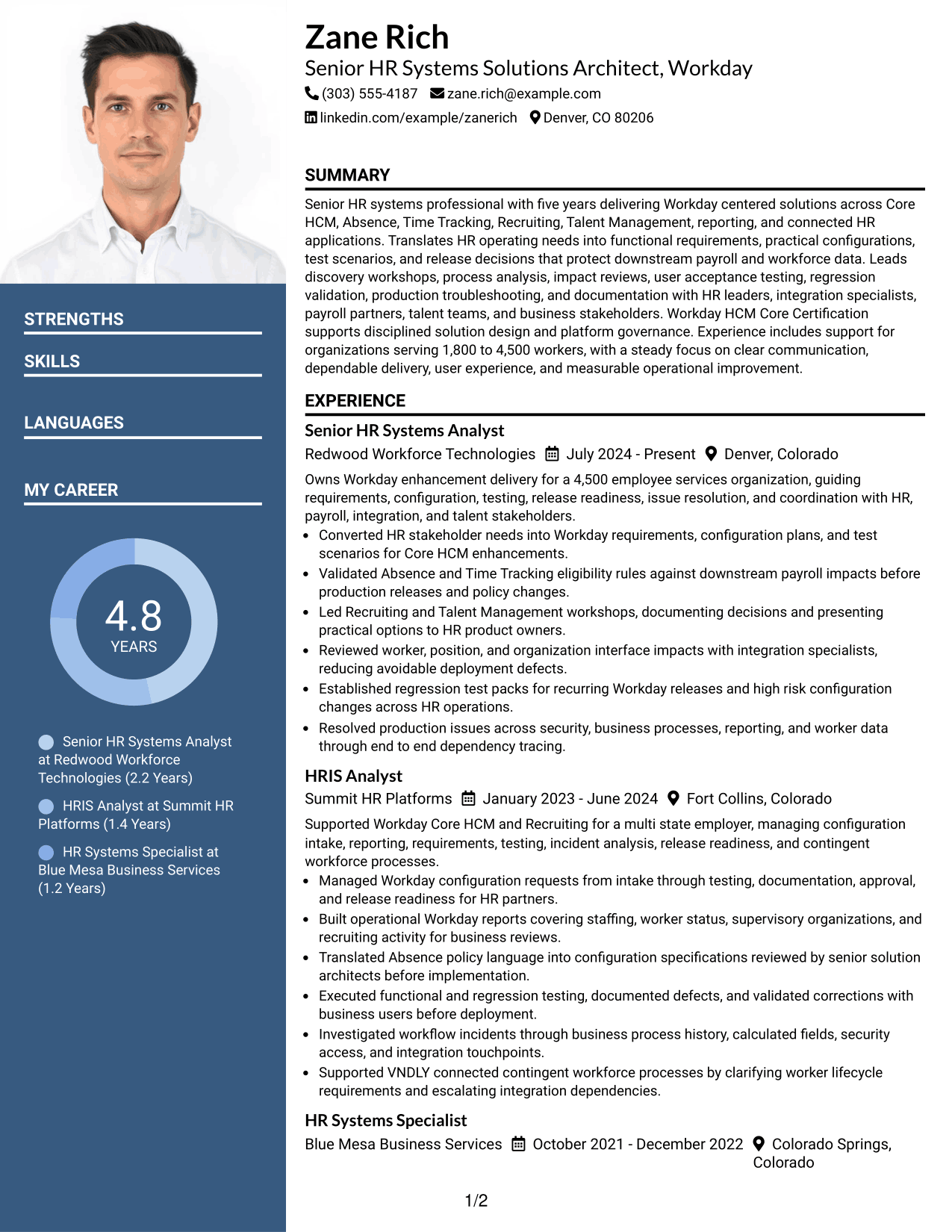
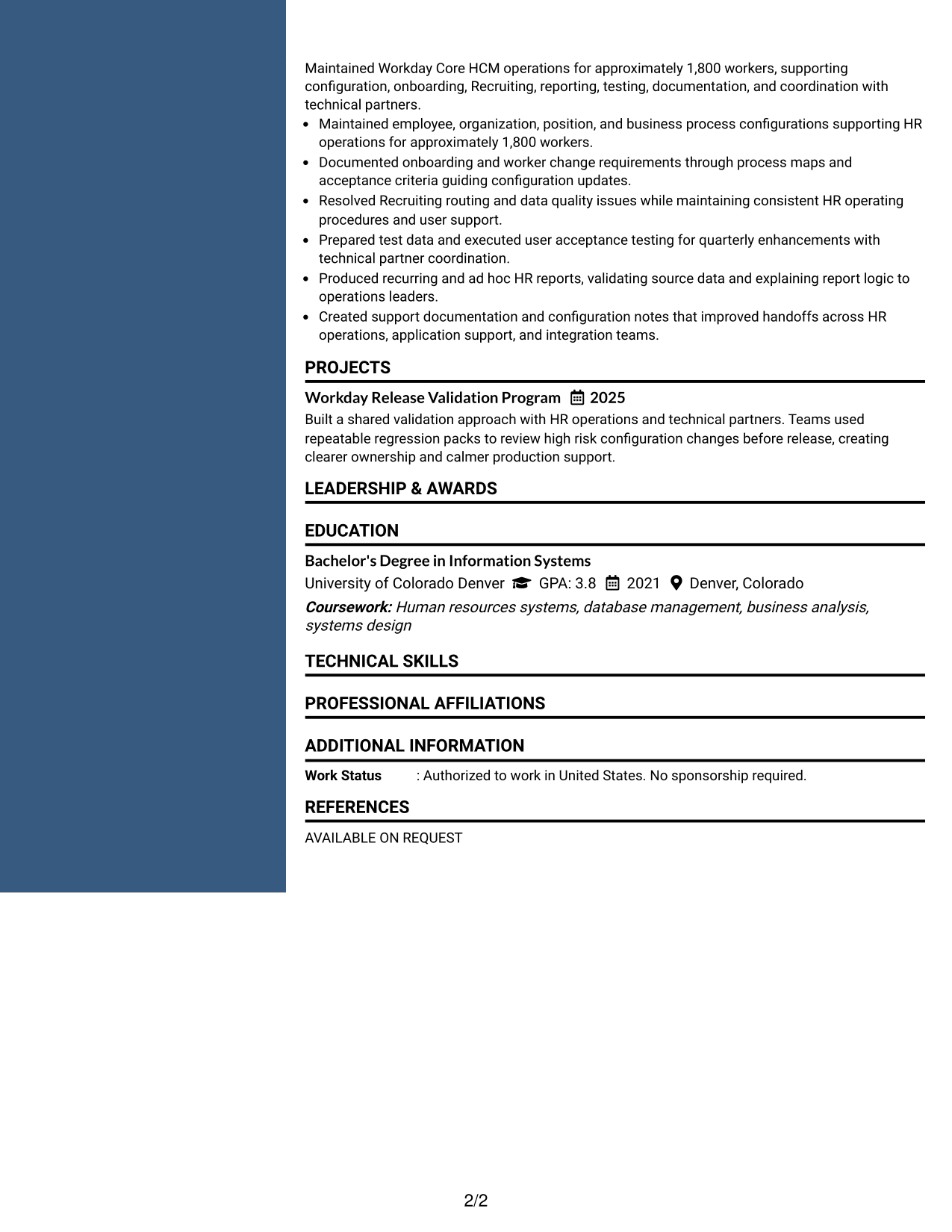
#6 Photo Header Two Column Format Resume Example
A photo header adds identity while the two-column body helps recruiters scan career and supporting sections side by side.
Why This Format Works
- Two-column body divides experience from supporting content without mixing section purposes.
- Separate content areas help recruiters locate skills, education, and credentials efficiently.
- Header photo remains visual context while body structure carries career progression.
Best For
- Regions where resume photos are expected
- International applications with photo norms
- Content suited to side-by-side organization
- Professionals balancing experience and credentials
- Readers who prefer compact section access
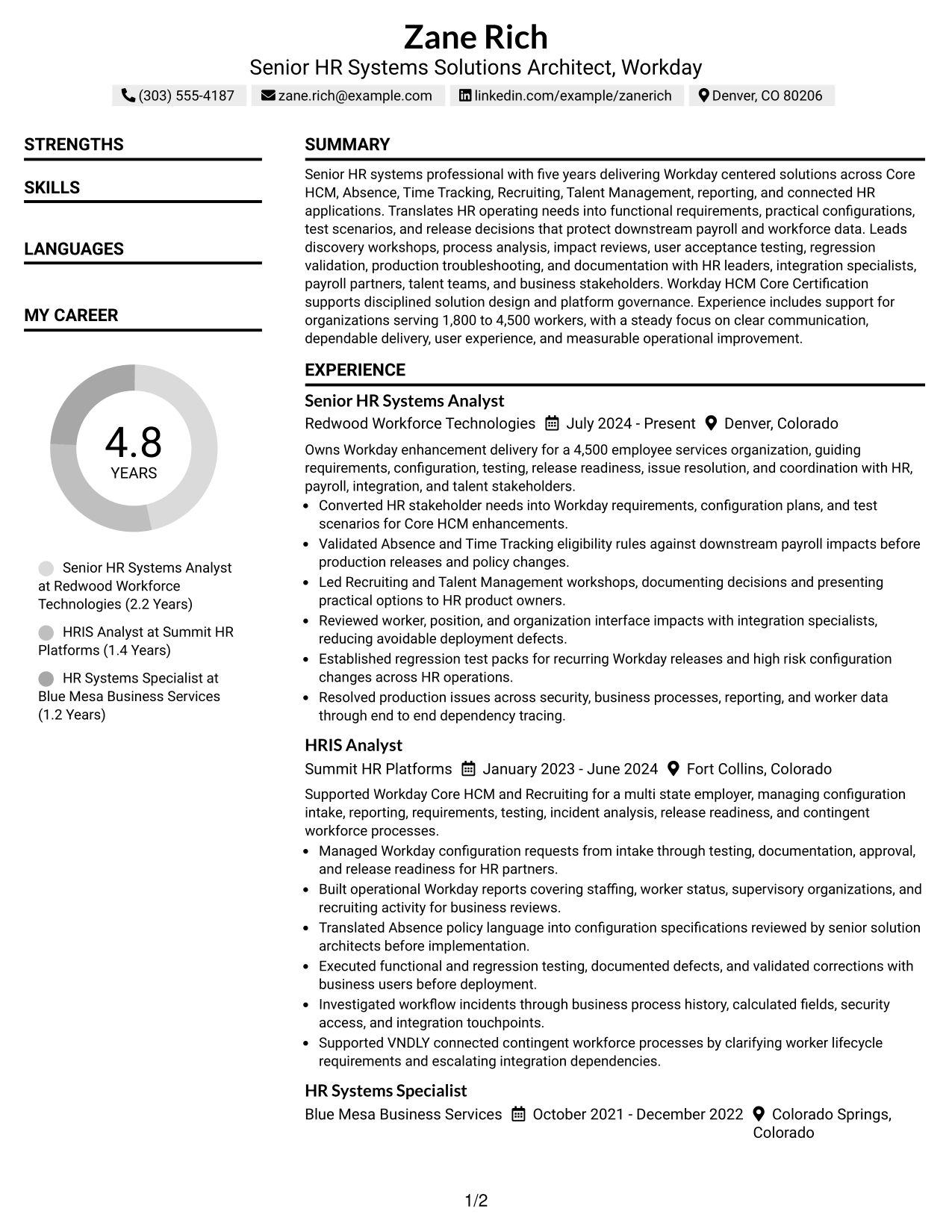
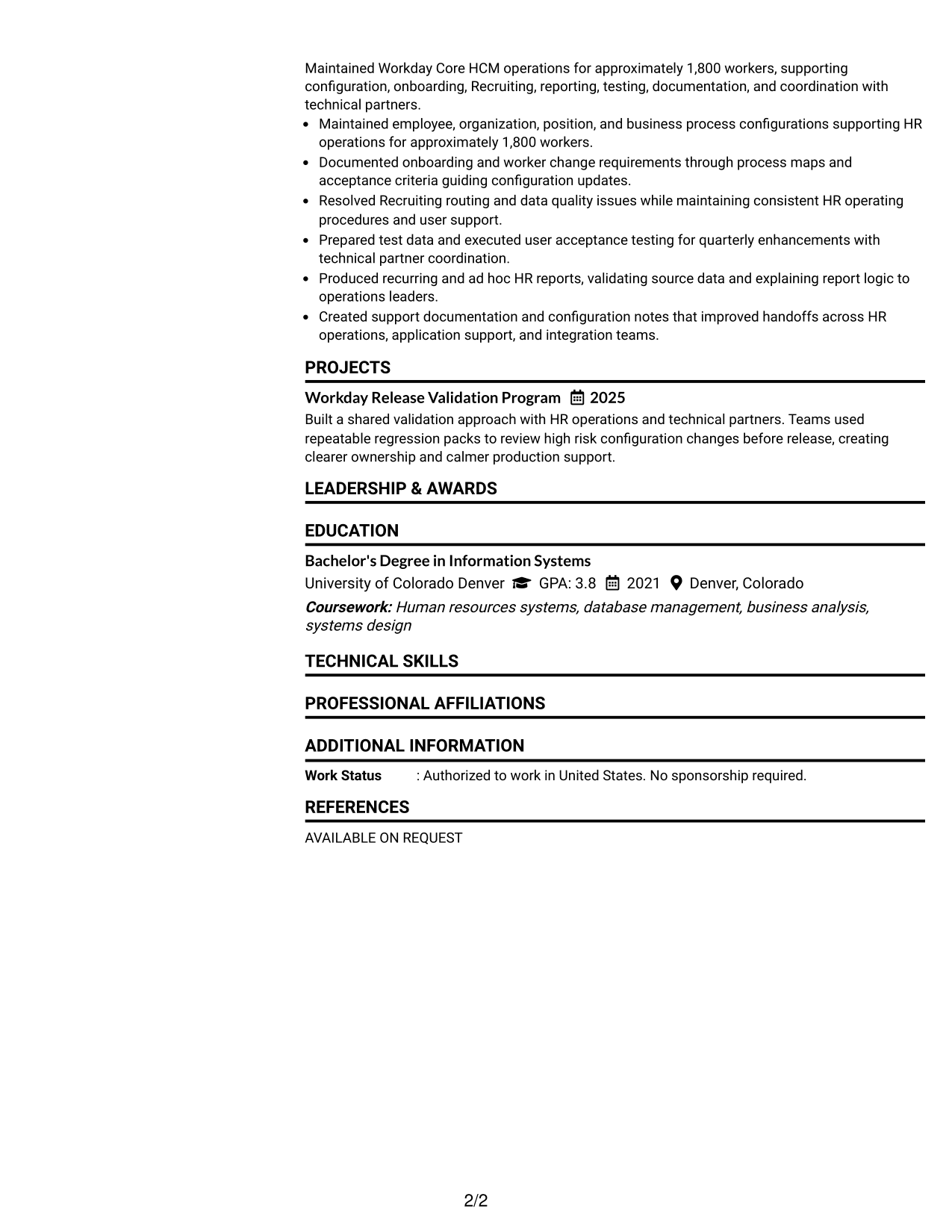
#7 Simple Two Column Format Resume Example
A simple two-column structure groups resume sections clearly so recruiters can scan broad evidence with less page movement.
Why This Format Works
- Simple columns separate career evidence from supporting details with clear boundaries.
- Compact organization keeps skills and credentials visible without interrupting experience flow.
- Section grouping helps reviewers move between achievements, education, and career history.
Best For
- Broad resumes with varied evidence
- Clear separation of primary and supporting content
- Readers reviewing several qualification areas
- Compact career histories
- Professionals wanting restrained two-column structure
Why Build Your Senior HR Systems Solutions Architect (Workday) Resume with ResumeInMinutes
ResumeInMinutes helps you turn complex HR systems work into clear resume sections, focused bullets, and role-specific keywords that are easier to review and update.
- ATS-friendly section structure
- Workday-focused keyword guidance
- Experience and achievement organization
- Skills and certification placement
- Free PDF resume previews
- Resume customization support
You can adapt the resume for a specific Senior HR Systems Solutions Architect (Workday) opening while keeping the facts accurate, the wording concise, and the most relevant evidence easy to find.
See Also
- 33 AI/ML Solutions Architect Resume Templates with Example 2026 (ATS-Optimized)
- 33 AI Solutions Architect Resume Templates with Example 2026 (ATS-Optimized)
- 7 Client Solution Architect Resume Templates with Example
- 33 Data Solutions Architect Resume Templates with Example 2026 (ATS-Optimized)
- 7 Senior Solution Architect, Traffic Infrastructure ASE Resume Templates with Example
- 33 Thermal Architect - Thermal Management Solutions Resume Templates with Example 2026 (ATS-Optimized)
- 33 HVACR & Liquid Cooling System Architect Resume Templates with Example
- 7 Information Systems Architects Resume Templates with Example
- 30+ AI/ML Solutions Architect Cover Letter Templates with Example 2026
- 30+ AI Solutions Architect Cover Letter Templates with Example 2026
Frequently Asked Questions
Are these Senior HR Systems Solutions Architect (Workday) resume templates ATS-friendly?
They use clear headings and structured sections that support ATS-friendly resume writing. Your content should also use accurate role keywords, standard section names, and simple formatting.
Are these different resumes?
No. The guide shows one Senior HR Systems Solutions Architect (Workday) resume example in different visual formats so you can compare how the same content is organized.
What should a Senior HR Systems Solutions Architect (Workday) resume include?
Include a focused summary, Workday and HRIS skills, relevant experience, measurable or verifiable results, education, certifications, reporting work, testing experience, integration coordination, and production support.
Which Workday keywords are useful for this resume?
Use keywords that match your real experience, such as Workday Core HCM, Absence, Time Tracking, Recruiting, Talent Management, VNDLY, reporting, HR integrations, regression testing, user acceptance testing, and troubleshooting.
How should I show HR systems architecture work if my title was analyst?
Keep your real job titles. Use the summary and experience bullets to show architecture-related work such as requirements discovery, impact assessment, configuration planning, testing, integration coordination, and stakeholder recommendations.
Should I include a Workday certification?
Yes, when you hold one. Place it in a clear certification section and use the exact certification name so recruiters can verify it easily.
Should I include a photo on my resume?
For most U.S. applications, a no-photo resume is usually the safer choice. Use a photo only when it is appropriate for the country, region, or application context.
Can I customize these resume templates?
Yes. Adjust the wording, section order, and visual format to match the target role while keeping every skill, metric, certification, and career fact accurate.