7 Senior Staff ESD Engineer Resume Templates with Example
This guide shows you how to build a Senior Staff ESD Engineer resume that is clear, focused, and easy to review. You will learn how to organize strong evidence so recruiters can understand your technical depth and leadership quickly.
Give the most space to ESD and Latch-Up design work, High Voltage BCD protection, silicon characterization, reliability, failure analysis, and design sign-off. Use clear section headings, direct achievement bullets, and exact terms such as HBM, CDM, TLP, Cadence, and Calibre PERC where they accurately match your background.
The same complete resume is presented in 7 ATS-friendly layouts so you can compare reading order, section balance, and visual structure without changing the underlying career evidence.
What Makes a Great Senior Staff ESD Engineer Resume in 2026
A strong resume makes senior technical ownership easy to see through a focused summary, clear experience sections, and concise evidence of design review, qualification, silicon debug, and risk decisions.
Match accurate keywords to your real work, including High Voltage BCD, ESD device physics, HBM, CDM, TLP, Latch-Up, Cadence, Calibre PERC, reliability, failure analysis, and technical writing.
The examples shown below are intentionally detailed to demonstrate a range of experiences, skills, accomplishments and relevant keywords. We prefer detailed resumes as they provide more context to the hiring managers and also help the ATS systems identify relevant qualifications and score your resume better for a match. But the length of a resume is an individual choice. If you want a one page resume, just keep the most relevant experience and information for the job. Note: Resume examples are for educational purposes only. Use only information that accurately reflects your experience and qualifications. References to real organizations do not imply affiliation or endorsement.
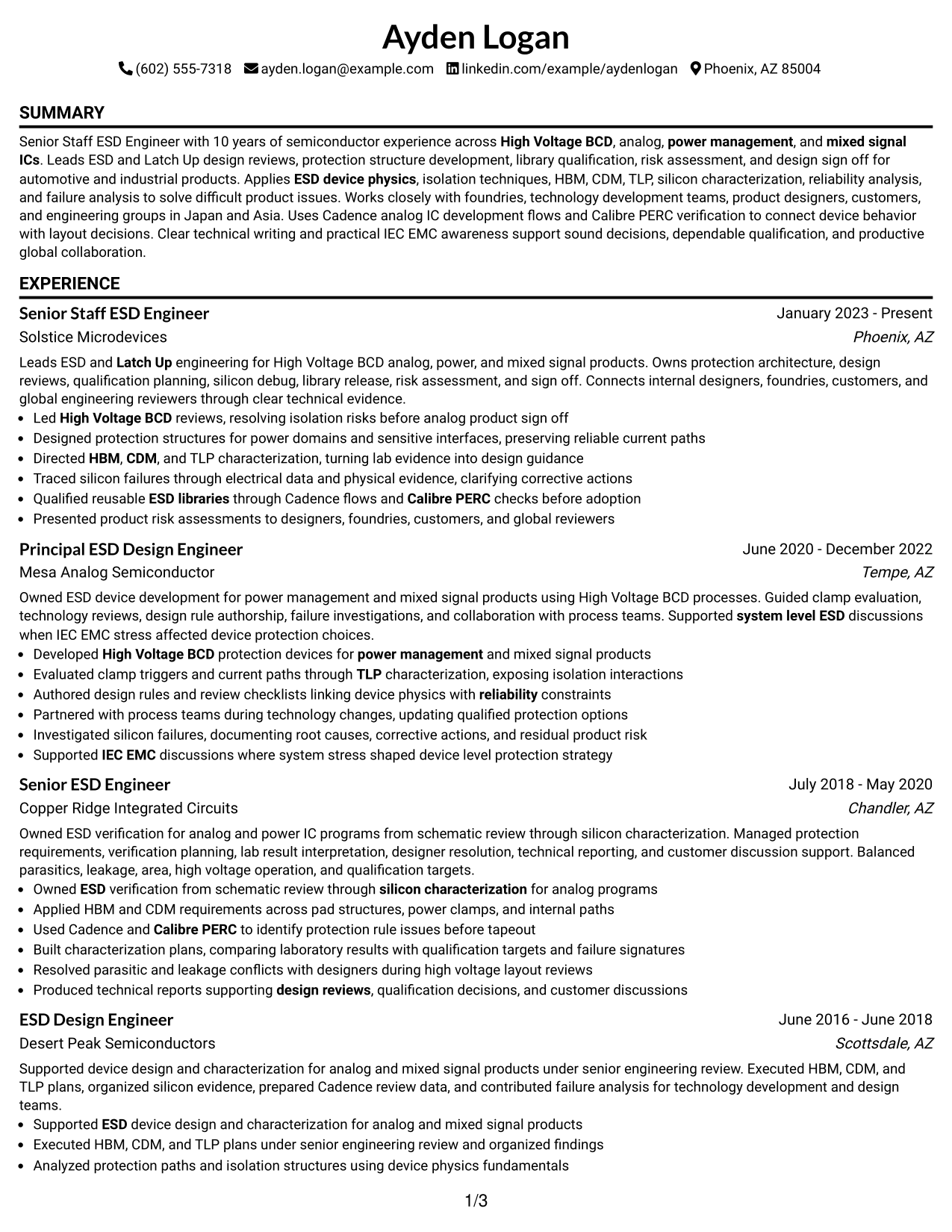
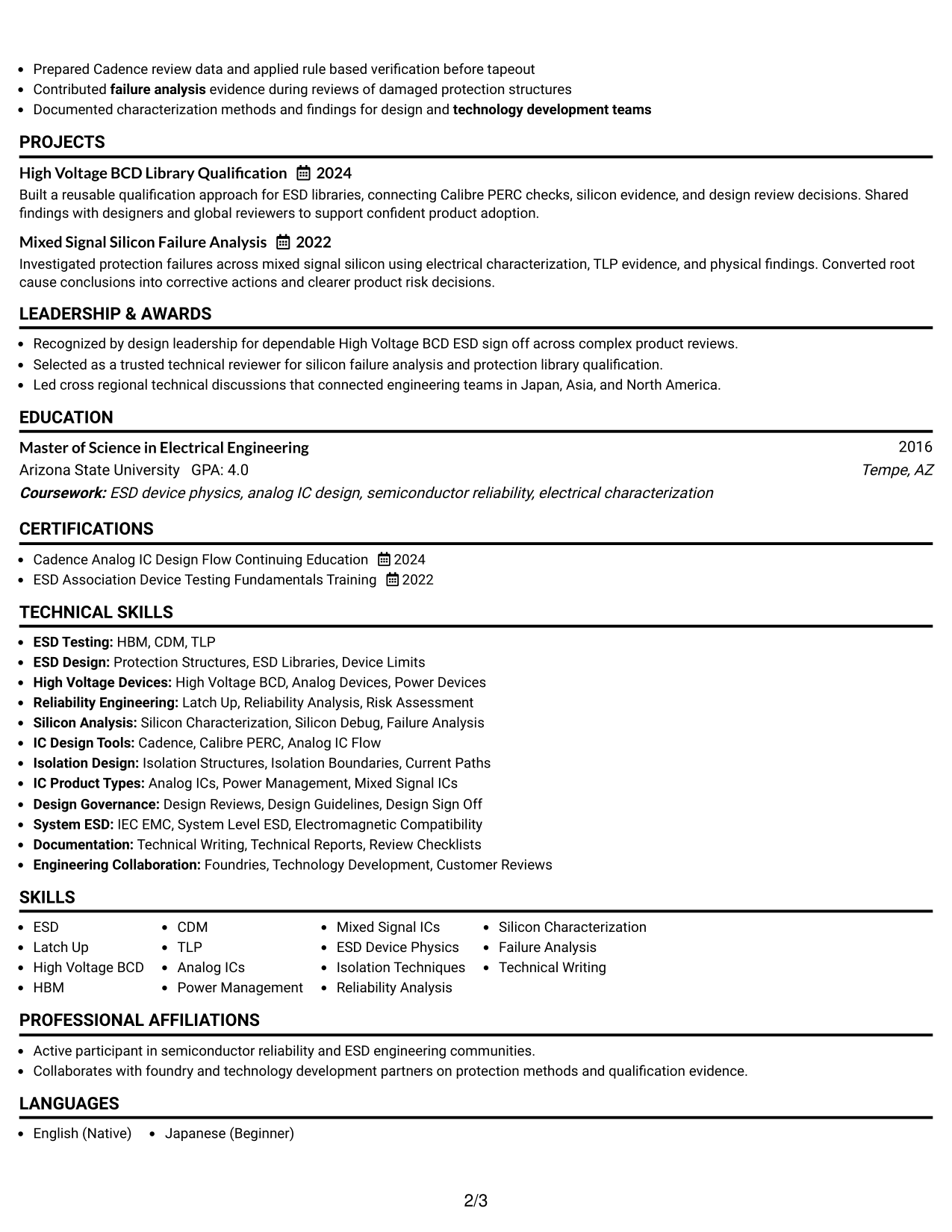
#1 Simple One Column Format Resume Example
A direct one-column reading order helps recruiters scan the resume from summary through experience, skills, education, and credentials.
Why This Format Works
- Linear reading keeps career progression easy to follow from top to bottom.
- Full-width sections give achievement bullets enough room for clear technical evidence.
- Consistent section order helps recruiters locate skills, education, and credentials quickly.
Best For
- Straightforward recruiter scanning
- Detailed experience sections
- Long achievement bullets
- Clear career progression
- Traditional U.S. applications
Resume Keywords
- Senior Staff ESD Engineer
- ESD
- Latch Up
- High Voltage BCD
- HBM
- CDM
- TLP
- ESD device physics
- silicon characterization
- failure analysis
- Cadence
- Calibre PERC
- ESD design sign off
- product risk assessment
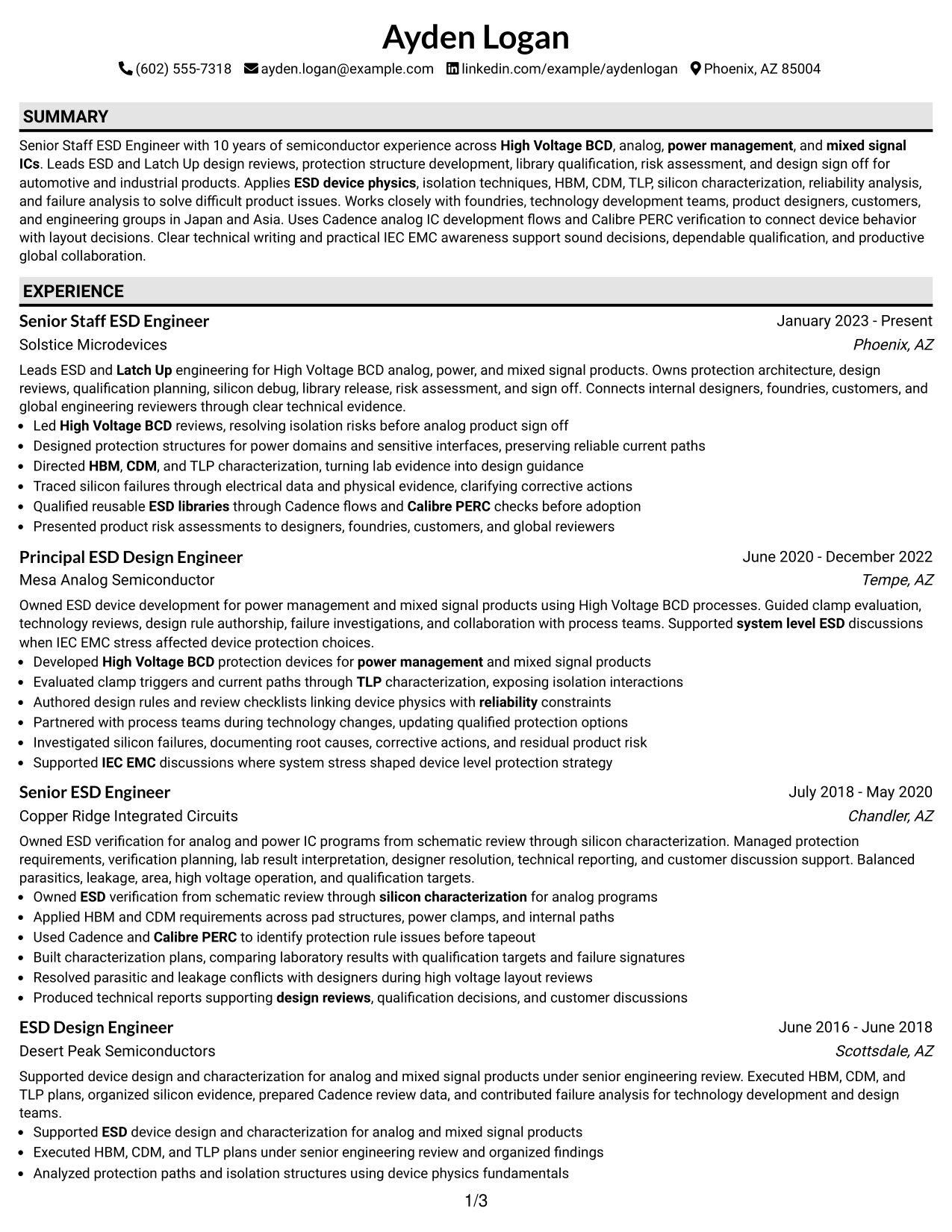
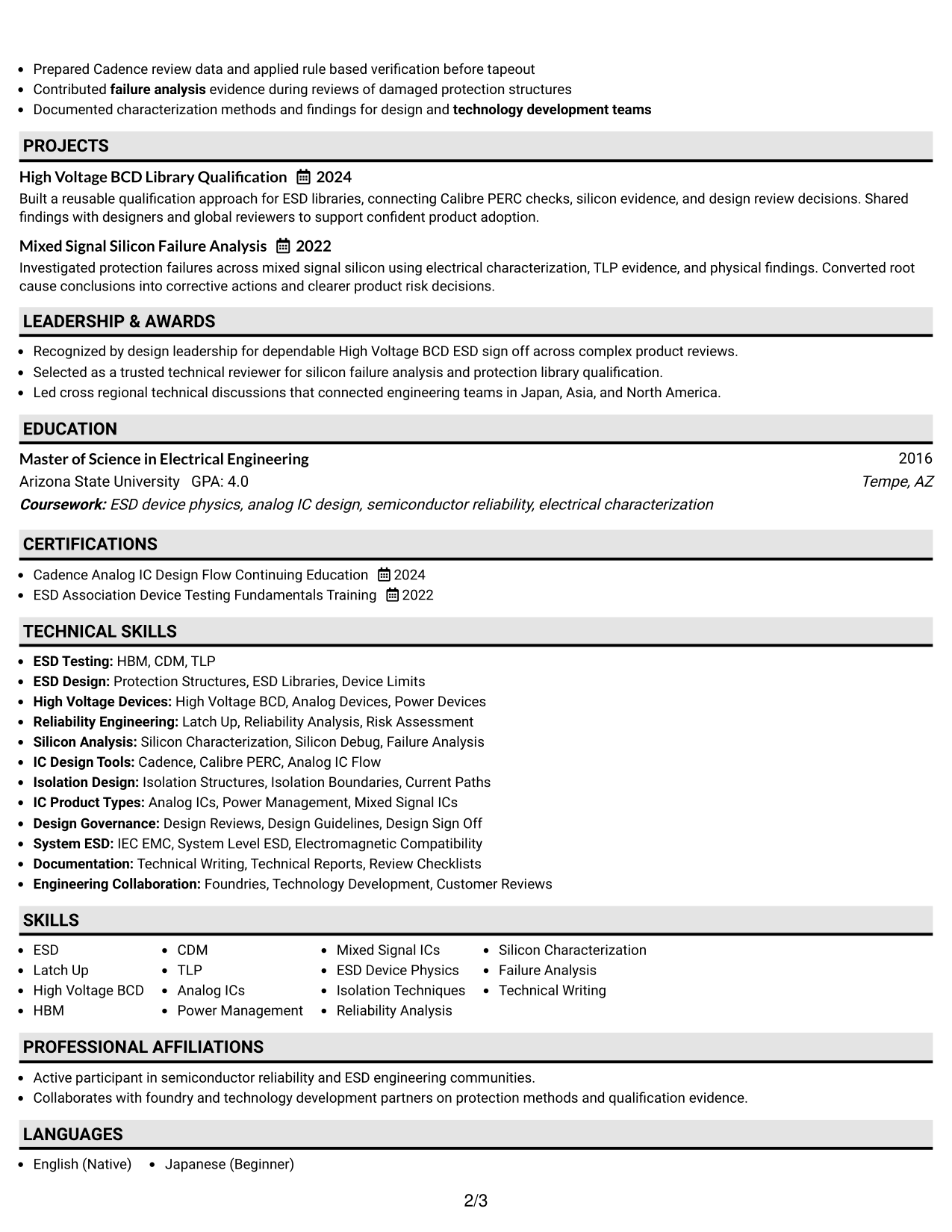
#2 Plain One Column with Shaded Labels Resume Example
Shaded section labels break the one-column flow into clear stops, helping recruiters find each resume section during a fast review.
Why This Format Works
- Shaded labels separate experience, skills, education, and credentials without changing reading order.
- One-column flow keeps detailed career history connected and easy to review.
- Visible section breaks help achievements stand apart from supporting qualifications.
Best For
- Section-heavy resumes
- Fast visual navigation
- Detailed technical histories
- Readers who prefer clear labels
- Conservative professional settings
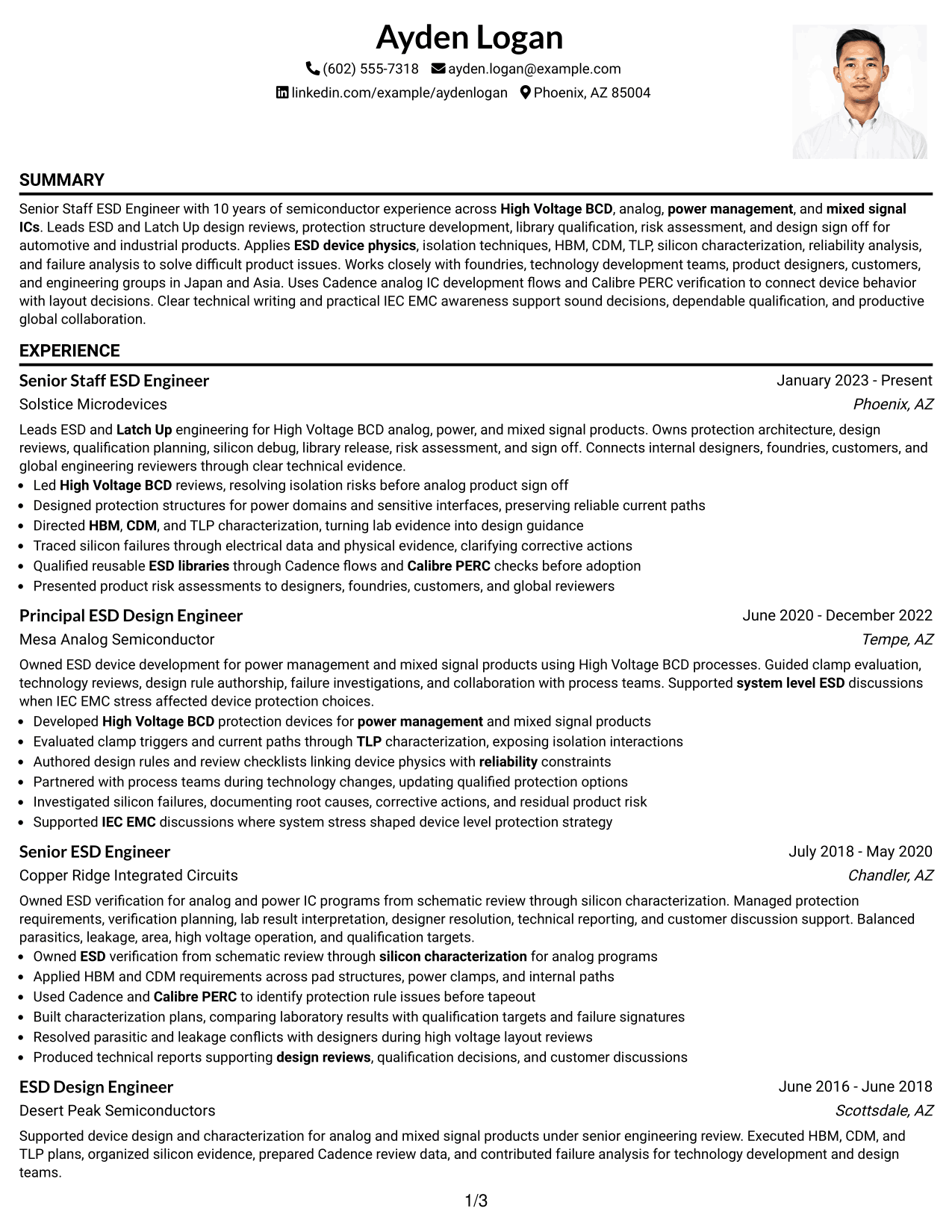
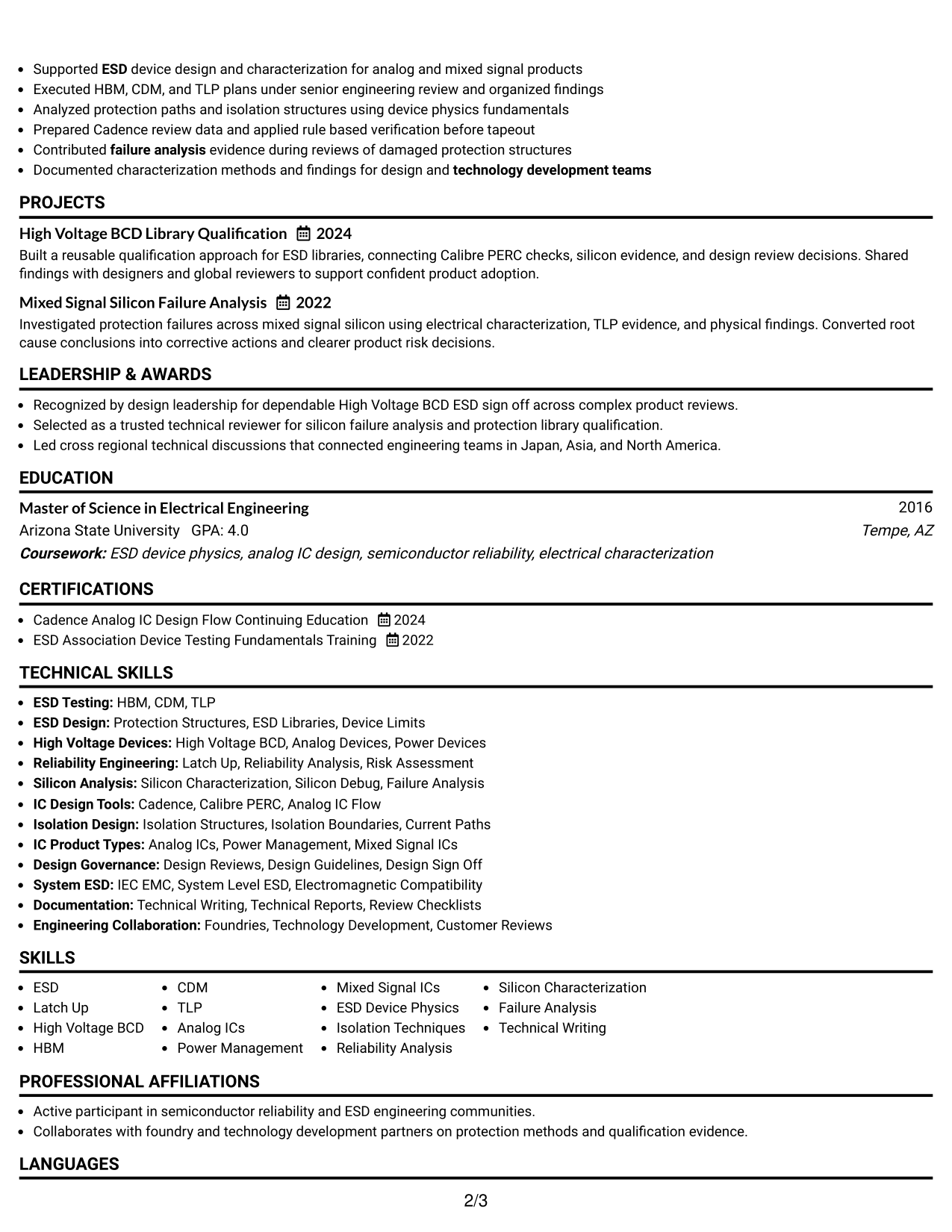
#3 One Column Format with Photo Right Resume Example
A right-side photo adds personal identification while the one-column body keeps the resume easy for recruiters to scan in order.
Why This Format Works
- One-column body preserves a simple path through experience and career progression.
- Photo placement stays separate from the main space used for achievements.
- Full-width body sections keep skills, education, and credentials easy to find.
Best For
- Markets where photos are customary
- International applications
- Personal identification in the header
- Sequential career histories
- Full-width experience content
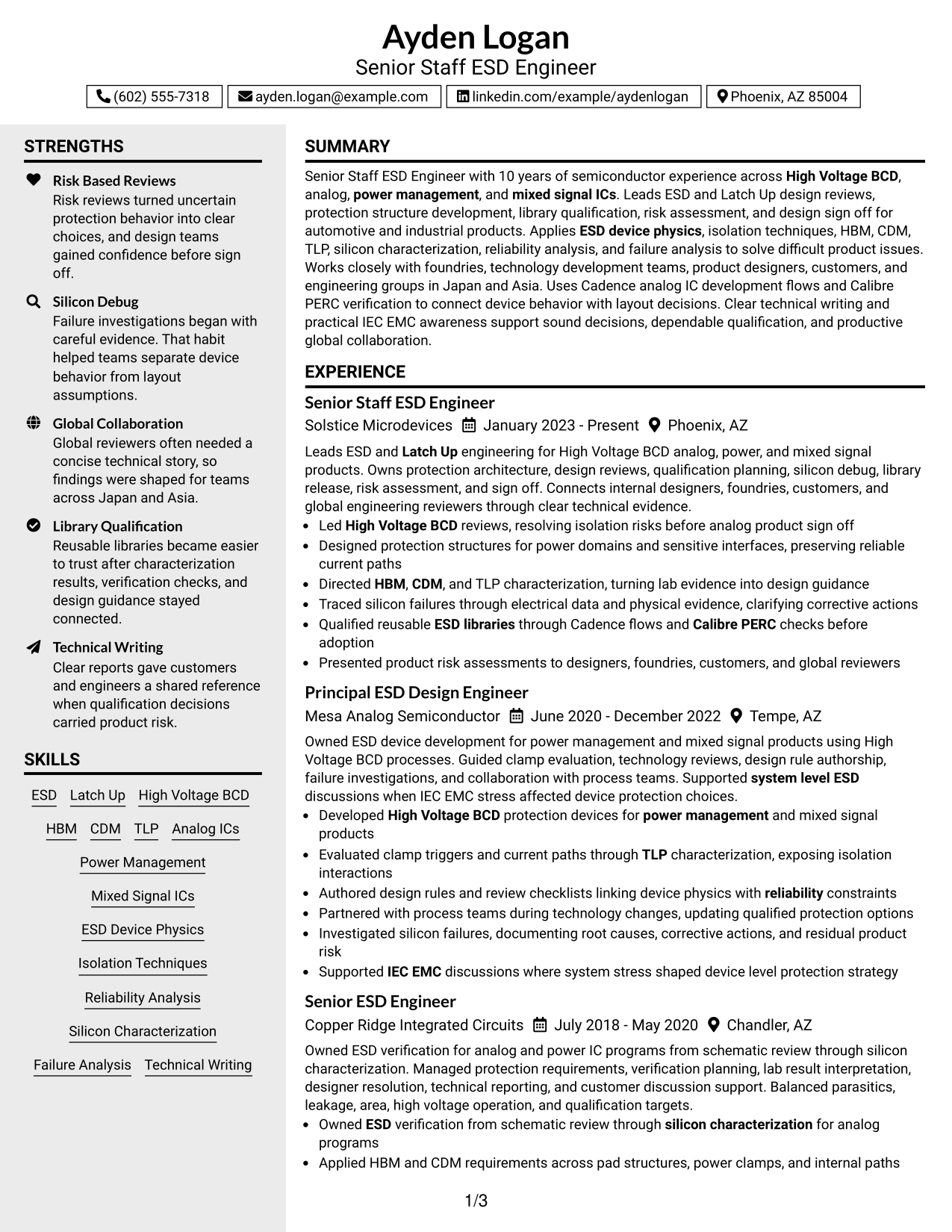
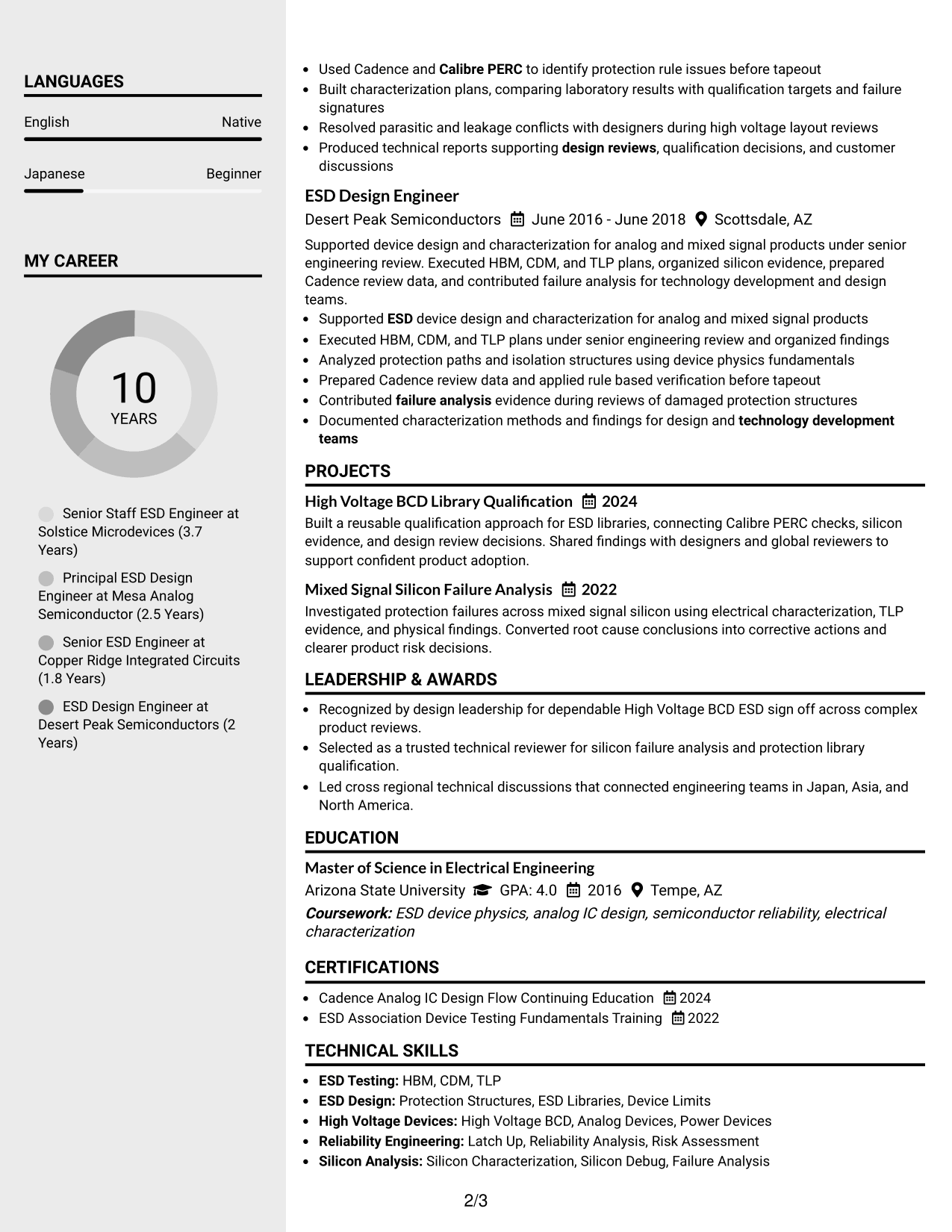
#4 Clean Two Column Sidebar Format Resume Example
A clean sidebar creates two reading zones, letting recruiters separate supporting details from the main career story.
Why This Format Works
- Two-column separation keeps career progression distinct from supporting skills and credentials.
- Sidebar structure gives compact qualifications a clear place beside detailed experience.
- Main-column space supports readable achievement bullets across several roles.
Best For
- Resumes with many supporting qualifications
- Compact skills and credentials
- Experience-led career stories
- Readers comparing sections quickly
- Balanced two-column organization
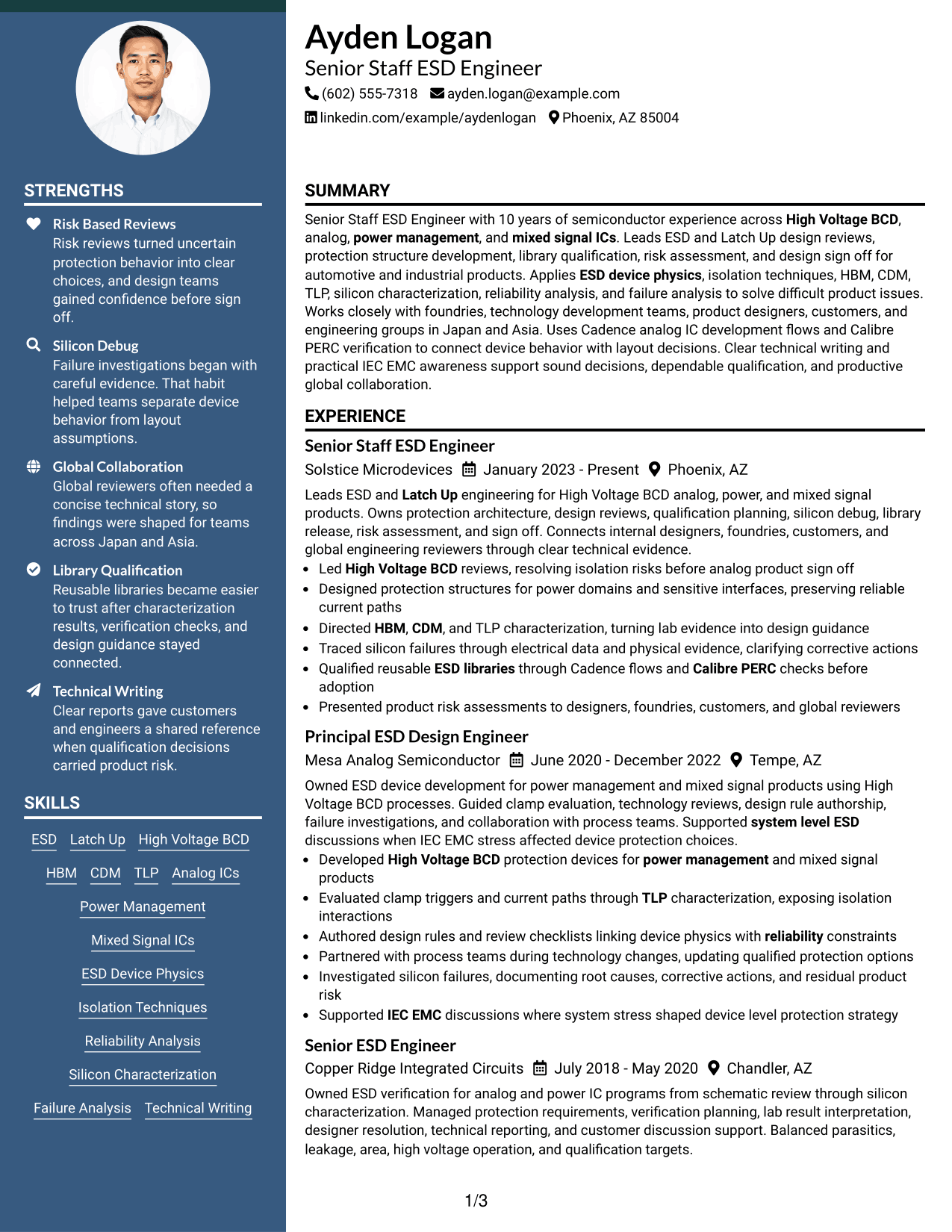
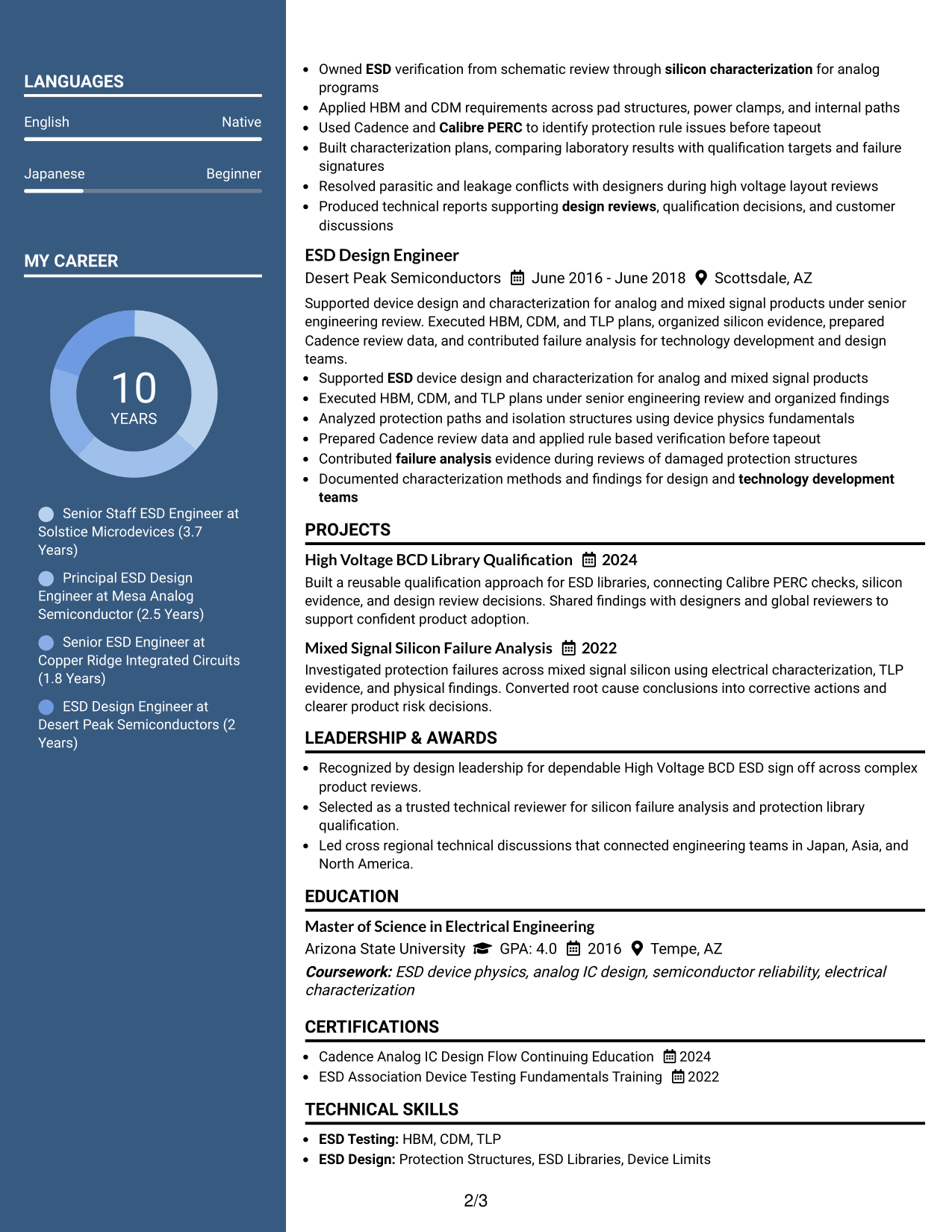
#5 Two Column Format Resume Example
Balanced parallel columns reduce long vertical runs and help recruiters compare major resume sections with fewer eye movements.
Why This Format Works
- Parallel columns divide experience and supporting information into distinct visual areas.
- Shorter vertical blocks make skills and credentials easier to revisit during review.
- Balanced section space helps achievements remain visible without crowding education details.
Best For
- Moderate information density
- Side-by-side section review
- Compact qualification summaries
- Mixed experience and credential content
- Modern professional applications
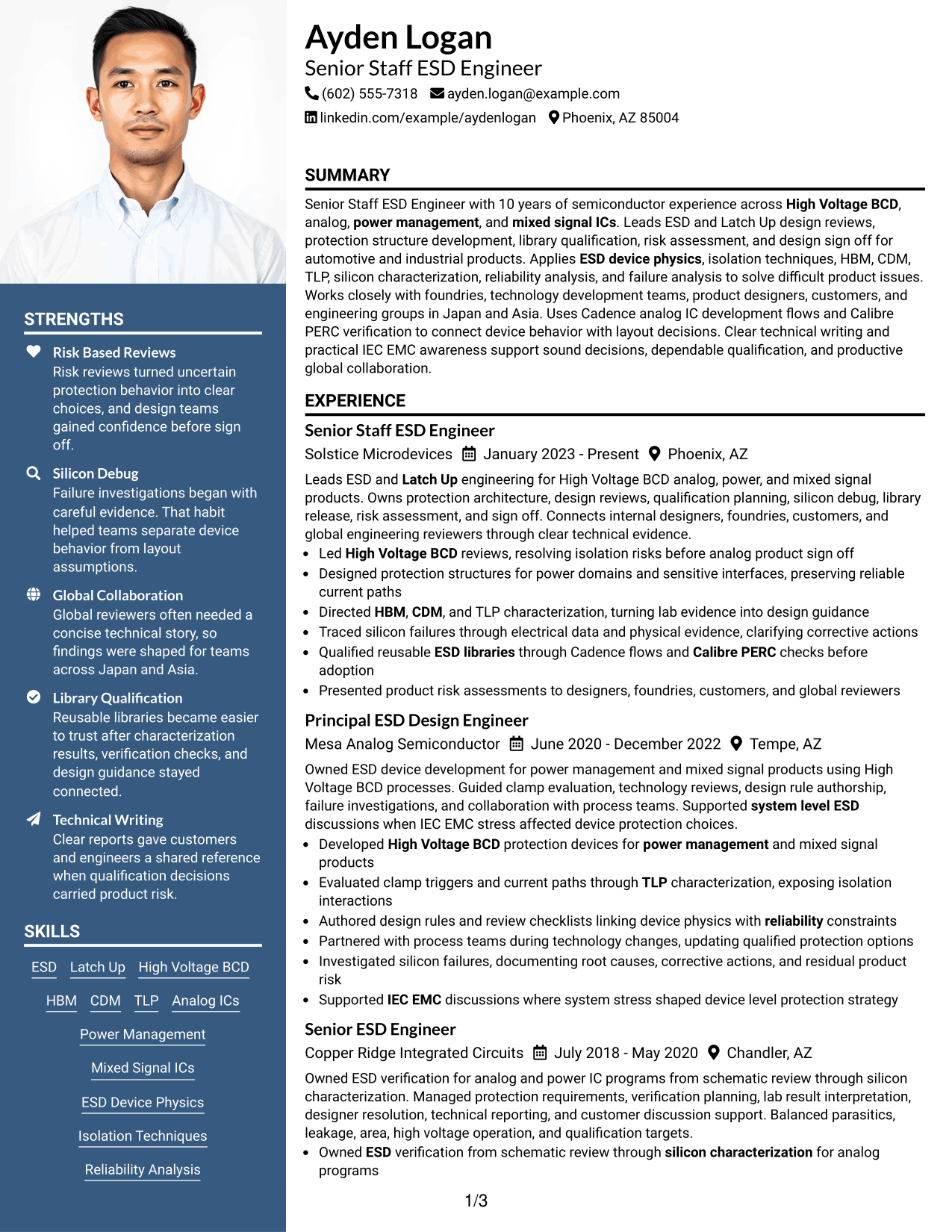
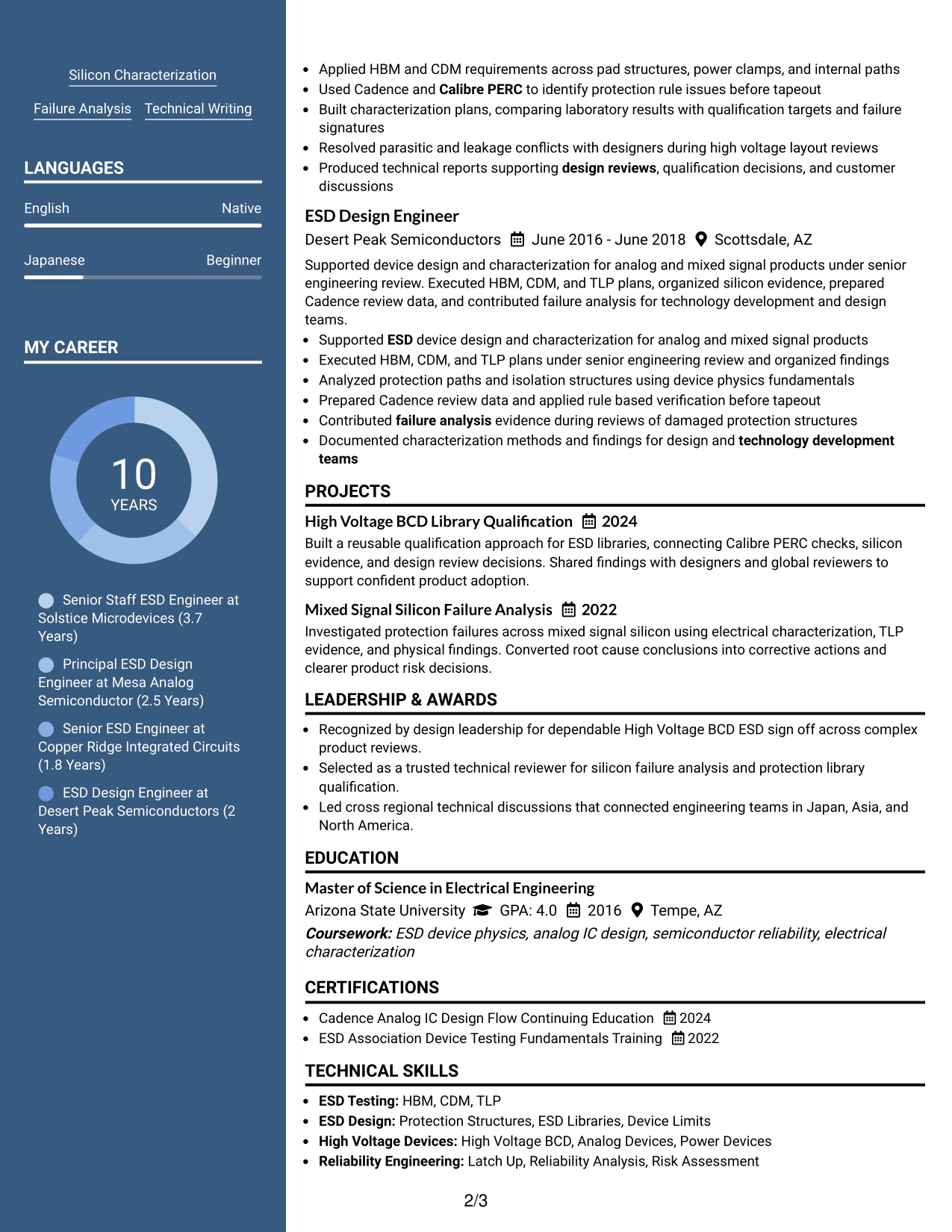
#6 Photo Header Two Column Format Resume Example
A photo header handles identity at the top while two body columns help recruiters move between experience and supporting qualifications.
Why This Format Works
- Photo header separates personal identification from the resume's detailed career content.
- Two-column body lets experience sit apart from skills, education, and credentials.
- Parallel section blocks support quick movement between achievements and supporting qualifications.
Best For
- Regions that expect resume photos
- International professional applications
- Compact supporting sections
- Two-track information scanning
- Career histories with varied credentials
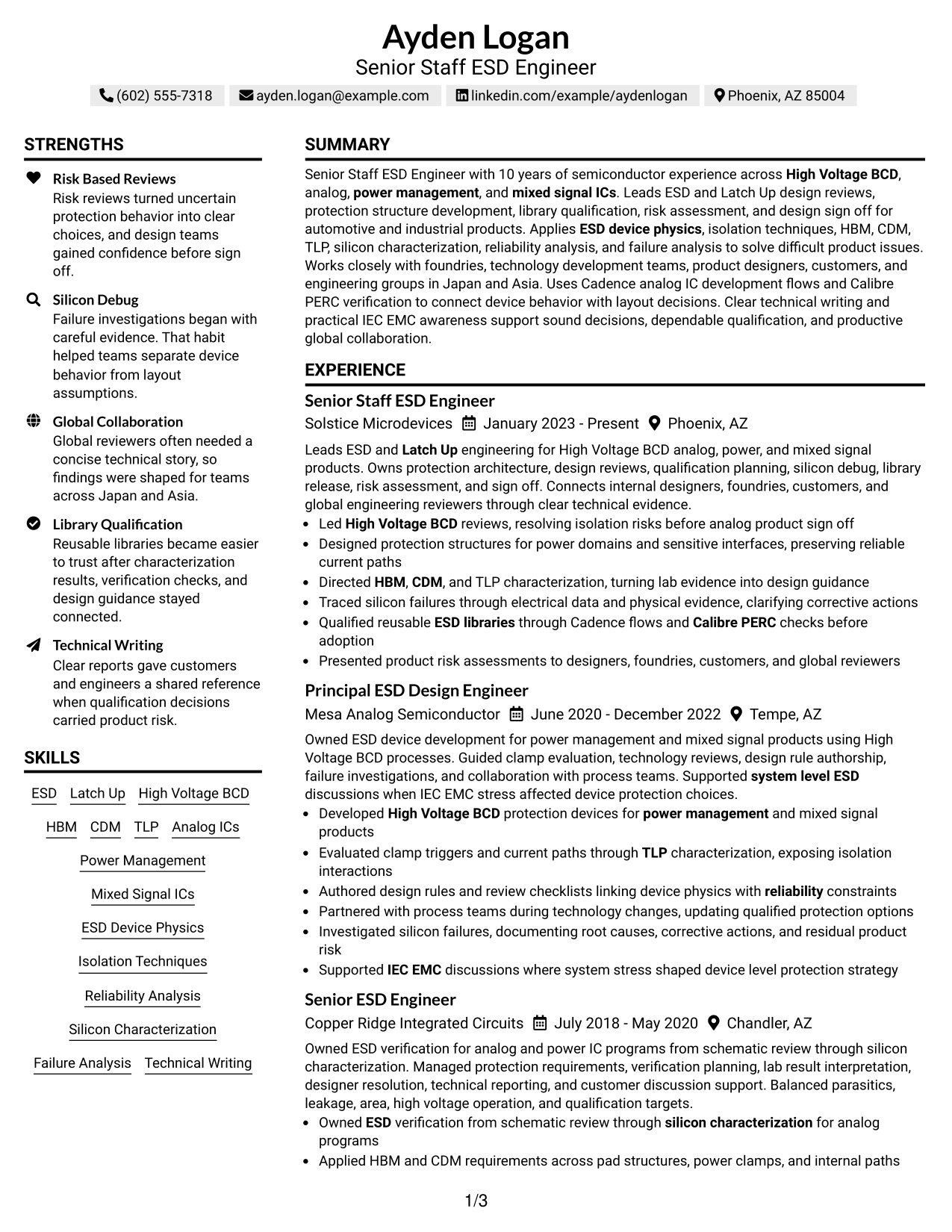
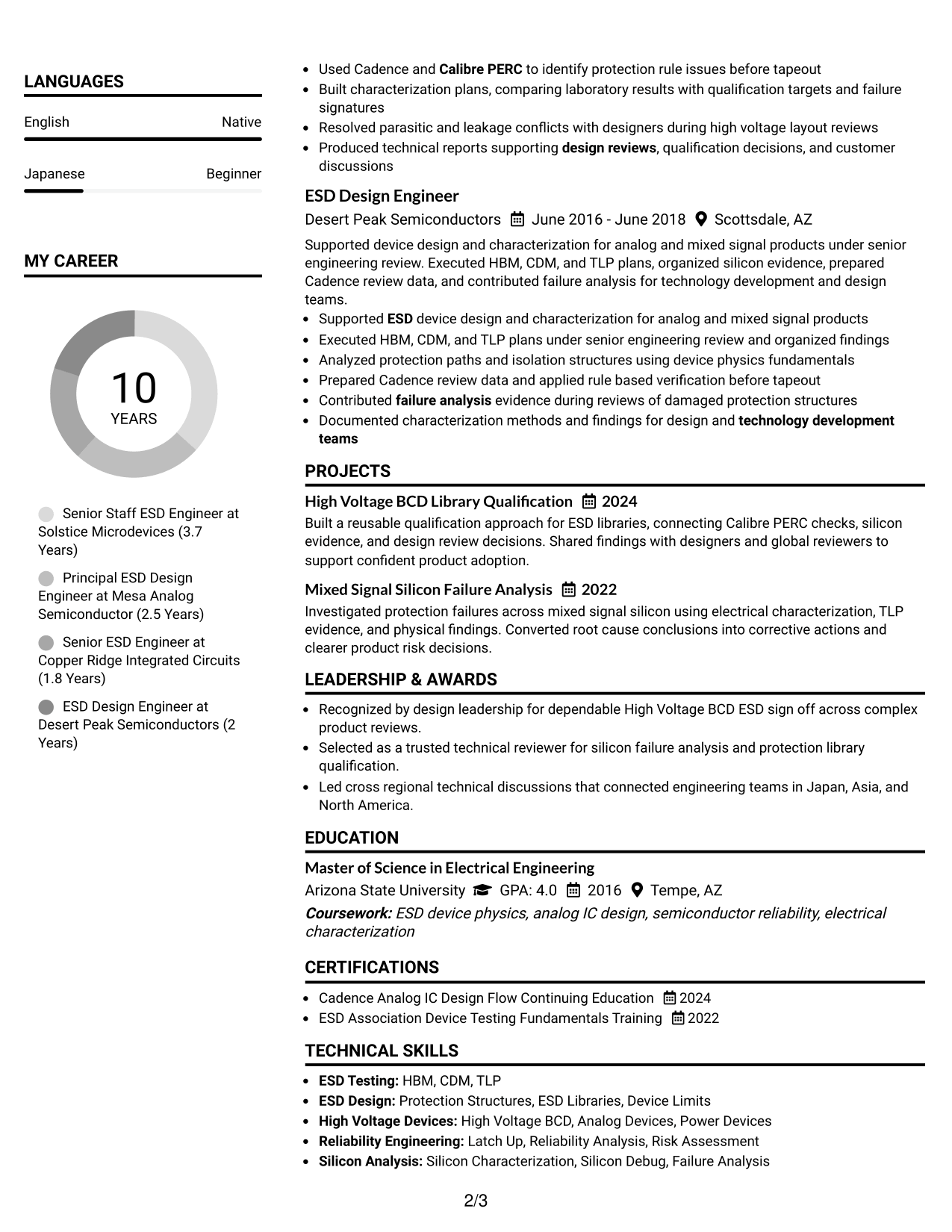
#7 Simple Two Column Format Resume Example
A simple two-column structure organizes dense resume content into compact sections that recruiters can scan without heavy visual decoration.
Why This Format Works
- Simple columns separate detailed experience from shorter skills and credential sections.
- Compact organization reduces long text runs while keeping career progression readable.
- Clear section boundaries help recruiters compare achievements with education and qualifications.
Best For
- Dense technical resumes
- Compact section organization
- Minimal visual styling
- Experienced professional histories
- Quick comparison of qualifications
See Also
- 33 Staff Cloud Engineer – Cloud Platforms Resume Templates with Example 2026 (ATS-Optimized)
- 33 Staff Platform Engineer Resume Templates with Example 2026 (ATS-Optimized)
- 33 Staff Product Engineer Resume Templates with Example 2026 (ATS-Optimized)
- 33 Staff Security Engineer – Red Team (AI) Resume Templates with Example 2026 (ATS-Optimized)
- 33 Staff/Senior Software Engineer (Python/PHP) Resume Templates with Example 2026 (ATS-Optimized)
- 7 Staff Software Engineer - Defensive Agent Resume Templates with Example
- 33 Staff Software Engineer Resume Templates with Example 2026 (ATS-Optimized)
- 33 Staff Structural Engineer Resume Templates with Example 2026 (ATS-Optimized)
- 30+ Staff Cloud Engineer – Cloud Platforms Cover Letter Templates with Example 2026
- 30+ Staff Platform Engineer Cover Letter Templates with Example 2026
Frequently Asked Questions
Are these Senior Staff ESD Engineer resume templates ATS-friendly?
They use clear section structure and readable headings that support ATS scanning. Keep your wording factual and include relevant terms from the job description only when they match your experience.
Are these different resumes?
No. The examples show the same Senior Staff ESD Engineer resume in different visual layouts, so you can compare structure without changing the candidate evidence.
What should a Senior Staff ESD Engineer resume include?
Include a focused summary, semiconductor ESD experience, design review and sign-off work, protection-device development, HBM, CDM, and TLP characterization, silicon debug, reliability work, failure analysis, tools, education, and relevant training.
How should I show ESD leadership on the resume?
Use experience bullets that show what you led, what technical risk you addressed, and what decision or guidance followed. Separate leadership evidence from a simple list of technical skills.
Should I include Cadence and Calibre PERC?
Yes, when you have used them. Place them in the skills or tools area and reinforce them in experience bullets that show how they supported review, verification, or qualification work.
How can I present HBM, CDM, and TLP work clearly?
Connect each test method to the work you performed, such as characterization, device limits, silicon debug, or design guidance. This gives the terms context instead of leaving them as isolated keywords.
Should I include a photo on my resume?
For U.S. applications, a no-photo resume is generally the safer choice. A photo may be appropriate in some countries or contexts, so follow local practice when applying outside the United States.
Can I customize these resume templates?
Yes. You can adjust the text, section order, visual style, and PDF output while keeping the resume focused on the Senior Staff ESD Engineer role.