
7 Social Media Manager - Audience Engagement Resume Templates with Example
This practical guide shows you how to build a Social Media Manager - Audience Engagement resume that makes your work clear and easy to review. You will learn how to organize relevant experience, skills, and results for this exact role.
Strong resumes connect content planning and publishing with audience response. Show how you shape platform-specific copy and multimedia, coordinate calendars and reviews, monitor trends, and use analytics or audience questions to guide future posts.
The guide presents one Social Media Manager - Audience Engagement resume example in 7 layouts. Compare the image previews, then open an example in the editor to review its structure and customize the content.
What Makes a Great Social Media Manager - Audience Engagement Resume in 2026
A strong resume connects social content work to audience needs and clear results. Use concise sections and achievement bullets to show planning, publishing, coordination, and improvements guided by audience response.
Include role-focused terms such as editorial calendars, platform-native writing, multimedia content, trend monitoring, audience engagement, and performance analytics. Name tools such as Sprout Social or Adobe Creative Cloud only when they reflect your own experience.
The examples shown below are intentionally detailed to demonstrate a range of experiences, skills, accomplishments and relevant keywords. We prefer detailed resumes as they provide more context to the hiring managers and also help the ATS systems identify relevant qualifications and score your resume better for a match. But the length of a resume is an individual choice. If you want a one page resume, just keep the most relevant experience and information for the job. Note: Resume examples are for educational purposes only. Use only information that accurately reflects your experience and qualifications. References to real organizations do not imply affiliation or endorsement.
#1 Plain Two Column Format Resume Example
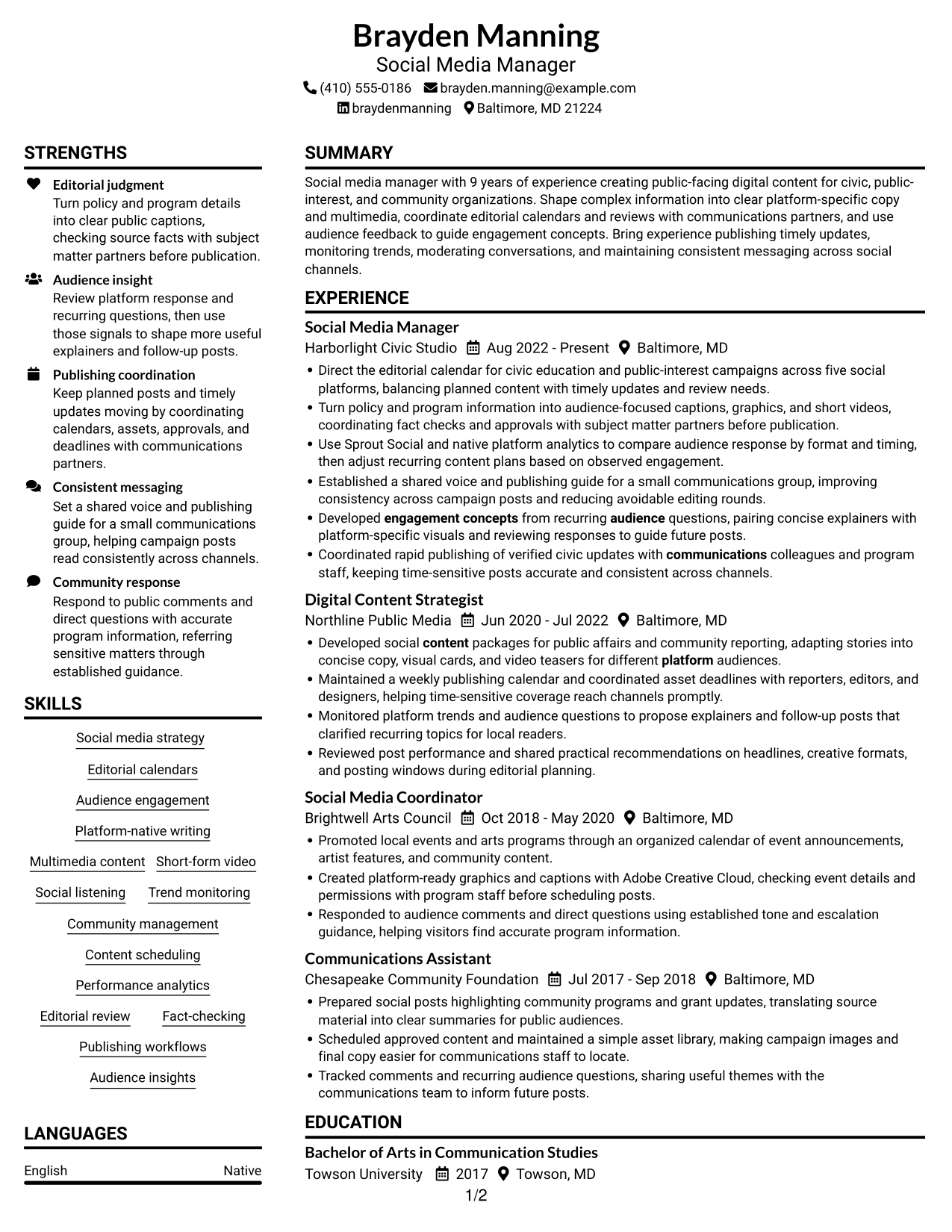
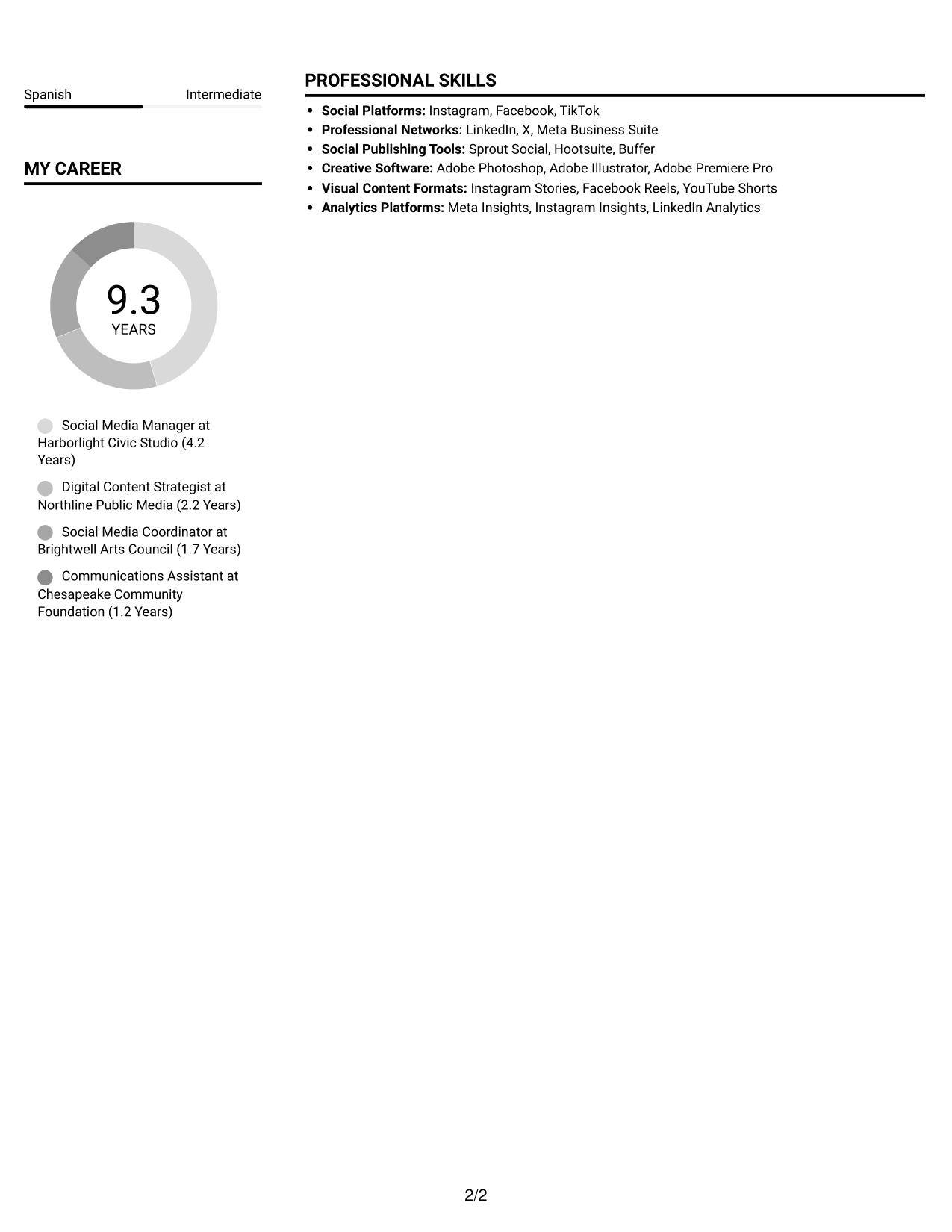
The Plain Two Column Format separates resume content into two body areas, giving reviewers a clear way to scan career history and supporting sections.
Resume Snapshot
- 9 years of experience in social media and digital communications
- Content published across five social platforms
- Bachelor of Arts in Communication Studies, Towson University
- Experience spanning civic, public-interest, and community organizations
Why This Format Works
- Career history and supporting sections occupy distinct areas, helping reviewers locate key details quickly.
- Education and skills stay visible as separate review points alongside career history.
- Two body areas offer an alternative to scanning one long vertical sequence.
Best For
- Detailed career histories
- Resumes with several content sections
- Side-by-side information review
- Text-only resume submissions
- Quick access to education and skills
Resume Keywords
- Turn policy and program information into audience-focused captions, graphics, and short videos, coordinating fact checks and approvals with subject matter partners before publication.
- Developed social content packages for public affairs and community reporting, adapting stories into concise copy, visual cards, and video teasers for different platform audiences.
- Developed engagement concepts from recurring audience questions, pairing concise explainers with platform-specific visuals and reviewing responses to guide future posts.
- Coordinated rapid publishing of verified civic updates with communications colleagues and program staff, keeping time-sensitive posts accurate and consistent across channels.
- Established a shared voice and publishing guide for a small communications group, improving consistency across campaign posts and reducing avoidable editing rounds.
#2 Simple One Column Format Resume Example
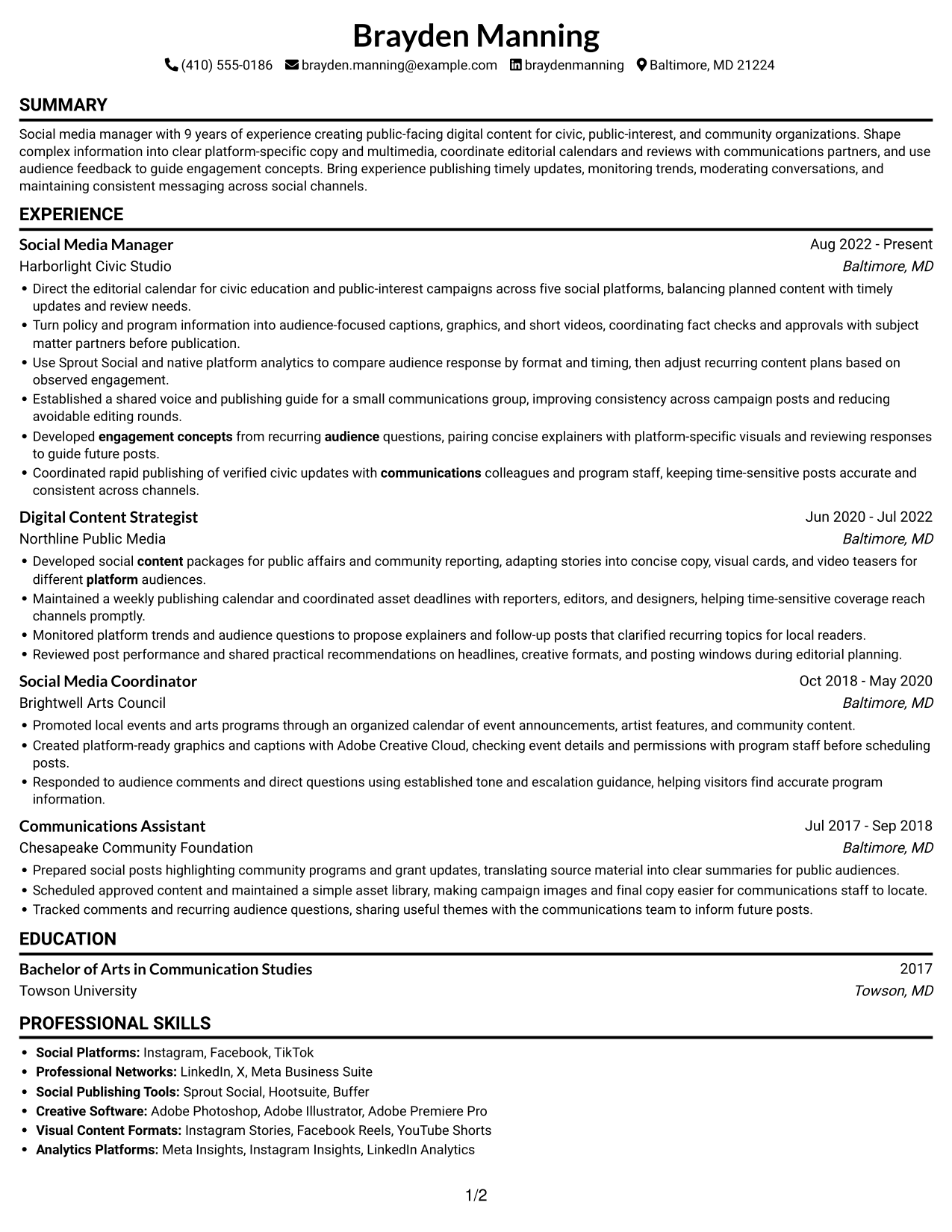
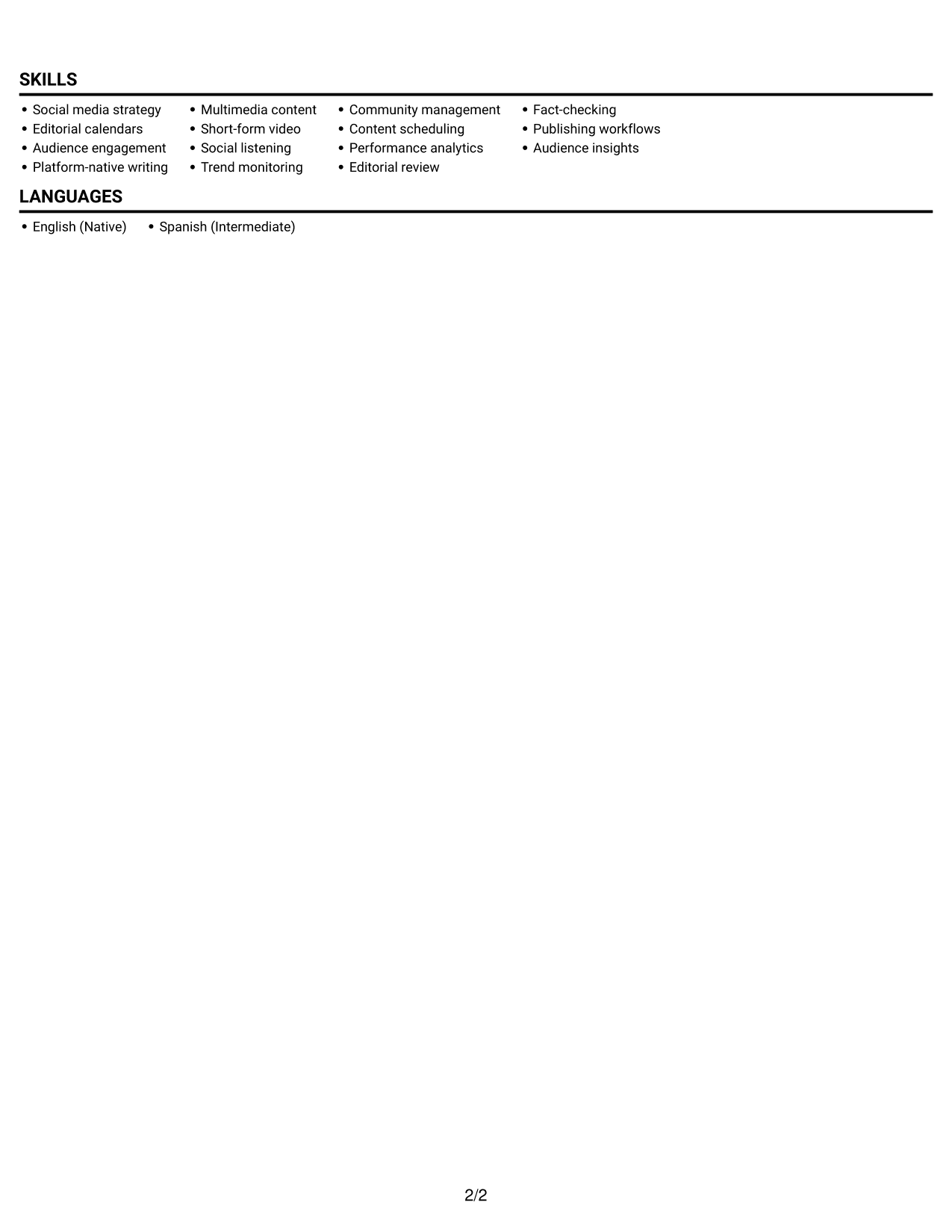
The Simple One Column Format keeps the resume body in a single vertical path, so reviewers can follow its sections in sequence.
Why This Format Works
- One vertical reading path keeps role chronology straightforward for reviewers.
- Experience bullets can retain their context without sharing space with another body column.
- Education and skills follow the same sequence as work history for a direct review.
Best For
- Chronological role reviews
- Continuous top-to-bottom scanning
- Experience bullets needing full context
- Resumes without a side-by-side body layout
- Skills and education in one reading path
#3 Clean Two Column Sidebar Format Resume Example
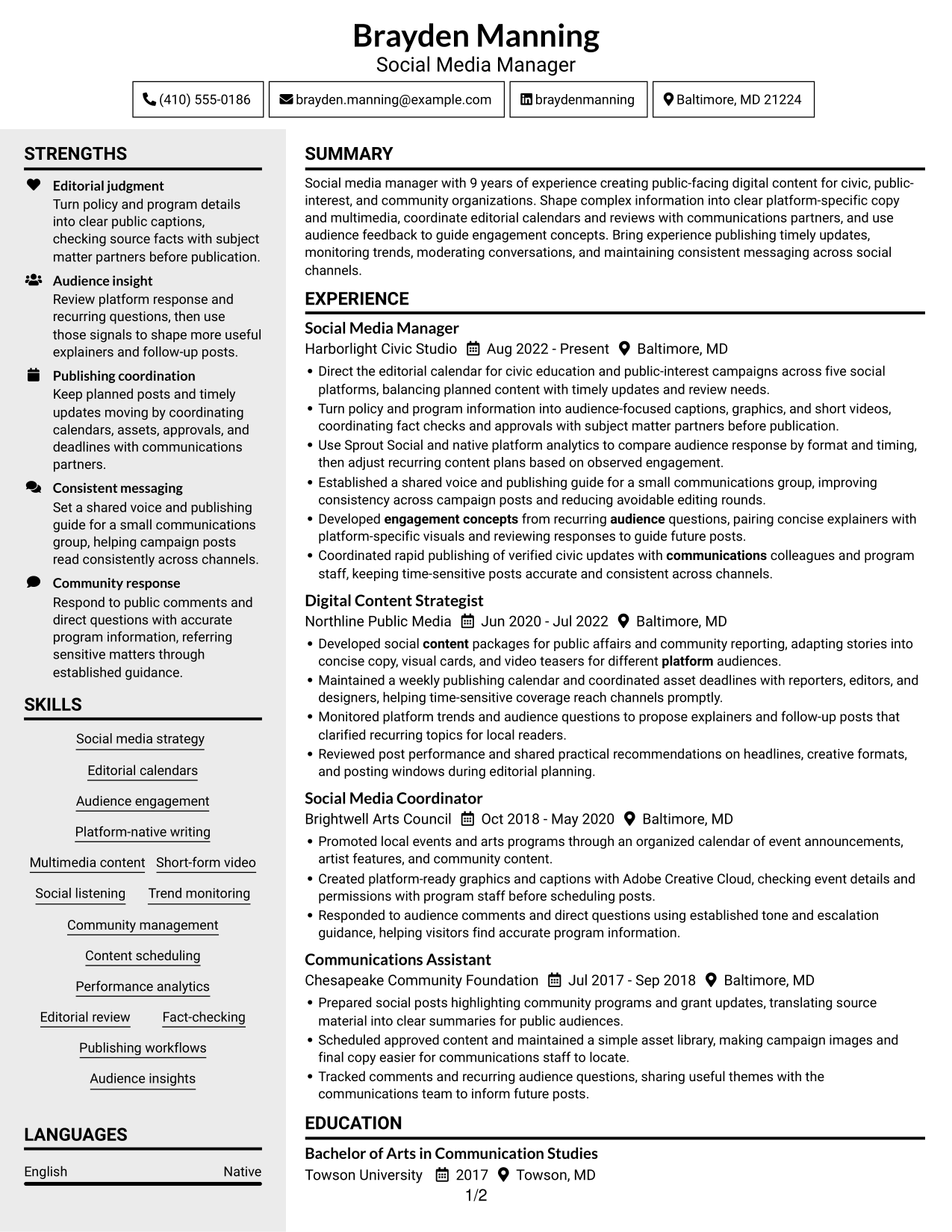
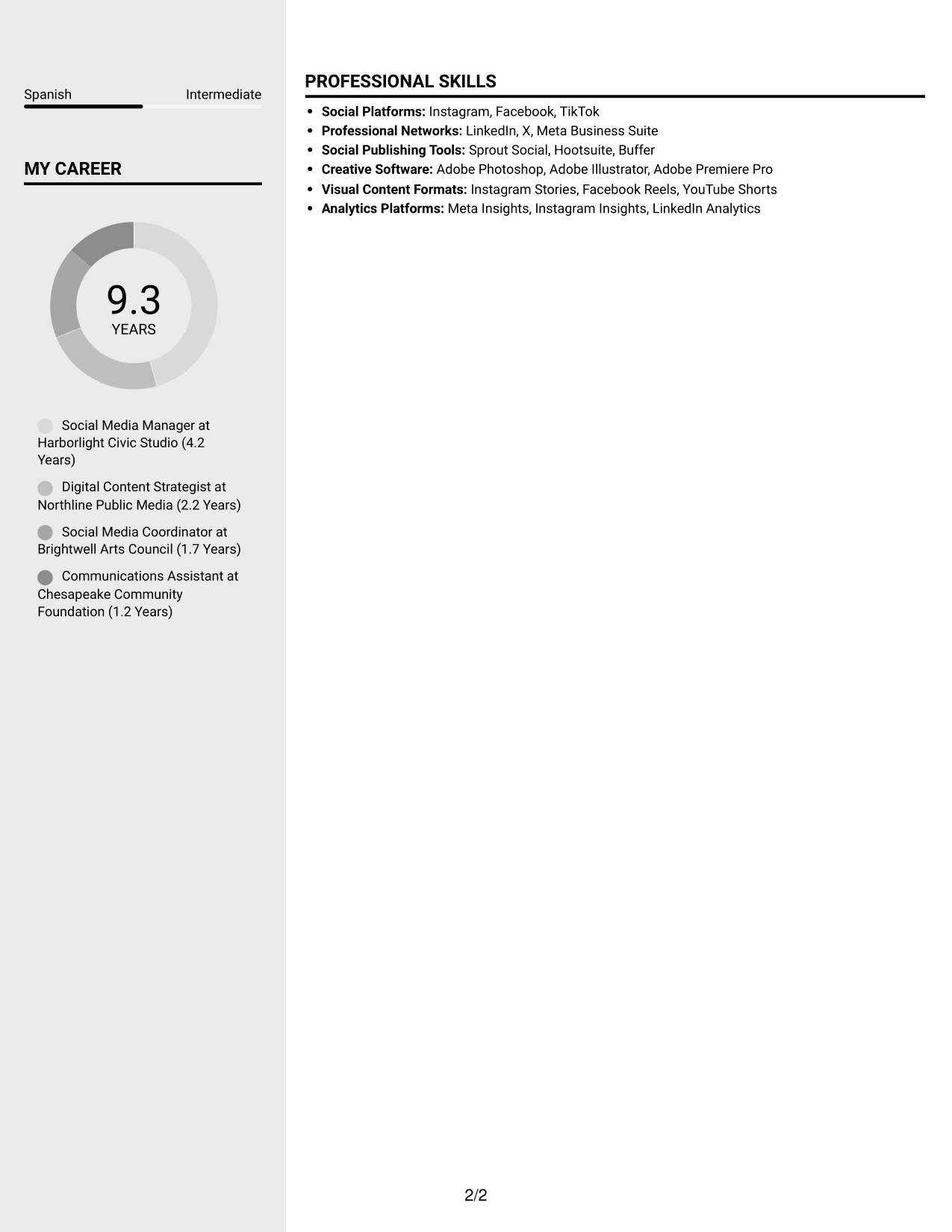
The Clean Two Column Sidebar Format uses two body columns to give resume information separate areas for a clearer review.
Why This Format Works
- Two columns give work history and supporting sections distinct reading areas.
- Reviewers can check skills and education without moving through every role entry.
- Separate areas make a detailed career history easier to scan in sections.
Best For
- Career histories with several roles
- Resume sections reviewed at different times
- Parallel review of experience and qualifications
- Quick reference to skills and education
- Documents with varied detail across sections
#4 Two Column Format Resume Example
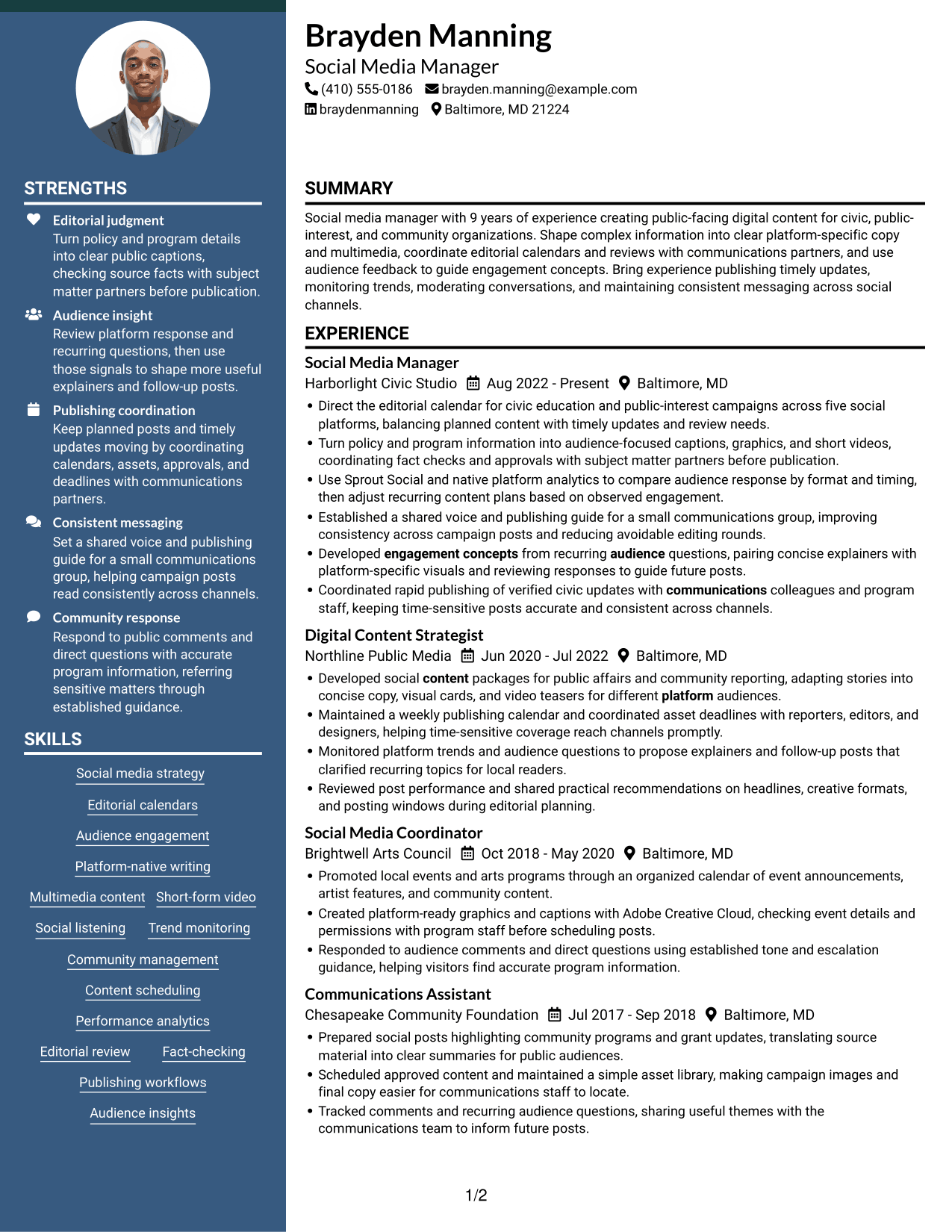
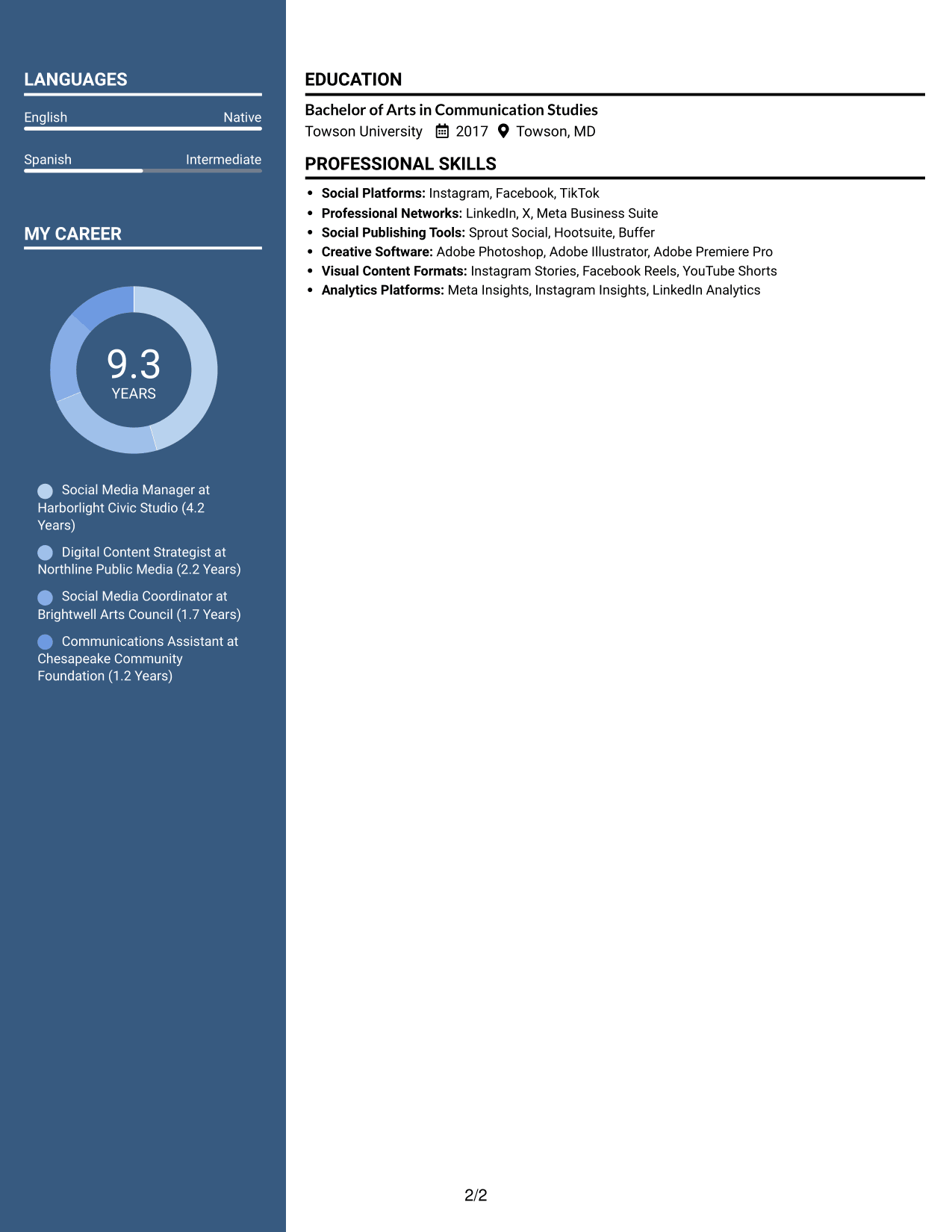
The Two Column Format places resume content in two body areas, allowing reviewers to move between career history and supporting information.
Why This Format Works
- Career progression and supporting qualifications can be viewed in parallel body areas.
- Section separation helps reviewers find education without interrupting work-history review.
- Two columns keep the resume from becoming one uninterrupted vertical block.
Best For
- Career progression with supporting details
- Resumes with multiple review sections
- Parallel reading of work history and qualifications
- Compact section navigation
- Education and skills reviewed alongside experience
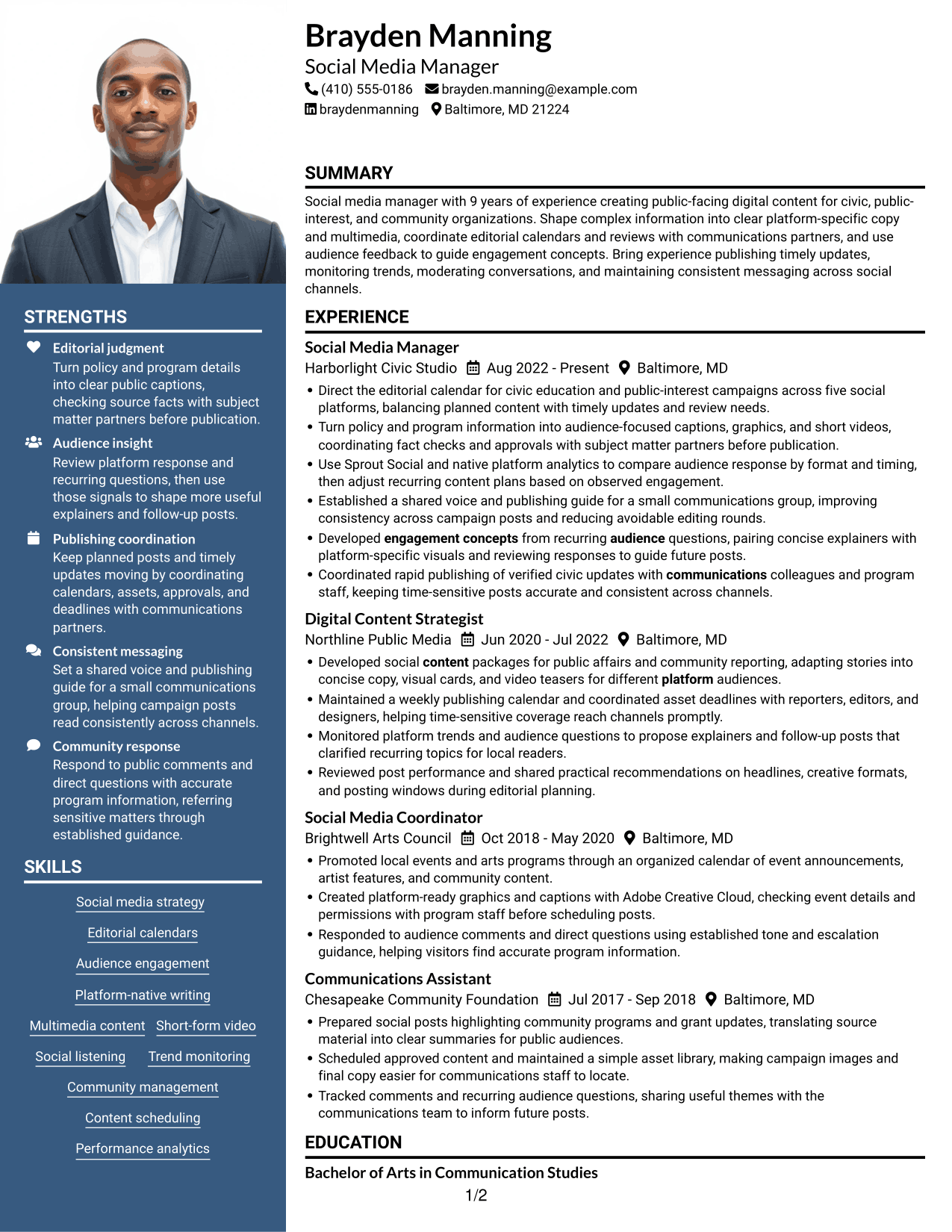
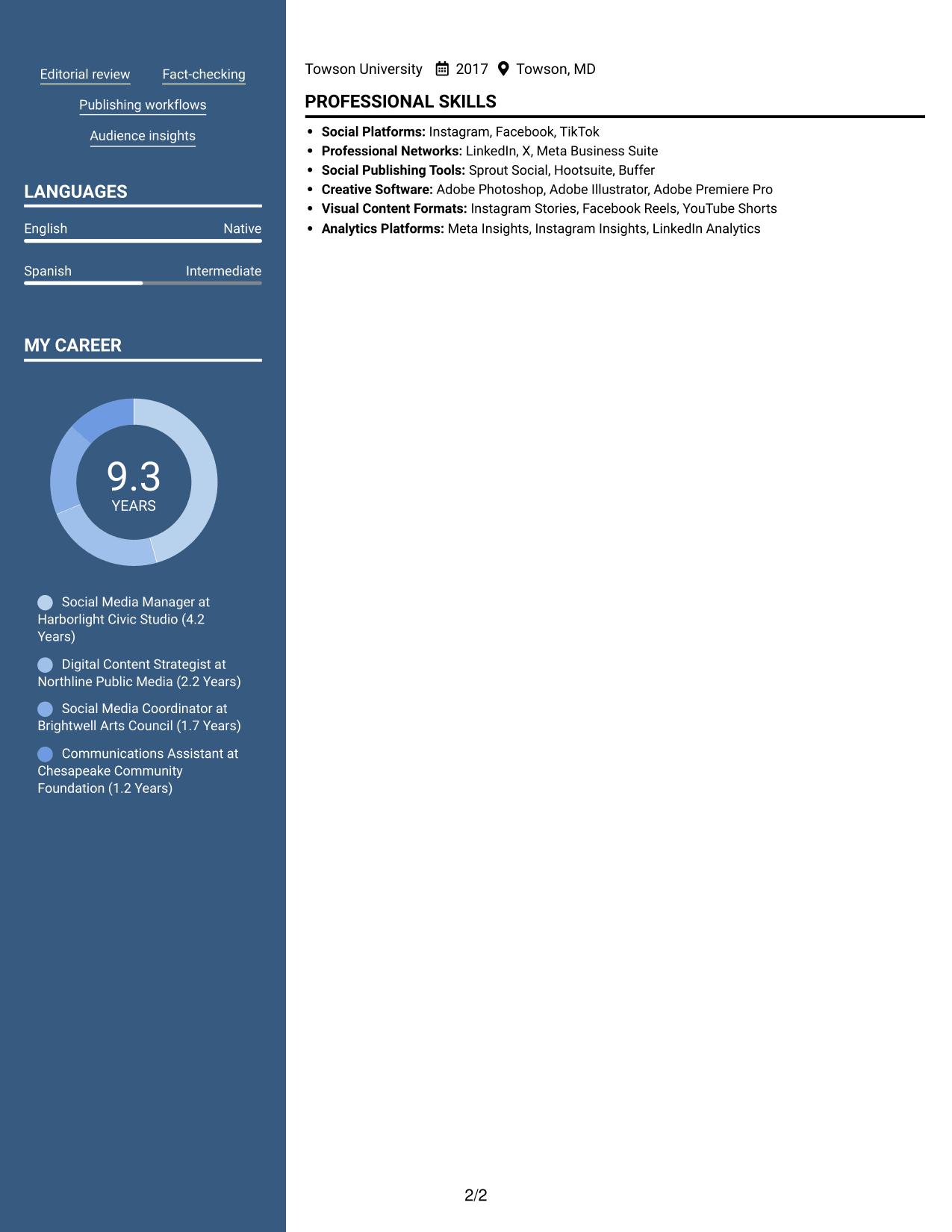
#5 Photo Header Two Column Format Resume Example
The Photo Header Two Column Format includes a portrait with a two-column resume body, combining a visible personal image with separated content areas.
Why This Format Works
- Two body columns keep work history and supporting details in separate reading areas.
- Reviewers can locate education without tracing every role entry.
- The portrait provides a visible personal image while leaving the resume body organized in two columns.
Best For
- Resume submissions where a portrait is preferred
- Experience paired with supporting sections
- Quick location of education details
- Two-column reading preferences
- Resumes with distinct review needs
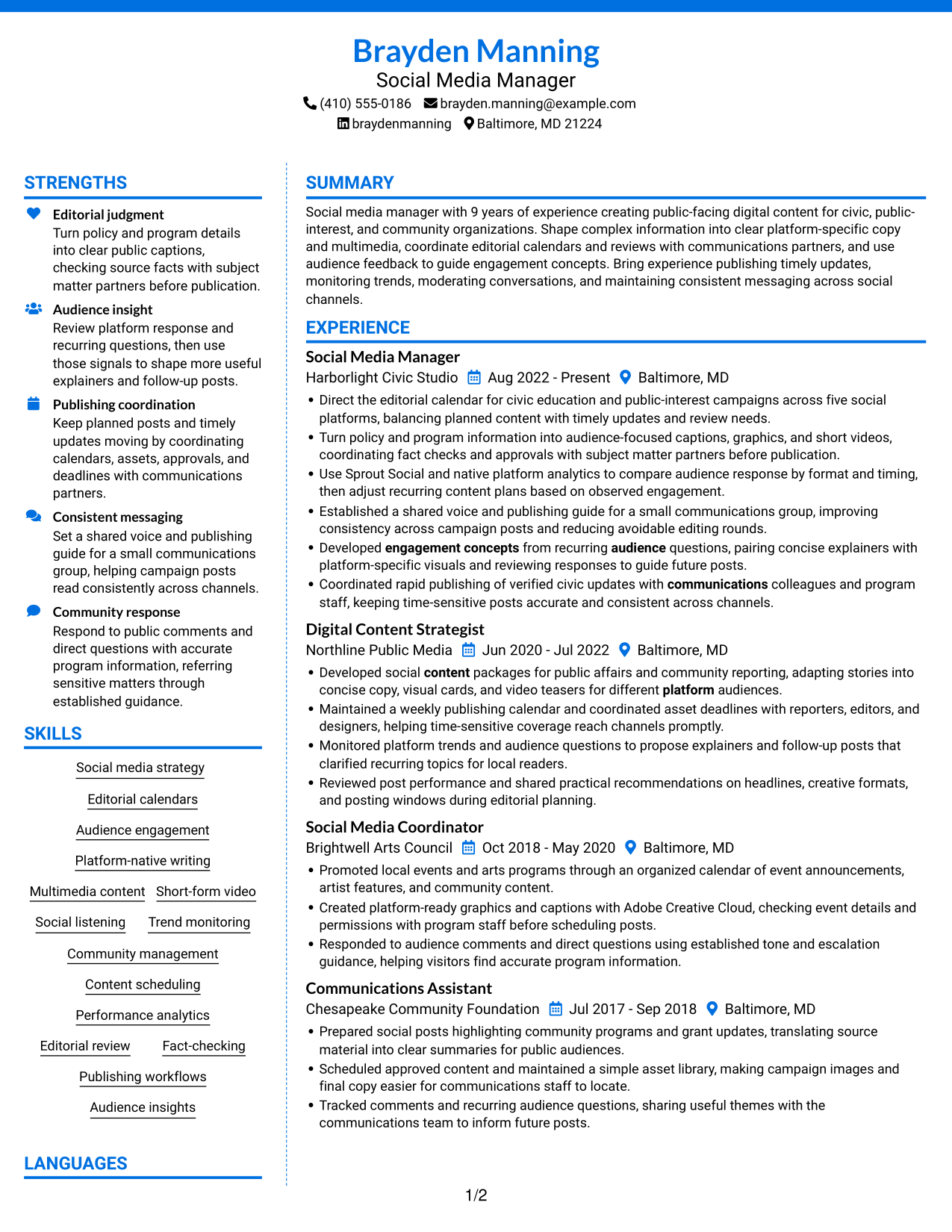
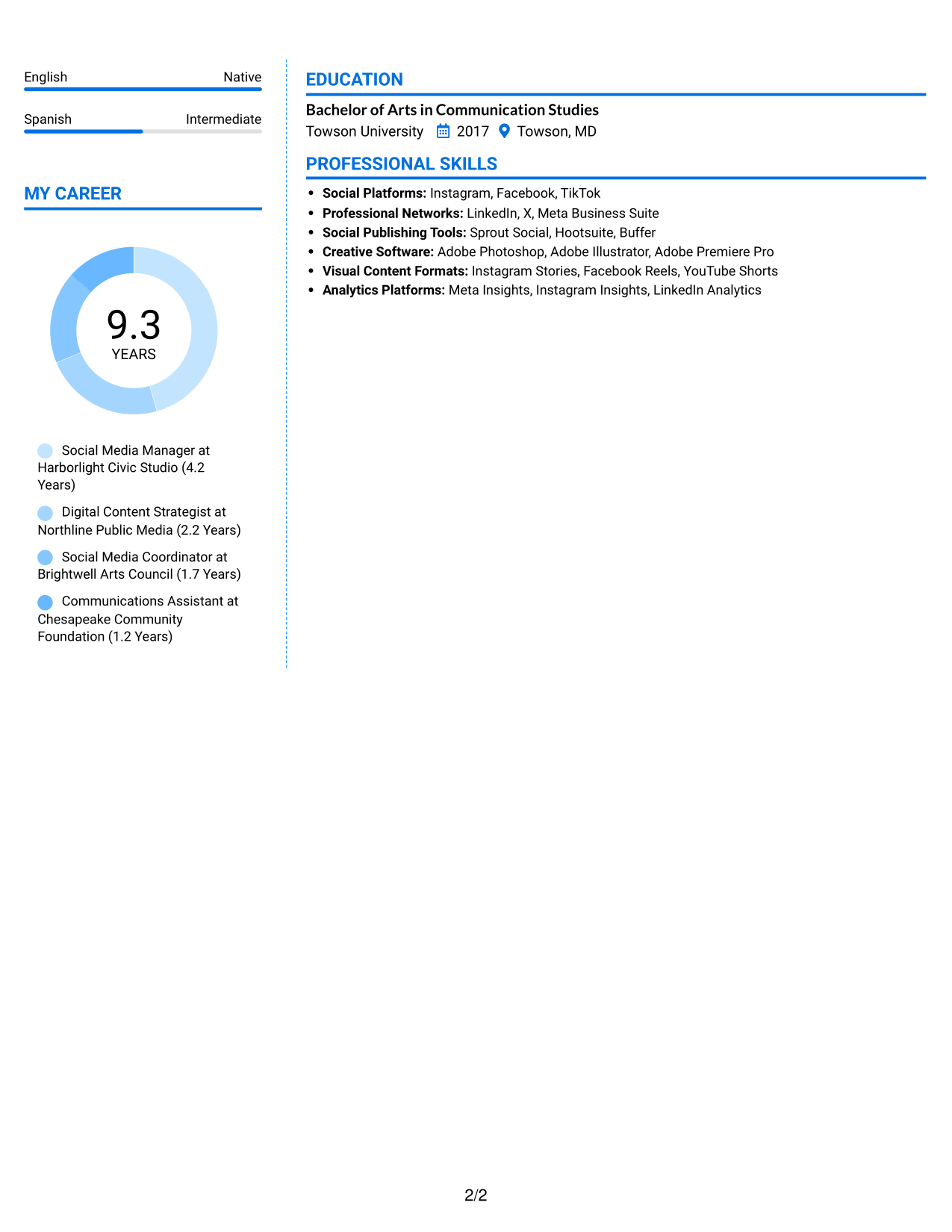
#6 Colored Two Column Format Resume Example
The Colored Two Column Format organizes the resume body into two areas, helping reviewers move between experience and supporting information.
Why This Format Works
- Two columns distinguish work history from supporting resume information for a direct review.
- Skills and education can be found without reading every experience bullet.
- Separate content areas help reviewers scan career progression and qualifications at different speeds.
Best For
- Work history with supporting information
- Resumes with distinct section groups
- Reviewers who move between content areas
- Fast access to skills and education
- Career histories needing clear navigation
#7 Stylish Two Column Designer Format Resume Example
The Stylish Two Column Designer Format presents resume content in two body columns, giving reviewers separate areas for role history and supporting details.
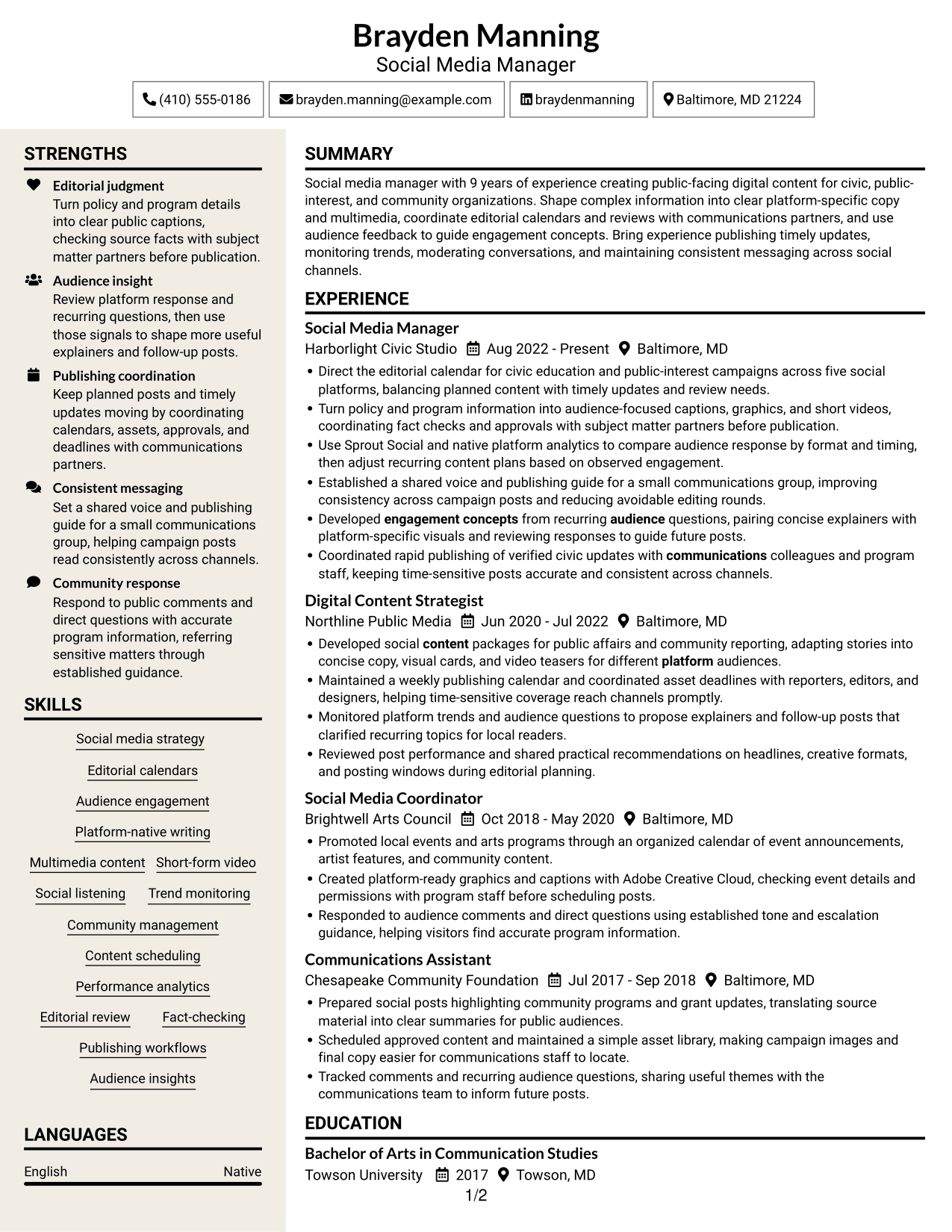
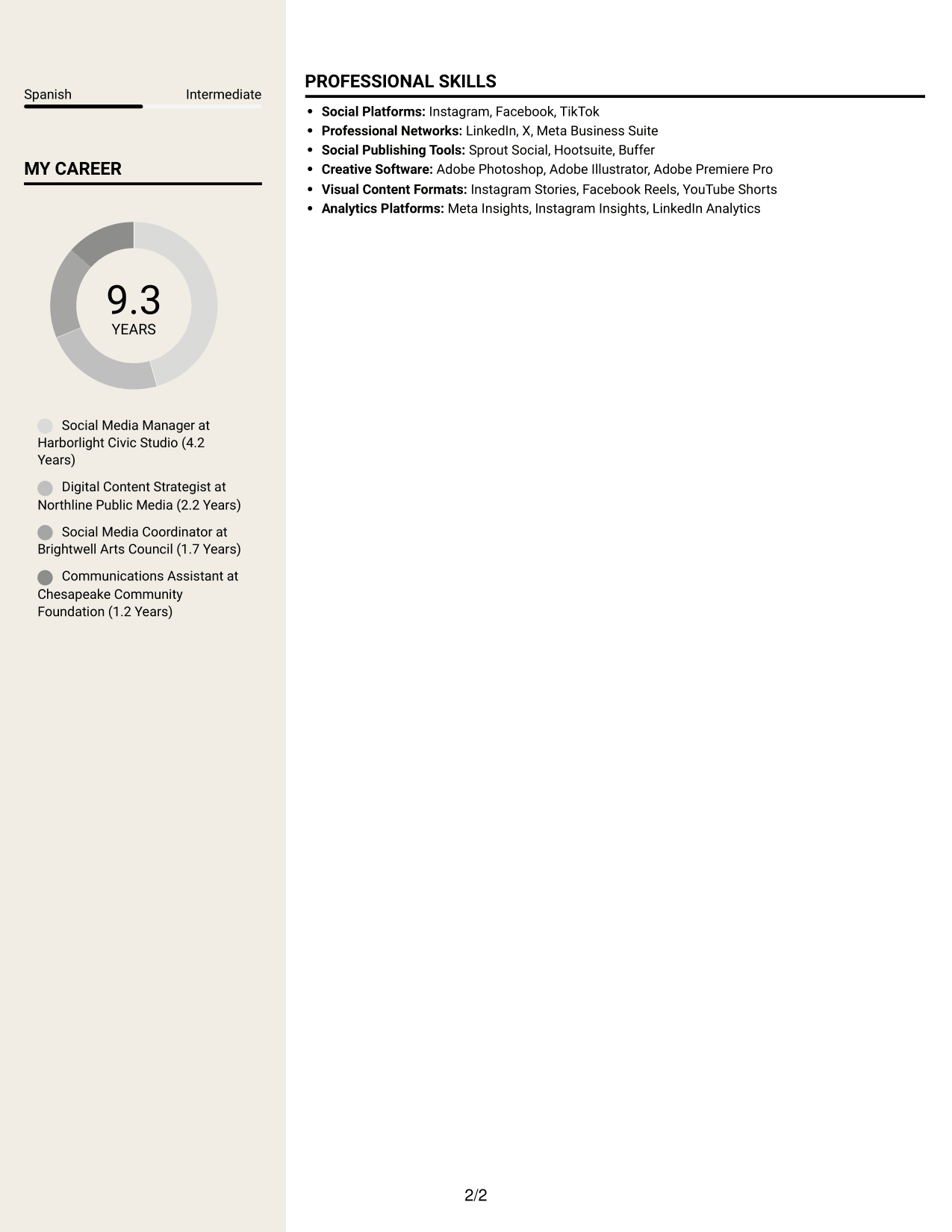
Why This Format Works
- Side-by-side reading areas let reviewers move between role history and supporting sections.
- Career details are easier to scan when separated from other resume sections.
- Education and skills remain accessible without breaking the review of work experience.
Best For
- Role history reviewed with supporting details
- Resumes with several distinct sections
- Readers who compare experience and qualifications
- Skills and education kept easy to find
- Two-column document preferences
Why Build Your Social Media Manager - Audience Engagement Resume with ResumeInMinutes
ResumeInMinutes helps you organize your experience, skills, and tools in a resume that readers can scan. Use the examples to see how content planning, publishing work, and audience insights can be presented clearly.
- Resume layout examples
- Clear section structure
- Role-focused keyword guidance
- Organized skills and tools
- Image previews for comparison
- Resume customization in the editor
Choose a layout that makes your strongest evidence easy to find. Focus each experience bullet on the work you did, the audience or channel involved, and the result or learning when you can support it.
See Also
- 7 Paid Social Media Strategist Resume Templates with Example
- 7 Social Media Community Manager Resume Templates with Example
- 7 Social Media & Content Coordinator Resume Templates with Example
- 33 Social Media Content Creator - Live Shopping Resume Templates with Example 2026 (ATS-Optimized)
- 33 Social Media & Content Creator Resume Templates with Example 2026 (ATS-Optimized)
- 7 Social Media Intern - Digital Storytelling Resume Templates with Example
- 33 Social Media Manager & Photographer Resume Templates with Example 2026 (ATS-Optimized)
- 33 Social Media Manager Resume Templates with Example 2026 (ATS-Optimized)
- 7 Social Media Manager - Audience Engagement Cover Letter Templates with Example
- 30+ Marketing and Social Media Intern Cover Letter Templates with Example 2026
Frequently Asked Questions
Are these Social Media Manager - Audience Engagement resume templates ATS-friendly?
They use clear sections and readable headings. Include relevant terms such as content calendars, multimedia content, audience engagement, and trend monitoring where they accurately describe your experience.
Are these separate resumes or layouts of one example?
This guide shows one resume example in different layouts. Compare the image previews to see how each design organizes the same type of resume content.
What should a Social Media Manager - Audience Engagement resume include?
Include a focused summary, relevant experience, skills, education, and any useful projects or certifications. Show editorial calendar work, platform-specific content, publishing coordination, audience response, and results supported by evidence.
Which resume layout works well for this role?
A simple layout with clear headings makes experience and skills easy to scan. Choose a design that gives enough space for concise achievement bullets and remains easy for applicant tracking systems to read.
How can I show audience engagement when I do not have a metric?
Describe the work and the evidence you do have. For example, explain how audience questions informed an explainer or how platform response shaped later content, without claiming results you cannot verify.
Which tools should I list on this resume?
List tools you have used and that support the role, such as Sprout Social, Meta Business Suite, Adobe Creative Cloud, or platform analytics. Group tools by purpose and avoid adding software only because it appears in a job description.




