7 Software Engineer I (Electronic Systems) Resume Templates with Example
This guide shows you how to build a Software Engineer I (Electronic Systems) resume that is clear, focused, and easy to review. You will learn how to organize strong evidence and choose a format that keeps important sections easy to find.
For this role, give clear space to programming experience, object oriented analysis and design, electronic systems projects, database work, laboratory testing, debugging, verification, and responsible use of AI-enabled tools. Use concise bullets that show what you built, tested, improved, documented, or presented, and include education and certifications that support your technical foundation.
The same complete resume appears below in 7 ATS-friendly layouts. Compare the reading order, section structure, and visual emphasis, then choose the format that presents your experience, skills, projects, and education most clearly.
What Makes a Great Software Engineer I (Electronic Systems) Resume in 2026
A strong resume is clear, evidence-based, and easy to scan, with concise bullets that connect technical work to testing, results, and team reviews.
Match the role with accurate terms such as C, C++, C#, OOA, OOD, database applications, automated test equipment, RF simulation, software verification, and electronic systems.
The examples shown below are intentionally detailed to demonstrate a range of experiences, skills, accomplishments and relevant keywords. We prefer detailed resumes as they provide more context to the hiring managers and also help the ATS systems identify relevant qualifications and score your resume better for a match. But the length of a resume is an individual choice. If you want a one page resume, just keep the most relevant experience and information for the job. Note: Resume examples are for educational purposes only. Use only information that accurately reflects your experience and qualifications. References to real organizations do not imply affiliation or endorsement.
#1 Simple One Column Format Resume Example
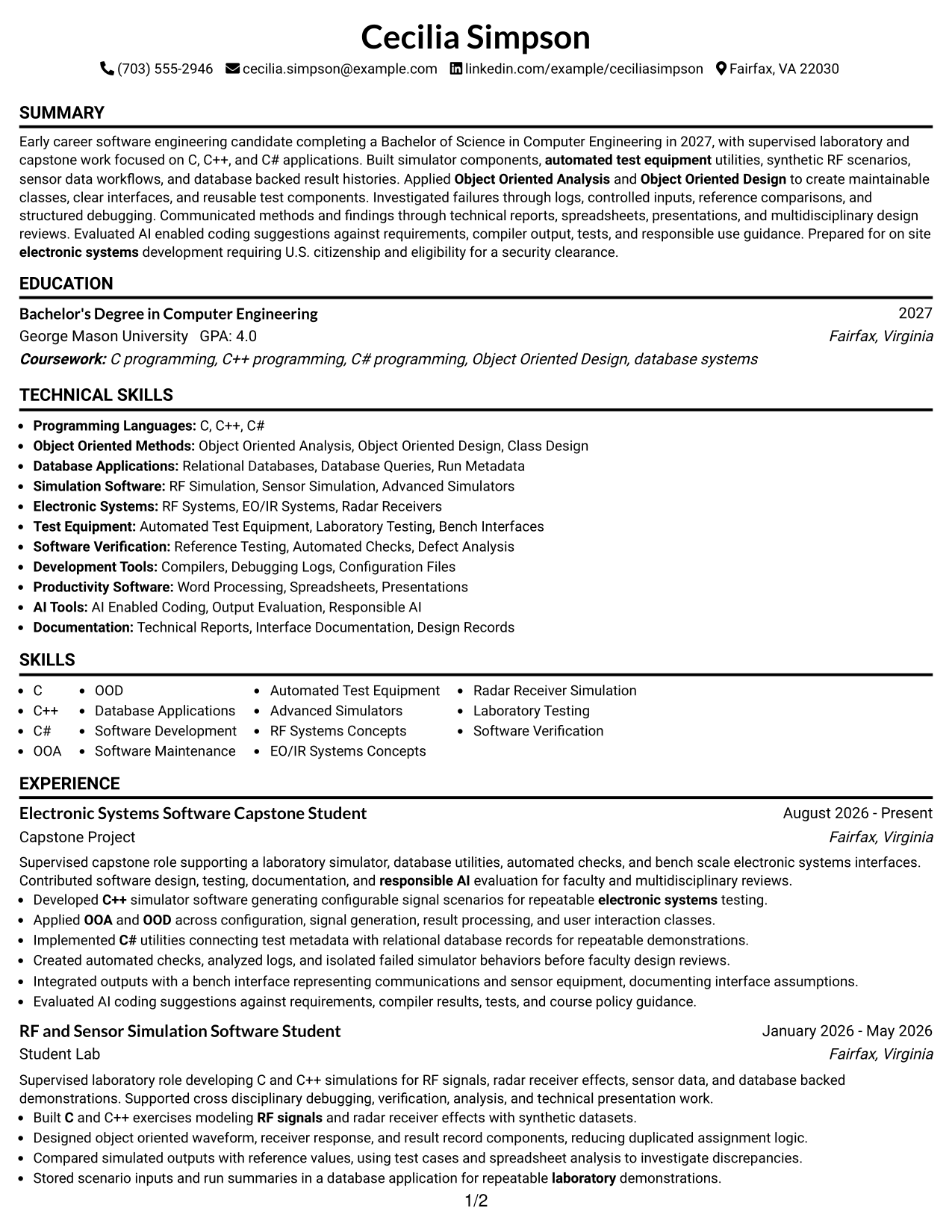
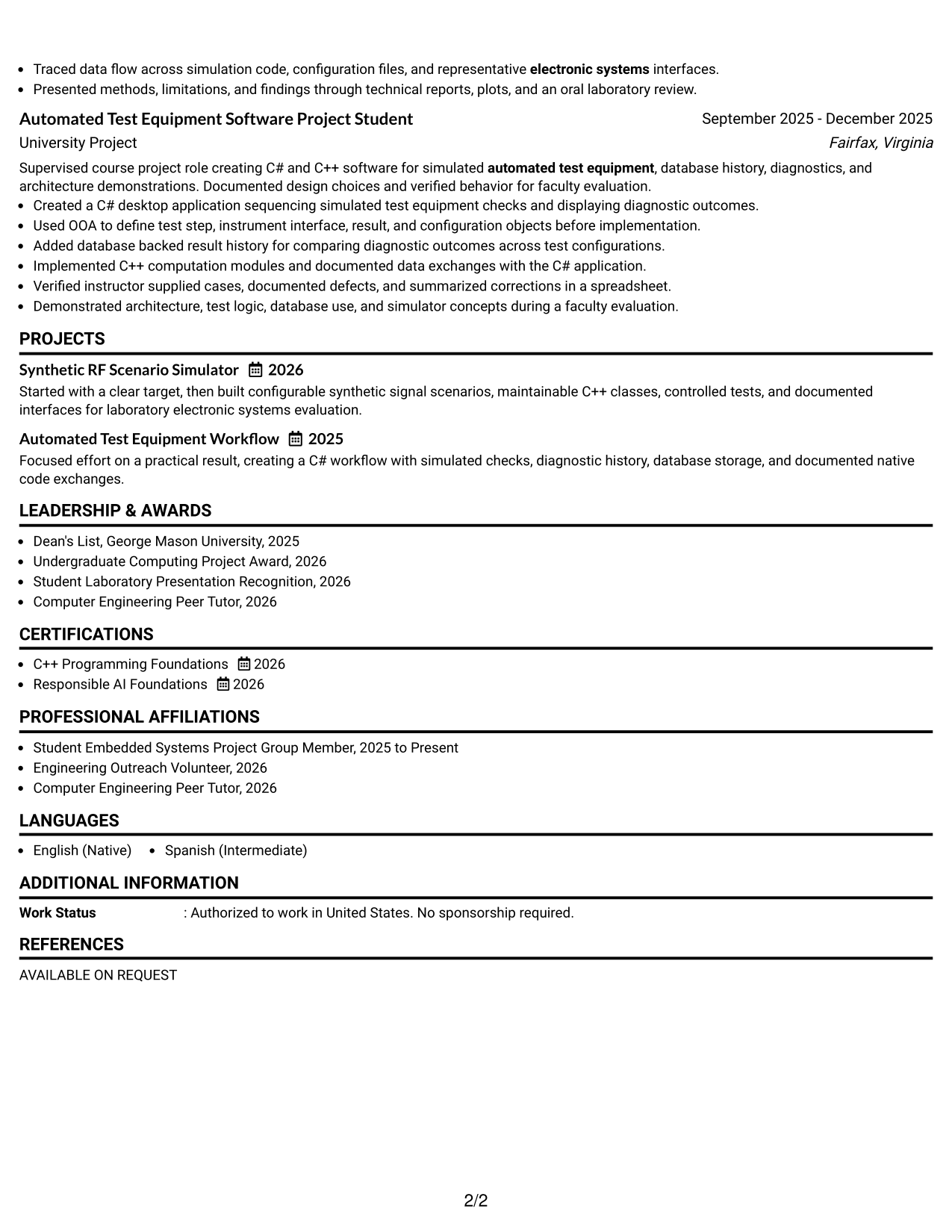
A simple one-column flow gives recruiters a direct path through every resume section.
Why This Format Works
- Linear reading order keeps experience and projects easy to follow.
- Full-width sections give technical skills and education clear breathing room.
- Simple section breaks help recruiters locate achievements without visual detours.
Best For
- Direct top-to-bottom reading
- Detailed project descriptions
- Clear section hierarchy
- ATS-conscious applications
- Readers who prefer simple structure
Resume Keywords
- Software Engineer I
- Electronic Systems
- C
- C++
- C#
- Object Oriented Analysis
- Object Oriented Design
- Database Applications
- Automated Test Equipment
- RF Simulation
- Software Verification
- Responsible AI
#2 Plain One Column with Shaded Labels Resume Example
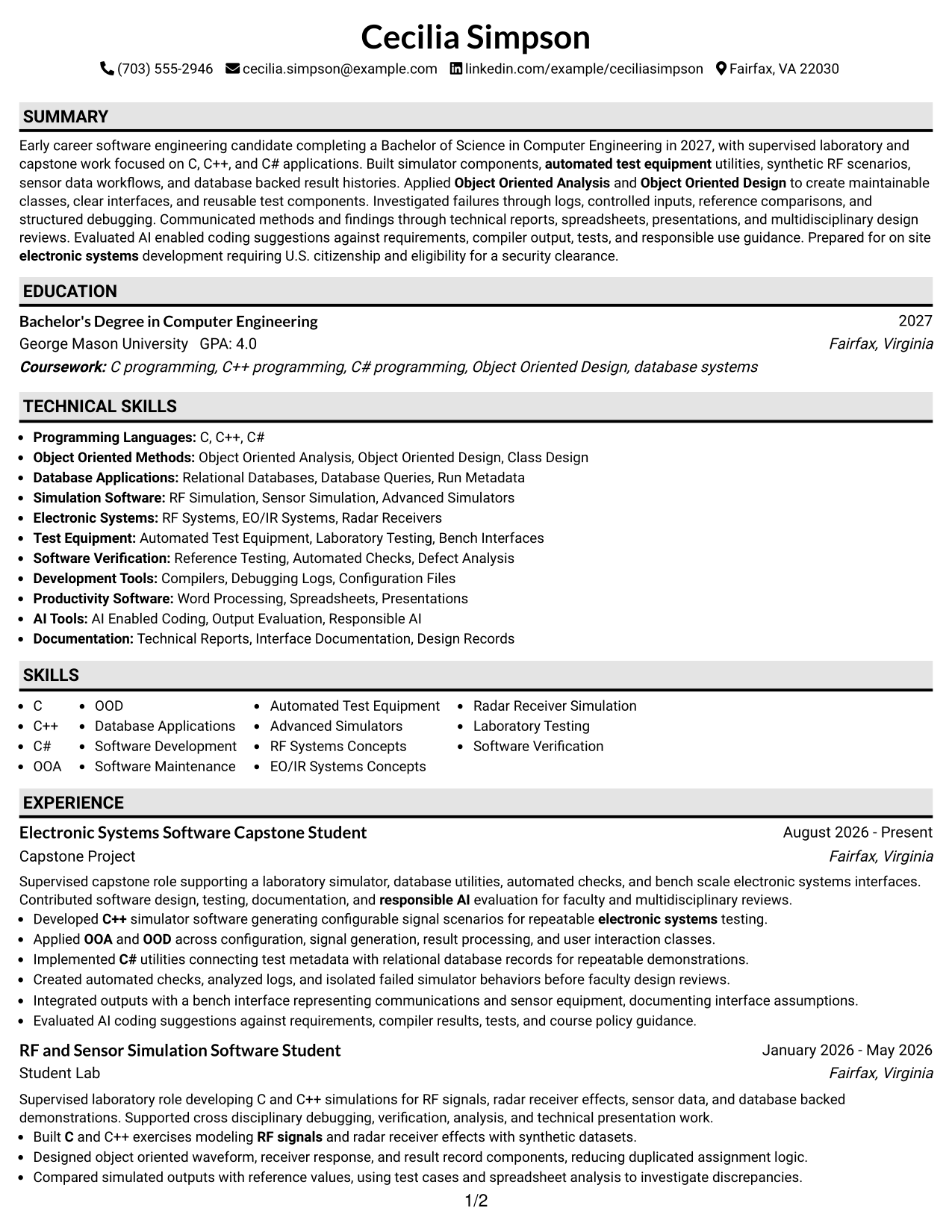
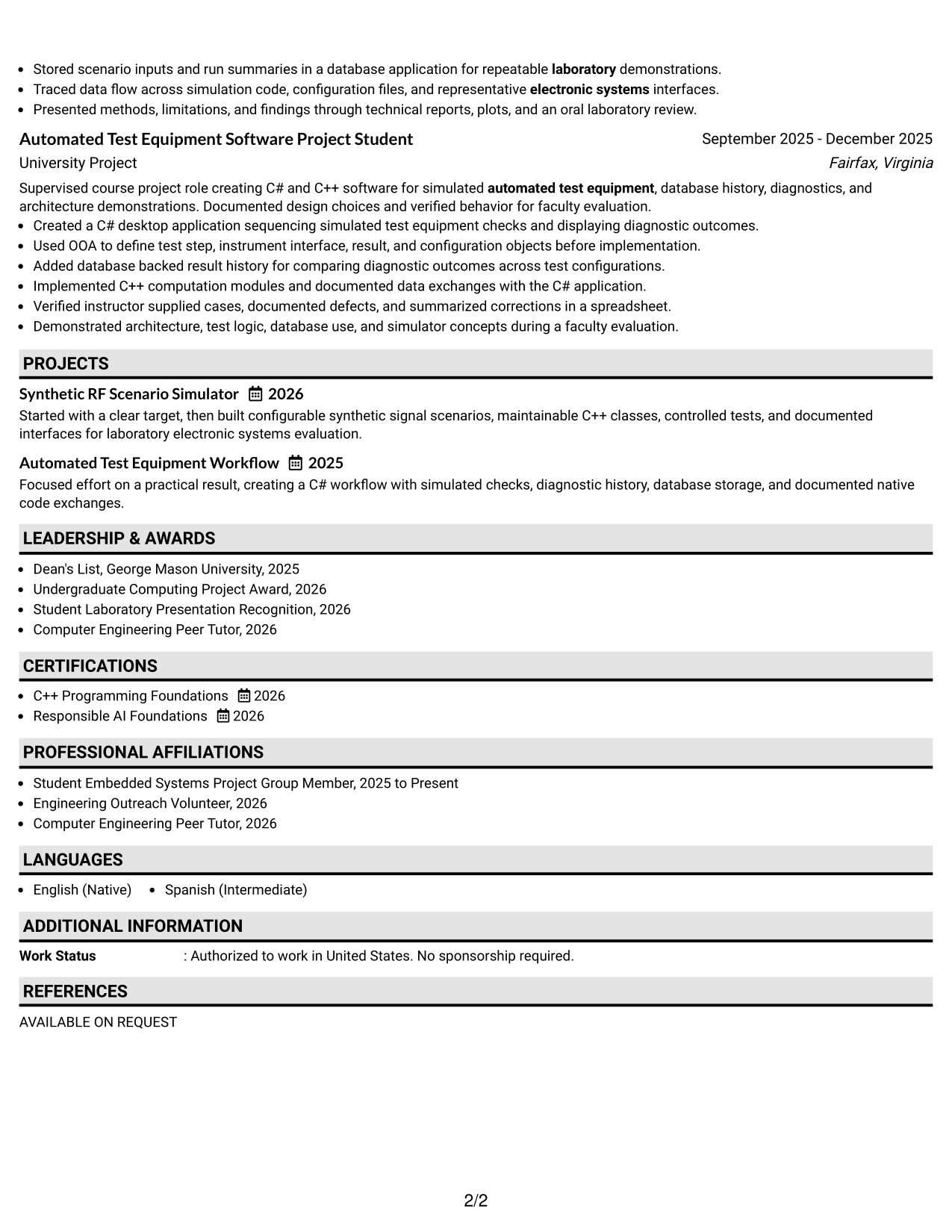
Shaded section labels help recruiters separate resume topics while keeping one continuous reading path.
Why This Format Works
- Shaded labels create clear stops between experience, education, and skills.
- Single-column order keeps career evidence moving in a predictable sequence.
- Visible section boundaries help recruiters return quickly to supporting credentials.
Best For
- Strong section separation
- Longer education and project entries
- Quick return to key sections
- Conservative visual styling
- Applications needing clear navigation
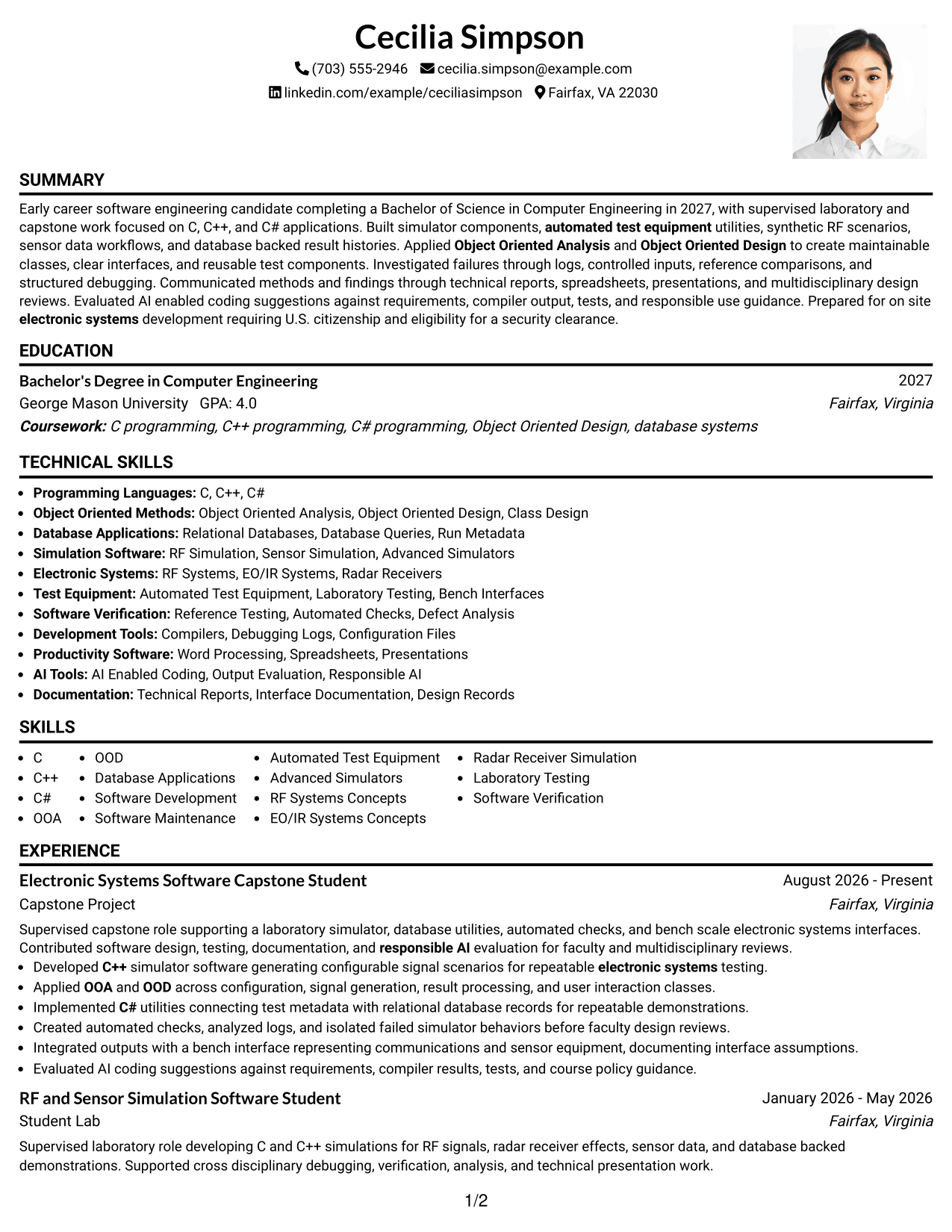
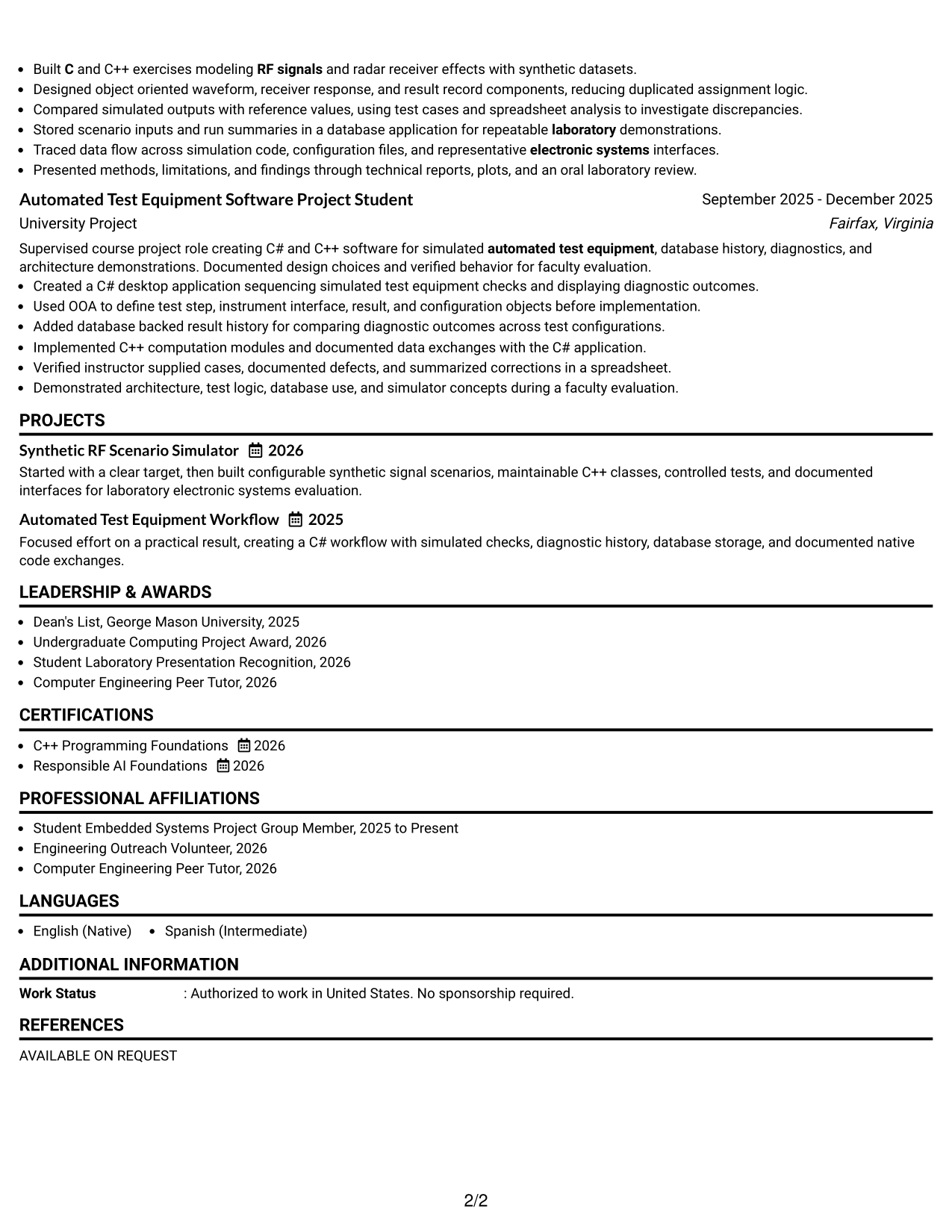
#3 One Column Format with Photo Right Resume Example
A right-side photo adds personal identification while the one-column body keeps recruiter scanning straightforward.
Why This Format Works
- One-column body keeps experience, projects, and education in clear sequence.
- Photo stays in the header area without splitting core resume content.
- Full-width sections leave room for detailed achievements and supporting credentials.
Best For
- Markets where resume photos are customary
- Straightforward body reading
- Detailed experience sections
- Visible personal identification
- Applications outside typical U.S. resume norms
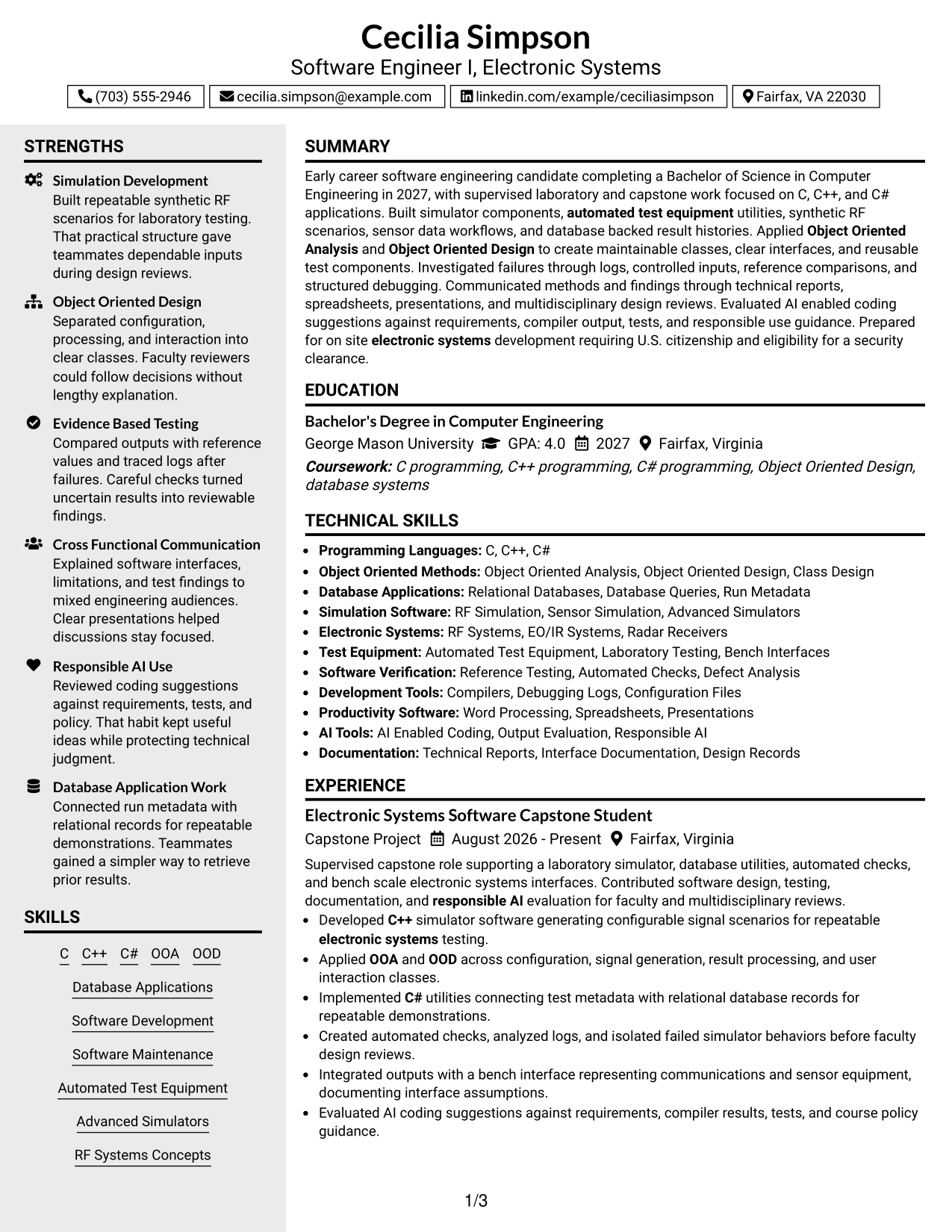
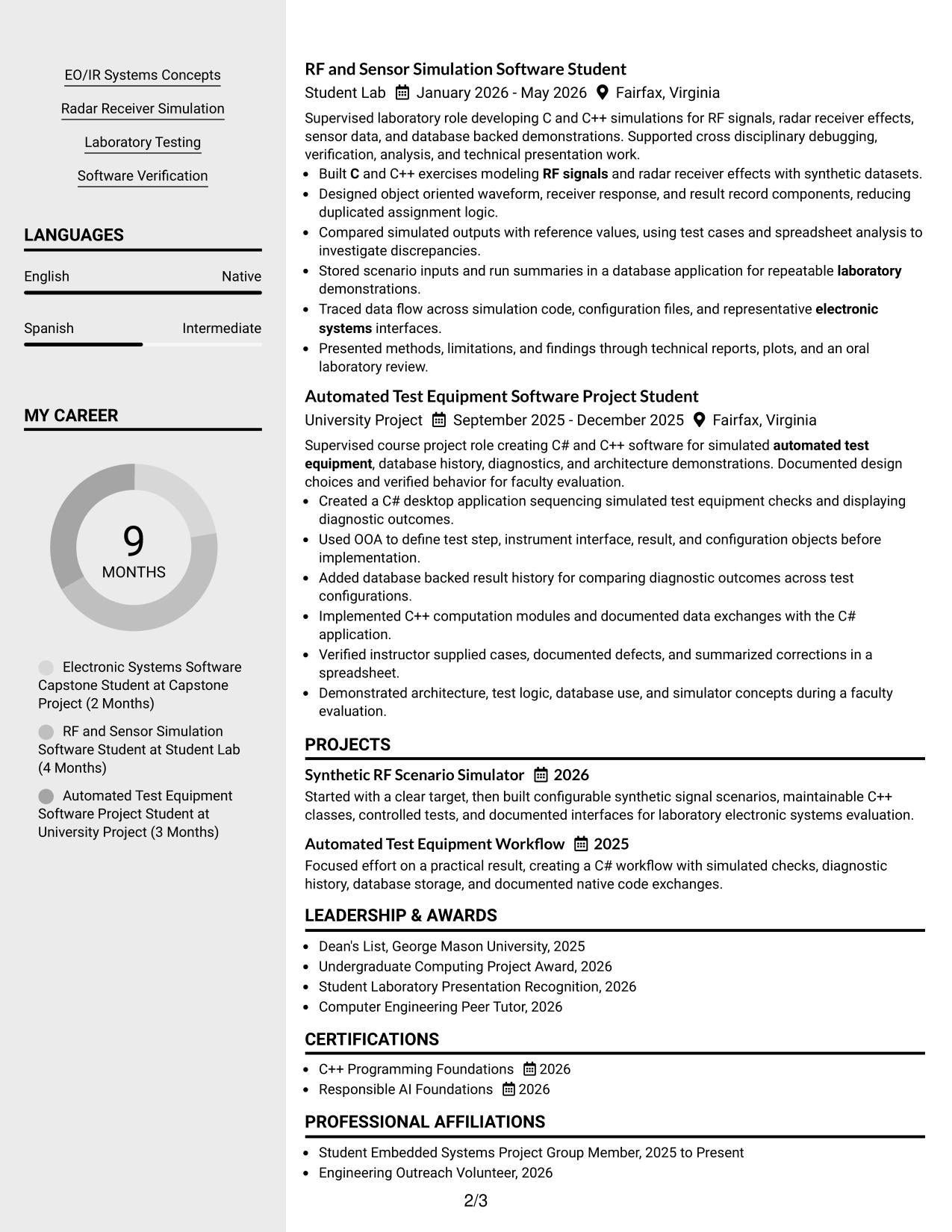
#4 Clean Two Column Sidebar Format Resume Example
A clean two-column sidebar lets recruiters scan supporting details beside the main resume narrative.
Why This Format Works
- Two-column structure separates supporting credentials from the main experience story.
- Sidebar organization makes skills and education easier to revisit during review.
- Main content area preserves room for achievements and project context.
Best For
- Compact skills and credential groups
- Parallel review of core and supporting sections
- Experience needing more narrative space
- Readers comparing qualifications quickly
- Balanced two-column organization
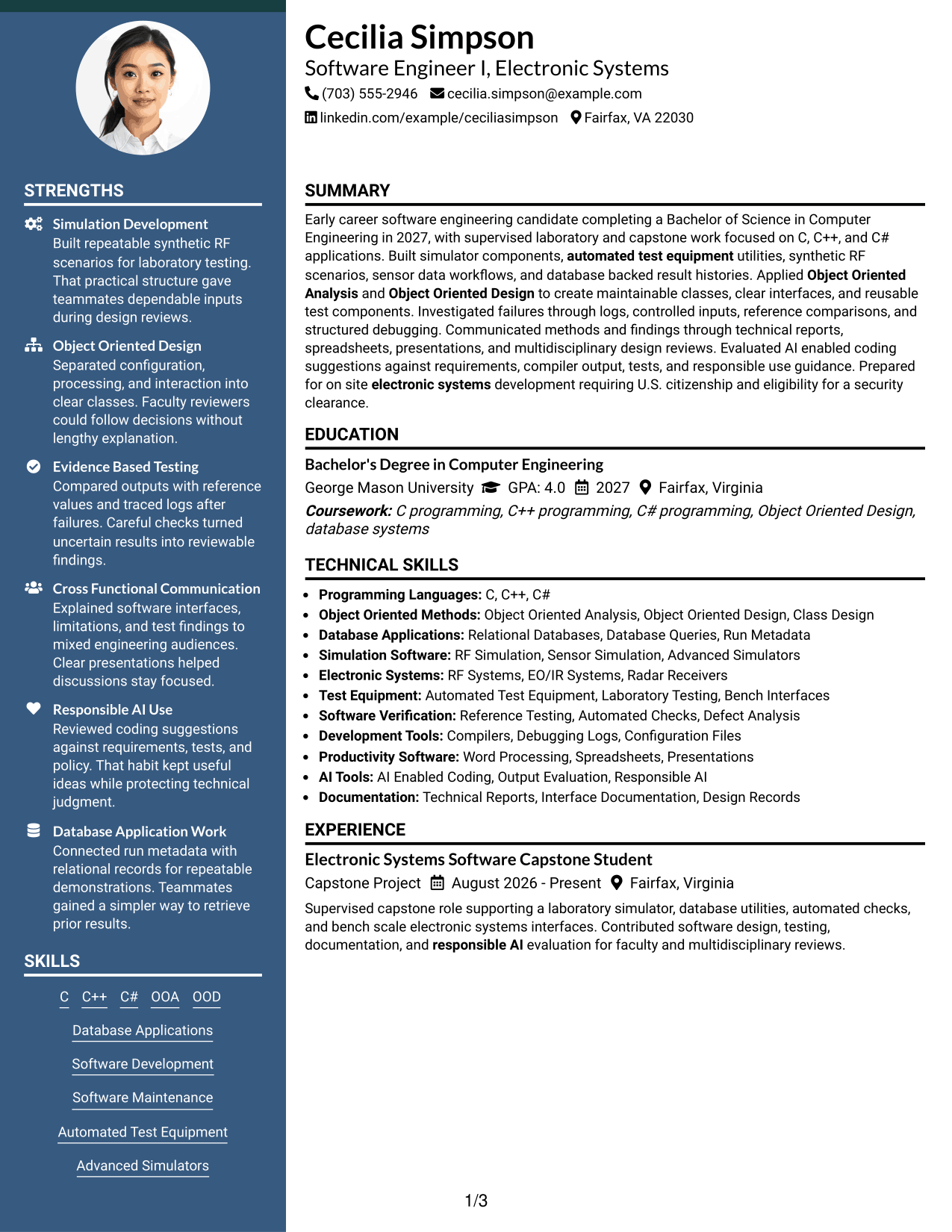
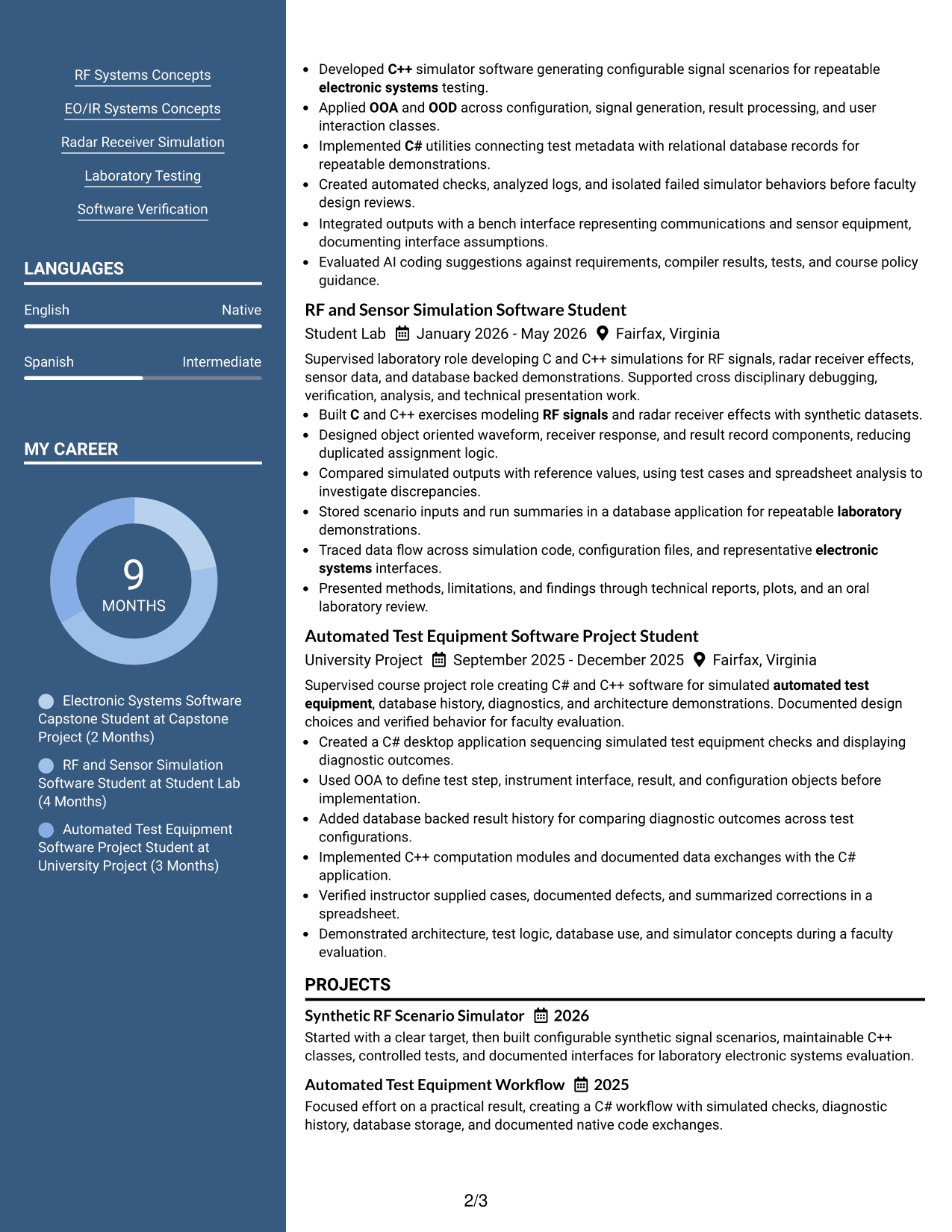
#5 Two Column Format Resume Example
A balanced two-column layout helps recruiters compare major resume sections without a long vertical scan.
Why This Format Works
- Parallel columns shorten the visual distance between experience and supporting sections.
- Balanced section space helps achievements and credentials share attention without crowding.
- Two-column grouping supports quick comparison of projects, education, and skills.
Best For
- Information-dense technical resumes
- Side-by-side section comparison
- Mixed project and academic evidence
- Shorter vertical scrolling
- Readers reviewing several qualification types
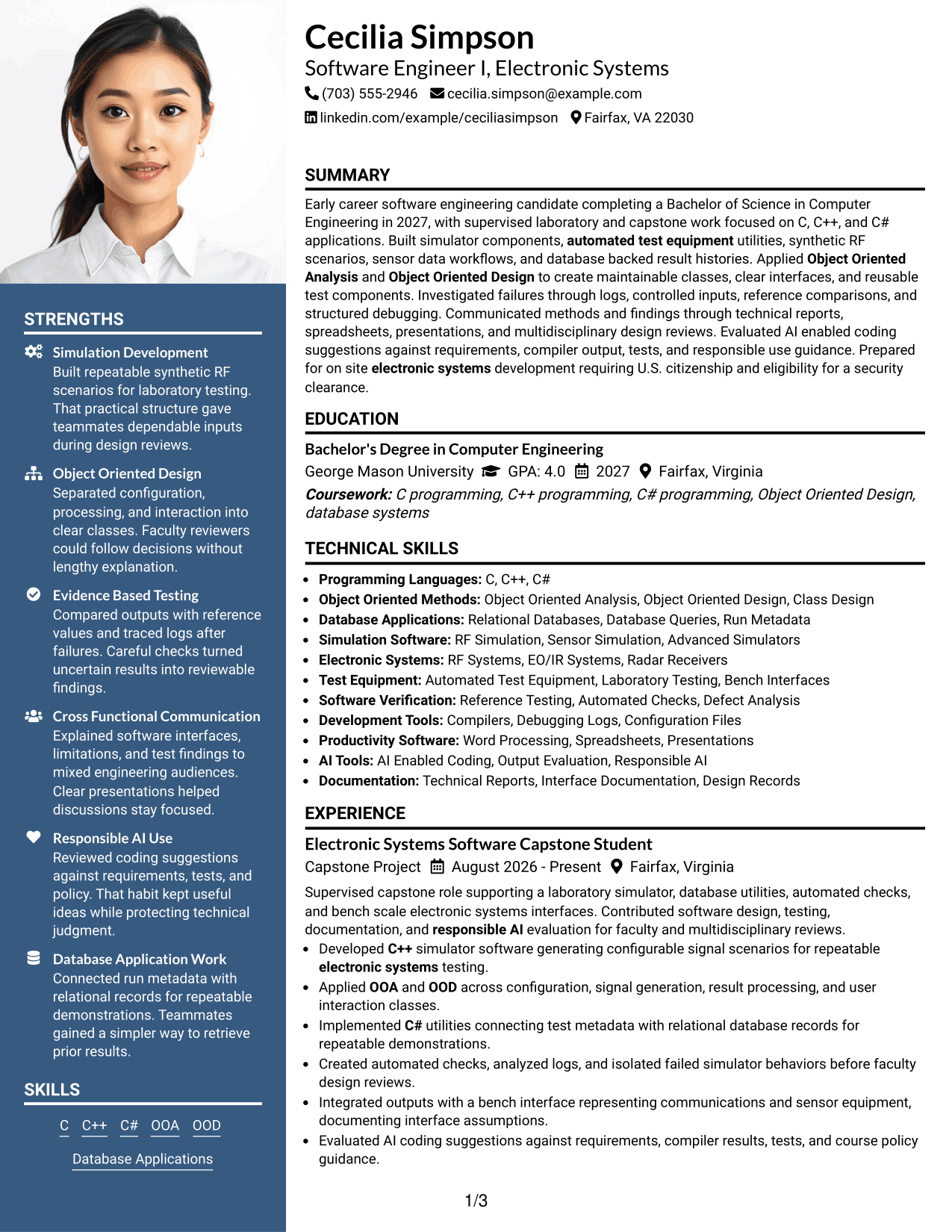
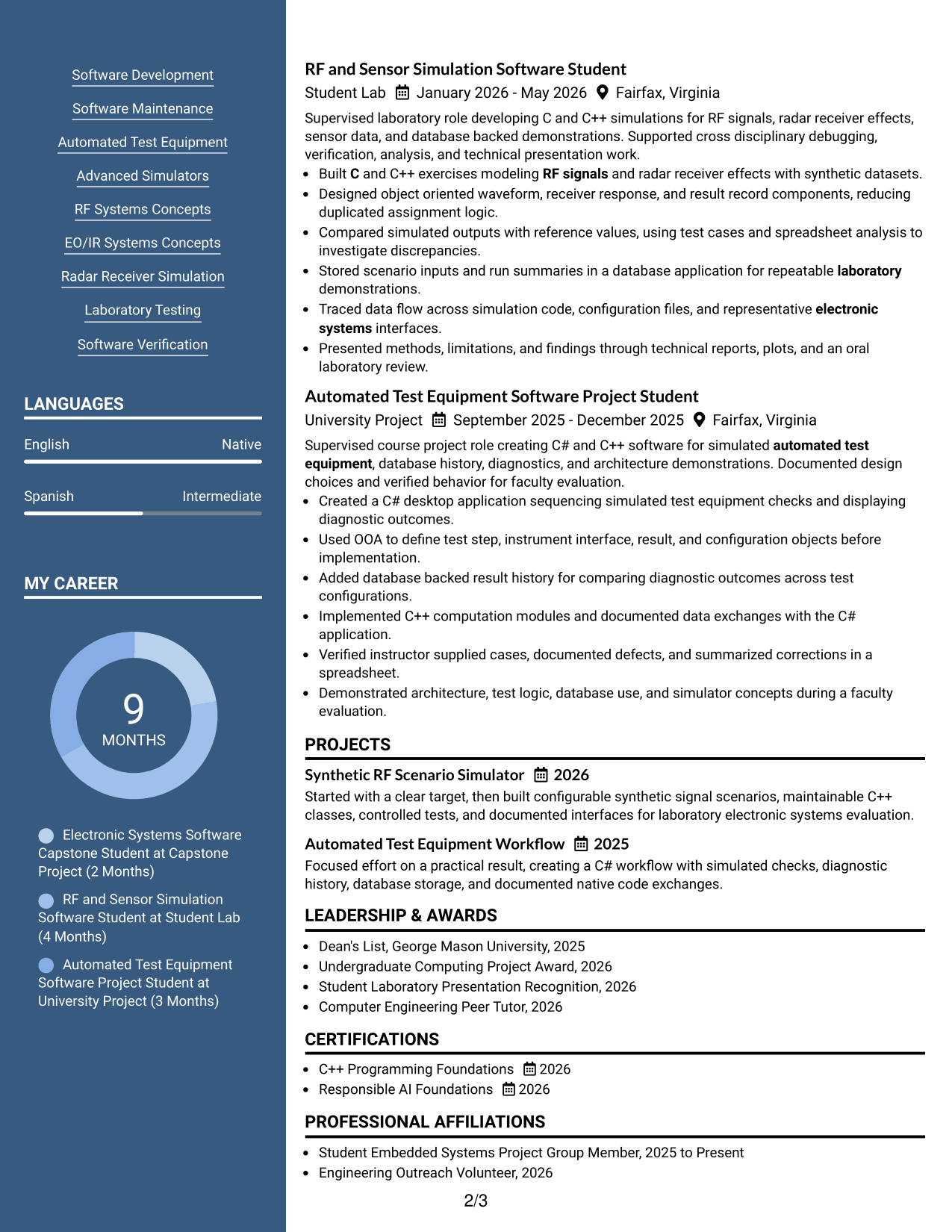
#6 Photo Header Two Column Format Resume Example
A photo header identifies the person, while two body columns help recruiters scan dense sections efficiently.
Why This Format Works
- Two body columns divide experience and supporting content into manageable areas.
- Header photo remains separate from the resume sections recruiters must evaluate.
- Column structure gives projects, education, and credentials distinct visual zones.
Best For
- Regions where professional photos are expected
- High-volume supporting information
- Distinct header and body treatment
- Two-column scanning needs
- International applications with photo conventions
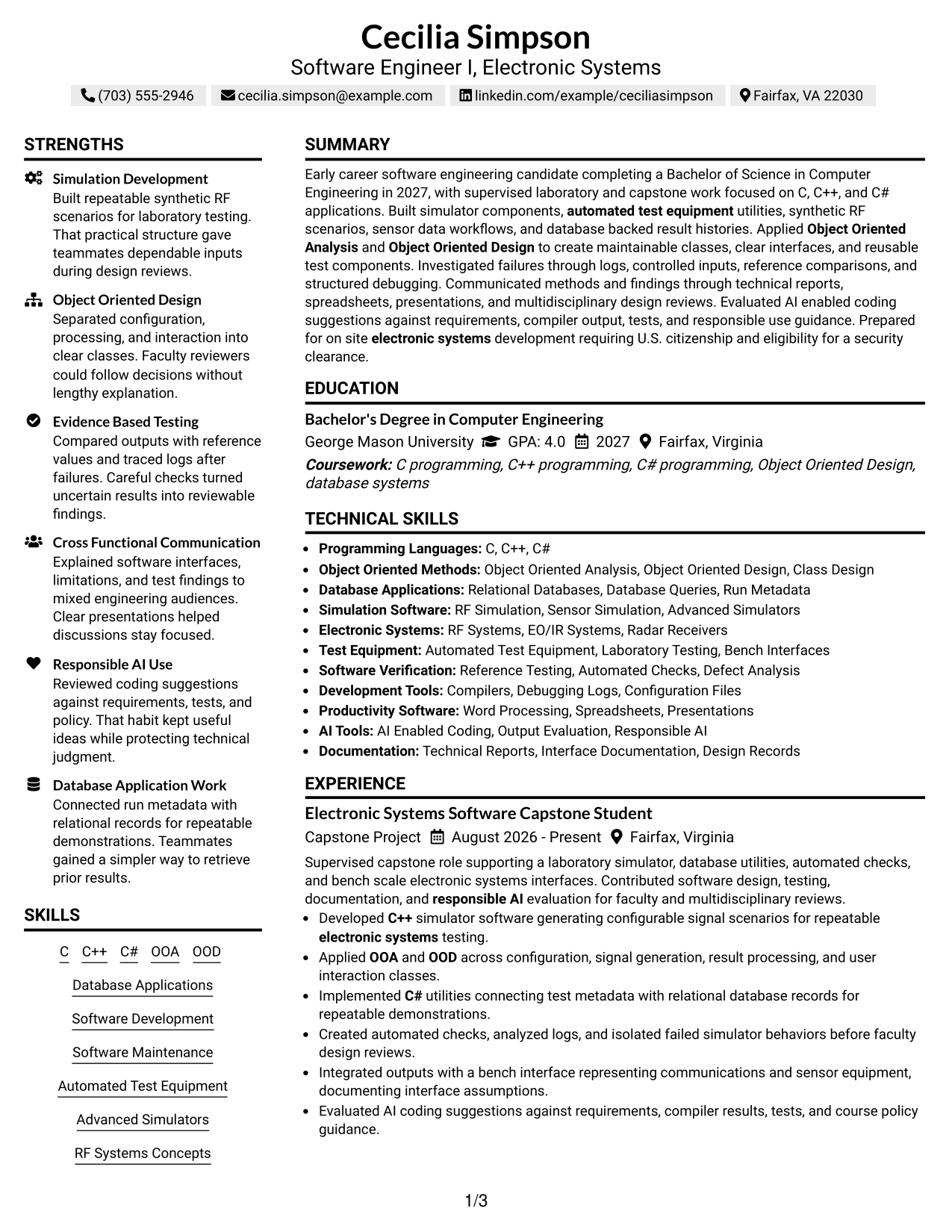
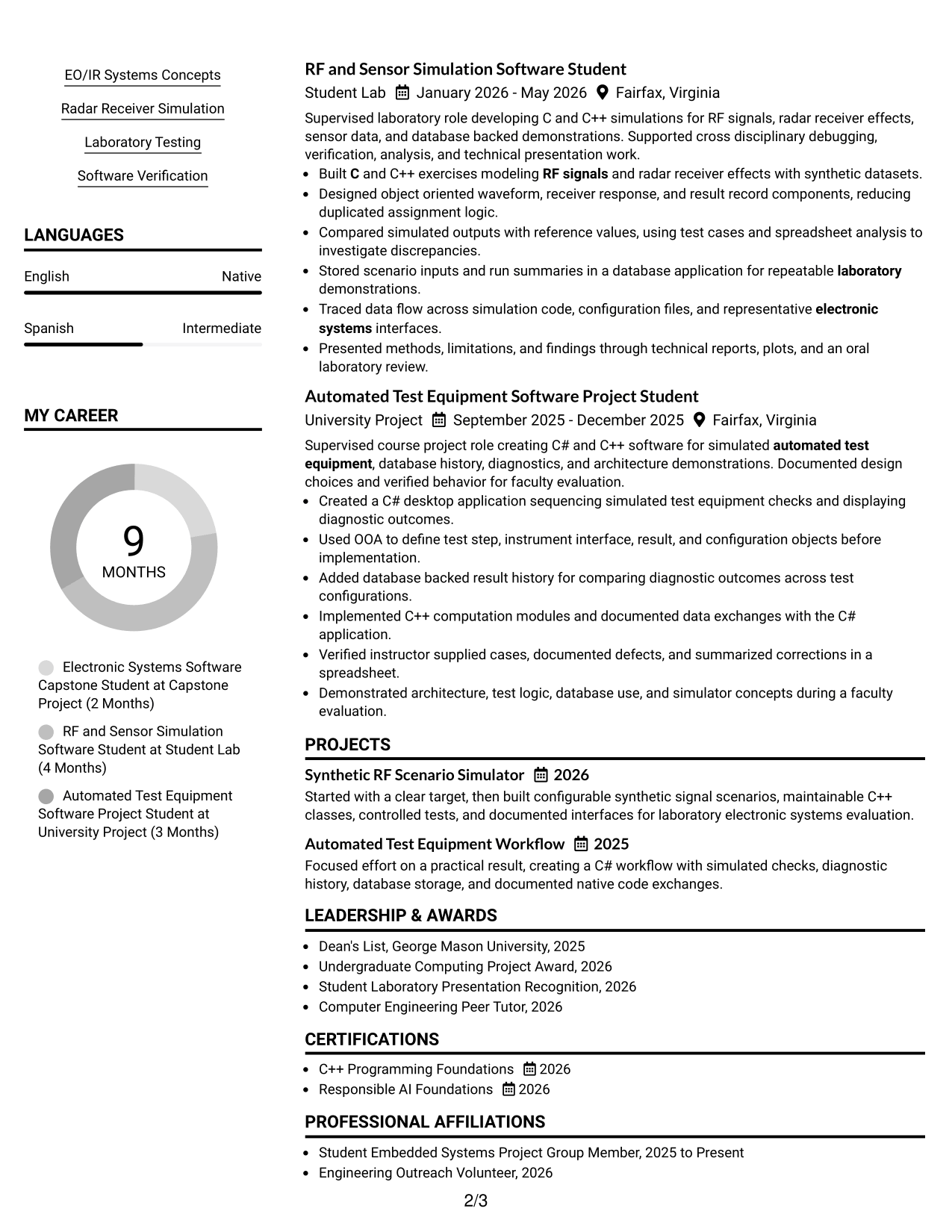
#7 Simple Two Column Format Resume Example
A simple two-column structure helps recruiters move between core evidence and concise supporting details.
Why This Format Works
- Simple columns keep experience prominent while giving credentials their own space.
- Compact organization reduces long stretches between skills, education, and projects.
- Clear section grouping supports fast review without decorative distractions.
Best For
- Simple two-column readability
- Compact supporting sections
- Project-heavy early-career resumes
- Recruiters scanning under time pressure
- Minimal visual decoration
See Also
- 7 Application Engineer - Electronic Security Systems Resume Templates with Example
- 7 Electronics Engineer - Power Communications Systems Resume Templates with Example
- 7 Manufacturing Engineer Manager - Systems, Electronics & Test Fixtures Resume Templates with Example
- 7 Software Development Engineer in Test, IS&T Customer Systems Resume Templates with Example
- 7 Software Engineer, Information Systems & Technology Resume Templates with Example
- 33 Software Engineer Intern - Secure Cross-Domain Systems Resume Templates with Example 2026 (ATS-Optimized)
- 33 Vehicle Electronics Architecture Engineer Resume Templates with Example 2026 (ATS-Optimized)
- 33 AI/ML Engineer - Machine Learning Systems Resume Templates with Example 2026 (ATS-Optimized)
- 30+ Vehicle Electronics Architecture Engineer Cover Letter Templates with Example 2026
- 30+ Applied AI Health System Engineer – Senior Manager Cover Letter Templates with Example 2026
Frequently Asked Questions
Are these Software Engineer I (Electronic Systems) resume templates ATS-friendly?
Yes. The layouts use clear section structure and readable headings. Keep your wording simple and include accurate role terms that match your real experience.
Do the examples use the same resume content?
Yes. The guide presents one complete resume in different visual formats so you can compare structure without changing the underlying qualifications.
What should a Software Engineer I (Electronic Systems) resume include?
Include a focused summary, technical skills, education, projects or experience, testing and debugging evidence, database knowledge, certifications, and clear examples of engineering communication.
How should I write project bullets for this role?
Start with a clear action. Explain what you built, tested, integrated, analyzed, or documented, then add the purpose or result when the source facts support it.
Which resume format works best for electronic systems software roles?
Choose a format with clear reading order and easy-to-find technical sections. One-column formats favor a direct sequence, while two-column formats can separate supporting details from core experience.
Can a current student build a strong resume for this role?
Yes. Use supervised laboratory work, capstone projects, course projects, testing evidence, technical presentations, and relevant certifications when they accurately reflect your background.
Should I include a photo on a U.S. software engineering resume?
Usually no. For U.S. applications, a no-photo format is generally the safer choice unless a specific local practice clearly calls for one.
Can I customize these resume templates?
Yes. Adjust the text and visual format while keeping facts accurate, section labels clear, and the most relevant technical evidence easy to scan.