7 Writing Tutor Resume Templates with Example
This guide shows you how to build a Writing Tutor resume that is clear, focused, and easy to review. You will see how to organize tutoring evidence so a recruiter can understand your value quickly.
Strong resumes for this role connect writing support with practical service skills. Show individual and group tutoring, workshop work, student records, instructional technology, Microsoft Office, training, and support for students with different learning needs.
The same complete resume is presented in 7 ATS-friendly layouts so you can compare reading order, section structure, and visual style. Use the notes and free PDF previews to choose a format that keeps experience, education, skills, projects, and credentials easy to find.
What Makes a Great Writing Tutor Resume in 2026
A strong Writing Tutor resume is clear, evidence-based, and easy to scan. It shows how you support writers, lead workshops, document sessions, and work across face-to-face and virtual settings.
Match the posting with supported terms such as 200-level writing support, Microsoft Office Suite, Excel activity reports, student database documentation, instructional technology, inclusive student support, tutor training, and TESOL.
The examples shown below are intentionally detailed to demonstrate a range of experiences, skills, accomplishments and relevant keywords. We prefer detailed resumes as they provide more context to the hiring managers and also help the ATS systems identify relevant qualifications and score your resume better for a match. But the length of a resume is an individual choice. If you want a one page resume, just keep the most relevant experience and information for the job. Note: Resume examples are for educational purposes only. Use only information that accurately reflects your experience and qualifications. References to real organizations do not imply affiliation or endorsement.
#1 Simple One Column Format Resume Example
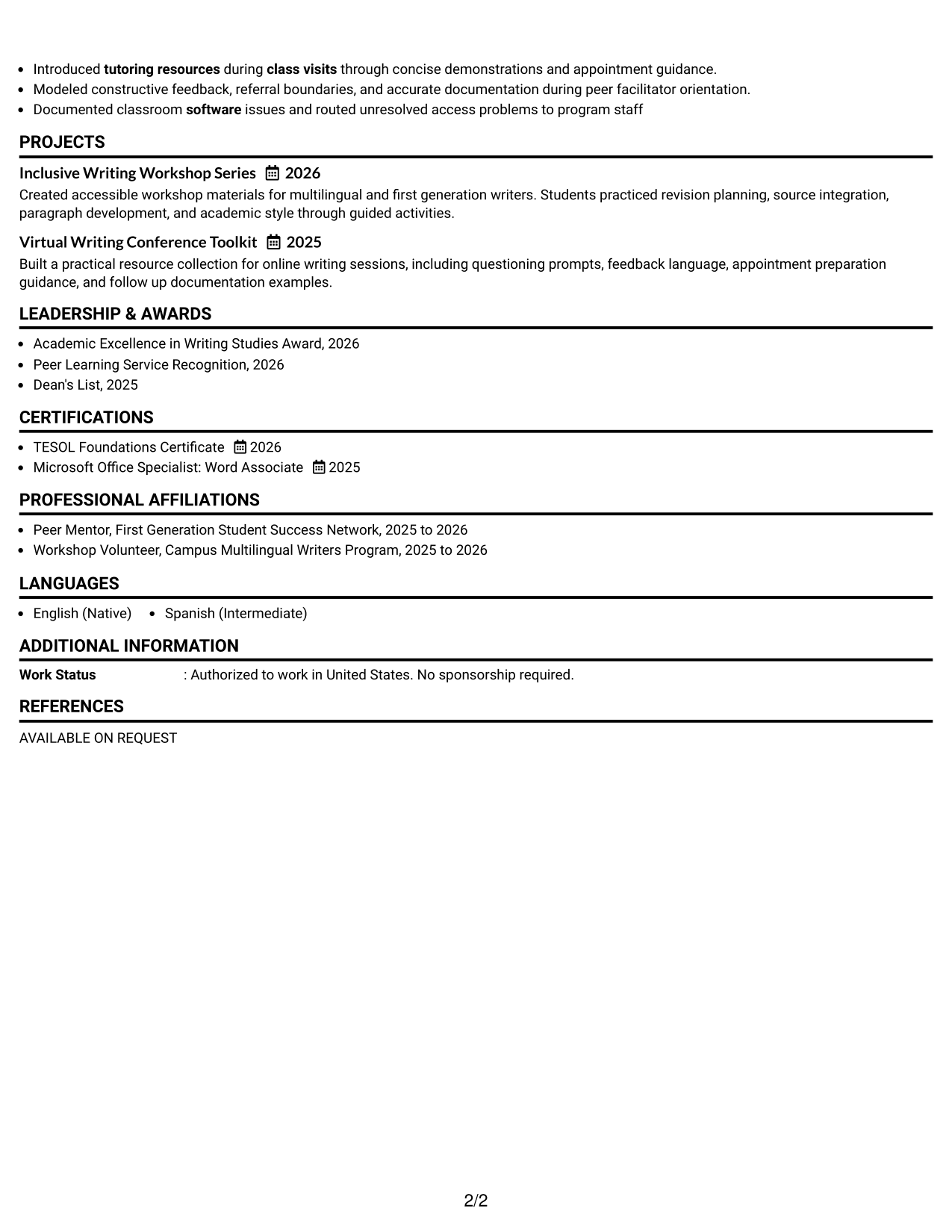
A simple one-column flow lets recruiters scan experience, education, projects, skills, and credentials in a direct order.
Why This Format Works
- Linear reading keeps tutoring experience and education easy to follow.
- Full-width sections give projects and credentials clear space without competing columns.
- Consistent section order helps recruiters compare skills with recent experience quickly.
Best For
- Straightforward recruiter scanning
- Detailed tutoring experience
- Clear education and credential review
- Applications needing simple reading order
- ATS-conscious resume structure
Resume Keywords
- Writing Tutor
- 200 Level Support
- Face to Face Tutoring
- Virtual Tutoring
- Workshop Facilitation
- Microsoft Office
- Microsoft Excel
- Student Documentation
- Instructional Technology
- TESOL
#2 Plain One Column with Shaded Labels Resume Example
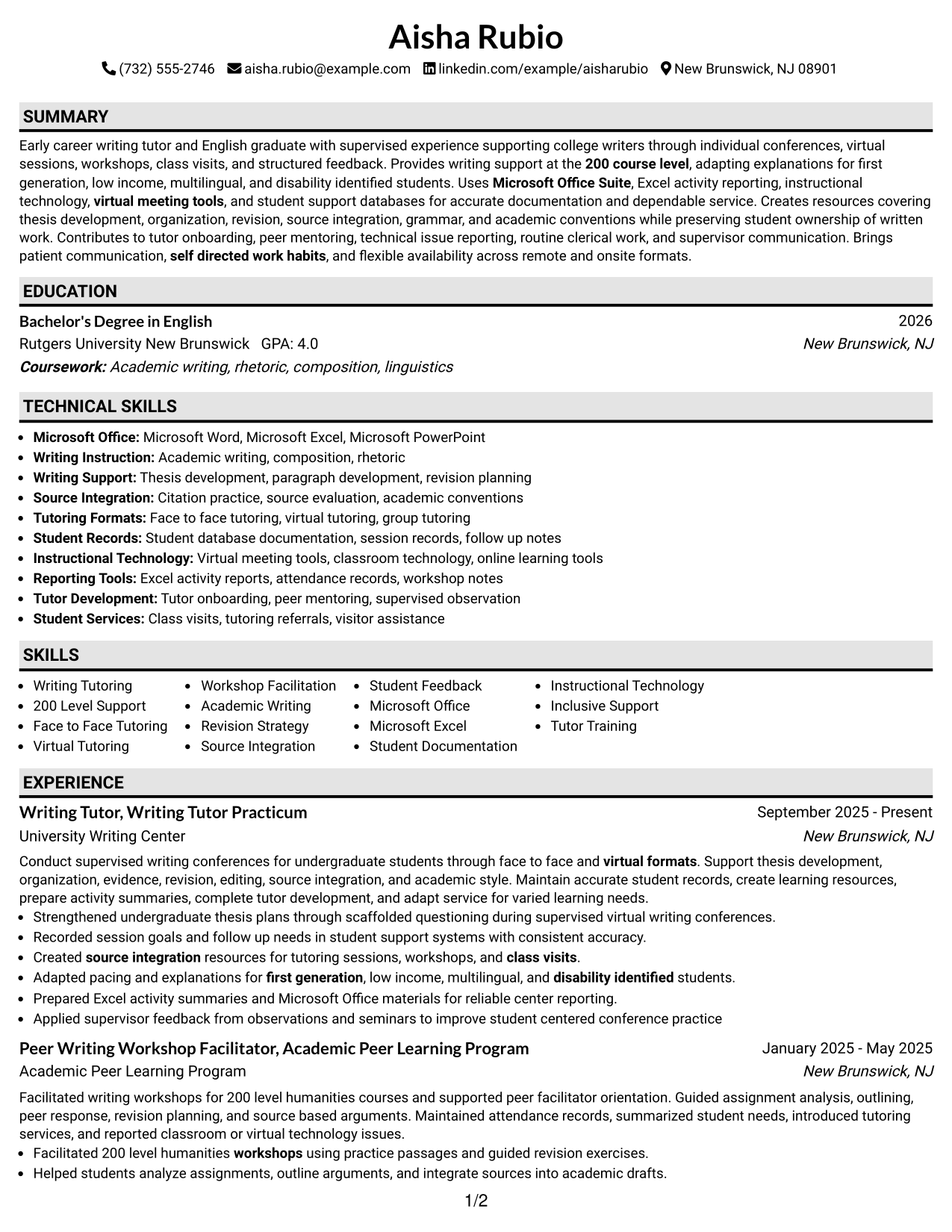
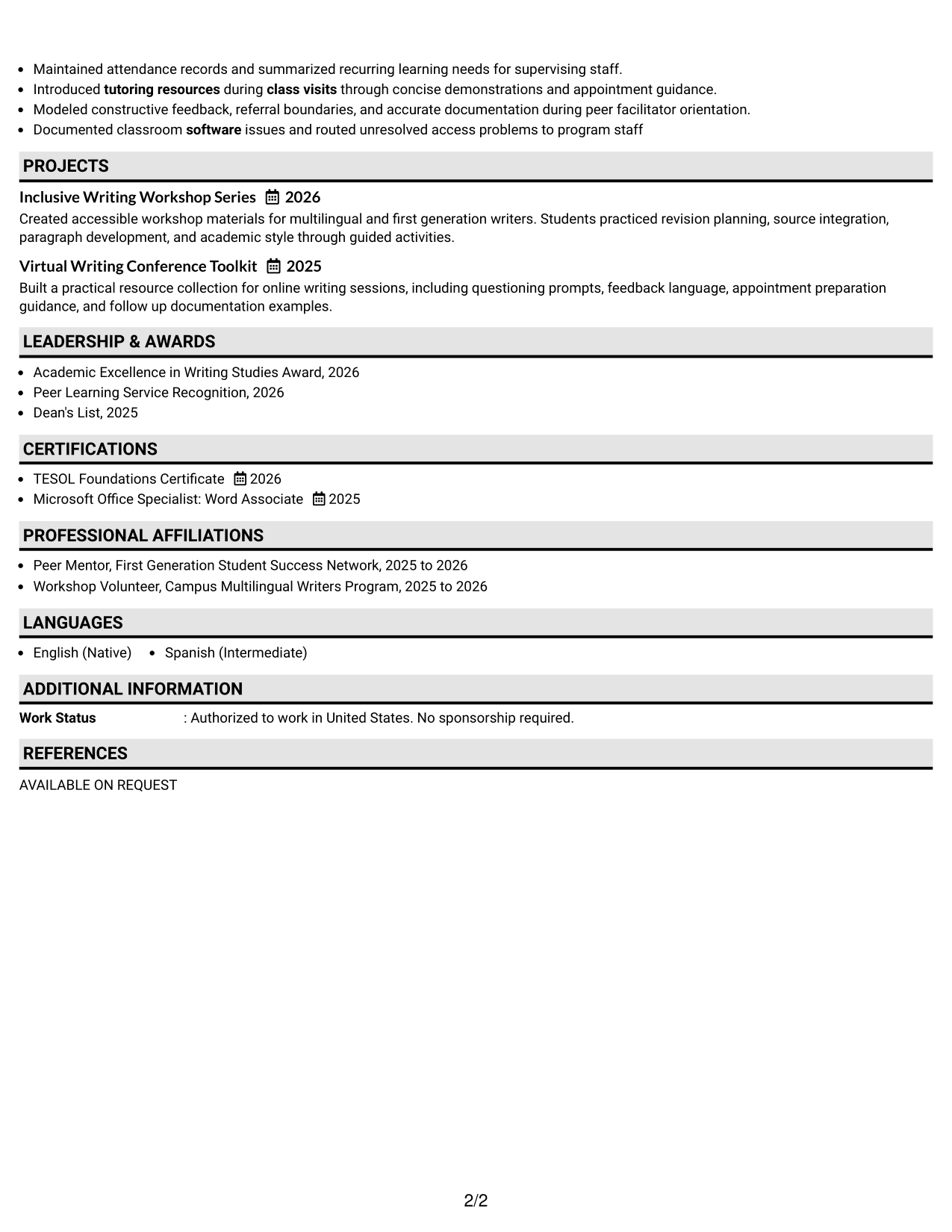
Shaded section labels break a one-column resume into clear blocks so recruiters can move between major sections quickly.
Why This Format Works
- Shaded labels separate experience, skills, and education without changing reading order.
- Single-column spacing gives achievement bullets room to remain readable.
- Visible section breaks help recruiters return to credentials after reviewing experience.
Best For
- Readers who prefer strong section cues
- Resumes with several supporting sections
- Experience plus projects and activities
- Fast movement between resume categories
- Traditional one-column organization
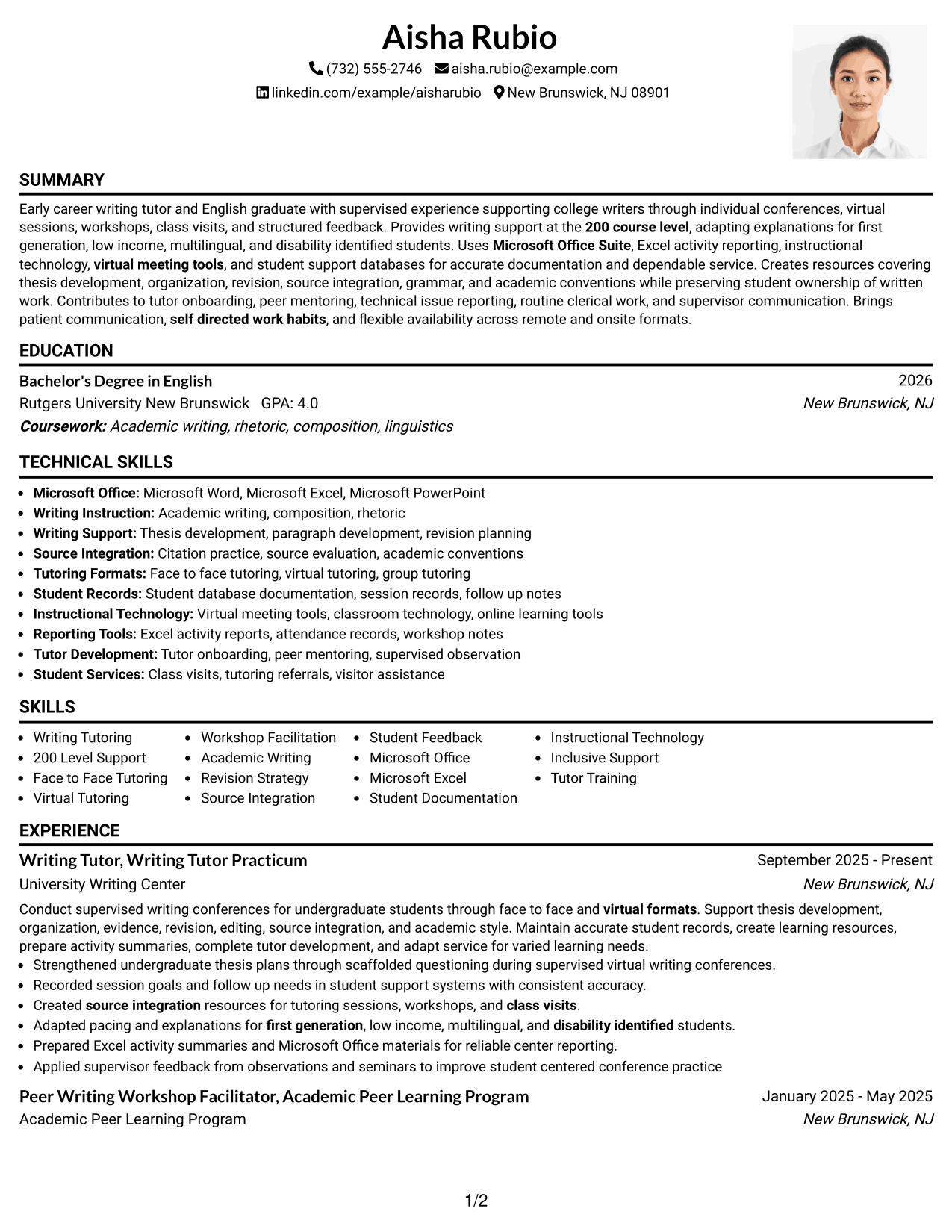
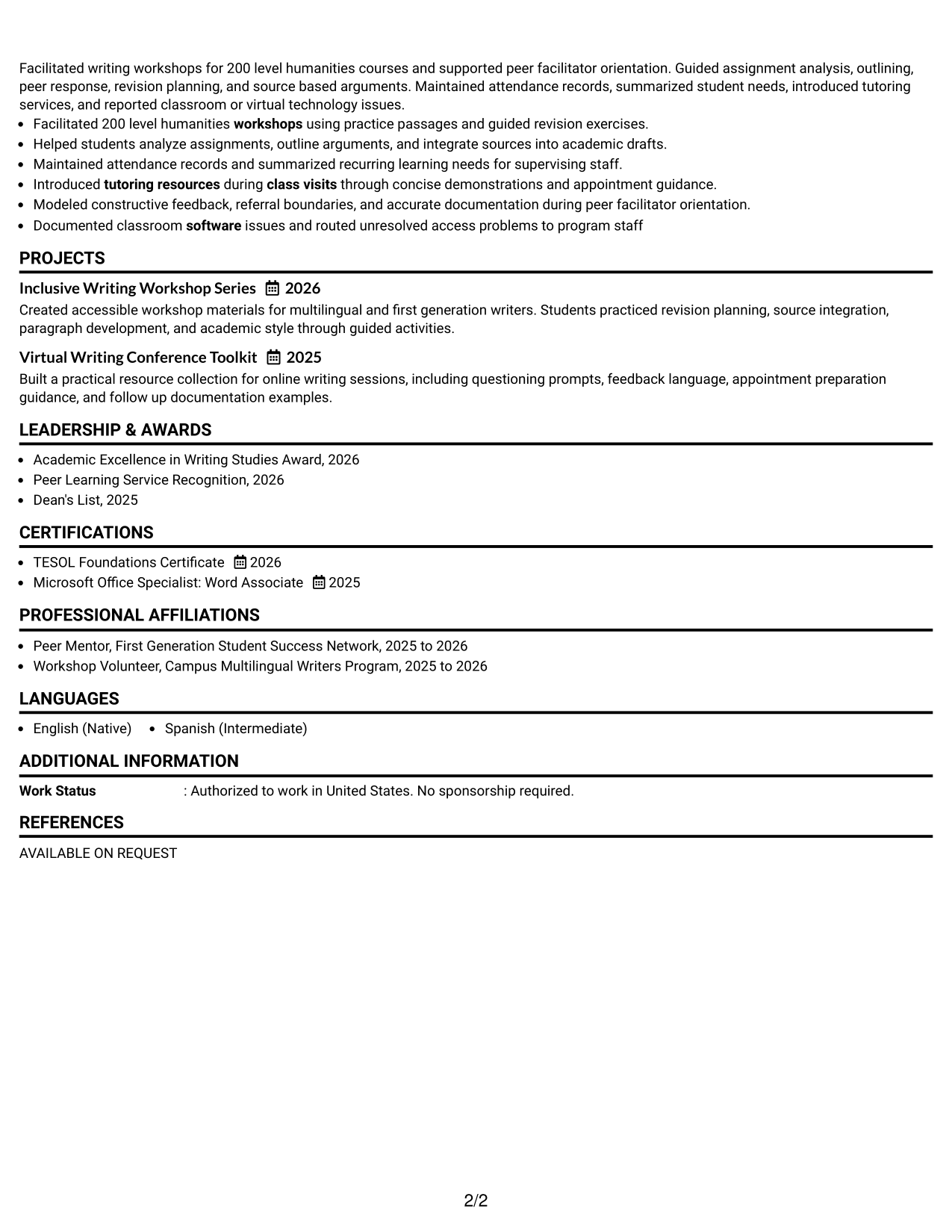
#3 One Column Format with Photo Right Resume Example
A right-side photo adds personal identification while the one-column body keeps resume sections in a simple scan path.
Why This Format Works
- One-column body keeps experience and education in an uninterrupted reading sequence.
- Photo stays separate from the body, leaving skills and credentials clearly structured.
- Full-width content supports readable achievement bullets and project descriptions.
Best For
- Markets where resume photos are customary
- Applications needing simple body flow
- Experience with fuller bullet detail
- Readers who value linear navigation
- Photo-based presentation with structured sections
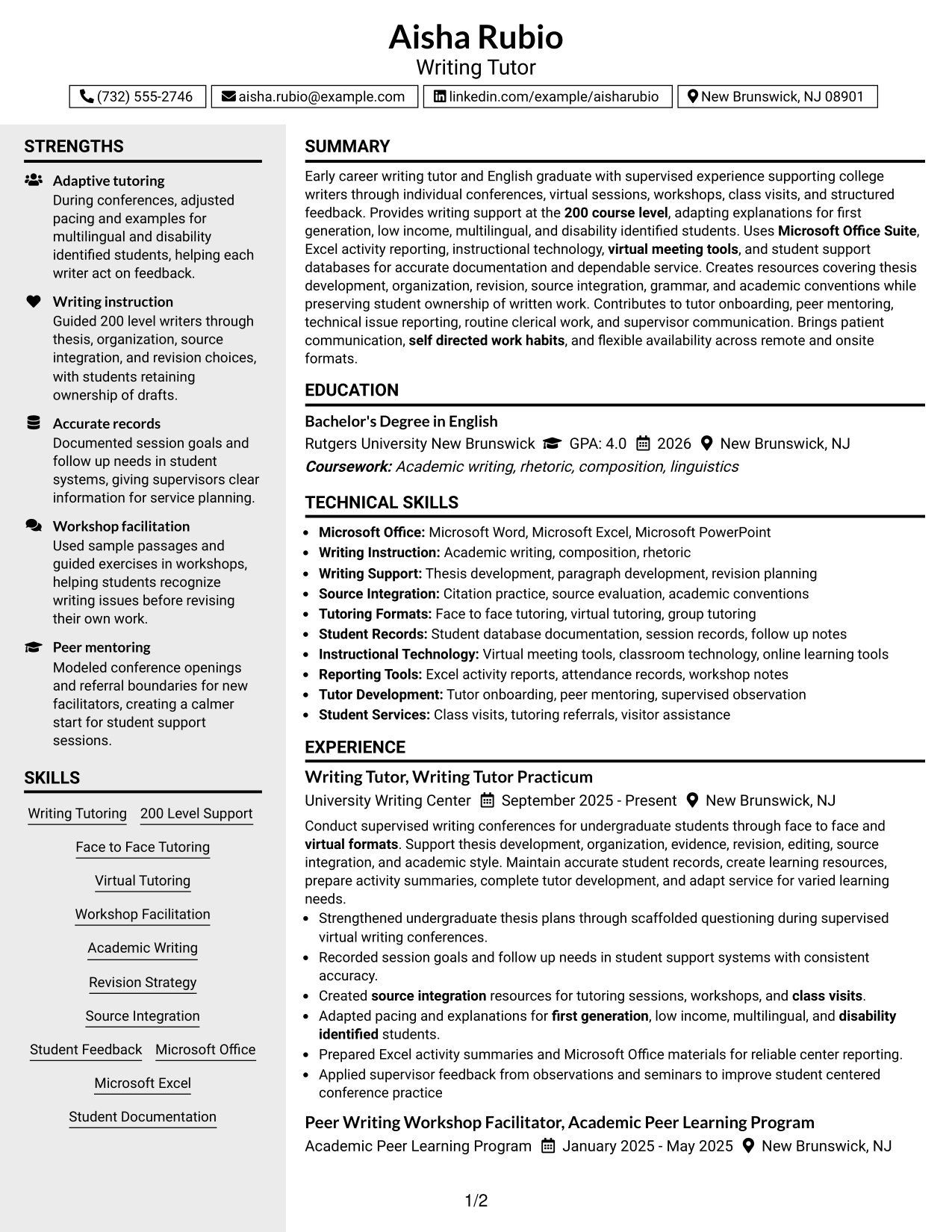
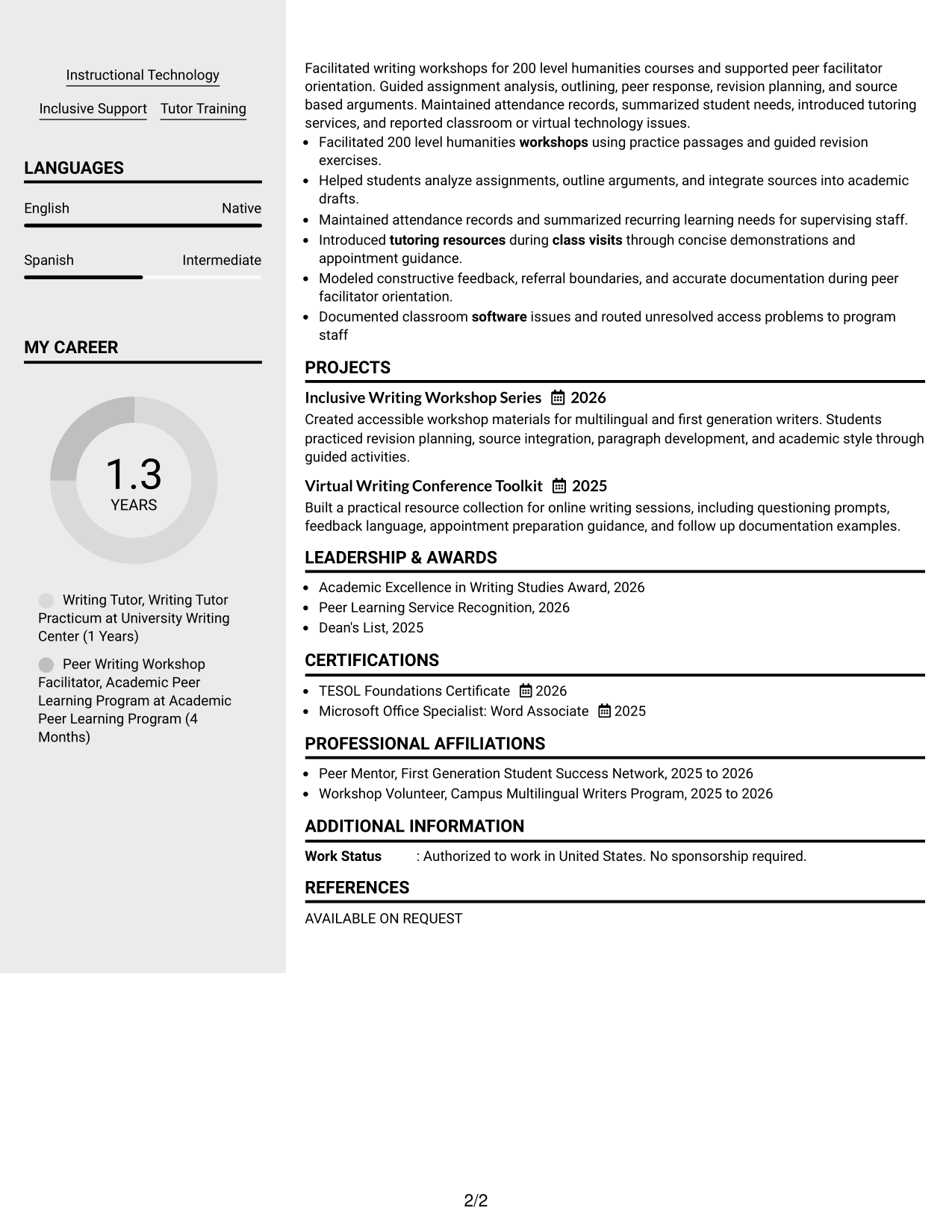
#4 Clean Two Column Sidebar Format Resume Example
A clean two-column sidebar separates compact supporting details from the main content, helping recruiters scan related sections in parallel.
Why This Format Works
- Main-column space keeps experience prominent while supporting details stay separate.
- Sidebar grouping makes skills and credentials easier to locate during quick review.
- Parallel sections reduce long vertical searches across education and supporting content.
Best For
- Resumes with compact skills sections
- Readers comparing experience and credentials
- Balanced main and supporting content
- Applications with several qualification groups
- Two-column visual organization
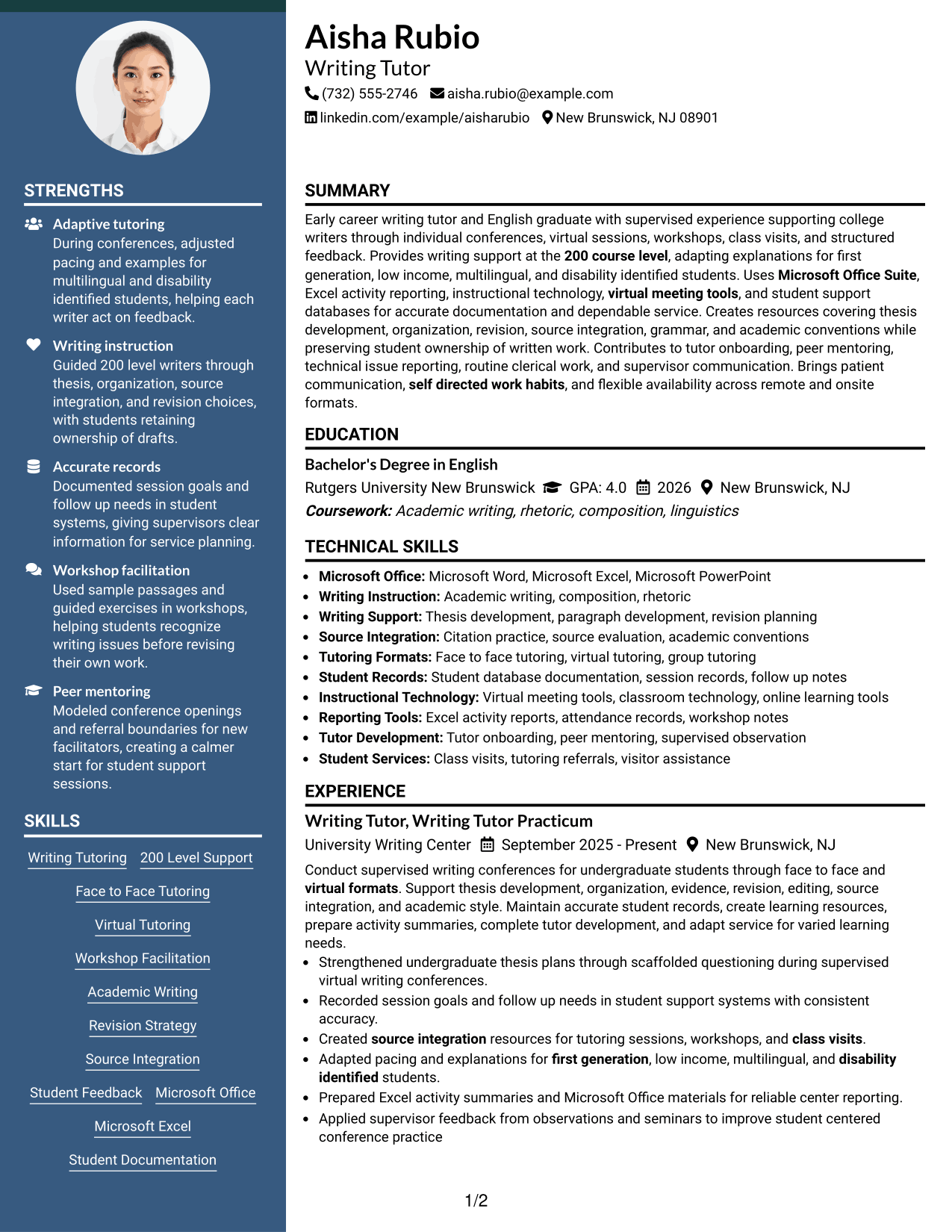
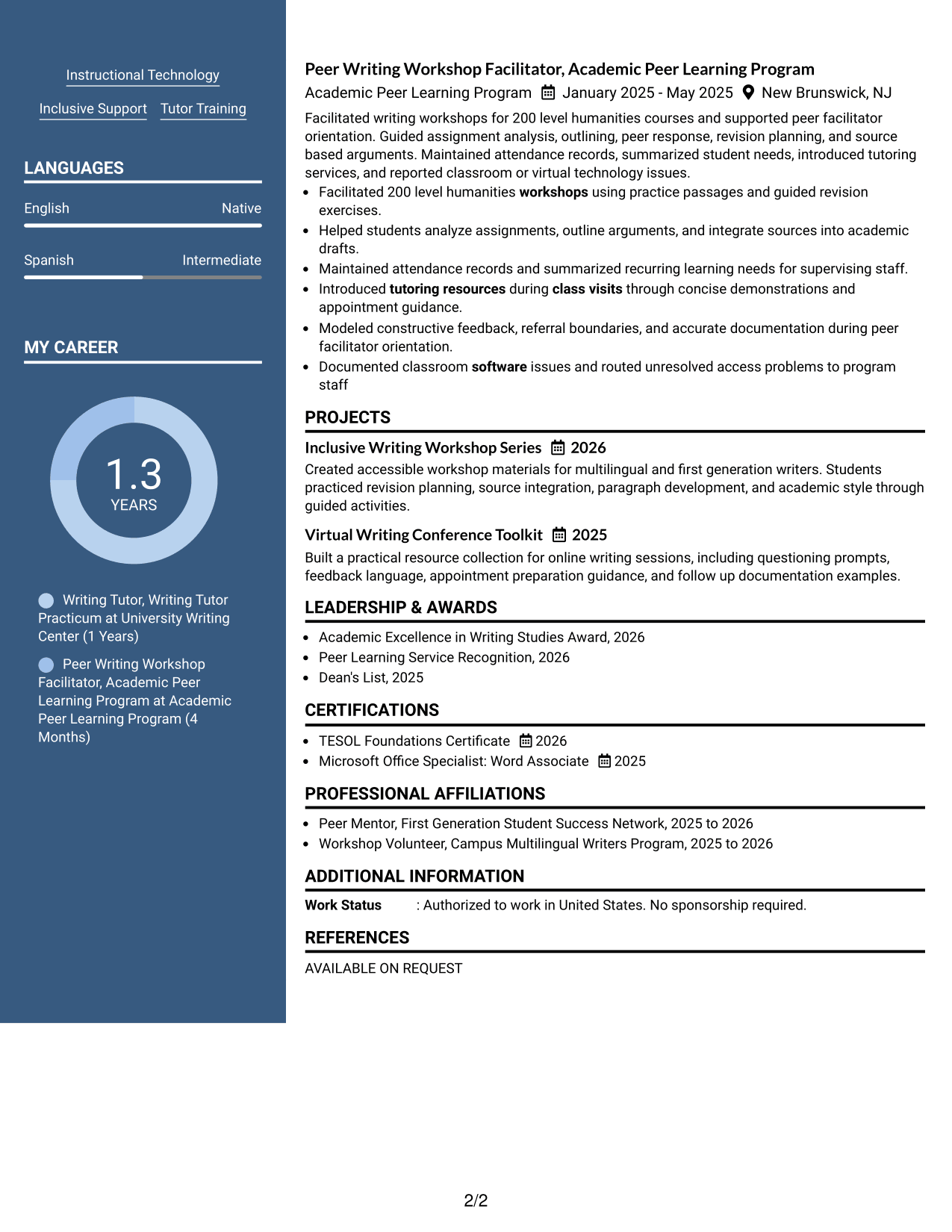
#5 Two Column Format Resume Example
Two balanced columns divide the resume into parallel areas, giving recruiters a compact way to compare core and supporting information.
Why This Format Works
- Parallel columns shorten travel between experience, skills, and education sections.
- Balanced space supports several content categories without one long vertical stream.
- Clear column separation helps recruiters distinguish core evidence from supporting credentials.
Best For
- Compact review of varied resume content
- Candidates with multiple supporting sections
- Side-by-side qualification scanning
- Resumes balancing experience and education
- Applications where space efficiency matters
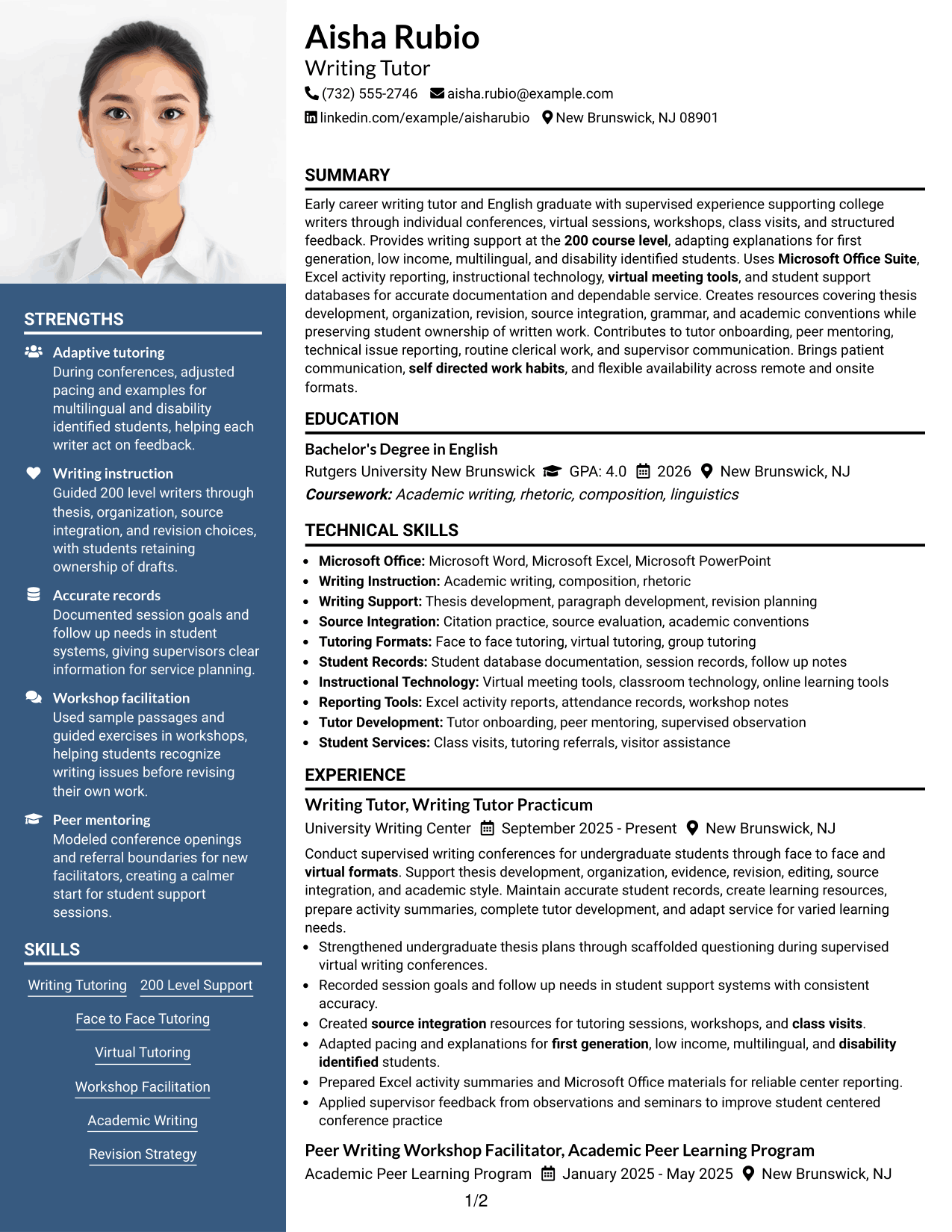
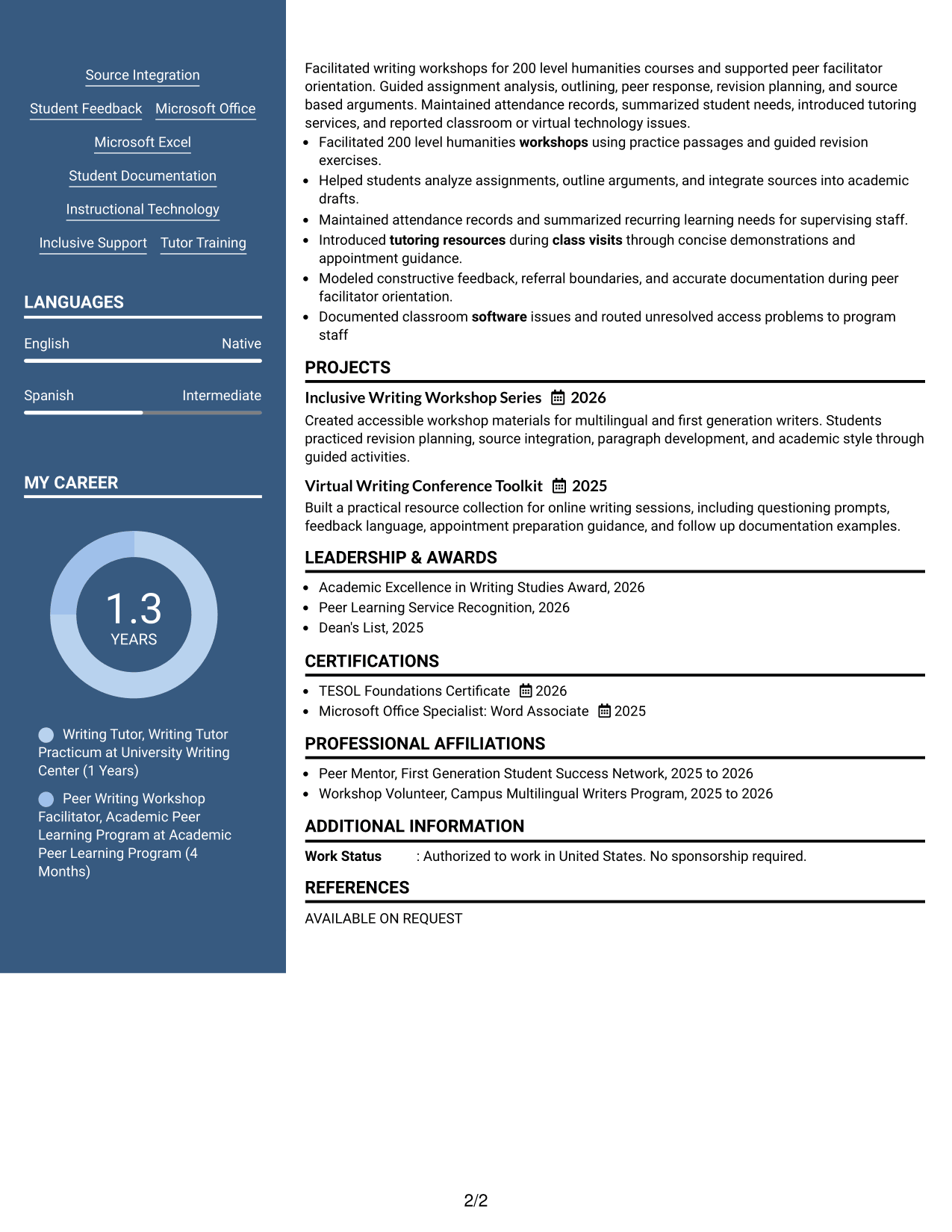
#6 Photo Header Two Column Format Resume Example
A photo header identifies the applicant while two body columns help recruiters scan experience and supporting sections without a long scroll.
Why This Format Works
- Two-column body keeps experience distinct from skills, education, and credentials.
- Header photo remains separate from the sections used to judge qualifications.
- Compact column structure helps recruiters move between achievements and supporting information.
Best For
- Regions where professional photos are expected
- Resumes with broad supporting information
- Quick comparison across resume sections
- Experience supported by education and credentials
- Compact two-column presentation
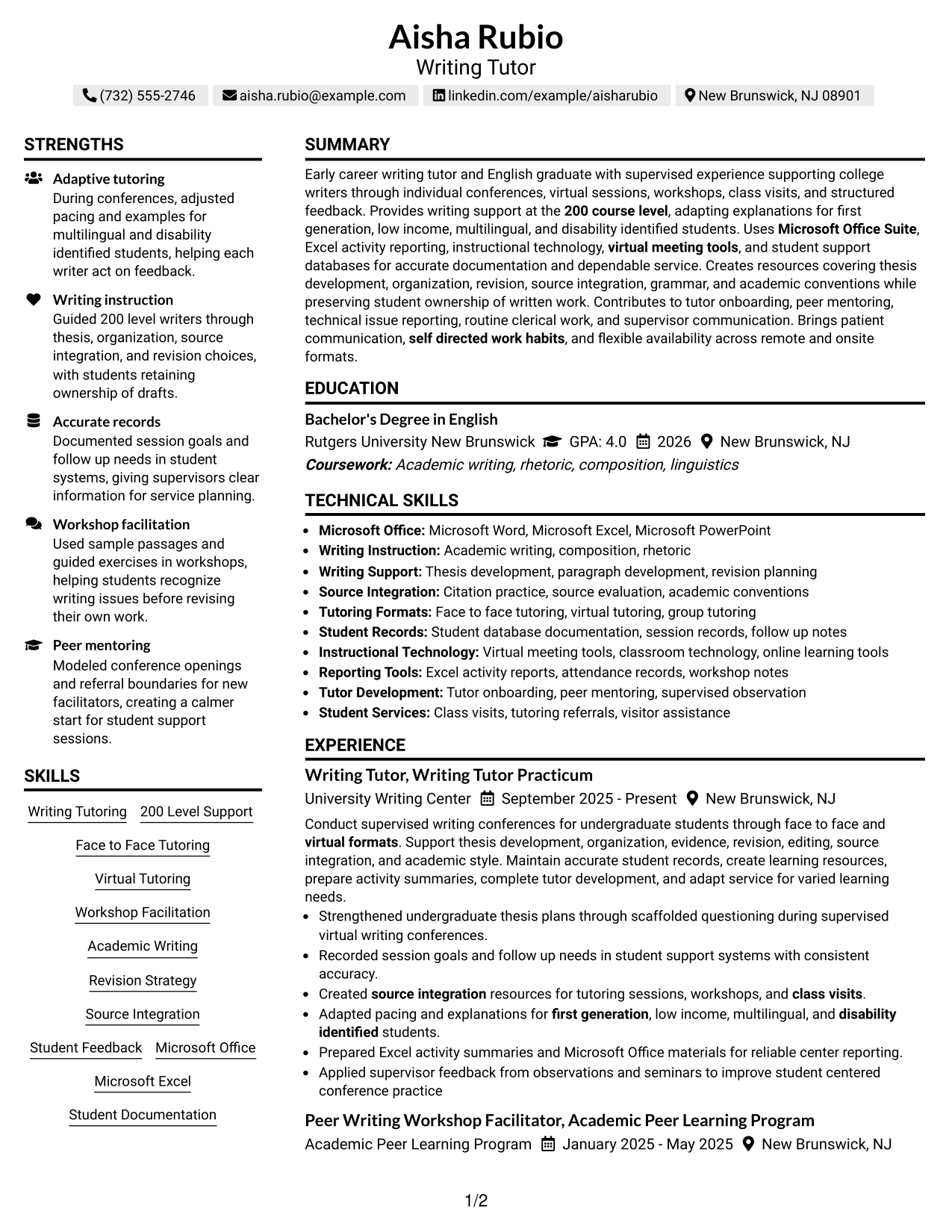
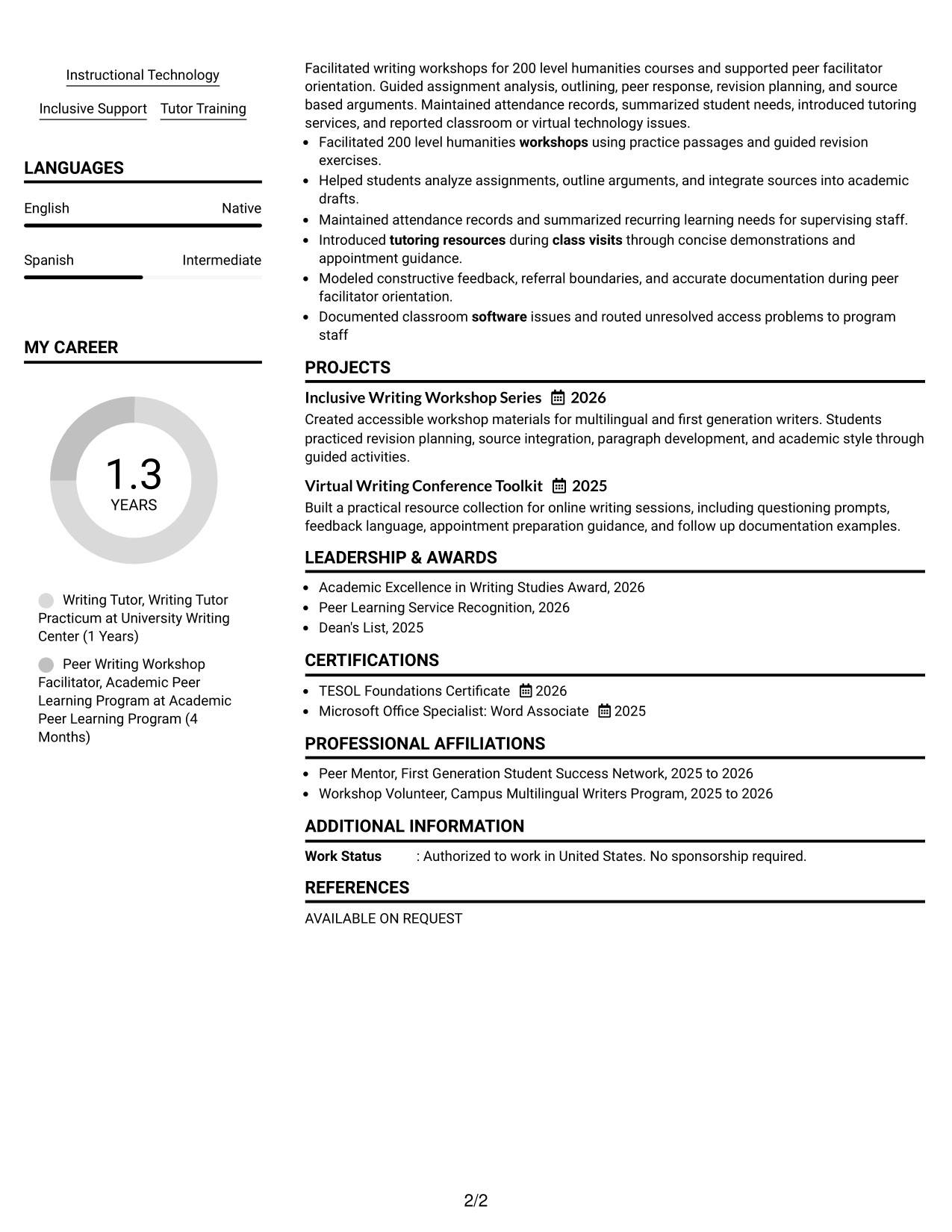
#7 Simple Two Column Format Resume Example
A simple two-column structure gives recruiters a clear split between main evidence and supporting details with limited visual decoration.
Why This Format Works
- Simple column boundaries keep experience separate from shorter supporting sections.
- Reduced decoration keeps attention on achievements, skills, education, and credentials.
- Side-by-side structure makes supporting qualifications easier to reference during review.
Best For
- Readers who prefer restrained visual styling
- Resumes with concise supporting details
- Applications needing clear content separation
- Experience-led resumes with secondary qualifications
- Simple two-column navigation
See Also
- Your First Task After Graduation: Writing a Resume That Gets Noticed
- 7 Intern Manufacturing Operations Resume Templates with Example
- 7 Financial Aid Representative Resume Templates with Example
- 7 Administrative Clerk Resume Templates with Example
- 7 Logistics Coordinator - International Programs Resume Templates with Example
- 7 Senior Radar Systems Engineer Resume Templates with Example
- 7 Instructional Assistant, Transitional Kindergarten Resume Templates with Example
- 7 Supply Planning Manager Resume Templates with Example
- 7 Web Optimization and Support Analyst Resume Templates with Example
- 7 Line Coordinator 2 Resume Templates with Example
Frequently Asked Questions
Are these Writing Tutor resume templates ATS-friendly?
They use clear headings and structured resume sections that are easy for many applicant tracking systems to read. Keep standard section names and use role keywords only when they match your real experience.
Is this guide based on one resume or several resumes?
It uses one complete Writing Tutor resume and shows how different layouts change the way the same information is organized and scanned.
What should a Writing Tutor resume include?
Include a focused summary, tutoring experience, workshop or peer-learning work, education, relevant projects, skills, certifications, and clear evidence of accurate student-support documentation.
Which skills matter most on a Writing Tutor resume?
Useful skills include college writing tutoring, revision strategy, source integration, student-centered feedback, workshop facilitation, Microsoft Office, Excel reporting, instructional technology, and inclusive student support.
How should I describe tutoring work without taking credit for a student's writing?
Focus on the guidance you provided. Describe questioning, feedback, revision planning, source support, workshop facilitation, and learning strategies while making clear that students kept ownership of their work.
Should I include TESOL training on a Writing Tutor resume?
Yes, when it is relevant and accurate. TESOL training can support your evidence of working with multilingual writers, but it should appear as a real credential rather than a general claim.
Should I include a photo on a U.S. Writing Tutor resume?
For most U.S. applications, a no-photo resume is the safer standard choice. Use a photo only when it is customary or specifically appropriate for the application context.
Can I customize these resume templates?
Yes. Adjust the resume text and layout to match your real tutoring experience, education, skills, certifications, and the requirements of the position you are targeting.