7 Civil Planning Engineer - Highways and Drainage Infrastructure Cover Letter Templates with Example
This practical guide to the Civil Planning Engineer - Highways and Drainage Infrastructure cover letter shows how to shape a persuasive application across seven layouts.
What Makes a Great Civil Planning Engineer - Highways and Drainage Infrastructure Cover Letter in 2026
A strong letter connects highways and drainage design with the practical needs of construction delivery. Make your opening clear about your interest and the value you can bring to this role.
Use relevant evidence, such as progressing S38, S278 and S104 approvals or resolving design issues with site teams. Link that experience to the employer’s needs and give a clear, genuine reason for your interest.
The featured example moves from role interest to design coordination, approvals and a clear close; adapt this focused progression while choosing a presentation suited to the employer and communication context.
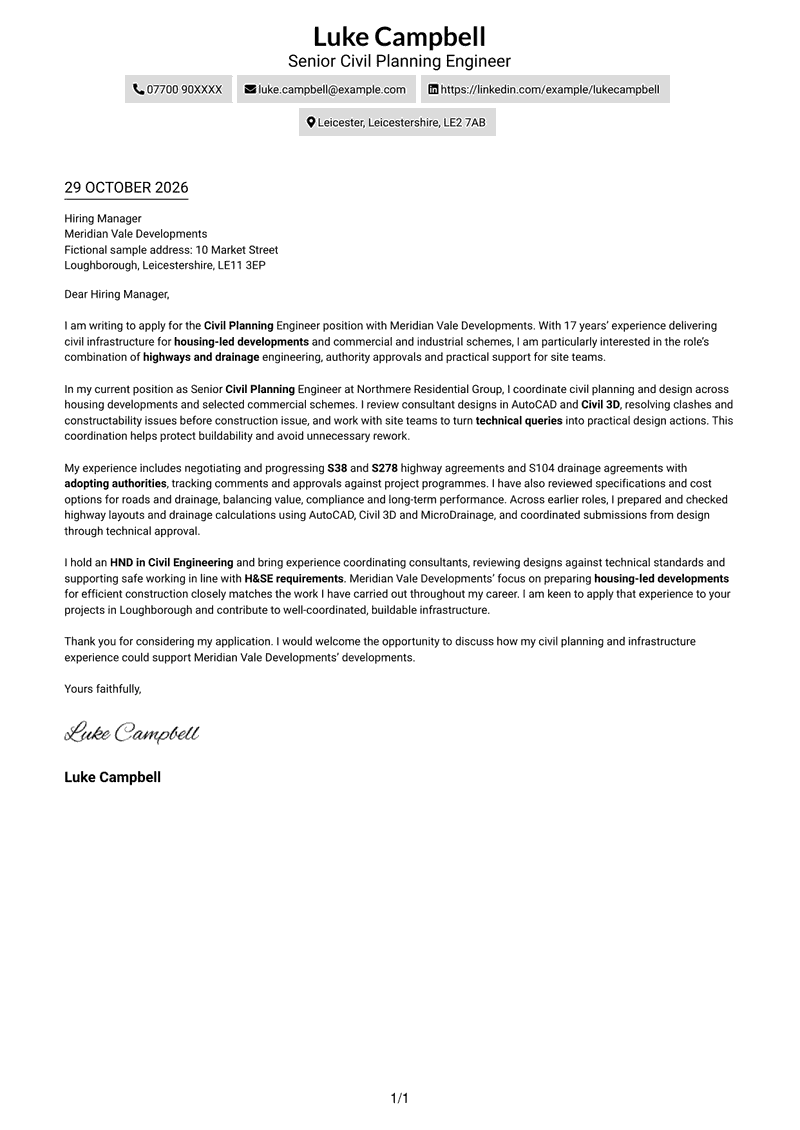
#1 Simple One Column Format Cover Letter Example
A single-column layout keeps the sender details in the header and the full letter on one clear reading path.
Why This Format Works
- The sender’s details remain in the header, apart from the letter paragraphs.
- Reviewers can follow the opening, evidence and close along one reading path.
- With no internal headings, the body keeps a familiar letter style.
Best For
- Single-column correspondence
- Header-based contact details
- Multi-paragraph letters
- Employer-specific motivation
- Evidence-led applications
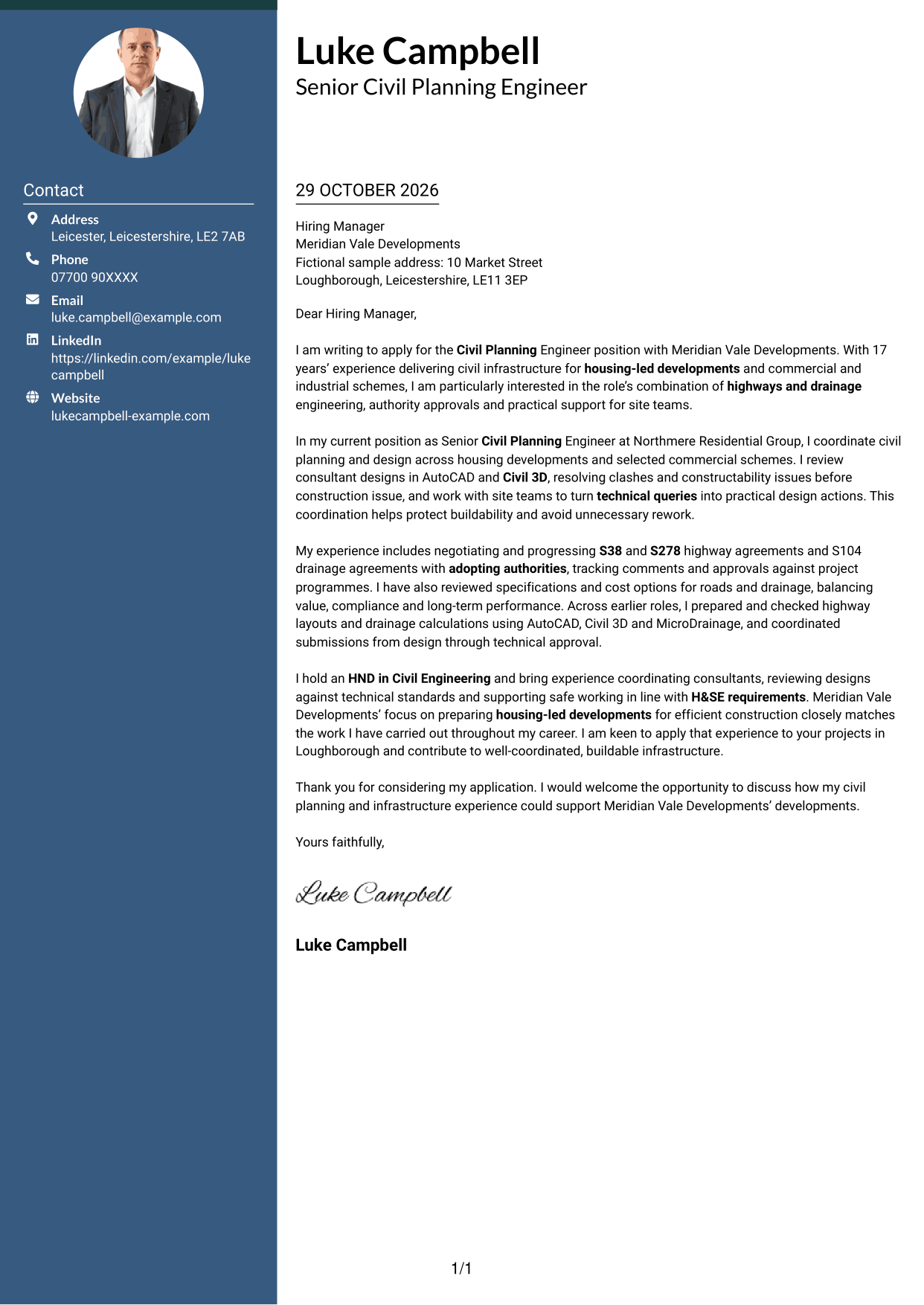
#2 Two Column Format Cover Letter Example
A contact sidebar sits beside one continuous letter body, separating contact details without dividing the argument.
Why This Format Works
- Contact information sits apart from the message, making it easy to locate.
- The letter’s uninterrupted body lets reviewers follow its case in sequence.
- Without argument headings, the prose retains a conventional correspondence style.
Best For
- Side-by-side contact and body layout
- Letters with detailed role alignment
- Formal employer correspondence
- Multi-paragraph applications
- Evidence-led applications
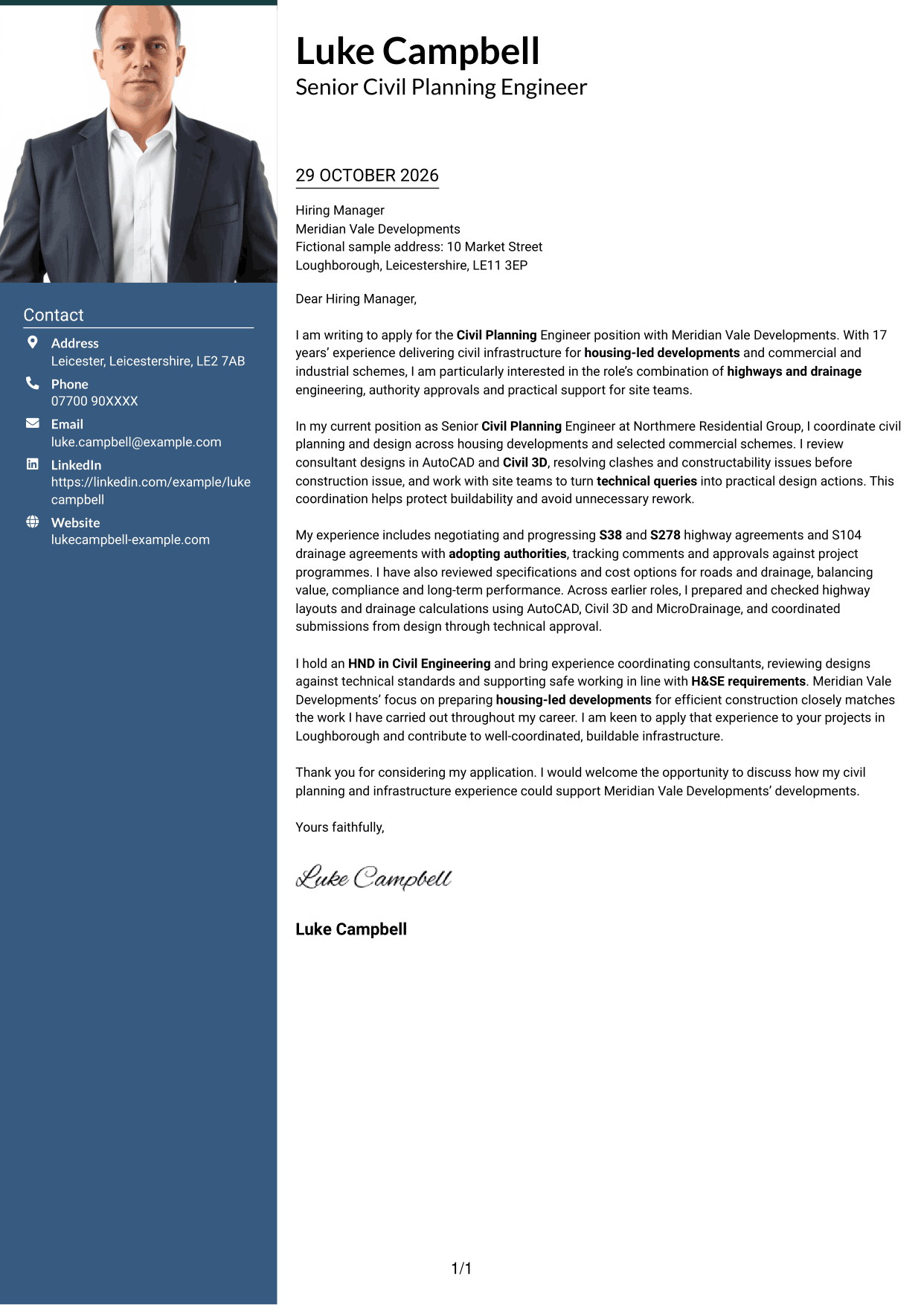
#3 Photo Header Two Column Format Cover Letter Example
A portrait accompanies the two-column layout, adding a personal visual element while the letter remains one continuous body.
Why This Format Works
- Portrait imagery offers a clear visual choice without changing the letter’s structure.
- Contact information remains distinct from the continuous persuasive message.
- The body’s paragraphs retain a natural order from interest to closing.
Best For
- Portrait-led document preference
- Separate contact and letter areas
- Multi-paragraph correspondence
- Employer-specific motivation
- Evidence across several paragraphs
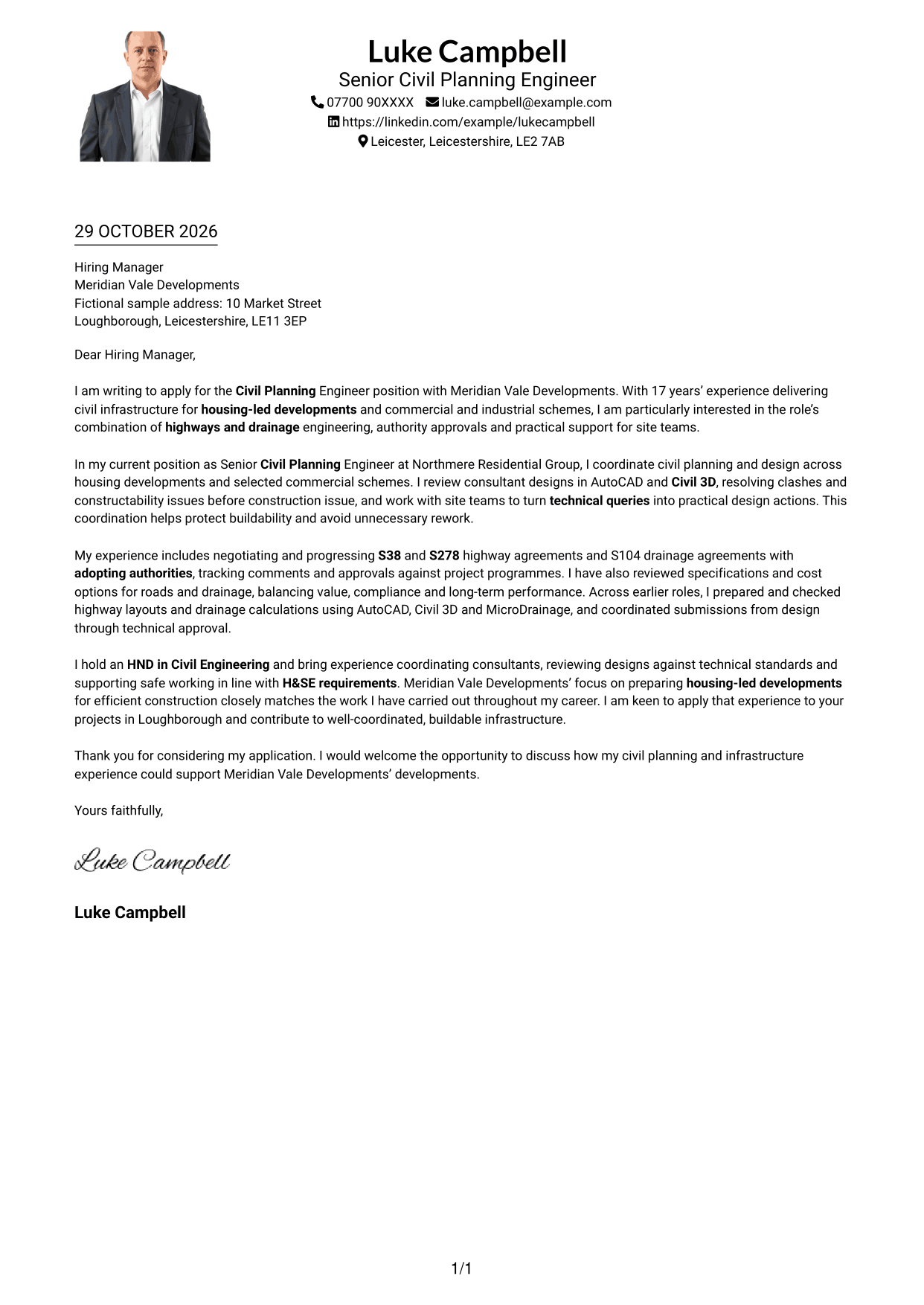
#4 One Column Format with Photo Cover Letter Example
The one-column letter includes a photo, a visual choice for applicants who want portrait imagery alongside their correspondence.
Why This Format Works
- The portrait adds a visual element while the message remains in one column.
- Sender details in the header stay separate from the letter’s paragraphs.
- Reviewers can read the argument in sequence without parallel body content.
Best For
- One-column correspondence
- Portrait imagery preference
- Header-based contact details
- Multi-paragraph letters
- Employer-focused applications
#5 Simple Two Column Format Cover Letter Example
A contact sidebar beside one continuous letter body offers a simple way to keep contact details separate from the message.
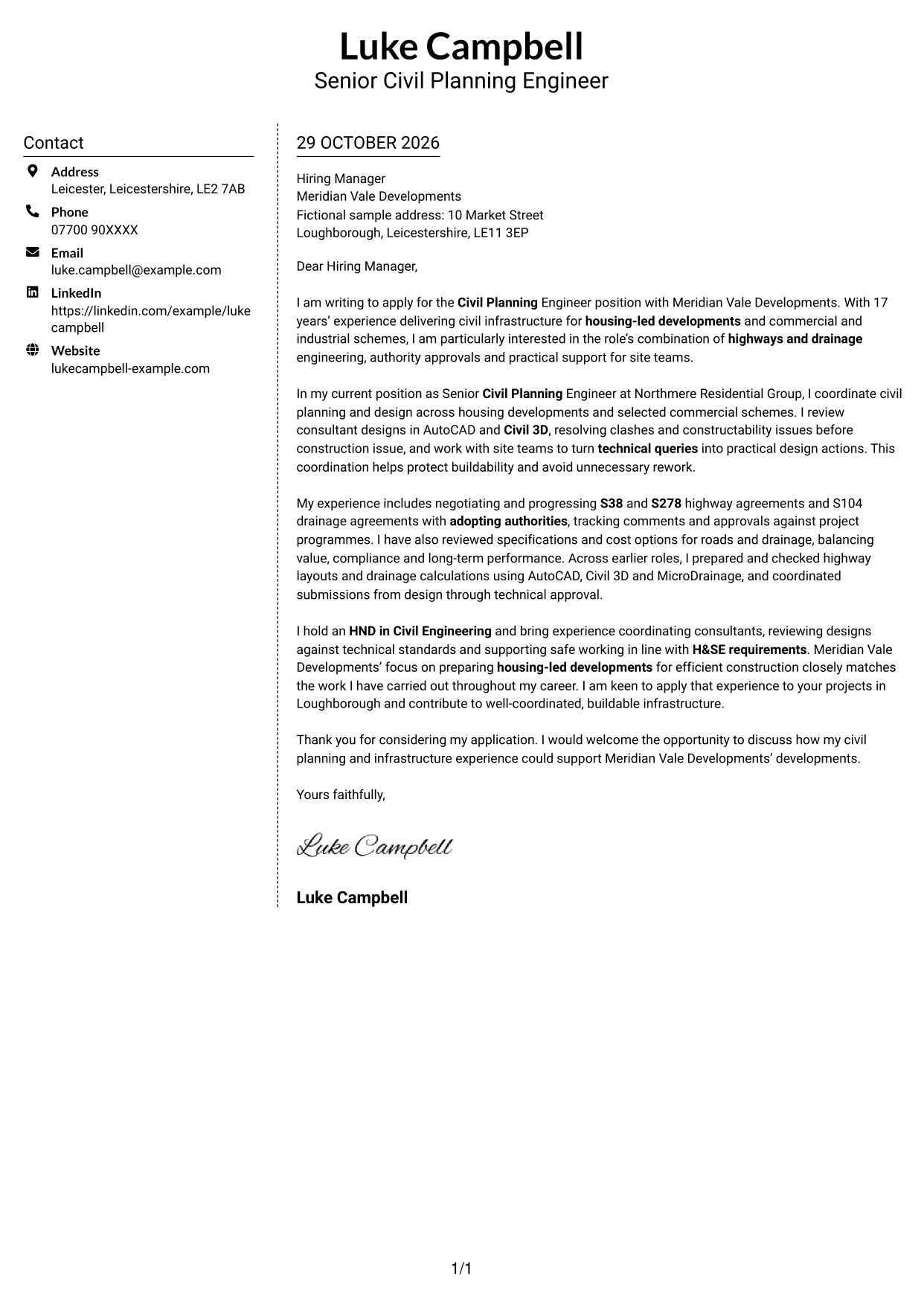
Why This Format Works
- Contact details occupy a sidebar, apart from the continuous letter body.
- All argument paragraphs remain together, so the case reads in sequence.
- The absence of internal headings keeps the message in a familiar letter form.
Best For
- Separate contact and letter areas
- Formal application letters
- Multi-paragraph correspondence
- Clear role alignment
- Evidence-led messages
#6 Modern Icon Format Cover Letter Example
Contact icons add visual cues to the details, while a sidebar keeps them beside one continuous letter body.
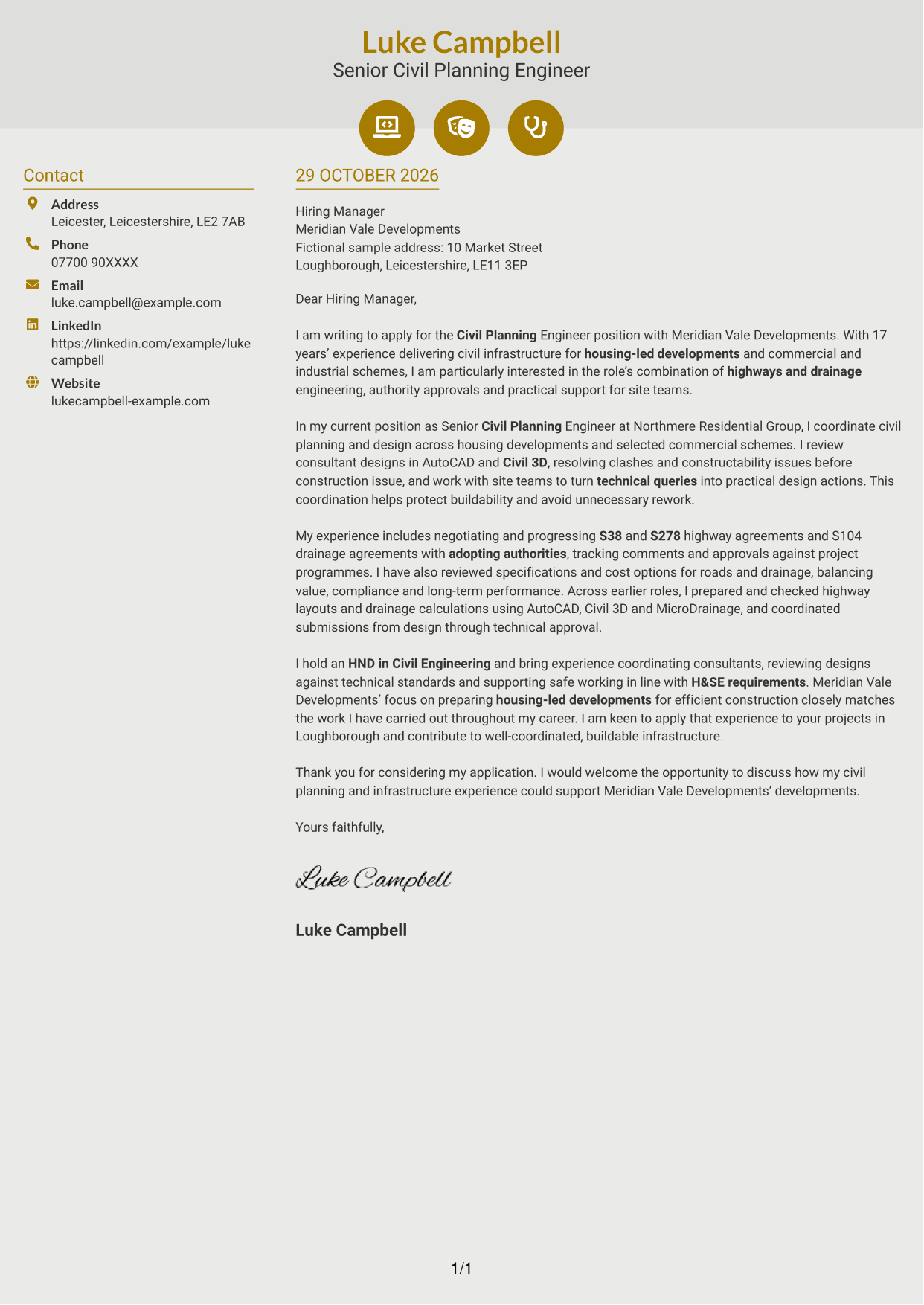
Why This Format Works
- Contact icons cue sender details, not the letter’s motivation or evidence.
- The sidebar leaves the argument in one continuous body for ordered reading.
- Header accents add visual interest without assigning labels to letter paragraphs.
Best For
- Icon-led contact details
- Side-by-side contact and letter areas
- Multi-paragraph applications
- Employer-specific motivation
- A visually distinct header
#7 Creative Two Tone Format Cover Letter Example
The two-column layout places contact details beside the letter, keeping the full argument together in one body.
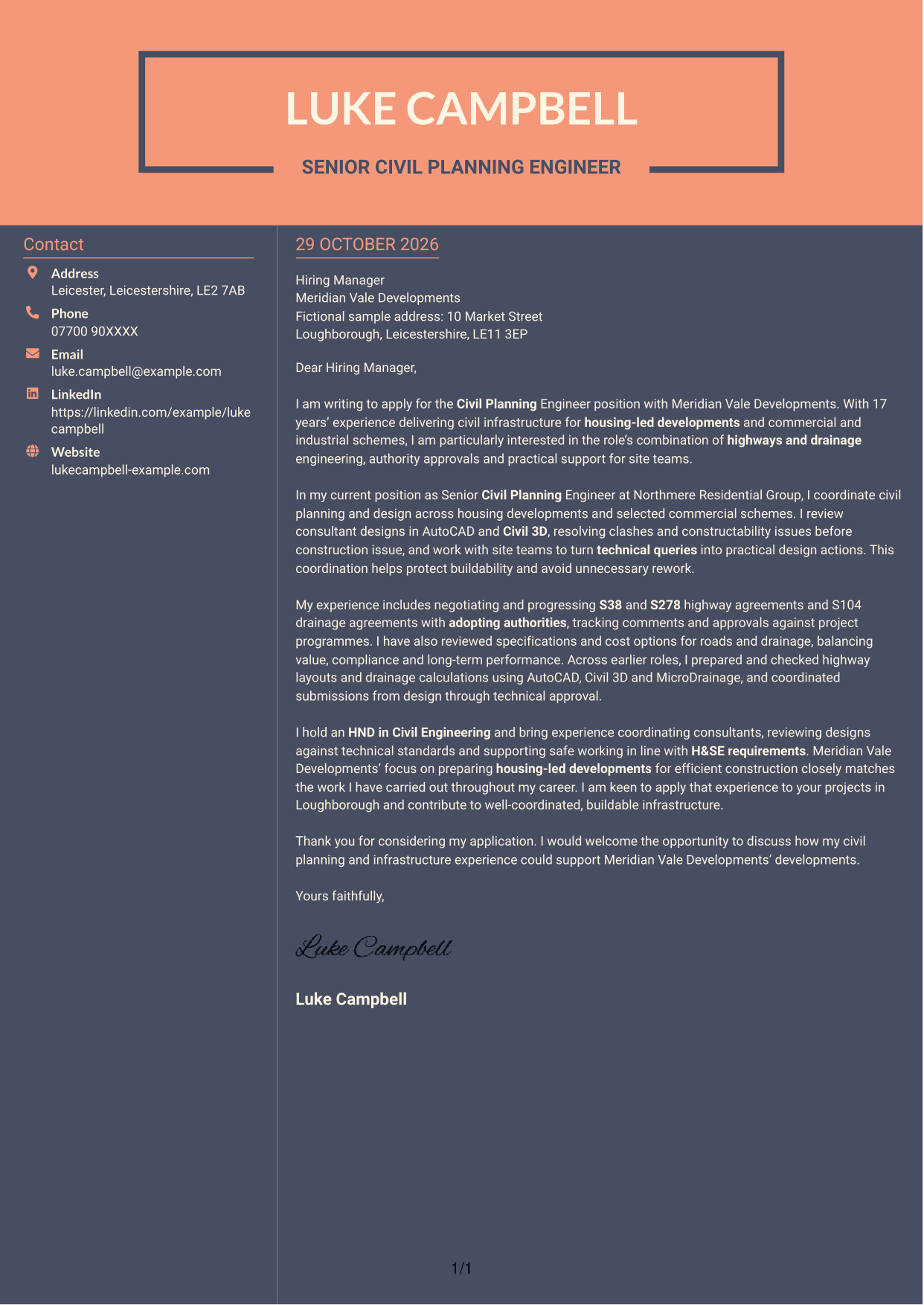
Why This Format Works
- Contact details sit in a sidebar, leaving the message in one continuous body.
- Reviewers can follow the letter’s case without switching between argument columns.
- No internal headings preserve the familiar flow of written correspondence.
Best For
- Side-by-side contact and letter areas
- Continuous letter arguments
- Formal employer correspondence
- Applications with detailed role alignment
- Multi-paragraph messages
See Also
- 7 Civil Planning Engineer - Highways and Drainage Infrastructure CV Templates with Example
- 7 Assistant Civil Engineer - Highways and Drainage Design CV Templates with Example
- 7 Chartered Civil Engineer - Highways, Drainage and Flood Risk CV Templates with Example
- 7 Civil Project Engineer - Highways and Drainage CV Templates with Example
- 7 Principal Civil Engineer - Drainage and Highways CV Templates with Example
- 7 Senior Civil Engineer - Drainage, Highways and SuDS CV Templates with Example
- 7 Civil Engineer Lead - Drainage and Infrastructure Design CV Templates with Example
- 7 Civil Drainage Engineer CV Templates with Example
- 7 Assistant Civil Engineer - Highways and Drainage Design Cover Letter Templates with Example
- 7 Chartered Civil Engineer - Highways, Drainage and Flood Risk Cover Letter Templates with Example
Frequently Asked Questions
What should a Civil Planning Engineer - Highways and Drainage Infrastructure cover letter highlight?
Show how your experience relates to highways and drainage design, authority approvals and practical support for site teams. Strong examples can explain how you progressed S38, S278 or S104 agreements, coordinated consultants or resolved technical queries.
How can I make my experience relevant to this role?
Choose a specific piece of work and explain what you did and why it mattered. For example, describe how you reviewed a design, addressed a constructability issue or helped keep an approval on programme.
How should I explain my interest in the employer?
Refer to a genuine point about the employer’s housing-led development work or the role’s focus on construction-ready infrastructure. Explain why that work interests you and how your experience could contribute.
What is a clear way to structure this cover letter?
Open by naming the role and your main reason for applying. Use the body to give focused evidence of design coordination and approvals, then close by restating your interest and inviting a discussion.
Should I include every part of my work history?
No. Select the experience that best supports your fit for this position. A few relevant examples, such as coordinating authority approvals or resolving design issues, will keep the letter focused.