7 Registered Nurse - Critical Care Float Cover Letter Templates with Example
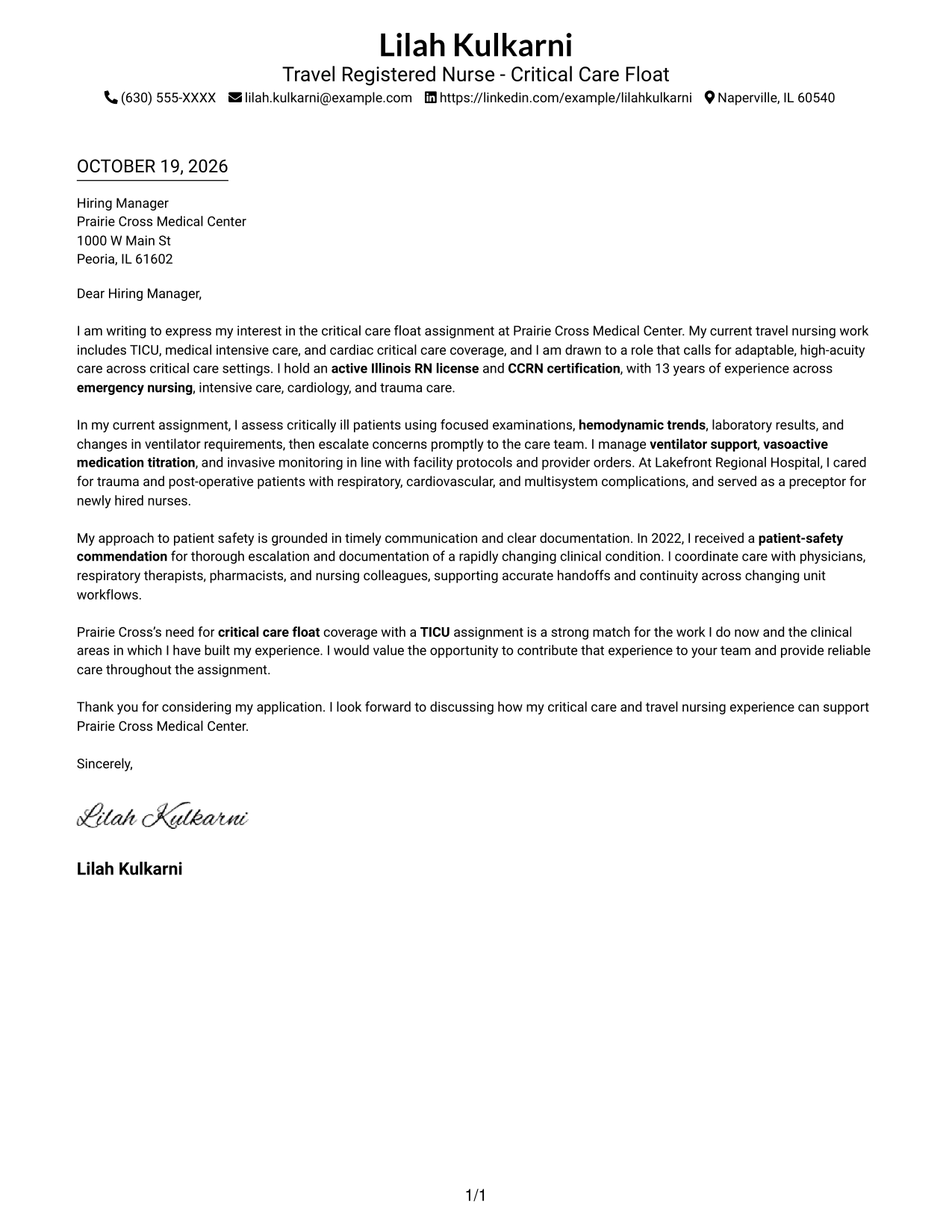
This guide helps you shape a focused Registered Nurse - Critical Care Float cover letter and compare seven layouts through image previews and editor examples.
What Makes a Great Registered Nurse - Critical Care Float Cover Letter in 2026
A strong letter links your interest in flexible, high-acuity care to the needs of a critical care float role with a TICU assignment. Keep the opening direct and explain why this work interests you.
Use clear examples of relevant practice, such as patient assessment, hemodynamic monitoring, or safe handoffs. Show how your approach supports the employer’s need for reliable care across changing unit workflows.
The featured Registered Nurse - Critical Care Float example moves from role interest to clinical evidence, patient safety, and fit. Adapt that focused progression while choosing a presentation suited to the employer and communication context.
#1 Simple One Column Format Cover Letter Example
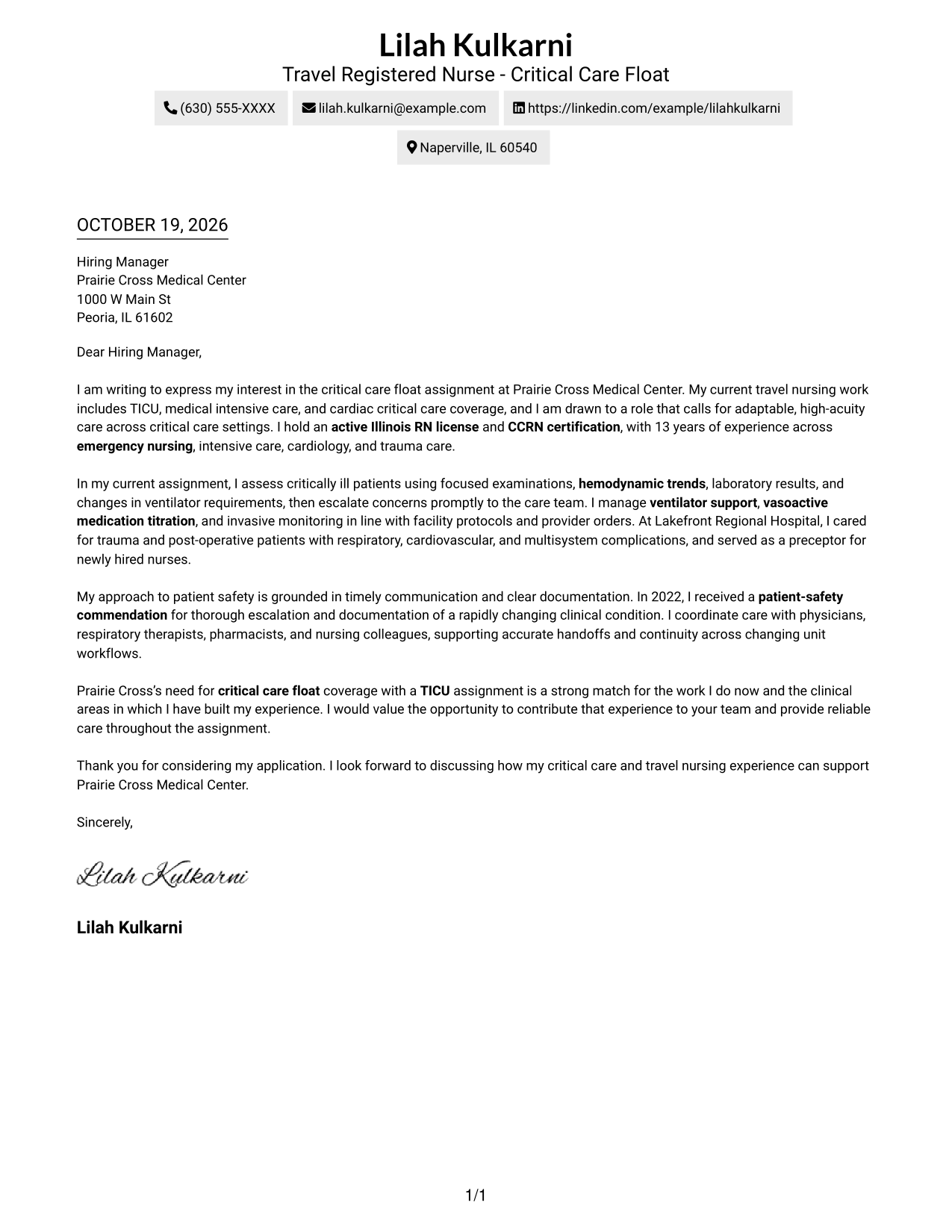
The single-column letter body gives the message one direct reading path, a useful choice for a simple, text-focused presentation.
Why This Format Works
- Sender details remain in the header, apart from the continuous letter body.
- One reading path helps reviewers follow the message from interest to closing.
- Without a sidebar, the page keeps its contact and message areas simple.
Best For
- Single-column reading preference
- Continuous letter flow
- Header-based contact details
- Text-focused applications
- Letters with a clear opening and close
#2 Two Column Format Cover Letter Example
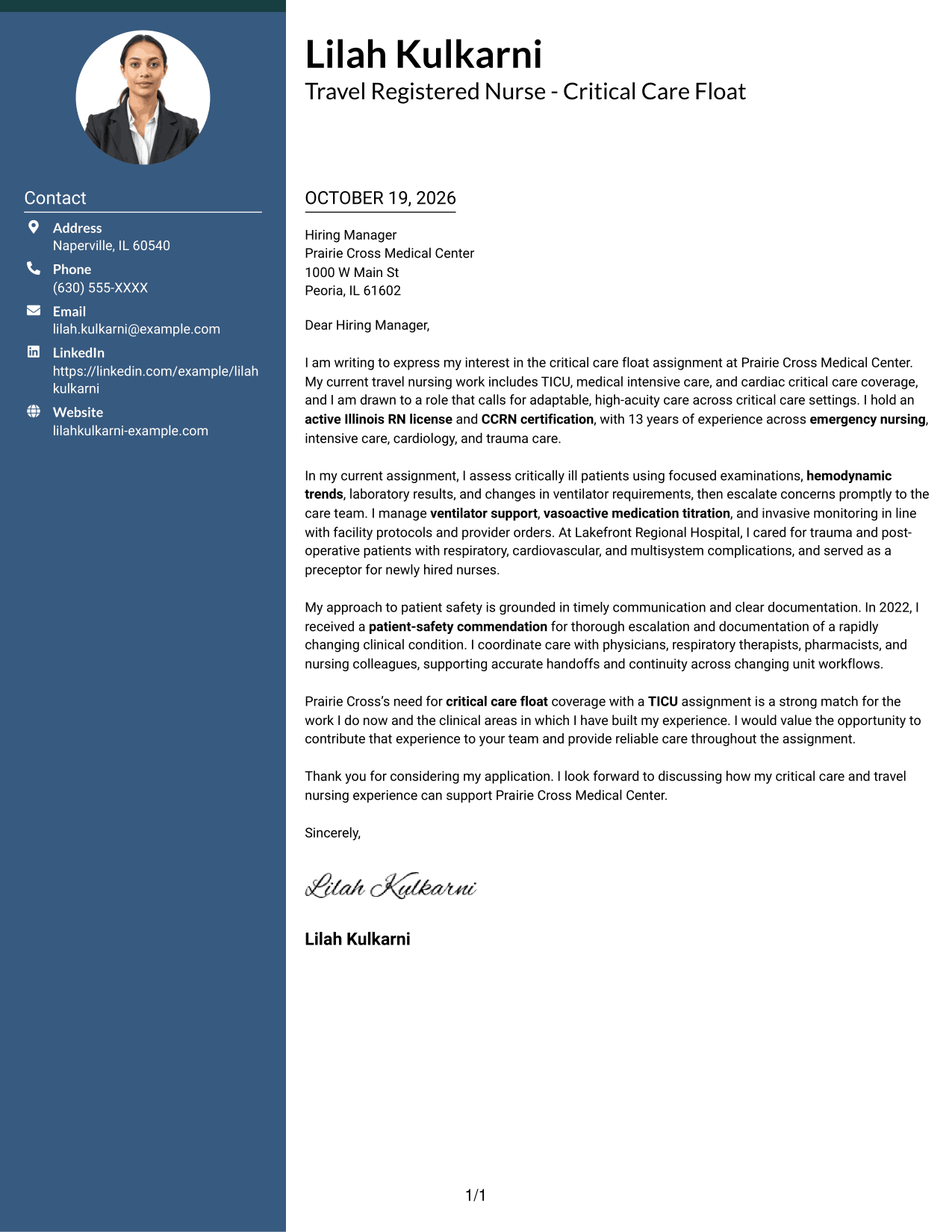
A contact sidebar sits beside the continuous letter body, keeping sender details apart from the message for quick reference.
Why This Format Works
- Contact details sit apart from the message, so reviewers can locate them directly.
- One body column keeps the letter's paragraphs in their intended sequence.
- Without a portrait, the layout keeps attention on the written application.
Best For
- Separate contact and message areas
- Uninterrupted letter paragraphs
- Readers who scan sender details first
- No-photo document preference
- Clear opening-to-close sequence
#3 Photo Header Two Column Format Cover Letter Example
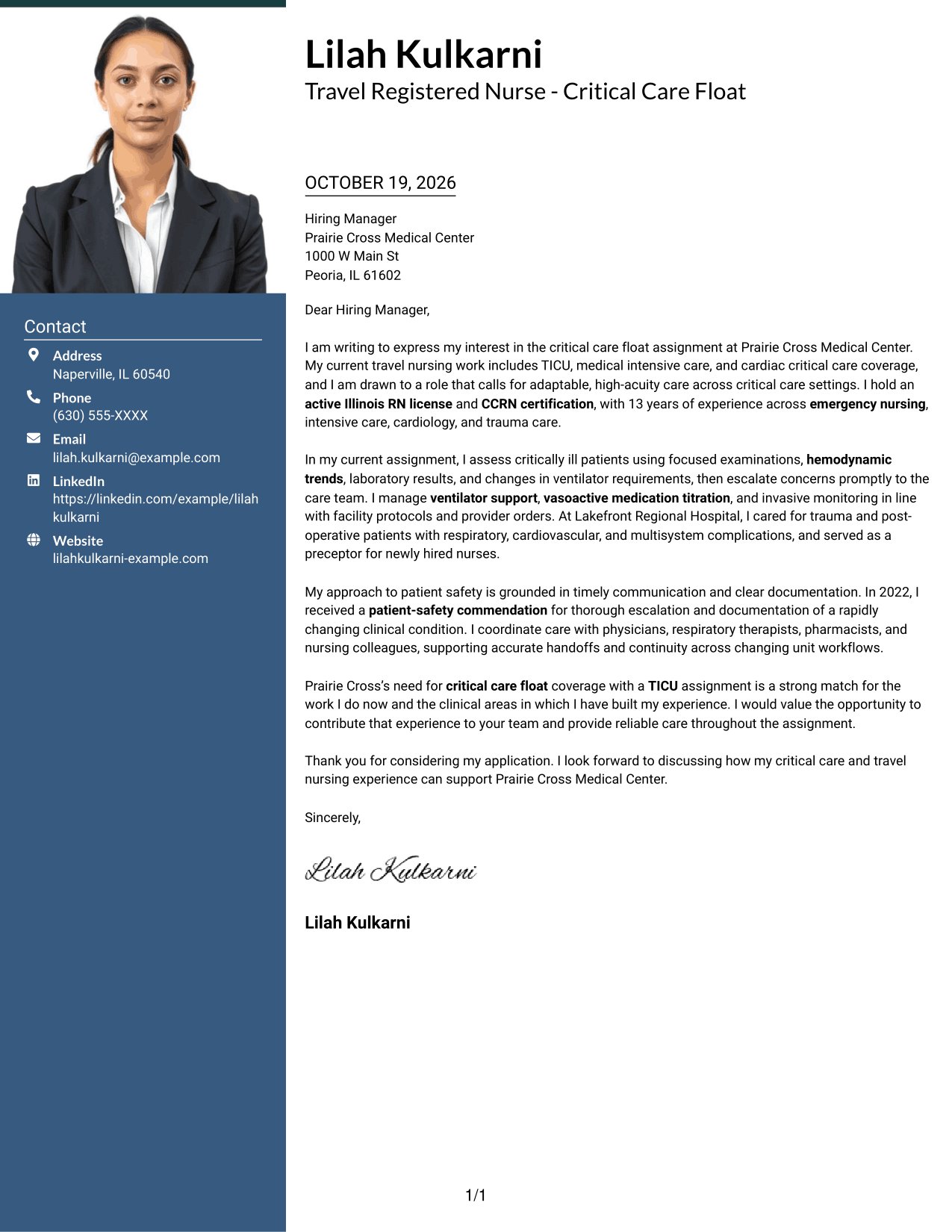
A portrait accompanies the two-column layout, where contact details sit beside one continuous letter body.
Why This Format Works
- Contact details stay in a sidebar, separate from the message paragraphs.
- The continuous body lets reviewers follow the letter's point without parallel text.
- A portrait adds a personal visual element without dividing the letter body.
Best For
- Portrait-inclusive applications
- Sidebar-based contact access
- Single-body-column reading
- Travel nursing applications
- Letters with several contact details
#4 One Column Format with Photo Cover Letter Example
The one-column letter body keeps the message together, while a photo adds a personal visual element.
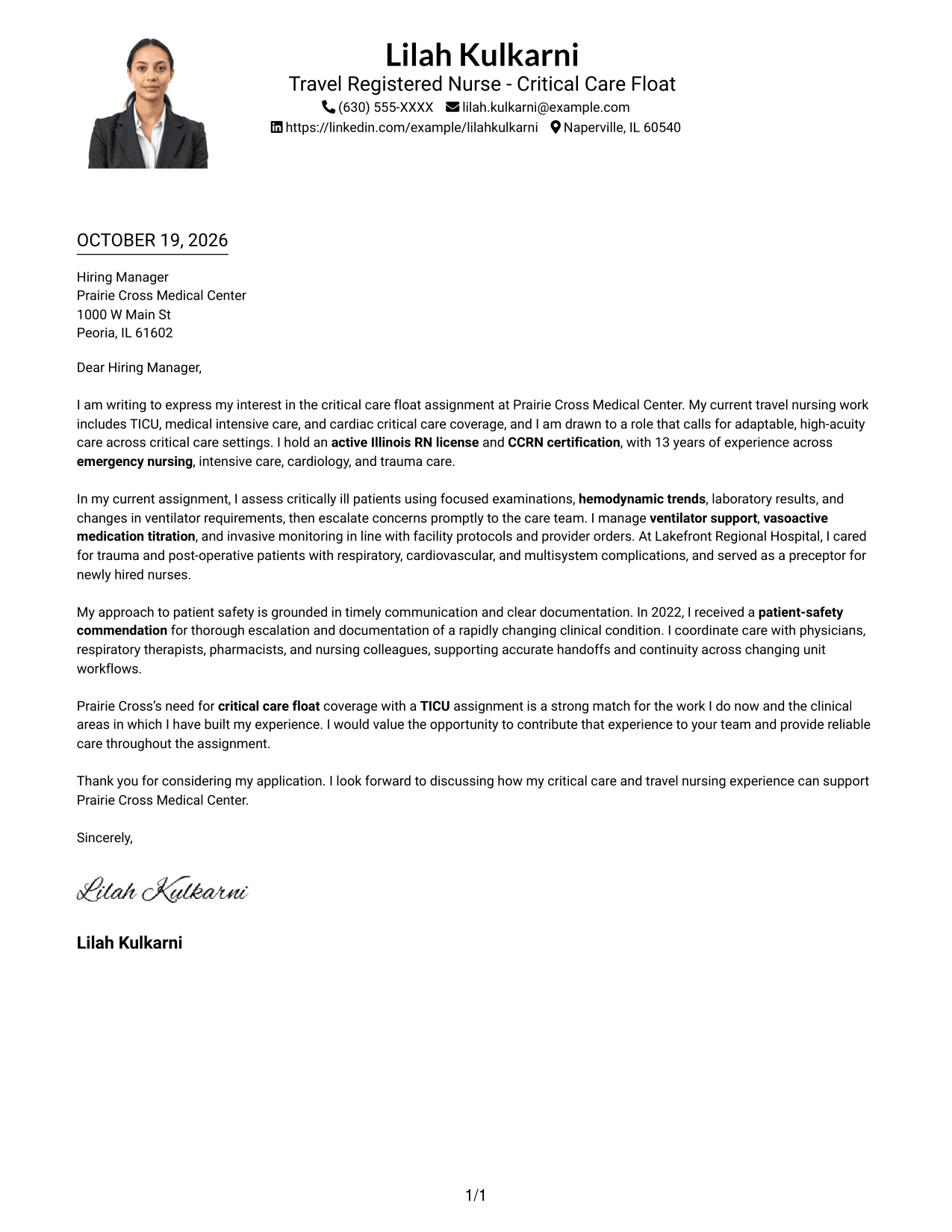
Why This Format Works
- Sender details share the header area, while the letter stays in one column.
- Paragraphs remain in a single reading path from interest through closing.
- The photo provides a visual point of identification, not a label for the message.
Best For
- Single-column letter reading
- Portrait-inclusive documents
- Header-based contact details
- Direct written-message focus
- Letters with a clear paragraph sequence
#5 Simple Two Column Format Cover Letter Example
The contact sidebar is set beside one uninterrupted letter body, giving sender details a separate place from the message.
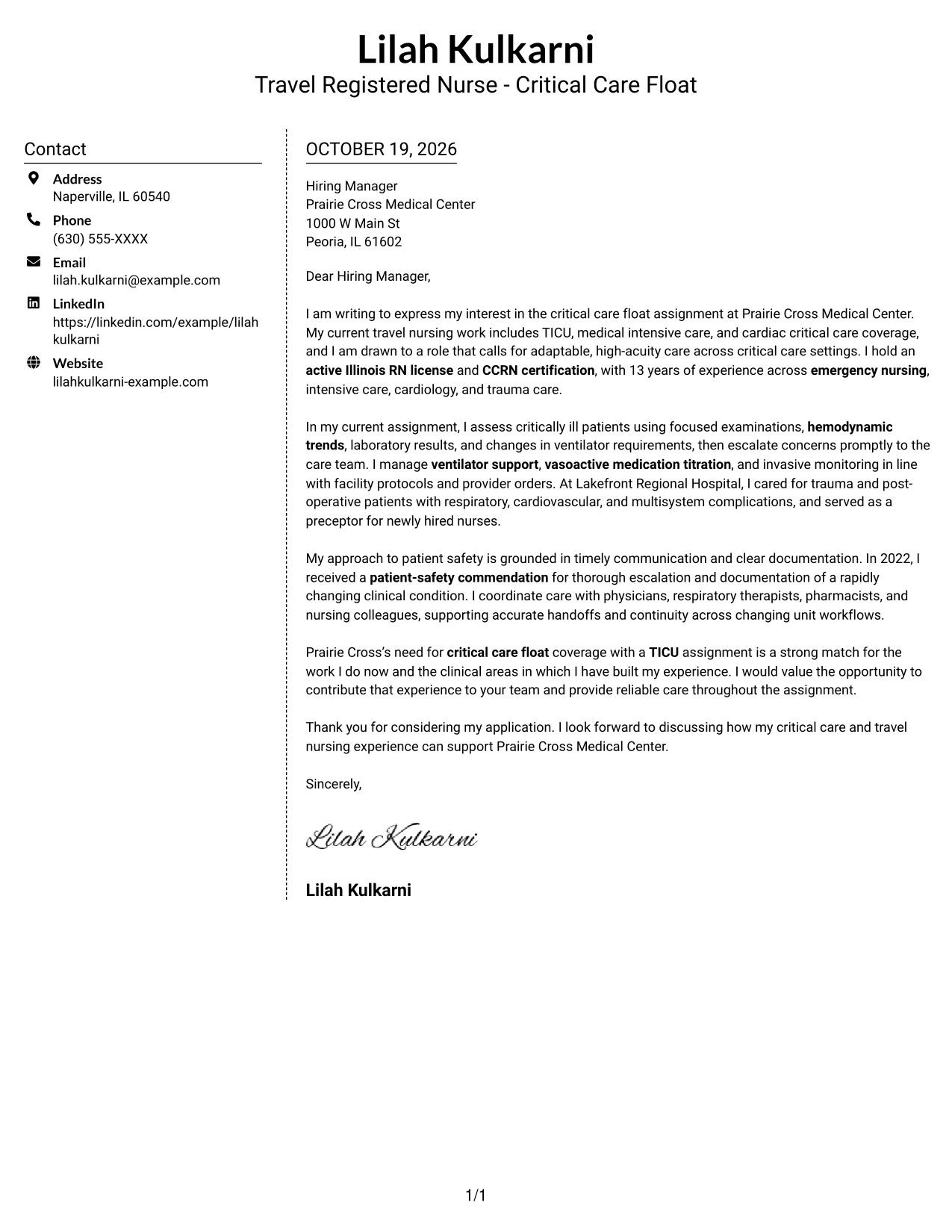
Why This Format Works
- Sidebar contact details remain distinct from the paragraphs of the letter.
- With one letter body, the argument stays in a natural reading order.
- A text-only layout suits readers who prefer no portrait on the page.
Best For
- Contact details outside the message
- Continuous letter paragraphs
- Text-only presentation
- Readers who prefer a contact sidebar
- Letters with a direct closing
#6 Modern Icon Format Cover Letter Example
Contact icons cue the sender's details in the sidebar, while the letter remains one continuous body.
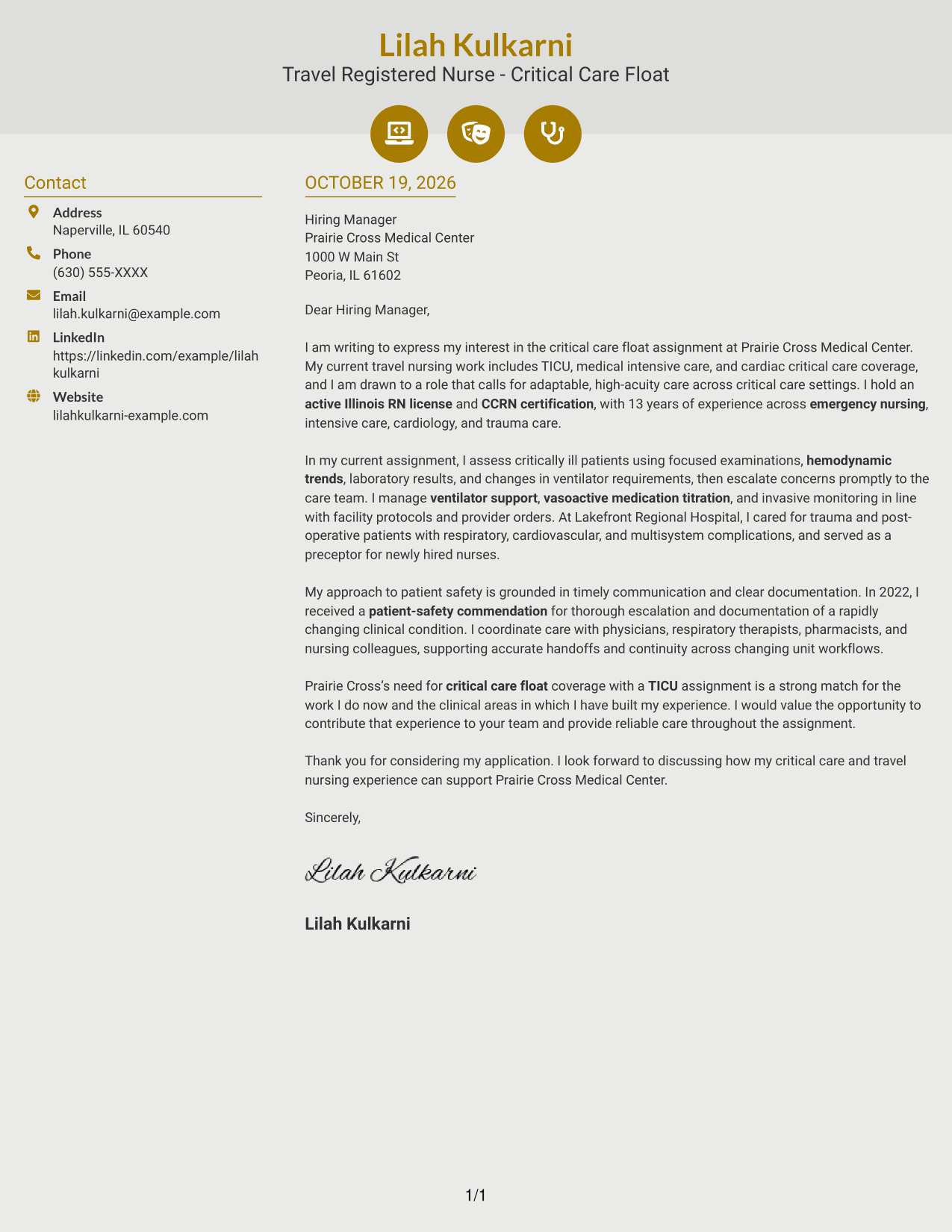
Why This Format Works
- Icons cue contact details in the sidebar without marking argument sections.
- Separate contact information leaves the letter's body as one continuous message.
- Reviewers can read the paragraphs in sequence rather than across parallel text.
Best For
- Icon-cued contact details
- Sidebar and letter-body separation
- Continuous paragraph reading
- Readers who value visual contact cues
- Text-focused applications
#7 Creative Two Tone Format Cover Letter Example
Contact information occupies a sidebar, while the message remains one continuous body for a clear distinction between the two.
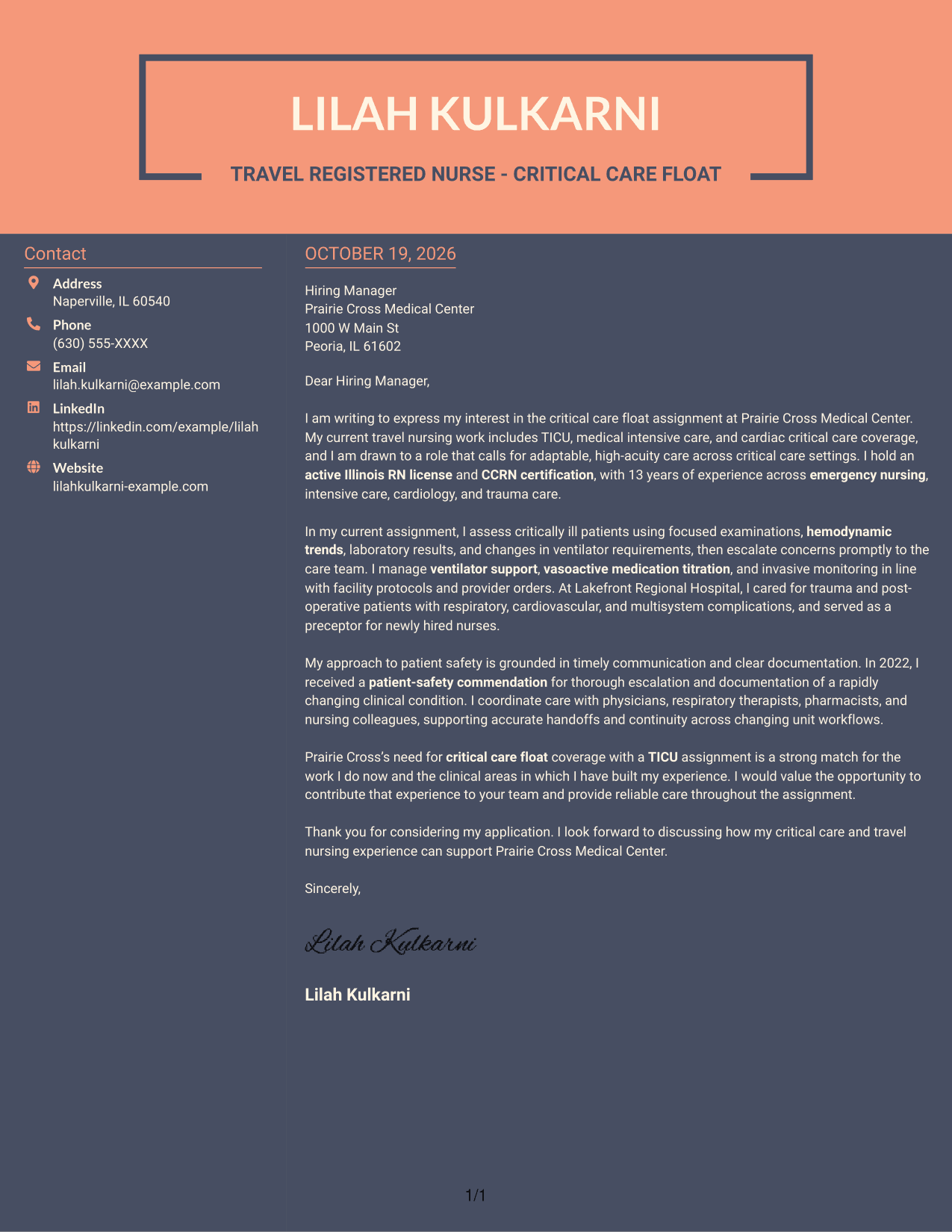
Why This Format Works
- Contact information occupies a separate area from the letter's paragraphs.
- The continuous message preserves a natural progression from opening to closing.
- Without a photo, the page keeps its visual focus on the written letter.
Best For
- Separate contact and message areas
- Continuous letter flow
- No-photo applications
- Readers who prefer a clear contact area
- Opening-to-close paragraph order
See Also
- 7 Registered Nurse - Critical Care Float Resume Templates with Example
- 33 Advanced Practice Registered Nurse (APRN) - Critical Care Resume Templates with Example 2026
- 33 Registered Nurse Educator - Critical Care Resume Templates with Example 2026 (ATS-Optimized)
- 7 Registered Nurse II/III - Adult Critical Care Resume Templates with Example
- 33 Home Care Registered Nurse Resume Templates with Example 2026 (ATS-Optimized)
- 33 Home Care Registered Nurse RN Resume Templates with Example 2026 (ATS-Optimized)
- 7 Neonatal Intensive Care Unit Registered Nurse Resume Templates with Example
- 33 Pediatric Intensive Care Unit (PICU) Registered Nurse Resume Templates with Example 2026 (ATS-Optimized)
- 30+ Advanced Practice Registered Nurse (APRN) - Critical Care Cover Letter Templates with Example 2026
- 30+ Registered Nurse Educator - Critical Care Cover Letter Templates with Example 2026
Frequently Asked Questions
What should the opening paragraph of a critical care float cover letter say?
Name the Registered Nurse - Critical Care Float role and state why its high-acuity, cross-unit work interests you. Then connect that interest to relevant clinical experience without repeating your full work history.
How can I show fit for a critical care float assignment?
Give specific examples of relevant care, such as TICU practice, focused patient assessment, ventilator management, hemodynamic monitoring, or coordination with the care team. Include only experience and credentials that are accurate for you.
How should I connect my experience to the employer?
Refer to details in the posting, such as critical care float coverage and a TICU assignment. Explain how your experience relates to those needs, and add a genuine reason for your interest when you have one.
What tone works well for a Registered Nurse - Critical Care Float cover letter?
Use a calm, direct, and professional tone. Keep each paragraph focused, support your claims with clear examples, and close by thanking the reader and expressing interest in discussing the role.
Can I compare the cover letter previews before choosing a layout?
Yes. Review the image previews to compare how each example presents its message, then open an example in the editor to view or customize it.