7 Senior Python Developer - Data Masking Resume Templates with Example
This guide shows you how to create a focused resume for a Senior Python Developer - Data Masking role. It explains how to organize your experience and present evidence that is clear to both recruiters and technical reviewers.
Strong resumes connect Python microservices and data masking work to reliable outcomes. Use concise experience bullets to show how you handle backup intake, obfuscation, validation, API delivery, and deployment.
Compare the same resume presented in 7 layouts, then choose a format that makes your skills, achievements, and technical tools easy to scan. The examples also show where to place relevant keywords, certifications, and education.
What Makes a Great Senior Python Developer - Data Masking Resume in 2026
A strong resume puts relevant experience, technical skills, and measurable results in clear sections. Focus each bullet on the work completed and how it supported dependable data masking or service delivery.
Use accurate terms such as Python microservices, Delphix Masking Tool, RESTful APIs, OpenAPI Spec, relational databases, AWS, Docker, Kubernetes, EKS, and GitLab CI/CD where they match your experience.
Note: Resume examples are for educational purposes only. Use only information that accurately reflects your experience and qualifications. References to real organizations do not imply affiliation or endorsement.
#1 Simple One Column Format Resume Example
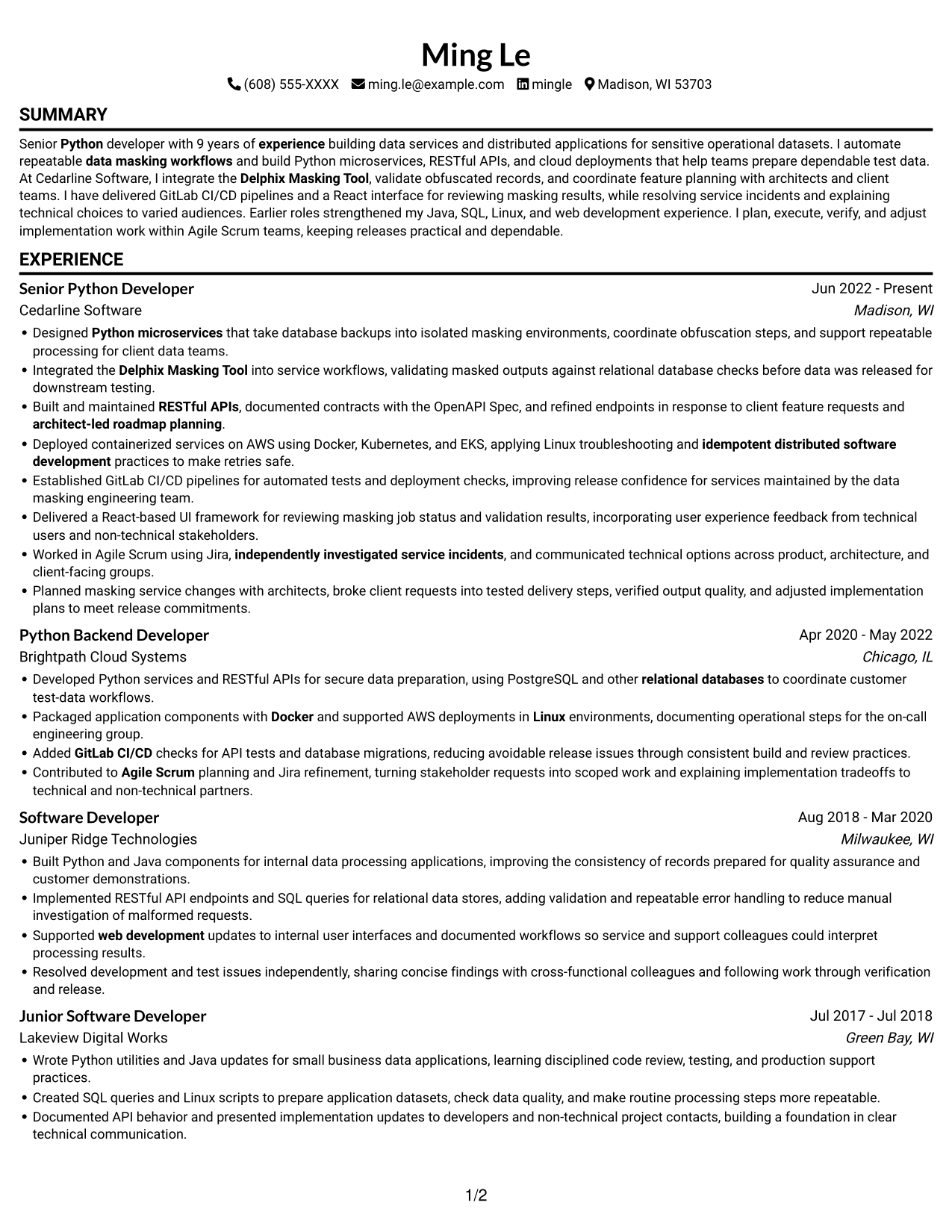
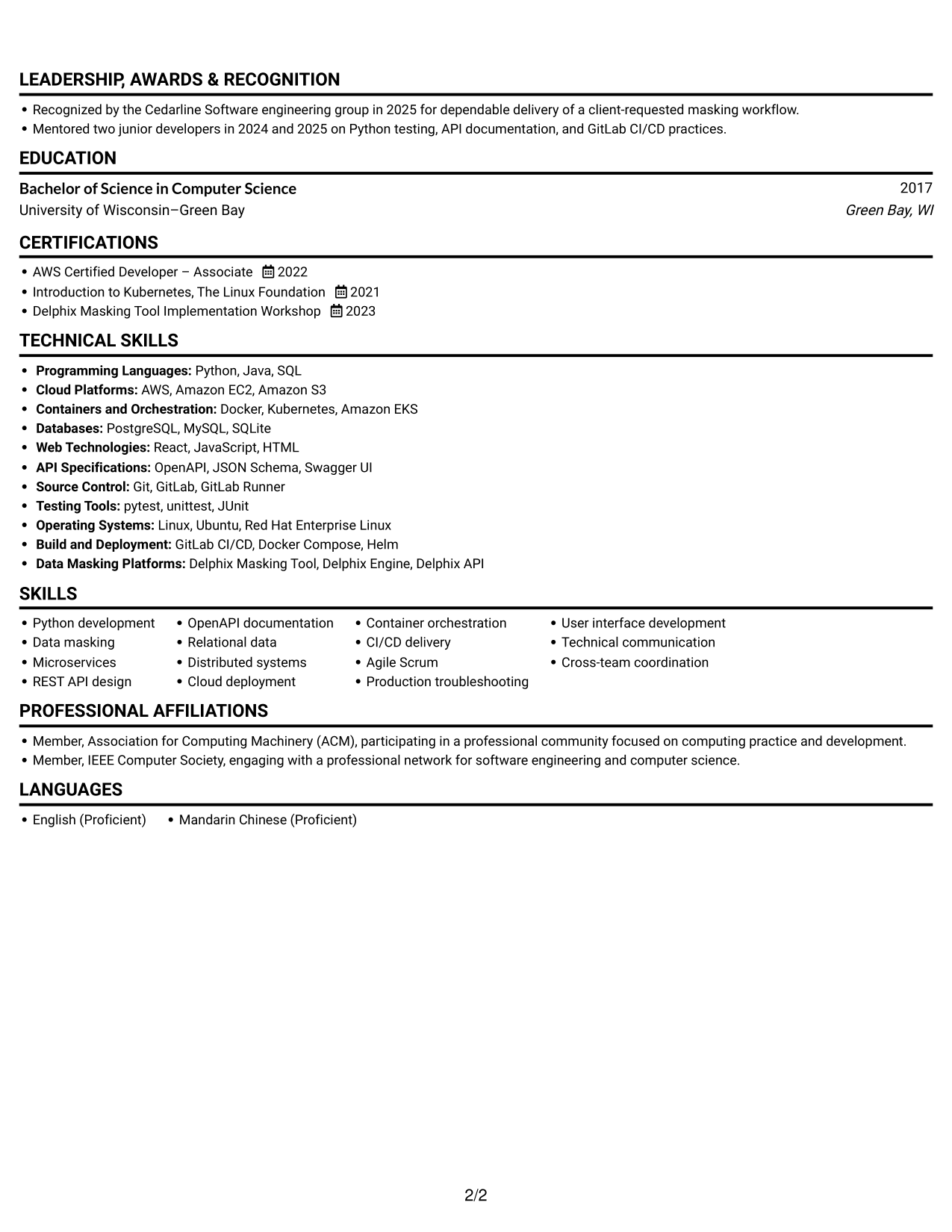
The single-column layout gives detailed experience entries a broad, continuous reading path.
Why This Format Works
- One reading path keeps experience entries in a clear chronological sequence.
- Consistent section breaks help reviewers locate skills, education, and credentials.
- Full-width bullets leave room to explain measurable outcomes and project scope.
Best For
- Chronological experience histories
- Detailed achievement bullets
- Sequential section review
- Full-width text content
- ATS-friendly text structure
Resume Keywords
- Senior Python developer with 9 years of experience
- Python microservices
- data masking workflows
- idempotent distributed software development
- RESTful APIs
- OpenAPI Spec
- Delphix Masking Tool
- Deployed containerized services on AWS using Docker, Kubernetes, and EKS
- relational databases
- Linux
- Kubernetes
- Docker
- EKS
- CI/CD
- GitLab
#2 Simple Two Column Format Resume Example
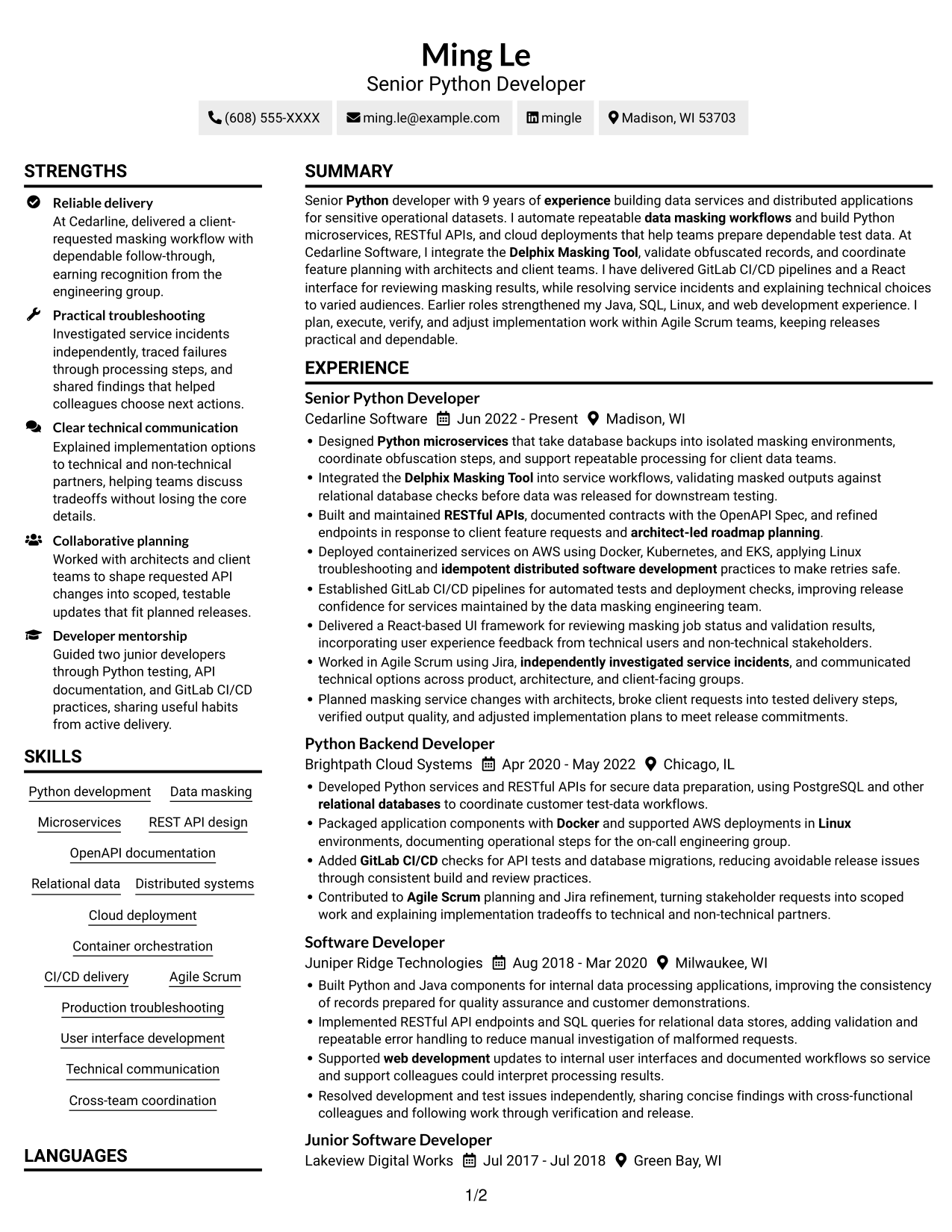
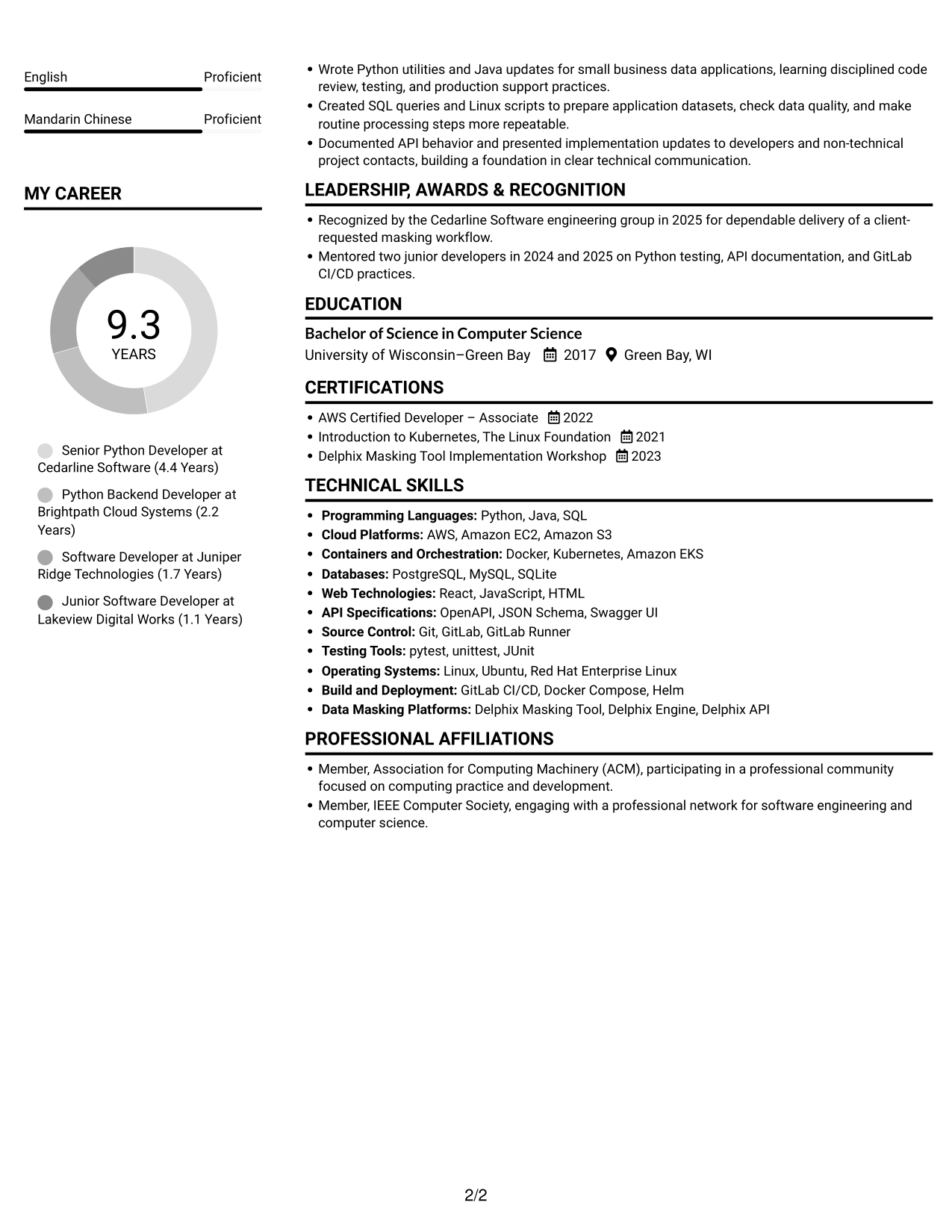
Two columns organize resume content in parallel areas, a practical choice when reviewers need to scan several section types.
Why This Format Works
- Parallel content areas help reviewers compare experience with supporting qualifications.
- Separate columns keep skills and credentials easy to find alongside career history.
- Resume sections stay distinct while experience bullets retain their own reading sequence.
Best For
- Side-by-side section review
- Multiple resume section types
- Distinct supporting details
- Compact content organization
- Roles with detailed experience
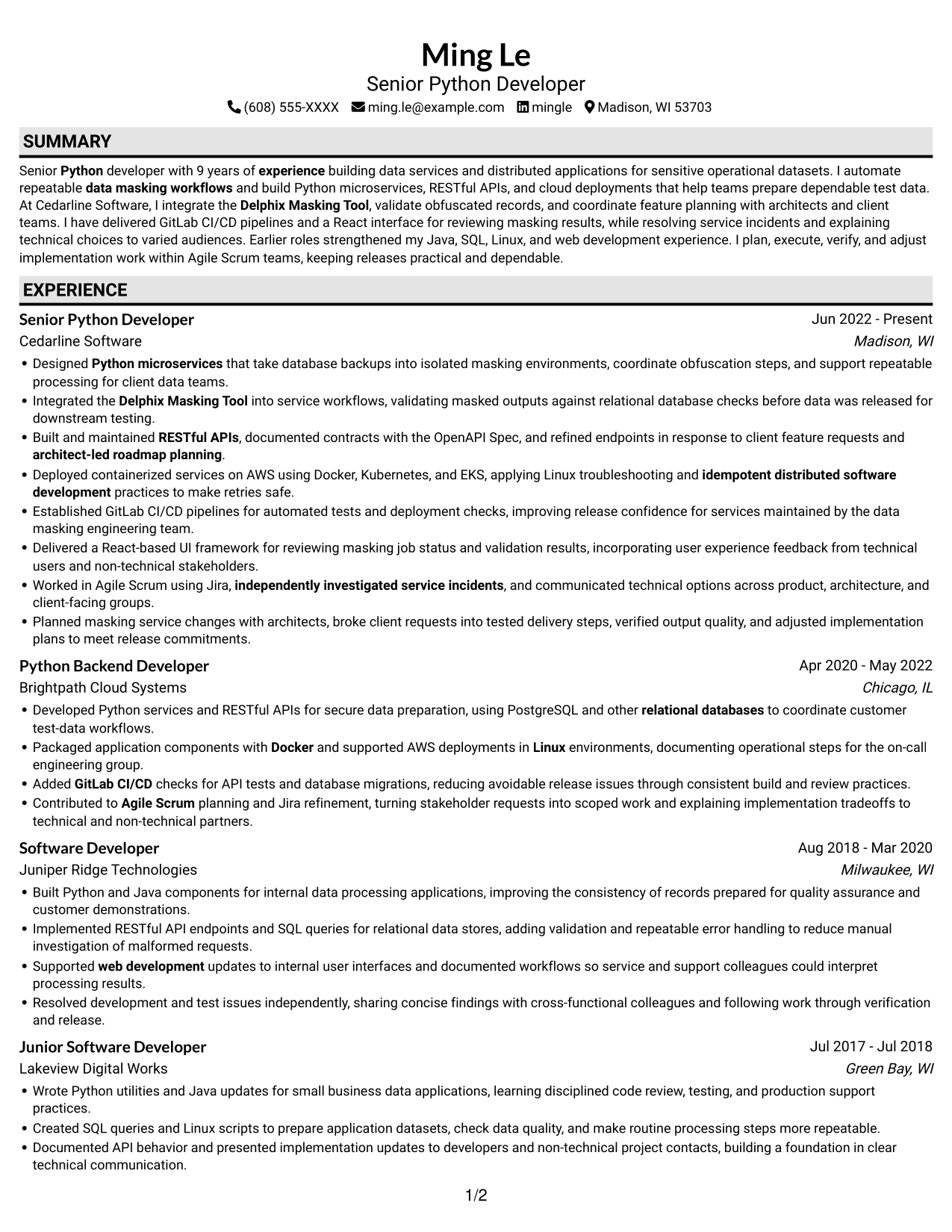
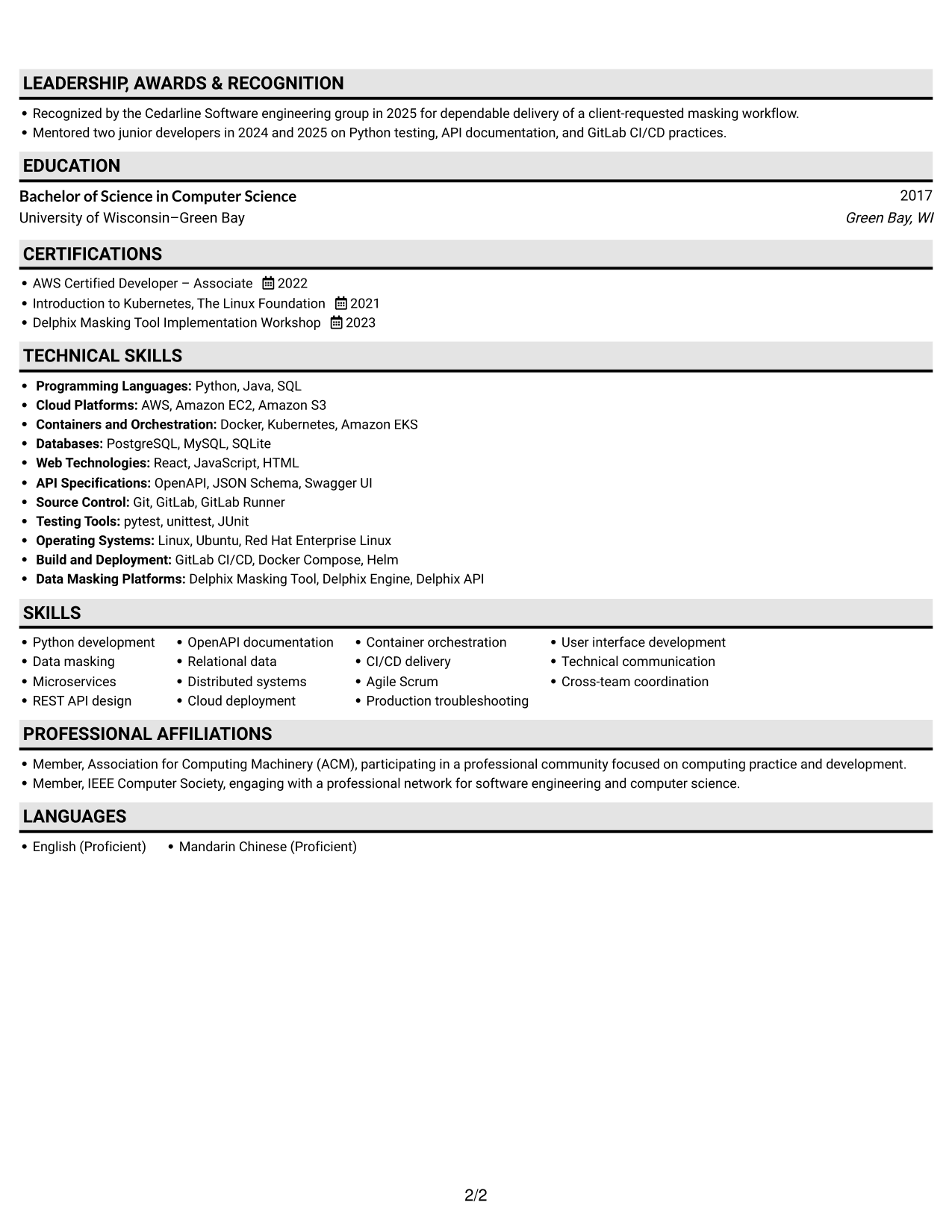
#3 Plain One Column with Shaded Labels Resume Example
A one-column layout presents each section in sequence, helping readers track career history across several roles.
Why This Format Works
- One continuous column lets reviewers follow experience from role to role.
- Clear section boundaries make education and credentials easier to locate.
- Broad text lines give achievement bullets room for context and results.
Best For
- Longer role descriptions
- Chronological career records
- Sequential resume reading
- Detailed education and credentials
- ATS-focused submissions
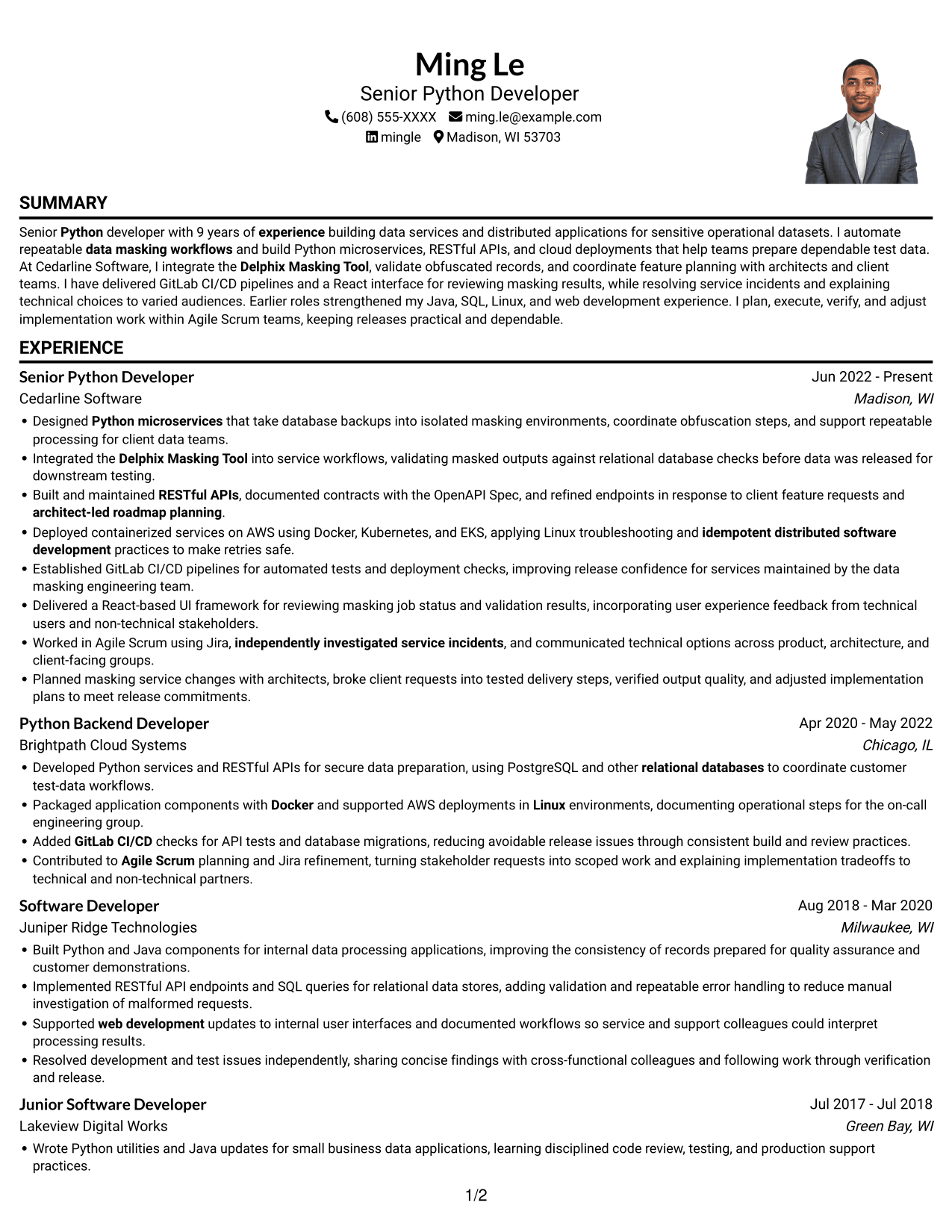
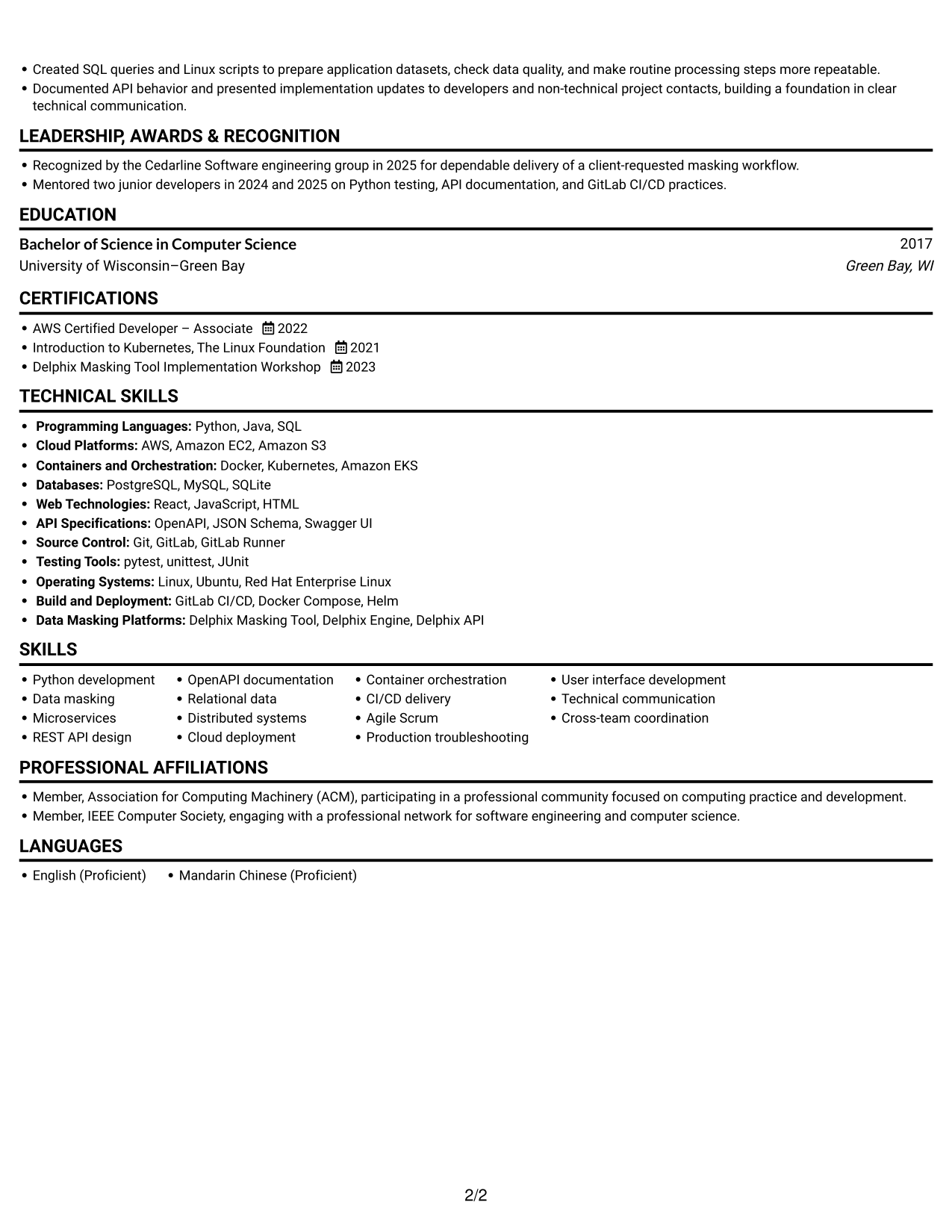
#4 One Column Format with Photo Right Resume Example
A right-side photo adds a portrait while the single-column body keeps resume content in sequence.
Why This Format Works
- The right-side portrait keeps photo presentation distinct from resume text.
- One-column reading order helps reviewers follow career progression across positions.
- Separate section breaks make skills, education, and credentials simple to locate.
Best For
- Applications requesting a portrait
- Single-column resume reading
- Chronological career progression
- Detailed experience entries
- Clear section-by-section review
#5 Clean Two Column Sidebar Format Resume Example
Two-column organization offers a compact way to scan experience alongside supporting resume sections.
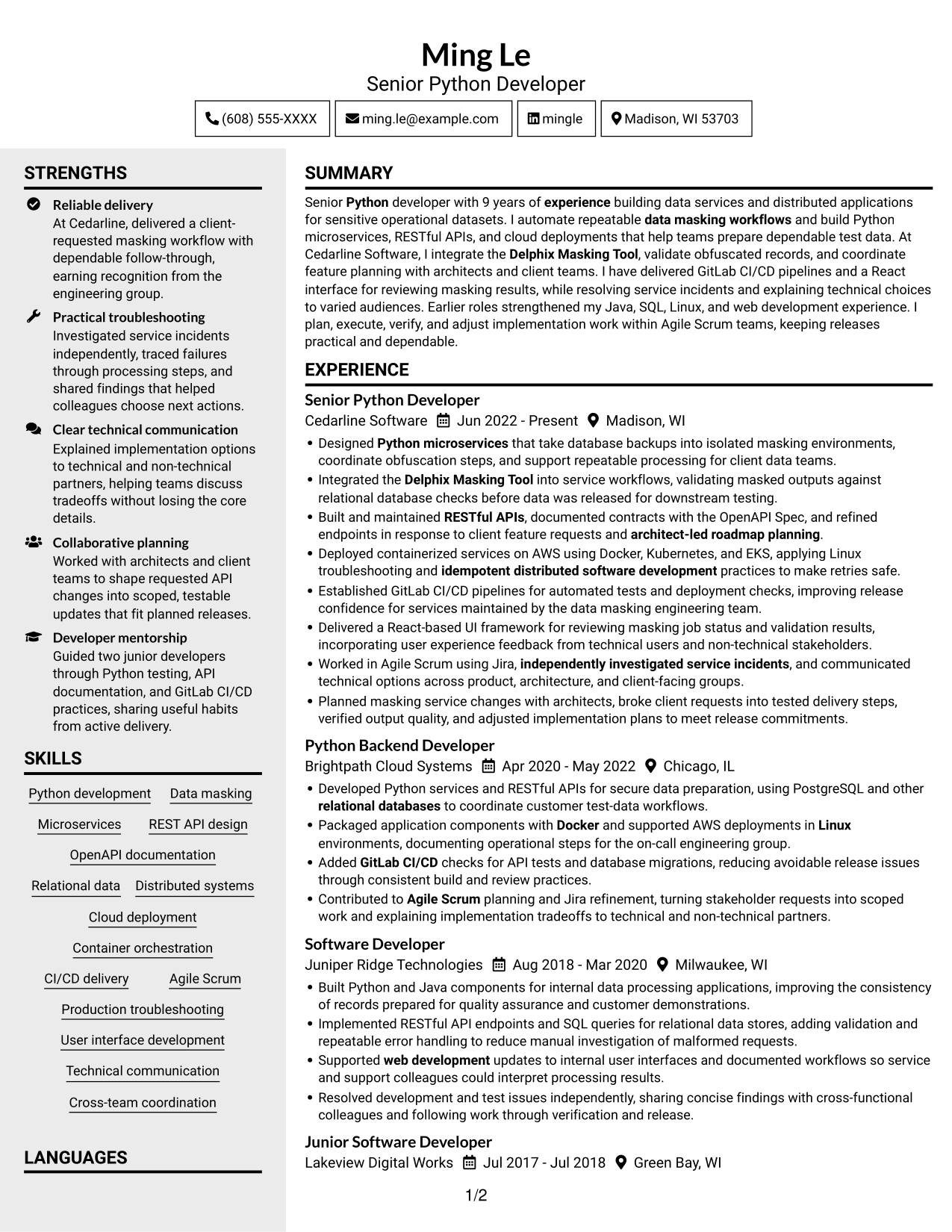
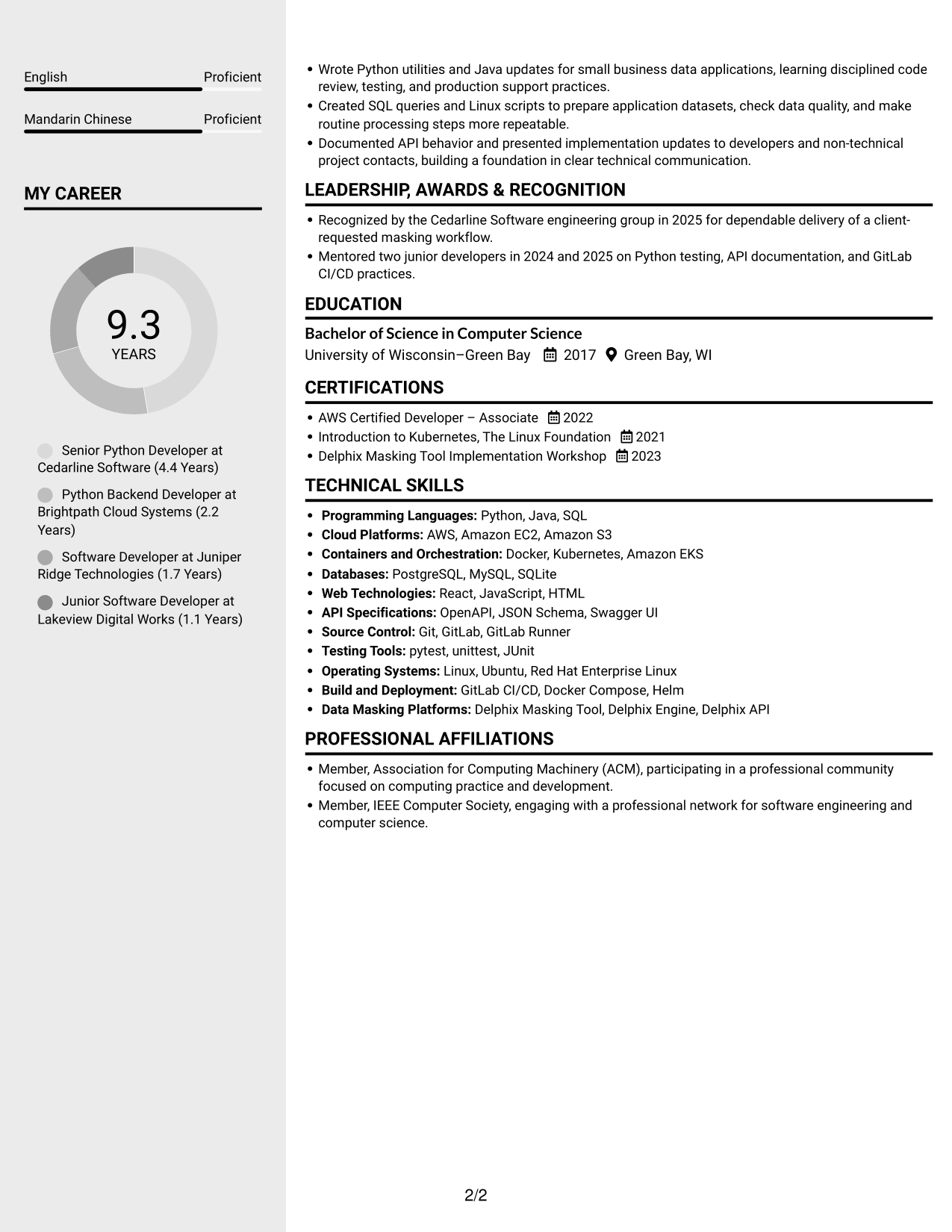
Why This Format Works
- Two columns give compact organization to a resume with multiple section types.
- Role entries remain easy to follow across successive positions.
- Supporting sections are easier to revisit when visually separated from role history.
Best For
- Compact resume organization
- Multiple supporting sections
- Career history across roles
- Quick section navigation
- Portrait-free resume use
#6 Two Column Format Resume Example
The two-column structure gives resume sections parallel reading areas, useful when reviewers need to move between career history and qualifications.
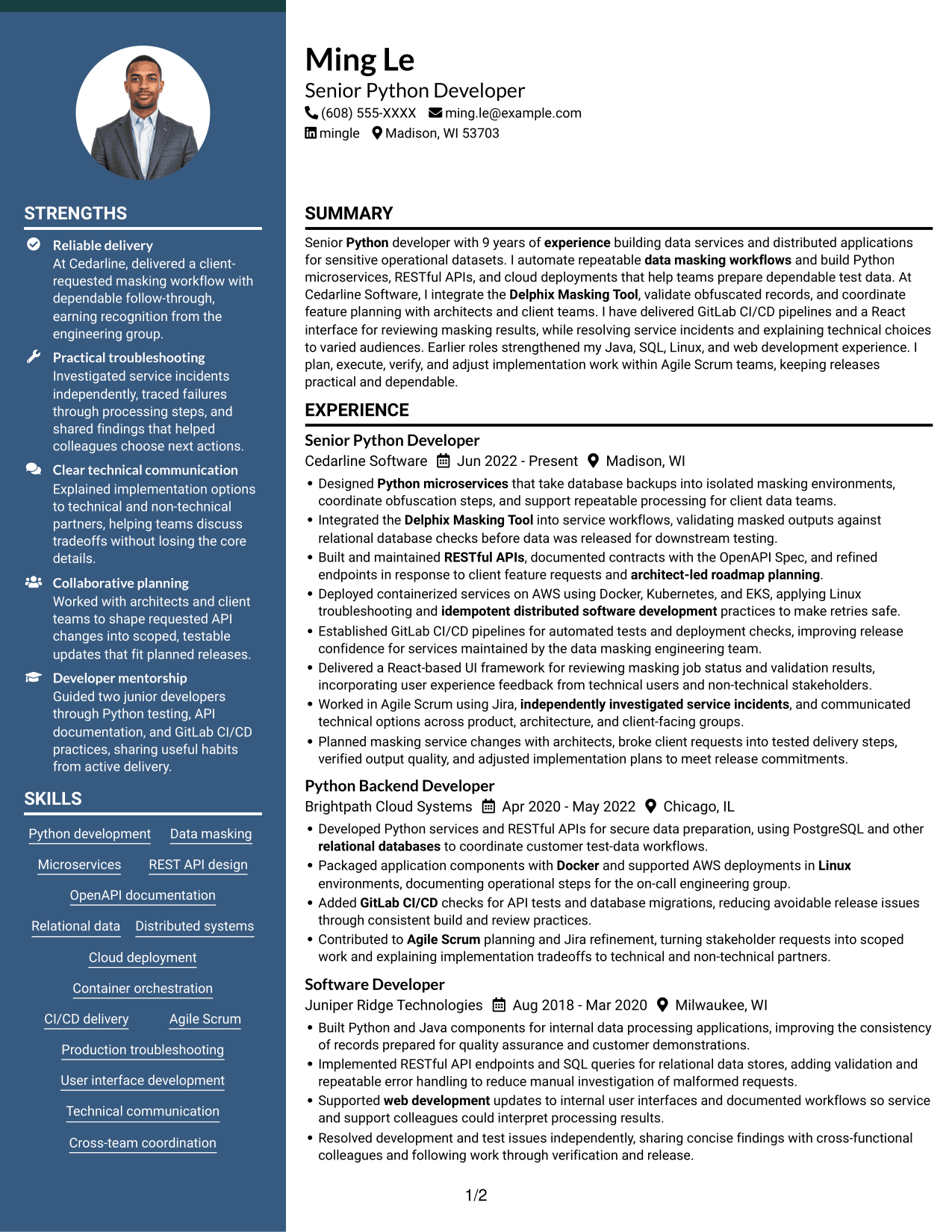
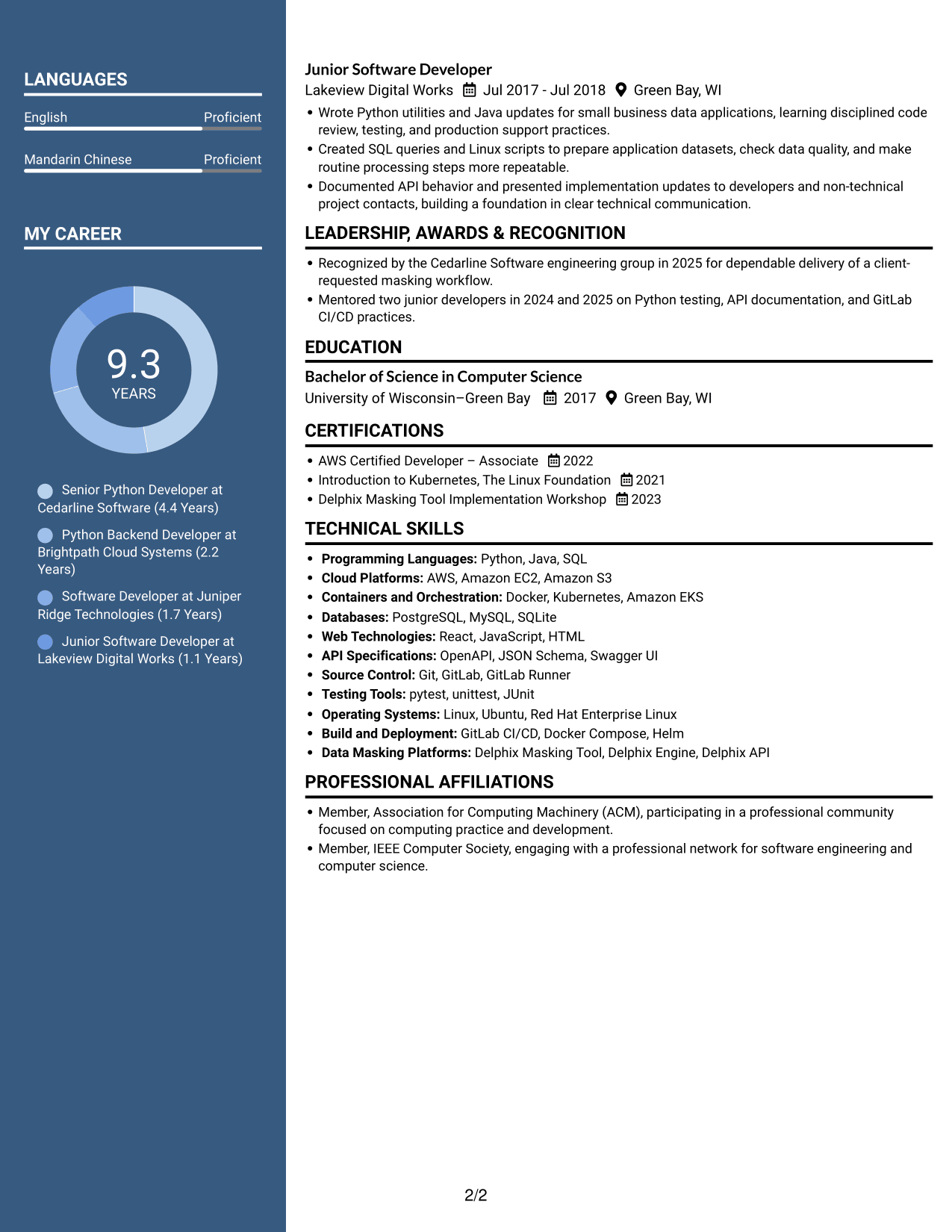
Why This Format Works
- Two columns let readers move between experience and supporting sections efficiently.
- Distinct content areas help reviewers trace role progression while checking qualifications.
- Education and credentials remain easy to revisit during a focused review.
Best For
- Parallel section review
- Several types of qualifications
- Career histories with multiple roles
- Frequent section cross-checking
- Compact resume content
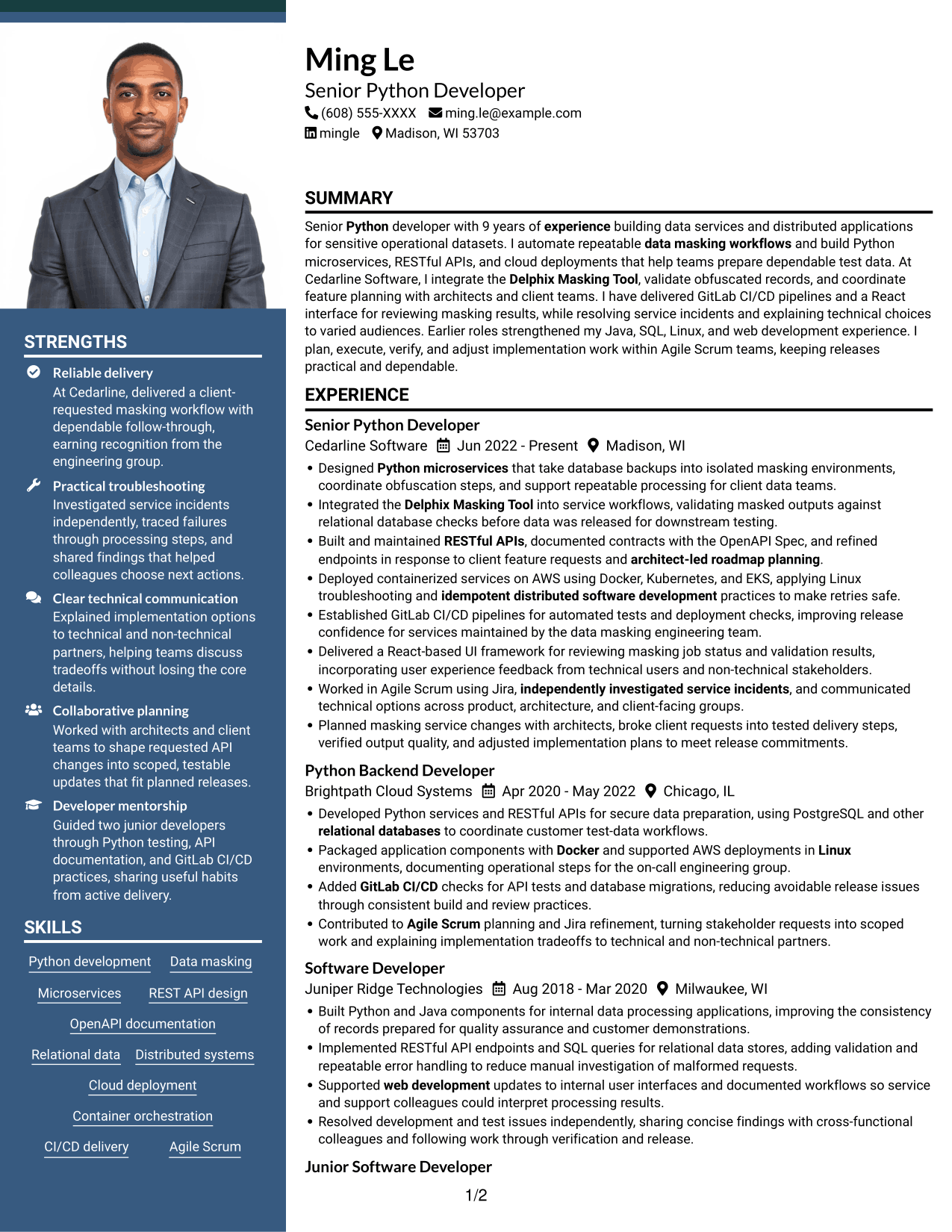
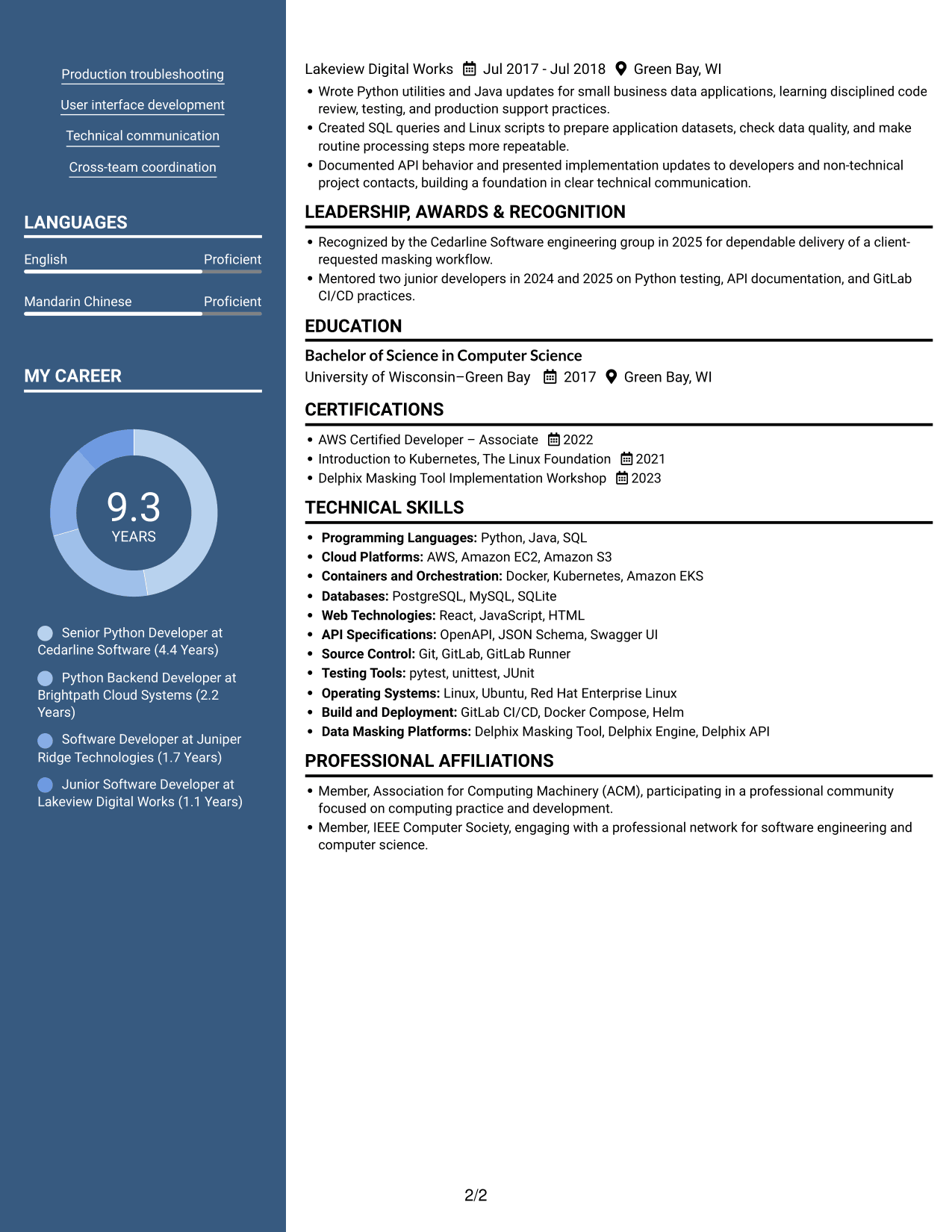
#7 Photo Header Two Column Format Resume Example
A header portrait pairs with two-column content, suiting resumes where a photo is part of the requested presentation.
Why This Format Works
- Two columns provide distinct resume content areas with a clear reading order.
- A header portrait adds a visual element without replacing career details.
- Experience chronology remains easy to follow while reviewers check skills and credentials.
Best For
- Applications requesting a header photo
- Two-column resume organization
- Chronological experience review
- Distinct content areas
- Portrait-inclusive presentation
Why Build Your Senior Python Developer - Data Masking Resume with ResumeInMinutes
ResumeInMinutes lets you review resume image previews and open an example in the editor to customize its content. Use a clear section order to help readers find your Python work, data masking experience, technical skills, and certifications.
- ATS-friendly section structure
- Clear experience and skills sections
- Role-relevant keyword guidance
- Space for measurable achievements
- PNG image previews
- Resume editing in the editor
Keep your resume focused on the role. Make key results easy to find, use consistent technical terms, and include only tools and skills you can support with your experience.
See Also
- 7 Junior Python Developer - Data Engineering Resume Templates with Example
- 33 Entry-Level Python Developer Resume Templates with Example 2026 (ATS-Optimized)
- 33 Junior Python Developer Resume Templates with Example 2026 (ATS-Optimized)
- 33 Mid-Level Python Developer with AWS Resume Templates with Example 2026 (ATS-Optimized)
- 33 Python Developer - Associate Resume Templates with Example 2026 (ATS-Optimized)
- 7 Python Developer Intern - DevOps Automation Resume Templates with Example
- 33 Senior Python Developer Resume Templates with Example 2026 (ATS-Optimized)
- 33 Software Developer - Java & Python Resume Templates with Example 2026 (ATS-Optimized)
- 7 Senior Python Developer - Data Masking Cover Letter Templates with Example
- 7 Junior Python Developer - Data Engineering Cover Letter Templates with Example
Frequently Asked Questions
Are these Senior Python Developer - Data Masking resume templates ATS-friendly?
The layouts use clear sections and readable headings. Include relevant terms such as Python, data masking, RESTful APIs, OpenAPI Spec, relational databases, Linux, AWS, Docker, Kubernetes, EKS, and GitLab CI/CD when they reflect your background.
Are these different resumes or layouts of one example?
The page shows one resume example in different visual layouts. Compare the PNG image previews and open an example in the editor to customize it.
What should a Senior Python Developer - Data Masking resume include?
Include a focused summary, relevant experience, technical skills, education, and certifications. Use experience bullets to show Python service work, data masking processes, API development, validation, and deployment outcomes.
Which resume format works well for this role?
A simple layout with clear headings helps recruiters and ATS software find your experience and skills. Choose a format that gives enough room for technical achievements without making the page crowded.
How can I show data masking experience effectively?
Describe the workflow you supported, the tools you used, and how you checked the masked output. If possible, explain the result, such as more repeatable processing or stronger release confidence, using only outcomes you can verify.
Should I include a photo on my resume?
For U.S. applications, a no-photo resume is generally the safer choice. Use a photo only when it is expected in your location or field.