7 Senior Strategic Solutions Architect - Life Insurance and Annuity Resume Templates with Example
This guide shows you how to create a Senior Strategic Solutions Architect - Life Insurance and Annuity resume that presents your architecture work clearly. You will learn how to organize relevant experience and compare professional resume formats.
Strong resumes for this role connect enterprise architecture decisions to carrier needs. Show how you work with policy administration, underwriting, distribution, CRM, customer platforms, enterprise data, and legacy systems, then support your claims with clear examples of integration planning, modernization, and delivery.
The guide presents one resume example in 7 layouts. Compare the PNG previews to see how each format arranges experience, technical skills, certifications, and education, then open the example in the editor to explore its structure.
What Makes a Great Senior Strategic Solutions Architect - Life Insurance and Annuity Resume in 2026
A strong resume makes your architecture scope easy to follow. Use clear sections and focused bullets to show how you connect carrier systems, guide decisions, and help teams deliver practical modernization plans.
Include relevant terms such as policy administration, enterprise data flows, API-driven architecture, event-based integration, cloud SaaS, and architectural governance. Pair each keyword with evidence from your experience, and state measurable results only when you can support them.
Note: Resume examples are for educational purposes only. Use only information that accurately reflects your experience and qualifications. References to real organizations do not imply affiliation or endorsement.
#1 Simple One Column Format Resume Example
The single-column structure keeps the resume in one reading path, giving reviewers a direct way to follow its sections.
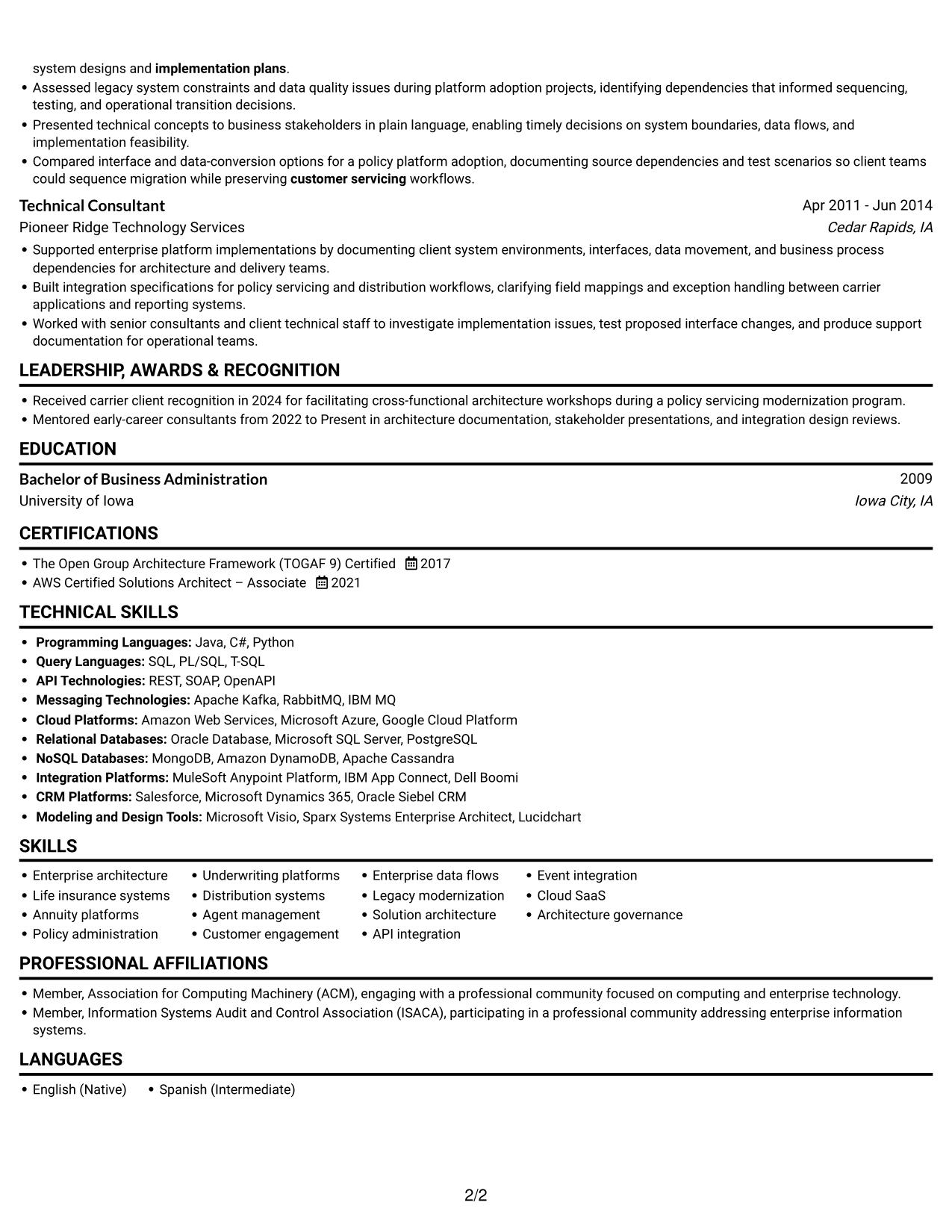
Why This Format Works
- The single reading path lets reviewers trace career progression without switching between columns.
- Skills and education remain easy to find within the same continuous page flow.
- Each role can be read in sequence, keeping achievements tied to its work history.
Best For
- Single-path section review
- Full career-history sequences
- Resumes with several supporting sections
- Readers comparing roles in order
- Text-first professional presentation
Resume Keywords
- technical consulting
- life insurance and annuity carriers
- enterprise architecture
- mapping policy administration, underwriting, CRM, distribution, customer servicing, and legacy environments into current-state architecture views and transformation options
- policy administration
- distribution management
- enterprise data platforms
- policy lifecycle
- customer servicing
- Defined shared integration patterns
- Mapped policy, agent, and customer records across policy administration, CRM, and enterprise data platforms
- Defined shared integration patterns for CRM and enterprise data platform exchanges
- using API-driven patterns
- event-based integrations
- new cloud-based SaaS capabilities
#2 Simple Two Column Format Resume Example
Two columns divide the resume into parallel reading areas, helping reviewers scan distinct sections without following one long stack.
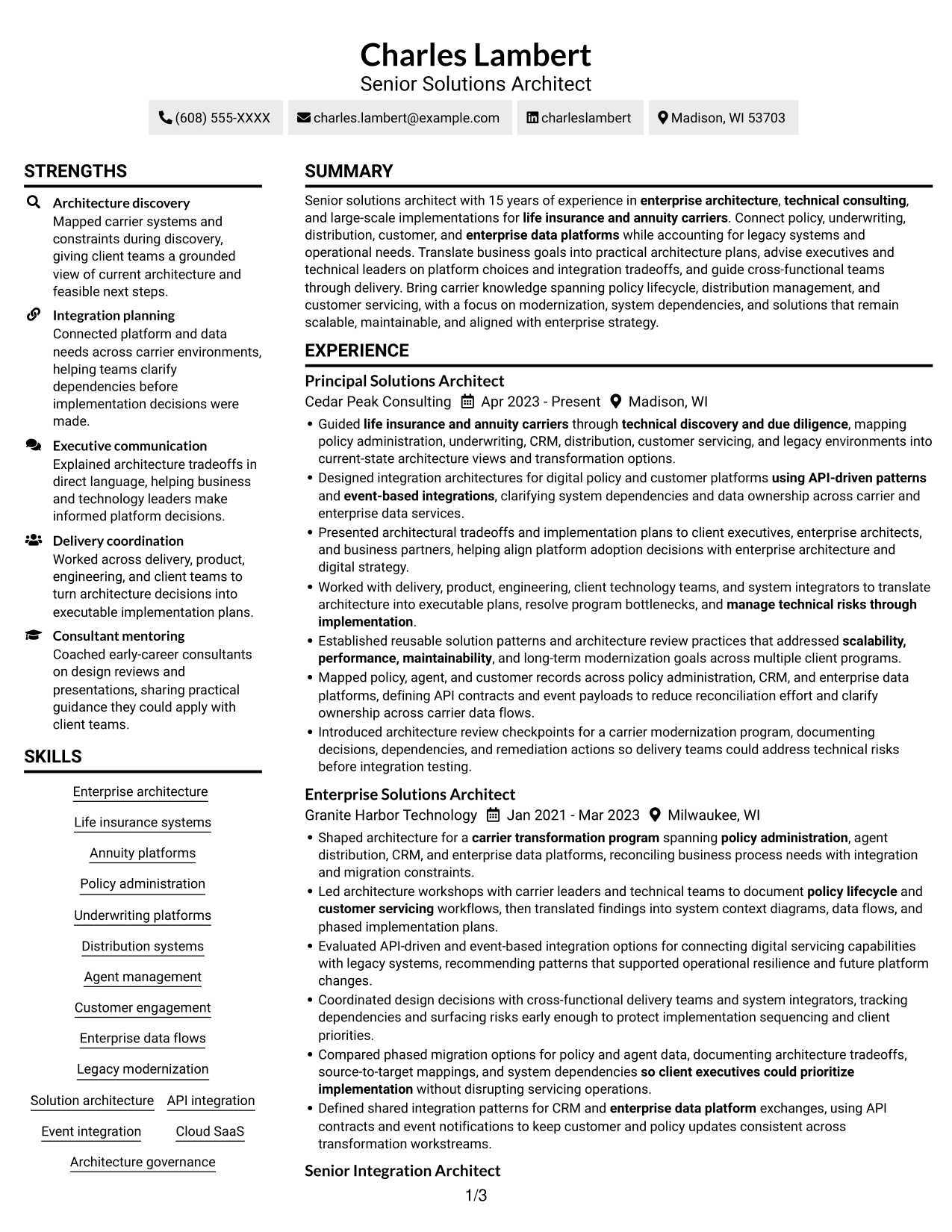
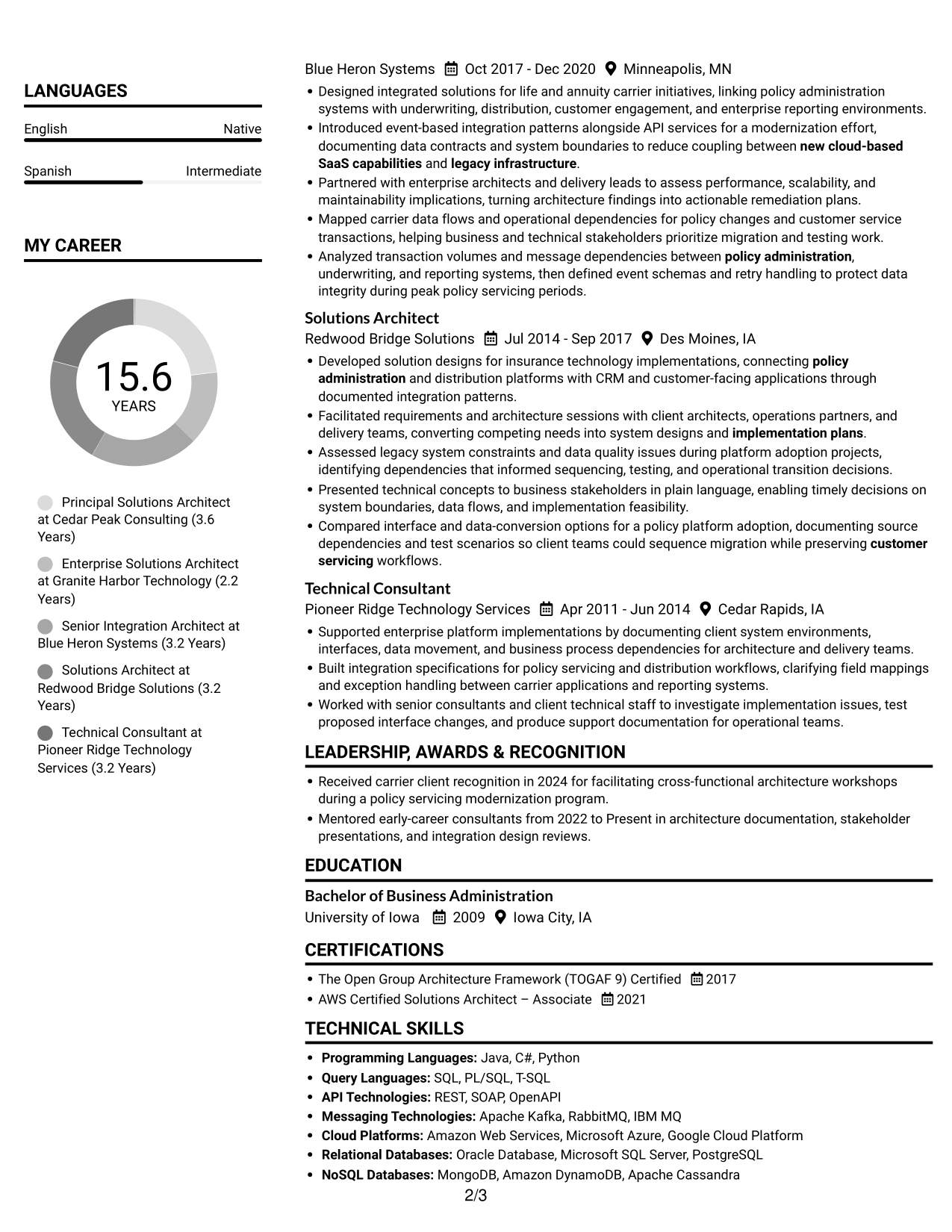
Why This Format Works
- Two content areas give reviewers a direct way to distinguish experience from supporting qualifications.
- Skills and credentials can be found without interrupting the career-history review.
- Parallel organization suits resumes that need several sections in a compact reading space.
Best For
- Side-by-side section review
- Dense career histories
- Resumes with several skill groups
- Readers comparing experience and credentials
- Compact content organization
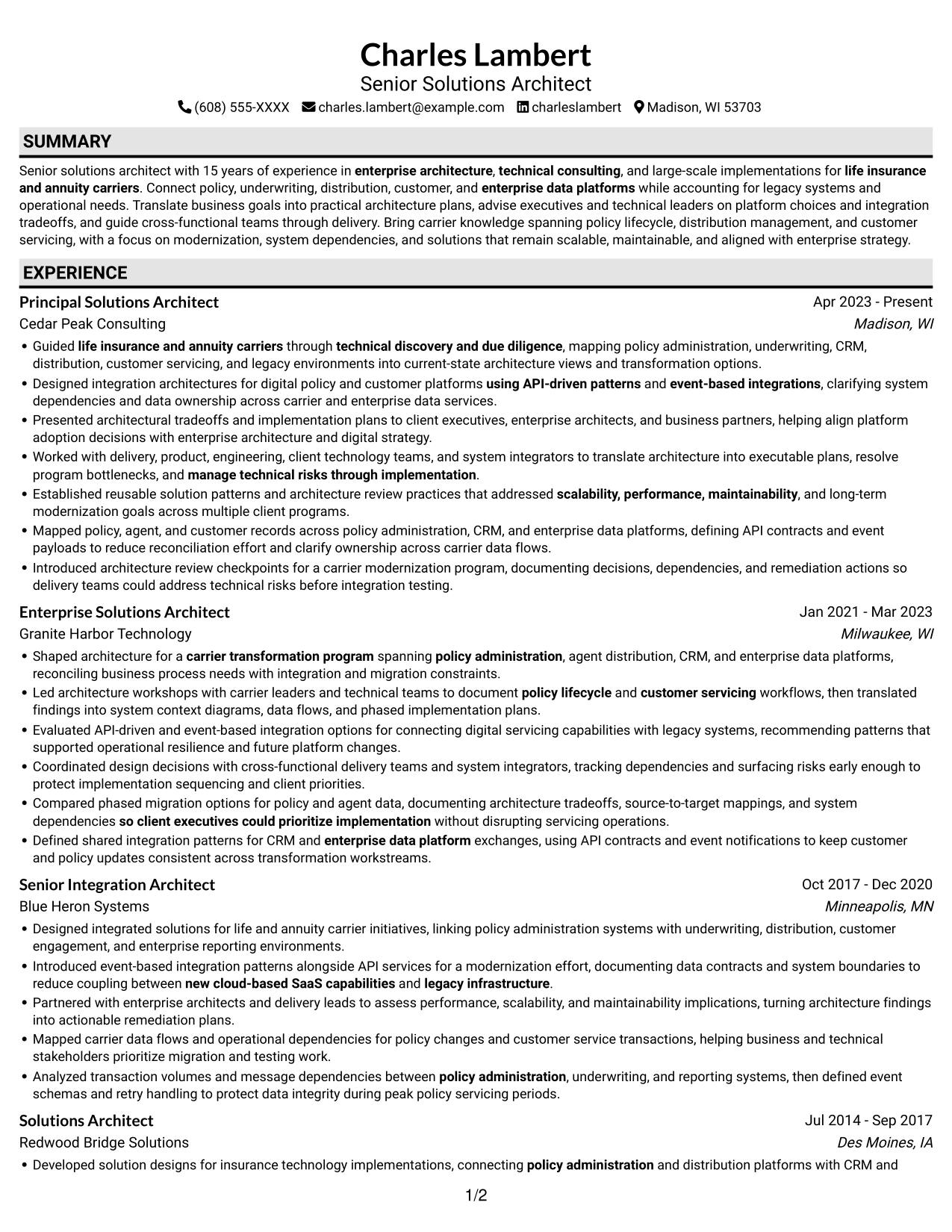
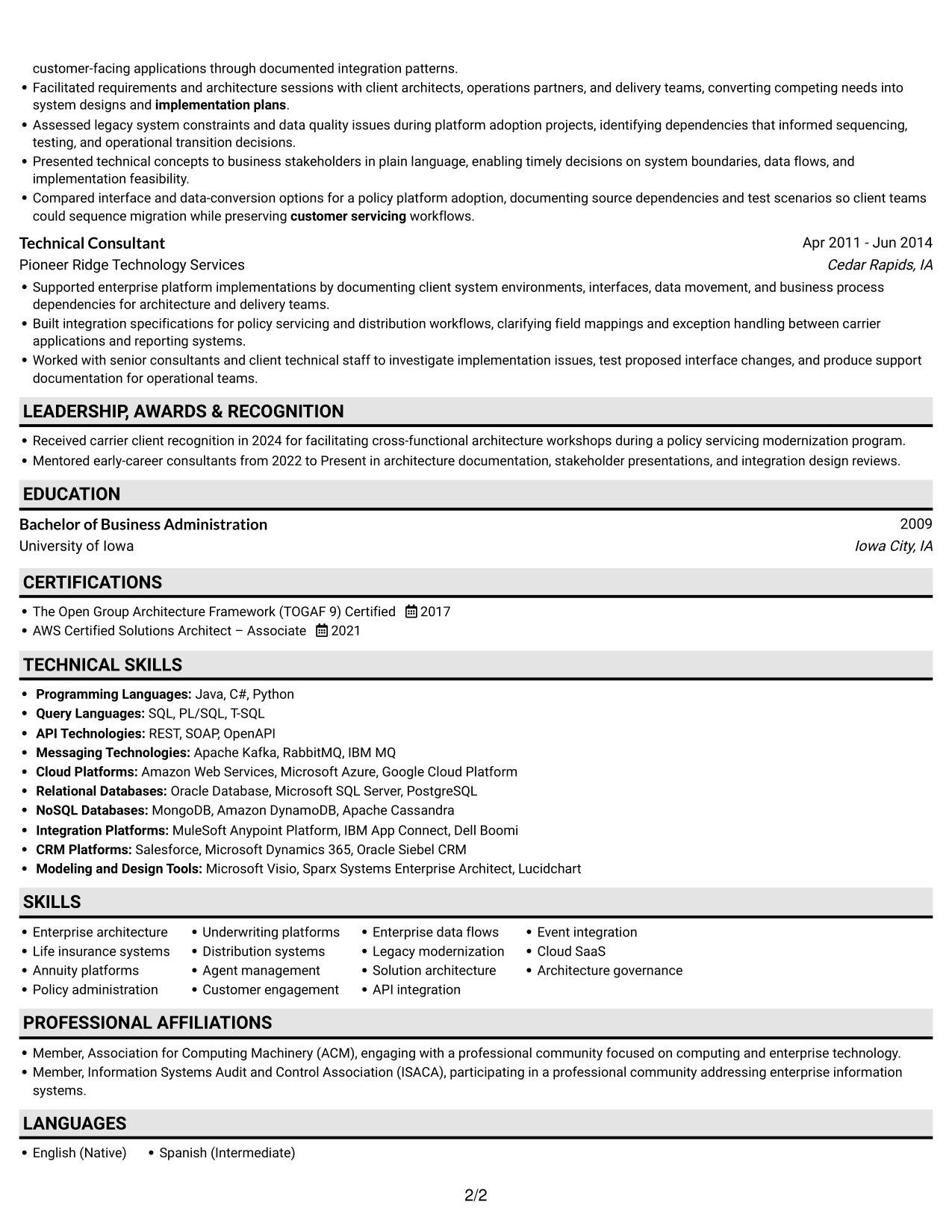
#3 Plain One Column with Shaded Labels Resume Example
A plain one-column layout keeps resume content in a direct sequence, which suits reviewers who prefer a familiar top-to-bottom read.
Why This Format Works
- One reading path keeps experience, skills, and education connected without parallel columns.
- Distinct section breaks help reviewers locate credentials after scanning career details.
- Consistent vertical order supports a steady review of career progression.
Best For
- Top-to-bottom resume review
- Text-heavy career histories
- Clear role progression
- Multiple education and credential entries
- Readers who prefer a direct sequence
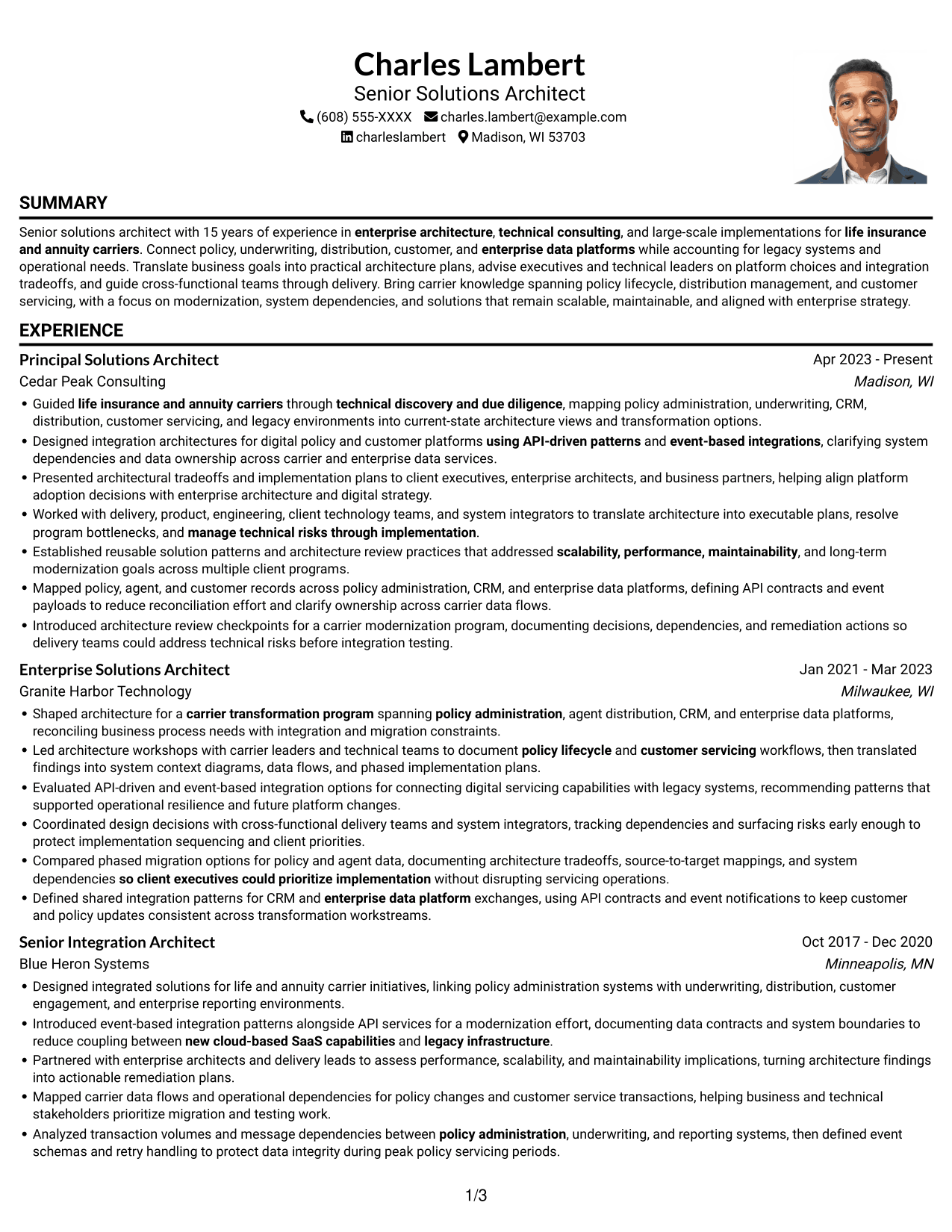
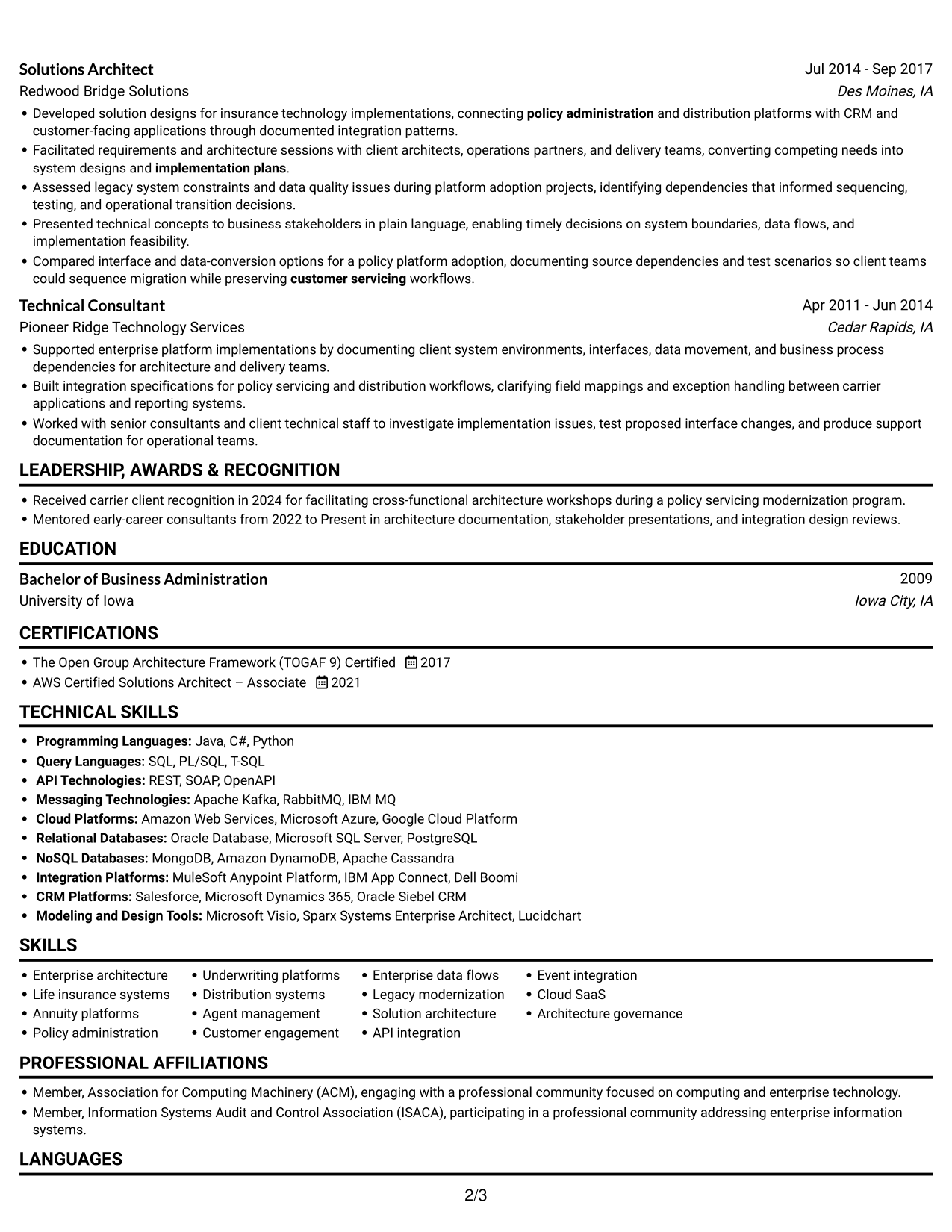
#4 One Column Format with Photo Right Resume Example
A portrait accompanies the one-column resume, adding a personal visual element while the written sections keep one reading path.
Why This Format Works
- Role sections stay within one reading path, so chronology is easy to follow.
- Skills and credentials remain part of the same sequence as experience.
- The portrait offers a personal visual choice while qualifications remain in text.
Best For
- Photo-inclusive professional presentation
- Single-path resume reading
- Career histories with supporting sections
- Readers who prefer steady section order
- Portraits paired with written qualifications
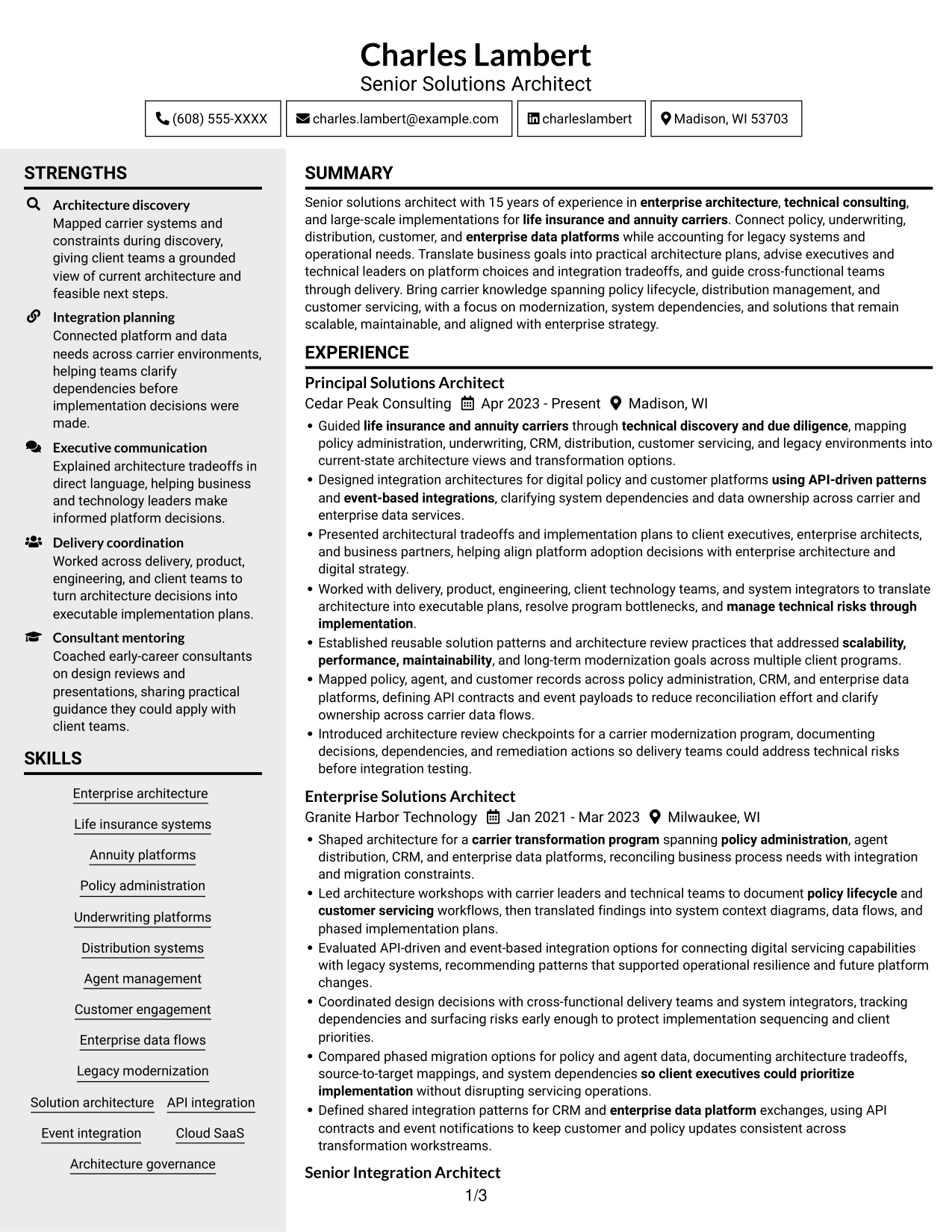
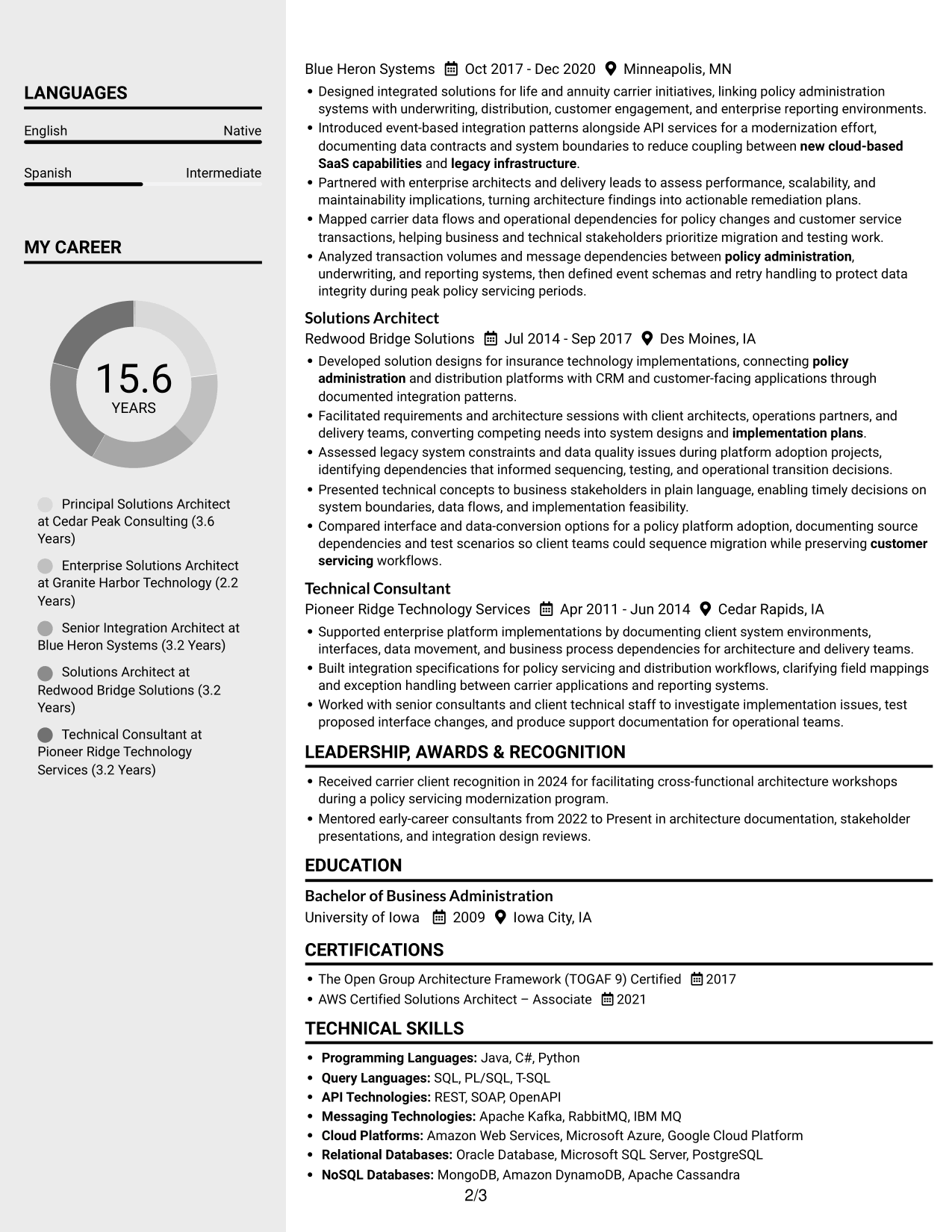
#5 Clean Two Column Sidebar Format Resume Example
The two-column sidebar format sets resume content in separate reading areas, helping reviewers move among sections efficiently.
Why This Format Works
- Separate columns help reviewers compare career history with the resume's supporting sections.
- Distinct areas make skills and education easier to locate during a quick review.
- Two-column reading order keeps several resume categories visible without one long stack.
Best For
- Separate area review
- Resumes with varied section types
- Readers locating skills and education
- Career histories beside supporting details
- Organized content across two columns
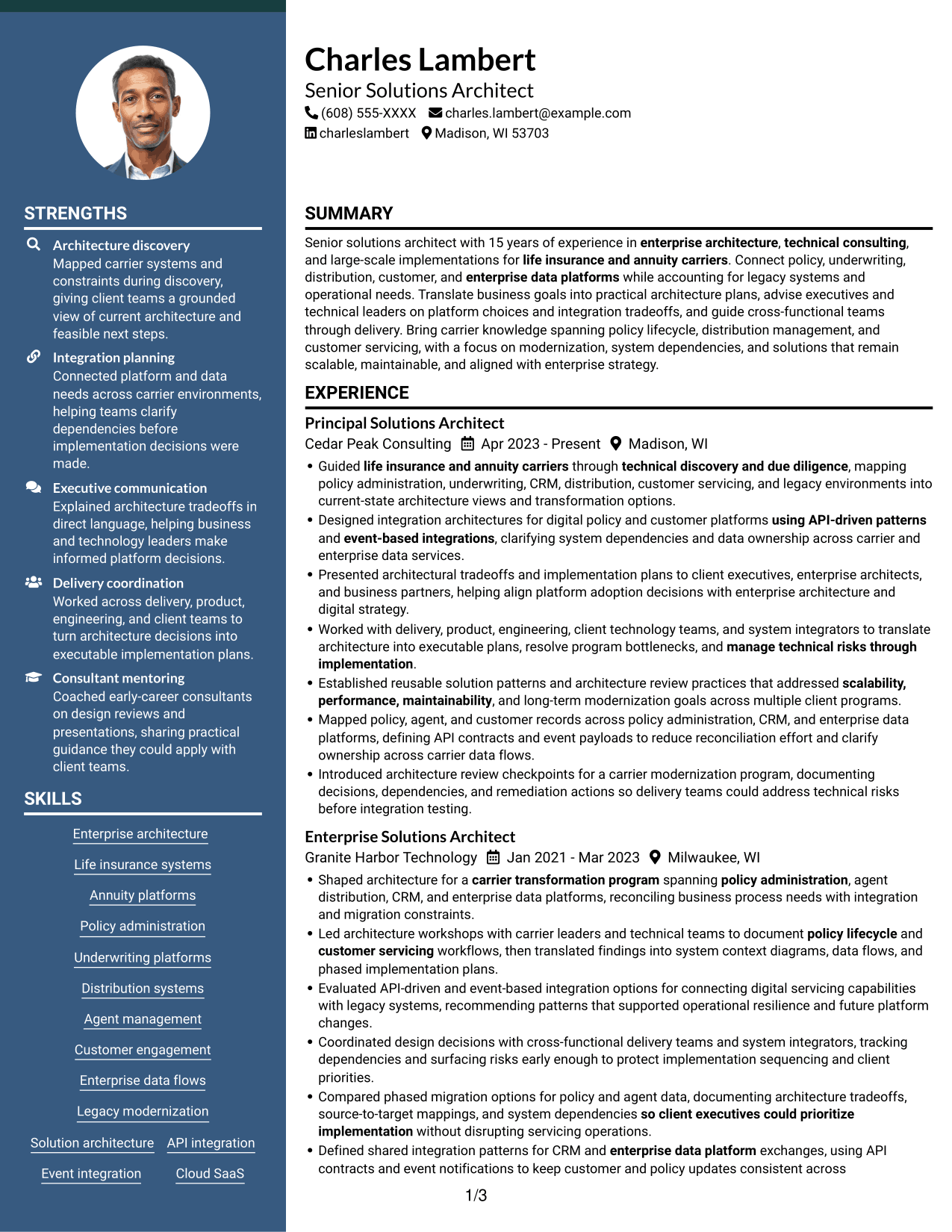
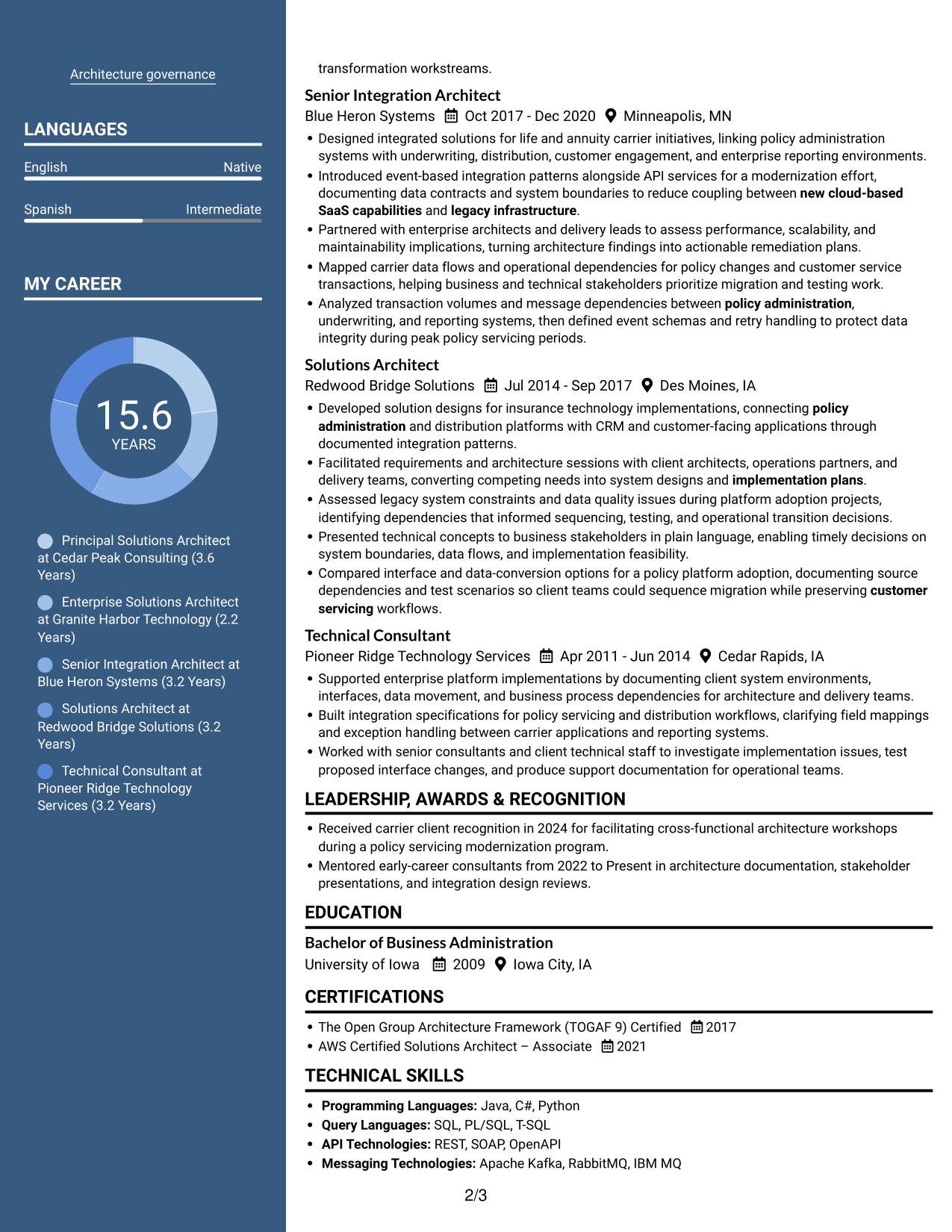
#6 Two Column Format Resume Example
The two-column body gives resume sections separate areas, helping reviewers move between career details and supporting qualifications.
Why This Format Works
- Parallel content areas let reviewers move between career details and qualifications directly.
- Section grouping helps skills, education, and certifications stand apart from role history.
- Two-column organization supports scanning across multiple resume categories.
Best For
- Parallel section review
- Resumes with several content categories
- Readers moving between roles and credentials
- Skills and education beside career history
- Compact resume organization
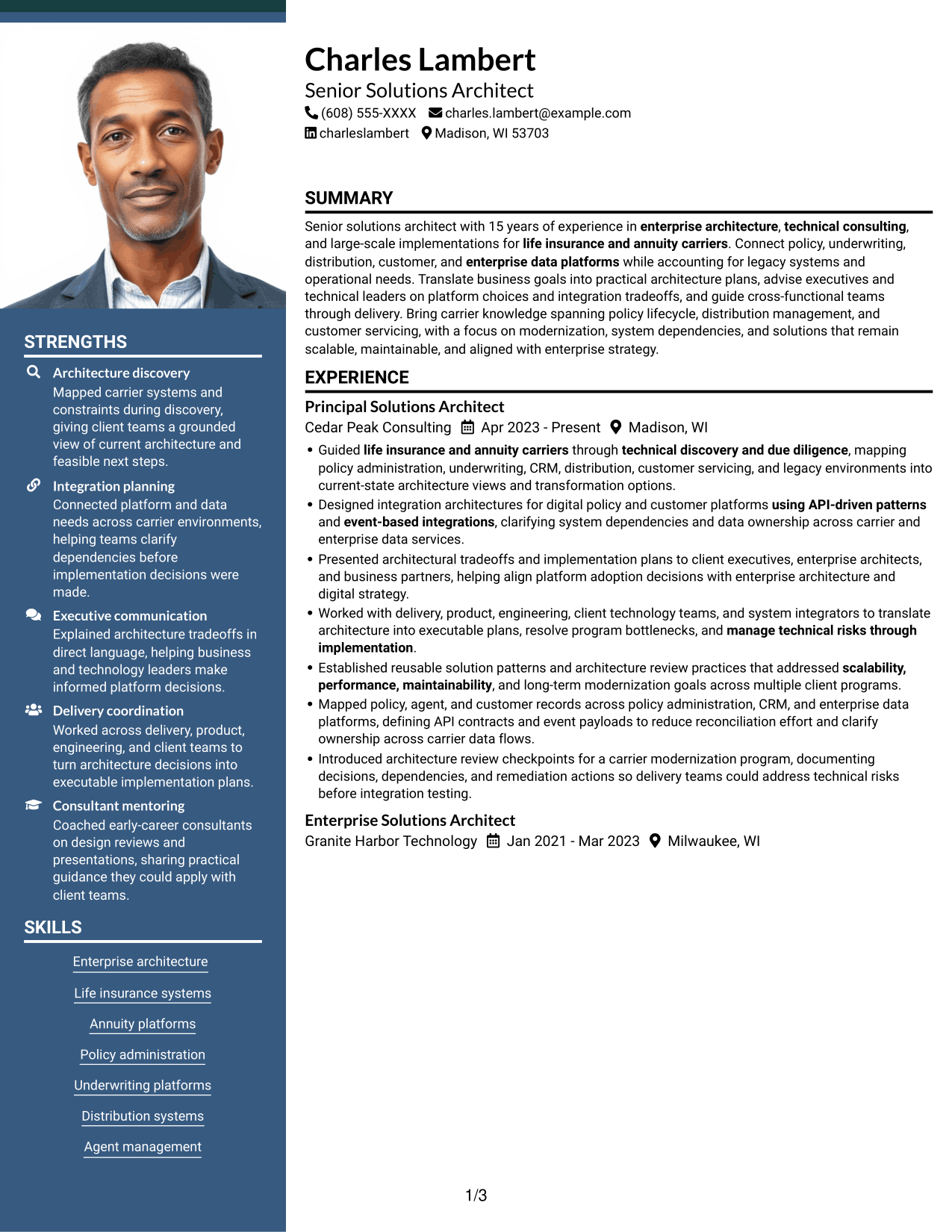
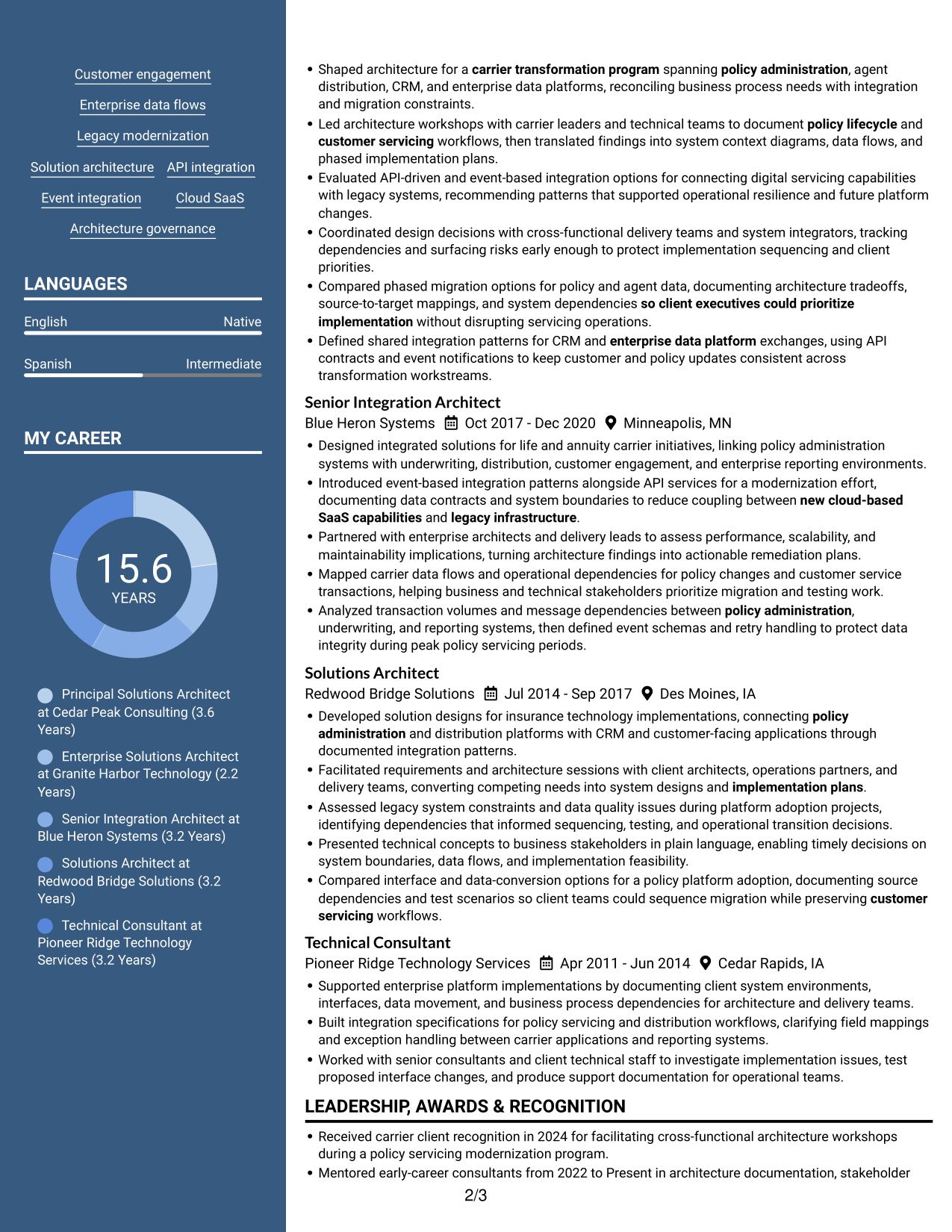
#7 Photo Header Two Column Format Resume Example
A portrait accompanies the two-column resume, adding a personal visual element while preserving separate areas for written sections.
Why This Format Works
- Two-column organization keeps experience and supporting qualifications in separate reading areas.
- Section grouping helps reviewers locate education and credentials alongside career history.
- The portrait offers a visual presentation choice without serving as proof of qualifications.
Best For
- Photo-inclusive two-column resumes
- Separate areas for experience and qualifications
- Readers scanning several resume sections
- Career histories with supporting credentials
- Personal visual presentation with structured content
Why Build Your Senior Strategic Solutions Architect - Life Insurance and Annuity Resume with ResumeInMinutes
ResumeInMinutes helps you arrange your architecture experience, technical skills, certifications, and education in a clear resume. Compare image previews, then open an example in the editor to review its layout and customize your content.
- Professional resume layouts
- Clear, ATS-readable sections
- Role-specific keyword guidance
- Experience and skills organization
- PNG image previews
- Resume customization in the editor
Use the examples to decide how to present architecture discovery, system integration, stakeholder advising, and delivery coordination. Keep the final resume grounded in work you have completed and skills you can discuss.
See Also
- 7 Agentic Solution Architect Resume Templates with Example
- 7 AI Application Solutions Architect - Generative AI Resume Templates with Example
- 7 AI Engineering Solutions Architect Resume Templates with Example
- 33 AI/ML Solutions Architect Resume Templates with Example 2026 (ATS-Optimized)
- 33 AI Solutions Architect Resume Templates with Example 2026 (ATS-Optimized)
- 7 Associate AI Solution Architect - Enterprise GenAI Resume Templates with Example
- 7 AWS Cloud Solutions Architect Resume Templates with Example
- 7 Azure Principal Solution Architect - Cloud Go-to-Market Resume Templates with Example
- 7 Senior Strategic Solutions Architect - Life Insurance and Annuity Cover Letter Templates with Example
- 7 Agentic Solution Architect Cover Letter Templates with Example
Frequently Asked Questions
Are these Senior Strategic Solutions Architect - Life Insurance and Annuity resume templates ATS-friendly?
They use clear section headings and a readable structure. To support ATS review, include relevant terms such as policy administration, enterprise architecture, system integration, API-driven architecture, and event-based integration where they accurately match your experience.
Does the guide show one resume or several different resumes?
It shows one Senior Strategic Solutions Architect - Life Insurance and Annuity resume example in different layouts. The PNG previews let you compare how the same information can be organized.
What should a Senior Strategic Solutions Architect - Life Insurance and Annuity resume include?
Include a focused summary, relevant architecture experience, technical skills, education, and certifications. Use concise bullets to show work with carrier systems, integration plans, modernization, architecture reviews, and stakeholder decisions.
Which resume style works well for this role?
A clean, straightforward layout helps readers find your experience and technical skills quickly. Choose a format with clear headings and enough space for complex architecture work without crowding the page.
How can I make architecture experience easy to evaluate?
Name the systems and business areas involved, explain your role in the design or delivery, and describe the result when you can support it. Use specific examples of dependencies, data flows, integration choices, or risks you addressed.
Should I include a photo on my resume?
For U.S. applications, a resume without a photo is generally the safer choice. Use a photo only when it is customary or required in your region or field.