This interview guide is for educational and informational purposes only. It is designed to help readers prepare, but it does not guarantee any interview result, hiring decision, offer, or outcome. Interview questions, hiring criteria, and preferred answers can vary by employer, interviewer, industry, location, and time. All answers, examples, and explanations in this guide are suggested examples for interview preparation, not definitive answers or instructions for professional practice. They are based on research and judgment, are provided without warranties of any kind, and should be adapted to the question, role, and applicable laws and professional requirements. Diagrams are simplified illustrations intended to highlight the main concepts and their relationships; actual situations, systems, and practices may be more complex. Alternative approaches may be equally valid or better suited to a particular question, context, or interviewer. To the fullest extent permitted by applicable law, the contributors and publisher are not liable for decisions made, actions taken, or losses incurred based on this guide.
State Laws and Professional Responsibilities
Laws and requirements governing an occupation vary by state and jurisdiction. You are responsible for checking the current laws, licensing requirements, and scope-of-practice rules that apply to your location and role, and for ensuring that your answers and actions comply with them. Adapt examples in this guide to those requirements. This guide is not legal advice.
Identity, Image, and Privacy Notice
To respect individual privacy, some names, profile photographs, avatars, biographical details, and other identifying information displayed in this guide may be replaced with pseudonyms, licensed stock images, illustrative avatars, composite images, or representative descriptions. Unless a person is expressly identified as an actual contributor, a displayed name, image, or profile should not be understood as depicting or identifying a specific candidate, interviewer, employee, or other real individual. These representations are provided for editorial and illustrative purposes only and do not imply endorsement, employment, participation, or affiliation with this guide or any company mentioned in it. Any resemblance to an actual person is coincidental.
Company Notice
This guide is an independent educational resource and is not affiliated with, endorsed by, sponsored by, or approved by the company named in this guide. Company names identify reported interview experiences or the employer context of clearly labeled original practice exercises. Interview practices can change without notice, and inclusion of company-specific content does not mean these questions are official, complete, or guaranteed to be asked. To the fullest extent permitted by law, the author, contributors, and publisher are not responsible for outcomes related to use of this material.
Content Accuracy and Verification
To the fullest extent permitted by applicable law, we do not represent or warrant that interview guides, questions, answers, examples, or diagrams are accurate, complete, current, error-free, or suitable for any particular purpose. You are responsible for independently reviewing and verifying the information before relying on it.
Questions or comments?
Contact us for general questions, or share feedback, technical corrections, and comments with the community.
Reverse the node links in place and describe how the head pointer changes after the final node becomes the new front.
Short Interview Answer (30-60 seconds)
I would reverse the linked list in place with three node references: prev, curr, and next. I start with prev and next as null, and curr at the head. For each node, I first save curr.Next so I do not lose the remaining list. Then I point curr.Next to prev and move both pointers forward. When curr becomes null, prev points to the original last node, so prev is the new head. This takes O(n) time and O(1) auxiliary space.
The goal is to change the direction of every link in the list without creating another list. For the example 1 -> 2 -> 3 -> 4 -> 5 -> null, the result must become 5 -> 4 -> 3 -> 2 -> 1 -> null. We move through the list from the original head. Before changing a link, we save where the next node is. This prevents us from losing the rest of the list. After every link is reversed, the original last node becomes the new first node.
Useful Questions to Ask the Interviewer
Can the input head be null?
Should I reverse the existing nodes in place instead of creating new nodes?
Should I return the new head after the reversal?
How to Explain It in an Interview
1. Understand the input and required output
The input is the head reference of a singly linked list. Each node stores a value and a reference to the next node. We must change the existing node links so they point in the opposite direction. We return a node reference, not just a value. For the diagram example, the input is 1 -> 2 -> 3 -> 4 -> 5 -> null. The returned head points to node 5, and the final list is 5 -> 4 -> 3 -> 2 -> 1 -> null.
2. Initialize the pointer state
We use three node references. prev starts as null because the original first node will become the final tail and must point to null. curr starts at the original head, which is node 1. next starts as null and is used to temporarily store the node after curr. The important rule is that we save curr.Next before changing that link. Otherwise, we could lose the unprocessed part of the list.
3. Reverse each link in the correct order
For every current node, first set next = curr.Next. Then set curr.Next = prev to reverse the current link. After that, move prev = curr and curr = next. This order is important. Saving next first keeps a reference to the remaining list. The loop continues while curr is not null.
4. Walk through the example
Initial state: prev = null, curr = 1, and next = null.
Step 1: Save node 2 in next. Change node 1 so its Next is null. Move prev to node 1 and curr to node 2. The reversed part is 1 -> null.
Step 2: Save node 3. Change node 2 so its Next points to node 1. Move prev to node 2 and curr to node 3. The reversed part is 2 -> 1 -> null.
Step 3: Save node 4. Change node 3 so its Next points to node 2. Move prev to node 3 and curr to node 4. The reversed part is 3 -> 2 -> 1 -> null.
Step 4: Save node 5. Change node 4 so its Next points to node 3. Move prev to node 4 and curr to node 5. The reversed part is 4 -> 3 -> 2 -> 1 -> null.
Step 5: Node 5 has no next node, so next becomes null. Change node 5 so its Next points to node 4. Move prev to node 5 and curr to null. The loop now stops. The final list is 5 -> 4 -> 3 -> 2 -> 1 -> null.
5. Explain why the result is correct
After each iteration, prev points to the front of the already reversed part of the list. curr points to the first node that still needs processing. The saved next reference keeps the remaining unprocessed list reachable before we change curr.Next. Each node's Next reference is changed exactly once. When curr becomes null, every node has been processed and prev points to node 5, which was the original tail. That node is therefore the new head.
6. Explain the C# implementation
The method accepts a nullable ListNode head and returns the new nullable head. It initializes prev and next to null and sets curr to head. Inside the loop, it stores curr.Next in next, reverses the current link, and then moves both working pointers forward. When the loop ends, curr is null and prev is the new head. A null input naturally returns null. A one-node list also works because its Next remains null.
7. Explain complexity and edge cases
If the list contains n nodes, the loop processes each node once, so the time complexity is O(n). The algorithm uses only three node references regardless of list size, so the auxiliary space complexity is O(1). An empty list returns null. A one-node list returns the same node. For two nodes, their links are reversed. The method preserves the existing node objects and only changes their Next references.
Key Insight / Why This Solution Works
The key insight is to reverse one link at a time without losing access to the rest of the list. Before changing curr.Next, save the original next node in next. Then redirect curr.Next to prev. After that, move prev to the current node and curr to the saved next node. The invariant is that prev always points to the front of the already reversed portion, while curr points to the first unprocessed node. When curr becomes null, prev points to the original final node, so prev is the new head.
Code
using System;
publicsealedclassListNode
{
publicint Val;
public ListNode? Next;
publicListNode(int val, ListNode? next = null)
{
Val = val;
Next = next;
}
}
publicstaticclassProgram
{
publicstatic ListNode? ReverseList(ListNode? head)
{
// prev is the front of the part that has already been reversed.// It starts as null because the original head becomes the final tail.
ListNode? prev = null;
// curr starts at the original head and marks the node being processed.
ListNode? curr = head;
// next temporarily saves the remaining list before a link is changed.
ListNode? next = null;
while (curr != null)
{
// Save the original next node before changing curr.Next.// Without this reference, the unprocessed part could be lost.
next = curr.Next;
// Reverse the current node's link so it points to the processed part.
curr.Next = prev;
// Move prev to the current node, which is now the front// of the reversed portion.
prev = curr;
// Move curr to the saved next node so processing can continue.
curr = next;
}
// curr is null, so all nodes have been processed.// prev points to the original final node, which is the new head.return prev;
}
publicstaticvoidMain()
{
// Build the diagram example: 1 -> 2 -> 3 -> 4 -> 5 -> null.
ListNode head =
new ListNode(1, new ListNode(2, new ListNode(3, new ListNode(4, new ListNode(5)))));
// Reverse the existing node links in place.
ListNode? newHead = ReverseList(head);
// Print the reversed example: 5 -> 4 -> 3 -> 2 -> 1 -> null.
ListNode? current = newHead;
while (current != null)
{
Console.Write($"{current.Val} -> ");
current = current.Next;
}
Console.WriteLine("null");
}
}
Time & Space Complexity
Let n be the number of nodes in the linked list. We visit each node once and change its Next reference once, so the time complexity is O(n). The algorithm only keeps the prev, curr, and next node references. The number of extra references does not grow when the list becomes larger, so the auxiliary space complexity is O(1). The nodes themselves are reused rather than copied into another list.
Where it is used
This pointer-reversal pattern is useful when software needs to change the direction of a singly linked chain without allocating another list. The same idea also appears inside linked-list operations such as reversing a whole list or reversing a selected section while keeping the existing node objects.
Why Interviewers Ask This
This problem checks whether you can safely manipulate node references and reason about changing state. The interviewer wants to see whether you understand why the next node must be saved before rewiring the current link. They can also evaluate whether you maintain a clear invariant, handle null and small lists, return the correct new head, write valid C#, and explain why the iterative solution uses O(n) time and O(1) auxiliary space.
Common interview mistakes
A common mistake is changing curr.Next before saving the original next node. That loses the remaining list. Another mistake is moving curr before updating prev, which breaks the pointer state. Candidates may also forget that the original head must eventually point to null. Another mistake is returning the original head instead of prev. It is also incorrect to claim O(n) extra space for this iterative version because it uses only a constant number of node references.
Interview tip
Say the pointer update order out loud while coding: save next, reverse the link, move prev, then move curr. That makes it easier to show the interviewer that you will not lose the remaining list.
Interviewer may ask next
Can you reverse only a section of the linked list instead of the whole list?
Yes. The same pointer-reversal operation can be applied only between the requested boundaries. Before reversing, keep references to the node before the section and to the first node inside the section. Reverse the selected links with the same save-next, reverse-link, move-prev, move-curr order. Then reconnect the unchanged prefix and suffix. If the section contains k nodes, the reversal takes O(k) time and O(1) auxiliary space. The main tradeoff is more pointer bookkeeping because both ends of the reversed section must be reconnected correctly.
Could you reverse this linked list recursively instead?
Yes, but that would be a different implementation from the iterative solution shown here. A recursive version can reverse the rest of the list first and then make the next node point back to the current node. It still takes O(n) time, but it uses O(n) call-stack space instead of O(1) auxiliary space. The iterative three-reference method is therefore better when constant extra space is important.
2. Given a vector of strings, group the strings which are anagrams eg:- {ada,mnj,kkl,mjn,aad} Ans:- {{ada,aad},{mnj,mjn},{kkl}}CodingEasyAmazon
i Question Details
Group input strings by anagram class, preserve each bucket’s members, and explain how you would normalize characters for comparison.
Short Interview Answer (30-60 seconds)
I would group the strings by a normalized key. For each word, I sort its characters in ascending order. Anagrams produce the same sorted key, so I use a Dictionary<string, List<string>> where each key represents one anagram class and each value stores the original words in that class. I process every word and add it to its matching bucket. For n words with average length k, the expected time is O(n * k log k), and the auxiliary space is O(n * k).
The input is a list of strings. We need to put strings into the same group when they contain exactly the same characters with the same counts, even if those characters appear in a different order. For example, "ada" and "aad" belong together. The main idea is to sort the characters of every word. This gives all anagrams the same comparison key. We store each original word under that key in a dictionary. After every word is processed, the dictionary values contain the required anagram groups.
Useful Questions to Ask the Interviewer
Should character comparison be case-sensitive?
Does the order of the groups matter?
Should the original order of words inside each group be preserved?
Can the input contain empty strings or repeated identical strings?
How to Explain It in an Interview
1. Understand the input and required output
The example input is {ada, mnj, kkl, mjn, aad}. We must return groups of the original strings. The diagram shows the valid result {{ada, aad}, {mnj, mjn}, {kkl}}. We return the strings themselves, not their positions. The question does not require one unique ordering of the groups, so the displayed result is one valid ordering.
2. Choose the algorithm and data structure
For each word, sort its characters in ascending order. The sorted text becomes a canonical key. Canonical means one standard representation used for comparison. For example, "ada" becomes "aad". The word "aad" also becomes "aad", so both strings belong in the same group. We use Dictionary<string, List<string>>. Each dictionary key is a sorted character sequence, and each value is the list of original strings that produced that sequence.
3. Initialize the state
Start with an empty dictionary. There are no groups yet. Process the input from left to right. For each word, create its sorted key. If that key is not already in the dictionary, create a new empty list for it. Then append the original word to that list.
4. Walk through the example
Step 1: Read "ada". Sorting its characters gives "aad". The dictionary is empty, so create key "aad" and add "ada". State after the step: aad -> [ada].
Step 2: Read "mnj". Sorting gives "jmn". That key is new, so create it and add "mnj". State after the step: aad -> [ada], jmn -> [mnj].
Step 3: Read "kkl". Sorting gives "kkl". That key is new, so create it and add "kkl". State after the step: aad -> [ada], jmn -> [mnj], kkl -> [kkl].
Step 4: Read "mjn". Sorting gives "jmn". That key already exists, so append "mjn" to its list. State after the step: aad -> [ada], jmn -> [mnj, mjn], kkl -> [kkl].
Step 5: Read "aad". Sorting gives "aad". That key already exists, so append "aad" to its list. Final state: aad -> [ada, aad], jmn -> [mnj, mjn], kkl -> [kkl].
All five words have now been processed. We collect the dictionary values. The diagram's final result is {{ada, aad}, {mnj, mjn}, {kkl}}.
5. Explain why the result is correct
Two strings are anagrams exactly when they contain the same characters with the same counts. Sorting those characters creates the same canonical form for both strings. Therefore, all anagrams receive the same dictionary key. Strings that are not anagrams receive different sorted keys. Every original string is added to exactly one bucket, so each bucket contains one anagram class and no input string is lost.
6. Explain the C# implementation
For every word, the code converts the string to a char array, sorts the array with Array.Sort, and creates a new string from the sorted characters. That string is the dictionary key. TryGetValue checks whether the dictionary already has a bucket for that key. If not, the code creates a new List<string> and stores it. Then it adds the original word to the bucket. After the loop, the dictionary values are copied into the final result and returned. Main runs the exact example shown in the diagram.
7. Explain complexity and edge cases
Let n be the number of words and k be the average word length. Sorting one word costs O(k log k). Doing this for all words gives O(n * k log k) expected total time. Dictionary lookup and insertion are O(1) on average, apart from the cost of hashing the string key, and sorting remains the dominant operation. Auxiliary space is O(n * k) because normalized keys are stored and the groups grow with the input. Empty input returns an empty result. One word creates one group. Repeated identical words stay together. The diagram keeps comparison case-sensitive unless the requirements say to normalize case first.
Key Insight / Why This Solution Works
The key insight is that every anagram class can be represented by one canonical key. We create that key by sorting each string's characters. For example, both "ada" and "aad" become "aad", while both "mnj" and "mjn" become "jmn". A Dictionary<string, List<string>> maps each sorted key to the original strings that produced it. The central invariant is that every string stored in one bucket has exactly the same sorted character sequence. Therefore, every bucket contains only anagrams, and all anagrams are placed together.
Code
using System;
using System.Collections.Generic;
publicstaticclassProgram
{
publicstatic IList<IList<string>> GroupAnagrams(IList<string> words)
{
// Each sorted key represents one anagram class.// Each value stores the original strings that belong to that class.
Dictionary<string, List<string>> groups = new Dictionary<string, List<string>>();
foreach (string word in words)
{
// Copy the characters so we can sort them without changing the original string.char[] keyCharacters = word.ToCharArray();
// Sorting creates the canonical comparison key.// Two anagrams produce the same sorted character sequence.
Array.Sort(keyCharacters);
string key = newstring(keyCharacters);
// If this key has not appeared before, create its bucket now.if (!groups.TryGetValue(key, out List<string>? bucket))
{
bucket = new List<string>();
groups[key] = bucket;
}
// Preserve the original word and add it to its matching anagram group.
bucket.Add(word);
}
// Collect every completed dictionary bucket as the final list of groups.
List<IList<string>> result = new List<IList<string>>();
foreach (List<string> bucket in groups.Values)
{
result.Add(bucket);
}
return result;
}
publicstaticvoidMain()
{
// Run the exact example shown in the approved diagram.
List<string> input = new List<string> { "ada", "mnj", "kkl", "mjn", "aad" };
IList<IList<string>> groups = GroupAnagrams(input);
// Print the returned groups in a compact form.
Console.Write("{");
for (int i = 0; i < groups.Count; i++)
{
Console.Write("{" + string.Join(",", groups[i]) + "}");
if (i < groups.Count - 1)
{
Console.Write(",");
}
}
Console.WriteLine("}");
}
}
Time & Space Complexity
Let n be the number of input words and k be the average number of characters in one word. Sorting the characters of one word costs O(k log k). We do that for every word, so the expected total time is O(n * k log k). Dictionary lookup and insertion are O(1) on average, although creating and hashing string keys also depends on their length. The sorting cost remains the main term. Auxiliary space is O(n * k) because the dictionary stores normalized keys and the grouped input grows with the total number of characters.
Where it is used
This pattern is useful when many values can be converted into a common canonical key and then grouped. Anagram grouping is a direct example. Similar grouping appears in data processing when different original values represent the same normalized category or signature. A dictionary is useful because it lets the program quickly find the bucket that belongs to a normalized key.
Why Interviewers Ask This
This question checks whether you can recognize that anagrams need a common representation before they can be grouped. It tests whether you can choose a suitable dictionary, define exactly what its keys and values mean, preserve the original strings, and handle repeated values correctly. It also checks your C# collection skills and whether you can explain the real complexity, including the cost of sorting every string instead of incorrectly calling the whole solution O(n).
Common interview mistakes
One mistake is using the original string as the dictionary key instead of its sorted form. Another is storing the sorted key as the output and losing the original string. A candidate may also overwrite an existing bucket instead of appending another matching word. Repeated strings must remain in the same group rather than being removed. Another common mistake is claiming O(n) time and ignoring the O(k log k) sort performed for each word. Case handling should also follow the stated requirement instead of being changed silently.
Interview tip
Explain one pair before writing the full code. For example, show that "mnj" becomes "jmn" and "mjn" also becomes "jmn". Then say that the sorted string is the dictionary key. This quickly explains why both original strings enter the same bucket.
Interviewer may ask next
How would you make the grouping case-insensitive?
Normalize the characters to the required case before building the sorted key. For example, create the key from word.ToLowerInvariant(), sort those characters, and use the result as the dictionary key. If the output should preserve the original text, still add the original word to the bucket. The correctness idea stays the same because strings that differ only by case now create the same normalized key. The expected time remains O(n * k log k), and auxiliary space remains O(n * k).
Can you reduce the sorting cost if the allowed character set is small and fixed?
Yes. Instead of sorting every word, count the frequency of each allowed character and use those counts as the canonical key. With a fixed-size alphabet, creating the signature takes O(k) time per word, so the expected total time becomes O(n * k). Auxiliary space remains O(n * k) for the stored groups and keys. The tradeoff is that this version depends on a clearly defined fixed character set, while the sorting approach is more general.
3. Given an array of integers, find the next biggest numberCodingEasyAmazon
i Question Details
Find the next larger value for each element or the next largest value in the array, and describe how the scan handles duplicates and the absence of a larger answer.
Short Interview Answer (30-60 seconds)
I would scan the array from right to left and use a monotonic stack of indices. The stack keeps useful candidates whose values are in decreasing order. For each value, I pop every stack value that is smaller than or equal to it. Then the remaining top, if one exists, is the first greater value to the right. I store that result and push the current index. Each index is pushed and popped at most once, so time is O(n) and auxiliary space is O(n).
The input is an array of integers. For each position, we need the first value to its right that is strictly larger. If no larger value exists, we return -1 for that position. For example, the diagram uses [4, 5, 2, 25, 7, 8] and returns [5, 25, 25, -1, 8, -1]. We scan from right to left because answers come from values on the right. A stack helps us remove values that can never be useful again.
Useful Questions to Ask the Interviewer
By "next bigger," do you mean the first strictly greater value to the right of each element?
Should I return -1 when no greater value exists?
Are duplicate values allowed, and should equal values be excluded because the answer must be strictly greater?
How to Explain It in an Interview
1. Understand the input and required output
The input is an integer array. The output is another integer array of the same size. Each output position contains the first strictly greater value found to the right of the matching input position. We return values, not indices. If no greater value exists, that result stays -1.
For the diagram example: Input: [4, 5, 2, 25, 7, 8] Output: [5, 25, 25, -1, 8, -1]
2. Choose the algorithm and data structure
I use a stack of indices and scan from right to left. Each stored index points to a value that may be the next greater value for an element farther left. Before using the stack top, I remove indices whose values are less than or equal to the current value. Those values cannot be the next strictly greater answer for the current element or for an earlier element when the current value is an equal or better candidate.
The important invariant is that the stack contains useful indices from the right side, with their values in decreasing order from bottom to top. After the removals, the top value is the nearest remaining value that is greater than the current value.
3. Initialize the state
Create a result array with the same length as the input and fill every position with -1. This already represents the correct answer when no greater value exists. Create an empty Stack<int>. The stack stores indices, not the values themselves. Start at the last index and move toward index 0.
4. Walk through the example
At index 5, the current value is 8. The stack is empty, so result[5] stays -1. Push index 5. The stack represents value [8].
At index 4, the current value is 7. The top value is 8. Since 8 is greater than 7, result[4] becomes 8. Push index 4. The stack now represents values [8, 7].
At index 3, the current value is 25. Values 7 and 8 are both less than or equal to 25, so pop both indices. The stack becomes empty. There is no greater value to the right, so result[3] stays -1. Push index 3. The stack now represents [25].
At index 2, the current value is 2. The top value is 25. It is greater than 2, so result[2] becomes 25. Push index 2. The stack represents [25, 2].
At index 1, the current value is 5. The top value 2 is not greater than 5, so pop index 2. The new top value is 25, which is greater than 5. Set result[1] to 25. Push index 1. The stack represents [25, 5].
At index 0, the current value is 4. The top value is 5. It is greater than 4, so result[0] becomes 5. Push index 0. The final stack represents [25, 5, 4], and the final result is [5, 25, 25, -1, 8, -1].
5. Explain why the result is correct
Before we choose an answer, every value on the stack that is less than or equal to the current value is removed. Such a value cannot be a strictly greater answer. The remaining top, if one exists, is greater than the current value and is the nearest useful candidate to its right. Equal values are also popped, so duplicates never incorrectly count as a strictly greater answer.
6. Explain the C# implementation
The code creates the result array and fills it with -1. It creates Stack<int> to store indices. The for loop moves from the last index to the first. The while loop removes indices while their values are less than or equal to the current value. If the stack still has an index, its value becomes the current answer. Then the current index is pushed so it can help positions farther left. Finally, the method returns the result array.
7. Explain complexity and edge cases
The time complexity is O(n). Each index is pushed once and can be popped at most once. The auxiliary stack space is O(n), and the returned result array also contains n values. A strictly increasing array gives the next element as the answer for each position except the last. A strictly decreasing array returns -1 everywhere. Equal values are popped because the answer must be strictly greater. A one-element array returns [-1], and an empty array returns an empty result.
Key Insight / Why This Solution Works
The key idea is to scan from right to left while keeping a monotonic stack of indices. Each index on the stack represents a value that is still useful as a possible next greater value for elements farther left. For the current value, remove stack entries whose values are less than or equal to it. They cannot be a strictly greater answer. After those removals, the stack top, if present, is the nearest useful greater value. Then push the current index. The invariant is that the stack keeps useful right-side candidates in decreasing value order from bottom to top.
Code
using System;
using System.Collections.Generic;
publicstaticclassProgram
{
publicstaticvoidMain()
{
// Run the exact example shown in the diagram.int[] numbers = { 4, 5, 2, 25, 7, 8 };
int[] result = NextGreaterElements(numbers);
// Print the returned next-greater values.
Console.WriteLine("[" + string.Join(", ", result) + "]");
}
publicstaticint[] NextGreaterElements(int[] arr)
{
int n = arr.Length;
// Start every answer at -1. It stays -1 when no greater value exists.int[] result = newint[n];
Array.Fill(result, -1);
// Store indices of useful candidates on the right side.
Stack<int> stack = new Stack<int>();
// Scan from right to left because each answer must come from the right.for (int i = n - 1; i >= 0; i--)
{
// Remove values that are not strictly greater than arr[i].// Equal values are removed too, which handles duplicates correctly.while (stack.Count > 0 && arr[stack.Peek()] <= arr[i])
{
stack.Pop();
}
// If a candidate remains, the top value is the next greater value.// Otherwise result[i] keeps its initial value of -1.if (stack.Count > 0)
{
result[i] = arr[stack.Peek()];
}
// Add the current index so it can help elements farther to the left.
stack.Push(i);
}
// Return one next-greater value for every input position.return result;
}
}
Time & Space Complexity
Let n be the number of elements. The time complexity is O(n). Although there is a while loop inside the for loop, each index is pushed onto the stack once and popped at most once. So the total number of stack operations grows linearly with n. The auxiliary stack space is O(n) because the stack can hold up to n indices. The returned result array also uses O(n) storage because it contains one answer for each input element.
Where it is used
This monotonic stack pattern is useful when software needs the next larger or next smaller item in a sequence. Examples include finding the next higher price, the next warmer measurement, or the next event whose value crosses the current value. It is useful when a simple nested scan would take O(n²) time and we want a linear-time solution.
Why Interviewers Ask This
This problem checks whether you can recognize the monotonic stack pattern instead of using an O(n²) nested scan. It also tests whether you can reason about traversal direction, maintain a clear stack invariant, distinguish values from indices, and handle duplicates correctly with a strictly greater comparison. The interviewer can also see whether you understand amortized O(n) behavior, write correct C# stack operations, and explain what happens when no larger value exists.
Common interview mistakes
A common mistake is looking for the largest value anywhere to the right instead of the first greater value to the right. Another mistake is using < instead of <= in the pop condition. That can incorrectly treat an equal duplicate as greater. Candidates may also store values without understanding that the diagram's stack stores indices. Another error is scanning left to right while using this exact stack logic. Finally, it is incorrect to call the nested loops O(n²). Each index is pushed once and popped at most once, so the total time is O(n).
Interview tip
While coding, say the stack invariant out loud: after I pop every value less than or equal to the current value, the remaining top is the nearest useful strictly greater value on the right. That one sentence explains both the pop condition and why the answer is correct.
Interviewer may ask next
What changes if equal values are allowed to count as the next bigger-or-equal value?
The scan direction and stack structure stay the same. The pop condition changes from arr[stack.Peek()] <= arr[i] to arr[stack.Peek()] < arr[i]. We remove only strictly smaller values, so an equal value can remain on top and become the answer. The invariant changes so the stack keeps candidates that are greater than or equal to the current value. Time remains O(n), and auxiliary stack space remains O(n). The tradeoff is that the comparison now follows a greater-than-or-equal contract instead of a strictly-greater contract.
Can we reduce the auxiliary stack space?
Not with this same monotonic-stack approach while keeping the input unchanged. In the worst case, the stack may need to hold O(n) indices, so its auxiliary space is O(n). A simple nested scan can use O(1) extra working space, not counting the required output array, but it can take O(n²) time because each position may search many later elements. The tradeoff is lower working memory versus slower worst-case time.
4. Given an array of distinct integers arr, find all pairs of elements with the minimum absolute difference of any two elementsCodingEasyAmazon
i Question Details
Work on distinct integers, identify every pair whose gap equals the global minimum, and clarify how to return ties in sorted order if needed.
Short Interview Answer (30-60 seconds)
I would sort the array first, then compare only adjacent values. In sorted order, the minimum absolute difference must appear between two neighbors. I keep a minDiff value and a result list. If I find a smaller difference, I replace the previous result. If I find the same difference, I add that pair. For [4, 2, 8, 1, 7], the result is [[1, 2], [7, 8]]. Time is O(n log n), with O(1) auxiliary space excluding the output.
We are given distinct integer values and need every pair whose absolute difference is as small as possible. The main idea is to put the values in increasing order first. After sorting, values that are closest must be next to each other. So we only compare neighboring values instead of checking every possible pair. We keep the smallest difference seen so far and collect every neighboring pair that has that difference. This gives all required pairs in sorted order and matches the example shown in the diagram.
Useful Questions to Ask the Interviewer
Should each returned pair contain the values rather than their original indices?
Should all pairs with the same minimum difference be returned in sorted order?
How to Explain It in an Interview
1. Understand the input and required output
The input is an array of distinct integers. We return the values themselves, not their original indices. We must return every pair whose absolute difference equals the global minimum difference. Each pair has the smaller value first, and the result is in sorted order. For the diagram example, the input is [4, 2, 8, 1, 7] and the final result is [[1, 2], [7, 8]].
2. Sort the values and initialize the state
First, sort the array in ascending order. The example becomes [1, 2, 4, 7, 8]. Set minDiff to a very large value and create an empty result list. The important rule is that, after sorting, a globally closest pair must appear as two adjacent values.
3. Scan adjacent pairs
Compare each neighboring pair from left to right. For each pair, calculate arr[i + 1] - arr[i]. Because the array is sorted, this value is non-negative and is the absolute difference between those two values. If the new difference is smaller than minDiff, update minDiff, clear the old result, and store the new pair. If it equals minDiff, add the pair without clearing the previous matches.
4. Walk through the example
Start with sorted array [1, 2, 4, 7, 8], minDiff set to a very large value, and an empty result.
At i = 0, compare (1, 2). The difference is 1. Since 1 is smaller than the current minDiff, set minDiff to 1, clear the result, and add [1, 2]. The result is now [[1, 2]].
At i = 1, compare (2, 4). The difference is 2. Since 2 is greater than 1, do nothing. The result stays [[1, 2]].
At i = 2, compare (4, 7). The difference is 3. Since 3 is greater than 1, do nothing. The result still stays [[1, 2]].
At i = 3, compare (7, 8). The difference is 1. Since it equals minDiff, add [7, 8]. The final result becomes [[1, 2], [7, 8]].
5. Explain why the result is correct
In a sorted array, the minimum absolute difference must occur between adjacent values. If two selected values are not adjacent, at least one sorted value lies between them, creating an adjacent gap that is no larger than their full gap. Therefore, scanning all adjacent pairs is enough to find the global minimum. Keeping every pair whose difference equals minDiff returns all ties.
6. Explain the C# implementation
The code sorts the input with Array.Sort. It stores minDiff as long so subtraction remains safe even when integer values are far apart. It then loops from index 0 through the second-to-last element. Each iteration calculates the adjacent difference, updates or extends the result list, and finally returns all collected pairs.
7. Explain complexity and edge cases
Sorting costs O(n log n), and the adjacent scan costs O(n), so the total time is O(n log n). The diagram reports O(1) auxiliary space excluding the output. If the input has fewer than two values, there is no pair, so the returned list is empty. Negative values work because sorting makes every adjacent subtraction non-negative. Multiple pairs with the same minimum difference are all returned.
Key Insight / Why This Solution Works
The key insight is to sort the values first. After sorting, the smallest absolute difference between any two values must occur between two adjacent elements. This avoids checking every possible pair. The invariant is: after each adjacent pair is processed, minDiff is the smallest difference seen so far, and result contains exactly the processed pairs whose difference equals minDiff. A smaller difference replaces the previous best and clears old pairs. An equal difference adds another tied pair. Scanning all adjacent pairs therefore finds the global minimum and every pair that reaches it.
Code
using System;
using System.Collections.Generic;
publicstaticclassProgram
{
publicstaticvoidMain()
{
// Use the exact example shown in the diagram.int[] arr = { 4, 2, 8, 1, 7 };
// Find every pair whose difference equals the global minimum.
List<List<int>> result = MinAbsDiffPairs(arr);
// Print the returned pairs in the same nested-list style as the diagram.
Console.Write("[");
for (int i = 0; i < result.Count; i++)
{
// Add a separator only between pairs.if (i > 0)
{
Console.Write(", ");
}
// Each returned item contains the two values of one minimum-difference pair.
Console.Write($"[{result[i][0]}, {result[i][1]}]");
}
Console.WriteLine("]");
}
publicstatic List<List<int>> MinAbsDiffPairs(int[] arr)
{
// Sort first so the global minimum difference must occur// between two adjacent values.
Array.Sort(arr);
// Start with no result pairs and a difference larger than// any difference we have seen so far.long minDiff = long.MaxValue;
List<List<int>> result = new List<List<int>>();
// Compare every adjacent pair in the sorted array from left to right.for (int i = 0; i < arr.Length - 1; i++)
{
// Cast before subtraction so extreme int values do not overflow.long diff = (long)arr[i + 1] - arr[i];
if (diff < minDiff)
{
// A new smaller difference makes all older result pairs obsolete.
minDiff = diff;
result.Clear();
result.Add(new List<int> { arr[i], arr[i + 1] });
}
elseif (diff == minDiff)
{
// Keep every pair tied with the current global minimum.
result.Add(new List<int> { arr[i], arr[i + 1] });
}
}
// For fewer than two values, the loop does not run and this list stays empty.return result;
}
}
Time & Space Complexity
Let n be the number of values. Sorting the array takes O(n log n) time. After sorting, the code checks n - 1 adjacent pairs, which takes O(n) time. The total time is O(n log n). The diagram treats the in-place sort as O(1) auxiliary space excluding the returned result. The output list itself can grow when several pairs have the same minimum difference, so output storage depends on the number of returned pairs.
Where it is used
This pattern is useful when software needs to find values that are closest to each other, such as nearby measurements, timestamps, prices, scores, or other one-dimensional numeric values. Sorting first often turns an expensive all-pairs comparison into a simple scan of neighboring values.
Why Interviewers Ask This
This question tests whether the candidate recognizes how sorting changes the problem. The interviewer can see whether the candidate avoids an unnecessary O(n²) all-pairs search, maintains a clear minimum-difference invariant, handles tied answers correctly, and writes readable C# code. It also checks whether the candidate includes sorting in the complexity analysis, distinguishes values from indices, and notices practical details such as safe integer subtraction.
Common interview mistakes
A common mistake is checking every possible pair, which takes O(n²) time even though sorting allows an adjacent scan. Another mistake is forgetting to clear the result when a new smaller difference is found. A candidate may also return only one pair and miss ties. Another error is returning original indices when this solution returns the values themselves. Finally, subtracting two int values before converting to long can overflow for extreme integer values.
Interview tip
After sorting, state the key proof idea before coding: the minimum difference must occur between adjacent values. Then explain the two update cases separately. A smaller difference resets the result, while an equal difference adds another pair.
Interviewer may ask next
What changes if the input array is already sorted?
We can skip Array.Sort and scan adjacent values directly. The same invariant and update rules still work because the values are already in ascending order. The time becomes O(n) because only the adjacent scan remains. The auxiliary space stays O(1) excluding the output, following the same space model as the diagram. The tradeoff is that this faster bound depends on the caller guaranteeing that the input is already sorted.
How would you handle very large positive and negative int values safely?
Keep the same sorting and adjacent-scan algorithm, but perform the subtraction using long. Cast one value to long before subtracting, as in (long)arr[i + 1] - arr[i]. This prevents int overflow when the two values are far apart. Correctness does not change. The time remains O(n log n), and the auxiliary-space treatment remains the same as in the diagram.
5. Given an array of integers nums and an integer target, return indices of the two numbers such that they add up to target. You may assume that each input would have exactly one solution, and you may not use the same element twice. You can return the answer in any orderCodingEasyAmazon
i Question Details
Return index positions, not values, for the one-solution two-sum case, and cover what happens when the matching pair appears late in the scan.
Short Interview Answer (30-60 seconds)
I would use a hash map that stores each earlier value and its index. For each number, I calculate its complement, which is target minus the current value. I check for that complement before storing the current number, so I never reuse the same element. When I find the complement, I return the earlier index and the current index. I process each item at most once and stop when the answer is found. This gives O(n) expected time and O(n) auxiliary space.
We are given a list of whole numbers and a target number. We need to find two different positions whose numbers add up to that target. We return the positions, not the numbers themselves. The question guarantees that exactly one matching pair exists. We may return the two positions in either order. I will remember each number I have already seen and its position. For every new number, I first check whether the number needed to reach the target was seen earlier. This lets me stop as soon as the matching pair is found.
Useful Questions to Ask the Interviewer
Should I return the two indices in any order? The question says yes.
Is exactly one valid pair guaranteed? The question says yes.
Can the array contain duplicate, negative, or zero values? The hash-map method can handle them.
How to Explain It in an Interview
1. Understand the input and required output
The input is an integer array called nums and an integer called target. The output is two indices. The values stored at those two indices must add up to target. I must not use one array element twice. The problem guarantees one valid pair, and the two returned indices can appear in either order.
2. Choose the algorithm and data structure
I use a C# Dictionary<int, int> as a hash map. Each key is a value seen earlier in the array. Each dictionary value is the earlier index where that number appeared. For the current value x, I calculate need = target - x. I check whether need is already in the dictionary before inserting x. This order is important because it prevents the current element from matching with itself. The central invariant is that the dictionary contains only values from earlier indices.
3. Initialize the state
I start with an empty dictionary. Then I move from left to right through the array. Before processing index 0, the dictionary is empty because no earlier values exist.
4. Walk through the example
The diagram uses nums = [2, 7, 11, 15] and target = 26.
At index 0, x = 2. The needed value is 26 - 2 = 24. The dictionary is empty, so 24 is not found. I store 2 -> 0.
At index 1, x = 7. The needed value is 26 - 7 = 19. The dictionary is {2 -> 0}, so 19 is not found. I store 7 -> 1.
At index 2, x = 11. The needed value is 26 - 11 = 15. The dictionary is {2 -> 0, 7 -> 1}, so 15 is not found. I store 11 -> 2.
At index 3, x = 15. The needed value is 26 - 15 = 11. The dictionary is {2 -> 0, 7 -> 1, 11 -> 2}. The value 11 is found at index 2. I return [2, 3] and stop immediately. nums[2] + nums[3] = 11 + 15 = 26.
5. Explain why the result is correct
Before processing index i, the dictionary contains only values from indices smaller than i. If the needed complement is present, its stored index is therefore different from the current index. The two values add to target because need was calculated as target - x. If the complement is not present, storing the current value makes it available for later elements. With the guaranteed solution, this process eventually finds the valid pair.
6. Explain the C# implementation
The code creates a Dictionary<int, int>. It loops through nums from left to right. For each index, it calculates the complement and calls TryGetValue before inserting the current value. If the complement exists, TryGetValue gives its earlier index and the method returns the two indices. Otherwise, the current value and index are stored. The fallback return is defensive only because the stated problem guarantees a solution.
7. Explain complexity and edge cases
Dictionary lookup and insertion are O(1) on average, so the overall expected time is O(n). We process the input at most once because the method returns immediately when the pair is found. The dictionary can grow to O(n) entries, so auxiliary space is O(n). Duplicate values work because lookup happens before insertion. Negative numbers and zero also work because complement arithmetic does not depend on values being positive.
Key Insight / Why This Solution Works
The key idea is to remember numbers that appeared earlier so we can quickly ask whether the current number has a partner. For each current value x, calculate complement = target - x. The hash map stores value -> earlier index. Check for the complement before storing x. If the complement exists, return [map[complement], currentIndex]. Otherwise, store the current value and index and continue. The central invariant is that the map contains only values from earlier indices. This both preserves the original indices and prevents reuse of the current element. A nested-loop approach would compare many pairs, while the dictionary gives average O(1) lookup and makes the overall expected time O(n).
Code
using System;
using System.Collections.Generic;
publicstaticclassProgram
{
publicstaticvoidMain()
{
// Use the exact example from the diagram.int[] nums = { 2, 7, 11, 15 };
int target = 26;
// Run the Two Sum algorithm and receive the matching indices.int[] result = TwoSum(nums, target);
// Print the returned pair. For this example, the result is [2, 3].
Console.WriteLine($"[{result[0]}, {result[1]}]");
}
publicstaticint[] TwoSum(int[] nums, int target)
{
// The dictionary stores each value already seen and its earlier index.
Dictionary<int, int> map = new Dictionary<int, int>();
// Process each element at most once and stop as soon as the pair is found.for (int i = 0; i < nums.Length; i++)
{
// Read the value at the current index.int currentValue = nums[i];
// Complement means the value needed to reach the target.int need = target - currentValue;
// Check before insertion so the current element cannot match with itself.if (map.TryGetValue(need, outint earlierIndex))
{
// The complement came from an earlier index, so return both indices.returnnewint[] { earlierIndex, i };
}
// No match was found yet, so remember this value for later elements.
map[currentValue] = i;
}
// Defensive fallback; the stated problem guarantees a solution.return Array.Empty<int>();
}
}
Time & Space Complexity
Let n be the number of elements in nums. We process the input at most once and may stop early when the pair is found. C# Dictionary<TKey, TValue> lookup and insertion are O(1) on average, with normal hashing and collision caveats. Therefore, the overall expected time is O(n). The dictionary may store up to n earlier values and their indices, so the auxiliary space is O(n). This is the standard optimal expected-time approach for this problem.
Where it is used
This pattern is useful when software needs to find whether a previously seen value can combine with the current value to satisfy a target condition. Similar hash-map lookups appear in matching, deduplication, frequency tracking, and fast membership checks where keeping the original position of an item matters.
Why Interviewers Ask This
This question tests whether a candidate can recognize a hash-map lookup pattern instead of using a slower nested comparison. It also checks whether the candidate preserves original indices, understands why lookup must happen before insertion, handles duplicate values correctly, and reasons about early return. For C#, the interviewer can also evaluate correct Dictionary<int, int> usage and whether the candidate describes hash-based complexity accurately as O(n) expected time with O(n) auxiliary space.
Common interview mistakes
A common mistake is returning the two values instead of their indices. Another mistake is inserting the current value before checking its complement, which can allow the same element to be reused. Sorting the array without preserving original indices is also wrong for this output contract. Candidates may also keep processing after finding the pair instead of returning immediately. Finally, saying the method has guaranteed O(n) time is too strong because Dictionary lookup and insertion are O(1) on average, so the overall O(n) bound is expected time.
Interview tip
State the dictionary invariant before writing the loop: it stores only values from earlier indices. Then say that you calculate the complement, check it before insertion, and return immediately when it is found. This makes the no-reuse rule and the correctness of the returned indices easy to explain.
Interviewer may ask next
What changes if a valid pair is not guaranteed?
The main hash-map algorithm does not need to change. I would still calculate the complement, check the dictionary before insertion, and return immediately when a pair is found. The difference is that reaching the end of the loop becomes a normal possible outcome instead of an unreachable defensive path. The method would need an agreed result for that case, such as Array.Empty<int>(), null, or a boolean-style Try method. Expected time remains O(n), and auxiliary space remains O(n).
What changes if the input array is already sorted and we want to reduce auxiliary space?
If the array is already sorted, a two-pointer method can replace the dictionary. Put one pointer at the start and one at the end. If their sum is too small, move the left pointer right. If the sum is too large, move the right pointer left. If the sum equals the target, return the two indices. The sorted order makes each pointer move safe. Time becomes O(n) and auxiliary space becomes O(1). The tradeoff is that this works directly only because the input is already sorted. Sorting an unsorted array would require preserving original indices and would add O(n log n) sorting time.
6. Remove the duplicate node(s) from a linked listCodingEasyAmazon
i Question Details
Remove repeated nodes from a linked list while preserving the first occurrence of each value and keeping the remaining list connected.
Short Interview Answer (30-60 seconds)
I would use a HashSet to remember values that have already appeared. I keep two node references, prev and curr. If curr.Value is new, I add it to the set and move prev forward. If the value is already in the set, I remove that node by setting prev.Next to curr.Next. Then I continue with curr.Next. This preserves the first occurrence and keeps the list connected. The expected time is O(n), and the auxiliary space is O(n).
The input is a linked list that may contain the same value more than once. We must remove later repeated nodes and keep the first time each value appears. The remaining nodes must stay in their original order and remain connected. For the example 1 → 2 → 3 → 2 → 4 → 3 → 5, the result is 1 → 2 → 3 → 4 → 5. A set works well because it can quickly tell us whether a value has already appeared.
Useful Questions to Ask the Interviewer
Should I preserve the first occurrence of each value and keep the original order?
Is it acceptable to modify the existing linked list in place?
Can the input list be empty?
How to Explain It in an Interview
1. Understand the input and required output
We receive the head node of a singly linked list. We must remove nodes whose values have already appeared earlier in the list. We keep the first node for each value. We return the head of the modified list.
I use a HashSet<int> named seen. It stores every value that has already been kept in the list.
I also use a dummy node before the real head. The dummy node gives prev a safe starting position before the head. The variable prev points to the last node that remains in the list. The variable curr points to the node currently being checked.
The main invariant is that seen contains exactly the values that have already been kept before curr. prev points to the last kept node.
3. Initialize the state
Create an empty HashSet<int>. Create a dummy node whose Next points to head. Set prev to dummy and curr to head.
At the start, seen is empty because no real node has been processed yet.
4. Walk through the example
Start with 1 → 2 → 3 → 2 → 4 → 3 → 5 and seen = {}.
Step 1: curr is 1. The set does not contain 1. Add 1 to seen. Move prev to node 1. Then move curr to node 2. seen becomes {1}.
Step 2: curr is 2. The set does not contain 2. Add 2. Move prev to node 2. Move curr to node 3. seen becomes {1, 2}.
Step 3: curr is 3. The set does not contain 3. Add 3. Move prev to node 3. Move curr to the next node, which has value 2. seen becomes {1, 2, 3}.
Step 4: curr is the second node with value 2. The set already contains 2. This node is a duplicate. Keep prev on the first 3 and set prev.Next = curr.Next. This bypasses the duplicate 2 without losing the rest of the list. Then move curr forward.
Step 5: curr is 4. The set does not contain 4. Add 4. Move prev to node 4. Move curr forward. seen becomes {1, 2, 3, 4}.
Step 6: curr is the second node with value 3. The set already contains 3. Keep prev on node 4 and set prev.Next = curr.Next. This bypasses the duplicate 3 and reconnects node 4 directly to node 5. Then move curr forward.
Step 7: curr is 5. The set does not contain 5. Add 5 to seen. Move prev to node 5. Then move curr forward. seen becomes {1, 2, 3, 4, 5}.
Step 8: curr becomes null. The loop stops. Return dummy.Next. The final list is 1 → 2 → 3 → 4 → 5.
5. Explain why the result is correct
A value is added to seen only when its first node is kept. If the same value appears again, that later node is bypassed. Because prev stays on the last kept node during duplicate removal, prev.Next can safely reconnect the list to curr.Next. Therefore the first occurrence of every value remains, later duplicates are removed, original order is preserved, and the list stays connected.
6. Explain the C# implementation
The method creates a HashSet<int>, a dummy node, and the prev and curr references. The while loop processes nodes until curr is null. Contains checks whether the current value was seen before. A duplicate is removed with prev.Next = curr.Next. A new value is added to the set and prev moves to curr. curr then advances to curr.Next. Finally, dummy.Next is returned.
7. Explain complexity and edge cases
HashSet lookup and insertion are O(1) on average, so processing n nodes takes O(n) expected time. The set may contain up to n different values, so auxiliary space is O(n).
An empty list returns null. A one-node list stays unchanged. If every node has a unique value, the list stays unchanged. If every node has the same value, only the first node remains. Negative values and zero work normally because HashSet<int> supports them.
Key Insight / Why This Solution Works
The key idea is to remember which values have already been kept. A HashSet<int> is a good fit because membership checks and insertions are O(1) on average. The invariant is that seen contains the values of all kept nodes before curr, and prev points to the last kept node. When curr has a new value, we add it to seen and move prev to curr. When curr is a duplicate, prev does not move. Instead, prev.Next is changed to curr.Next, which removes the duplicate while preserving the rest of the linked list. This keeps the first occurrence of each value and preserves the original order.
Code
using System;
using System.Collections.Generic;
publicstaticclassProgram
{
publicsealedclassListNode
{
publicint Value;
public ListNode? Next;
publicListNode(intvalue)
{
Value = value;
}
}
publicstatic ListNode? RemoveDuplicates(ListNode? head)
{
// Store values whose first occurrence has already been kept.
HashSet<int> seen = new HashSet<int>();
// Put a dummy node before the real head so prev has a safe start.
ListNode dummy = new ListNode(0) { Next = head };
// prev points to the last node that remains in the list.
ListNode prev = dummy;
// curr points to the node currently being checked.
ListNode? curr = head;
while (curr != null)
{
// A value already in seen means this node is a later duplicate.if (seen.Contains(curr.Value))
{
// Bypass curr without moving prev, so the remaining list stays connected.
prev.Next = curr.Next;
}
else
{
// Keep the first occurrence and remember its value.
seen.Add(curr.Value);
// Because curr is kept, it becomes the new last kept node.
prev = curr;
}
// Continue with the node that followed the current node.
curr = curr.Next;
}
// The real list still begins at the node after the dummy node.return dummy.Next;
}
publicstaticvoidMain()
{
// Build the exact diagram example:// 1 → 2 → 3 → 2 → 4 → 3 → 5
ListNode head = new ListNode(1) { Next = new ListNode(2) {
Next = new ListNode(
3) { Next = new ListNode(
2) { Next = new ListNode(
4) { Next = new ListNode(3) { Next = new ListNode(5) } } } }
} };
// Remove later duplicate nodes while preserving each first occurrence.
ListNode? result = RemoveDuplicates(head);
// Print the expected result: 1 → 2 → 3 → 4 → 5
ListNode? node = result;
while (node != null)
{
Console.Write(node.Value);
node = node.Next;
// Print an arrow only when another node follows.if (node != null)
{
Console.Write(" → ");
}
}
Console.WriteLine();
}
}
Time & Space Complexity
Let n be the number of nodes. We visit each node once. HashSet<int> lookup and insertion are O(1) on average, so the total expected time is O(n). This is expected rather than guaranteed worst-case time because it depends on hash-table behavior. The HashSet may store up to n unique values, so the auxiliary space is O(n). The dummy node and the prev and curr references use only constant extra space.
Where it is used
This pattern is useful when processing linked data where the first occurrence must be kept and later duplicates must be removed without changing the original order. The same idea can appear in data-cleaning pipelines, deduplicating ordered records, or filtering repeated identifiers while preserving the order in which they first appeared.
Why Interviewers Ask This
This problem checks whether you can combine linked-list pointer manipulation with a suitable data structure. The interviewer can see whether you preserve node connections while deleting elements, distinguish node references from node values, maintain a clear invariant, and handle duplicates correctly. It also tests whether you understand why prev moves only for kept nodes, can write safe C# reference updates, consider important edge cases, and describe HashSet-based expected time complexity accurately.
Common interview mistakes
A common mistake is moving prev when curr is a duplicate. prev must stay on the last kept node so prev.Next can bypass the duplicate. Another mistake is changing the wrong Next reference, which can disconnect part of the list. Candidates may also forget to add a first occurrence to the HashSet, so a later duplicate is not detected. Another error is advancing prev for both branches instead of only for kept nodes. Finally, candidates should not describe the HashSet-based O(n) time as a guaranteed worst-case bound. It is expected O(n) because HashSet operations are O(1) on average.
Interview tip
State the invariant before coding: seen contains the values already kept, prev points to the last kept node, and curr points to the node being checked. Then explain that duplicates are removed by changing prev.Next while prev itself stays in place.
Interviewer may ask next
Can we remove duplicates without using extra O(n) space?
Yes, but the algorithm must change. For each kept node, scan the nodes after it and remove any later node with the same value. This still preserves the first occurrence and original order because only later matches are deleted. The new time complexity is O(n²), and the auxiliary space is O(1). The tradeoff is lower memory use but slower processing.
What is the worst-case behavior of the HashSet-based solution?
The shown solution has O(n) expected time because HashSet<int> lookup and insertion are O(1) on average. In a pathological collision case, hash operations can take longer, so expected O(n) should not be presented as a guaranteed worst-case bound. The auxiliary space remains O(n) because the HashSet may store every distinct value. The linked-list pointer logic and correctness are unchanged.
7. Design a function that, given an array of lockers and an incoming package, the function will return the optimal locker for that packageCodingEasyAmazon
i Question Details
Choose a locker from a finite set based on package fit and explain how you would compare locker sizes, availability, and fallback behavior when no exact fit exists.
Short Interview Answer (30-60 seconds)
I would scan the lockers in their given order. I skip any locker that is unavailable or smaller than the package. If I find an exact-size locker, I return its id immediately. Otherwise, I keep the fitting locker with the smallest wasted space. If there is a tie, I prefer the smaller locker size, then the smaller id. If nothing fits, I return -1. This takes O(n) time and O(1) auxiliary space.
The function receives a list of lockers and one package size. Each locker has an id, a size, and an availability flag. We only consider lockers that are available and large enough for the package. An exact-size locker is best, so we return it immediately. If there is no exact fit, we choose the locker that leaves the least unused size. If nothing can hold the package, we return -1. This method is simple because one pass is enough and we only keep the current best locker.
Useful Questions to Ask the Interviewer
Should an exact-size locker be returned immediately when it is found?
If two non-exact lockers waste the same amount of space, should I use the smaller locker size and then the smaller locker id?
Should invalid package sizes, an empty locker array, or no valid fit return -1?
How to Explain It in an Interview
1. Understand the input and required output
The input is an array of lockers and one package size. A locker has an integer id, an integer size, and a Boolean Available value. The output is the id of the chosen locker. If no locker can be used, the function returns -1.
2. Initialize the state
Start with bestId = -1. This means no locker has been selected yet. Set bestSize and minWasted to very large integer values. These values will be replaced when we find the first usable non-exact locker.
3. Process each locker in order
For each locker, first check availability. If it is not available, skip it. Then check size. If the locker is smaller than the package, skip it. If its size exactly matches the package size, return that locker id immediately. Otherwise calculate wasted space as locker.Size - packageSize.
4. Walk through the verified example
The package size is 7. Locker 1 has size 6, so it cannot fit the package and is skipped. Locker 2 has size 9, so it fits with wasted space 2. It becomes the current best. Locker 3 has size 12 but is unavailable, so it is skipped. Locker 4 has size 10, so its wasted space is 3. That is worse than 2, so locker 2 stays best. Locker 5 has size 8, so its wasted space is 1. That is better than 2, so bestId becomes 5. Locker 6 has size 15, so its wasted space is 8. Locker 5 stays best. The final result is locker id 5.
5. Explain why the result is correct
At every point, bestId represents the best usable non-exact locker seen so far. minWasted stores its wasted space. We replace the best locker only when the new locker wastes less space, or when the tie-break rules prefer it. An exact fit wastes zero, so the algorithm returns immediately when one is found.
6. Explain the C# implementation
The code validates the input first. It then loops through the locker array once. It skips unavailable and too-small lockers. It returns immediately for an exact fit. For larger fitting lockers, it computes wasted space and updates bestId, bestSize, and minWasted when the candidate is better. After the loop, it returns bestId, which is still -1 if no locker fit.
7. Explain complexity and edge cases
With n lockers, the loop examines each locker at most once, so the time complexity is O(n). The algorithm stores only a few integer variables, so auxiliary space is O(1). Important edge cases are no fitting locker, no available locker, an exact fit, an empty array, and an invalid package size.
Key Insight / Why This Solution Works
Use one linear scan over the locker array. The key rule is to ignore lockers that are unavailable or too small. If an available locker has exactly the package size, return its id immediately. For larger valid lockers, calculate wasted space as locker size minus package size. Keep the candidate with the smallest wasted space. If needed, break ties by smaller locker size and then smaller id. The invariant is that after each processed locker, bestId is the best valid non-exact locker seen so far.
Code
using System;
publicstaticclassProgram
{
publicstaticvoidMain()
{
// Build the exact locker set from the diagram.
Locker[] lockers = { new Locker { Id = 1, Size = 6, Available = true },
new Locker { Id = 2, Size = 9, Available = true },
new Locker { Id = 3, Size = 12, Available = false },
new Locker { Id = 4, Size = 10, Available = true },
new Locker { Id = 5, Size = 8, Available = true },
new Locker { Id = 6, Size = 15, Available = true } };
// Use the exact incoming package size from the diagram.int result = LockerSelector.GetOptimalLocker(lockers, 7);
// The verified example returns locker id 5.
Console.WriteLine(result);
}
}
publicstaticclassLockerSelector
{
publicstaticintGetOptimalLocker(Locker[] lockers, int packageSize)
{
// Treat a null locker array or a non-positive package size as invalid input.if (lockers == null || packageSize <= 0)
{
return-1;
}
// -1 means no valid locker has been selected yet.int bestId = -1;
// Start with very large values so the first valid non-exact fit becomes the current best.int bestSize = int.MaxValue;
int minWasted = int.MaxValue;
foreach (Locker locker in lockers)
{
// An unavailable locker cannot be selected.if (!locker.Available)
{
continue;
}
// A locker smaller than the package cannot fit it.if (locker.Size < packageSize)
{
continue;
}
// An exact fit has zero wasted space, so the diagram returns it immediately.if (locker.Size == packageSize)
{
return locker.Id;
}
// For a larger fitting locker, measure the unused size.int wasted = locker.Size - packageSize;
// Prefer less wasted space. On a tie, prefer smaller size, then smaller id.if (wasted < minWasted ||
(wasted == minWasted &&
(locker.Size < bestSize || (locker.Size == bestSize && locker.Id < bestId))))
{
// Save the new best candidate and the values used to compare later candidates.
minWasted = wasted;
bestSize = locker.Size;
bestId = locker.Id;
}
}
// bestId remains -1 when no available locker can fit the package.return bestId;
}
}
publicsealedclassLocker
{
publicint Id { get; set; }
publicint Size { get; set; }
publicbool Available { get; set; }
}
Time & Space Complexity
Let n be the number of lockers. We process each locker at most once, so the time complexity is O(n). The function may stop earlier if it finds an exact fit. It uses only bestId, bestSize, minWasted, and a few temporary values. These do not grow with n, so the auxiliary space complexity is O(1).
Where it is used
This pattern is useful in allocation systems where one item must be placed into the smallest available container that can hold it. Examples include package lockers, storage bins, memory blocks, or resource slots when the goal is to reduce unused capacity.
Why Interviewers Ask This
This question checks whether you can turn a simple business rule into precise code. The interviewer can see how you filter invalid choices, define what optimal means, maintain the current best candidate, handle an early return for an exact fit, apply deterministic tie-breakers, and cover failure cases. It also tests whether your C# implementation matches your explanation and whether you can state O(n) time and O(1) auxiliary space correctly.
Common interview mistakes
Common mistakes are forgetting to skip unavailable lockers, allowing a locker that is smaller than the package, comparing the wrong quantity when choosing the best fit, ignoring the stated tie-break rules, continuing after an exact fit even though the shown algorithm returns immediately, and claiming auxiliary space is O(n) even though this implementation stores only constant-size state.
Interview tip
State the selection rule before coding: available and large enough first, exact fit returns immediately, otherwise minimize wasted space and apply the tie-breakers. Then keep that same rule visible in the update condition.
Interviewer may ask next
What changes if locker size has width, height, and depth instead of one integer size?
The fit check must compare all three dimensions. The locker width, height, and depth must each be at least the corresponding package dimension. We also need a clear optimization rule, such as minimum wasted volume. We can still process each locker once and keep the best valid candidate. The time complexity remains O(n), and auxiliary space remains O(1). The main tradeoff is that three dimensions model real lockers better but require a more detailed fit and wasted-space calculation.
How would this change if lockers arrive as a stream instead of a fixed array?
The same one-pass selection logic can process each locker as it arrives. We keep only bestId, bestSize, and minWasted. We can return immediately if an exact fit appears. If no exact fit appears, we must wait until the stream ends before returning the best non-exact candidate. For n lockers received, the time complexity is O(n) and auxiliary space remains O(1). The tradeoff is that a non-exact result cannot be finalized until the stream is complete.
8. Given an array arr[] of size n, its prefix sum array is another array prefixSum[] of the same size, such that the value of prefixSum[i] is arr[0] + arr[1] + arr[2] … arr[i]CodingEasyAmazon
i Question Details
Compute the prefix-sum transformation for a one-dimensional array and explain how each output element depends on the running total of all prior values.
Short Interview Answer (30-60 seconds)
I would build a prefix-sum array of the same size as the input. I copy the first value directly, then move from index 1 to the end. At each index, I add the current array value to the previous prefix sum. This works because each previous prefix sum already contains the total of all earlier values. The algorithm takes O(n) time and uses O(n) space for the separate prefix-sum array.
The input is a one-dimensional integer array. We need to create another array of the same size. Each position in the new array stores the total of all input values from index 0 through that position. For example, the diagram uses arr = [3, -1, 4, 2, -2]. The result is prefixSum = [3, 2, 6, 8, 6]. We can build this result from left to right because the previous prefix sum already contains the total we need for the next calculation.
Useful Questions to Ask the Interviewer
Should I return a new prefix-sum array instead of modifying the input array?
Should an empty input array return an empty result?
How to Explain It in an Interview
1. Understand the input and required output
The input is an integer array arr. The output is another integer array called prefixSum with the same length. For every index i, prefixSum[i] must equal arr[0] + arr[1] + ... + arr[i].
For the diagram example: arr = [3, -1, 4, 2, -2] prefixSum = [3, 2, 6, 8, 6]
The first output value is 3 because it contains only arr[0]. The next output value is 2 because 3 + (-1) = 2.
2. Choose the running-total approach
We process the array from left to right. We store each running total directly in prefixSum. The important idea is that prefixSum[i - 1] already contains the sum of every value from index 0 through index i - 1. Therefore, for i >= 1, we only need to add arr[i].
The recurrence is: prefixSum[i] = prefixSum[i - 1] + arr[i]
This avoids adding all earlier values again for every position.
3. Initialize the state
Let n be arr.Length. Create prefixSum with n elements. If n is 0, return the empty prefixSum array. Otherwise, set prefixSum[0] = arr[0].
For the example, prefixSum[0] = 3. This is correct because the sum from index 0 through index 0 is simply 3.
4. Walk through the example
At index 0, arr[0] is 3. We set prefixSum[0] to 3.
At index 1, arr[1] is -1. The previous running total is 3. We calculate 3 + (-1) = 2, so prefixSum[1] becomes 2.
At index 2, arr[2] is 4. The previous running total is 2. We calculate 2 + 4 = 6, so prefixSum[2] becomes 6.
At index 3, arr[3] is 2. The previous running total is 6. We calculate 6 + 2 = 8, so prefixSum[3] becomes 8.
At index 4, arr[4] is -2. The previous running total is 8. We calculate 8 + (-2) = 6, so prefixSum[4] becomes 6.
After the last index is processed, the final result is [3, 2, 6, 8, 6].
5. Explain why the result is correct
The invariant is that after processing index i, prefixSum[i] contains the sum of arr[0] through arr[i]. The first position is correct because prefixSum[0] equals arr[0]. For every later position, we take the already-correct sum through index i - 1 and add arr[i]. Therefore every output position contains the required prefix sum.
6. Explain the C# implementation
The code first creates the result array. It handles an empty array by returning that empty result. It copies arr[0] into prefixSum[0]. Then a for loop starts at index 1. Each iteration calculates prefixSum[i] from prefixSum[i - 1] and arr[i]. After the loop finishes, the code returns prefixSum.
7. Explain complexity and edge cases
The loop processes each element once, so the time complexity is O(n). The separate prefixSum result contains n integers, so the space used for the result is O(n). An empty array returns an empty result. A one-element array returns that one value. Positive, negative, and zero values all work with the same calculation.
Key Insight / Why This Solution Works
The key insight is to reuse the running total that has already been calculated. After index i - 1 is processed, prefixSum[i - 1] equals arr[0] + arr[1] + ... + arr[i - 1]. To calculate the next position, we only add arr[i]. Therefore prefixSum[i] = prefixSum[i - 1] + arr[i]. The central invariant is that each completed prefixSum position stores the exact sum of the input values from index 0 through that position. This gives a simple left-to-right O(n) solution.
Code
using System;
publicstaticclassProgram
{
publicstaticvoidMain()
{
// Use the exact example shown in the diagram.int[] arr = { 3, -1, 4, 2, -2 };
// Build the prefix-sum transformation.int[] prefixSum = PrefixSum(arr);
// Display the final result: [3, 2, 6, 8, 6].
Console.WriteLine($"[{string.Join(", ", prefixSum)}]");
}
publicstaticint[] PrefixSum(int[] arr)
{
// The result has exactly the same number of elements as the input.int n = arr.Length;
int[] prefixSum = newint[n];
// An empty input has an empty prefix-sum result.if (n == 0)
{
return prefixSum;
}
// The first prefix sum contains only the first input value.
prefixSum[0] = arr[0];
// Build each later running total from the previous prefix sum.for (int i = 1; i < n; i++)
{
// prefixSum[i - 1] already stores the sum through index i - 1.// Add the current value to extend that total through index i.
prefixSum[i] = prefixSum[i - 1] + arr[i];
}
// Return the complete prefix-sum array.return prefixSum;
}
}
Time & Space Complexity
Let n be the number of elements in arr. The time complexity is O(n) because we move through the array once and perform one addition for each position after the first. The diagram counts the separate prefixSum result array as O(n) space because it contains n integers. Apart from that returned array, the algorithm uses only a few local variables.
Where it is used
Prefix sums are useful when software needs cumulative totals. Examples include running balances, cumulative counts, progress totals, and repeated range-sum calculations. Building the prefix array once lets later calculations reuse totals that were already computed instead of repeatedly adding the same earlier values.
Why Interviewers Ask This
This question checks whether a candidate can recognize and maintain a simple running state. The interviewer can see whether the candidate understands array indexing, initialization, iteration order, and how one previously computed value can avoid repeated work. It also checks whether the candidate can explain a loop invariant, handle basic edge cases such as an empty array, write correct C#, and state the O(n) time and O(n) result-space costs accurately.
Common interview mistakes
A common mistake is starting the loop at index 0 and then trying to read prefixSum[i - 1], which would use an invalid index. Another mistake is forgetting to initialize prefixSum[0] with arr[0]. Candidates may also recalculate arr[0] through arr[i] for every output position, which makes the solution unnecessarily slow. Another mistake is assuming negative values need special handling. They do not. It is also important to handle an empty array before accessing arr[0] and to account for the O(n) space of the separate result array.
Interview tip
Explain the invariant before writing the loop: prefixSum[i - 1] already contains the total through the previous index, so the next value needs only one addition. Then trace one or two positions from the example before coding.
Interviewer may ask next
Can you reduce the extra space if I allow you to modify the input array?
Yes. We can turn arr itself into the prefix-sum array. Starting at index 1, set arr[i] = arr[i - 1] + arr[i]. The same invariant still holds because arr[i - 1] contains the running total through the previous position before we calculate arr[i]. The time remains O(n), and the additional working space becomes O(1) because no separate n-element result array is created. The tradeoff is that the original input values are overwritten.
How can this prefix-sum array help answer the sum of a subarray from index left to index right?
After building prefixSum, the sum from index 0 through right is prefixSum[right]. If left is 0, that is the answer. Otherwise, subtract the total before left: prefixSum[right] - prefixSum[left - 1]. Each range query then takes O(1) time after the original O(n) prefix-sum construction. The prefix array still uses O(n) space. The tradeoff is spending memory and preprocessing time so repeated range-sum queries become very fast.
9. There are n gas stations along a circular route, where the amount of gas at the ith station is gas[i]. You have a car with an unlimited gas tank and it costs cost[i] of gas to travel from the ith station to its next (i + 1)th station. You begin the journey with an empty tank at one of the gas stations. Given two integer arrays gas and cost, return the starting gas station's index if you can travel around the circuit once in the clockwise direction, otherwise return -1CodingMediumAmazon
i Question Details
Reason about the circular-tour feasibility problem, specify how the running gas balance determines the start index, and explain the failure case when the total gas is insufficient.
Short Interview Answer (30-60 seconds)
I would use one greedy pass. I keep a total balance to check whether the full circuit is possible, and a tank balance for the current candidate start. At each station, I add gas[i] - cost[i]. If tank becomes negative, no station in that failed segment can be a valid start, so I move start to i + 1 and reset tank. At the end, I return start if total is non-negative, otherwise -1. This takes O(n) time and O(1) auxiliary space.
We have gas stations arranged in a circle. Each station gives us some gas, and moving to the next station costs some gas. We start with an empty tank. We need to find a station where we can start, travel clockwise around the whole circle, and return to the same place. The main idea is to keep track of the gas balance while moving forward. If that balance becomes negative, the current starting area cannot work. We also track the total balance to know whether the full trip is possible.
Useful Questions to Ask the Interviewer
Can I assume gas and cost have the same length?
Should I return -1 when the total gas is less than the total cost?
If more than one starting station works, is returning any valid starting index acceptable?
How to Explain It in an Interview
1. Understand the input and required output
The input is two integer arrays, gas and cost. gas[i] is the gas available at station i. cost[i] is the gas needed to travel from station i to the next station. We start with an empty tank. We must return a valid starting station index that lets us complete one clockwise circuit. If no starting station works, we return -1.
2. Choose the greedy algorithm
For each station, I calculate diff = gas[i] - cost[i]. I keep two balances. total is the net gas across all stations. tank is the gas balance from the current candidate start. The key rule is that if tank becomes negative at station i, no station from the current candidate start through i can be a valid start. Therefore, the next candidate becomes i + 1.
3. Initialize the state
I start with total = 0, tank = 0, and start = 0. total will tell me whether the complete circuit has enough gas. tank tells me whether the current candidate start can continue. start stores the current candidate index.
4. Walk through the example
The diagram uses gas = [1, 2, 3, 4, 5] and cost = [3, 4, 5, 1, 2].
At index 0, diff = 1 - 3 = -2. total becomes -2 and tank becomes -2. Since tank is negative, start becomes 1 and tank resets to 0.
At index 1, diff = 2 - 4 = -2. total becomes -4 and tank becomes -2. Since tank is negative, start becomes 2 and tank resets to 0.
At index 2, diff = 3 - 5 = -2. total becomes -6 and tank becomes -2. Since tank is negative, start becomes 3 and tank resets to 0.
At index 3, diff = 4 - 1 = 3. total becomes -3 and tank becomes 3. tank is not negative, so start stays 3.
At index 4, diff = 5 - 2 = 3. total becomes 0 and tank becomes 6. tank remains non-negative. The final total is 0, so a solution exists. We return start = 3. Starting at index 3 gives the route 3 -> 4 -> 0 -> 1 -> 2 -> back to 3.
5. Explain why the result is correct
If tank becomes negative at station i, the current candidate cannot reach station i + 1. No station in that failed segment can be a valid start, so it is safe to skip the whole segment and try i + 1. The variable total contains the sum of every gas[i] - cost[i]. If total is negative, all stations together do not provide enough gas to pay all travel costs, so no starting station can complete the circuit. If total is non-negative, the final candidate start is valid.
6. Explain the C# implementation
The loop processes the stations from index 0 to n - 1. At each station, it calculates diff, adds diff to total, and adds diff to tank. If tank becomes negative, the code sets start = i + 1 and resets tank to 0. After the loop, total decides whether the full circuit is possible. If total is non-negative, the method returns start. Otherwise, it returns -1.
7. Explain complexity and edge cases
The algorithm takes O(n) time because each station is processed once. It uses O(1) auxiliary space because it keeps only a few variables. For one station, index 0 works when gas[0] is at least cost[0]. If all values are zero, index 0 is valid. If total gas is less than total cost, the answer is -1. If input values can make the running totals exceed the range of int, the balance variables can be changed to long without changing the algorithm.
Key Insight / Why This Solution Works
The solution uses a greedy running-balance idea. For each station, compute gas[i] - cost[i]. The variable tank represents the balance from the current candidate start. The invariant is that while tank is non-negative, the current candidate can reach the next processed station. If tank becomes negative at station i, no station from the current candidate start through i can be a valid start, so the next candidate is i + 1 and tank resets to zero. The separate variable total checks global feasibility. If total is negative, no starting station can complete the circuit. If total is non-negative, the final candidate start is valid.
Code
using System;
publicstaticclassProgram
{
publicstaticintCanCompleteCircuit(int[] gas, int[] cost)
{
// total tracks the net gas across the entire circuit.int total = 0;
// tank tracks the balance from the current candidate start.int tank = 0;
// start stores the current candidate starting station.int start = 0;
// Visit each station once in clockwise array order.for (int i = 0; i < gas.Length; i++)
{
// Compute the net gas gained or lost at this station.int diff = gas[i] - cost[i];
// Update the full-circuit balance.
total += diff;
// Update the balance from the current candidate start.
tank += diff;
// A negative tank means this candidate cannot reach i + 1.// Skip the failed segment and try the next station.if (tank < 0)
{
start = i + 1;
tank = 0;
}
}
// A non-negative total means the final candidate can complete the circuit.// Otherwise, the total gas is insufficient and no start can work.return total >= 0 ? start : -1;
}
publicstaticvoidMain()
{
// Exact example shown in the diagram.int[] gas = { 1, 2, 3, 4, 5 };
int[] cost = { 3, 4, 5, 1, 2 };
// The valid starting index for this example is 3.int result = CanCompleteCircuit(gas, cost);
Console.WriteLine(result);
}
}
Time & Space Complexity
Time complexity is O(n), where n is the number of gas stations. The loop visits each station once and does constant work at each station. Auxiliary space is O(1). Auxiliary space means extra memory used by the algorithm. Only total, tank, start, diff, and the loop index are stored, so the extra memory does not grow with n.
Where it is used
This greedy pattern is useful in circular resource problems where each step adds some resource and moving forward consumes some resource. It is especially useful when a negative running balance proves that several possible starting positions can be skipped at once instead of testing every start separately.
Why Interviewers Ask This
This problem tests whether a candidate can recognize a greedy pattern and justify why failed starting positions can be skipped safely. It also tests whether the candidate can separate a local running balance from a global feasibility check. The interviewer can evaluate array traversal, invariant reasoning, handling the -1 failure case, writing correct C# code, and explaining O(n) time and O(1) auxiliary space accurately.
Common interview mistakes
A common mistake is resetting the candidate start without resetting tank to zero. Another mistake is tracking only tank and forgetting total, which is needed to detect when the whole circuit is impossible. Some candidates return a gas value instead of the required station index. Another mistake is testing every possible starting station separately, which can take O(n^2) time. It is also incorrect to claim that the returned start must be the only valid start, because the question only asks for a valid starting index.
Interview tip
Explain total and tank as two separate jobs. tank decides when the current candidate start has failed. total decides whether the complete circuit is possible at all. This makes the greedy proof much easier to explain.
Interviewer may ask next
Why can we skip every station from the current candidate start through station i when tank becomes negative?
Suppose the current candidate start is s and the running balance becomes negative at i. Starting from s, the net gas from s through i is not enough to reach i + 1. Any station between s and i begins inside that same failed segment and cannot make the segment succeed. Therefore, none of those stations can be a valid start for reaching i + 1. We can safely move the candidate to i + 1. The algorithm remains O(n) time and O(1) auxiliary space.
What should change if the running gas totals may exceed the range of a 32-bit integer?
The greedy algorithm does not change. Keep the same loop, candidate reset rule, and total-feasibility check, but use long for diff, tank, and total. This avoids integer overflow while preserving the same logic. The time complexity remains O(n), the auxiliary space remains O(1), and the only tradeoff is using wider numeric variables.
10. You are given an array prices where prices[i] is the price of a given stock on the ith day. You want to maximize your profit by choosing a single day to buy one stock and choosing a different day in the future to sell that stock. Return the maximum profit you can achieve from this transaction. If you cannot achieve any profit, return 0CodingMediumAmazon
i Question Details
Solve the single-transaction stock-profit problem and make clear that the buy day must occur before the sell day.
Short Interview Answer (30-60 seconds)
I would keep the lowest stock price from an earlier day and the best profit found so far. I initialize minPrice with prices[0], then start from Day 1 so the buy day is always before the sell day. For each day, I calculate prices[i] - minPrice, update maxProfit, and then update minPrice for future days. If no positive profit exists, maxProfit stays 0. This takes O(n) time and O(1) auxiliary space.
We have an array of stock prices, where each position represents one day. We may buy the stock once and sell it once on a later day. We want the largest positive difference between a later price and an earlier price. If every valid transaction would lose money or make no money, we return 0. The solution makes one left-to-right pass. It remembers the lowest price from an earlier day and the best valid profit found so far.
Useful Questions to Ask the Interviewer
Should I return only the maximum profit, not the buy and sell indices?
If the array is empty or contains only one day, should I return 0?
Is only one buy followed by one later sell allowed?
How to Explain It in an Interview
1. Understand the input and required output
The input is an integer array named prices. prices[i] is the stock price on Day i. We return one integer: the maximum profit from buying on one day and selling on a different later day. We do not return the day indices or the prices. If no positive profit is possible, we return 0.
2. Choose the algorithm and maintain the invariant
We scan the prices from left to right. Before evaluating Day i as a possible sell day, minPrice is the lowest price among the earlier days 0 through i - 1. This is the central invariant. It guarantees that the buy day is always before the sell day. maxProfit stores the best valid profit found so far.
3. Initialize the state
If prices is null or contains fewer than two values, we return 0 because we cannot make a valid buy followed by a later sell. Otherwise, we set minPrice = prices[0] and maxProfit = 0. Day 0 is only used for initialization. We start evaluating possible sell days at Day 1.
4. Walk through the example
The diagram uses prices = [7, 1, 5, 3, 6, 4]. We start with minPrice = 7 and maxProfit = 0.
Day 0 is initialization only. No sell transaction is evaluated.
Day 1 has price 1. Before this day, minPrice is 7. The possible profit is 1 - 7 = -6. maxProfit stays 0. Then minPrice becomes 1 for future days.
Day 2 has price 5. The possible profit is 5 - 1 = 4. maxProfit becomes 4. minPrice stays 1.
Day 3 has price 3. The possible profit is 3 - 1 = 2. maxProfit stays 4. minPrice stays 1.
Day 4 has price 6. The possible profit is 6 - 1 = 5. maxProfit becomes 5. minPrice stays 1.
Day 5 has price 4. The possible profit is 4 - 1 = 3. maxProfit stays 5. minPrice stays 1.
The final answer is
The best transaction shown in the diagram is to buy on Day 1 at price 1 and sell on Day 4 at price
The profit is 6 - 1 = 5.
5. Explain why the result is correct
Before each sell day is evaluated, minPrice contains only a price from an earlier day. Therefore, every calculated transaction buys before it sells. For each possible sell day, minPrice gives the cheapest valid earlier buy price, so prices[i] - minPrice is the best profit that can end on that sell day. maxProfit keeps the largest of these valid profits. After the final day, maxProfit is therefore the maximum valid single-transaction profit.
6. Explain the C# implementation
The code first handles null input and arrays with fewer than two prices. It initializes minPrice from prices[0] and maxProfit to
The loop starts at index
On each iteration, it first calculates profit using the earlier minPrice. It then updates maxProfit. Only after evaluating the current day as a sell day does it update minPrice so the current price can be considered as a buy price for future days. Finally, it returns maxProfit.
7. Explain complexity and edge cases
The algorithm processes each price after Day 0 once, so the time complexity is O(n). It stores only a few integer variables, so the auxiliary space complexity is O(1). Empty input and one-day input return 0. Strictly decreasing prices return 0. Equal prices return 0. With increasing prices, the first price remains the minimum and later prices are evaluated as possible sell prices.
Key Insight / Why This Solution Works
The key idea is to remember the lowest price from an earlier day instead of comparing every pair of days. Before evaluating Day i, minPrice is the smallest price among Days 0 through i - 1. We calculate the best profit that can end on Day i as prices[i] - minPrice. maxProfit stores the largest valid profit seen so far. After evaluating the current sell opportunity, we update minPrice with prices[i] so the current day can become a possible buy day for a future sell. This processing order preserves the rule that the buy day must be earlier than the sell day.
Code
using System;
publicstaticclassProgram
{
publicstaticvoidMain()
{
// Use the exact example shown in the diagram.int[] prices = { 7, 1, 5, 3, 6, 4 };
// Calculate the best profit from one buy followed by one later sell.int result = MaxProfit(prices);
// The expected result for this example is 5.
Console.WriteLine(result);
}
publicstaticintMaxProfit(int[] prices)
{
// A valid transaction needs at least two days: one to buy and a later one to sell.if (prices == null || prices.Length < 2)
{
return0;
}
// Day 0 initializes the lowest price available from an earlier day.int minPrice = prices[0];
// Keep 0 when no positive valid profit is found.int maxProfit = 0;
// Start from Day 1 so every possible sell day has at least one earlier buy day.for (int i = 1; i < prices.Length; i++)
{
// Calculate the profit using only the minimum price from an earlier day.int profit = prices[i] - minPrice;
// Save the largest valid profit found so far.
maxProfit = Math.Max(maxProfit, profit);
// Update the minimum only after today's sell opportunity is evaluated.// Today's price can then become the buy price for a future sell day.
minPrice = Math.Min(minPrice, prices[i]);
}
// This remains 0 when every valid transaction has zero or negative profit.return maxProfit;
}
}
Time & Space Complexity
Let n be the number of prices. The time complexity is O(n) because the algorithm makes one left-to-right pass through the array, starting at Day 1. Each iteration performs only constant-time arithmetic and comparisons. The auxiliary space complexity is O(1) because the algorithm stores only a few integers such as minPrice, maxProfit, profit, and the loop index. The amount of extra memory does not grow with n.
Where it is used
This running-minimum pattern is useful when software needs the largest increase between an earlier value and a later value in ordered data. Similar logic can be used with stock prices, sensor measurements, performance metrics, or other time-series values where the earlier event must occur before the later event.
Why Interviewers Ask This
This problem tests whether a candidate can replace an obvious O(n^2) pair comparison with a one-pass O(n) solution. It also tests whether the candidate can maintain a precise invariant, especially the rule that the minimum buy price must come from an earlier day. The interviewer can evaluate loop ordering, edge-case handling, C# coding skills, correctness reasoning, and whether the candidate can explain the O(n) time and O(1) auxiliary space clearly.
Common interview mistakes
A common mistake is using two nested loops and getting O(n^2) time when a running minimum is enough. Another mistake is treating Day 0 as a valid sell day even though no earlier buy day exists. Candidates may also update minPrice before calculating the current day's profit, which breaks the stated invariant that the sell calculation uses an earlier-day minimum, even though the final numeric answer may still happen to remain correct for this particular return contract. Another mistake is returning a negative profit for decreasing prices instead of 0. Candidates should also avoid confusing stock prices with day indices.
Interview tip
State the invariant before writing the loop: before Day i is evaluated as a sell day, minPrice is the lowest price from earlier days only. Then keep the code in the same order as the diagram: calculate profit, update maxProfit, and finally update minPrice for future days.
Interviewer may ask next
How would you change the solution if you also had to return the buy day and sell day?
I would keep minIndex together with minPrice. When a newly calculated profit is larger than maxProfit, I would save buyIndex = minIndex and sellIndex = i. After evaluating the current sell day, if prices[i] becomes the new minimum, I would update both minPrice and minIndex. The same invariant is preserved because minIndex always refers to an earlier day when a sell is evaluated. The time complexity stays O(n), and the auxiliary space stays O(1). The tradeoff is only a few additional variables.
How would the solution work if prices arrived one at a time as a stream?
The same running-minimum idea works without storing the full history. The first received price initializes minPrice. For every later price, I first calculate currentPrice - minPrice, update maxProfit, and then update minPrice. The minimum therefore always comes from an earlier received price when the current price is evaluated as a sell. Each new price takes O(1) processing time, total time after n prices is O(n), and auxiliary space stays O(1). The main benefit is that the complete array does not need to be stored.
More questions load as you scroll
.NET Developer Resume Examples
Explore the resume examples below to find the one that best matches your target .NET Developer role.
Disclaimer: This interview guide is for educational and informational purposes only. It is designed to help readers prepare, but it does not guarantee any interview result, hiring decision, offer, or outcome. Interview questions, hiring criteria, and preferred answers can vary by employer, interviewer, industry, location, and time. All answers, examples, and explanations in this guide are suggested examples for interview preparation, not definitive answers or instructions for professional practice. They are based on research and judgment, are provided without warranties of any kind, and should be adapted to the question, role, and applicable laws and professional requirements. Diagrams are simplified illustrations intended to highlight the main concepts and their relationships; actual situations, systems, and practices may be more complex. Alternative approaches may be equally valid or better suited to a particular question, context, or interviewer. To the fullest extent permitted by applicable law, the contributors and publisher are not liable for decisions made, actions taken, or losses incurred based on this guide.
State Laws and Professional Responsibilities: Laws and requirements governing an occupation vary by state and jurisdiction. You are responsible for checking the current laws, licensing requirements, and scope-of-practice rules that apply to your location and role, and for ensuring that your answers and actions comply with them. Adapt examples in this guide to those requirements. This guide is not legal advice.
Company Notice: This guide is an independent educational resource and is not affiliated with, endorsed by, sponsored by, or approved by the company named in this guide. Company names identify reported interview experiences or the employer context of clearly labeled original practice exercises. Interview practices can change without notice, and inclusion of company-specific content does not mean these questions are official, complete, or guaranteed to be asked. To the fullest extent permitted by law, the author, contributors, and publisher are not responsible for outcomes related to use of this material.
Content Accuracy and Verification: To the fullest extent permitted by applicable law, we do not represent or warrant that interview guides, questions, answers, examples, or diagrams are accurate, complete, current, error-free, or suitable for any particular purpose. You are responsible for independently reviewing and verifying the information before relying on it.

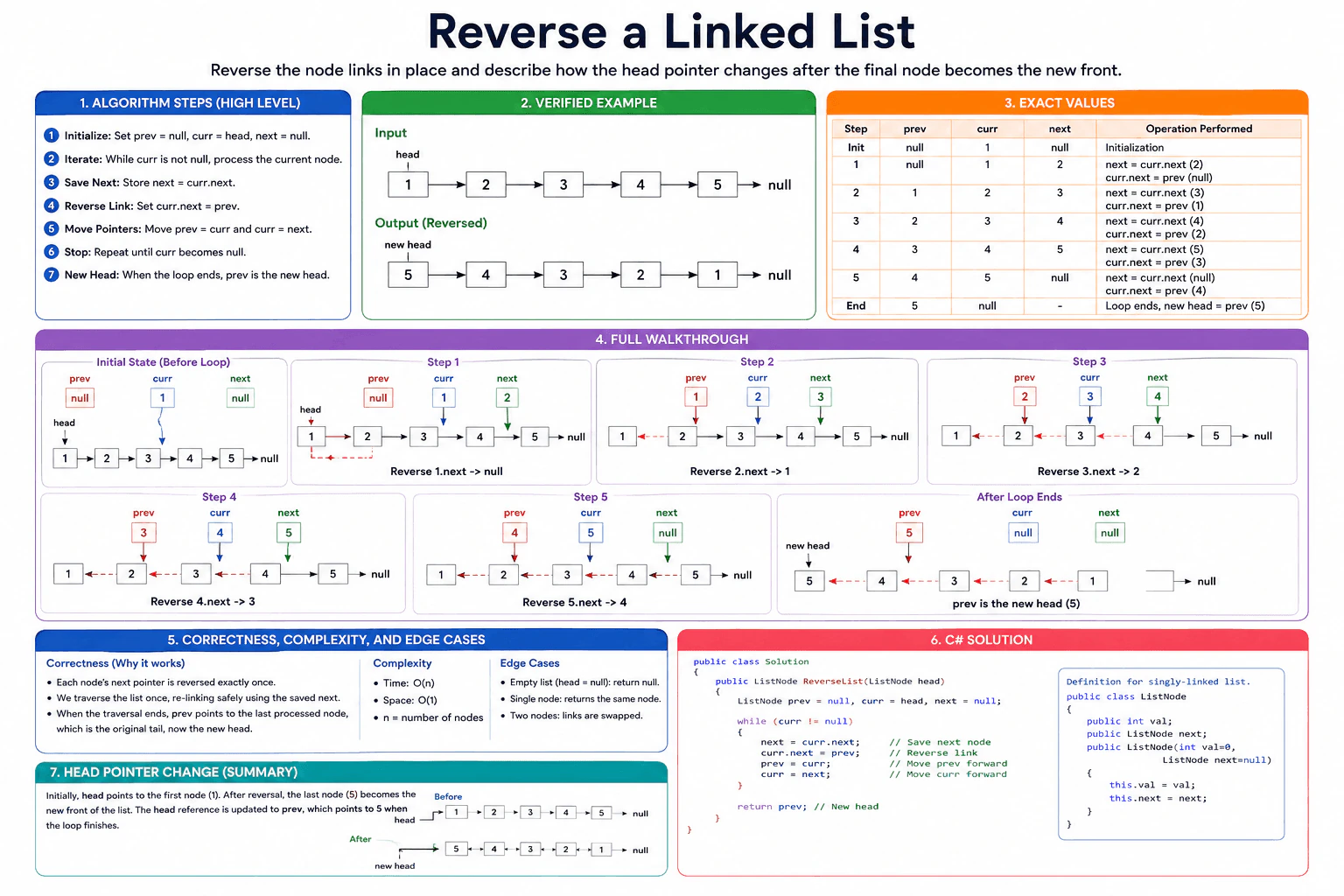
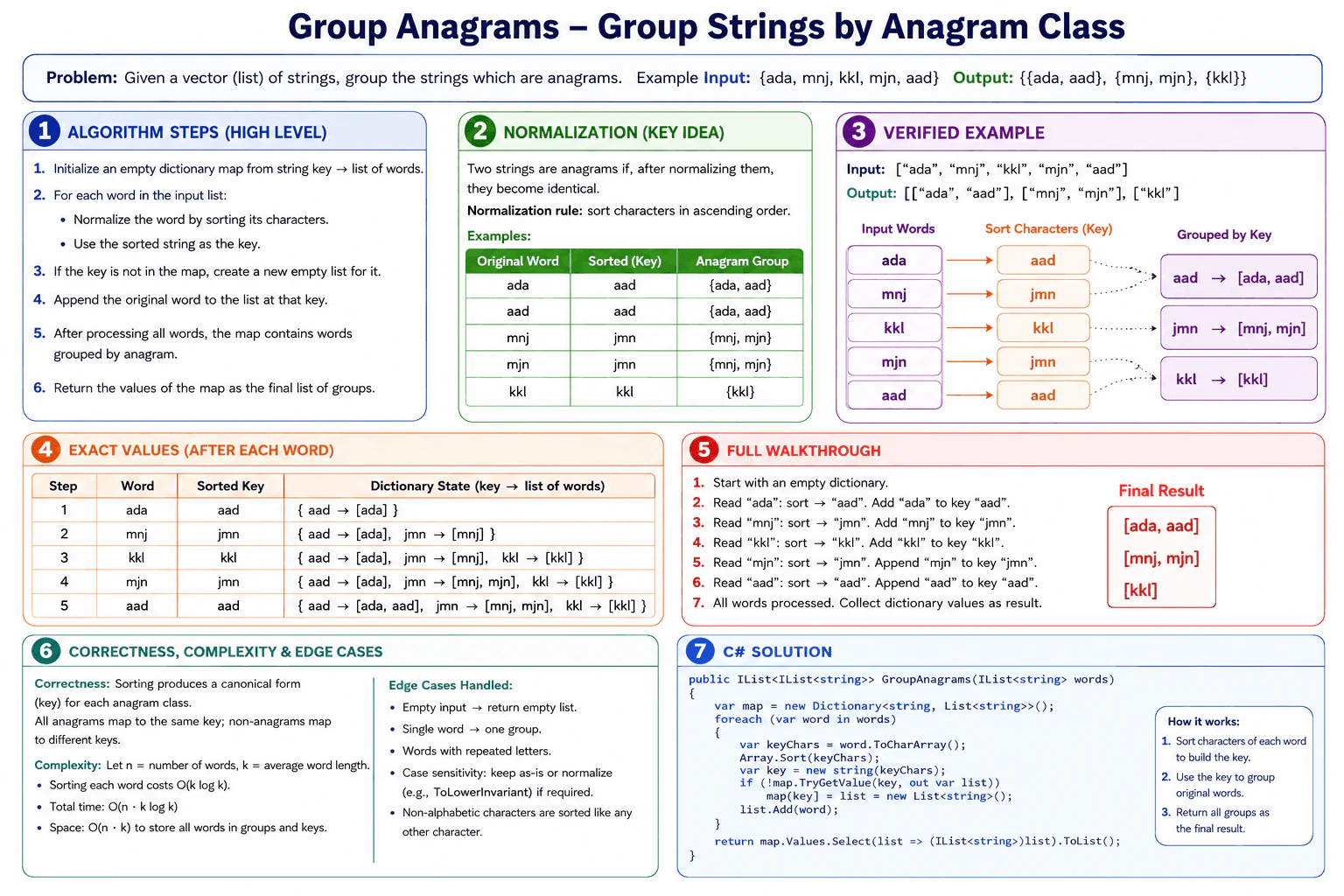
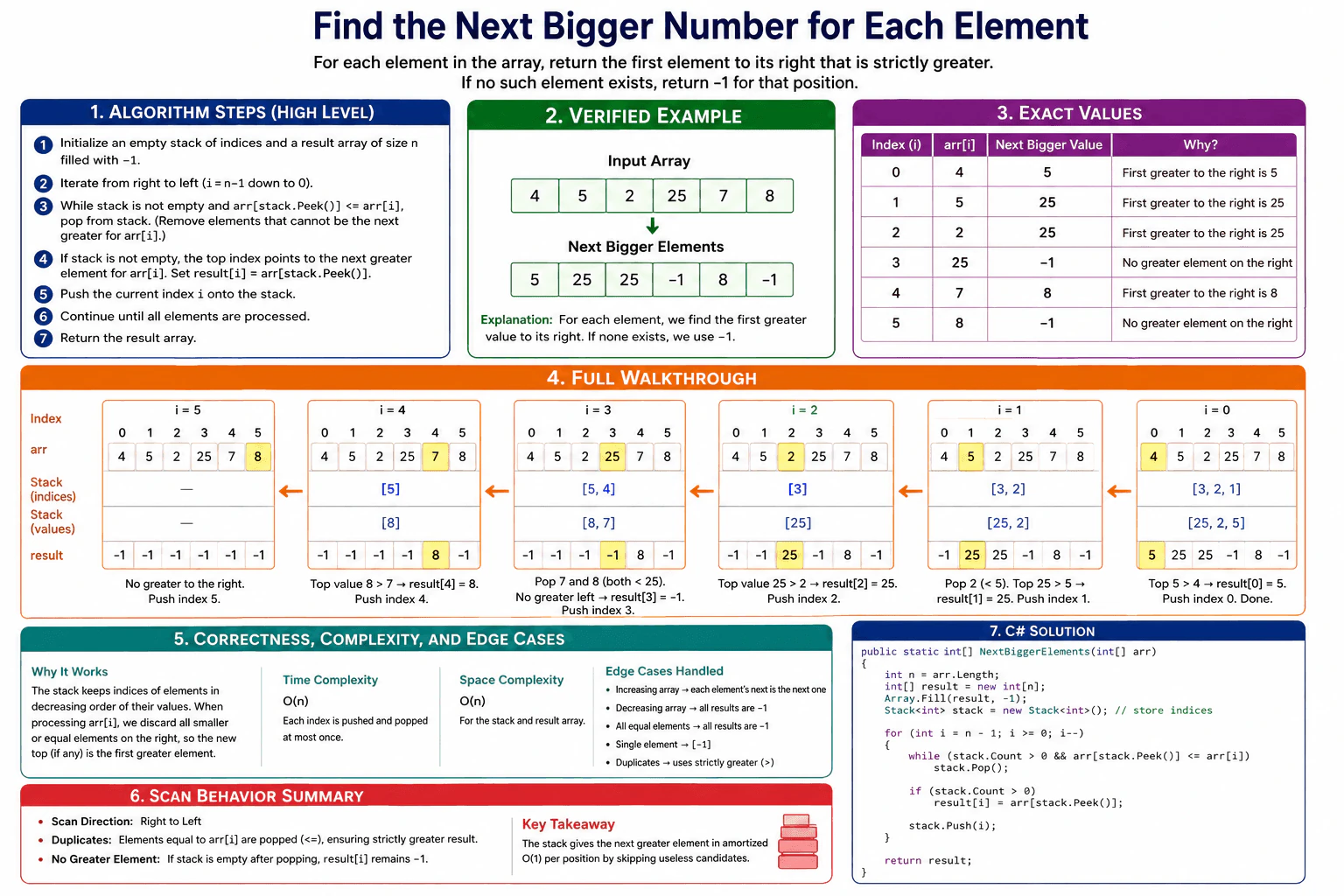
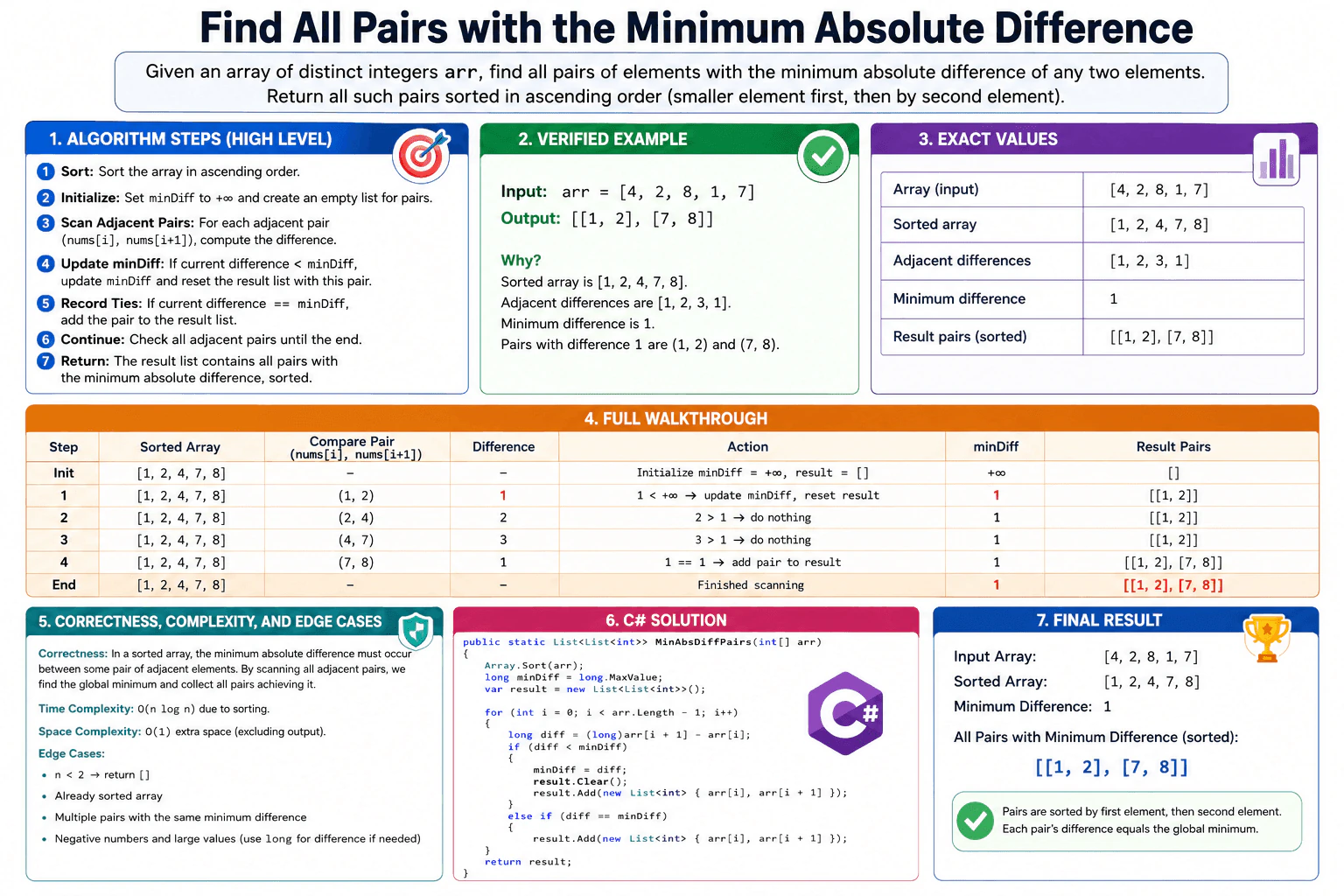
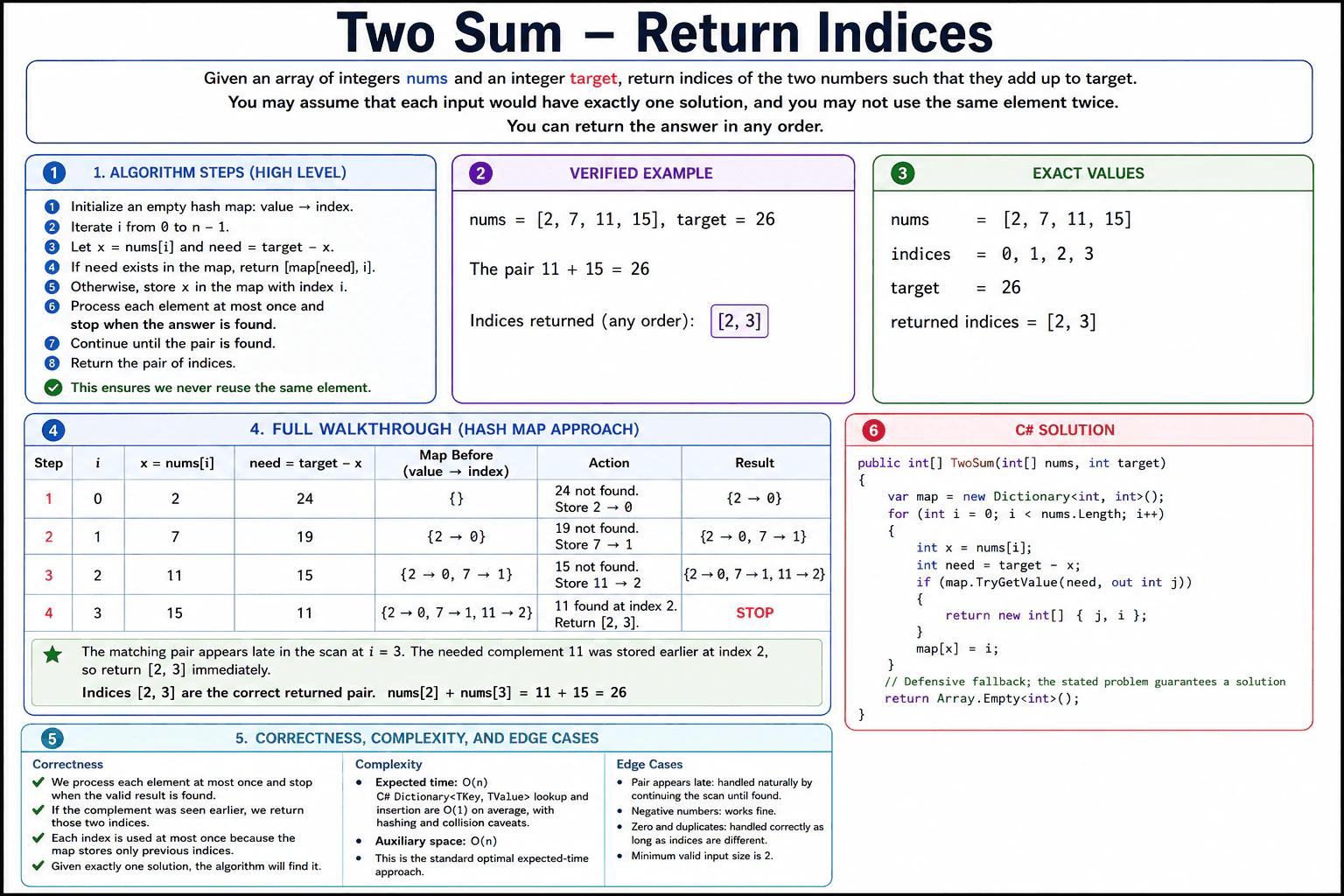
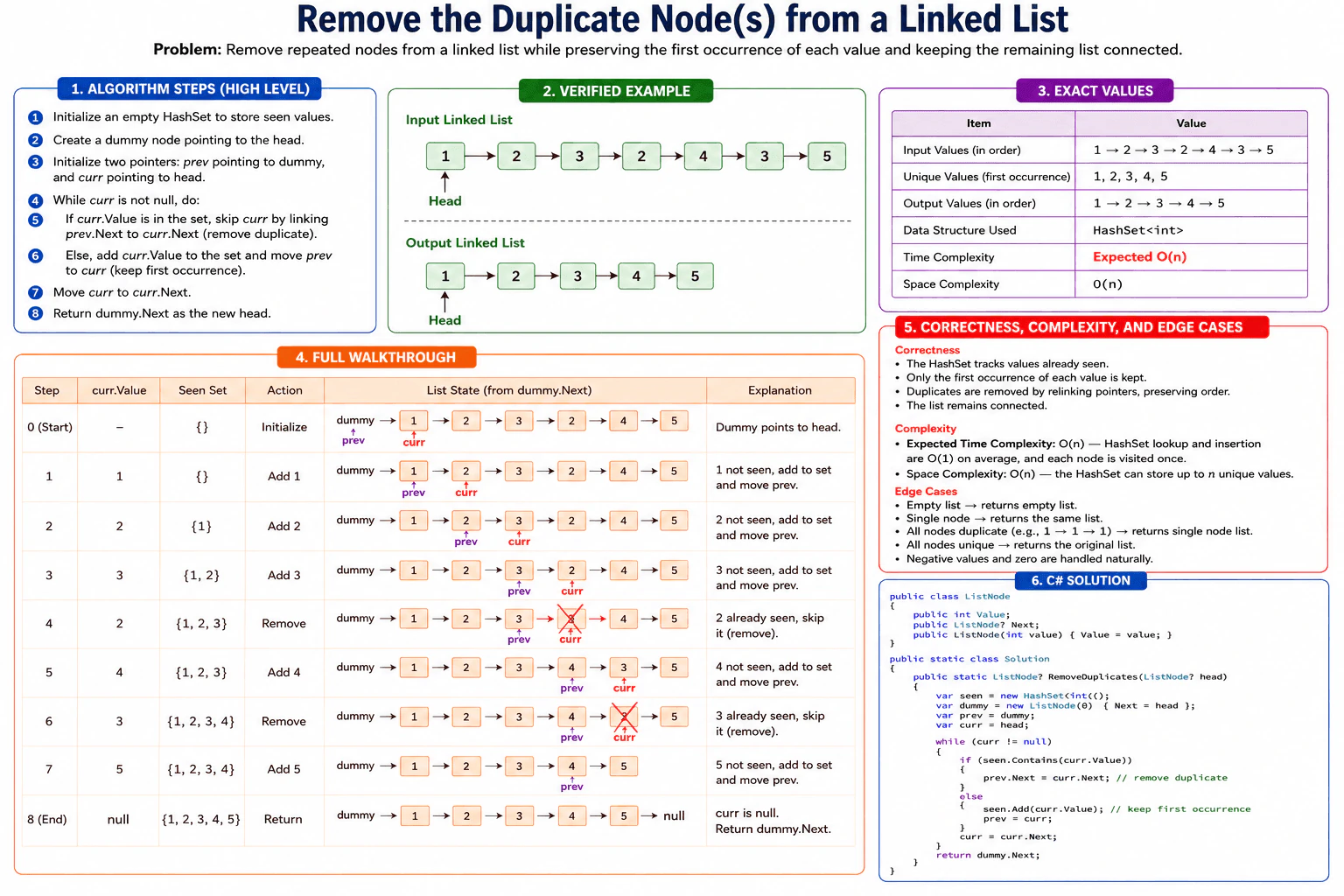
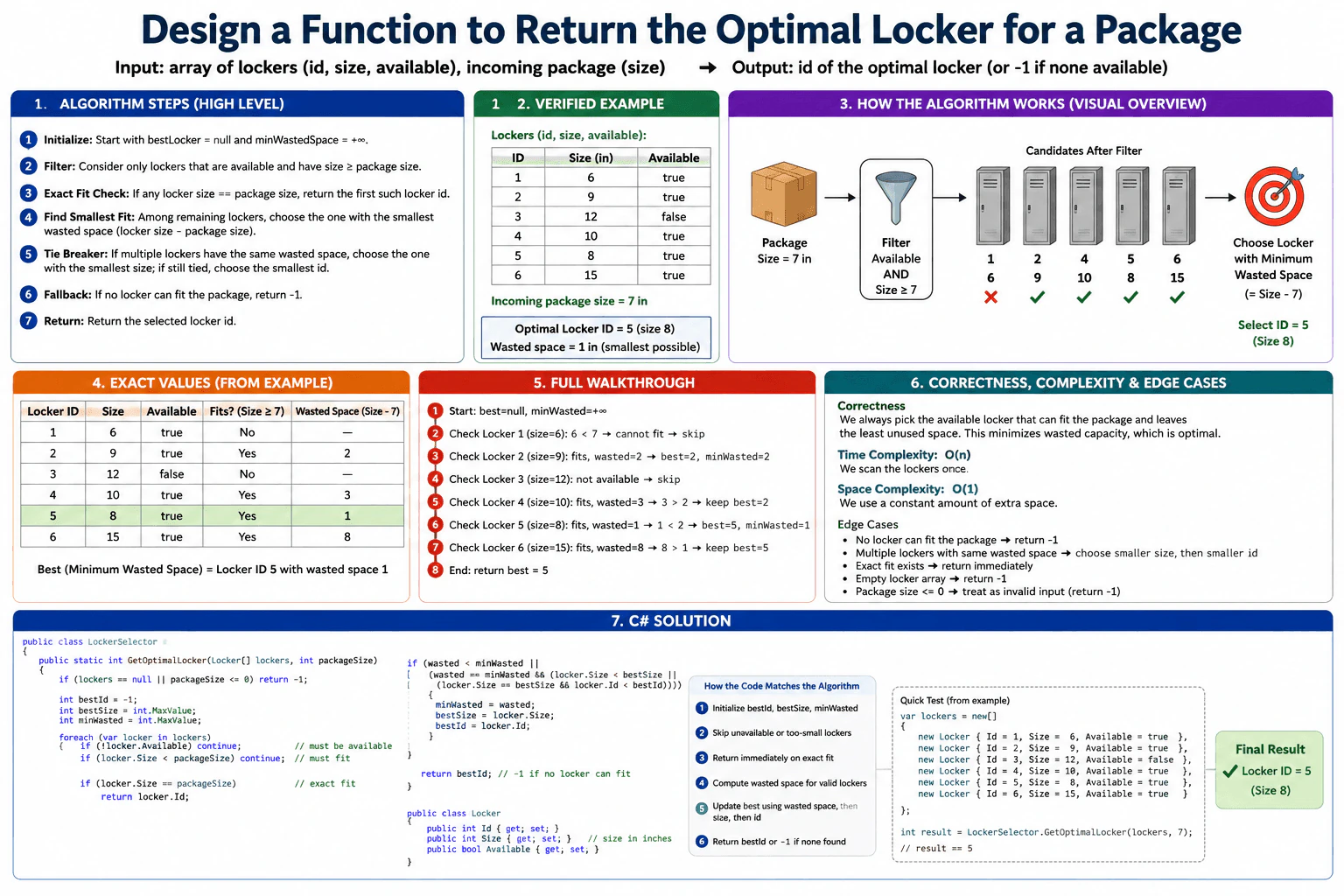
![Given an array arr[] of size n, its prefix sum array is another array prefixSum[] of the same size, such that the value of prefixSum[i] is arr[0] + arr[1] + arr[2] … arr[i] diagram](resources/diagrams/webp/amazon-net-developer-amazon-coding-1.webp)
![There are n gas stations along a circular route, where the amount of gas at the ith station is gas[i]. You have a car with an unlimited gas tank and it costs cost[i] of gas to travel from the ith station to its next (i + 1)th station. You begin the journey with an empty tank at one of the gas stations. Given two integer arrays gas and cost, return the starting gas station's index if you can travel around the circuit once in the clockwise direction, otherwise return -1 diagram](resources/diagrams/webp/amazon-net-developer-amazon-coding-12.webp)
![You are given an array prices where prices[i] is the price of a given stock on the ith day. You want to maximize your profit by choosing a single day to buy one stock and choosing a different day in the future to sell that stock. Return the maximum profit you can achieve from this transaction. If you cannot achieve any profit, return 0 diagram](resources/diagrams/webp/amazon-net-developer-amazon-coding-13.webp)


